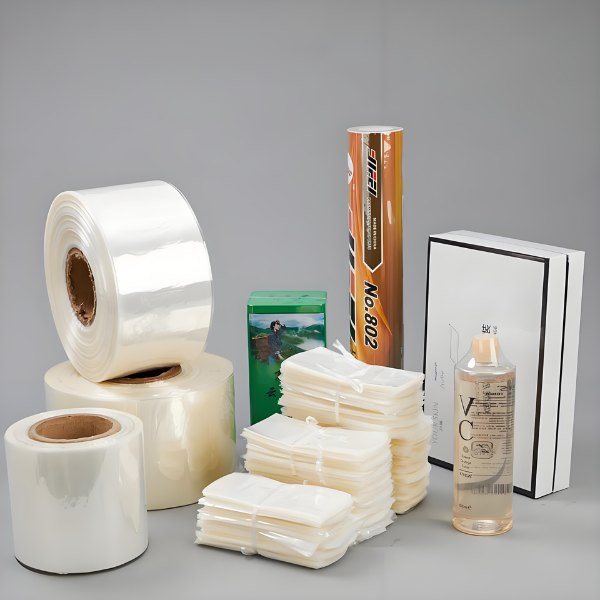
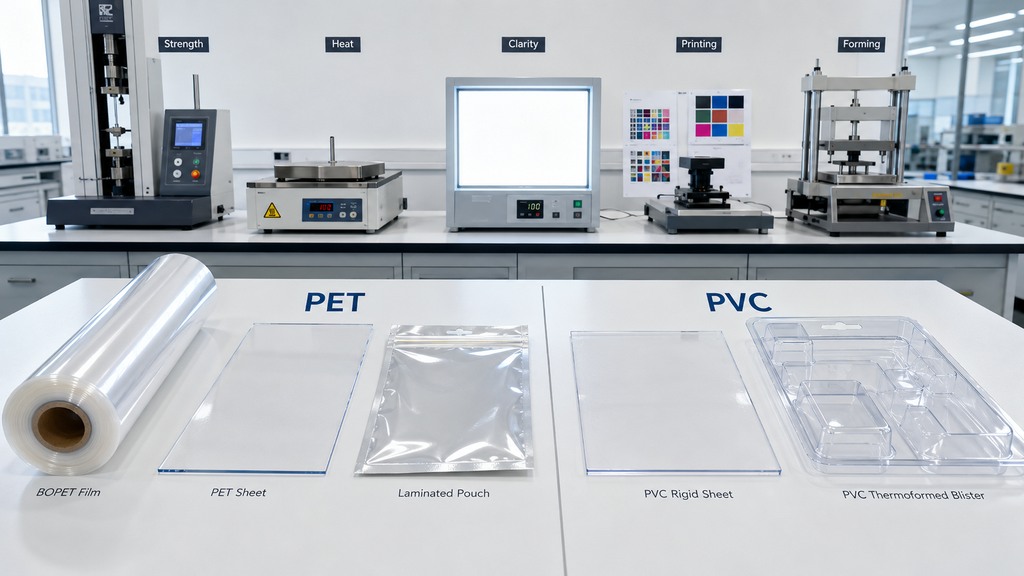
PET and PVC are both widely used plastics, but they are not interchangeable. Their polymer chemistry, temperature behavior, stiffness, converting performance, recycling compatibility, and common packaging formats differ enough to change both production results and total packaging cost.
For packaging buyers, the right question is not simply, “Is PET better than PVC?” A better question is, “Which material fits this package, machine, product, market, and end-of-life requirement?”
This guide compares PET and PVC from a practical packaging perspective. It focuses on material selection for films, laminates, sheets, blisters, labels, and related converting processes without treating every polyester or shrink material as the same resin.
If you need a broader overview before comparing these two materials, see From PE to EVA: All Common Plastic Film Types.
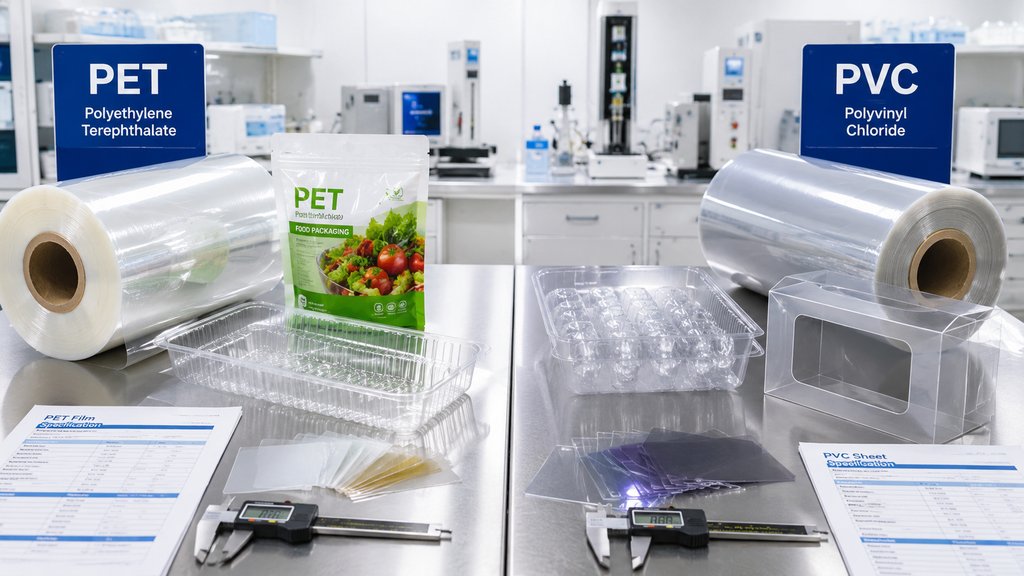
Quick Answer: What Is the Main Difference Between PET and PVC?
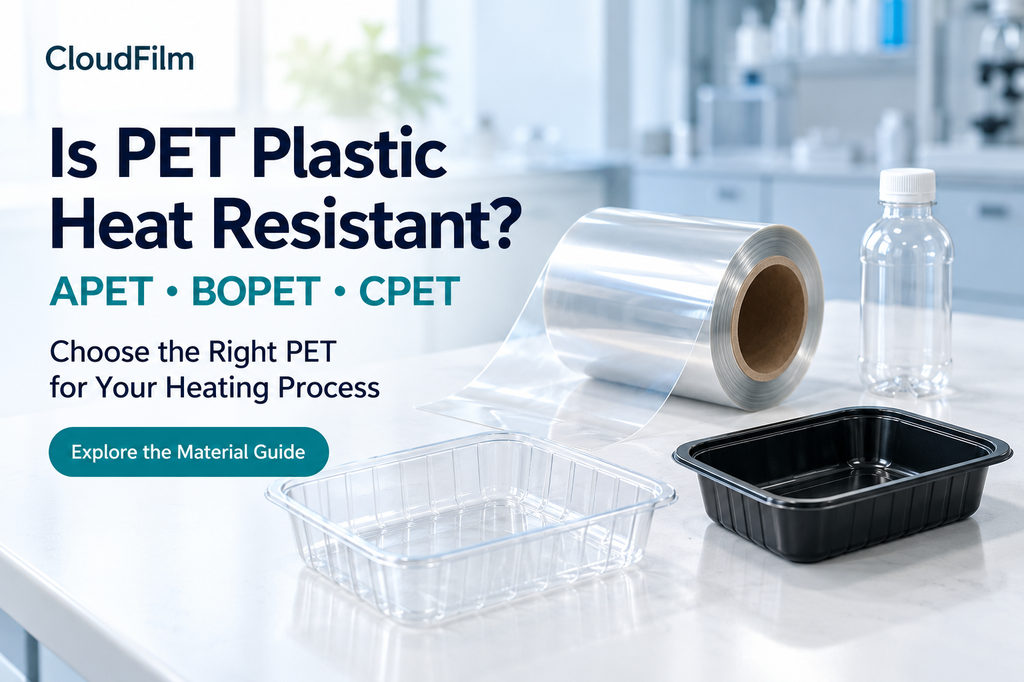
PET, or polyethylene terephthalate, is a polyester known for strength, stiffness, dimensional stability, clarity, and good temperature resistance. In flexible packaging, biaxially oriented PET is commonly used as a printing, structural, or barrier-support layer.
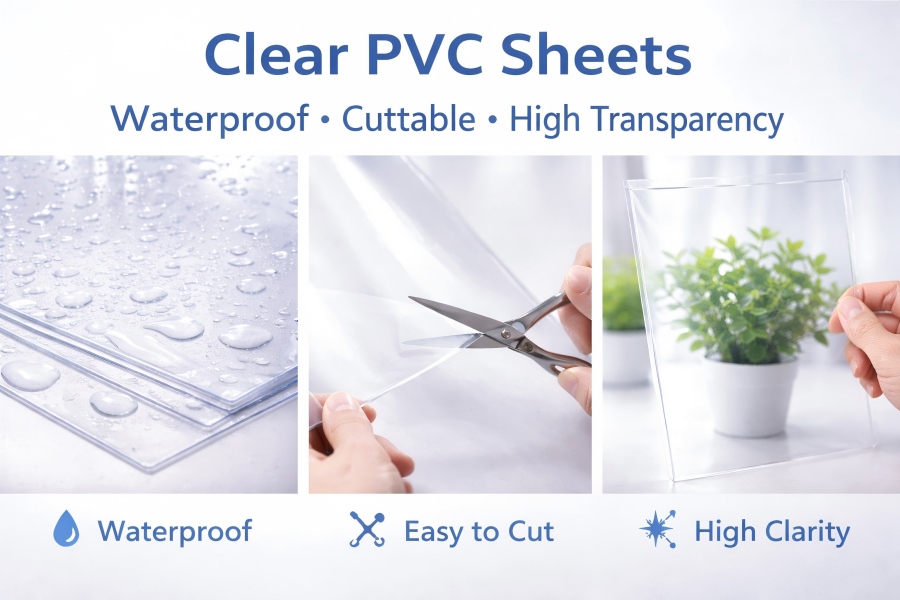
PVC, or polyvinyl chloride, is a chlorine-containing polymer whose properties can be adjusted substantially through formulation. Rigid PVC is widely associated with clear sheets, blisters, folding-box windows, and other formed or display packaging.
The two materials can overlap in some transparent packaging applications, especially rigid sheet and specialty wrapping. However, the best choice depends more on the packaging format and converting process than on transparency alone.
PET vs PVC at a Glance
| Selection Factor | PET | PVC | Practical Buyer Takeaway |
| Polymer family | Polyester | Vinyl polymer | Different chemistry creates different processing behavior |
| Typical packaging roles | BOPET film, laminate outer web, lidding, trays, sheets | Rigid sheet, blisters, windows, specialty shrink formats | Start with package format before comparing price |
| Stiffness and strength | High, especially oriented PET | Good, formulation-dependent | PET is often selected when dimensional stability matters |
| Heat resistance | Generally higher | More heat-sensitive in many grades | PET often suits higher-temperature converting steps |
| Clarity | Excellent | Excellent in suitable clear grades | Both can provide strong product visibility |
| Heat sealing | Standard BOPET usually needs a sealant or coating | Depends on grade and formulation | Do not assume either base material seals by itself |
| Printing and lamination | Widely used as a print and laminate web | Printable, especially in sheet and specialty formats | Surface treatment and ink system still matter |
| Thermoforming | APET/PETG/GAG formats are common | Rigid PVC is also widely thermoformed | Compare exact sheet grade, not resin names alone |
| Recycling considerations | Established PET streams exist, but acceptance varies by format and location | PVC acceptance is more limited in many systems | Confirm local collection and recycler specifications |
| Cost decision | Evaluate yield, structure, processing, and performance | May be economical in certain established applications | Price per kilogram is not the full package cost |
Why PET and PVC Behave Differently
PET: a strong polyester platform
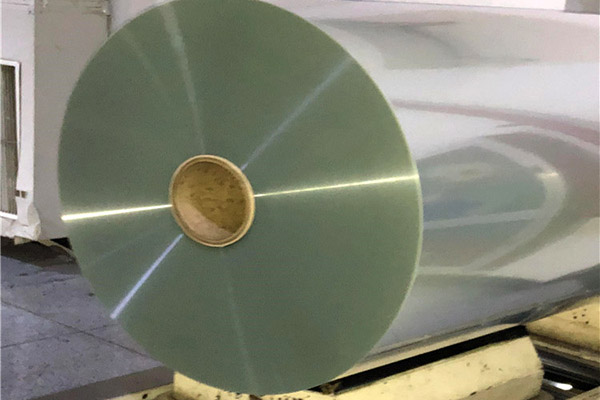
PET has a relatively rigid molecular structure and is frequently oriented to improve mechanical properties. BOPET film therefore provides excellent tensile strength, flatness, dimensional stability, and a clean surface for printing, coating, metallizing, and lamination.
For flexible packaging projects, PET film roll is commonly used as an outer or middle web rather than as the final heat-sealing layer.
PVC: a highly formulation-dependent material
PVC can be produced in rigid or flexible forms. Plasticizers, stabilizers, impact modifiers, and other additives can significantly change softness, forming response, clarity, and processing behavior.
That flexibility in formulation is useful, but it also means buyers should never purchase “PVC” based only on polymer name. The actual grade, thickness, additive system, compliance requirements, and converting method must be specified.
PET vs PVC: Key Packaging Performance Differences
- Mechanical strength and dimensional stability
PET is usually favored when a packaging web must stay flat under tension, maintain registration during printing, or resist dimensional change during lamination and downstream converting.
Oriented PET also performs well where a thin film must provide structural support without becoming excessively soft. This is one reason PET appears frequently in high-quality printed laminates.
PVC can provide good strength in rigid sheet applications, but performance changes significantly with formulation and thickness. A rigid blister sheet and a flexible PVC film should not be treated as the same engineering material.
- Heat resistance and process stability
PET generally offers a wider useful temperature window than many conventional PVC grades. That matters during printing, drying, lamination, coating, heat treatment, and applications where the package may encounter elevated temperatures.
PVC requires tighter control in heating processes because excessive temperature can affect stability, appearance, and processing quality. Converters should match the resin formulation to the forming or shrinking conditions used on their equipment.
For procurement teams, this difference can influence line speed, scrap rate, setup tolerance, and consistency between production batches.
- Transparency, gloss, and shelf appearance
Both PET and PVC can deliver excellent transparency. A customer looking only at a clear sample may therefore find them visually similar.
PET is widely selected for premium printed structures because it combines clarity with stiffness, gloss, and a stable print surface. It can also support coatings or metallization when additional appearance or barrier performance is required.
PVC remains attractive for clear rigid display packaging, blisters, and windows where product visibility and formability are key priorities.
- Printing, coating, and lamination
PET is one of the most established substrates for reverse printing and adhesive lamination. Corona treatment or suitable surface preparation helps achieve reliable ink and adhesive anchorage.
PVC can also be printed, but ink, solvent, drying temperature, and surface chemistry must match the grade. The buyer should confirm compatibility with the printer or converter before bulk purchasing.
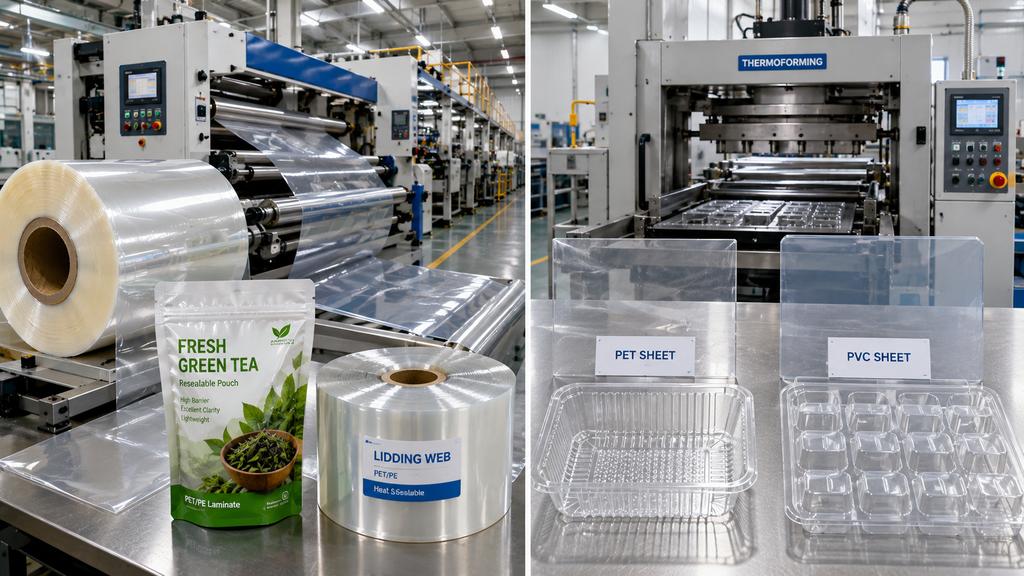
If the package needs a strong printed outer web plus a reliable sealant, PET/PE laminated film is a common structure because PET provides print stability while PE provides sealing performance.
- Barrier performance
Neither “PET” nor “PVC” should be treated as a complete barrier specification. Oxygen, moisture, aroma, light, and chemical resistance depend on thickness, orientation, coatings, metallization, and the full laminate.
Standard BOPET offers useful gas and aroma resistance and can become a platform for high-barrier coatings or metallization. In demanding flexible packaging, it is usually evaluated as one layer in a complete structure.
For a wider view of how PET is used across packaging structures, see PET Packaging Market: Trends, Uses, and Suppliers.
- Heat sealing
Standard BOPET is not normally selected as the sole sealant layer. It is commonly laminated to PE, CPP, or another sealing film, or supplied with a heat-sealable coating when the application requires direct sealing.
PVC sealing behavior depends on the specific grade and package format. Buyers should specify sealing method, jaw temperature, dwell time, pressure, and the material being sealed against.
A lower resin price is not useful if the material creates unstable seals or forces a slower packaging line.
Flexible Packaging: PET Usually Has the Clearer Role
In modern flexible packaging, PET has a well-defined function. BOPET often acts as the printed outer web, structural layer, or carrier for barrier coatings.
Typical structures include PET/PE, PET/CPP, PET/metallized layer/PE, and other multi-layer combinations designed around product protection and sealing requirements.
PVC is less commonly selected as the default structural web for mainstream laminated food packaging. Its stronger position is usually in sheet, blister, display, or specific shrink applications.
This distinction is important when a buyer searches “PET PVC film.” The first step should be identifying whether the request is truly flexible roll stock, rigid sheet, thermoforming stock, or shrink material.
Rigid Packaging and Thermoforming: Compare the Exact Sheet Grade
When the application is a tray, blister, clamshell, folding box, or display window, the PET-versus-PVC question becomes more nuanced.
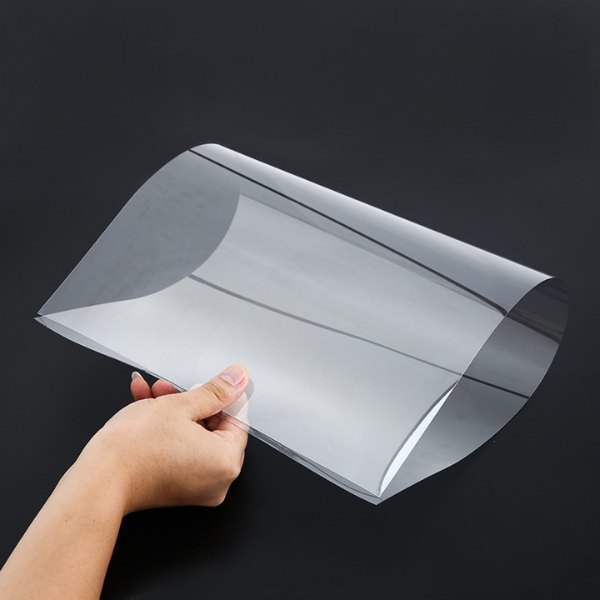
PET-based options include APET, PETG, multilayer PET structures, and thicker PET film sheet. Each has different forming, impact, sealing, and printing behavior.
Rigid PVC sheet remains relevant for blisters, windows, display packaging, stationery packs, and other applications where established forming performance is required.
For projects that need excellent clarity and easy forming, PETG/APET/PETG structures may also enter the comparison. The GAG PET Sheet buying guide explains that route in more detail.
Buyers should also avoid mixing APET sheet and thin BOPET film into one specification. APET vs PET Film: Guide for Trays & Lids explains how their roles differ.
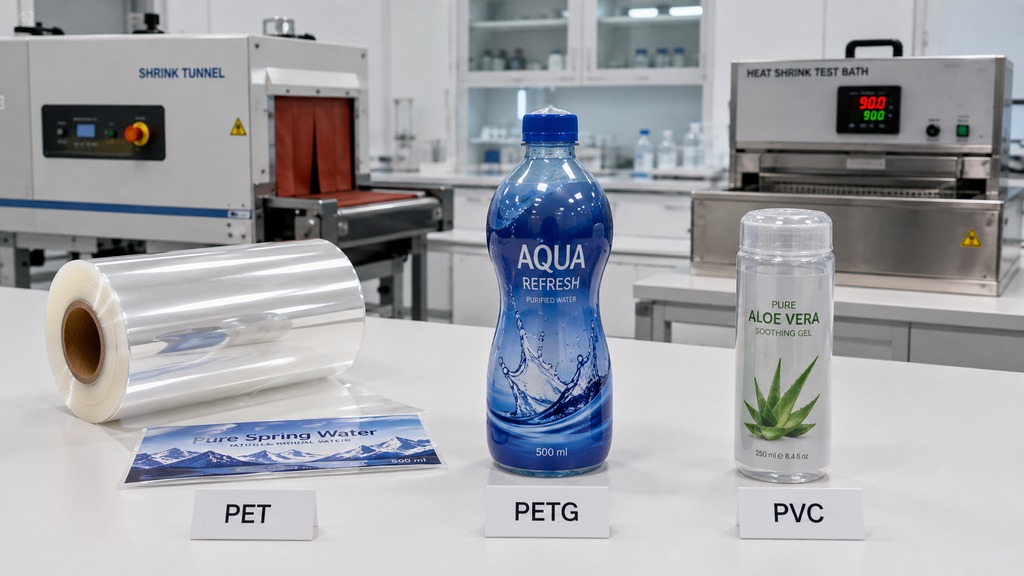
Shrink Packaging: Do Not Confuse PET with PETG
This is one of the most common sourcing mistakes.
Standard PET or BOPET packaging film is not the same product as PETG shrink film. PETG is a modified polyester designed to provide different forming and shrink behavior.
If your actual application is a full-body bottle sleeve or high-shrink label, the useful comparison is usually PETG shrink film versus PVC shrink film, not generic PET versus PVC.
CloudFilm has already covered this decision in PVC vs PETG Shrink Film: Which Is Better for Shrink Sleeves and Packaging?.
For buyers who already know PETG is required, the PETG shrink film page focuses on the product format and application.
Sustainability and Recycling: Evaluate the Whole Packaging System
A resin name alone does not determine whether a package will be recycled.
Collection systems, sorting technology, package color, labels, adhesives, coatings, barriers, additives, and local recycler specifications can all change the practical recycling outcome.
PET benefits from well-established recycling infrastructure in many bottle markets. However, acceptance of films, trays, and complex laminates can differ substantially by region and recycling stream.
PVC has different sorting and processing requirements. Mixing incompatible polymers into a recycling stream can reduce recyclate quality, so material identification and design-for-recycling rules matter.
If recycled content is part of your project, PCR PET film can be evaluated for suitable print webs, laminates, labels, and other packaging applications.
Procurement teams should therefore ask two separate questions: “Can this polymer technically be recycled?” and “Will this exact package be collected, sorted, and accepted in the target market?”
PET or PVC: Which Material Should You Choose?
Choose PET when:
You need a strong, dimensionally stable film for printing, coating, metallizing, or lamination.
You require better resistance to heat during converting or downstream use.
You are building a PET-based flexible laminate, printed web, lidding structure, tray, or technical film application.
You want access to a broad family of PET-based films, sheets, coatings, and recycled-content options.
Choose PVC when:
Your application is an established rigid PVC blister, transparent window, display sheet, or other format already designed around PVC processing.
Your forming equipment, tooling, sealing system, and approved specification are optimized for a particular PVC grade.
The application has been checked against the compliance, recycling, and customer requirements of the destination market.
Consider another PET-family grade when:
The real requirement is high shrink, deep thermoforming, improved impact strength, or another property that standard PET does not provide.
In that case, PETG, APET, GAG, coated PET, or a laminated PET structure may be more technically accurate than simply specifying “PET.”
What to Tell a PET or PVC Supplier Before Requesting a Quote
A professional film supplier or manufacturer cannot recommend the right material from “PET PVC” alone.
Send the following information with your inquiry:
- End application and packed product.
- Flexible film, rigid sheet, blister, tray, label, sleeve, or other format.
- Required thickness and width.
- Roll, cut sheet, or formed-part requirement.
- Printing, lamination, coating, or thermoforming process.
- Sealing method and sealing substrate.
- Required clarity, haze, color, stiffness, or impact performance.
- Barrier requirements, if any.
- Food, medical, industrial, or other compliance needs.
- Target market and recycling requirements.
- Current material structure or technical data sheet.
- Trial quantity, monthly demand, and destination.
For buyers sourcing PET internationally, Polyester Company in China | PET Film Supplier provides a broader supplier-selection perspective.
If you are not yet certain which transparent film family fits the project, clear plastic film is a useful starting point for comparing PET with BOPP, PE, CPP, and other transparent roll-stock options.

Common Buying Mistakes to Avoid
Buying by resin name only
“PET” and “PVC” are material families, not complete specifications. Orientation, additives, coatings, thickness, surface treatment, and converting format can change performance dramatically.
Comparing price per kilogram without comparing yield
Density, thickness, structure, usable width, scrap, and converting efficiency affect the real cost per square meter or per finished package.
Assuming transparent materials are interchangeable
Two clear films can behave very differently under heat, tension, sealing pressure, forming, or printing.
Using a shrink-film comparison for a non-shrink project
PETG shrink film, PVC shrink film, standard BOPET, and rigid PET sheet solve different packaging problems.
Skipping machine trials
A technically suitable material can still require adjustments to temperature, tension, dwell time, tooling, ink, adhesive, or sealing parameters. Trial material should be validated under actual production conditions before a large order.
FAQs About PET vs PVC for Packaging
FAQ 1. Is PET the same as PVC?
No. PET is polyethylene terephthalate, a polyester. PVC is polyvinyl chloride, a vinyl polymer. Their chemistry, processing window, mechanical behavior, and common packaging applications are different.
FAQ 2. Is PET stronger than PVC?
Biaxially oriented PET generally provides high tensile strength and dimensional stability at relatively thin gauges. PVC strength depends strongly on whether the grade is rigid or flexible, its formulation, and its thickness.
FAQ 3. Which is clearer, PET or PVC?
Both can be highly transparent. Optical quality depends on resin grade, processing, thickness, surface condition, additives, and forming history rather than polymer name alone.
FAQ 4. Which material handles heat better?
PET generally provides better temperature resistance and dimensional stability than many conventional PVC grades. Exact limits must still be confirmed for the selected grade and process.
FAQ 5. Can PET film be heat sealed directly?
Standard BOPET is usually not used as the sole heat-sealing layer. It is often laminated to PE or CPP, or supplied with a heat-sealable coating for specific applications.
FAQ 6. Can PVC be used for thermoforming?
Yes. Rigid PVC sheet is widely used in thermoformed blister and display packaging. The correct grade should be selected according to forming depth, tooling, temperature, thickness, and end-use requirements.
FAQ 7. Is PET better for flexible packaging?
PET often has a clearer role in high-performance flexible laminates because it provides strength, stiffness, printability, and dimensional stability. The final structure normally includes a separate sealant layer.
FAQ 8. Is PVC better for blister packaging?
PVC remains an established blister material in many applications, but PET-based sheets are also widely used. The better option depends on forming, sealing, compliance, appearance, recycling goals, and the packed product.
FAQ 9. Is PET shrink film the same as PETG shrink film?
No. PETG is a modified polyester designed for different forming and shrink behavior. Buyers requesting bottle sleeves should normally specify PETG shrink film rather than generic PET film.
FAQ 10. Which is more recyclable, PET or PVC?
The answer depends on package format and local recycling infrastructure. PET has strong recycling systems in many bottle markets, but films and laminates may face different acceptance rules. Always check the target market’s collection and recycler specifications.
FAQ 11. Which is cheaper, PET or PVC?
There is no universal answer. Resin price, thickness, density, yield, forming scrap, printing speed, sealing performance, tooling, logistics, and order volume all affect finished-package cost.
FAQ 12. What samples should I test before placing a bulk order?
Test the actual proposed thickness and grade, ideally in the same roll or sheet format used in production. Evaluate appearance, printing, forming, sealing, lamination, machine speed, scrap, and finished-package performance.
Final Recommendation
PET and PVC should not be compared as if they were two interchangeable transparent plastics.
For flexible laminates, printing webs, high-strength films, and many PET-based packaging structures, PET usually has a more natural technical role. For established rigid blisters, display sheets, windows, and certain specialty formats, PVC can remain a practical option.
The strongest purchasing decision starts with the package format, machine conditions, performance targets, compliance needs, and end-of-life requirements. Only then should buyers compare grades, suppliers, samples, and total cost.
If you are developing a new packaging structure, send CloudFilm your current film specification, application, thickness, width, converting process, and target quantity. We can help narrow the material family before you move to sample trials and commercial quotation.