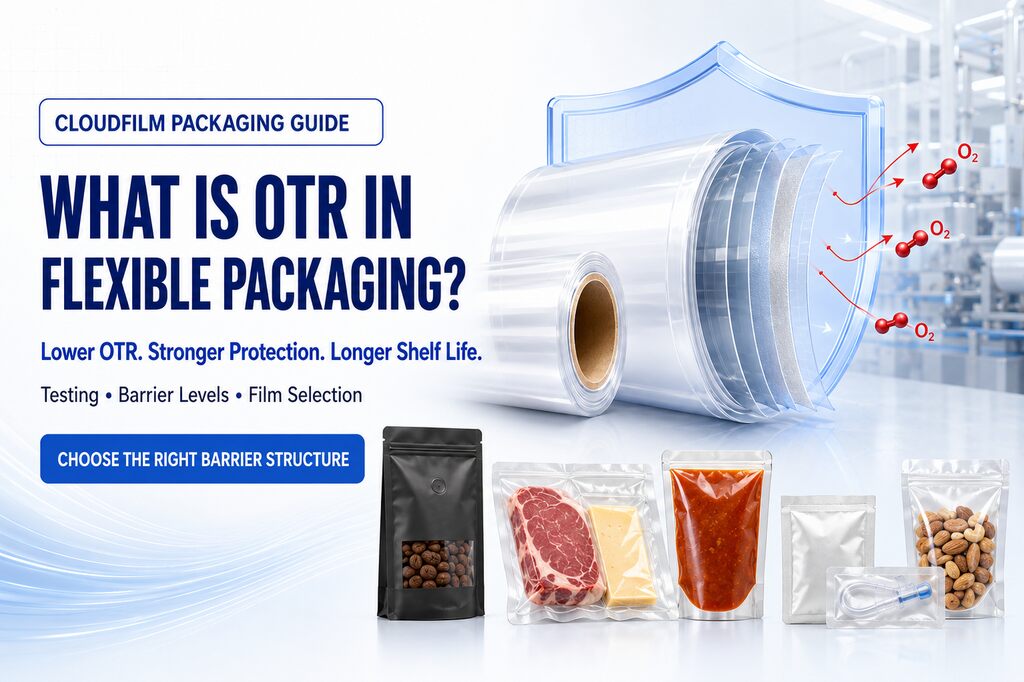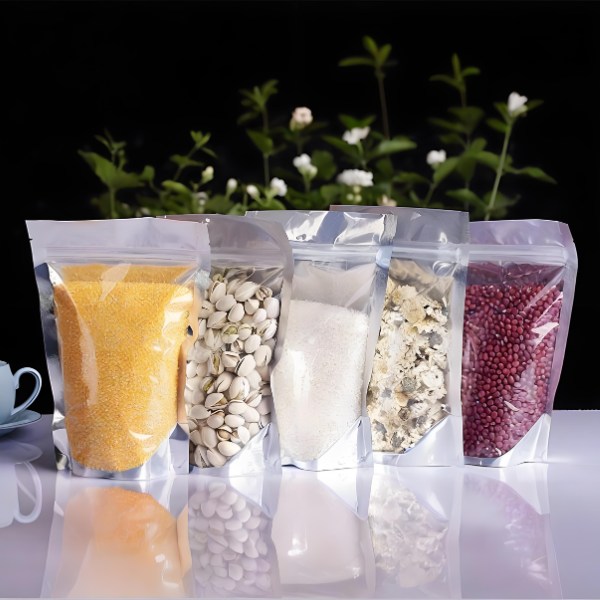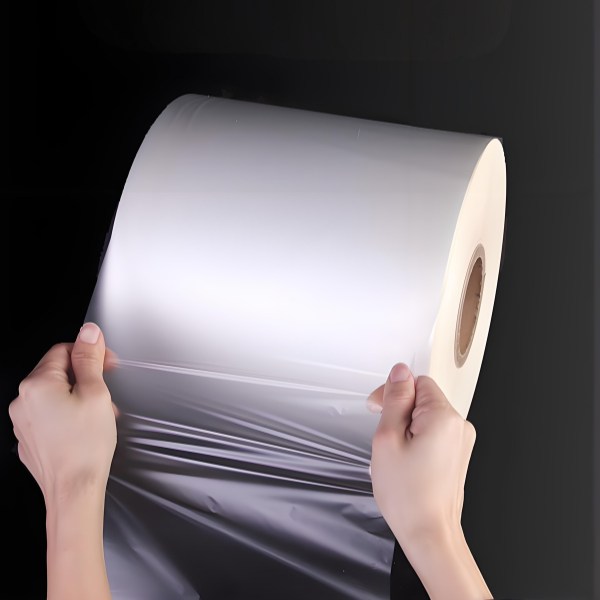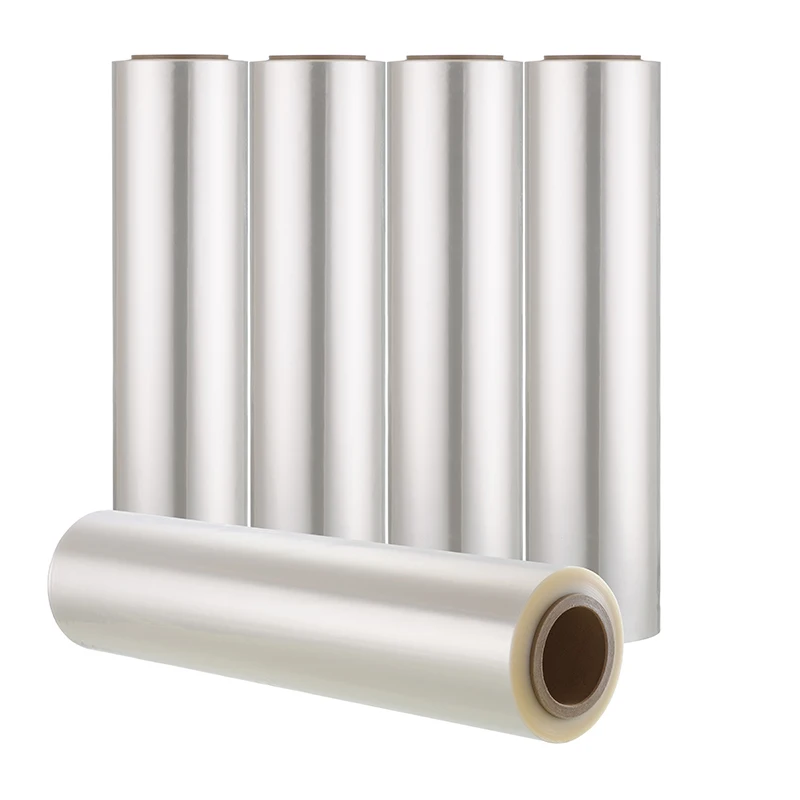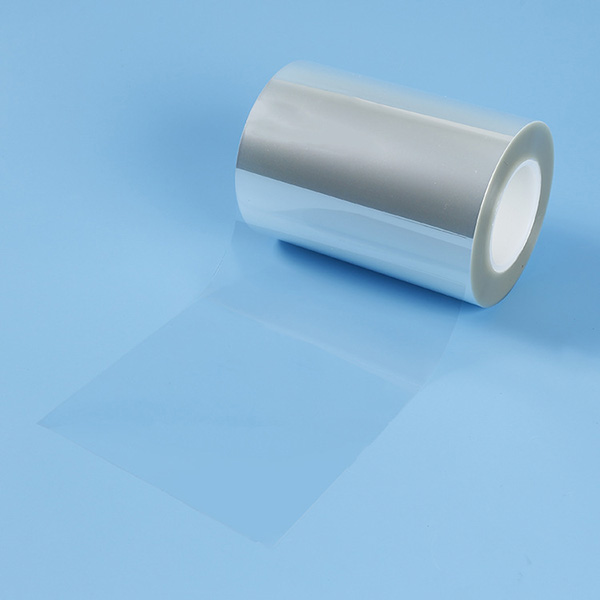
PE and PP are two of the most widely used polymer families in flexible packaging. They can look similar in roll form, but they behave differently during converting, sealing, filling, storage, and transportation.
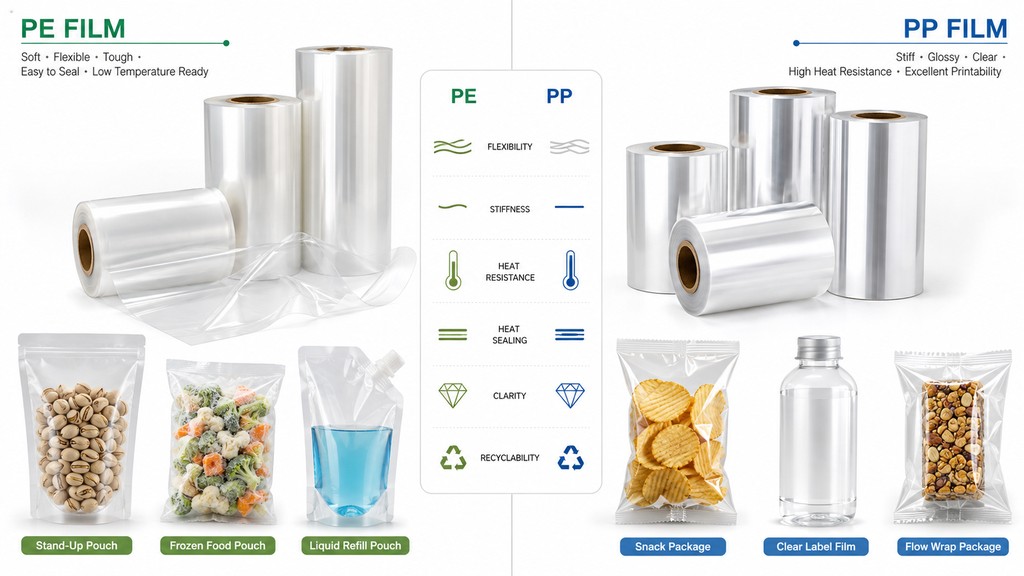
For most packaging buyers, the practical difference is simple: PE is usually softer, more flexible, easier to seal, and better at low temperatures, while PP is usually stiffer, clearer, and more heat resistant. Neither material is universally better.
The right choice depends on the product being packed, package format, filling temperature, sealing equipment, shelf-life target, appearance, mechanical requirements, and recycling strategy.
This guide focuses on those purchasing decisions rather than repeating basic polymer definitions.
PE vs PP Film at a Glance
| Decision Factor | PE Film | PP Film |
| General feel | Softer and more flexible | Stiffer and crisper |
| Heat resistance | Moderate, grade dependent | Generally higher |
| Low-temperature toughness | Usually better | More grade dependent |
| Heat sealing | Broadly used as a sealant | Strong in CPP and heat-sealable PP grades |
| Clarity and gloss | Good, depending on grade | Often excellent, especially BOPP |
| Moisture resistance | Very good | Very good |
| Oxygen barrier | Limited without barrier technology | Limited without barrier technology |
| Typical packaging role | Sealant, pouch web, liner, shrink or protective film | Print web, overwrap, label, sealant or mono-PP web |
| Common examples | LDPE, LLDPE, MDO PE, BOPE, CPE | BOPP, CPP, heat-sealable BOPP, retort CPP |
| Recyclable design route | Mono-PE structures | Mono-PP structures |
What PE and PP Mean in Flexible Packaging
In packaging, “PE” does not refer to only one film. It is a family that includes different polyethylene grades and processing methods. Buyers may encounter LDPE, LLDPE, CPE, MDO PE, BOPE, shrink film, stretch film, or multilayer PE-based structures.
If you need an overview of available polyethylene formats, the PE Film range shows how different PE films are used across packaging and industrial applications.
“PP” is also a polymer family rather than a single packaging film. The two most important flexible-packaging forms are BOPP and CPP. They share the same polypropylene base but perform very differently because of their manufacturing processes.
The PP Film range is a useful starting point when comparing polypropylene options for packaging, labels, lamination, and technical converting.
The important purchasing question is therefore not simply “PE or PP?” It is “Which PE or PP film grade should perform each function in my package?”
Key Performance Differences Between PE and PP Film
Flexibility and stiffness
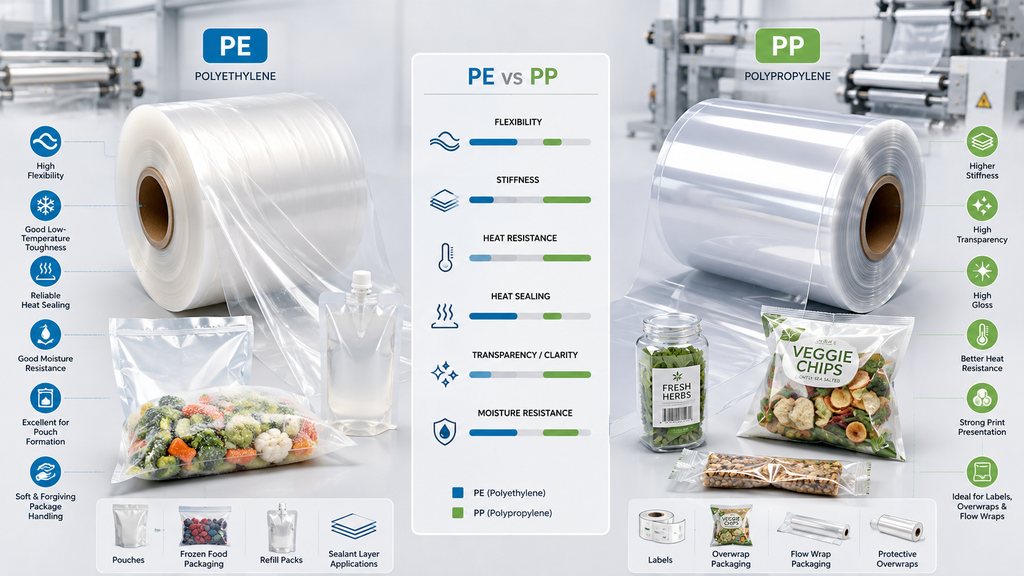
PE is normally selected when a package needs softness, flexibility, impact tolerance, or a forgiving seal layer. It conforms well around products and is widely used in pouches, liners, heavy-duty bags, shrink applications, and flexible inner webs.
PP generally feels stiffer and crisper. Oriented PP, especially BOPP, provides strong dimensional stability and a premium glossy appearance. That makes it attractive for printed outer webs, labels, overwraps, snack packaging, and applications where package shape matters.
Heat resistance
PP generally tolerates higher service and processing temperatures than common flexible PE grades. That is one reason polypropylene structures are frequently considered for hot-fill, heat-exposed, or higher-temperature packaging applications.
However, buyers should never select a material from polymer name alone. Actual performance depends on film orientation, resin grade, seal layer, additives, thickness, laminate construction, and the temperature-time profile of the process.
Heat-sealing behavior
PE is one of the most common sealant materials in flexible packaging. It can provide reliable seals over a practical operating window and is widely used as the inner layer in laminated pouches and roll stock.
Within the PP family, CPP is commonly used when a polypropylene-based structure needs a heat-sealing web. Heat-sealable BOPP grades can also work in specific overwrap and flow-wrap applications.
The best sealant is determined by seal initiation temperature, hot tack, dwell time, pressure, contamination resistance, filling speed, and required seal strength—not simply by whether the resin is PE or PP.
Clarity, gloss, and presentation
Both polymer families can produce attractive transparent films. BOPP is especially well known for high clarity, gloss, stiffness, and good print presentation, which explains its widespread use in consumer-facing packaging and labels.
PE can also provide good clarity, but the visual result varies significantly with density, processing method, thickness, additives, and film structure. When premium transparency is critical, sample evaluation should be part of material approval.
Moisture and oxygen barrier
Both PE and PP provide useful resistance to water vapor, making them valuable in dry-food and moisture-sensitive packaging. Neither unmodified polymer should automatically be treated as a high oxygen-barrier material.
When oxygen, aroma, or shelf-life requirements are demanding, the final structure may need EVOH, coatings, metallization, or another barrier solution. Barrier targets should be specified with measurable OTR and WVTR requirements.
Low-temperature and impact performance
PE is generally favored for low-temperature toughness and flexible impact performance. This makes PE-based structures common in frozen foods, ice, cold-chain products, heavy packs, and applications where brittle failure must be minimized.
PP can perform well in many applications, but the exact grade and temperature range should be confirmed when the package will experience deep-freeze conditions or repeated impact at low temperature.
PE Film Types Buyers Should Know
Different PE films solve different problems, so replacing one PE grade with another can change machine performance substantially.
LDPE and LLDPE are widely used where flexibility, sealing, toughness, and practical converting performance matter. LDPE Film is commonly considered for bags, liners, protective films, and sealant functions.
MDO PE is stretched mainly in the machine direction to improve stiffness and dimensional stability. It can act as a printable structural web in PE-based recyclable laminates. Buyers developing mono-PE pouches can review MDO PE Film for this role.
Other PE formats include CPE, BOPE, shrink film, stretch film, protective film, and coextruded PE structures. The correct grade depends on whether the film must print, seal, stretch, shrink, laminate, protect, or carry mechanical load.
PP Film Types Buyers Should Know
BOPP is biaxially oriented polypropylene. Orientation gives it high stiffness, good dimensional stability, attractive clarity, and strong print presentation. The BOPP Film range includes grades for packaging, labels, lamination, and specialty uses.
CPP is cast polypropylene. Compared with BOPP, it is generally softer and is widely used as a sealing layer in polypropylene-based laminates. The CPP Film range includes clear, metallized, anti-fog, retort, and other application-specific grades.
If your project specifically involves these two polypropylene films, BOPP vs CPP Film: Key Differences explains why they should not be treated as interchangeable PP films.
Which Is Better for Different Packaging Applications?
Frozen food and cold-chain packaging
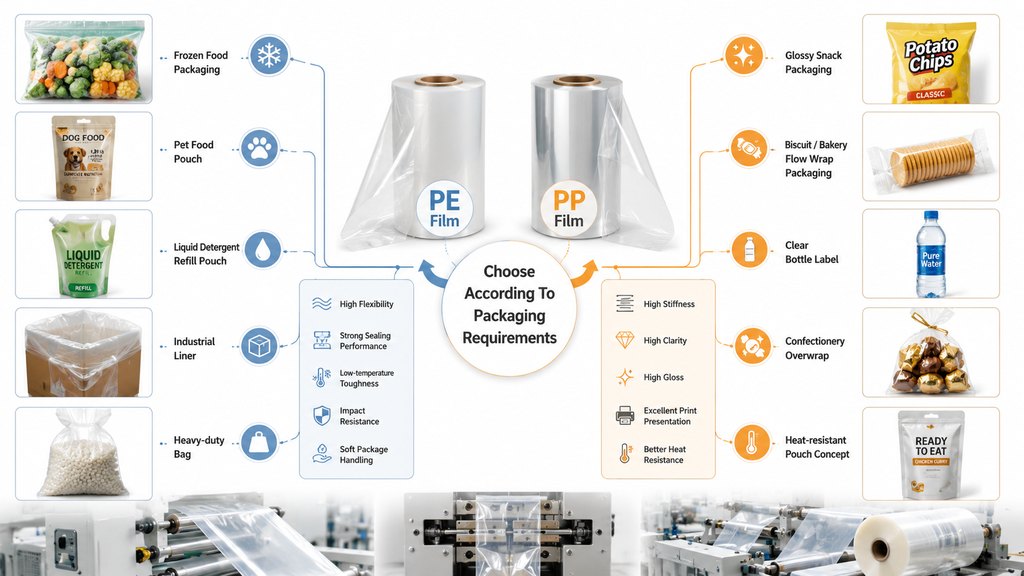
PE is usually the stronger starting point because flexible PE structures maintain good toughness at low temperature and provide reliable sealing. The final structure still needs testing for drop resistance, puncture resistance, freezer abuse, and seal integrity.
Snacks, biscuits, confectionery, and dry foods
PP is often attractive when stiffness, gloss, clarity, and high-speed flow-wrap performance are important. BOPP may be used as the outer print web, while CPP or another suitable sealant provides the inner sealing function.
Liquid detergent and refill pouches
PE-based structures are often preferred because they combine flexible handling, strong seals, drop resistance, and compatibility with mono-PE design strategies. Chemical compatibility and spout-seal performance should still be validated before launch.
Labels and premium overwraps
PP, particularly BOPP, is a strong option when buyers need clarity, stiffness, dimensional stability, and a high-quality printed surface. Label applications may also require controlled shrinkage, surface treatment, and specific adhesive compatibility.
General laminated pouches
PE and CPP can both serve as sealant layers, but they are not direct substitutes in every laminate. The outer web, adhesive, filling temperature, seal conditions, package stiffness, and end-use temperature all influence the correct choice.
Higher-temperature packaging
Specialized PP structures, including suitable CPP grades, are often considered when heat resistance is a major requirement. Retort or demanding thermal processes require application-specific grades and validation rather than generic PP film.
Industrial and heavy-duty packaging
PE is widely used when toughness, flexibility, puncture resistance, larger bag formats, or protective performance matter more than high gloss and stiffness.
Mono-PE vs Mono-PP for Recyclable Packaging
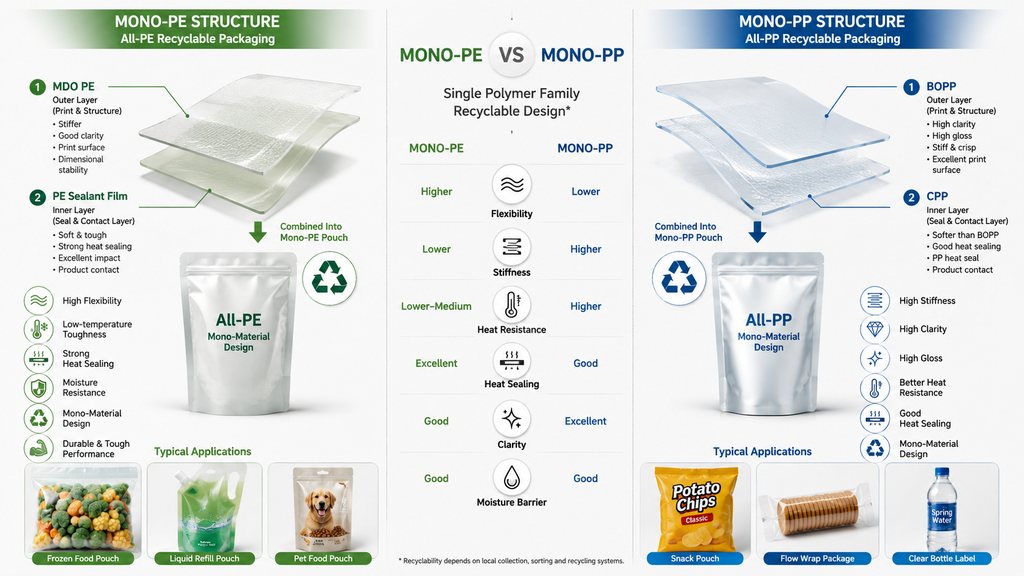
For recyclable flexible packaging, the PE-versus-PP decision becomes more strategic. The goal is often to keep the package predominantly within one polymer family so it can better align with an appropriate recycling stream where collection and recycling infrastructure exists.
Mono-Material Films for Recyclable Packaging provides a broader explanation of how mono-PE and mono-PP structures are designed.
Mono-PE structures are often chosen for soft pouches, frozen food, pet food, refill packs, and applications requiring strong sealing and low-temperature flexibility. MDO PE or BOPE may be used to add stiffness and improve the performance balance.
Mono-PP structures are often considered when stiffness, clarity, heat resistance, or a crisp package feel is more important. BOPP and CPP can be combined to keep the structure within the PP family while assigning different functions to each layer.
For ready-made pack formats, Recyclable Pouches shows practical mono-material PE and PP directions for different products.
“Designed for recycling” should not be confused with guaranteed recycling everywhere. Collection, sorting, local infrastructure, retailer rules, inks, adhesives, coatings, barrier layers, closures, and total package composition can affect real-world recyclability.
For that reason, buyers with sustainability targets should define the destination market before approving the final structure. Recyclable Flexible Packaging: A Sustainable Guide provides additional context for these decisions.
Does PE or PP Cost Less?
There is no reliable answer based only on the polymer name. Resin markets change, film conversion routes differ, and the lowest price per kilogram does not always deliver the lowest packaging cost.
A buyer should compare cost per usable package, not only film price. Important variables include density, thickness, yield, required stiffness, sealing temperature, line speed, scrap rate, printability, lamination steps, barrier upgrades, and pouch conversion efficiency.
For example, a stiffer film may allow downgauging in one project, while a tougher sealant may reduce leakage or line rejects in another. These operational effects can outweigh a small difference in resin or film price.
Ask suppliers to quote the exact specification and roll format you intend to run. Comparing unlike thicknesses, treatment levels, widths, cores, or winding requirements can produce misleading price conclusions.
How to Choose Between PE and PP for a New Project
A professional film manufacturer or supplier should not recommend PE or PP from the product name alone. The supplier needs enough information to connect material properties with the converting and filling process.
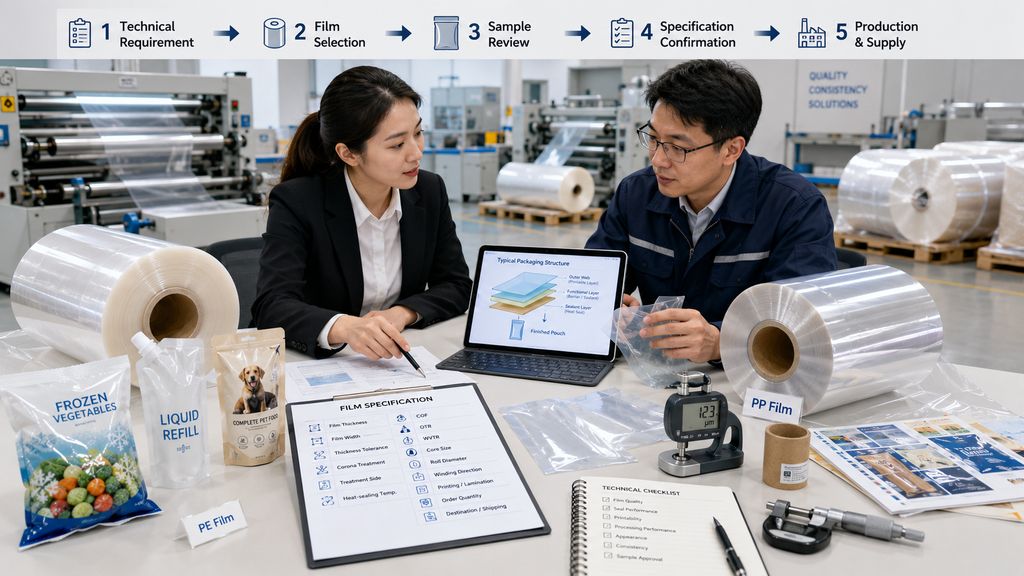
Use the following sequence when developing a new package.
- Define the packed product.State whether it is dry food, frozen food, liquid, powder, chemical, pet food, pharmaceutical, agricultural, or industrial material.
- Define the package format.Confirm whether you need roll stock, flow wrap, stand-up pouch, flat pouch, spout pouch, liner, lidding film, overwrap, label, or another format.
- Share the current structure if one exists.A structure such as PET/PE, BOPP/CPP, or PE/PE gives the supplier a useful performance benchmark.
- Specify thickness and width.Include thickness tolerance, roll width, maximum roll diameter, core size, winding direction, and required splice rules.
- Define surface requirements.Clarify corona treatment, treatment side, printing method, lamination method, coating, matte or gloss finish, slip, anti-block, anti-static, or anti-fog requirements.
- Provide sealing and filling conditions.Share seal-jaw temperature, line speed, dwell time, product contamination risk, hot-fill temperature, retort conditions, or freezer temperature where relevant.
- State mechanical and barrier targets.Include seal strength, puncture resistance, tensile requirements, COF, OTR, WVTR, or drop-test targets when they are important.
- Confirm compliance and destination market.Food-contact requirements, recycling guidelines, retailer specifications, and documentation expectations may differ by country.
- Request samples before mass production.A laboratory value is not a substitute for testing on your printing, laminating, pouch-making, or filling line.
- Compare total supply performance.Evaluate quality consistency, lot traceability, technical communication, roll packaging, lead time, export documentation, and complaint handling—not only unit price.
For buyers comparing more than PE and PP, BOPP Vs BOPET Vs CPP Vs PE: Packaging Film Guide provides a broader material-selection framework.
Common PE vs PP Selection Mistakes
Choosing by resin name only. “PE” and “PP” are too broad for a purchase specification. Film type, resin formulation, orientation, thickness, treatment, and additives must be defined.
Assuming all PP films behave like BOPP. CPP and BOPP have different stiffness, sealing behavior, dimensional stability, and typical packaging roles.
Assuming all PE films are soft commodity films. MDO PE and BOPE can provide significantly different stiffness and optical properties from conventional LDPE or LLDPE films.
Selecting a material without machine trials. A film that looks good on a data sheet can still create sealing, tracking, curling, static, COF, or printing problems on a specific line.
Ignoring the total laminate. The package is a system. Outer web, sealant, adhesive, inks, barrier layer, zipper, spout, and process conditions interact with each other.
Calling a structure recyclable without checking the target market. Polymer compatibility is only one part of recycling performance. Local collection and recycling rules still matter.
Practical Buyer Decision Matrix
Choose PE first when your priority is flexibility, strong sealing, low-temperature toughness, soft pouch handling, heavy-duty performance, or a mono-PE recycling direction.
Choose PP first when your priority is stiffness, clarity, gloss, heat resistance, label performance, crisp flow-wrap presentation, or a mono-PP packaging direction.
Choose a laminate or engineered structure when neither polymer alone can meet your barrier, mechanical, thermal, print, and shelf-life requirements.
The best purchasing decision is therefore not “Which plastic is better?” It is “Which material structure delivers the required package performance with the lowest practical total cost and acceptable end-of-life route?”
Working With a PE and PP Film Manufacturer or Supplier
When sourcing internationally, send a structured RFQ rather than asking only for “PE film price” or “PP film price.” A precise request allows a manufacturer to select the right production route and reduces the risk of receiving a technically irrelevant quotation.
CloudFilm works with flexible-packaging buyers, converters, brand owners, and trading companies on film and pouch projects. You can review the company background on About CloudFilm before sending a project specification.
A useful first inquiry should include application, film type if known, thickness, width, roll length or diameter, core size, treatment side, printing or lamination process, required properties, order quantity, destination port, and whether samples are needed.
That information is usually enough for a supplier to begin grade selection and identify which points require technical confirmation before quotation or trial production.
Conclusion
PE and PP are both essential flexible-packaging materials, but they solve different problems. PE generally brings flexibility, sealing performance, low-temperature toughness, and strong options for soft mono-material packaging. PP generally brings stiffness, clarity, gloss, and higher heat resistance.
For many real projects, the choice is more specific: LDPE or MDO PE, BOPP or CPP, mono-PE or mono-PP, and sometimes a multilayer structure that combines several functions.
Start with the packed product and process conditions. Then define measurable requirements, choose the film family, select the specific grade, and test it on the actual converting or filling line.
That approach gives buyers a much more reliable answer than choosing PE or PP from a generic property chart.
FAQs About PE and PP Film for Packaging
- What is the main difference between PE and PP film?
PE is generally softer, more flexible, easier to seal, and better suited to low-temperature or impact-sensitive applications. PP is generally stiffer, clearer, and more heat resistant. Exact performance depends on the film grade and processing method.
- Is PE or PP better for food packaging?
Both are widely used. PE is common in sealant layers, frozen-food packs, liners, and flexible pouches. PP is common in snack packaging, labels, overwraps, and BOPP/CPP laminates. The food, filling process, and shelf-life target determine the better choice.
- Which is better for frozen food, PE or PP?
PE is usually the preferred starting point because of its low-temperature toughness and flexible sealing performance. Final structures should still be tested for puncture, drop resistance, seal integrity, and freezer conditions.
- Which is more heat resistant, PE or PP?
PP generally offers higher heat resistance than common flexible PE grades. Specialized thermal applications should be evaluated using the exact film grade, laminate, and process temperature rather than a generic polymer comparison.
- Which film is easier to heat seal?
PE is widely used as a flexible-packaging sealant because of its practical sealing behavior. CPP and heat-sealable PP grades also provide strong sealing performance in PP-based structures. Machine settings and contamination conditions remain critical.
- Is PP clearer than PE?
BOPP commonly provides very high clarity and gloss, but some PE films can also be highly transparent. Optical quality depends on formulation, processing method, thickness, haze, surface finish, and additives.
- Is PE stronger than PP?
“Stronger” is too general. PP may provide greater stiffness and dimensional stability, while PE may provide better flexibility, impact tolerance, or low-temperature toughness. Compare the specific tensile, puncture, tear, and impact requirements of your project.
- Can PE and PP be laminated together?
Yes, they can be combined in certain structures, but doing so creates a mixed-polymer laminate and may complicate recycling objectives. Adhesion, seal performance, stiffness, and end-of-life requirements should be reviewed before selecting the structure.
- Is BOPP the same as PP film?
BOPP is one type of PP film. It is polypropylene that has been stretched in both machine and transverse directions. CPP is another major PP film type and has different sealing and mechanical characteristics.
- Is LDPE the same as PE film?
LDPE is one member of the PE film family. Other polyethylene films include LLDPE, HDPE-related film grades, CPE, MDO PE, BOPE, and different coextruded or specialty PE structures.
- Which is better for recyclable packaging, PE or PP?
Both can support recyclable mono-material designs. Mono-PE is often selected for flexible pouches and low-temperature applications, while mono-PP is often chosen when stiffness, clarity, or heat resistance is important. Local recycling systems must still be checked.
- Can PE or PP provide high oxygen barrier by itself?
Standard PE and PP films are not normally selected as high oxygen-barrier materials. High-barrier packaging may need EVOH, coatings, metallization, or another barrier technology integrated into the structure.
- Which is cheaper, PE film or PP film?
There is no permanent price winner. Resin prices, film process, thickness, yield, grade, width, treatment, order volume, and converting requirements all affect cost. Compare the total cost per usable package rather than price per kilogram alone.
- What information should I send to a PE or PP film supplier for quotation?
Send the application, current structure, film type, thickness, width, roll specification, treatment side, printing or lamination method, sealing conditions, required barrier or mechanical properties, quantity, destination, and sample requirement.
- Should I test samples before ordering PE or PP film in bulk?
Yes. Trial rolls or representative samples help verify printing, lamination, sealing, COF, tracking, appearance, barrier, and filling-line performance. Bulk orders should follow technical approval whenever the material is new to the application.