If you work in packaging, printing, converting, or product sourcing, you will probably see the phrase “100% recycled polyester” more often than before. It appears in emails, specifications, tenders, and product discussions across many industries.
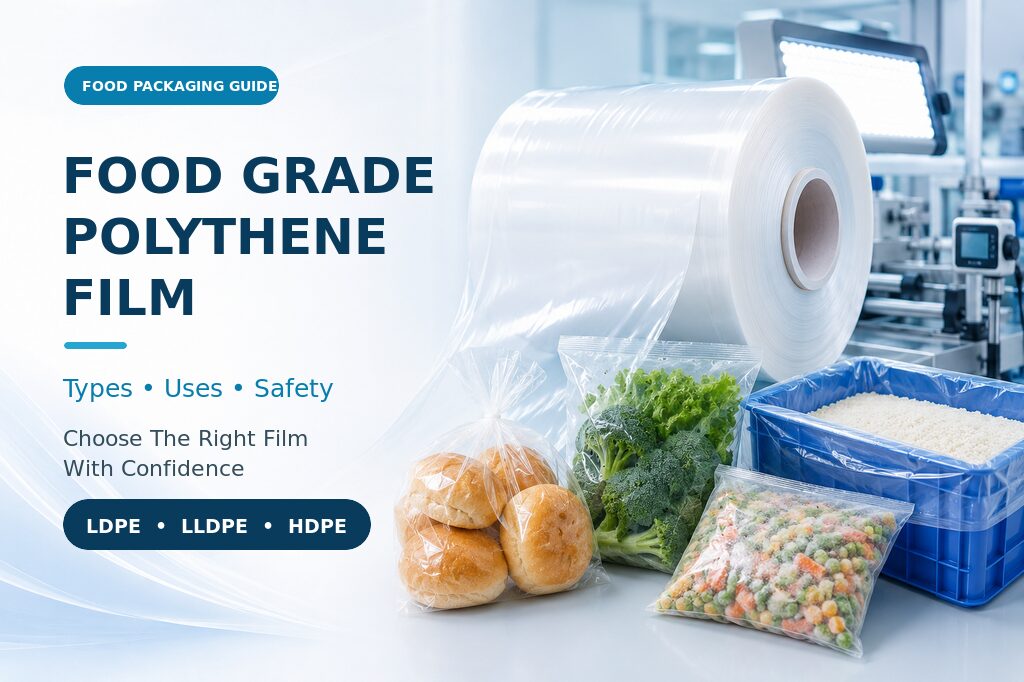
However, the phrase is often used loosely. Some buyers mean recycled textile fiber. Others mean recycled PET film. More customers now also mean rPET sheet for trays, thermoforming, blister packs, and other thicker applications.
That is why this topic deserves a practical explanation. In packaging and industrial material sourcing, accurate terminology saves time, avoids misunderstandings, and leads to better purchasing decisions.
This guide explains what 100% recycled polyester usually means, how it connects to PET, where rPET film and rPET sheet fit, and what buyers should check before placing an order.
If you are still comparing the terminology, our Difference Between PET Film And Polyester Film article can help clarify the language first.
What Does 100% Recycled Polyester Actually Mean?
In most packaging-related conversations, polyester usually refers to PET, or polyethylene terephthalate. PET is the polymer family widely used for bottles, films, sheets, labels, trays, and many industrial applications.
So when a customer says “100% recycled polyester,” they often mean a PET-based material made fully from recycled feedstock rather than virgin resin.
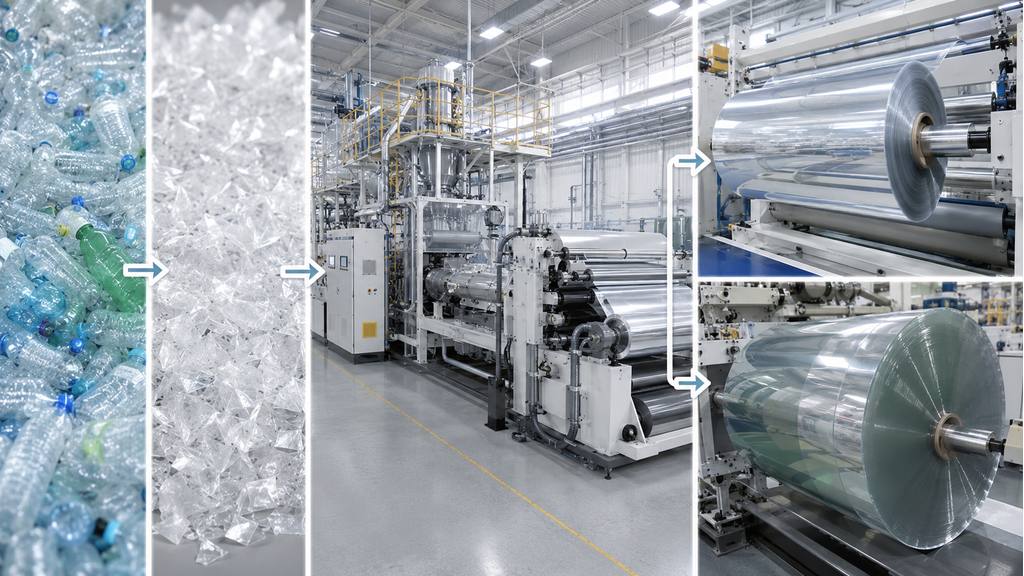
That recycled feedstock may come from post-consumer bottle flakes, reprocessed PET, or other verified recycled sources. In day-to-day business, many people shorten this idea to “rPET.”
In simple terms:
PET means polyester in material form.
rPET means recycled PET.
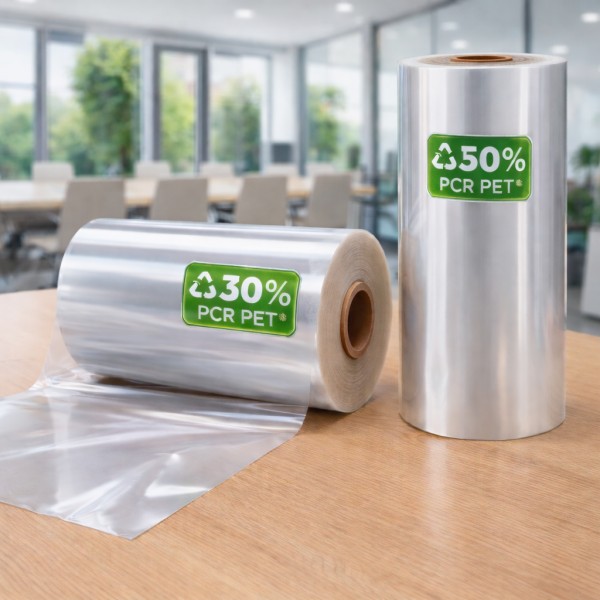
PCR PET usually means post-consumer recycled PET.
100% recycled polyester usually means the resin content is fully derived from recycled PET sources.
Even so, the phrase alone is still incomplete. Buyers should ask one more question: is the material a flexible film, a thick sheet, a fiber, or a finished product?
That single clarification changes the entire discussion.
Why Buyers Search For “100 Recycled Polyester”
The keyword looks simple, but the search intent behind it is broad. Some users are researching sustainability. Some are looking for textile content. Others are actively searching for a material supplier.
In B2B packaging, the most common commercial intent usually falls into three groups.
First, buyers want a sustainable alternative.
They may be replacing virgin PET with recycled content to support internal environmental targets, retailer requirements, or customer commitments.
Second, buyers need application guidance.
They know they want a recycled material, but they are unsure whether they need flexible rPET film or a more rigid rPET sheet.
Third, buyers want a qualified manufacturer or supplier.
At this stage, they care less about general definitions and more about thickness, performance, lead time, certification, and export documentation.
This is why the phrase “100% recycled polyester” often works better as an educational entry point than as a standalone product name.
rPET Film And rPET Sheet: What Is The Difference?
This is one of the most important distinctions in real customer communication.
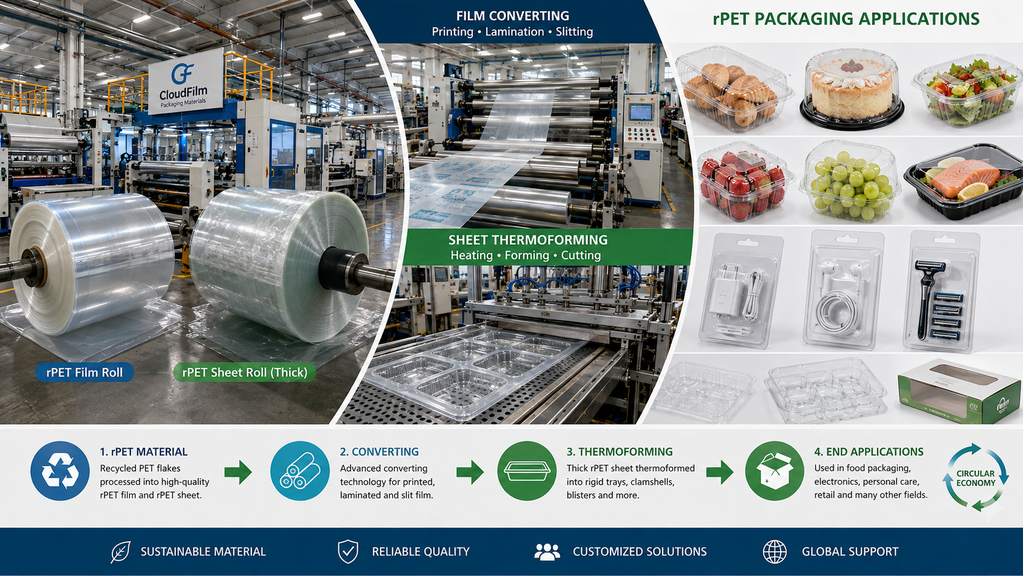
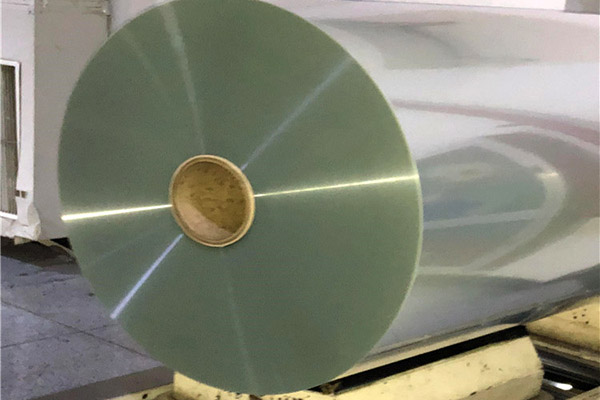
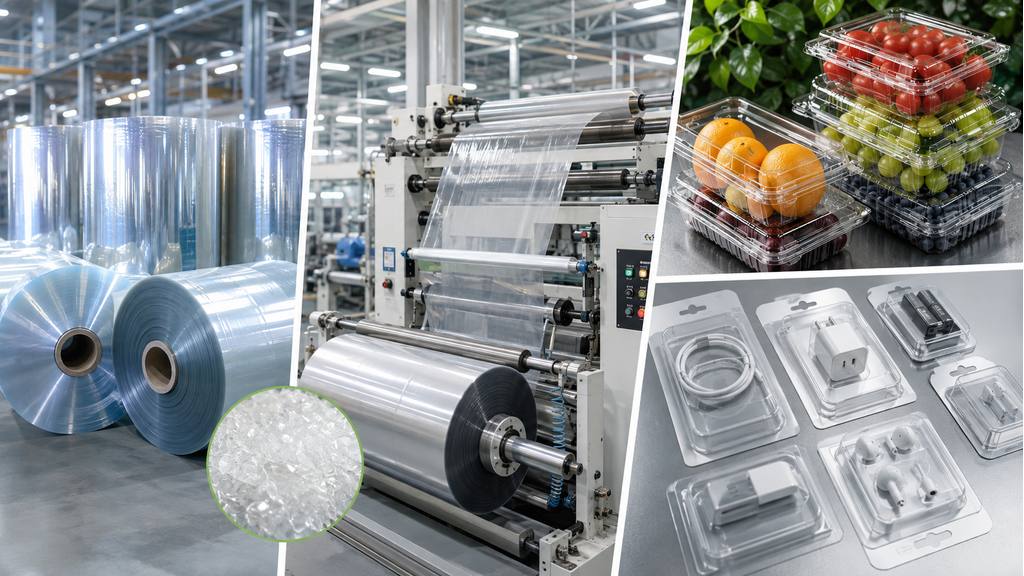
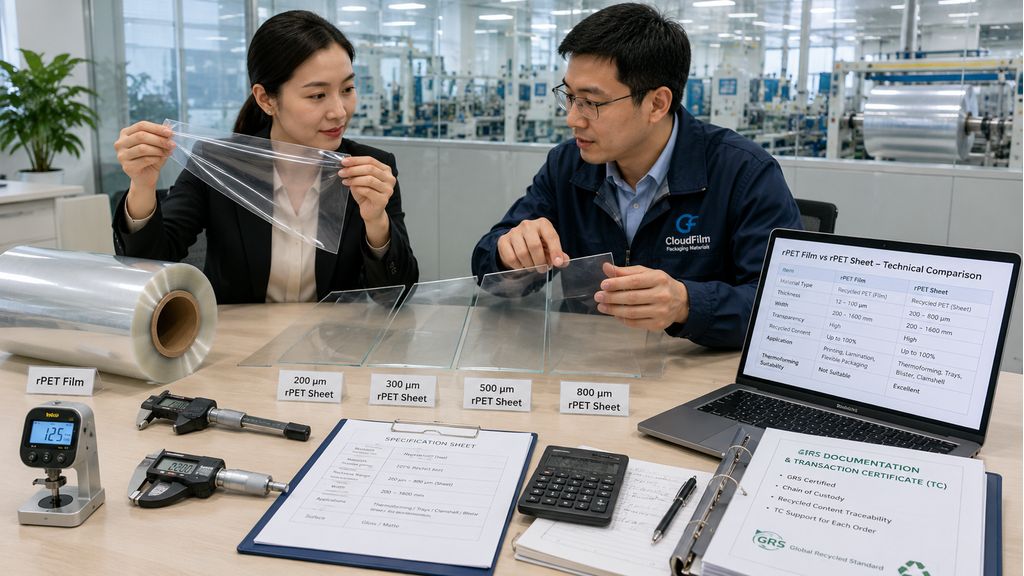
rPET film is usually thinner, flexible, and used in roll form. It is often selected for printing, lamination, labels, release liners, lidding, insulation, and other converting uses.
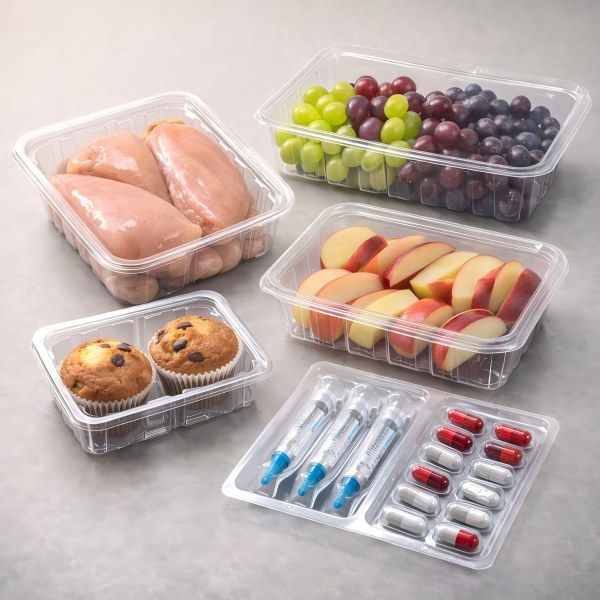
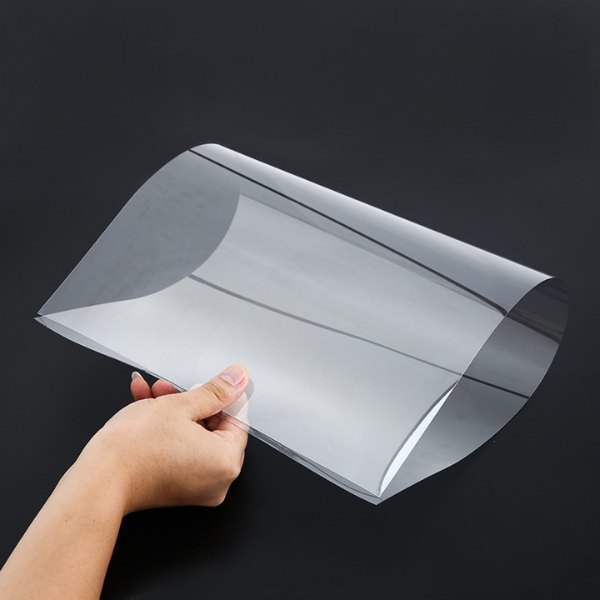
rPET sheet is much thicker and more rigid. It is commonly used for thermoforming, trays, blister packaging, lids, inserts, folding carton windows, and display packaging.
In other words, both are recycled polyester materials, but they serve different processing routes and different end markets.
Flexible rPET film is typically discussed in microns suitable for roll-stock converting. rPET sheet is often discussed in several hundred microns, especially when the material needs enough stiffness for forming or structural support.
That is why many inquiries now specifically ask for “rPET sheet” instead of only “recycled polyester.” The buyer already knows the format matters.
Common Uses Of 100% Recycled Polyester In Packaging And Industry
The real value of 100% recycled polyester becomes clearer when we look at applications.
rPET film applications often include printed laminates, label stock, release film structures, industrial protection, decorative uses, and selected packaging components.
For buyers focusing on flexible packaging, PCR PET Film is often the most relevant starting point because it directly connects recycled content with roll-stock converting needs.
Some projects use rPET film as a print web. Others use it as a laminate component. In certain structures, it is chosen because it combines better sustainability positioning with the familiar performance profile of polyester.
rPET sheet applications are different.
This material is widely discussed for trays, thermoformed packaging, blisters, clamshells, inserts, display windows, and other semi-rigid or rigid packaging formats.
When customers ask for a few hundred microns, they are usually no longer talking about ordinary flexible film. They are talking about sheet performance, stiffness, formability, and thickness consistency.
For example, food trays, bakery containers, fruit packs, electronics blisters, and consumer goods packaging often need stable sheet material rather than soft film.
In those cases, haze, gloss, gauge uniformity, and forming behavior become central buying criteria.
If your project includes tray systems or lidding combinations, our APET Vs PET Film guide may also help you decide which PET-based format is closer to your application.
Why 100% Recycled Polyester Is Attracting More Attention
The rise in demand is not only about fashion or public messaging. It is also about practical supply chain pressure.
Many brand owners want packaging materials with higher recycled content because retailers, export markets, and internal sustainability programs increasingly ask for measurable progress.
In many categories, using rPET is one of the most familiar and realistic ways to move toward that goal without abandoning the PET processing ecosystem.
Buyers already know how PET behaves. Converters understand how to print, laminate, slit, form, or handle PET-based materials. This reduces the learning curve.
That makes recycled polyester attractive not only for environmental reasons, but also for operational continuity.
Another advantage is communication clarity with downstream customers. A specification that clearly states recycled content is often easier to explain than a vague “eco-friendly” claim.
Film Versus Sheet: Thickness And Performance Priorities
When you compare film and sheet, thickness is only the beginning.
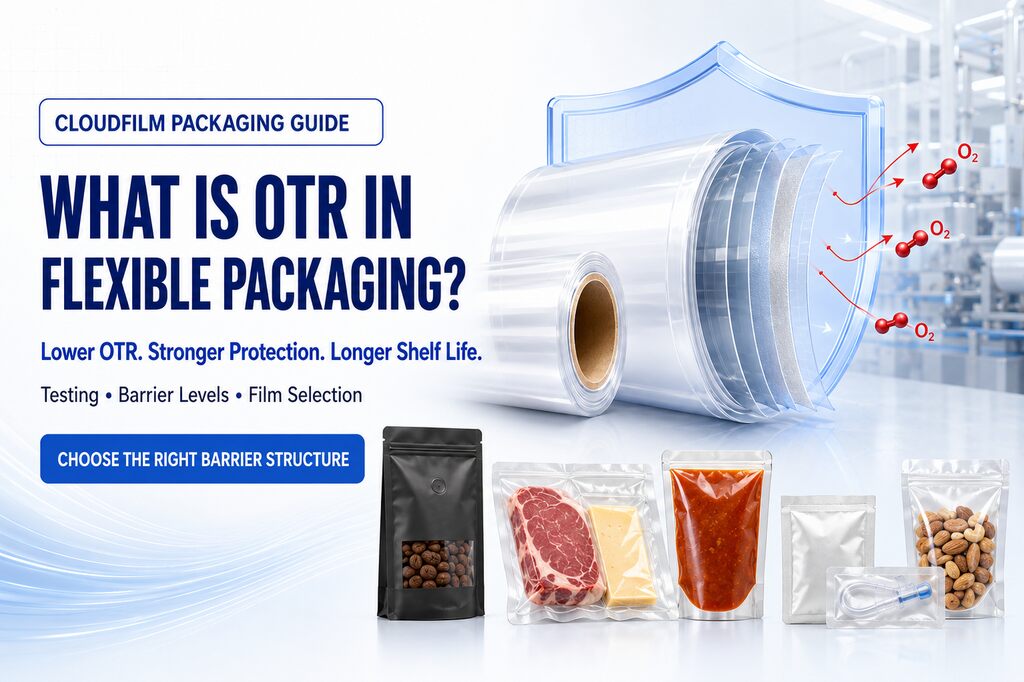
For rPET film, buyers often focus on optical clarity, tensile behavior, printability, lamination compatibility, surface treatment, dimensional stability, and roll handling.
For rPET sheet, buyers usually focus more on stiffness, flatness, gauge consistency, impact resistance, thermoforming behavior, transparency, and finished part appearance.
A thicker gauge does not simply mean “more PET.” It usually means a different process window, different equipment expectations, and different performance priorities.
That is why a buyer asking for 300, 400, or 600 microns is usually working on a sheet-based project, not a flexible packaging film project.
In sourcing discussions, it is helpful to state the following as early as possible: thickness, width, roll or sheet format, end use, transparency target, food-contact need, and whether the material will be printed, laminated, or thermoformed.
These details help a supplier respond accurately instead of making assumptions.
What Buyers Should Check Before Ordering rPET Material
A recycled polyester project should never be judged by recycled content alone.
The first checkpoint is recycled content definition.
Ask whether the claimed content is post-consumer, post-industrial, or mixed recycled input. This matters for both compliance and customer communication.
The second checkpoint is certification and traceability.
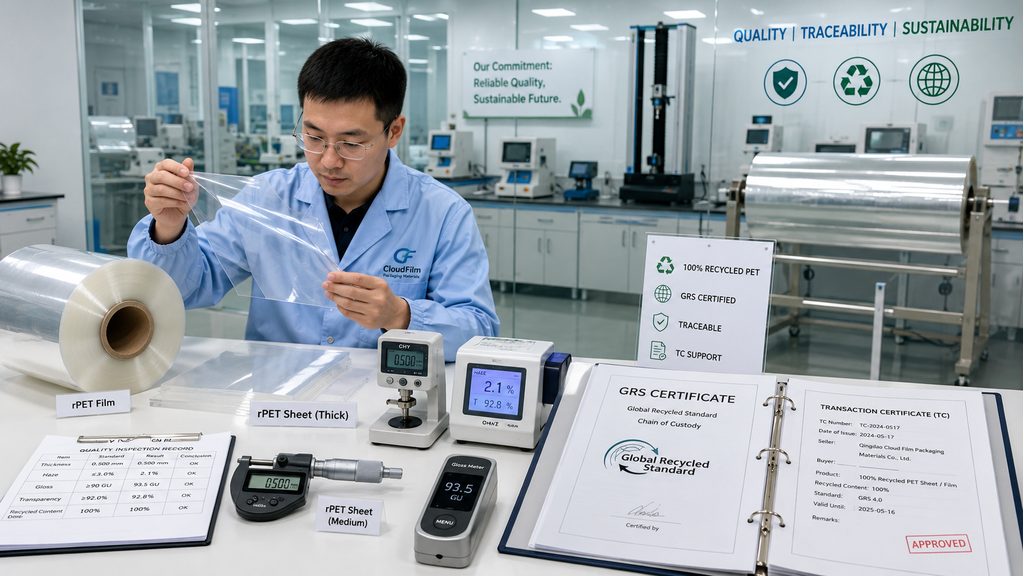
If your customer requires a recognized chain-of-custody system, you should confirm whether the supplier holds GRS certification and whether TC documents can be issued for the relevant orders.
For buyers serving retail programs or export markets, this point is often non-negotiable.
The third checkpoint is application match.
A material that performs well as film may not fit a thermoforming sheet line. Likewise, a beautiful rigid sheet may not work well in a lamination process designed for thin film.
The fourth checkpoint is surface and conversion requirements.
Do you need corona treatment? High clarity? Matte surface? Heat resistance? Print adhesion? Food-contact compliance? Each one affects grade selection.
The fifth checkpoint is supply stability.
Recycled materials are commercial materials, not only sustainability stories. Buyers still need consistent lead time, quality control, and documentation.
GRS Certification And TC Documents Matter
When a buyer asks for recycled polyester today, the question is often not only “Can you supply it?” The deeper question is “Can you prove it?”
That is where certification becomes important.
CloudFilm holds GRS certification, and TC documents can be issued for qualifying orders. This gives buyers a clearer documentation path when they need certified recycled content in their projects.
For many customers, that documentation support is just as important as the material itself.
It helps align procurement, quality, compliance, and customer-facing communication.
This is especially helpful when the final buyer must verify recycled claims through the supply chain rather than relying on a simple declaration.
How To Evaluate An rPET Film Or Sheet Manufacturer
Once the material direction is clear, supplier evaluation becomes the next task.
A serious buyer should ask whether the supplier understands both the material and the application. A good answer includes more than a recycled-content percentage.
You should expect discussion around thickness tolerance, end use, converting method, packaging requirements, order volume, and documentation support.
You should also ask whether the supplier can support development samples, trial quantities, and commercial scaling.
For buyers searching for a long-term partner, manufacturer capability matters more than a broad marketing claim.
This is one reason some purchasers prefer to work with a Polyester Company In China that already understands export communication, packaging material terminology, and custom production requirements.
If you are comparing the broader direction of sustainable material choices, our Recyclable Flexible Packaging overview may also be useful.
Is 100% Recycled Polyester Always The Best Choice?
Not always.
In some projects, 100% recycled content is exactly the right choice. The customer wants the highest possible recycled ratio, the application is stable, and the specification is clear.
In other cases, a lower recycled-content range may be more practical because of performance targets, converting needs, optical preferences, or cost structure.
This does not mean the project is less serious. It means material selection must follow the actual application.
The best commercial result often comes from balancing sustainability goals with process reality.
For example, some flexible packaging projects prioritize runnability and print consistency. Some rigid packaging projects prioritize forming behavior and visual appearance. Some export projects prioritize documentation and stable supply.
The right material is the one that fits those real priorities.
Where rPET Fits In The Wider PET Packaging Market
rPET is not a separate world. It sits inside the larger PET material family.
That larger family includes films, sheets, laminates, lidding materials, thermoforming substrates, and many specialty variants used across packaging and industry.
Understanding that broader context helps buyers make faster decisions.
If you want a wider commercial view of how PET materials are used across packaging categories, the PET Packaging Market article is a good next read.
It is especially useful when you are comparing flexible and rigid applications in one sourcing plan.
Numbered FAQs About 100% Recycled Polyester, rPET Film, And rPET Sheet
FAQ 1. Does 100% recycled polyester always mean recycled PET film?
No. The phrase may refer to fiber, film, sheet, or another PET-based product. In packaging, you should confirm the format immediately.
FAQ 2. What is the difference between rPET film and rPET sheet?
rPET film is thinner and flexible, usually used in rolls. rPET sheet is thicker and more rigid, often used for thermoforming, trays, blisters, and display packaging.
FAQ 3. Is rPET sheet usually measured in hundreds of microns?
Yes, many rPET sheet projects are discussed in several hundred microns because stiffness and forming performance are important.
FAQ 4. Can 100% recycled polyester be used for packaging?
Yes. It can be used in many packaging-related applications, but the exact grade must match the processing method and performance requirements.
FAQ 5. What does PCR mean in PCR PET?
PCR usually stands for post-consumer recycled. It means the recycled PET feedstock comes from materials that have already been used by consumers and then recovered for recycling.
FAQ 6. Why do buyers ask for GRS certification?
They want recognized traceability for recycled claims through the supply chain. This is often important for brand owners, retailers, and export programs.
FAQ 7. Can a supplier issue TC documents for recycled polyester orders?
Some can, and some cannot. If documentation is important, this should be confirmed before sampling or ordering.
FAQ 8. What information should I send in an rPET inquiry?
Send the product format, thickness, width, roll or sheet requirement, end use, annual volume, transparency target, food-contact need, and whether the material will be printed, laminated, or thermoformed.
FAQ 9. Is 100% recycled content always better than 50% or 70%?
Not automatically. Higher recycled content may be excellent, but the best choice still depends on performance, appearance, processing, and project goals.
FAQ 10. Can one supplier handle both rPET film and thicker PET-based sheet discussions?
Yes, some suppliers can support both directions, which is useful when your packaging program includes flexible and rigid PET components.
FAQ 11. What industries commonly use rPET sheet?
Food packaging, bakery packaging, fresh produce, medical packaging, cosmetics, electronics accessories, and many retail blister or display applications all commonly use PET-based sheet structures.
FAQ 12. How do I start a sourcing conversation with an rPET supplier?
Start with your application and technical basics, then discuss recycled content, certification, sample needs, and commercial volume. A clear brief usually leads to faster and more accurate quotations.
Final Thoughts
“100% recycled polyester” is an important phrase, but it should be treated as a starting point, not a finished specification.
In packaging and converting, the next question always matters: do you need rPET film or rPET sheet?
Once that is clear, the project becomes easier to define. Thickness, application, processing method, certification, and documentation all fall into place more naturally.
For companies moving toward recycled content, that clarity leads to better development work and fewer sourcing delays.
Whether you are evaluating flexible roll-stock or several-hundred-micron sheet, the best results come from matching the recycled PET material to the real application.
If you are planning a new project, it is worth preparing a concise brief before contacting suppliers. That simple step often shortens sampling time and improves quotation accuracy.