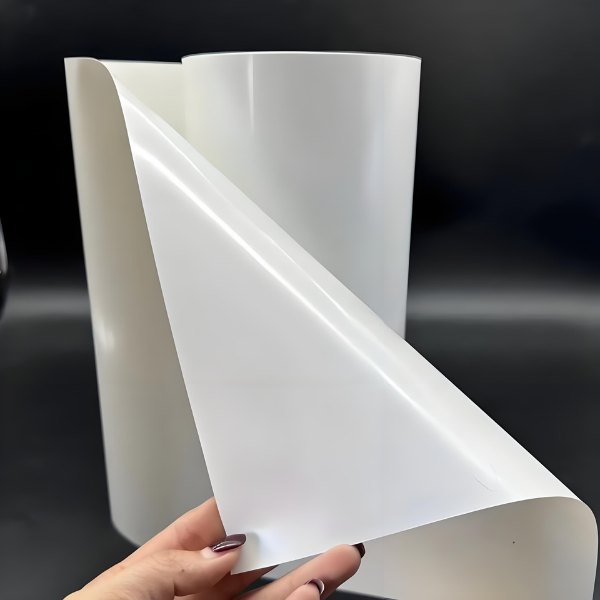
Electrical film is a broad purchasing term for thin materials used in electrical and electronic applications. To select the right product, first identify its job: separating conductors, acting as a circuit or capacitor dielectric, controlling static during handling, or providing another specified function.
These jobs require different evidence. A film that resists electrical breakdown does not automatically provide electrostatic discharge protection. An antistatic surface does not establish a safe working voltage. Even two films made from the same polymer can be unsuitable substitutes.
For buyers, the practical starting point is therefore a functional specification. Describe where the film sits, what it contacts, and what could go wrong. Then compare the material grade, finished construction, processing requirements, and test results against that description.

What Electrical Film Can Mean in a Purchase Request
The phrase electrical film does not identify one standardized product. Suppliers may use it for an application family, while engineers use more specific names. A request for electrical insulation film, for example, is clearer than a request for a transparent electrical film roll.
| Required function | Typical context | First question to resolve |
| Electrical insulation | Separators, coil insulation, equipment liners | What electrical and environmental stresses must the construction withstand? |
| Capacitor dielectric | Film between capacitor electrodes | Which capacitor design, dielectric grade and electrode construction are specified? |
| Electronic circuit substrate | Flexible circuits and high frequency assemblies | What frequency, dielectric loss and dimensional requirements apply? |
| Static control | Component handling, protective films and packaging | Is the requirement low charging, charge dissipation, discharge shielding, or a combination? |
Capacitor film deserves a separate specification. Film capacitors use a plastic dielectric with separate metal foil electrodes or deposited metal electrodes. This does not make ordinary packaging film, or any metallized packaging film, an interchangeable capacitor material.
Likewise, circuit substrate selection involves the electrical behavior of a complete circuit construction. A material that works as a mechanical spacer is not automatically suitable for a high frequency signal path. Specify the application before comparing familiar polymer names.
Switchable glazing films and electric heating films can also appear under similar wording. Their active functions and connections require different product information. This guide focuses on material selection for insulation and static control, with circuit and capacitor applications identified where their requirements diverge.
Electrical Insulation and Antistatic Performance Have Different Jobs
An electrical insulation layer limits unwanted current flow between parts at different electrical potentials. Its suitability depends on the stresses it experiences throughout service, including electrical loading, temperature, moisture, mechanical damage, and interaction with adjacent materials.
Static control addresses charge generation, accumulation, movement, and discharge during handling or use. The EOS/ESD Association explains that an insulating surface can retain localized charge. Good insulation performance therefore does not mean that a surface cannot become electrostatically charged.
Low charging, dissipation and shielding
Low charging behavior concerns how much charge develops when materials contact and separate. Dissipative behavior concerns how charge can move through an appropriate resistance path. These properties are related to static control, but one measurement does not establish every aspect of protection.
Discharge shielding is another requirement. Packaging for sensitive electronics may need to limit the energy reaching its contents from an external discharge. A clear film described as antistatic should not be assumed to provide this function without relevant evidence for the completed package.
The EOS/ESD Association guidance on static control distinguishes protection within an electrostatic protected area from protection outside it. This is why the handling environment and transport route belong in an electronics packaging inquiry, alongside the film dimensions.
CloudFilm’s anti static PET film page is a starting point for discussing static control materials. A project inquiry should identify the required function, contact surface, operating conditions, and acceptance tests rather than relying on the product name alone.

Two requests that should follow different paths
Consider two hypothetical buyers requesting clear PET. One needs a die-cut separator inside powered equipment. The other needs a removable protective layer during electronic assembly. The first request calls for insulation qualification; the second requires an assessment of charging and handling conditions.
The same purchasing department might manage both projects, but one approved sample should not automatically cover the other. Separate specification numbers help prevent a visually similar roll from being used for the wrong job. These are selection examples, not claims about a particular supplied grade.
Choose a Material Family After Defining the Function
Material names provide a useful shortlist, not final approval. Polyester, polyimide, PEEK and LCP films appear in different electrical applications, but each family includes grades, thicknesses and surface constructions with different performance. Ask which exact product the supplier is proposing.
| Film family | Why buyers may evaluate it | What still needs confirmation |
| PET polyester | Insulating parts, spacers and industrial converting | Electrical grade, heat exposure, shrinkage, thickness control and surface construction |
| Polyimide | Insulation and flexible electronic constructions with demanding thermal conditions | Exact grade, moisture conditioning, adhesive system and processing history |
| PEEK | Applications combining electrical, thermal, chemical and mechanical demands | Grade-specific evidence, forming conditions, tolerances and project economics |
| LCP | High frequency electronic substrates | Dielectric data at the relevant frequency, direction, moisture condition and laminate structure |
PET and polyester film
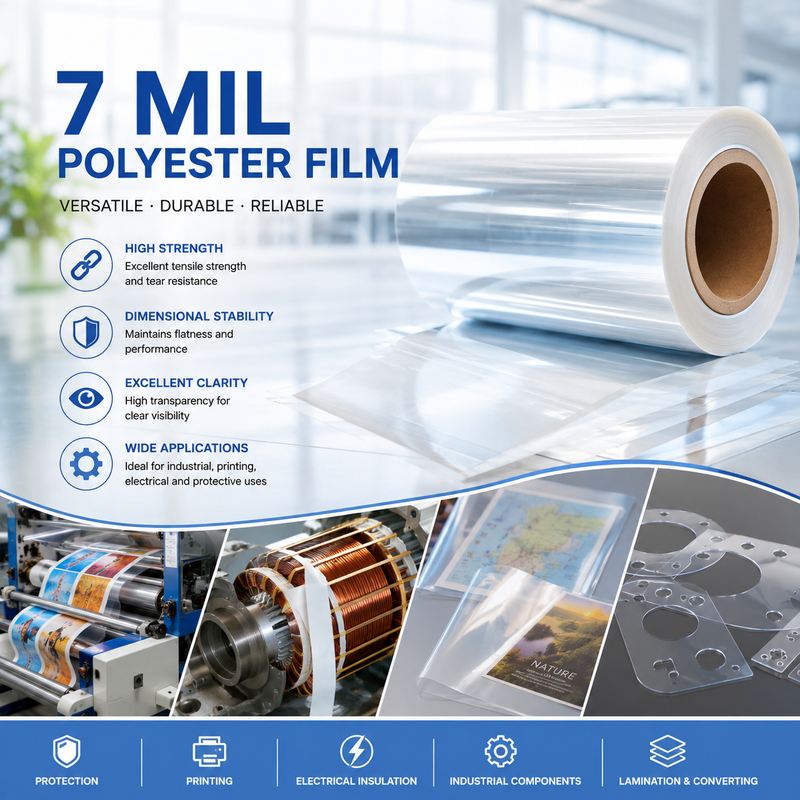
PET film can combine mechanical strength with useful dielectric behavior. However, a packaging grade, printing grade and electrically qualified grade may differ in formulation, cleanliness, surface treatment or supporting documentation. Polymer identity alone does not establish suitability for a specified insulation system.
If the drawing calls for flat sheets or die-cut blanks, PET film sheet provides a relevant format discussion. Confirm flatness, thickness tolerance, edge quality and the required electrical grade together; a convenient sheet size does not settle material qualification.
For broader background, CloudFilm’s guide to polyester film properties and industrial uses connects packaging and industrial applications. Use that background to understand the material family, then obtain the actual specification for the electrical project.
Engineering films and specialist dielectrics
Polyimide is used in insulation and flexible electronic structures where thermal requirements can be demanding. Its familiar amber appearance is not a specification. Coated, uncoated and adhesive-backed constructions should be identified separately, with electrical properties checked for the construction actually being purchased.
Where temperature, chemical exposure and mechanical durability must be considered together, PEEK film may be worth evaluating. Do not copy a resin temperature headline into a film drawing. The grade, film thickness, exposure duration and qualification evidence must support the intended use.
For high frequency circuits, LCP film belongs to a more specialized discussion. Dielectric constant and dielectric loss must be meaningful at the intended frequency and conditions. Low loss alone does not establish compatibility with the circuit fabrication process.
These materials are not a simple ladder from inexpensive to universally better. A more costly polymer can create unnecessary processing or supply complications. Select the least complex construction that meets the verified design requirements, rather than upgrading by material name alone.
Read Electrical Film Data Without Mixing Different Measurements
A useful technical data sheet identifies the product, thickness, measurement method and test conditions. A number without these details may describe a different specimen from the film in your quotation. Resolve those differences before ranking suppliers by the largest value.
Breakdown voltage and dielectric strength
Breakdown voltage describes failure under stated test conditions. Dielectric strength expresses that result relative to specimen thickness, commonly in a unit such as kV/mm. Neither value, by itself, is the continuous operating voltage rating of a finished component.
Ask whether the measurement used AC or DC, which electrodes and surrounding medium were used, and how the specimen was conditioned. The UL Solutions overview of electrical testing shows why test method and setup belong alongside an electrical property.
Do not multiply a published dielectric strength by your nominal film thickness and treat the result as a guaranteed working voltage. The equipment designer must account for service stresses, construction details and the applicable product requirements when approving the insulation design.
Surface behavior and through-thickness behavior
Surface resistance concerns a defined path across a surface; volume behavior concerns conduction through the material. Resistance and resistivity are also different quantities. Keep the property name, unit, electrode geometry and method together when transferring data into a comparison sheet.
A surface coating can change electrical behavior without replacing the base polymer. Ask which side was tested and whether the result refers to bare film, coated film or the completed laminate. Record temperature, humidity and conditioning time where they affect the comparison.
Thermal evidence and flammability
A short processing exposure and years of continuous service are different demands. Record the peak manufacturing temperature separately from the operating temperature and duration. An insulation system also includes interacting components, so a single film result cannot establish the performance of the whole assembly.
UL 94 concerns flammability. A flammability classification is not a dielectric strength rating or a complete electrical approval. When a project requires recognized materials, verify the exact grade, thickness range, classification and conditions covered by the relevant documentation.
Typical values and acceptance limits
Ask whether a datasheet number is a typical result, a guaranteed limit, or a value supplied for design screening. Your purchase specification should identify the properties used for acceptance and the agreed sampling method. A typical value should not silently become a contractual minimum.
Where two suppliers use different methods, mark the values as not directly comparable. Request equivalent testing or arrange a common evaluation. Preserve the original reports, including specimen identification and conditioning details, instead of copying only the headline numbers into an RFQ spreadsheet.
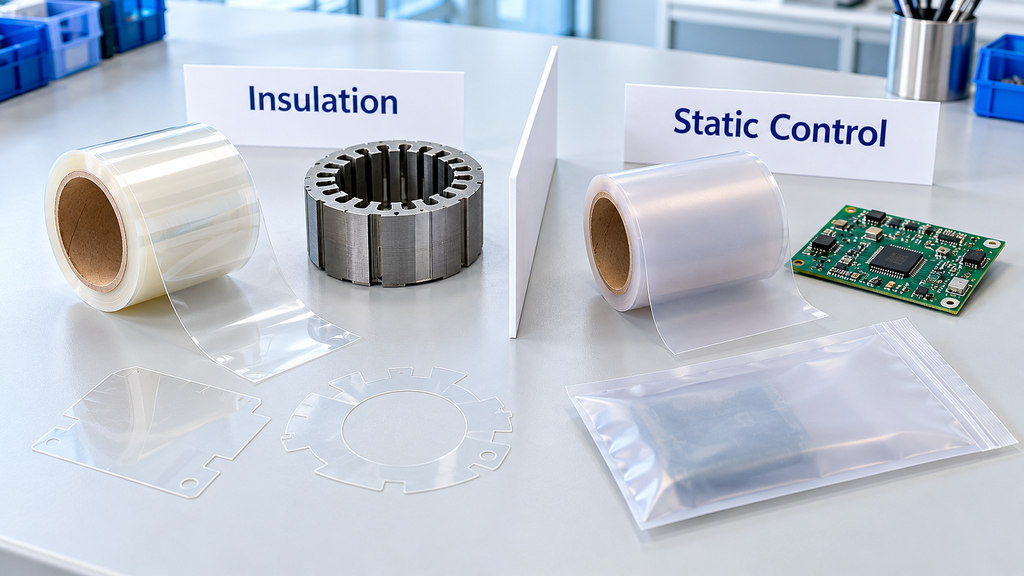
Converting Can Change the Construction You Qualified
An electrical film is often slit, die-cut, folded, coated, bonded or laminated before use. Qualification should reflect those operations. Testing a pristine laboratory sheet does not answer every question about a finished part with edges, holes, adhesive and repeated handling.
Thickness, edges and orientation
Agree on thickness tolerances and measurement positions, not just nominal gauge. For converted pieces, include critical dimensions, hole locations, edge condition and inspection expectations. A smooth incoming roll can still produce unacceptable parts if the cutting or winding process introduces damage.
Mark machine and transverse directions when shrinkage, tensile behavior or dimensional accuracy matters. Record the direction used in test specimens and trial parts. This makes it easier to identify whether a production problem comes from the material, its orientation or the converting conditions.
Coatings, adhesives and release liners
Specify every permanent layer. A base film, an adhesive-backed film and a multilayer laminate are different constructions, even when the sales description uses the same polymer name. Temporary release liners should also be identified so they are not mistaken for part of the final thickness.
Confirm whether the reported data applies before or after coating and lamination. ASTM D2305’s public scope distinguishes homogeneous polymer film testing from combinations involving coatings or other substrates. Discuss the correct evaluation method for the finished construction rather than extending a bare-film result automatically.
For static control packaging, CPP anti static film is relevant when sealability and packaging conversion are part of the requirement. The completed package still needs the protection properties specified for the device and its handling environment.
Storage and delivery condition
State how rolls and sheets must arrive: core size, winding direction, protective wrapping, identification and any agreed cleanliness requirements. Ask for storage conditions and shelf-life information applicable to the supplied construction. Adhesives and functional coatings may introduce requirements beyond those of the base film.
Qualify the Film in Stages
1 Turn the application into a short written specification
Begin with the drawing or application description. Identify the electrical function, contact materials, environment and manufacturing steps. Ask the responsible engineer to establish required performance and validation criteria before purchasing selects a film solely from a catalogue description.
For a new design, separate mandatory requirements from preferences. A mandatory electrical requirement should not be traded away to obtain a preferred roll length or color. This distinction helps suppliers propose practical alternatives without changing the function the customer actually needs.
2 Review the proposed grade and evidence
Request an exact grade designation, current datasheet, construction description and applicable test reports. If recognition or regulatory documentation is required, check what it covers. Keep a record of unresolved points rather than treating a missing result as an assumed pass.
3 Test samples that represent the intended supply
Record sample grade, thickness, treatment side, lot and date. If a sample differs from the proposed production material, identify the difference explicitly. A trial can answer handling questions without establishing full qualification, so write down the purpose of each evaluation.
4 Convert and evaluate the final construction
Run the relevant cutting, coating, lamination or forming process, then assess the resulting parts against the agreed criteria. Where aging or environmental exposure matters, include it in the evaluation plan. The appropriate tests depend on the application; there is no universal electrical film test bundle.
5 Freeze the approved specification and control changes
Link the approved drawing, material specification and sample records to the purchase order. Agree which supplier changes require notification, such as grade, coating or production location changes. Retain the approval record so repeat orders do not depend on a salesperson remembering the original discussion.

Prepare an RFQ That Suppliers Can Answer Consistently
A useful RFQ lets suppliers quote the same job. Start with the application and required function, then add dimensions, construction and evidence requirements. Avoid sending only a photo of a clear roll: it cannot identify the polymer grade or its electrical qualification.
| RFQ field | Information to provide |
| Application | Component or packaging use, contact surfaces and failure being prevented |
| Electrical function | Insulation, circuit dielectric, low charging, dissipation or shielding |
| Service conditions | Voltage or frequency where relevant, temperature, humidity and exposure duration |
| Construction | Material or approved equivalent, thickness tolerance, coatings, adhesives and treatment side |
| Format and processing | Rolls, sheets or parts; width, length, core, drawing and converting operations |
| Evidence and delivery | Required tests and documents, trial quantity, production quantity and destination |
Ask suppliers to flag deviations in a separate column. An alternative thickness, test method or coating should remain visible during commercial comparison. A lower price for a different construction is not necessarily a saving on the original requirement.
Compare cost on a consistent basis, such as usable area or accepted parts, as well as the quoted mass or roll price. Include converting yield, qualification work, minimum order quantity and delivery format. These costs can change the practical choice between otherwise suitable candidates.
For repeat purchases, send the approved specification revision with the order. If a test report is essential to release the incoming material, agree when it will be supplied and how it will be matched to the shipment. This avoids discovering documentation gaps after delivery.
Frequently Asked Questions
1 Is mil the same as millimeter
No. One mil is one thousandth of an inch, equal to 25.4 micrometers. Seven mil is 177.8 micrometers, often rounded to 178. When requesting 7 mil polyester film, specify the unit and tolerance explicitly to prevent ordering errors.
2 Does black film automatically conduct electricity
No. Color alone does not establish conductivity, static dissipation, shielding or insulation performance. A black PET film inquiry should state whether the purpose is light blocking, an electrical function, or both, followed by the relevant acceptance requirements.
3 Can the base film insulate while its surface dissipates charge
Some engineered constructions can combine different surface and bulk properties. That does not establish that both requirements are satisfied in a particular assembly. Define each function separately, including contacts and possible current paths, and validate the complete construction before approval.
4 Can recycled content be substituted into an approved grade
Do not treat a change in resin source or recycled content as an invisible commercial substitution. Follow the agreed material change process and establish what evidence or requalification is necessary. This does not mean every recycled material is unsuitable; suitability belongs to the qualified construction.
Discuss Your Electrical Film Requirement With CloudFilm
Start with the function the film must perform. Share the application, required thickness and format, operating conditions, and any existing drawing or material specification. Include the relevant electrical requirements so an available material can be assessed against a defined need.
CloudFilm’s PET and engineering film pages provide starting points for this discussion. The quotation should identify the proposed grade and documentation available for that request.
Confirm the sample evaluation and acceptance process before placing the production order, so purchasing, engineering and quality teams approve the same construction.