Introduction: Why The UK Packaging Industry Matters
The packaging industry in the UK is a mature but fast-changing market. It serves food, beverage, bakery, dairy, frozen food, pet food, household products, personal care, e-commerce, medical supplies, and industrial goods. For many brands, packaging is no longer only a protective wrapper. It is part of product safety, shelf appeal, logistics efficiency, sustainability planning, and consumer experience.
UK packaging buyers are facing several pressures at the same time. Retailers want lighter and more responsible packaging. Food manufacturers want longer shelf life and stable sealing performance. E-commerce sellers need stronger packs for transport. Packaging converters need films that run smoothly on printing, lamination, slitting, pouch-making, and form-fill-seal equipment.
This is why flexible packaging has become one of the most important areas in the UK packaging industry. Compared with many rigid formats, flexible films and pouches can reduce material weight, save space during storage and transport, support high-quality printing, and adapt to many product categories.
For UK brands, importers, converters, and distributors, choosing the right packaging material is not only a purchasing decision. It is a technical decision that affects product quality, packing speed, cost control, compliance, and brand value.
What Products Drive Packaging Demand In The UK?
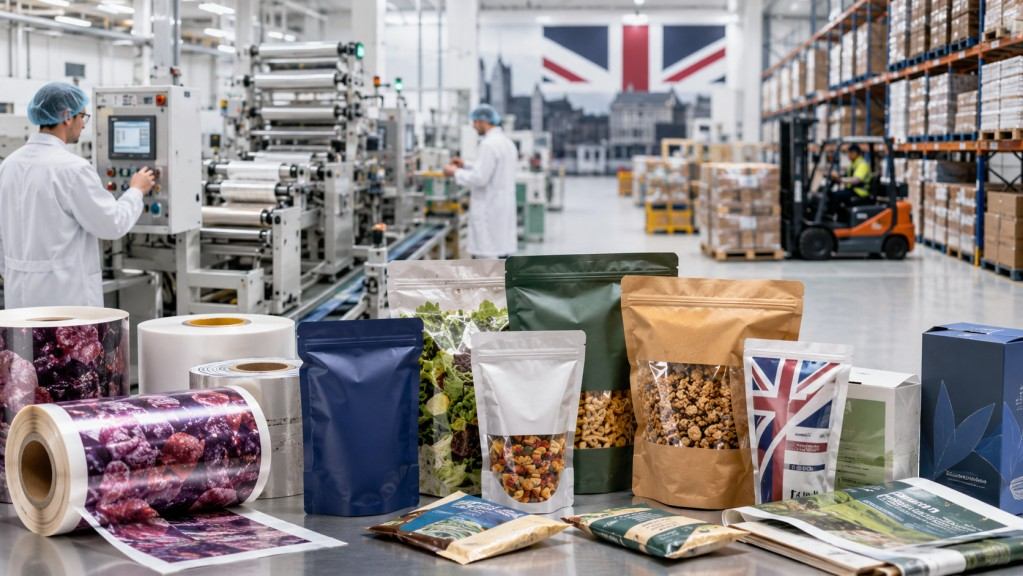
The UK packaging market is closely linked to the structure of modern retail and food consumption. Supermarkets, convenience stores, online grocery platforms, restaurant supply chains, meal kits, private-label food brands, pet food brands, and personal care companies all need reliable packaging.
Food packaging is especially important. Snacks, biscuits, coffee, tea, cheese, bakery products, frozen foods, sauces, ready meals, dried fruit, rice, noodles, meat products, and pet food all require different packaging structures. A bakery product may need clarity and good sealability. Coffee may need aroma barrier and degassing options. Cheese may need oxygen control and lidding performance. Frozen food needs toughness and low-temperature resistance.
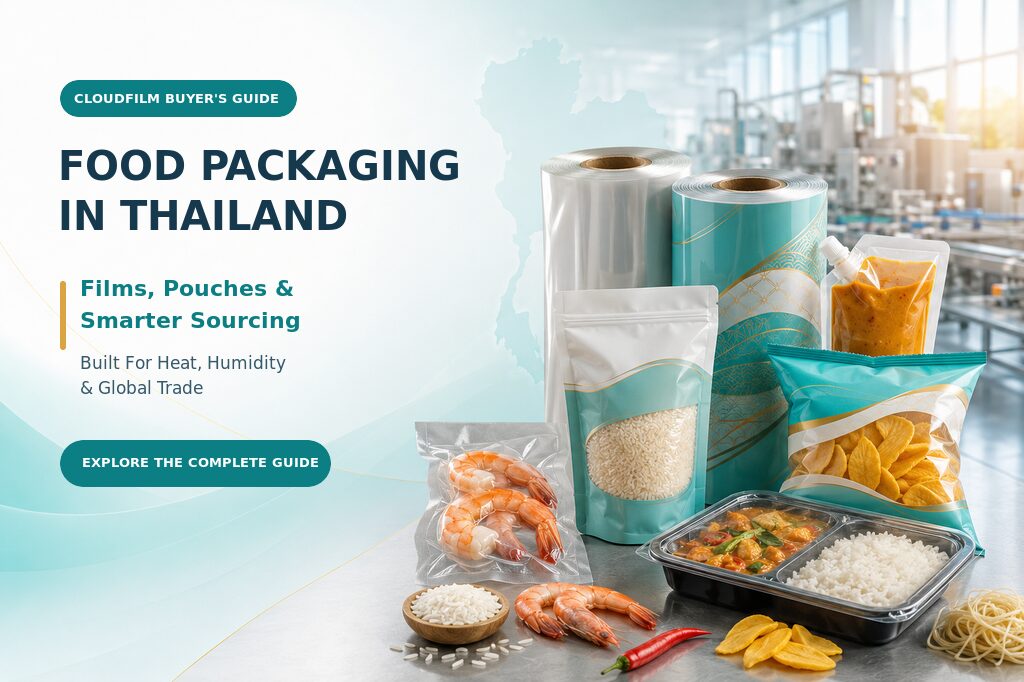
If your project is mainly food-related, it is useful to start from a technical overview of food packaging film. Food packaging film can include BOPP, PET, PE, CPP, PA, EVOH, metallized films, ALOx films, and laminated structures. The correct material depends on the product’s moisture sensitivity, oxygen sensitivity, oil content, filling method, sealing temperature, shelf-life target, and retail channel.
In the UK, packaging is also strongly influenced by private-label development. Many supermarket and retail brands need consistent packaging appearance across multiple SKUs. This creates demand for custom printed roll stock, stand up pouches, pillow pouches, lidding films, recyclable mono-material structures, and high-barrier laminated films.
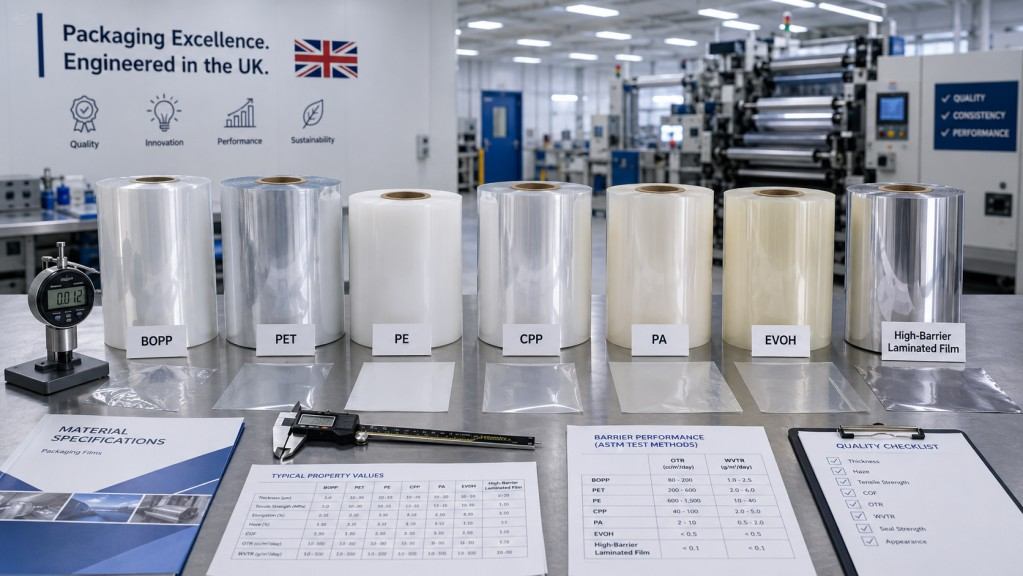
Main Flexible Packaging Materials Used In The UK Market
Flexible packaging is not one material. It is a large family of films and laminated structures. Each material has its own role.
BOPP Film
BOPP film is widely used for snacks, biscuits, confectionery, bakery packaging, labels, overwrap, and laminated pouches. It offers good clarity, stiffness, printability, and moisture resistance. In many pillow bags and flow-wrap applications, BOPP can be used as the outer printed layer or combined with CPP or PE as the sealing layer.
PET Film
PET film, also called BOPET film, is valued for strength, thermal stability, dimensional stability, and good print appearance. It is often used as the outer layer in laminated food packaging, lidding films, vacuum bags, and high-barrier structures. For UK buyers who need clear, durable, heat-sealable structures, PET/PE film is a practical option for food, medical, and industrial packaging.
PE Film
PE film is flexible, sealable, and widely used as a sealing layer in laminated packaging. It can also be used in mono-PE recyclable structures, bags, liners, shrink film, and protective packaging. PE is important when the package needs strong seals, good puncture resistance, and soft hand-feel.
CPP Film
CPP film is a cast polypropylene film used for sealing layers, retort packaging, bakery packaging, and laminated structures. It provides good heat sealability and clarity. CPP is often paired with BOPP or PET to create cost-effective packaging structures.
PA / Nylon Film
PA film is used where puncture resistance and toughness are needed. It is common in meat packaging, cheese packaging, vacuum packaging, frozen food, and heavy-duty pouch structures.
EVOH And High-Barrier Films
EVOH, metallized films, aluminum foil laminates, and ALOx films are used when oxygen, aroma, moisture, or light barrier is critical. These materials are important for coffee, cheese, meat, sauces, pet food, ready meals, and long-shelf-life products.
Roll Stock Film: A Key Format For UK Converters
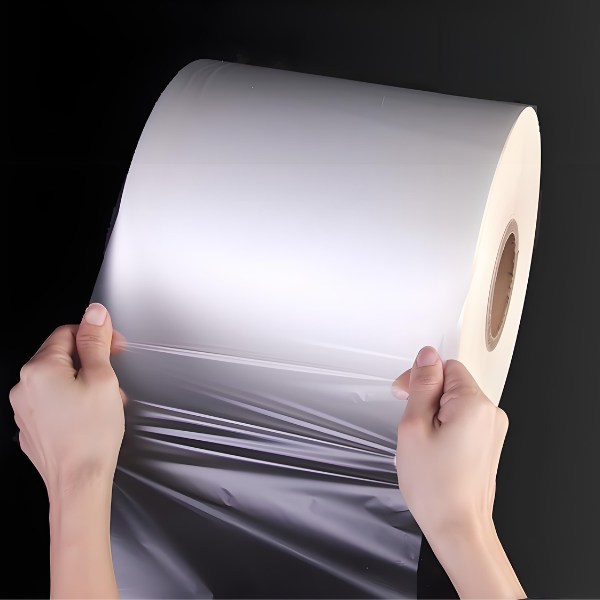
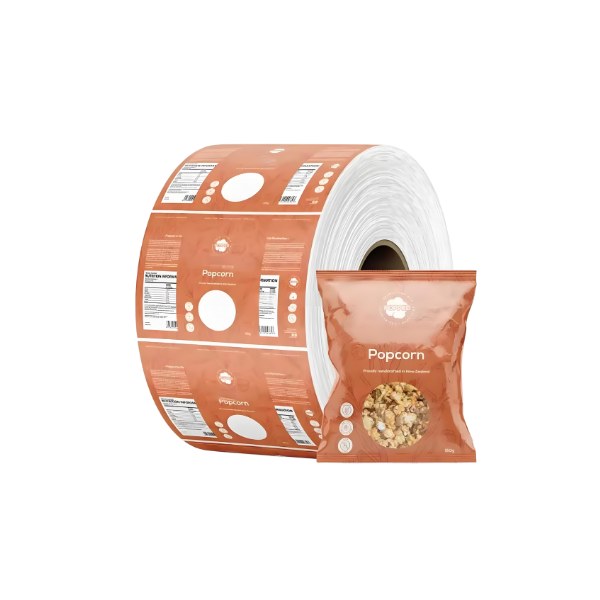
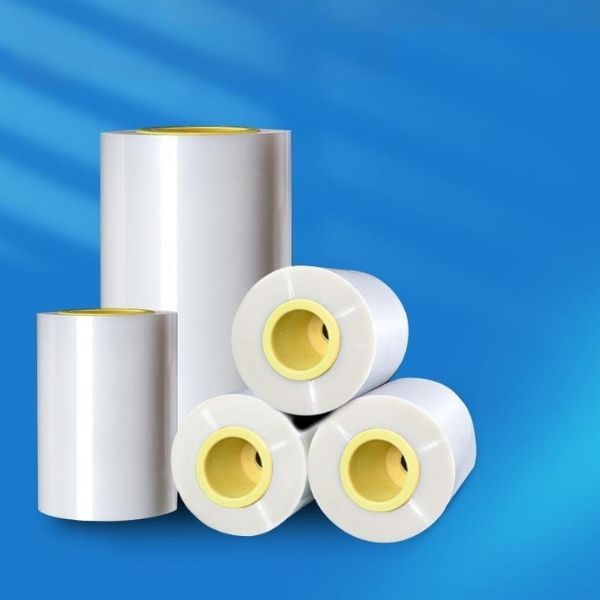
Many UK packaging converters and food manufacturers use roll stock film because it works efficiently on VFFS, HFFS, flow-wrap, sachet, and pouch-making equipment. Roll stock is flexible in both format and structure. It can be supplied as plain film, printed film, laminated film, recyclable film, or high-barrier film.
A packaging film roll can be designed for snacks, biscuits, coffee, frozen food, powder, dry food, multipack packaging, and other product categories. The key is not only the material name. Buyers should confirm thickness, width, roll length, core size, winding direction, COF, sealing temperature, hot tack, printing method, and packing machine type.
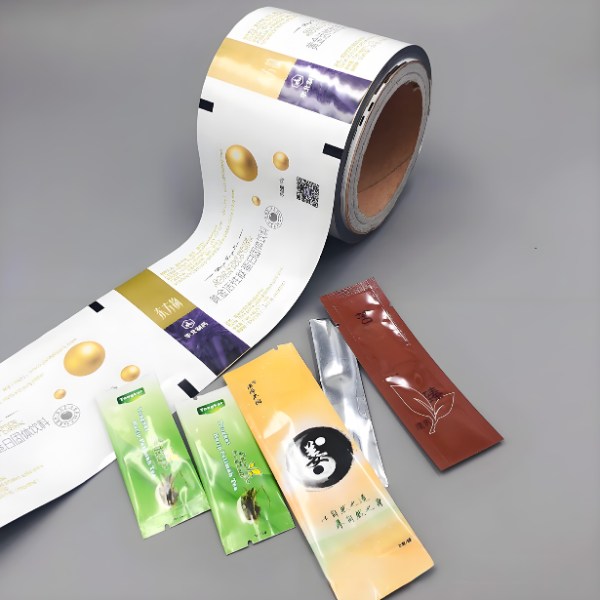
For brand owners and co-packers, custom printed roll stock film is often the most efficient choice when production volume is high. It helps reduce packaging cost per unit, supports high-speed packing, and gives brands full control over graphics, product information, and shelf appearance.
When selecting roll stock for the UK market, buyers should not only ask for price per kilogram. They should also check whether the film structure is suitable for their machine speed, sealing jaw temperature, filling conditions, and final product protection needs.
Pouch Packaging In The UK: Retail-Ready And E-Commerce Friendly
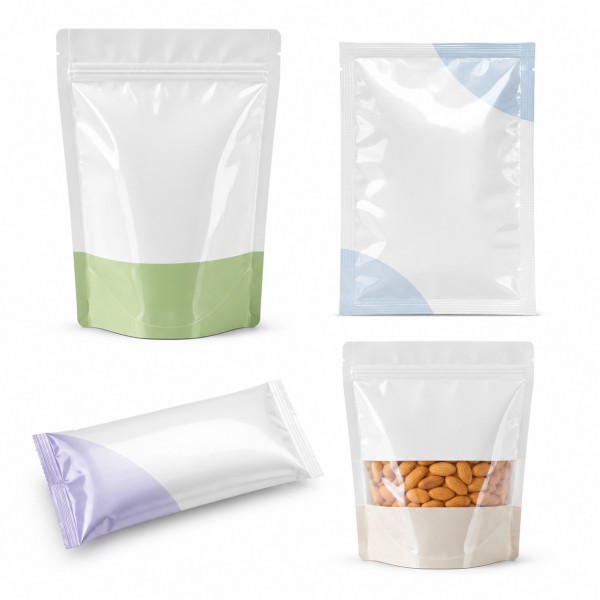
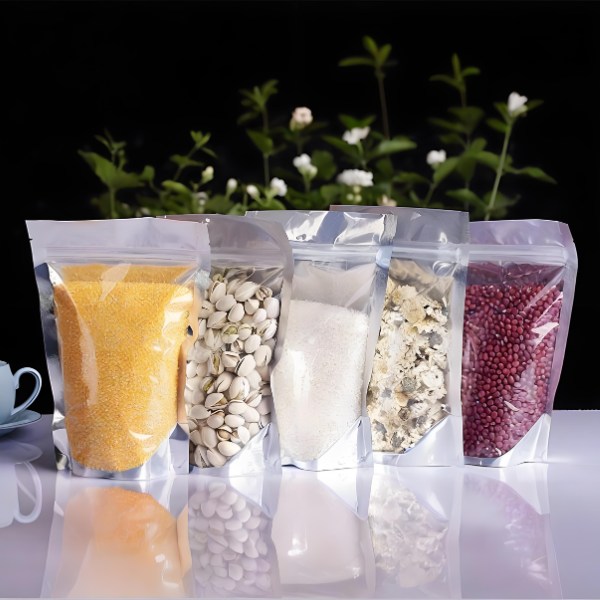
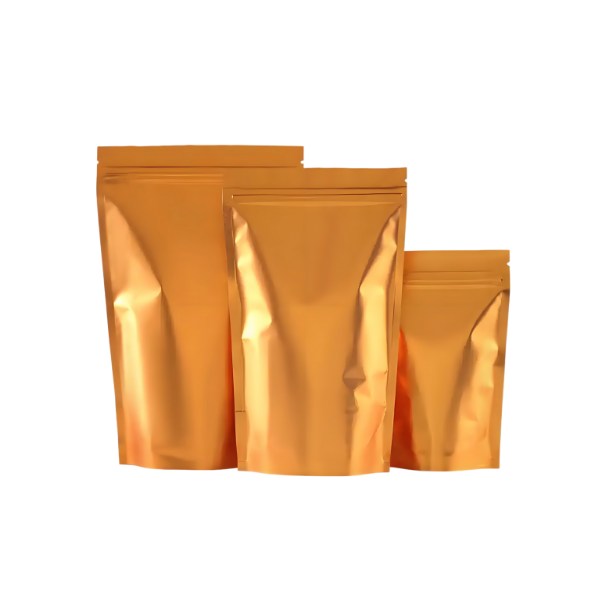
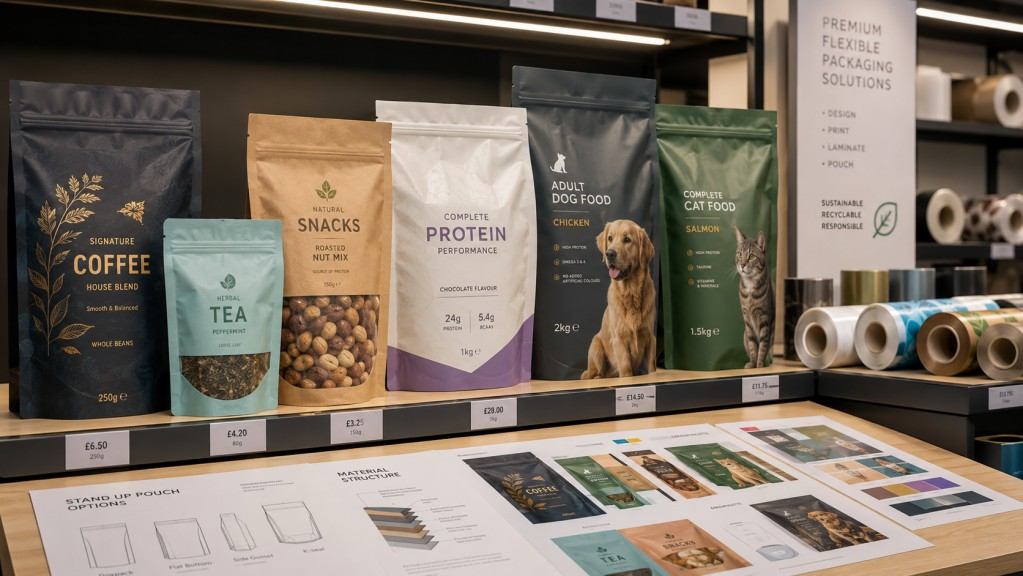
Pouches are widely used in the UK because they are lightweight, printable, easy to transport, and suitable for many product categories. Stand up pouches, flat bottom pouches, quad seal pouches, pillow pouches, spout pouches, vacuum pouches, and shaped pouches are common formats.
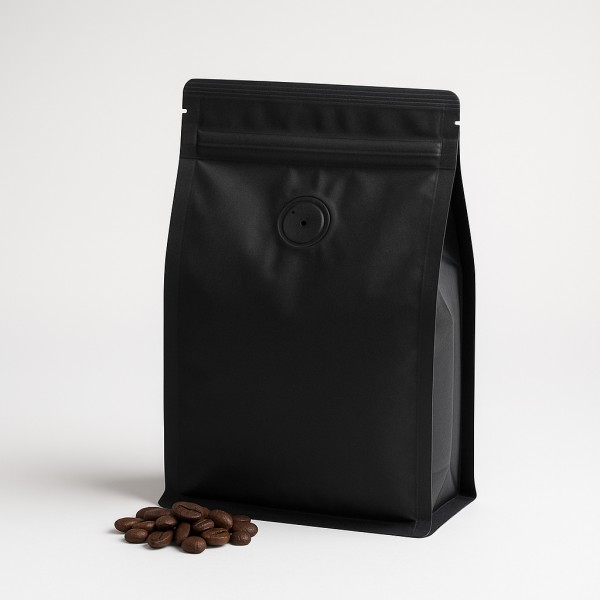
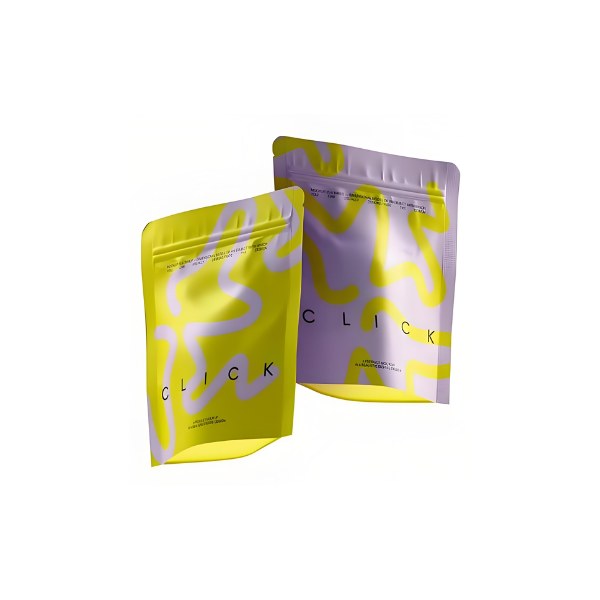
For retail brands, stand up pouches are especially popular because they display well on shelves and can include zippers, tear notches, clear windows, matte finishes, spouts, valves, and high-barrier structures. They are used for coffee, tea, snacks, protein powder, pet treats, dried fruit, candy, cereals, and refill products.
For e-commerce brands, pouch strength is critical. A good pouch should survive compression, vibration, drop impact, and warehouse handling. This is why seal strength, lamination bond, puncture resistance, and corner design are important. A beautiful pouch that leaks during delivery can damage the product, the brand, and customer trust.
Pouch packaging is also useful for product trials. Small brands can test new SKUs, limited editions, seasonal flavors, and private-label programs with lower tooling pressure than some rigid packaging formats.
Sustainability And Recyclable Packaging Direction
Sustainability is one of the strongest forces shaping the UK packaging industry. Brands are looking for lighter structures, recyclable materials, recycled-content options, mono-material designs, and better packaging data. The best solution, however, is not always the simplest material name. A recyclable package still needs to protect the product, seal reliably, run on machines, and meet shelf-life expectations.
One important direction is mono-material flexible packaging. Recyclable pouches based on PE or PP structures can help brands move away from traditional mixed-material laminates in suitable applications. Examples include PE/PE, MDOPE/PE, BOPE/PE, and PP/PP structures.
However, mono-material packaging must be evaluated carefully. Some products need high oxygen barrier, aroma barrier, puncture resistance, or heat resistance. If the recyclable structure cannot protect the product, it may cause higher food waste, product returns, or quality complaints. For this reason, the best approach is to balance recyclability, product protection, packing performance, and cost.
UK packaging buyers should discuss the following points with suppliers:
- What is the required shelf life?
- Is the product sensitive to oxygen, moisture, aroma loss, or light?
- Does the packing line need high hot tack or low sealing temperature?
- Is the package designed for supermarket retail, food service, or e-commerce?
- Does the brand prefer mono-PE, mono-PP, PCR content, or a high-barrier laminate?
- Can the supplier provide samples, test data, and structure recommendations?
Lidding Films And Tray Packaging
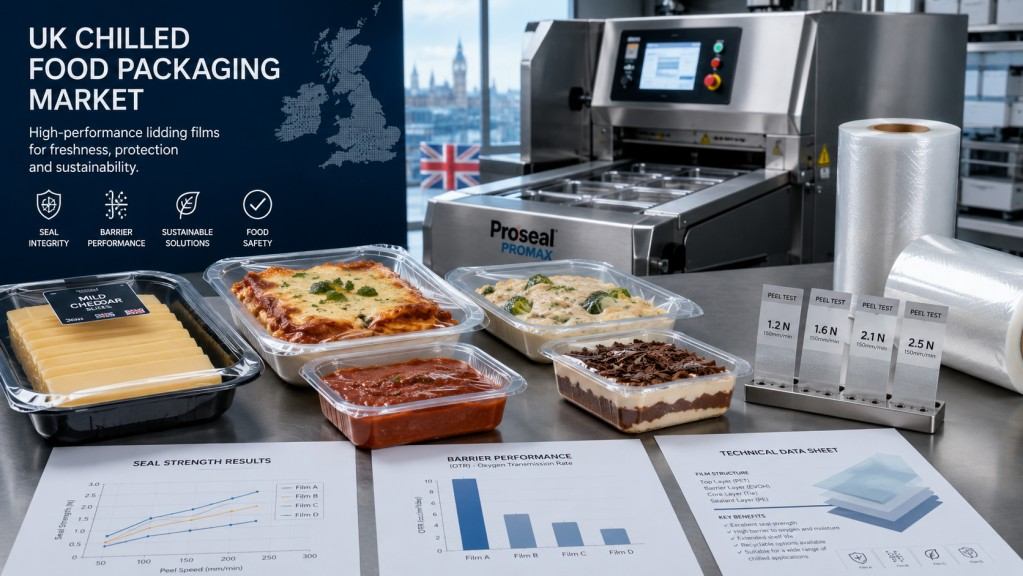
Tray packaging is important for meat, cheese, ready meals, dairy, chilled foods, sauces, dips, desserts, fruit, and bakery products. The film used to seal the tray must match the tray material, sealing temperature, peel strength, anti-fog requirement, barrier target, and consumer opening experience.
A clear introduction to lidding film can help buyers understand how tray sealing works. In many UK applications, lidding film must provide a controlled peel, strong seal integrity, good clarity, and reliable performance on automatic tray sealers.
For convenience-focused products, easy-peel films are useful because they allow consumers to open the package cleanly without tearing the tray or leaving messy residue. This is important for dairy cups, ready meals, fresh food trays, medical products, and small containers.
The technical challenge is balance. If the seal is too weak, leakage may occur. If the seal is too strong, the consumer experience becomes poor. The supplier must adjust seal layer formulation, thickness, peel behavior, and sealing window based on the tray material and filling process.
Printing And Branding In UK Packaging
Packaging design has a direct impact on shelf visibility. In the UK retail environment, many products compete in a small space. A package must communicate product type, flavor, brand identity, nutrition information, sustainability claims, and usage instructions quickly.
The material structure must support the printing method. PET, BOPP, and PA are often used as printable outer layers. Matte, gloss, metallic, soft-touch, transparent window, and high-barrier effects can be combined depending on brand positioning.
For buyers comparing printing options, the flexible packaging printing guide is useful for understanding gravure, flexographic, and digital printing. Large-volume SKUs often use gravure or flexo printing for stable quality and cost efficiency. Small trial orders and seasonal designs may use digital printing when available.
Good printing is not only about attractive graphics. It also requires correct artwork file preparation, color matching, registration accuracy, ink adhesion, lamination compatibility, and food-contact safety considerations. Packaging buyers should communicate artwork, Pantone colors, repeat length, barcode position, and regulatory text early in the project.
Technical Parameters UK Buyers Should Confirm
Many packaging problems happen because the buyer and supplier only discuss the product name but not the real technical specification. “PE film”, “PET film”, or “snack packaging film” is not enough.
Before confirming an order, buyers should define the following parameters:
- Material structure
- Total thickness
- Film width
- Roll length or roll weight
- Core inner diameter
- Winding direction
- Printing design and color count
- Surface treatment
- COF requirement
- Sealing temperature range
- Hot tack requirement
- Barrier target
- Transparency or haze requirement
- Puncture resistance
- Bag or pouch dimensions
- Packing machine type
- Storage and shipping conditions
- Food-contact requirement
- Export carton and pallet packing method
A practical overview of packaging film parameters can help buyers and engineers build a clearer specification. The more accurate the information, the easier it is for the supplier to recommend the correct structure and avoid costly trial-and-error.
How To Choose A Packaging Supplier Or Manufacturer
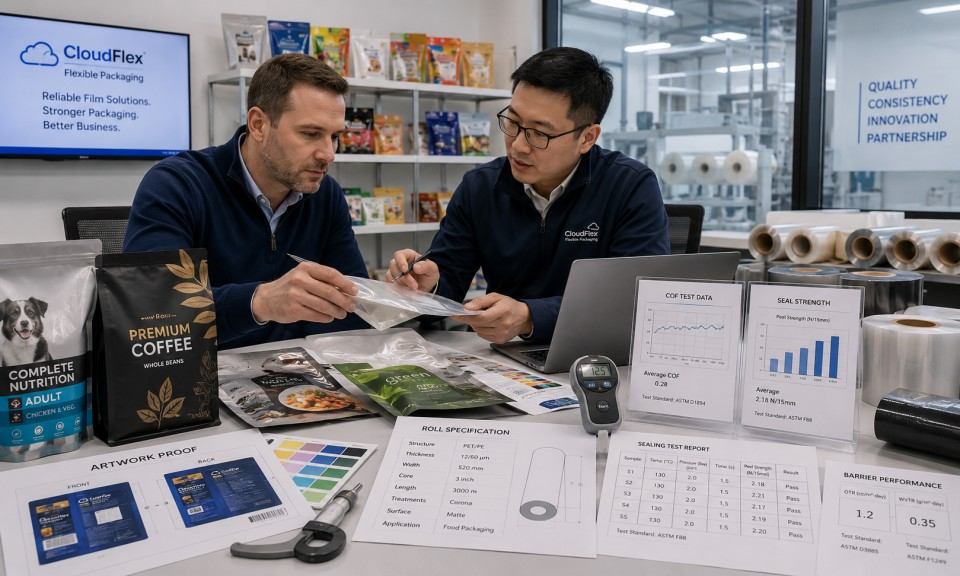
Choosing a packaging supplier for the UK market should not be based only on the lowest price. Packaging affects product loss, machine downtime, consumer complaints, and brand reputation. A strong supplier or manufacturer should understand materials, converting, printing, sealing, logistics, and export documentation.
A reliable flexible packaging supplier should be able to support:
- Material selection based on product risk
- Custom film structure design
- Sample preparation and testing
- Printing and lamination advice
- Pouch format selection
- Roll stock supply for local converters
- Recyclable and high-barrier options
- Stable batch quality
- Clear communication about MOQ and lead time
- Export packing and shipping support
For buyers who need a broad product base, CloudFilm flexible packaging films and custom pouches can support BOPP, BOPET, BOPA, CPP, PE, high-barrier films, printed roll stock, mono-material pouches, and application-ready laminated structures.
Some UK companies prefer to buy finished pouches. Others prefer roll stock because they already have local converting or packing equipment. A supplier that can provide both film rolls and finished pouches can help buyers keep structure consistency across different packaging formats.
Application Examples For The UK Packaging Industry
Bakery And Biscuits
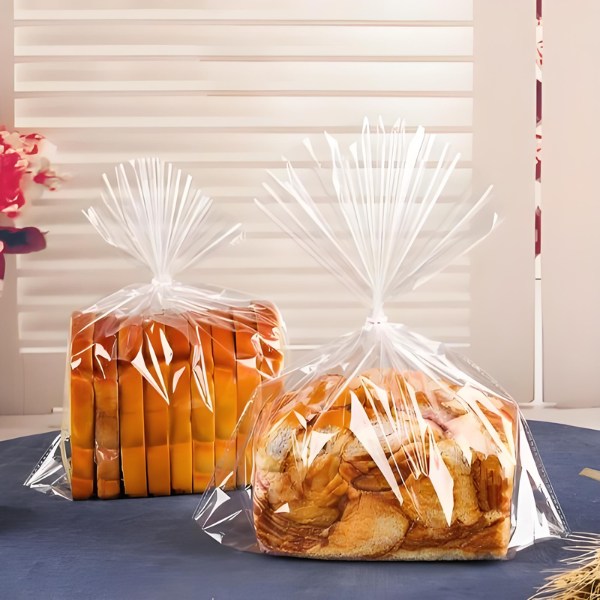
Bakery packaging needs clarity, moisture control, good sealing, and attractive shelf display. Bread, cakes, cookies, pastries, and biscuits may use BOPP, CPP, PE, PET/PE, or laminated films depending on shelf life and packing method. Buyers can refer to bakery food packaging when comparing film, bag, and tray options.
Cheese And Dairy
Cheese packaging requires oxygen control, moisture management, puncture resistance, and sometimes vacuum or MAP performance. Lidding films, vacuum bags, high-barrier pouches, and thermoforming films may all be used. A detailed cheese packaging guide can help buyers match the structure to the cheese type and shelf-life target.
Coffee And Tea
Coffee and tea are sensitive to oxygen, moisture, and aroma loss. Common structures include PET/AL/PE, PET/VMPET/PE, kraft paper laminates, recyclable mono-material options, and pouches with valves or zippers. Premium finishes are often used to improve shelf impact.
Pet Food
Pet food packaging must balance barrier, strength, aroma control, and bag durability. Dry pet food often needs strong seals and puncture resistance. Wet pet food and treats may require high-barrier structures or retort-capable materials.
Frozen Food
Frozen food packaging needs cold resistance, puncture resistance, good sealing, and stable performance during transport. PE-based structures, PET/PE, PA/PE, and high-barrier laminates can be selected depending on product type.
E-Commerce Packaging
E-commerce packaging must survive transport. Flexible pouches and mailer-related packaging need strong seals, tear resistance, and good drop performance. Lightweight packaging can reduce logistics cost, but strength cannot be ignored.
Supplier Communication Checklist
Before asking for a quotation, UK buyers can prepare a short specification sheet. This helps the supplier respond faster and more accurately.
- Product type
- Filling weight
- Package format
- Bag size or film width
- Required shelf life
- Storage condition
- Packing machine type
- Target material structure if known
- Printing artwork or color count
- Quantity per order
- Destination port or delivery address
- Sustainability preference
- Special requirements such as anti-fog, easy-peel, high barrier, retort, vacuum, or low-temperature sealing
If the buyer does not know the exact structure, that is normal. A professional supplier can recommend options after understanding the product and packing process. The key is to describe the real use case clearly.
FAQ: Packaging Industry UK
1. What is the main trend in the UK packaging industry?
The main trend is the move toward lighter, more efficient, and more responsible packaging without losing product protection. Buyers want recyclable options, better packaging data, lower waste, strong shelf appeal, and stable machine performance.
2. Is flexible packaging popular in the UK?
Yes. Flexible packaging is widely used in food, beverage, pet food, personal care, household products, and e-commerce. It is popular because it is lightweight, printable, space-saving, and adaptable to many product formats.
3. What packaging materials are common for UK food brands?
Common materials include BOPP, PET, PE, CPP, PA, EVOH, metallized films, aluminum foil laminates, and mono-material PE or PP structures. The best choice depends on shelf life, barrier needs, sealing method, and product sensitivity.
4. What is the difference between roll stock and premade pouches?
Roll stock is supplied in film rolls and used on packing machines or converting lines. Premade pouches are already formed bags that are filled and sealed later. Roll stock is efficient for high-speed production, while premade pouches are flexible for retail-ready formats and smaller runs.
5. What packaging is suitable for bakery products?
Bakery packaging often uses BOPP, CPP, PE, PET/PE, or laminated films. Bread and cakes may need clarity and moisture control, while cookies and biscuits may need crispness protection and strong seals.
6. What packaging is suitable for cheese?
Cheese may need vacuum packaging, high-barrier pouches, lidding films, thermoforming films, or MAP tray lidding. Oxygen barrier, moisture control, and seal reliability are important.
7. Are recyclable pouches always the best choice?
Not always. Recyclable pouches are a strong direction, but the structure must still protect the product. If the product needs very high oxygen or aroma barrier, the supplier should test whether a mono-material structure can meet the target.
8. What should I ask before choosing a packaging film supplier?
Ask about material structure, thickness, sealing range, barrier data, MOQ, lead time, sample support, printing method, food-contact compliance, roll dimensions, and export packing.
9. Can a China packaging manufacturer supply the UK market?
Yes. Many UK brands, converters, and importers work with overseas packaging manufacturers when they need custom structures, competitive pricing, large production capacity, and export support. The key is to choose a supplier with clear communication and technical understanding.
10. How can I reduce packaging cost without reducing quality?
Cost can be improved by optimizing film thickness, choosing the right structure, reducing waste, improving machine runnability, using correct roll dimensions, and matching the material to the real shelf-life requirement.
11. What is high-barrier packaging?
High-barrier packaging is designed to reduce oxygen, moisture, aroma, or light transmission. It is used for coffee, cheese, meat, pet food, sauces, ready meals, and products with long shelf-life needs.
12. Why does sealing performance matter?
Poor sealing can cause leakage, contamination, product spoilage, and complaints. Seal strength, hot tack, sealing temperature range, and compatibility with the packing machine must be checked before mass production.
13. What information is needed for a packaging quotation?
A supplier usually needs product type, package size, material structure, thickness, quantity, printing design, packing machine type, shelf-life target, and destination country or port.
14. Can one supplier provide both films and pouches?
Yes. A supplier with both film and pouch capabilities can help maintain consistent material structures, simplify purchasing, and support different production routes.
15. What is the best packaging for e-commerce products?
E-commerce packaging should be lightweight but strong. It should resist drops, compression, vibration, and warehouse handling. Seal strength and puncture resistance are especially important.
Conclusion: The UK Packaging Industry Needs Smarter Material Choices
The packaging industry in the UK is moving toward better performance, lower waste, stronger branding, and more responsible material choices. Flexible films, roll stock, pouches, lidding films, and recyclable structures all have important roles to play.
For packaging buyers, the best result comes from matching the material to the product, machine, shelf-life target, retail channel, and sustainability goal. A professional packaging supplier or manufacturer should not only sell film. It should help buyers choose the right structure, test samples, control quality, and support long-term supply.
Whether the project is bakery packaging, cheese packaging, coffee pouches, pet food bags, frozen food roll stock, tray lidding film, or recyclable pouch packaging, careful material selection can improve product protection, reduce waste, and strengthen brand value in the UK market.