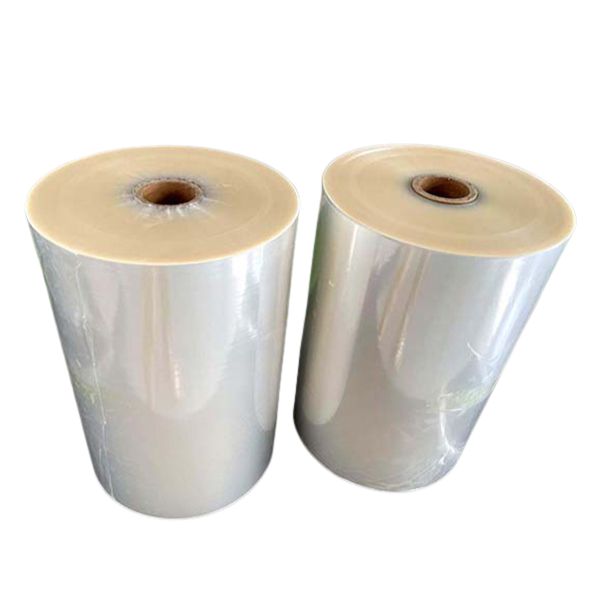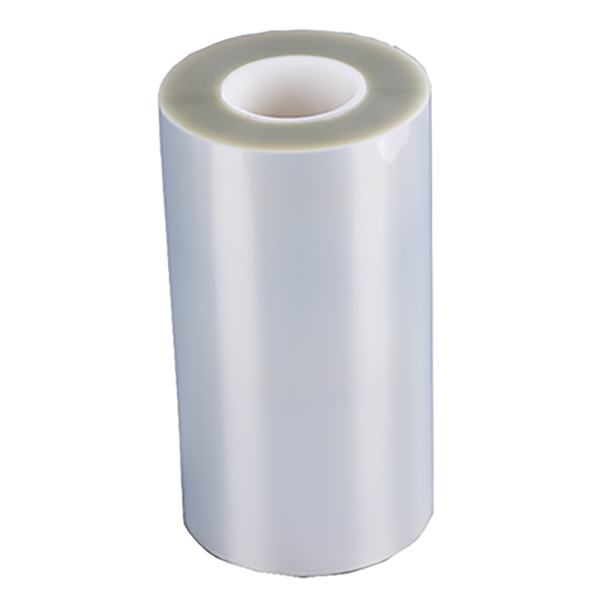
Peelable lidding film is one of the most important packaging materials for modern tray and cup packaging. It must seal tightly during filling, storage, transport, and retail display, but it also needs to open smoothly when the consumer pulls the lid. For food brands, tray manufacturers, meal-kit companies, dairy producers, and packaging converters, choosing the right peelable lidding film is not only a material decision. It directly affects shelf life, leakage risk, opening experience, production efficiency, and brand value.
A good peelable lid should not feel too weak or too strong. If the seal is too weak, the tray may leak during transport or cold-chain handling. If the seal is too strong, the consumer may need too much force to open it, which can cause splashing, tearing, product damage, or customer complaints. This is why buyers should not select peelable lidding film only by thickness or price. The better way is to match the film structure with the tray material, product type, sealing machine, filling condition, storage temperature, and final consumer experience.
For companies looking for a reliable peelable lidding film supplier, the most important question is not simply “What is the cheapest film?” The better question is: “Which lidding film can give my tray the right seal strength, clean peel, barrier performance, and stable running on my packing line?”
What Is Peelable Lidding Film?
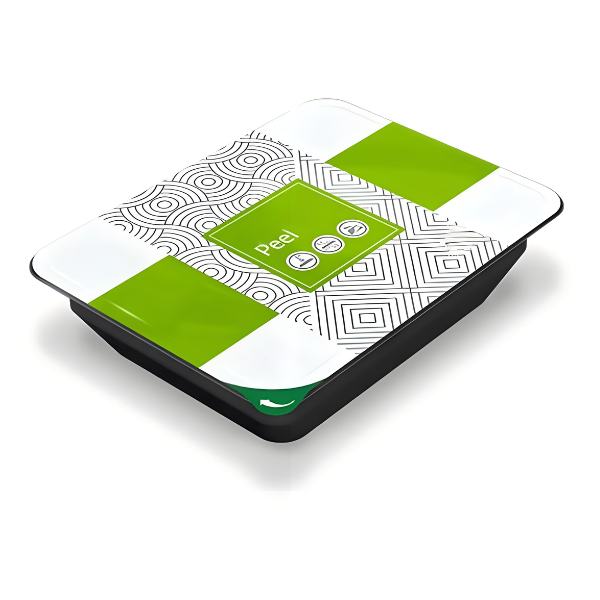
Peelable lidding film is a heat-sealable film used to close trays, cups, bowls, and rigid containers. Unlike a permanent lock-up seal, a peelable seal is designed to open with controlled force. The consumer can peel the lid away without scissors, knives, or excessive pulling.
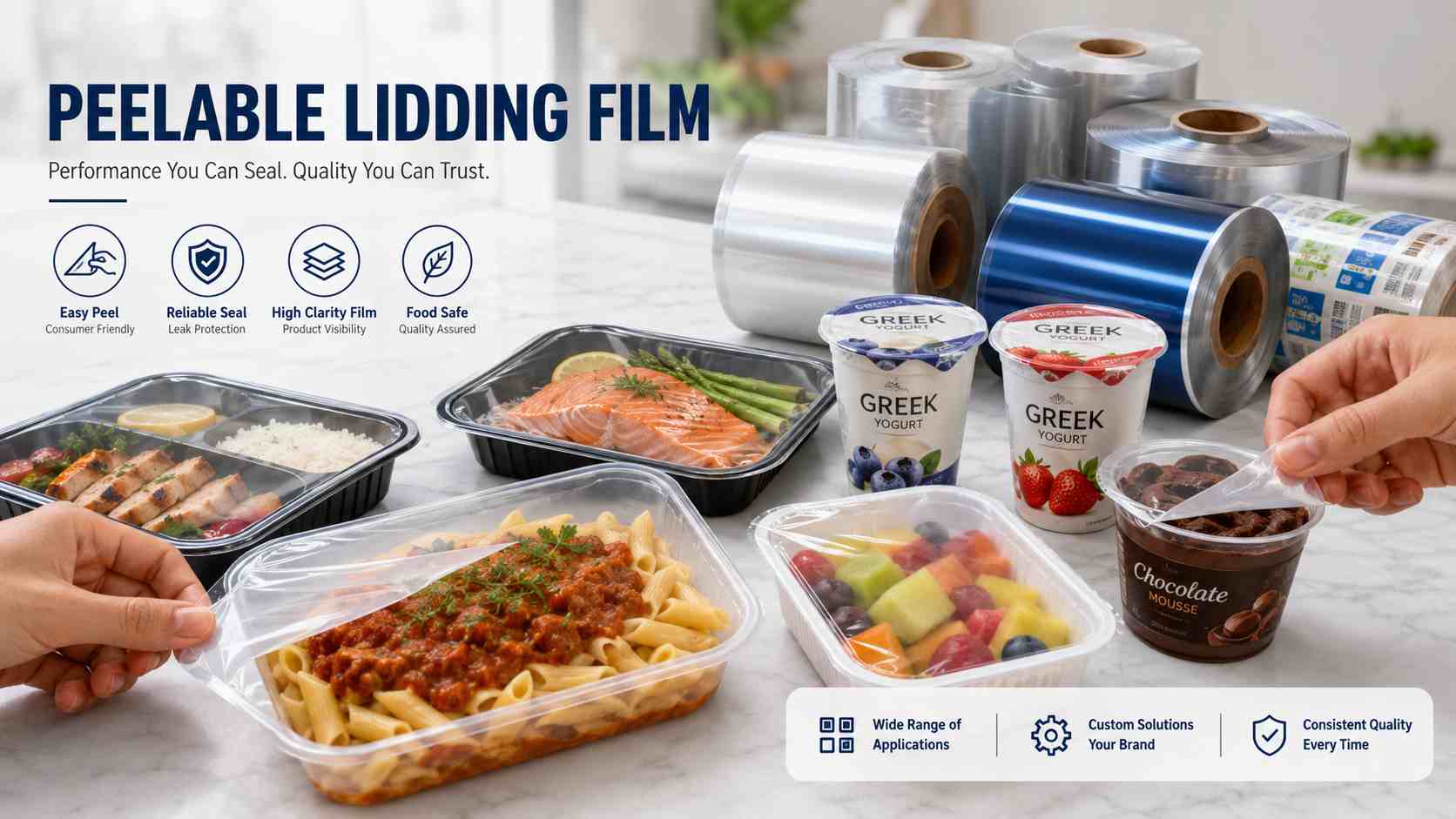
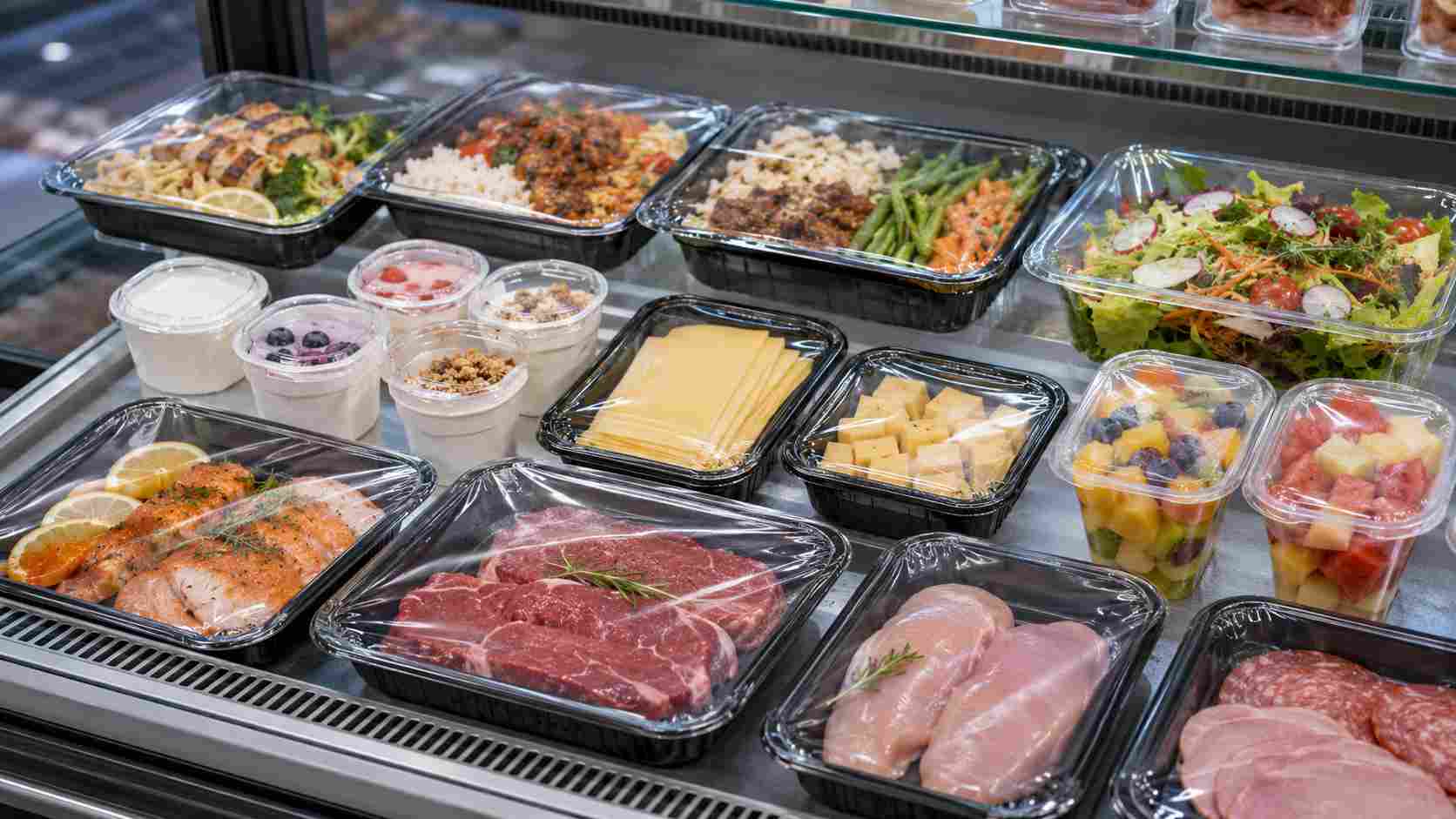
In practical packaging, peelable lidding film can be used for ready meals, fresh meat, seafood, fruit cups, yogurt, cheese, desserts, sauces, dips, medical trays, and other products that need both protection and easy opening. Depending on the final application, the film can be clear, printed, white, metallized, anti-fog, high-barrier, retortable, ovenable, or recyclable-oriented.
The key function is balance. The film must seal strongly enough to protect the product, but it must also peel cleanly from the tray flange. This balance comes from the sealant layer, film structure, coating technology, sealing temperature, dwell time, pressure, and tray material.
For buyers comparing lidding materials, it is useful to understand the difference between normal lidding film and easy-peel lidding film. Normal lidding film may create a permanent seal, while peelable film is engineered for controlled opening. A peelable solution is especially valuable when the package is used by children, elderly consumers, busy office workers, or food-service users who want convenience without messy tearing.
Why Peelability Matters More Than Many Buyers Think
Many buyers first focus on film thickness, material name, or unit price. These are important, but peelability often has a bigger influence on the real user experience. A package may look attractive on the shelf, but if it leaks, bursts, tears, or opens too aggressively, the consumer may not buy the product again.
Peelability affects four major areas.
First, it affects food safety and leakage control. The seal must stay closed during filling, cooling, stacking, shipping, and display. For chilled and frozen food, the film also needs to maintain performance under temperature changes.
Second, it affects consumer convenience. A smooth peel creates a premium feeling. A rough peel, stringy peel, or film tear can make the package feel low quality.
Third, it affects production stability. If the film has a narrow sealing window, the packing line may face more rejected trays, more leakage tests, and more downtime. A good lidding film should give stable sealing performance over a practical temperature range.
Fourth, it affects brand positioning. Premium ready meals, dairy products, fresh-cut fruit, and medical packs often require a cleaner opening experience. In these markets, peel strength is part of the product quality.
Main Applications Of Peelable Lidding Film
Peelable lidding film is widely used across food, medical, and consumer packaging. Different applications require different levels of sealing strength, barrier, clarity, temperature resistance, and puncture resistance.
Ready Meal Trays
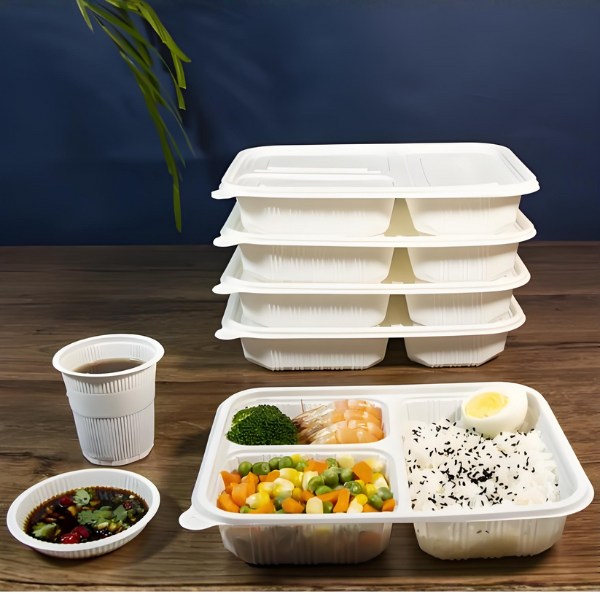
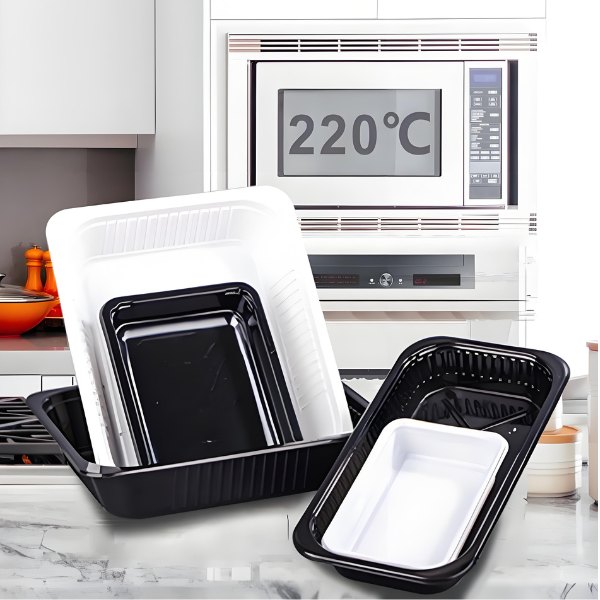
Ready meals often use PP, CPET, APET, or aluminum trays. The lidding film may need microwave resistance, oven resistance, chilled storage performance, or freezer durability. For dual-ovenable ready meals, tray and film matching is especially important.
If the tray is CPET and the meal needs reheating, buyers may need to consider matching lidding solutions with CPET film or CPET tray systems, depending on the full package design.
Fresh Meat, Seafood, And Poultry
Fresh proteins often need strong seal integrity and, in many cases, modified atmosphere packaging. The film should support reliable sealing, good clarity, and strong resistance to leakage. If shelf life is critical, high-barrier structures may be required.
Dairy Cups And Dessert Cups
Yogurt, pudding, cheese, cream, and dessert cups require smooth peel, clean opening, and strong freshness protection. Consumers usually expect the lid to open without splashing or tearing.
Fresh Produce And Salad Trays
Fresh fruit, salad, and vegetable trays often need clear visibility and anti-fog performance. For chilled produce packaging, CPP anti fog film can be considered when the pack requires good clarity and reduced fogging.
Medical And Hygiene Trays
Medical packaging may require controlled peel, clean opening, and stable seal integrity. The film must be selected carefully based on sterilization method, product sensitivity, tray material, and compliance requirements.
Step 1: Confirm The Tray Or Cup Material
The first step in choosing peelable lidding film is to confirm the tray or cup material. The film must be compatible with the sealing surface. A film that seals well to PP may not seal the same way to PET, PS, PE, PLA, or aluminum.
Common tray materials include PP, APET, CPET, PS, PET, PE, PLA, and aluminum. Each material has different heat resistance, surface energy, stiffness, and sealing behavior. For example, PP trays are common for microwaveable food, CPET trays are common for ovenable meals, APET trays are common for chilled food and high-clarity presentation, and aluminum trays are used for ovenable and high-barrier applications.
If you are developing a complete tray packaging project, it is better to review the lidding film and tray together. A supplier that can help match food packaging trays with suitable lidding film can reduce trial-and-error costs and shorten the testing cycle.
Before requesting a quotation, buyers should tell the supplier the exact tray material, tray size, flange width, tray depth, filling temperature, storage condition, and sealing machine model. These details help the supplier recommend a more accurate film structure.
Step 2: Define The Required Peel Strength
Peel strength is the force required to open the lid from the tray. It is one of the most important technical parameters for peelable lidding film.
A low peel force may be suitable for small cups, dessert packs, or elderly-friendly packaging. A higher peel force may be needed for large ready-meal trays, meat trays, liquid products, or export packaging. However, the target should not be “as strong as possible.” The target should be “strong enough to protect, but easy enough to open.”
Peel strength can be affected by the film sealant, tray material, sealing temperature, pressure, dwell time, contamination in the seal area, and cooling condition after sealing. If the same film is tested on two different tray materials, the peel result may be very different.
For this reason, professional buyers should test peel strength under real production conditions, not only in a lab. The test should include filled trays, normal sealing settings, storage simulation, transport simulation, and final opening tests.
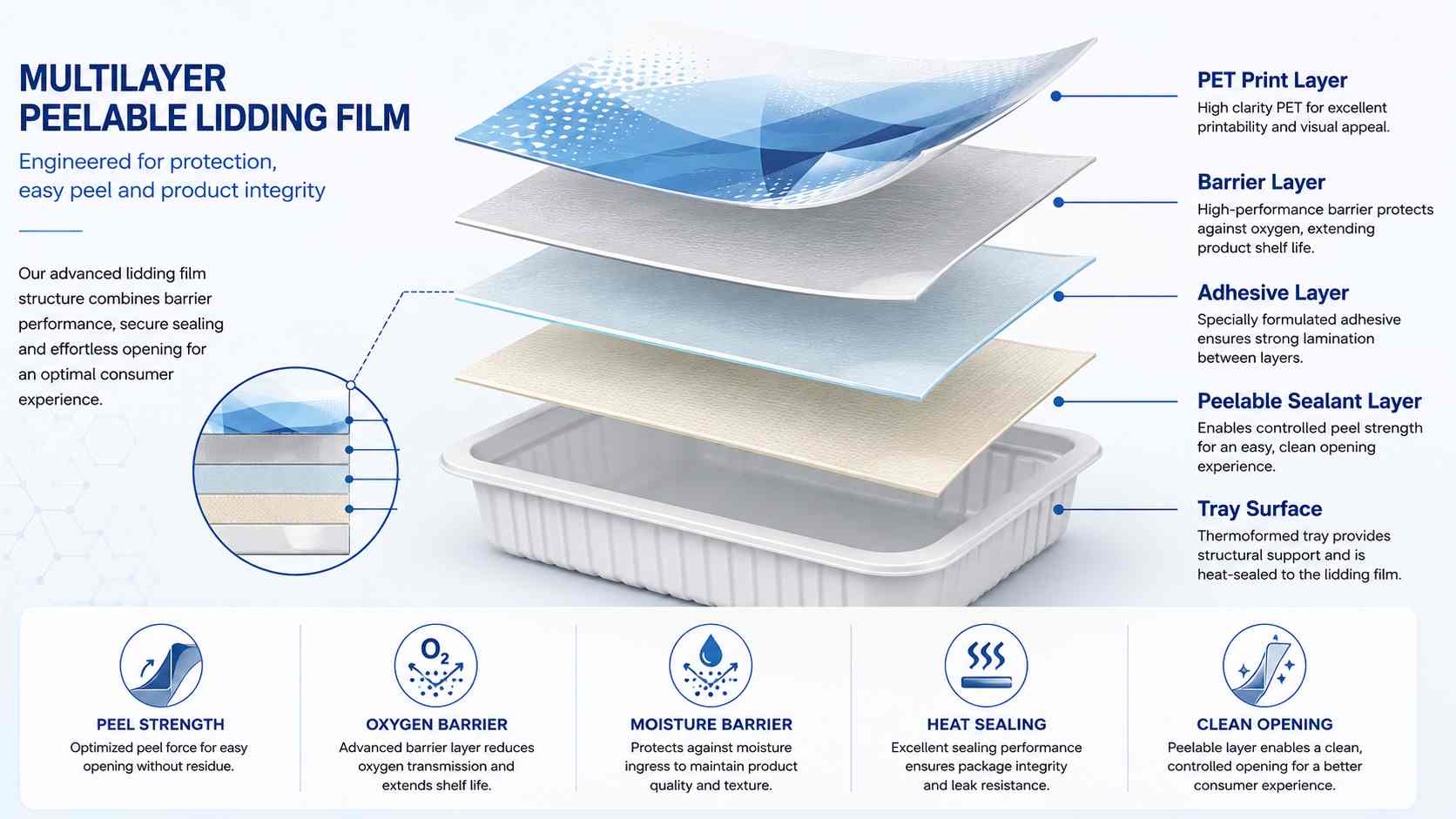
Step 3: Choose The Right Film Structure
Peelable lidding film can be made from different structures. The correct structure depends on product type, shelf-life target, barrier needs, printing method, tray material, and sealing condition.
Common structures may include PET/PE, PET/CPP, BOPP/PE, PA/PE, PET/EVOH/PE, PET/AL/PE, PET/PVDC/PE, or customized co-extruded structures. For simple chilled food, a clear PET/PE or PET/CPP lidding structure may be enough. For oxygen-sensitive food, a high-barrier layer such as EVOH, PVDC, ALOx, or aluminum foil may be required.
When the product is sensitive to oxygen, aroma loss, moisture, or oil migration, buyers should not only ask for “easy peel.” They should also ask for OTR, WVTR, grease resistance, aroma barrier, and shelf-life testing support.
For high-barrier tray lidding projects, materials such as co-extrusion EVOH film can help improve oxygen barrier performance in suitable packaging structures.
Step 4: Match Barrier Performance With Shelf Life
Barrier performance should be selected according to the product, not according to a general assumption. Some products mainly need moisture protection. Some need oxygen protection. Some need aroma retention. Some need grease resistance. Some only need a short shelf life in chilled distribution.
For dry snacks, cheese, meat, seafood, ready meals, and sensitive ingredients, oxygen barrier can be very important. For desserts, bakery items, powders, and some chilled foods, moisture control may be more important. For products with strong aroma, such as cheese, sauces, spices, or ready meals, aroma retention should also be considered.
A transparent high-barrier solution may use ALOx PET, PVDC PET, EVOH, or other barrier materials. If visibility is not required, aluminum foil structures can provide very strong barrier performance.
For transparent high-barrier lidding designs, ALOx PET film can be considered when the package needs both visibility and improved barrier. For projects where PVDC barrier is suitable, PVDC PET film may also be considered.
The best structure depends on the real food, expected shelf life, filling process, sterilization condition, and storage chain. A good lidding film manufacturer should ask technical questions before recommending a structure.
Step 5: Consider Anti-Fog Performance For Chilled Display
For chilled food packaging, fogging can reduce shelf appeal. If moisture condenses inside the lid, consumers may not see the product clearly. This is a common problem for fresh produce, salads, fruit cups, chilled meals, meat, and seafood.
Anti-fog lidding film helps improve visibility by reducing water droplet formation on the inner surface. This is especially useful when the product moves between different temperatures, such as from production to cold storage, transport, and supermarket display.
However, anti-fog performance should be tested with the actual product and storage condition. Different foods release different levels of moisture. A salad tray, fruit cup, and hot-filled ready meal may behave differently.
For buyers, the key question is not only “Do you have anti-fog film?” A better question is: “Can this anti-fog lidding film work with my tray material, storage temperature, product moisture, and sealing process?”
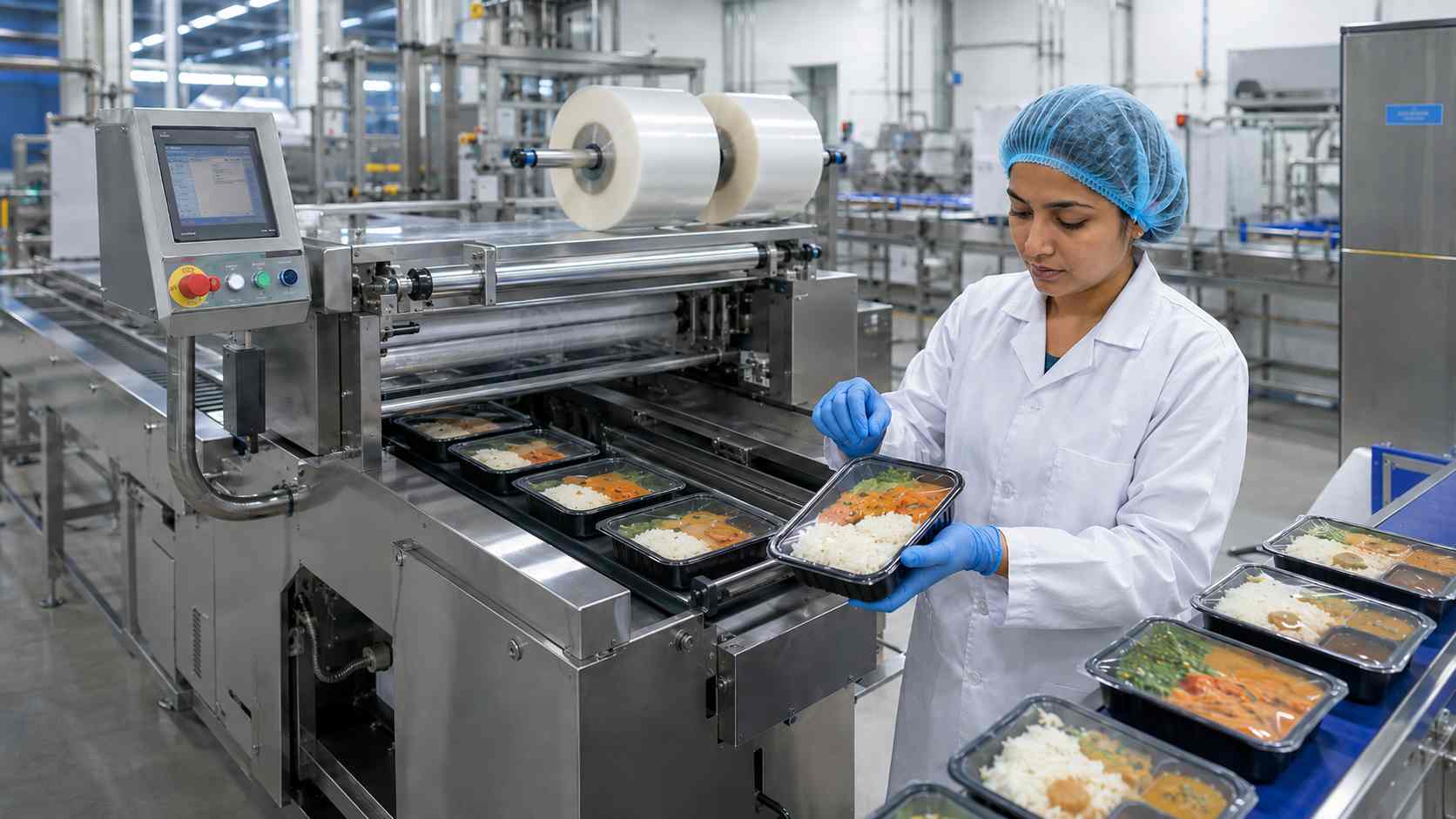
Step 6: Review Heat Sealing Window And Packing Line Speed
A good peelable lidding film should run smoothly on the tray sealing machine. The heat sealing window is the temperature range where the film can create a stable seal without burning, shrinking, sticking, or losing peelability.
If the sealing window is too narrow, small changes in machine temperature, pressure, dwell time, or line speed may cause unstable results. This can lead to leakage, over-sealing, weak corners, film wrinkles, or poor opening.
For high-speed tray sealing lines, the film must seal quickly and consistently. For slower or semi-automatic machines, the film may have more dwell time, but the supplier still needs to match the film to the machine setting.
Heat-sealable polyester-based solutions may be useful in some lidding applications. Buyers can also review heat sealable PET film when they need PET-based lidding materials for tray or cup sealing projects.
Step 7: Decide Between Printed And Unprinted Lidding Film
Peelable lidding film can be supplied as plain clear film, printed film, white film, metallized film, or laminated printed film. The decision depends on brand design, retail display, product visibility, and cost.
Clear lidding film is useful when the product needs to be visible. Printed lidding film gives more space for branding, nutrition information, cooking instructions, barcodes, QR codes, and promotional messages. White or opaque lidding film can create a clean premium look, especially for dairy, desserts, and ready meals.
For printed lidding film, buyers should confirm printing method, ink system, lamination structure, heat resistance, and food-contact design. If the film is used on hot-filled, microwaveable, or ovenable packaging, the printed layer and adhesive must be selected carefully.
The film should also maintain good flatness and registration during high-speed sealing. Poor roll quality can cause tracking problems, print misalignment, or sealing defects.
Step 8: Check Food Contact, Compliance, And Documentation
For food packaging, compliance is not optional. Buyers should ask whether the film is suitable for the intended food-contact condition. The supplier may need to provide TDS, MSDS, food-contact declaration, migration test reports, or other documents depending on the market.
Important details include direct or indirect food contact, fatty food, acidic food, hot filling, freezing, microwave heating, oven heating, retort, pasteurization, and sterilization. A film that is suitable for chilled dry food may not be suitable for high-temperature or oily food.
For export projects, buyers should also confirm the destination market requirements. Different countries and regions may have different documentation expectations.
A professional peelable lidding film manufacturer should not only sell film rolls. It should help buyers review application details, recommend suitable structures, and support sample testing before mass production.
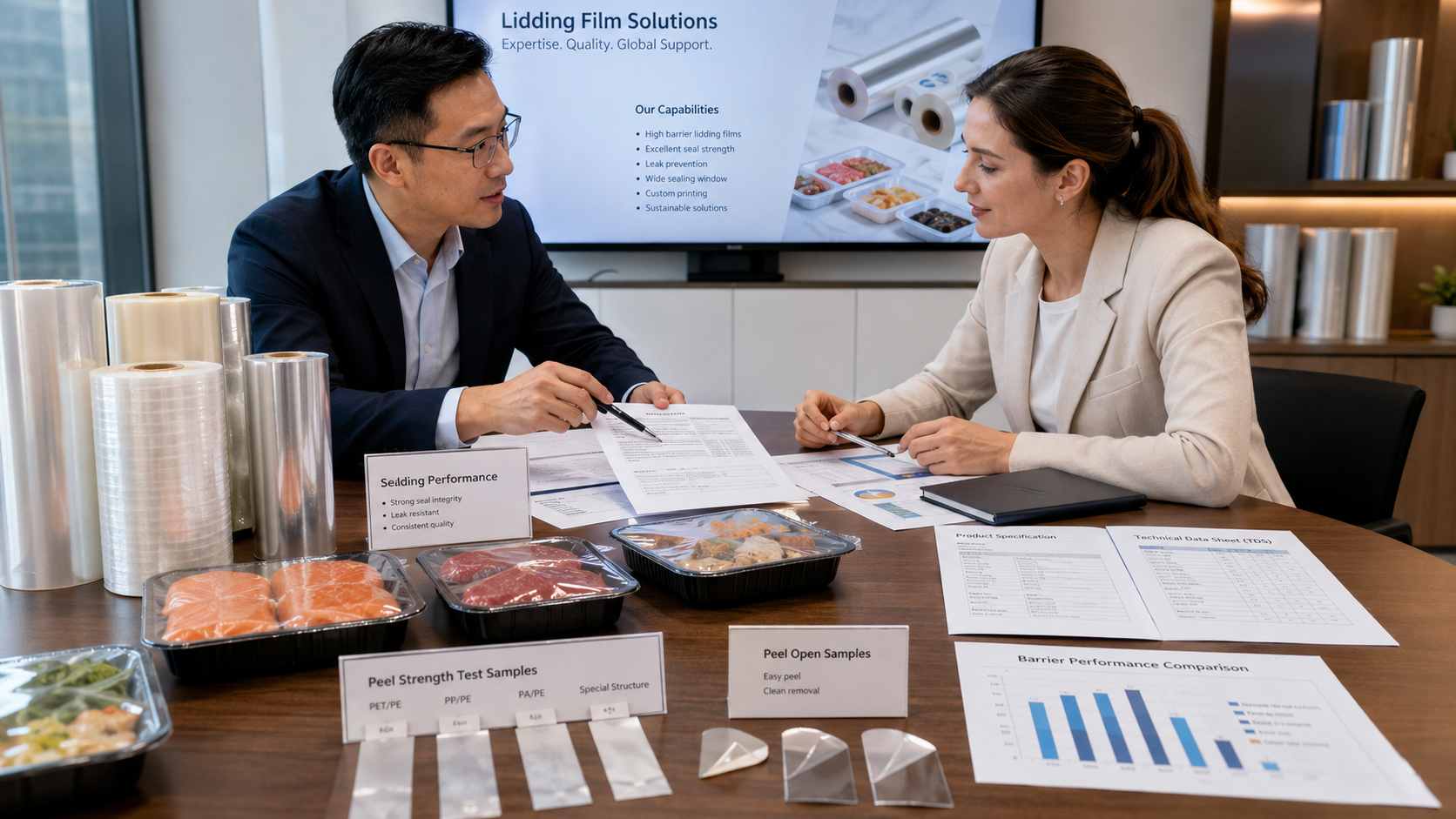
Step 9: Work With A Manufacturer That Understands Real Packaging Applications
For B2B buyers, choosing a supplier is not only about unit price. A reliable lidding film partner should understand tray sealing, flexible packaging materials, barrier design, roll slitting, sample testing, export packing, and communication with international buyers.
A strong lidding film manufacturer in China should be able to discuss film structure, tray compatibility, peel strength target, sealing window, MOQ, lead time, roll width, core size, printing needs, barrier grade, and sample preparation.
For custom lidding film projects, buyers should provide the following information:
- Product type and filling condition
- Tray or cup material
- Tray size and flange width
- Target shelf life
- Storage temperature
- Sealing machine model
- Required peel strength
- Printed or unprinted film
- Barrier requirement
- Destination market and compliance needs
With this information, the supplier can recommend a more practical structure instead of guessing.
Common Mistakes When Choosing Peelable Lidding Film
One common mistake is selecting the film only by thickness. Thickness does not fully determine seal strength, peelability, barrier, or machine performance. Two films with the same thickness may behave very differently.
Another mistake is testing the film on the wrong tray material. If the final tray is PP, the sample should be tested on PP. If the final tray is APET, CPET, PS, PLA, or aluminum, the test should match the real tray.
A third mistake is ignoring sealing conditions. Sealing temperature, pressure, dwell time, tooling design, and line speed can all affect final results. The same film may perform well on one machine and poorly on another if settings are not adjusted.
A fourth mistake is asking for the strongest possible seal. Peelable packaging should not be designed like permanent sealing. The goal is controlled opening, not maximum force.
A fifth mistake is skipping filled-product testing. Empty tray tests are useful, but they do not fully represent real production. Oil, sauce, powder, water, protein juice, or small contamination in the seal area can change sealing performance.
How To Request A Quote For Peelable Lidding Film
To receive an accurate quotation, buyers should prepare technical details before contacting suppliers. This saves time and reduces misunderstanding.
A good quotation request should include tray material, tray size, film width, film thickness preference, product type, packing temperature, storage condition, required shelf life, printing requirement, annual or monthly quantity, and destination port.
If you are not sure about the exact film structure, you can describe the packaging problem instead. For example: “We need a clear peelable lid for PP ready-meal trays, chilled storage, microwave reheating, and clean opening.” A technical supplier can then recommend a suitable structure for testing.
For new projects, it is usually better to start with samples. After sample testing, buyers can confirm peel force, sealing window, appearance, barrier, anti-fog effect, and machine performance. Then the final specification can be fixed for bulk production.
FAQ: Peelable Lidding Film
1. What is peelable lidding film used for?
Peelable lidding film is used to seal trays, cups, bowls, and containers while allowing the consumer to peel the lid open smoothly. It is common in ready meals, dairy cups, meat trays, seafood trays, fruit cups, salad trays, desserts, sauces, dips, and medical trays.
2. Is peelable lidding film the same as easy peel film?
In many packaging discussions, the two terms are used very closely. Easy peel film usually emphasizes the opening function, while peelable lidding film emphasizes its use as a lid for trays or cups.
3. What tray materials can peelable lidding film seal to?
It can be designed for PP, APET, CPET, PET, PS, PE, PLA, aluminum, and other tray materials. The film must be matched to the tray surface.
4. How do I choose the correct peel strength?
The correct peel strength depends on tray size, product weight, liquid content, storage condition, transport risk, and consumer opening preference. The target should be easy opening with reliable seal integrity.
5. Can peelable lidding film be used for microwave meals?
Yes, but the film structure, tray material, ink, adhesive, and sealing layer must be suitable for microwave conditions. The full package should be tested before commercial use.
6. Can it be used for ovenable trays?
Yes, for suitable high-temperature structures and tray systems. CPET and aluminum trays are common in ovenable packaging, but the lidding film must be selected according to the required heating condition.
7. Can peelable lidding film be anti-fog?
Yes. Anti-fog peelable lidding film is often used for chilled produce, salads, fresh meat, seafood, and ready meals where clear product visibility is important.
8. Can peelable lidding film be printed?
Yes. It can be supplied as printed lidding film for branding, product information, cooking instructions, and retail presentation.
9. What information should I provide to a supplier?
You should provide tray material, tray size, product type, filling temperature, storage temperature, shelf-life target, sealing machine, film width, printing requirement, quantity, and destination market.
10. Why does the same film peel differently on different trays?
Different tray materials have different sealing behavior. Surface treatment, flange design, tray thickness, and sealing conditions can also affect peel strength.
11. What causes lidding film leakage?
Leakage may come from low sealing temperature, poor pressure, short dwell time, tray deformation, contamination in the seal area, wrong film structure, or poor tray-film compatibility.
12. What causes the film to tear instead of peel?
Film tearing may happen when the seal is too strong, the film structure is not suitable, the tray edge is sharp, or the sealing temperature is too high.
13. Is high barrier always necessary?
No. High barrier should be selected according to shelf-life requirements. Short-life chilled products may not need ultra-high barrier, while meat, cheese, seafood, and sensitive ready meals may need stronger oxygen or moisture protection.
14. Can recyclable peelable lidding film be made?
In some applications, recyclable-oriented mono-material or simplified structures may be possible. However, the final design must balance recyclability, sealing, barrier, printing, and packing performance.
15. Should I choose a trading company or a manufacturer?
For technical lidding film projects, a manufacturer or experienced supplier with strong technical support is usually better. The supplier should understand film structure, tray compatibility, peel strength, testing, documentation, and export service.
Conclusion
Choosing peelable lidding film is a technical and commercial decision. The right film should match the tray material, product type, sealing machine, shelf-life target, and consumer opening experience. It should protect the product during storage and transport, but still open smoothly and cleanly at the moment of use.
For buyers, the best approach is to share real application details with the supplier, test samples on the actual tray and machine, and confirm performance before mass production. A professional lidding film supplier can help reduce testing time, avoid wrong material selection, and build a packaging solution that works in the real market.