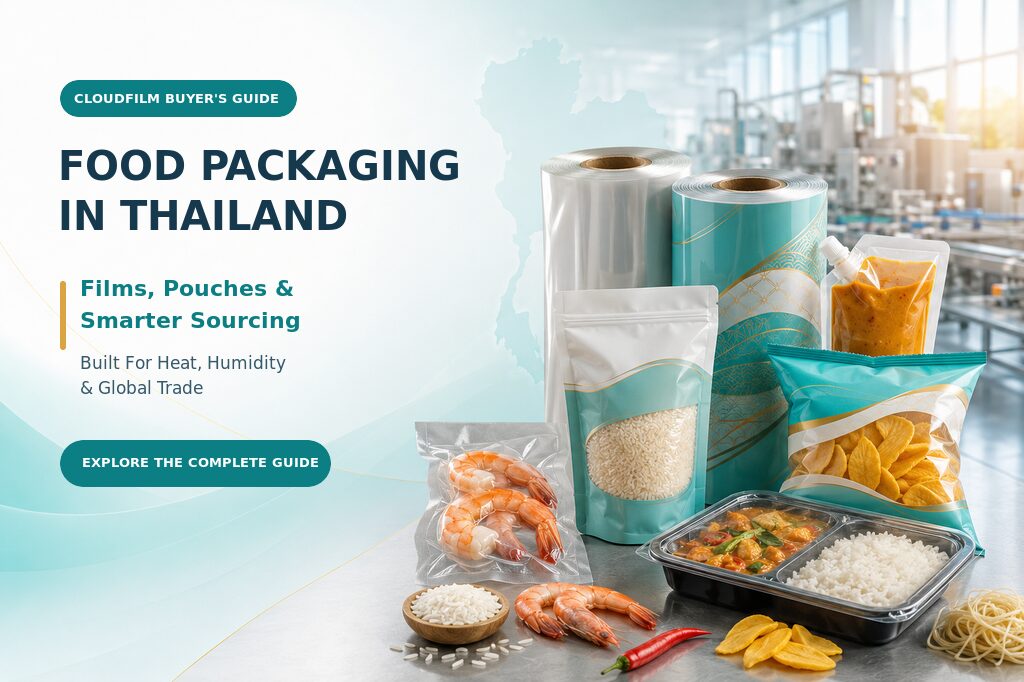
Food packaging is no longer only a container. For modern food brands, it is a protection system, a shelf display tool, a logistics solution, and a consumer experience touchpoint. A good package must protect flavor, control moisture, reduce oxygen exposure, run smoothly on packing machines, support brand design, and meet the growing demand for more responsible materials.
This is why new technology in food packaging has become so important. Food brands, processors, importers, distributors, and packaging buyers are looking for packaging that can do more with less material. They want longer shelf life, better safety, stronger sealing, better print appearance, lighter weight, and practical sustainability.
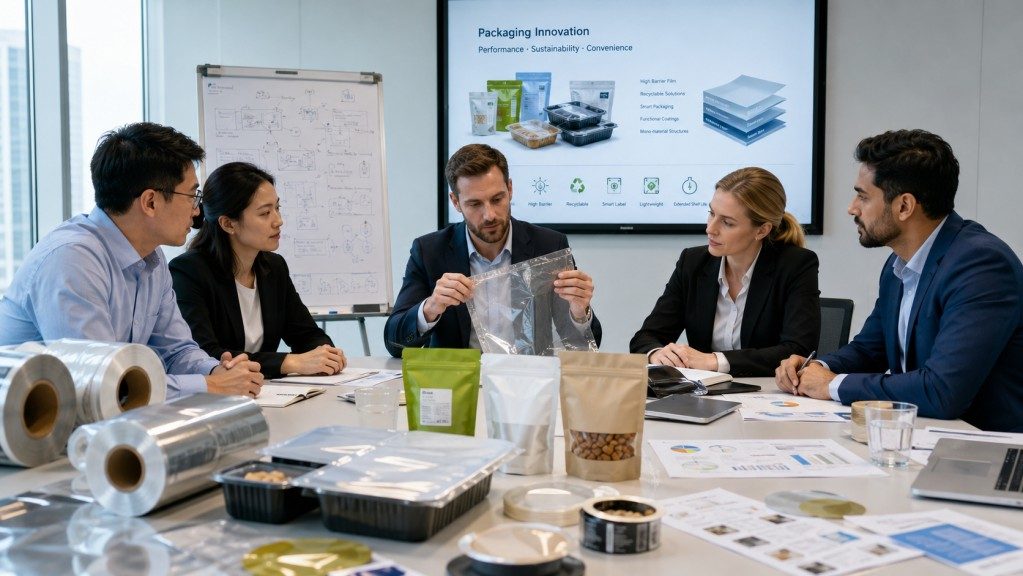
For buyers who work with a food packaging supplier or flexible packaging manufacturer, understanding the latest packaging trends can make material selection much easier. The right film structure or pouch format can help reduce product loss, improve shelf appeal, and support stable production from trial order to mass supply.
Why Food Packaging Technology Is Changing
Food packaging is changing because food supply chains are changing. Products travel longer distances, stay in warehouses for longer periods, and are sold through supermarkets, convenience stores, online channels, and export markets. Each channel places different pressure on packaging performance.
A frozen seafood pouch, a bakery bag, a snack roll film, and a ready meal tray do not need the same material. One may need oxygen barrier, another may need anti-fog clarity, another may need strong puncture resistance, and another may need easy opening. This is why packaging technology is moving from general materials to application-specific structures.
Another driver is sustainability. Many food brands want to reduce packaging weight, simplify material structures, or move toward recyclable mono-material designs. However, food safety and shelf life cannot be ignored. A package that is easier to recycle but cannot protect the food is not a complete solution.
For this reason, the best packaging development usually starts with the food product itself: moisture level, oil content, oxygen sensitivity, aroma sensitivity, filling temperature, storage condition, shelf-life target, and packing machine type.
What Does “Latest Packaging” Mean For Food Brands?
The phrase “latest packaging” does not simply mean a new look. In the food industry, it usually means packaging that combines better material science, stronger production efficiency, and improved consumer convenience.
For dry snacks, latest packaging may mean lightweight printed roll stock with better moisture protection and stable high-speed packing performance. For meat and cheese, it may mean high-barrier vacuum packaging or modified atmosphere packaging. For ready meals, it may mean retort pouches, easy-peel lidding films, or trays that can handle heating and distribution.
For brand owners, latest packaging should answer several practical questions. Can it protect the product during transport? Can it reduce returns? Can it make the product look better on shelf? Can it run on existing machines? Can it support export requirements? Can the supplier provide stable quality and repeatable specifications?
A packaging trend only becomes valuable when it solves a real business problem. This is why food brands should not choose packaging based on trend words alone. They should connect each new technology with product protection, cost control, filling performance, and consumer use.
1. High-Barrier Packaging Technology
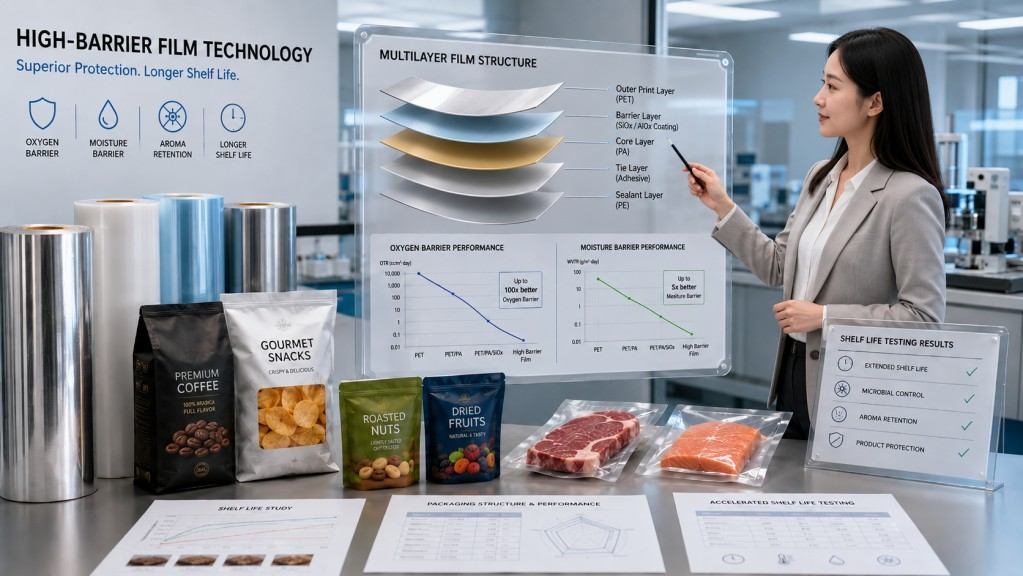
High-barrier packaging remains one of the most important technologies in food packaging. Many food products are sensitive to oxygen, water vapor, aroma loss, light, or oil migration. Without the correct barrier structure, products can lose crispness, flavor, color, and freshness before they reach consumers.
High-barrier flexible packaging may use PET, PA, PE, CPP, aluminum foil, metallized film, EVOH, or coated barrier films depending on the application. For example, snacks often need strong moisture protection, while meat, cheese, and sauces may need better oxygen barrier. Coffee, spices, and pet food often require aroma protection.
For buyers comparing different film structures, food packaging film is often a good starting point because it connects product type, shelf-life requirement, and flexible film structure. For deeper barrier requirements, brands may also review high barrier films when they need stronger protection against oxygen, moisture, and aroma transfer.
The key is not to choose the highest barrier blindly. The correct solution should match the target shelf life, storage environment, product value, and cost level.
2. Recyclable Mono-Material Packaging
Recyclable packaging is one of the strongest trends in food packaging, but it must be handled carefully. In flexible packaging, many traditional structures combine different materials to achieve strength, printability, barrier, and sealing. These mixed-material structures can be difficult to recycle in some markets.
Mono-material packaging tries to simplify the structure by using mainly one polymer family, such as PE-based or PP-based films. This can help improve sorting and recycling compatibility where proper collection and recycling systems are available.
For food brands, the challenge is balance. A mono-material pouch still needs to protect the product, seal strongly, print clearly, and survive transport. Recyclability should not come at the cost of leakage, poor shelf life, or weak shelf appearance.
For snacks, frozen food, pet food, coffee, and refill products, recyclable pouches can be considered when the brand wants a PE or PP oriented structure. Buyers who are still comparing material direction can also read the recyclable flexible packaging guide to understand how mono-material structures are selected.
The future of recyclable food packaging will not be one single material. It will be practical structure design based on product risk, local recycling rules, filling process, and shelf-life demand.
3. Lightweight Flexible Packaging And Roll Stock
Another important packaging trend is lightweighting. Food brands want to reduce packaging weight without losing strength, barrier, or machine performance. Flexible packaging is well suited for this goal because film rolls and pouches use less material than many rigid formats.
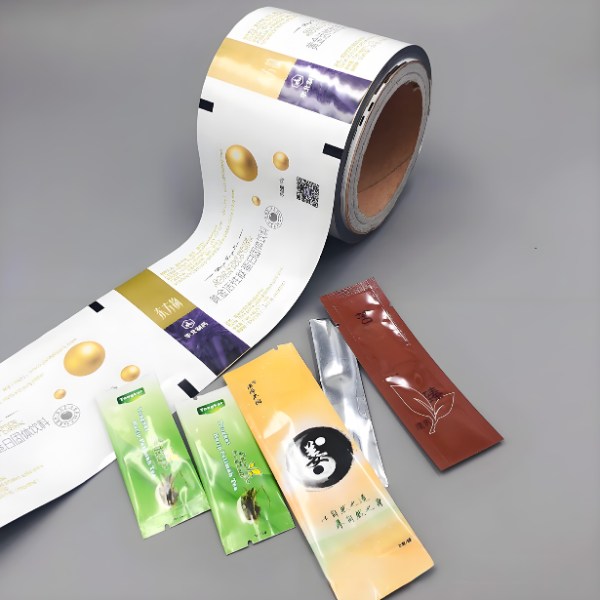
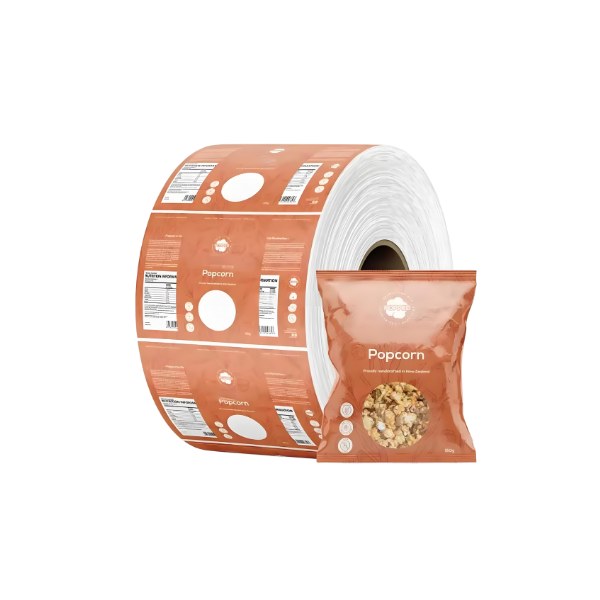
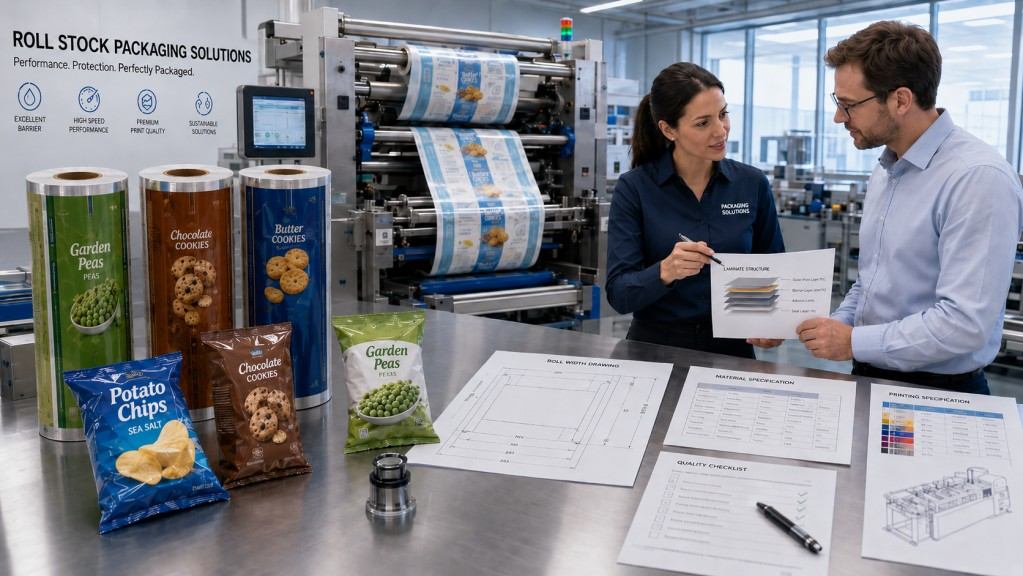
For high-speed food production, roll stock packaging is especially important. Printed roll stock can be used on vertical form-fill-seal, horizontal form-fill-seal, flow-wrap, and sachet machines. It is widely used for snacks, biscuits, frozen food, powders, noodles, sauces, and many other products.
A good roll film must have stable thickness, correct coefficient of friction, strong sealing, accurate printing, and consistent roll winding. Even a small problem in film friction or sealing temperature can cause machine stops, waste, or poor pack appearance.
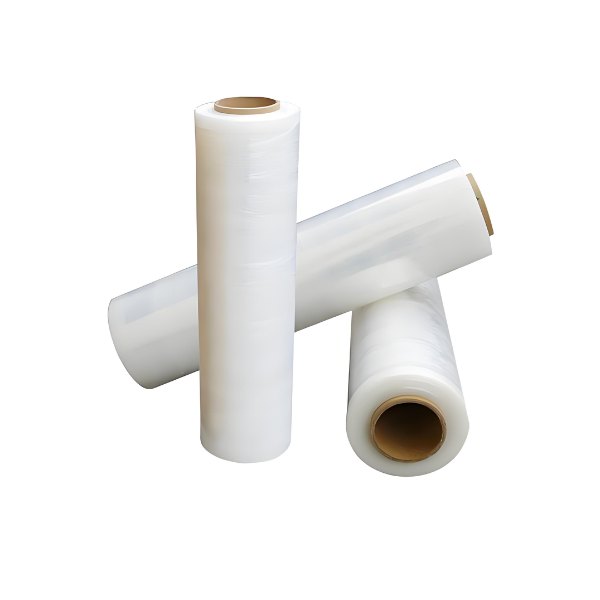
Food brands that pack products in-house often need custom printed roll stock film to match their equipment and brand design. For buyers still comparing material families and structures, packaging film roll can help clarify common structures such as PET/PE, BOPP/CPP, BOPP/PE, PA/PE, and PET/VMPET/PE.
In practice, lightweight packaging should not simply mean thinner film. It should mean better structure design, stable runnability, and lower total packaging waste.
4. Smart And Intelligent Packaging
Smart packaging is becoming more visible in food categories that require freshness monitoring, cold chain control, product traceability, and consumer interaction. It can include QR codes, digital product information, temperature indicators, freshness indicators, anti-counterfeit marks, and connected labels.
For food brands, smart packaging is useful when information matters. A frozen food brand may want cold-chain visibility. A premium snack brand may want interactive product stories. A meat or seafood supplier may want batch traceability. A baby food brand may want stronger trust and safety communication.
However, smart packaging should not be treated as decoration only. The base package still needs the right barrier, sealing, and mechanical strength. A smart label cannot solve oxygen transmission, weak seals, or poor puncture resistance.
This is why smart packaging works best when digital features are combined with a reliable physical package. A well-designed pouch, tray, or roll film protects the product first, while smart features add information and trust.
For brands exploring this direction, smart flexible packaging can offer useful ideas on how intelligent features, flexible materials, and sustainable goals may work together.
5. Modified Atmosphere Packaging And Fresh Food
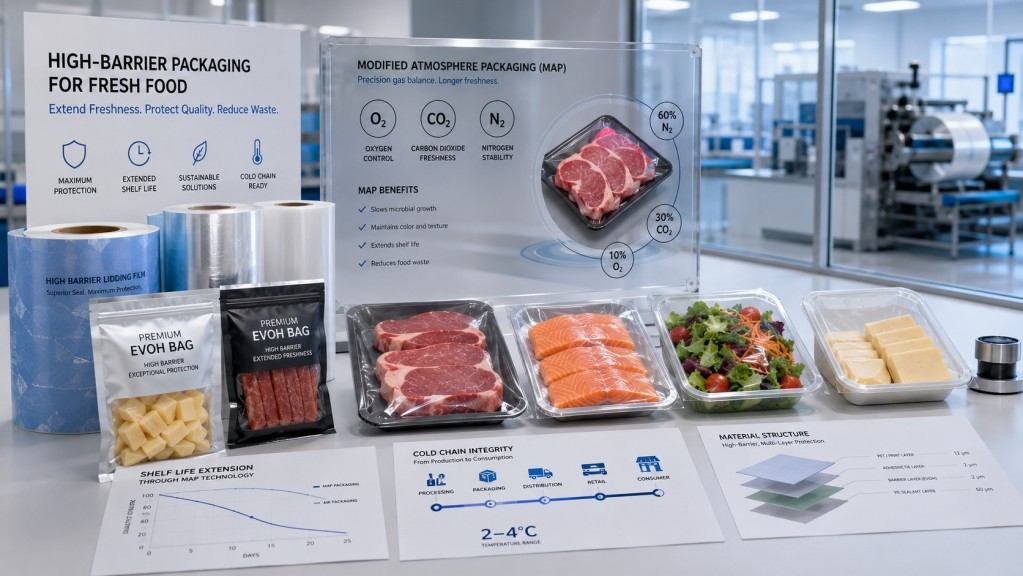
Modified atmosphere packaging, often called MAP, is widely used for fresh meat, seafood, cheese, produce, bakery products, and ready-to-eat foods. The basic idea is to replace the air inside the package with a selected gas mixture to slow quality loss and extend shelf life.
MAP is not only about the gas. The film or tray system must also be carefully designed. If the film barrier is too low, the gas mixture may change too quickly. If the seal is weak, leakage can destroy the protection. If the film fogs badly, consumers may not see the product clearly.
For meat, cheese, seafood, and liquid foods, high oxygen barrier can be very important. EVOH bags are one practical option for products that need strong oxygen protection, vacuum compatibility, or longer chilled and frozen shelf life.
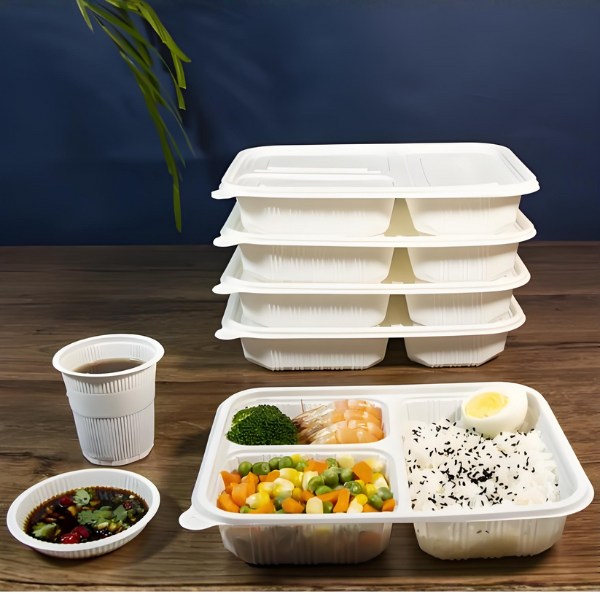
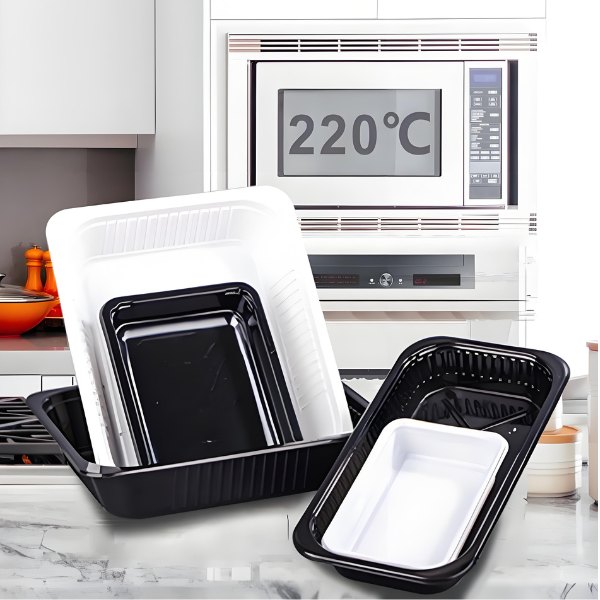
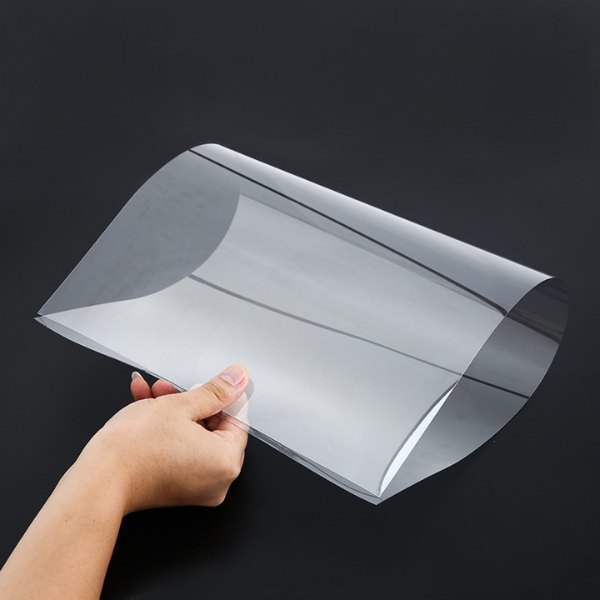
Fresh ready meals and meat products may also use food packaging trays with suitable lidding films. For fresh produce, salad, chilled food, and some frozen products, CPP anti fog film can help maintain clear shelf visibility.
The right MAP structure depends on the food type, gas mixture, storage temperature, filling line, and retail channel.
6. Active Packaging For Shelf-Life Support
Active packaging is designed to interact with the product environment. It may help control oxygen, moisture, aroma, ethylene, or microbial risk depending on the application. Common examples include oxygen absorbers, moisture absorbers, antimicrobial concepts, and freshness-control components.
For food brands, active packaging can be valuable when the product is highly sensitive. Bakery products may need moisture balance. Roasted nuts may need oxygen control. Fresh produce may need respiration management. Meat and seafood may need stronger protection against color change and odor problems.
Not every product needs active packaging. In many cases, a well-designed high-barrier film structure is enough. But for high-value products, long export routes, or strict shelf-life targets, active packaging may become part of the complete solution.
The most important point is compatibility. Active components must match the food, the film structure, the sealing process, storage condition, and local food-contact requirements. Buyers should always test before mass production.
A reliable food packaging manufacturer can help compare whether active packaging is necessary or whether a simpler barrier laminate can achieve the same target with lower cost and easier production.
7. Easy-Open, Easy-Peel, And Resealable Packaging
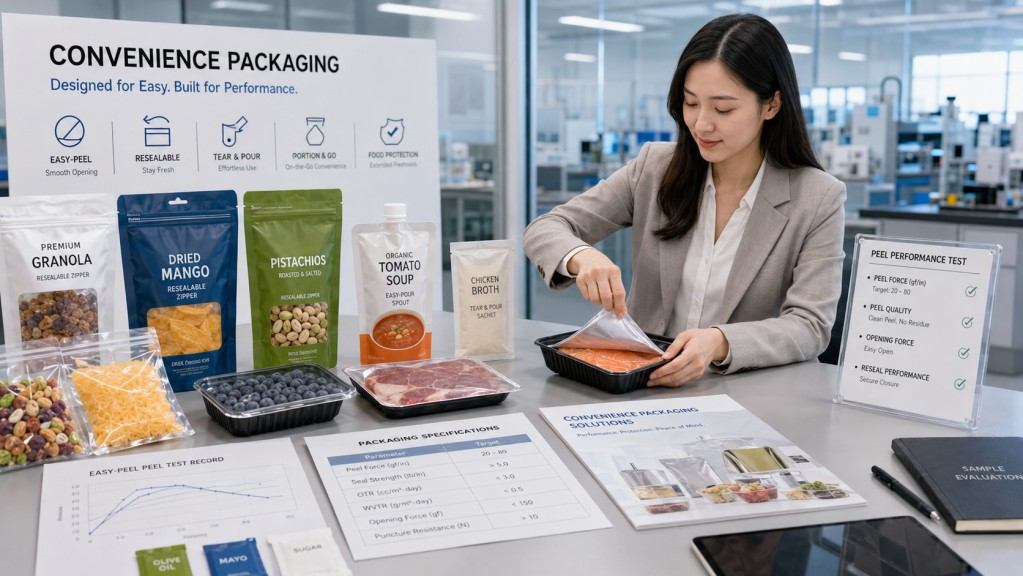
Convenience is now a major part of food packaging technology. Consumers want packaging that opens cleanly, pours easily, reseals well, and does not create a messy experience. This is especially important for ready meals, cheese, snacks, pet food, baby food, and portion packs.
Easy-peel lidding film is widely used for trays and cups. It must keep a secure seal during transport, but still peel smoothly when consumers open it. Poor peel performance can lead to tearing, residue, leakage, or consumer complaints.
For tray packaging, easy peel film can help improve the opening experience while maintaining seal protection. For small sachets, medical packs, snacks, and consumer packaging, easy tear film can improve access without requiring scissors.
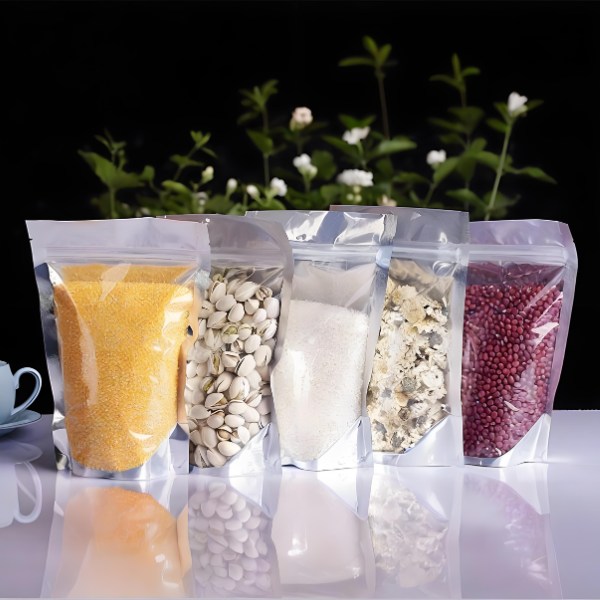
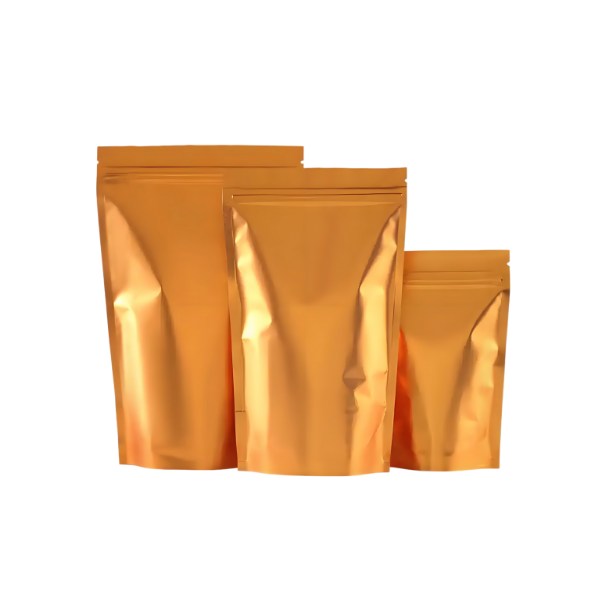
Resealable packaging is another fast-growing direction. Zippers, sliders, spouts, and caps help consumers use the product across multiple occasions. For dry foods, pet treats, powders, and snacks, stand up pouches can combine shelf display, zipper convenience, and custom printing.
Convenience is not only about comfort. It can also improve product freshness after opening and increase repeat purchase.
8. Retort, Hot-Fill, And Ready Meal Packaging
Ready meals, sauces, soups, wet pet food, seafood, and baby food often need packaging that can handle heat treatment. Retort packaging is designed for sterilization at high temperature, while hot-fill packaging must tolerate elevated filling temperature and seal stress.
Retort pouches have become a lightweight alternative to cans and jars for many food categories. They can reduce package weight, improve storage efficiency, and offer printable surfaces for branding. However, they require strong structure design because heat, pressure, and cooling can challenge seals and laminate bonds.
For sterilized ready meals, soups, sauces, and wet pet food, retort pouches can provide reliable high-temperature performance. The inner sealing layer is also critical. Retort CPP film is often used as a sealing layer in retort laminate structures.
For beverages, baby food, sauces, and refills, liquid pouches and spout pouches can provide a lighter, more convenient option than rigid packaging.
When choosing heat-resistant packaging, buyers should confirm filling temperature, sterilization condition, product acidity, pouch size, seal width, and required shelf life.
9. Digital Printing, Premium Finishes, And Shelf Impact
Food packaging must protect the product, but it also needs to sell the product. This is why printing quality, finish selection, and surface feel remain important parts of latest packaging development.
Digital printing can support shorter runs, faster artwork changes, and more personalized packaging. Gravure and flexo printing remain important for larger orders, strong color consistency, and high-volume production. The best choice depends on order quantity, artwork complexity, lead time, and target price.
Premium finishes such as matte, gloss, soft-touch, metallic effect, window design, and clear high-clarity film can help food brands create stronger shelf impact. For premium snacks, coffee, frozen food, and pet food, packaging appearance can directly influence consumer trust.
However, appearance should be built on a correct technical base. A beautiful pouch that delaminates, leaks, or loses barrier performance will damage the brand. A professional packaging film supplier should connect appearance, structure, sealing layer, and packing machine performance together.
For food brands, the best package is not only beautiful. It is beautiful, protective, practical, and repeatable in mass production.
How To Choose The Right New Packaging Technology
Choosing new technology in food packaging should start with clear project information. Before asking for a quotation, buyers should prepare the product type, target shelf life, storage temperature, filling condition, package size, printing requirement, order quantity, destination market, and current packaging problems.
For example, a snack brand may need moisture barrier and crispness protection. A cheese brand may need oxygen barrier and easy-peel lidding. A sauce brand may need puncture resistance and hot-fill stability. A frozen food brand may need low-temperature toughness and seal strength. A coffee brand may need aroma protection and degassing options.
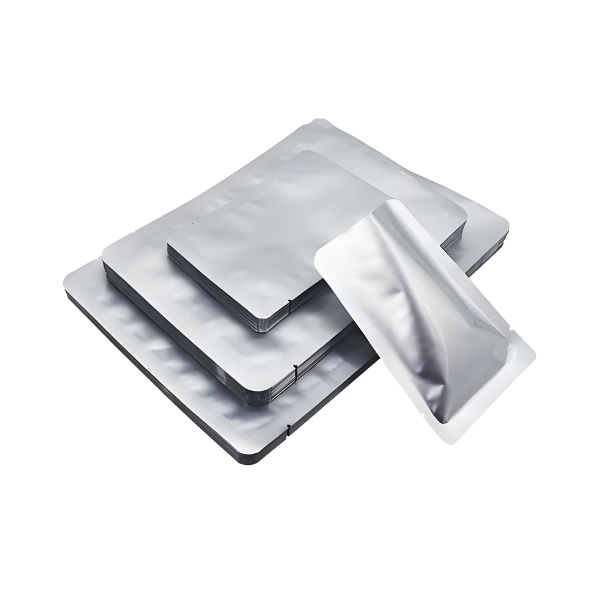
Buyers should also decide whether they need roll stock for automatic packing or finished pouches for direct filling. A brand with its own packing line may prefer film rolls. A smaller brand or product developer may prefer pre-made pouches for easier handling.
The best approach is to test before scaling up. Samples, pilot runs, sealing trials, drop tests, leakage tests, and shelf-life tests can help avoid costly mistakes.
A good supplier should not only quote a price. It should help select the structure, explain the trade-offs, and support stable repeat orders.
Working With A Food Packaging Film Manufacturer
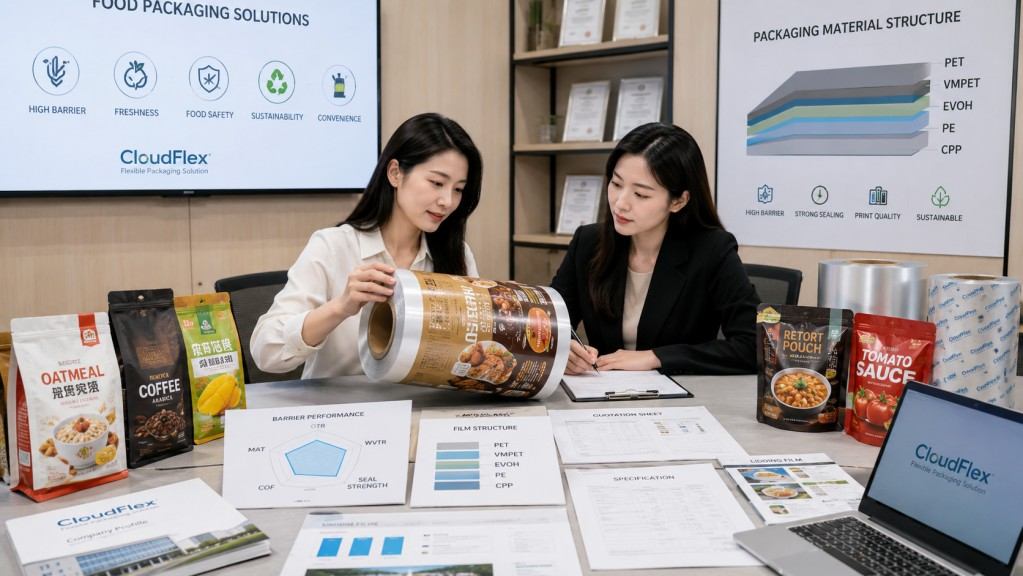
For food brands, choosing the right food packaging film manufacturer is as important as choosing the material itself. Packaging is a technical product. Small changes in film thickness, sealing layer, treatment level, lamination strength, or roll winding can affect the final packing result.
A strong supplier should understand food categories, packing machine conditions, export requirements, printing, lamination, slitting, pouch making, and quality control. The supplier should also be able to support trial samples, specification confirmation, and stable batch-to-batch production.
CloudFilm Packaging supports food brands, converters, distributors, and importers with flexible packaging films, printed roll stock, high-barrier materials, and custom pouch solutions. Whether the project is snacks, coffee, frozen food, meat, cheese, sauces, ready meals, pet food, or liquid products, the packaging structure should be designed around the product risk and market goal.
For many buyers, the most efficient route is to share product details first, then let the supplier recommend a practical structure. This avoids over-engineering, reduces quotation confusion, and improves the chance of a successful trial.
Conclusion
New technology in food packaging is not only about using new materials. It is about building smarter, safer, more efficient, and more market-ready packaging systems.
The latest packaging trends show a clear direction: stronger barrier performance, lighter structures, recyclable material design, intelligent information features, better consumer convenience, and more customized packaging formats. But every trend must be judged by real product requirements.
For food brands, the right package should protect the product, support shelf life, run well on the packing line, look attractive, and fit the commercial target. The best packaging decision is not always the newest or most expensive option. It is the structure that solves the product’s real problem with stable quality and reasonable cost.
Working with an experienced food packaging supplier or manufacturer can help brands turn packaging ideas into practical film and pouch solutions that are ready for testing, production, and export.
FAQ
1. What is the most important new technology in food packaging?
There is no single most important technology for every food product. High-barrier films, recyclable mono-material structures, smart packaging, MAP, active packaging, easy-peel lidding, and retort pouches are all important in different applications. The best choice depends on the food type, shelf life, filling process, and storage condition.
2. What does latest packaging mean in the food industry?
Latest packaging usually means packaging that improves product protection, sustainability, convenience, machine performance, and shelf appeal. It may include high-barrier films, recyclable pouches, smart labels, lightweight roll stock, easy-open features, and heat-resistant pouch structures.
3. Is recyclable flexible packaging suitable for all food products?
No. Recyclable flexible packaging is useful for many food categories, but it must still meet barrier, sealing, strength, and shelf-life requirements. Some oxygen-sensitive or high-moisture foods may need additional barrier design or testing before switching to a recyclable structure.
4. What is the difference between high-barrier packaging and normal packaging?
High-barrier packaging provides stronger protection against oxygen, moisture, aroma loss, or light. Normal packaging may be enough for short shelf-life or low-risk products, while high-barrier packaging is often used for coffee, meat, cheese, snacks, sauces, pet food, and export products.
5. What information should I provide to a packaging supplier?
You should provide product type, package size, target shelf life, storage condition, filling temperature, packing machine type, printing design, order quantity, destination country, and any current packaging problems. This helps the supplier recommend a more accurate structure.
6. Should food brands choose roll stock or pre-made pouches?
Roll stock is suitable for brands with automatic packing machines such as VFFS, HFFS, or flow-wrap lines. Pre-made pouches are suitable for brands that need stand up pouches, zipper pouches, spout pouches, retort pouches, or lower-volume flexible filling.
7. What packaging is suitable for ready meals?
Ready meals may use retort pouches, CPET trays, easy-peel lidding films, PET/CPP laminates, or high-barrier tray systems depending on sterilization, reheating method, storage temperature, and shelf-life target.
8. What packaging is suitable for snacks?
Snack packaging usually needs moisture barrier, good printing, stable sealing, and smooth machine running. Common structures include BOPP/CPP, BOPP/PE, PET/PE, metallized film laminates, or recyclable mono-material options.
9. What packaging is suitable for meat and cheese?
Meat and cheese often need high oxygen barrier, puncture resistance, strong sealing, and vacuum or MAP compatibility. PA/PE, EVOH-based films, vacuum bags, high-barrier lidding films, and tray systems are common options.
10. Can smart packaging replace high-barrier films?
No. Smart packaging adds information, traceability, or monitoring functions, but it does not replace the physical protection of the film structure. Barrier, sealing, strength, and food-contact safety must still be designed correctly.
11. How can packaging help extend shelf life?
Packaging can extend shelf life by reducing oxygen transmission, controlling moisture, preventing aroma loss, supporting vacuum or MAP systems, protecting against light, and maintaining strong seals during transport and storage.
12. How do I choose a food packaging manufacturer?
Choose a manufacturer that understands your food category, film structure, packing process, printing needs, and export requirements. A reliable manufacturer should provide material recommendations, samples, testing support, stable quality, and clear communication before mass production.