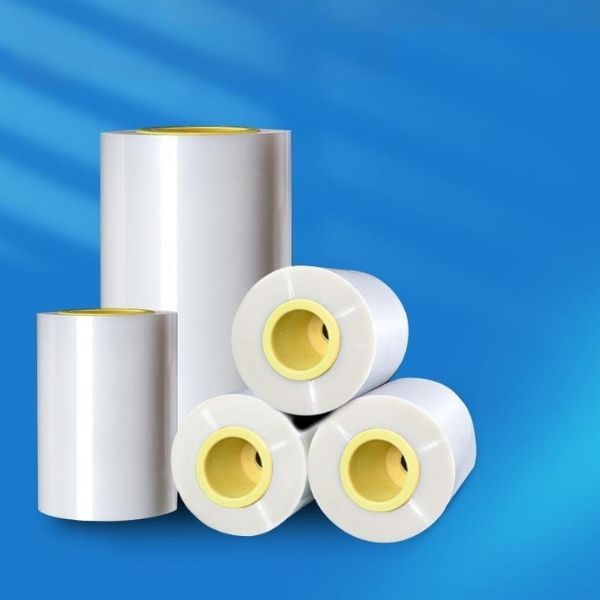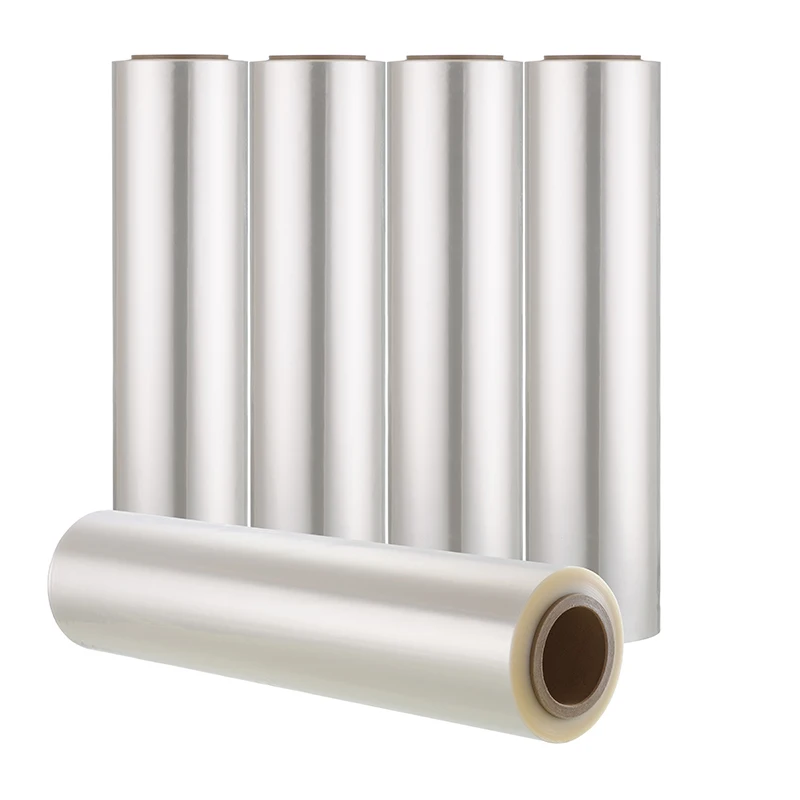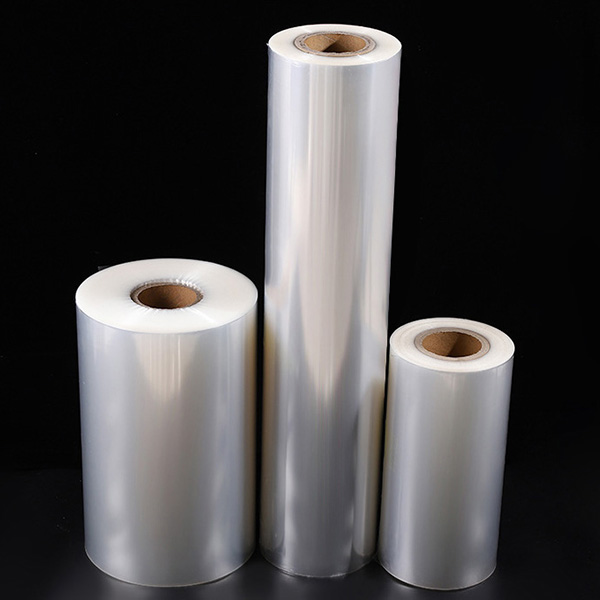
Choosing the right packaging film is one of the most important decisions in flexible packaging. A film may look simple from the outside, but its material, thickness, stiffness, sealing behavior, barrier performance, and lamination structure can directly affect product shelf life, packing speed, pouch strength, printing quality, and total packaging cost.
Among the most widely used packaging films, BOPP, BOPET, CPP, and PE are four common materials that buyers often compare. Each film has its own strengths. BOPP is often chosen for clarity, stiffness, and cost efficiency. BOPET is preferred when dimensional stability, print quality, and mechanical strength are required. CPP is widely used as a heat-sealing layer in laminated structures. PE is flexible, sealable, moisture-resistant, and increasingly important in recyclable mono-material packaging.
For packaging buyers, brand owners, converters, and procurement teams, the key question is not simply “Which film is best?” The better question is: Which film is best for your product, filling process, shelf-life target, and packaging format?
This guide explains the differences between BOPP, BOPET, CPP, and PE films, their typical applications, their advantages and limitations, and how to choose the right film or laminated structure for flexible packaging.
What Are BOPP, BOPET, CPP, And PE Films?
Before comparing performance, it is important to understand what each film means and how it is usually used in packaging.
What Is BOPP Film?
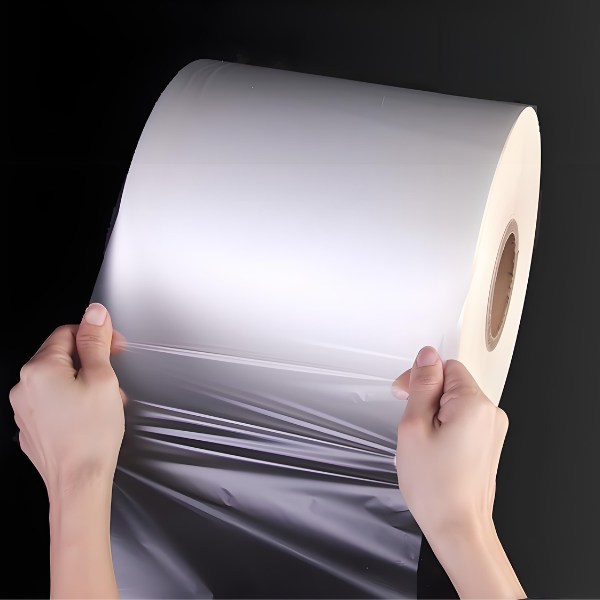
BOPP means biaxially oriented polypropylene film. It is produced by stretching polypropylene film in both the machine direction and transverse direction. This orientation process improves clarity, stiffness, tensile strength, and dimensional stability.
In flexible packaging, BOPP is commonly used for dry food packaging, snack packaging, labels, overwraps, printed roll stock, and laminated pouch structures. It is also available in different grades, such as transparent BOPP, matte BOPP, pearlized BOPP, metallized BOPP, anti-fog BOPP, and heat-sealable BOPP.
For buyers who need a clear and printable polypropylene-based material, BOPP printing film is often used as the outer printing layer in flexible packaging and label applications.
What Is BOPET Film?
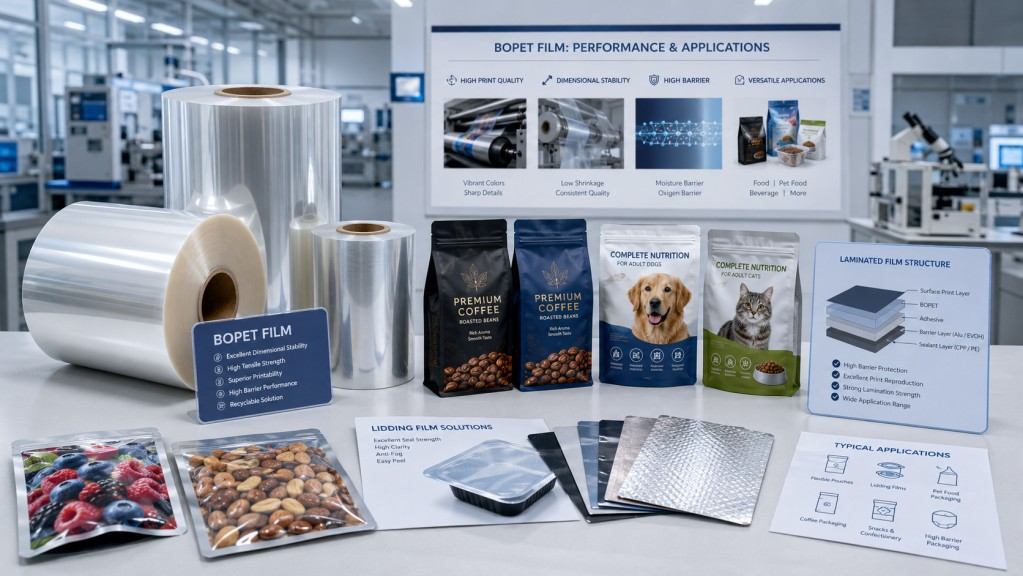
BOPET means biaxially oriented polyethylene terephthalate film. It is also commonly called polyester film in packaging. BOPET offers excellent mechanical strength, dimensional stability, heat resistance, clarity, and printability. It is often used as the outer layer in laminated flexible packaging.
Compared with BOPP, BOPET is usually stronger, more heat-resistant, and more dimensionally stable. It is widely used in coffee bags, pet food packaging, lidding films, retort structures, high-barrier laminates, and premium printed pouches.
For projects that require strong print quality and stable performance in lamination, BOPET film for packaging is a common choice.
What Is CPP Film?
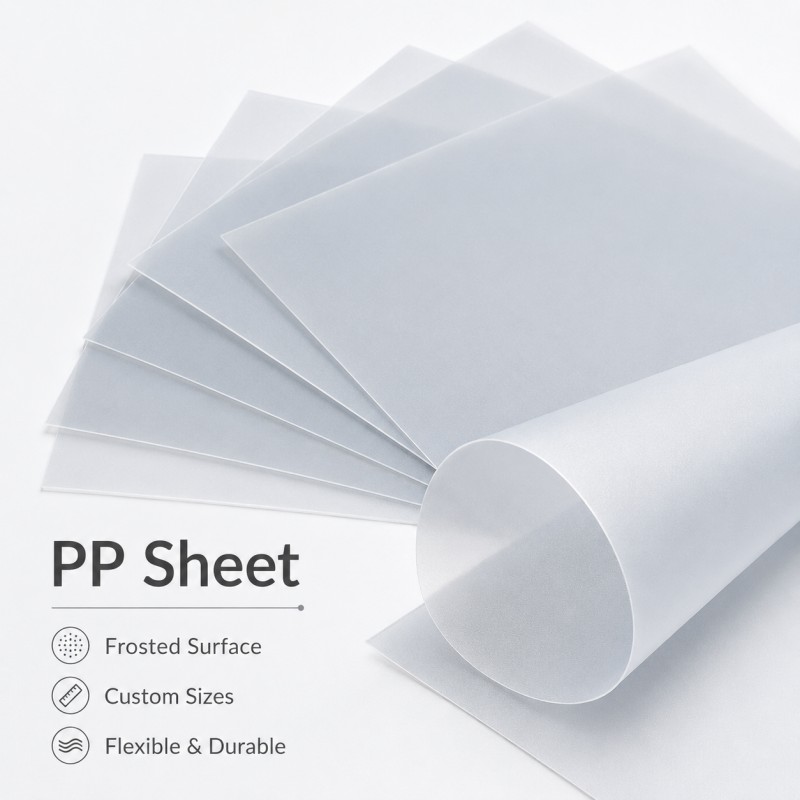
CPP means cast polypropylene film. Unlike BOPP, CPP is not biaxially oriented. It is made by cast extrusion, which gives the film good clarity, softness, heat-sealing performance, and puncture resistance.
CPP is frequently used as the inner sealing layer of laminated packaging. Common structures include BOPP/CPP, PET/CPP, PA/CPP, and PET/AL/CPP. CPP is especially important for snack packaging, bakery packaging, dry food packaging, retort pouches, and some medical or industrial packaging applications.
If a package needs good heat sealing with a polypropylene-based inner layer, clear CPP film can be a practical material choice.
What Is PE Film?
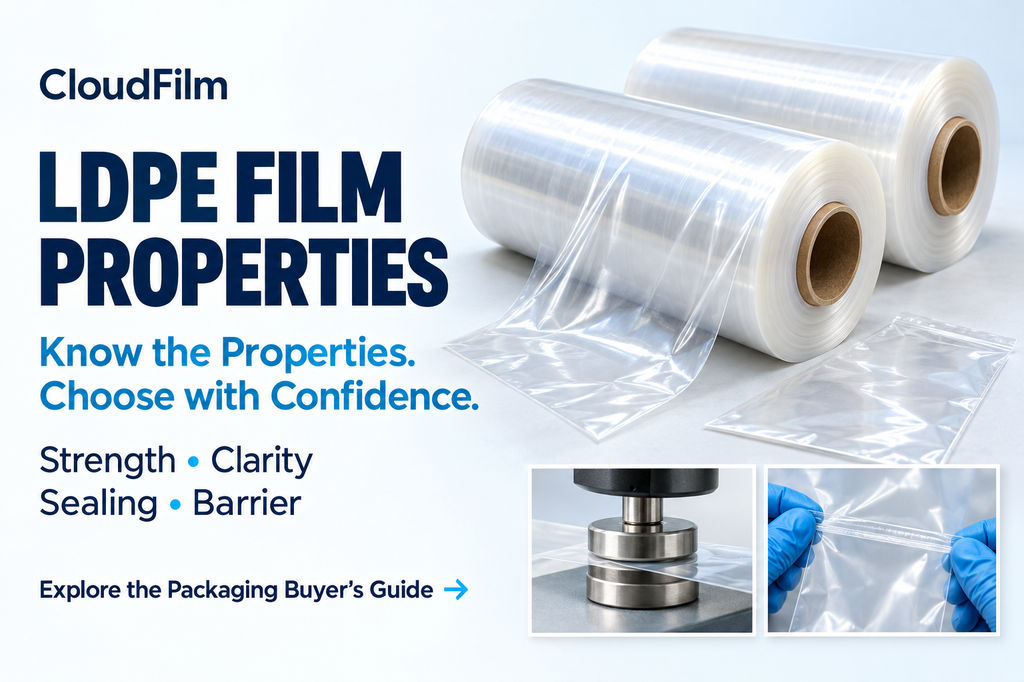
PE means polyethylene film. It is one of the most widely used plastic films in packaging. PE film is flexible, soft, sealable, moisture-resistant, and suitable for many packaging formats, including bags, liners, pouches, shrink films, stretch films, and laminated structures.
PE can be produced in different forms, such as LDPE, LLDPE, HDPE, CPE, MDO PE, and BOPE. In flexible packaging, PE is often used as the inner sealing layer in PET/PE, PA/PE, BOPET/PE, and paper/PE structures. It is also widely used in mono-PE recyclable packaging.
For general polyethylene roll applications, PE roll can be customized by thickness, width, color, additives, and roll format.
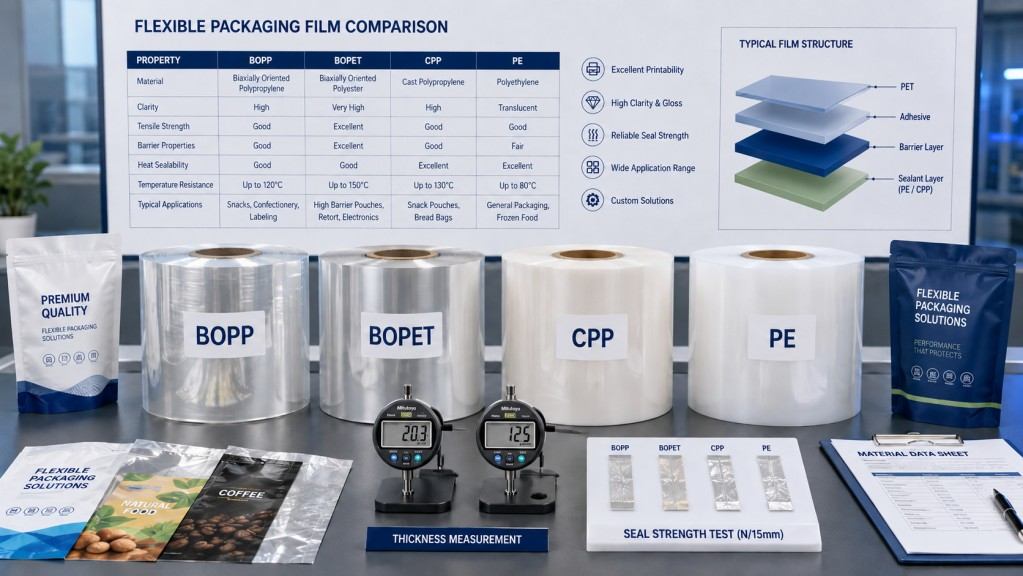
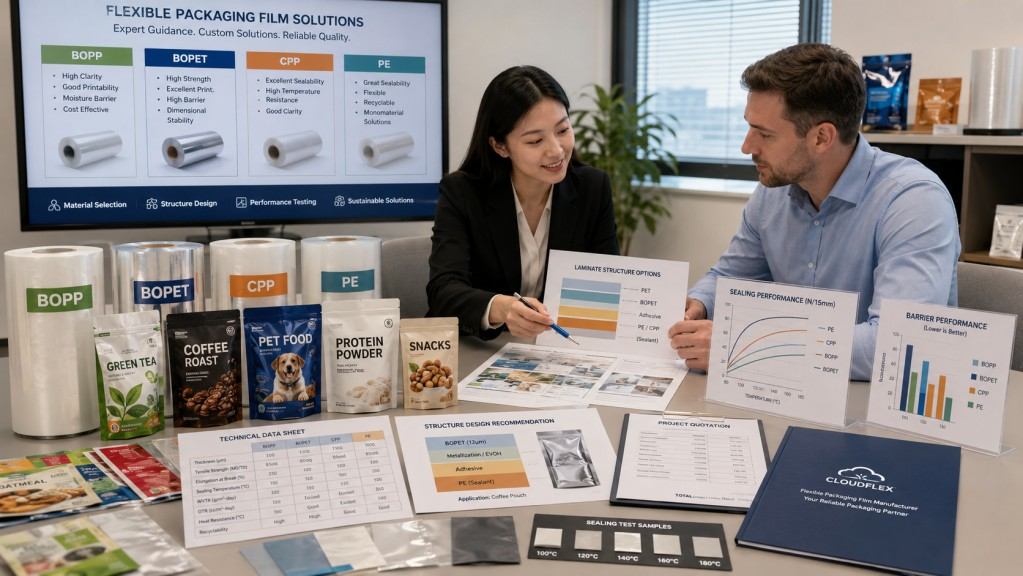
Quick Comparison Table: BOPP Vs BOPET Vs CPP Vs PE
| Film Type | Main Strengths | Common Role In Packaging | Typical Applications |
|---|---|---|---|
| BOPP | High clarity, good stiffness, cost efficiency, moisture resistance | Outer printing layer, overwrap, label film, snack packaging film | Snacks, bakery, labels, candy, dry food, stationery |
| BOPET | Strong, dimensionally stable, heat-resistant, excellent printability | Outer printing layer, high-strength layer, barrier laminate base | Coffee, pet food, lidding film, retort pouch, premium pouches |
| CPP | Good heat sealing, softness, clarity, puncture resistance | Inner sealing layer, retort sealing layer, laminated film layer | Snacks, dry food, retort food, bakery, medical packaging |
| PE | Flexible, sealable, moisture-resistant, tough, widely available | Inner sealing layer, mono-material film, bag film, liner film | Frozen food, vacuum packaging, liquids, pouches, recyclable packaging |
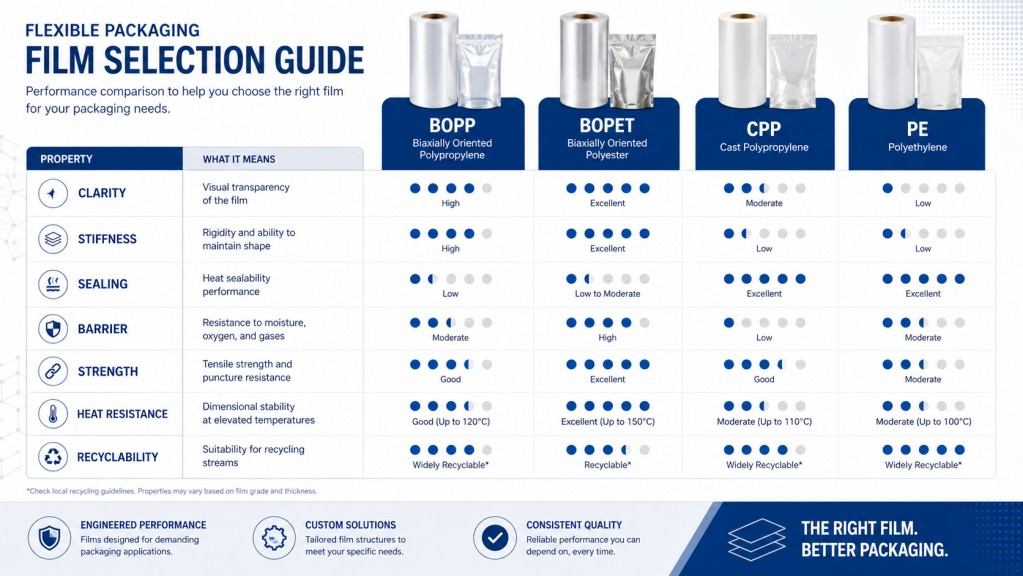
This table is a good starting point, but real packaging decisions should also consider product sensitivity, shelf-life requirements, filling temperature, sealing equipment, packaging speed, storage conditions, and recyclability goals.
BOPP Film: When Should You Use It?
BOPP is one of the most common films in flexible packaging because it offers a strong balance between appearance, stiffness, moisture resistance, and cost. It is especially suitable for packaging dry products that need good shelf display and stable machine performance.
Advantages Of BOPP Film
BOPP film has excellent clarity and gloss, which makes it suitable for retail packaging where product appearance matters. It also has good stiffness, so packages can feel crisp and structured even when using relatively thin film.
Another important benefit is its moisture resistance. For dry food products such as biscuits, crackers, candies, instant noodles, bakery items, and snack foods, BOPP can help protect the product from humidity when used in the right structure.
BOPP is also widely used in high-speed packaging lines because it has good dimensional stability and runnability. For converters, BOPP is a practical printing and lamination substrate because it can support attractive graphics at a competitive cost.
Limitations Of BOPP Film
BOPP is not the best choice when very high oxygen barrier, high puncture resistance, or high-temperature resistance is required. It is also not usually used alone for products that need strong heat seals, because many BOPP grades require a separate sealing layer or a heat-sealable coating.
For oily, liquid, sharp-edged, frozen, or long-shelf-life products, BOPP may need to be laminated with CPP, PE, metallized film, EVOH film, or other barrier materials.
Common BOPP Packaging Structures
Common BOPP-based structures include:
- BOPP/CPP for snacks and dry foods
- BOPP/PE for lightweight flexible packaging
- BOPP/VMPET/PE for higher-barrier dry food packaging
- Metallized BOPP/CPP for snacks, candy, tea, and dry goods
- Matte BOPP/PE for premium retail pouches
If your product is dry, lightweight, and sensitive mainly to moisture, BOPP can be a cost-effective starting point.
BOPET Film: When Should You Use It?
BOPET is often selected when the package needs higher strength, better print registration, better heat resistance, and stronger dimensional stability than BOPP. It is a preferred outer layer for many laminated flexible packaging structures.
Advantages Of BOPET Film
BOPET has excellent tensile strength and dimensional stability. During printing, lamination, slitting, and pouch making, it helps maintain stable web tension and clear graphics. This is especially important for premium printed packaging and multi-color designs.
BOPET also has better heat resistance than BOPP, making it suitable for applications where the outer web must withstand lamination heat, sealing jaw contact, hot filling, pasteurization, or retort-related processing when combined with the correct inner layers.
Another reason buyers choose BOPET is its compatibility with high-barrier structures. BOPET can be laminated with PE, CPP, aluminum foil, metallized PET, ALOx PET, EVOH film, or nylon film to create packaging for coffee, pet food, spices, sauces, medical products, and industrial goods.
Limitations Of BOPET Film
BOPET is usually more expensive than BOPP and PE. It also does not provide strong heat sealing by itself, so it is normally used with PE, CPP, or another sealant layer. If the product only needs simple moisture protection and low-cost packaging, BOPET may be more than necessary.
Common BOPET Packaging Structures
Common BOPET-based structures include:
- PET/PE for food pouches, frozen food, and general packaging
- PET/CPP for dry food, retort food, and medical packaging
- PET/VMPET/PE for coffee, snacks, tea, and powder packaging
- PET/AL/PE for high-barrier packaging
- PET/PA/PE for stronger puncture resistance
For food, medical, and industrial packaging that needs a strong outer layer and reliable sealing, PET/PE film is one of the most widely used laminated film structures.
CPP Film: When Should You Use It?
CPP is widely used as a sealing layer. It is softer than BOPP and offers good heat-sealing performance, clarity, and flexibility. In many laminated structures, CPP is the inside layer that contacts the product and forms the final seal.
Advantages Of CPP Film
CPP provides a good sealing window, which helps packaging lines form reliable seals. It can also offer good hot tack and puncture resistance depending on the grade. This makes it useful for snack bags, bakery packaging, dry food packaging, and laminated roll stock.
Retort-grade CPP, often called RCPP, can be designed for high-temperature sterilization structures. This makes CPP important in retort pouches for ready meals, sauces, soups, pet food, and other shelf-stable products.
CPP also has good clarity, which can help create transparent packaging when used alone or in clear laminated structures.
Limitations Of CPP Film
CPP is usually softer and less stiff than BOPP. It may not provide the same crisp appearance as BOPP when used as an outer layer. It also has limited oxygen barrier by itself, so it may need to be combined with PET, BOPA, EVOH, metallized film, or foil when the product requires longer shelf life.
Common CPP Packaging Structures
Common CPP-based structures include:
- BOPP/CPP for snacks and dry food
- PET/CPP for stronger laminated packaging
- PET/AL/CPP for retort pouches
- BOPA/CPP for puncture-resistant pouches
- Metallized CPP structures for barrier and metallic appearance
When you need a strong PET outer layer and a CPP sealing layer, PET CPP film can help build reliable laminated packaging for food, retort, medical, and technical applications.
PE Film: When Should You Use It?
PE film is one of the most important materials in flexible packaging because it is easy to seal, flexible, moisture-resistant, and widely used in both simple and complex structures.
Advantages Of PE Film
PE has excellent heat-sealing performance, which is why it is often used as the inner layer of laminated packaging. It can seal at relatively practical temperatures and can be adjusted for hot tack, low-temperature sealing, puncture resistance, stiffness, and slip performance.
PE is also flexible and tough. It is widely used for frozen food bags, vacuum packaging, liquid pouches, liners, protective films, shrink films, and industrial packaging. For products that need moisture protection and flexible handling, PE is often a practical solution.
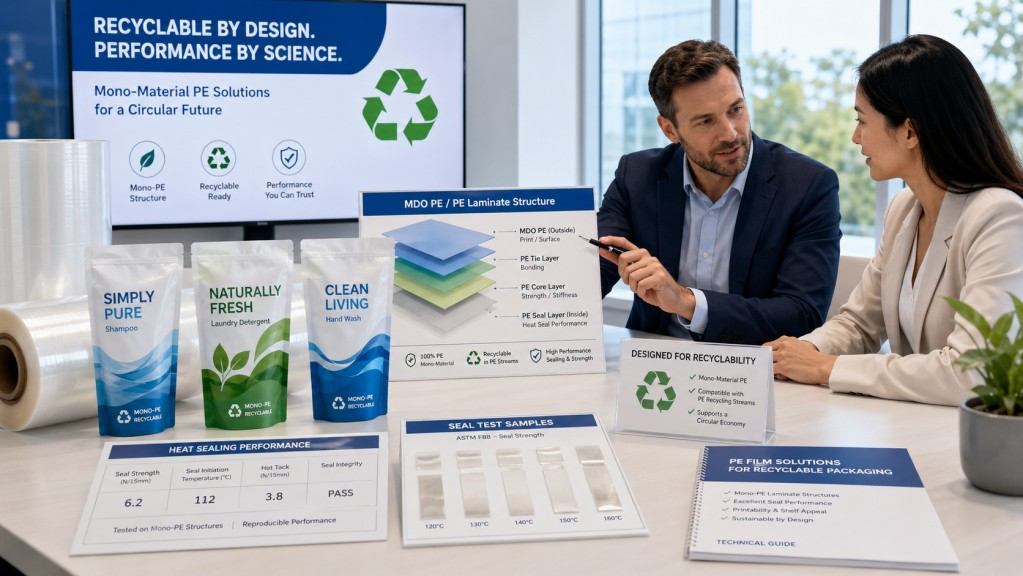
Another major advantage is recyclability potential. Mono-PE structures, such as MDO PE/PE or BOPE/PE, are increasingly used when brands want to move away from mixed-material laminates. These structures can improve recyclability while still supporting printing, sealing, and pouch-making performance.
For recyclable flexible packaging projects, MDO PE film can be used as a stiff, printable PE layer in mono-PE laminates.
Limitations Of PE Film
PE is softer than BOPP and BOPET. It may have lower heat resistance and lower stiffness, especially in simple blown film grades. Standard PE also has limited oxygen barrier, so it may need EVOH, PA, metallized film, or other barrier layers for oxygen-sensitive products.
PE can also be more challenging for high-quality printing if used as a simple outer layer. That is why PE is often combined with MDO PE, BOPE, PET, BOPP, or other printable substrates.
Common PE Packaging Structures
Common PE-based structures include:
- PET/PE for general food packaging
- PA/PE for vacuum bags and frozen food
- PE/EVOH/PE for high-barrier recyclable structures
- MDO PE/PE for mono-PE recyclable pouches
- BOPE/PE for recyclable flexible packaging
- Paper/PE for moisture-resistant paper-based packaging
If your product needs good sealing, flexibility, moisture protection, and practical cost control, PE is usually one of the first materials to consider.
How To Choose Between BOPP, BOPET, CPP, And PE
A professional packaging film supplier or manufacturer should not recommend a film based only on material name. The right structure depends on the product and the packaging process.
1. Start With The Product
The product determines the protection requirement. Dry snacks may need moisture protection and good shelf appearance. Coffee may need aroma protection and oxygen barrier. Frozen meat may need puncture resistance and low-temperature durability. Liquid sauce may need strong sealing and leak resistance.
For food applications that need custom structures, food packaging film can be engineered based on shelf life, filling method, barrier target, and sealing performance.
2. Define The Packaging Format
Different formats need different films. Flow wrap packaging may need stiffness and machinability. Stand-up pouches need outer printability, barrier, and a strong inner sealant. Vacuum bags need puncture resistance and strong seals. Retort pouches need heat resistance and sterilization stability.
3. Confirm The Barrier Requirement
Barrier is not only about oxygen. You may also need moisture barrier, aroma barrier, light barrier, grease resistance, or chemical resistance. BOPP is useful for moisture resistance in dry packaging. BOPET provides better dimensional stability and can support barrier laminates. CPP and PE are often used as sealing layers. EVOH, metallized film, aluminum foil, PA, or coated films can be added when higher barrier is needed.
4. Check Sealing Conditions
A beautiful package is useless if it cannot seal properly. Buyers should confirm sealing temperature, dwell time, pressure, packing speed, contamination level, and hot-tack requirement. CPP and PE are common sealant layers, but the final choice depends on the product and machine.
5. Consider Sustainability And Recycling
If recyclability is a priority, mono-material structures may be better than traditional mixed-material laminates. For example, a mono-PE pouch may use MDO PE as the printing layer and PE as the sealing layer. A mono-PP structure may use BOPP and CPP together.
For buyers evaluating material simplification, mono material packaging is an important direction for recyclable flexible packaging.
6. Review Cost And Total Value
The cheapest film is not always the lowest-cost solution. If a film causes sealing failures, high scrap rates, poor shelf life, or customer complaints, the real cost becomes much higher. A reliable packaging film manufacturer should help you balance price, performance, machine efficiency, and product protection.
Typical Application Recommendations
Snacks And Dry Food
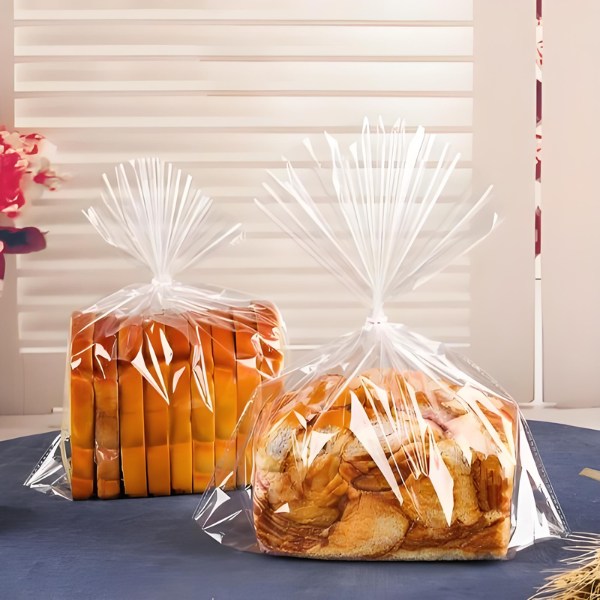
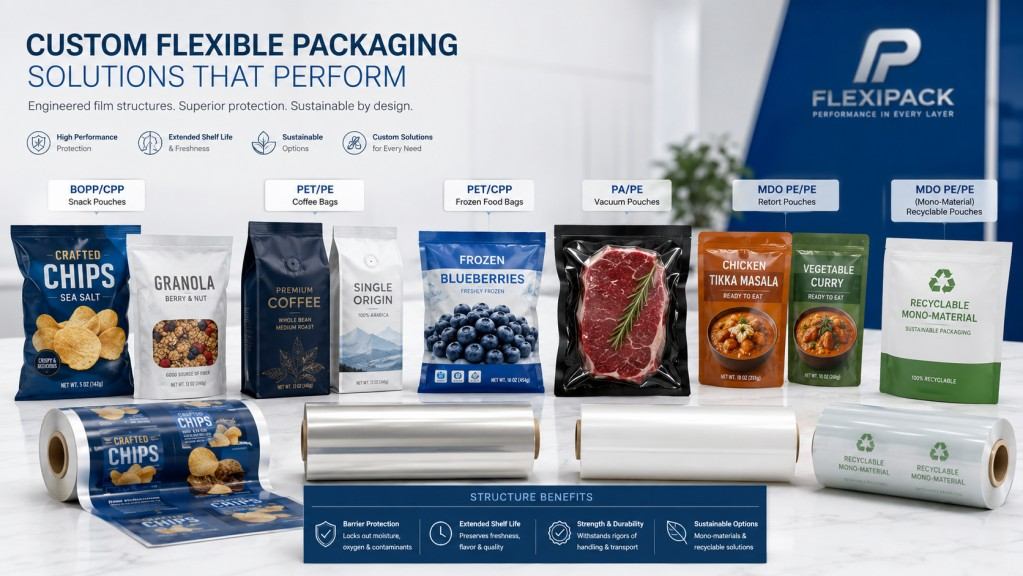
For chips, biscuits, candy, crackers, instant noodles, and dry bakery products, BOPP/CPP, BOPP/metallized CPP, PET/PE, or PET/VMPET/PE structures are common options. BOPP is often useful when clarity, stiffness, and cost control are important.
Coffee, Tea, And Powder Products
Coffee, tea, milk powder, protein powder, spices, and aroma-sensitive products often need stronger oxygen and aroma barrier. PET/VMPET/PE, PET/AL/PE, PET/EVOH/PE, and similar high-barrier structures may be used.
Frozen Food And Vacuum Packaging
Frozen meat, seafood, cheese, and vacuum-packed products often need puncture resistance, sealing strength, and oxygen barrier. PA/PE, PE/PA/PE, PET/PE, and PE/EVOH/PE structures are common. If puncture resistance is a priority, BOPA film can be used in laminated structures for demanding packaging.
Retort And High-Temperature Food
Ready meals, sauces, soups, pet food, and sterilized products need films that can survive retort conditions. PET/AL/RCPP, PET/BOPA/RCPP, and other retort structures are common. CPP or RCPP is often selected as the inner sealing layer.
Labels, Overwraps, And Retail Packaging
BOPP is widely used for labels, clear overwraps, stationery packaging, and retail display packaging. It offers good clarity, stiffness, and surface appearance.
Recyclable Pouches
For recyclable flexible packaging, mono-PE and mono-PP structures are becoming more common. MDO PE/PE, BOPE/PE, and BOPP/CPP structures may be considered depending on local recycling guidance, product needs, and performance targets.
BOPP Vs BOPET Vs CPP Vs PE: Practical Selection Summary
There is no single film that solves every packaging problem.
Use BOPP when you need a clear, stiff, cost-effective film for dry food, labels, overwraps, or polypropylene-based packaging.
Use BOPET when you need higher strength, better print stability, better heat resistance, and a strong outer layer for laminated packaging.
Use CPP when you need a polypropylene-based heat-sealing layer, especially for snack packaging, dry food packaging, retort structures, or PET/CPP laminates.
Use PE when you need flexibility, moisture protection, strong sealing, frozen-food performance, liquid packaging suitability, or mono-PE recyclable packaging.
In many real projects, the best solution is not one film alone, but a customized laminated structure. A professional flexible packaging film supplier should help you compare materials, test samples, adjust thickness, confirm sealing parameters, and match the film to your filling line.
FAQ: BOPP, BOPET, CPP, And PE Film
1. What is the main difference between BOPP and BOPET film?
BOPP is made from polypropylene and is commonly used for dry food packaging, labels, overwraps, and cost-effective printed packaging. BOPET is made from polyester and usually offers higher strength, better dimensional stability, and better heat resistance. BOPET is often used as the outer layer in premium laminated packaging.
2. Is CPP the same as BOPP?
No. Both are polypropylene-based films, but they are produced differently. BOPP is biaxially oriented and has higher stiffness and clarity. CPP is cast film and is softer with better heat-sealing performance. In many laminated structures, BOPP is used as the outer layer and CPP is used as the inner sealing layer.
3. Is PE film better than PP film?
Not always. PE is usually better for flexible sealing layers, frozen packaging, liquid packaging, and mono-PE recyclable structures. PP films such as BOPP and CPP can provide better stiffness, clarity, and heat resistance in some applications. The right choice depends on the product and packing process.
4. Which film is best for food packaging?
There is no one best film for all food packaging. Dry snacks may use BOPP/CPP. Coffee may use PET/VMPET/PE. Frozen meat may use PA/PE or PE/EVOH/PE. Retort food may use PET/AL/RCPP or PET/BOPA/RCPP. The best film depends on shelf life, sealing, barrier, product weight, and filling conditions.
5. Which film is best for printing?
BOPET and BOPP are both widely used as printing layers. BOPET is often preferred for premium printed laminates because of its dimensional stability and heat resistance. BOPP is commonly used when cost efficiency, clarity, and stiffness are important.
6. Which film is best for heat sealing?
PE and CPP are common heat-sealing films. PE is widely used in PET/PE, PA/PE, and mono-PE structures. CPP is commonly used in BOPP/CPP, PET/CPP, and retort structures. The best sealant depends on sealing temperature, packing speed, contamination level, and product type.
7. Which film has the best barrier?
Among BOPP, BOPET, CPP, and PE alone, none should be treated as a universal high-barrier solution. For high oxygen or aroma barrier, the structure may need EVOH, metallized film, aluminum foil, coated PET, or PA. For moisture barrier in dry packaging, BOPP and metallized films can be useful.
8. Can BOPP and CPP be laminated together?
Yes. BOPP/CPP is a common flexible packaging structure. BOPP can provide clarity, stiffness, and printability, while CPP provides heat sealing. This structure is widely used for snacks, bakery, candy, and dry food packaging.
9. Can BOPET and PE be laminated together?
Yes. PET/PE is one of the most common laminated structures in flexible packaging. PET provides strength, printability, and dimensional stability, while PE provides heat sealing and flexibility. It is widely used for food pouches, frozen food, powders, and general packaging.
10. Which material is better for recyclable packaging?
Mono-material PE or PP structures are usually considered when recyclability is the main target. For example, MDO PE/PE can support mono-PE recyclable packaging, while BOPP/CPP may support mono-PP packaging. The final structure should match local recycling requirements and product performance needs.
11. What information should I give a film supplier before asking for a quote?
You should provide product type, packaging format, film structure if known, thickness, roll width, roll length or outer diameter, printing requirement, sealing method, filling temperature, shelf-life target, annual or monthly quantity, and destination country. If you have a current film sample, sharing it can make the recommendation faster.
12. Can one film replace another film directly?
Sometimes yes, but not always. Replacing BOPP with BOPET, CPP with PE, or mixed-material laminates with mono-material structures may change stiffness, sealing, barrier, shrinkage, COF, and machine performance. Testing is strongly recommended before mass production.
13. Which film should I choose for pouches?
Most pouches use laminated structures instead of a single film. Stand-up pouches may use PET/PE, PET/VMPET/PE, PET/AL/PE, MDO PE/PE, or BOPP/CPP depending on the product. Heavy products, liquid products, and high-barrier products usually need stronger structures.
14. Which film should I choose for roll stock packaging?
For roll stock, the best film depends on the form-fill-seal machine, sealing jaws, speed, filling product, and required barrier. BOPP/CPP, PET/PE, PET/CPP, PA/PE, and mono-PE structures are common options.
15. How can CloudFilm help with packaging film selection?
CloudFilm Packaging can help buyers compare BOPP, BOPET, CPP, PE, BOPA, EVOH, metallized films, and laminated structures based on application needs. For custom packaging film projects, buyers can share product details, target shelf life, current film samples, and packaging machine conditions to receive a practical film structure recommendation.
Conclusion
BOPP, BOPET, CPP, and PE films are all important materials in modern flexible packaging. BOPP is strong in clarity, stiffness, and cost efficiency. BOPET offers strength, print stability, and heat resistance. CPP is a practical sealing layer for many PP-based and retort packaging structures. PE provides flexibility, strong sealing, moisture protection, and strong potential for recyclable mono-material packaging.
The best packaging film is not decided by material name alone. It should be selected according to product protection, shelf life, packaging format, filling process, sealing conditions, sustainability target, and total cost.
For buyers looking for a reliable packaging film manufacturer and supplier, the most effective approach is to start with the product application and then build the structure layer by layer. With the right film selection, flexible packaging can improve shelf life, reduce packaging failures, support better shelf appearance, and create more value for your product.