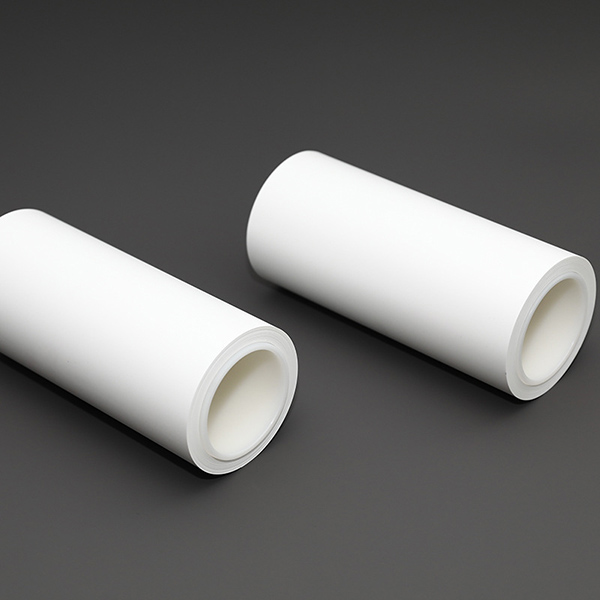
Matte plastic packaging has become one of the most popular choices for brands that want a cleaner, softer, and more premium shelf appearance. Compared with glossy packaging, matte packaging gives a low-glare finish that feels more refined and often more modern. It is widely used in food packaging, coffee bags, pet food pouches, cosmetics, health products, and many other retail applications where visual presentation matters.
For many buyers, however, “matte plastic packaging” is still a broad term. It can refer to a matte outer film, a matte laminated pouch, a soft-touch retail bag, or a complete custom flexible package with a matte effect. That is why it is important to understand not only the look of matte packaging, but also the material options, barrier needs, converting process, and supplier selection points behind it.
If you are new to this category, it also helps to understand the broader concept of flexible packaging, because matte packaging is usually built as part of a flexible packaging structure rather than as a standalone decorative layer.
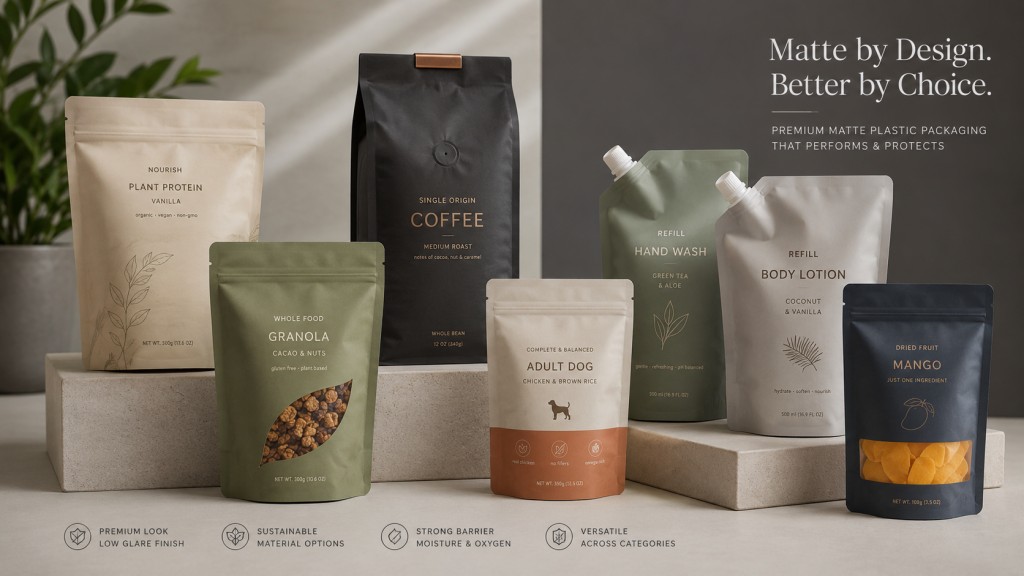
What Is Matte Plastic Packaging?
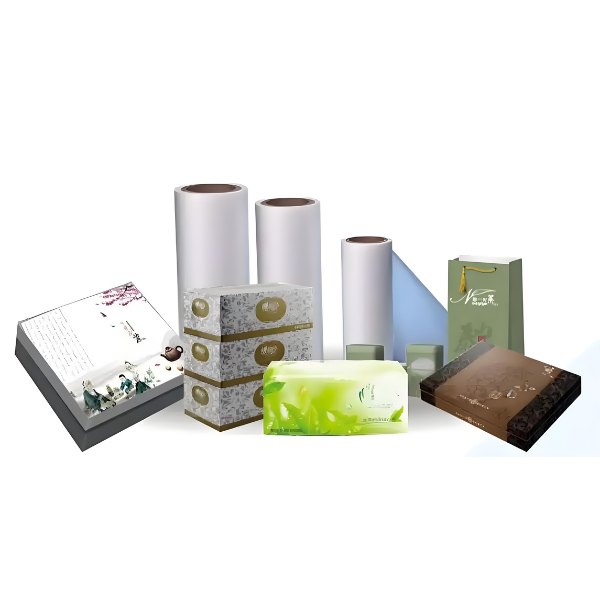
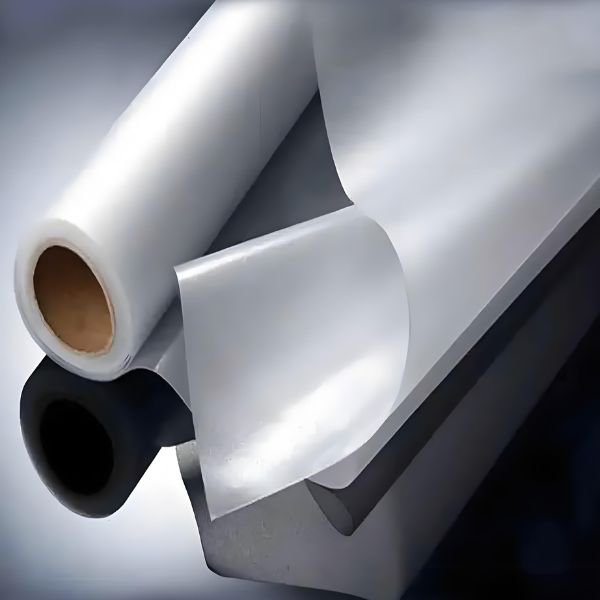
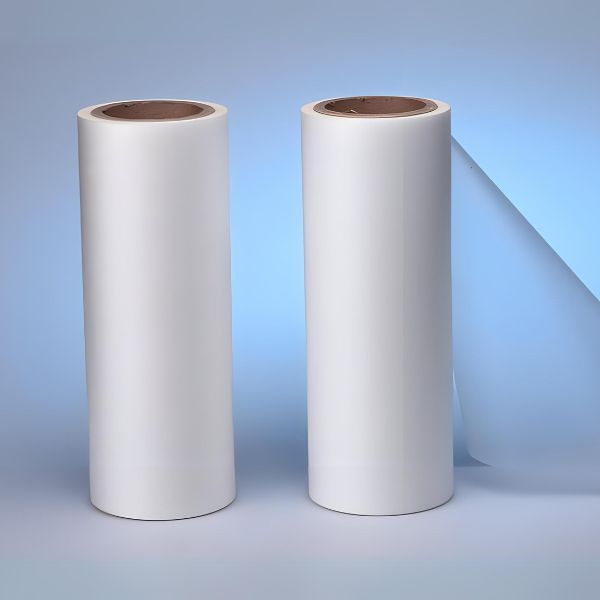
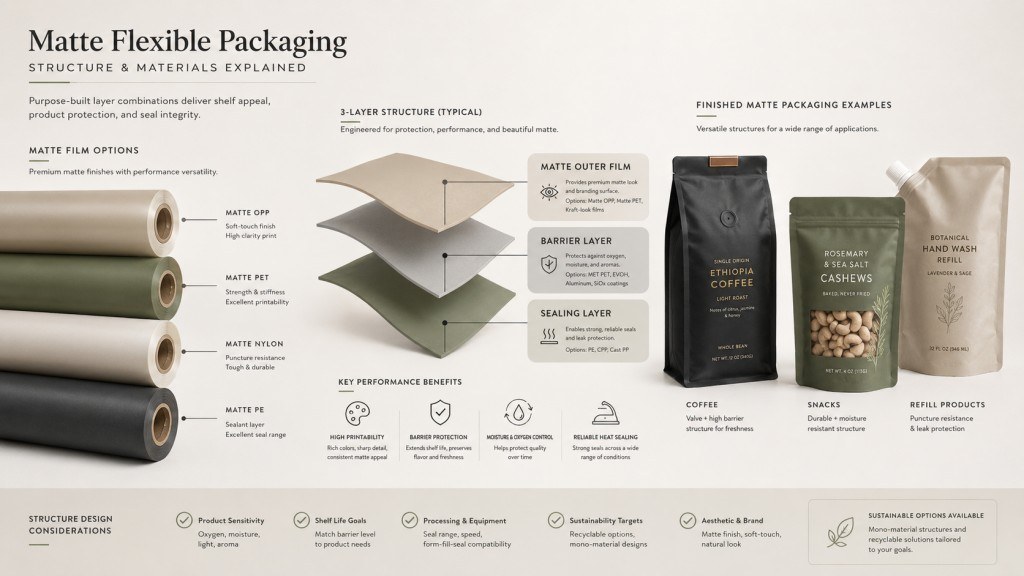
Matte plastic packaging refers to packaging that has a non-glossy, low-reflection surface. Instead of producing a bright, shiny look, the outer surface diffuses light and creates a softer visual effect. This finish can be achieved in several ways, such as using matte BOPP film, matte PET film, matte lamination film, or a specialty coating that creates a dull or velvet-like surface.
In practical terms, matte packaging is not limited to one single structure. It may appear in roll stock, pouches, bags, labels, wraps, overlaminates, or printed laminated films. In some cases, the matte effect is purely visual. In other cases, it also improves handling by reducing fingerprints, glare, or surface scuff visibility.
For packaging buyers, matte packaging often sits at the intersection of branding and performance. It is chosen not only because it looks attractive, but because it can help a product feel more premium, more differentiated, and more aligned with modern retail positioning.
Why Matte Plastic Packaging Is So Popular
The growing popularity of matte packaging comes from a combination of visual appeal and commercial practicality.
First, matte packaging looks more premium in many retail categories. The low-gloss appearance often makes products feel more sophisticated and more “designed.” This is especially useful in coffee, tea, specialty snacks, nutraceuticals, cosmetics, and premium pet products, where packaging plays a major role in brand perception.
Second, matte packaging reduces glare. Under strong store lighting, glossy surfaces can reflect too much light and make printed graphics harder to read. Matte packaging offers a calmer surface that improves readability and often gives photography or typography a cleaner look.
Third, matte surfaces can help create a better tactile experience. Even standard matte film feels different from gloss film, while soft-touch matte films go further by adding a velvety hand-feel. This tactile element can make packaging feel more expensive and more memorable.
Fourth, matte finishes can work well across many pouch formats. Whether you are using three-side-seal pouches, side-gusset bags, pillow packs, or box pouches, the matte effect can be integrated into the outer layer without changing the basic consumer convenience of the package.
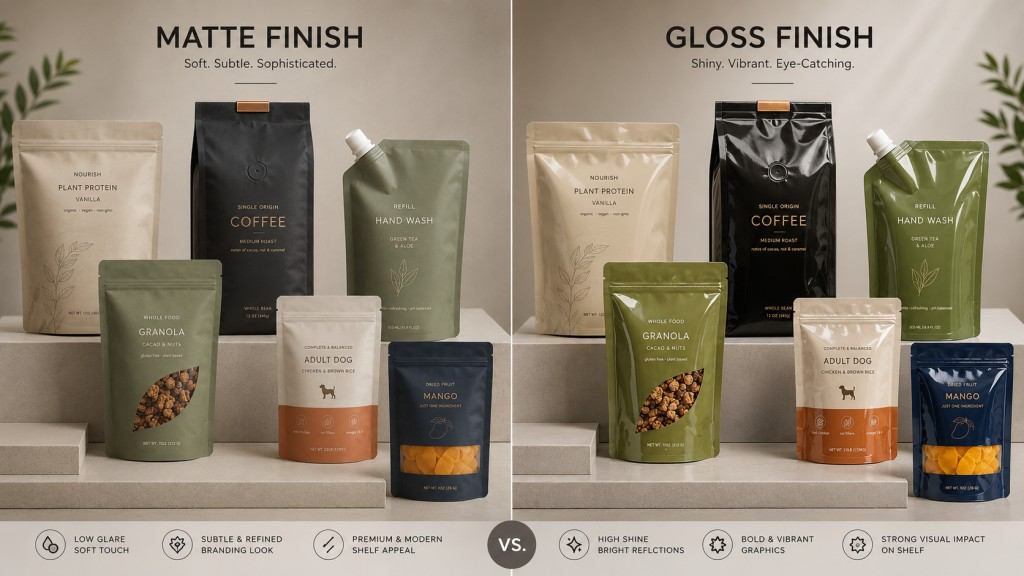
Matte Packaging Vs. Glossy Packaging
Many buyers compare matte and glossy packaging at the start of a project. Neither is universally better. The right choice depends on your product, brand positioning, and retail environment.
Glossy packaging is brighter, more reflective, and often associated with vivid color pop. It can make graphics appear more energetic and bold. It is common in mass-market snacks, confectionery, and products that want maximum brightness.
Matte packaging, by contrast, creates a quieter and more refined impression. It is often preferred by brands that want elegance, softness, or a premium minimalist look. Matte packaging is also a strong choice when glare reduction matters or when the brand design uses muted colors, earthy tones, or modern typography.
In many projects, the decision comes down to brand language. If the product needs a sharp, loud, high-energy look, gloss may work better. If the product needs a premium, natural, modern, or boutique feel, matte is often the better fit.
Common Materials Used In Matte Plastic Packaging
1. Matte BOPP Film
For many projects, BOPP matte film is one of the most practical starting points. BOPP matte film is widely used as an outer web in laminated packaging because it offers a clean matte look, good printability, and a cost-effective balance between appearance and performance.
It is commonly used for snacks, bakery products, labels, wrap-around applications, and various consumer goods. In many cases, matte BOPP is laminated with sealing layers or barrier layers to create the final package.
2. Matte PET Film
Matte PET is often chosen when buyers need more stiffness, better dimensional stability, or a slightly different premium feel. It can be useful in applications where the outer layer needs to hold shape better or where the package design benefits from a firmer hand-feel.
3. Matte Lamination Films
Matte lamination films are often used when the goal is to add a matte finish over a printed substrate. This approach is common in both printed packaging and non-packaging applications. It allows designers to preserve printed graphics while changing the final surface effect. Matte lamination can also improve scuff resistance depending on the structure.
4. Soft-Touch Matte Films
Soft-touch films are a more premium branch of matte packaging. They offer a velvet-like tactile feel that is especially popular in luxury packaging, premium labels, cosmetics, gift packaging, and high-end retail items.
5. Recyclable Matte Structures
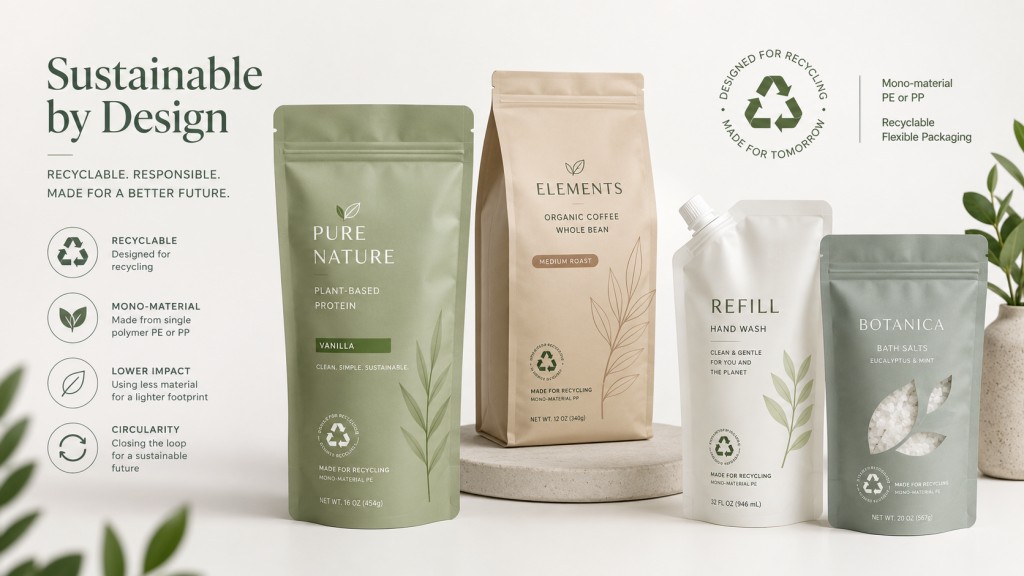
Sustainability is increasingly part of matte packaging development. If recyclability is a priority, buyers should explore recyclable pouches and related mono-material concepts early in the project. Matte effects can still be possible in recyclable designs, but the structure, barrier level, and print system must be chosen carefully.
Which Packaging Formats Work Best With Matte Finishes?
Matte finishes can be used across a wide range of formats, but some formats showcase the effect especially well.
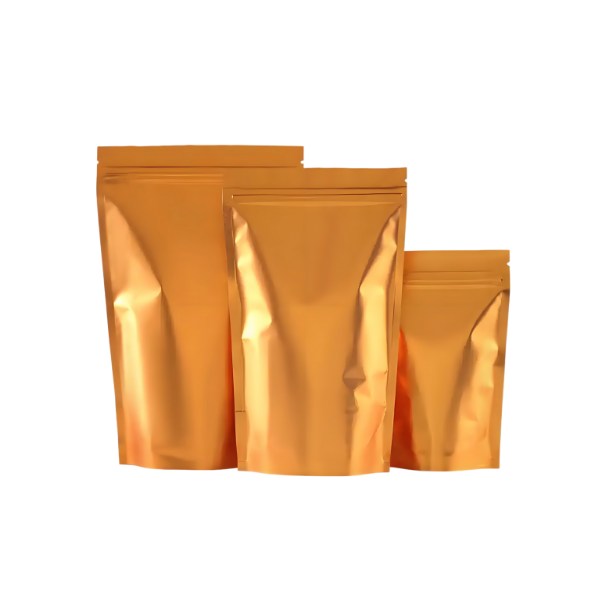
For retail display, custom stand up pouches are one of the most popular choices. They offer a large printable front panel, strong shelf presence, and enough flexibility for zippers, windows, valves, and specialty features.
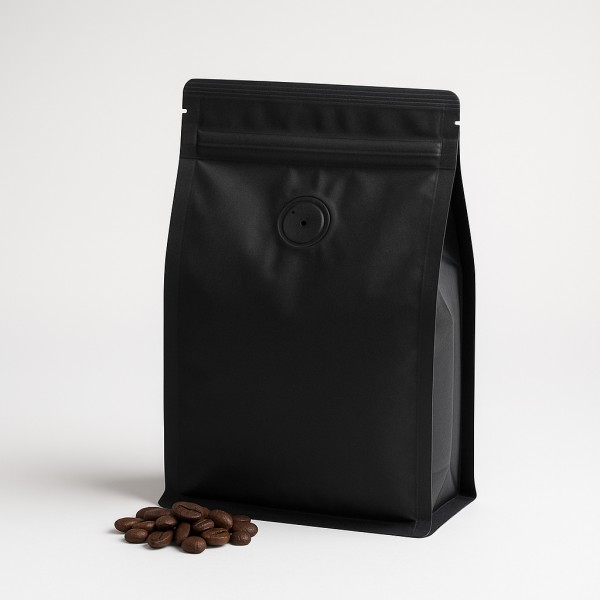
Flat bottom pouches are another excellent option, especially for premium dry products like coffee, granola, specialty foods, and pet treats. Their box-like silhouette gives more branding area, and the matte surface enhances the structured premium look.
Three-side-seal pouches and pillow pouches are often used when efficiency and cost control are important. Even in simpler pouch styles, a matte outer layer can make the package feel more upscale.
For buyers comparing different pouch shapes and shelf functions, the ultimate guide to pouch types is a useful way to think through format selection before final artwork and structure decisions are made.
Best Applications For Matte Plastic Packaging
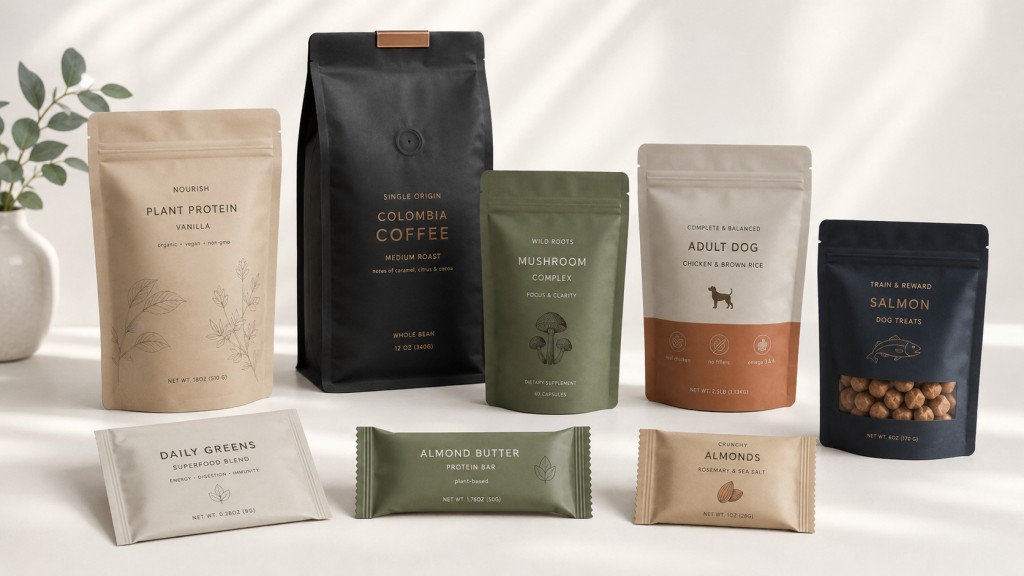
Coffee Packaging
Coffee is one of the strongest applications for matte packaging. A matte finish works especially well for specialty coffee brands because it communicates craftsmanship, quality, and brand personality. It also pairs well with earthy designs, minimalist branding, and premium printed details. If you are developing this category, coffee packaging bags are a useful reference for barrier structures, valves, and common bag formats.
Snacks And Dry Foods
Matte packaging is widely used in premium snacks, dried fruits, nuts, granola, cereal, chocolate, and bakery products. It helps products stand out without looking too glossy or too mass-market.
Pet Food And Pet Treats
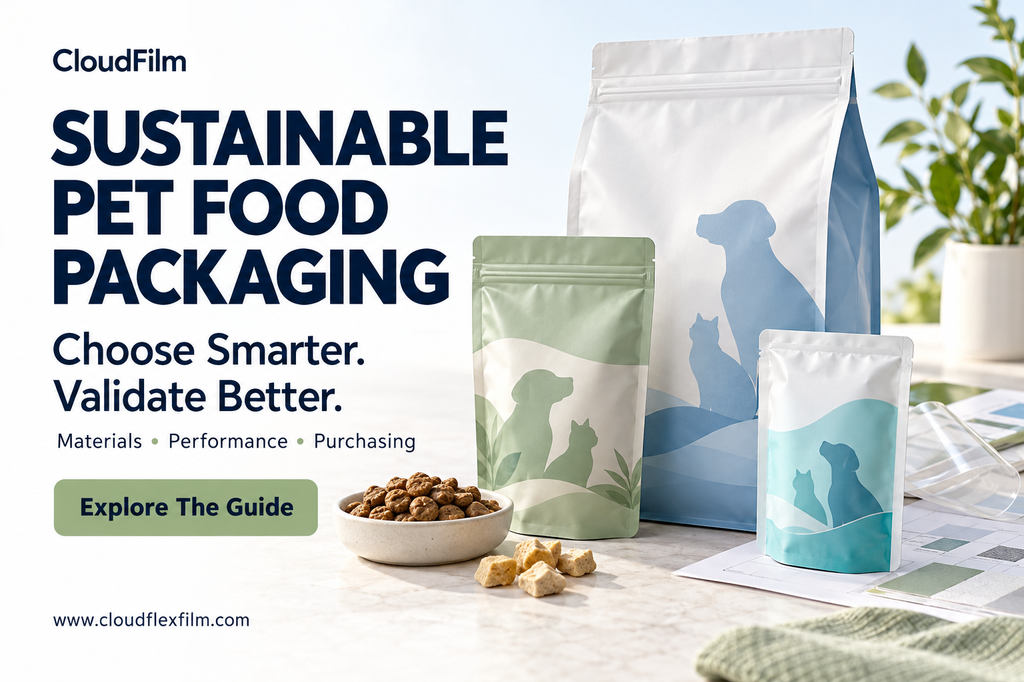
Premium pet brands increasingly choose matte packaging because it helps position the product at a higher value level. Matte stand-up pouches and flat bottom bags are especially effective for treats, freeze-dried products, and specialty nutrition lines.
Cosmetics And Personal Care
Refill pouches, face mask pouches, bath salts, and beauty retail packs often use matte packaging because it communicates elegance and modernity. Matte surfaces also complement delicate color palettes and clean design.
Health, Supplements, And Wellness
Protein powders, vitamins, herbal products, and wellness blends frequently use matte pouches to support a professional, trustworthy appearance. The finish can make the pack look cleaner and more premium while still allowing strong product information display.
Household And Industrial Applications
Matte packaging is not limited to food or beauty. It can also be used in household refill products, hardware accessory packaging, and industrial pouches when a low-glare or more technical look is desired.
How Matte Packaging Structures Are Built
A matte package is usually not a single-layer “matte plastic.” In most real-world projects, it is part of a layered structure designed around several functional goals: printability, barrier, stiffness, sealability, puncture resistance, and appearance.
For example, a snack pouch may use a matte outer printable layer, then a barrier or support layer, and finally a sealing inner layer. A coffee bag may need a matte outer surface plus a high-barrier middle layer and a reliable heat-seal inner layer. A refill pouch may prioritize squeezability, seal strength, and lighter-weight recyclable design.
That is why material selection should start with the product itself. Buyers should define the fill product, shelf life target, filling condition, pack size, closure features, and distribution environment before deciding the exact matte structure.
How To Choose The Right Matte Plastic Packaging Manufacturer Or Supplier
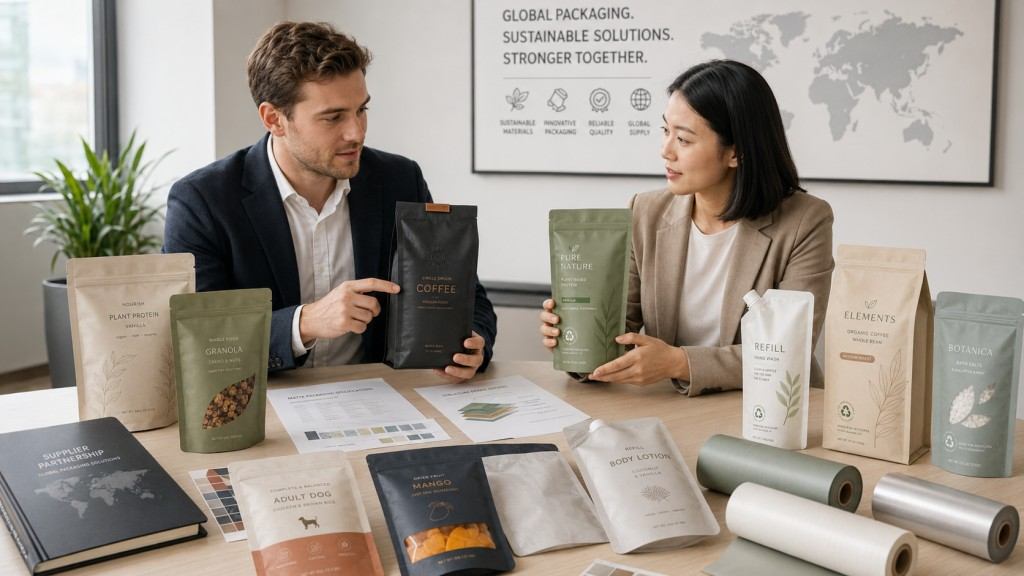
For B2B buyers, choosing the right manufacturer or supplier matters as much as choosing the right film type. A good supplier should do more than quote a price. It should understand your application and recommend structures that match your product and market.
Here are some practical questions to ask:
- What product will be packed, and how sensitive is it to oxygen, moisture, light, or grease?
- Do you need standard matte, soft-touch matte, or a specific tactile effect?
- Is the package for automatic filling, manual packing, or high-speed conversion?
- What pouch format do you need?
- Do you need zipper, valve, easy-open notch, window, or spout features?
- Is the project aimed at food, cosmetics, supplements, household, or industrial use?
- Do you need recyclable or mono-material options?
- What is your required MOQ, lead time, and target market?
A strong packaging manufacturer should be able to discuss materials, pouch styles, testing, printing, and export details clearly. It should also provide sample support and help reduce trial risk before mass production.
Typical Benefits Buyers Expect From Matte Plastic Packaging
Buyers usually choose matte packaging because they want one or more of the following benefits:
- A more premium shelf appearance
- Lower glare and improved readability
- Better alignment with natural, boutique, or modern branding
- A more refined tactile experience
- Strong compatibility with stand-up and flat bottom formats
- Room for custom printing and premium finishes
- Better brand differentiation in crowded markets
The key is to match these benefits with the actual technical needs of the product. Beautiful packaging must still seal well, protect the product, run efficiently, and arrive in good condition.
Can Matte Packaging Be Sustainable?
Yes, but the answer depends on how the pack is designed.
A matte look alone does not make a package sustainable or non-sustainable. What matters is the full structure, material family, and the recovery system in the target market. Many traditional high-barrier laminates are effective for shelf life but may be difficult to recycle. On the other hand, mono-material PE or PP concepts can improve recyclability where suitable collection and recycling systems exist.
That is why sustainability goals should be discussed at the start of development, not after artwork is finalized. In some cases, a brand may choose a recyclable matte pouch with moderate barrier. In other cases, a longer shelf life requirement may justify a more complex laminate.
Frequently Asked Questions About Matte Plastic Packaging
1. What is matte plastic packaging?
It is packaging with a low-gloss, non-reflective surface that creates a softer and more premium visual effect than glossy packaging.
2. Is matte packaging the same as soft-touch packaging?
No. Standard matte packaging reduces shine, while soft-touch packaging adds a more velvety tactile feel on top of a matte appearance.
3. Is matte packaging good for food products?
Yes. Matte packaging is widely used for snacks, coffee, bakery products, dried foods, supplements, and many other food categories, provided the full structure is suitable for the product.
4. Does matte packaging reduce glare?
Yes. One of its most common advantages is reduced surface reflection, which helps printed designs and text appear easier to read under strong light.
5. Which is better: matte BOPP or matte PET?
It depends on the project. Matte BOPP is often more economical and widely used. Matte PET may be chosen when more stiffness or a different premium feel is needed.
6. Can matte packaging still have high barrier?
Yes. Matte outer layers can be combined with high-barrier inner structures when the packed product needs better protection.
7. What pouch formats work best with matte finishes?
Stand-up pouches, flat bottom pouches, side-gusset bags, and three-side-seal pouches all work well with matte surfaces.
8. Can matte packaging include zippers, valves, windows, or spouts?
Yes. Matte packaging can be combined with many convenience features depending on the pouch style and application.
9. Is matte packaging more expensive than glossy packaging?
In many cases, yes, but the difference depends on the material, structure, finish type, and order volume. The added value often comes from stronger shelf appeal.
10. Is matte packaging suitable for premium branding?
Absolutely. Matte packaging is one of the most common packaging choices for premium and boutique brand positioning.
11. Can matte packaging support recyclable designs?
Yes. Recyclable matte packaging is possible, especially when the structure is developed around mono-material design principles.
12. What should I send to a supplier when asking for a quote?
You should ideally provide product type, bag size, target shelf life, filling condition, desired finish, pouch format, quantity, and destination market.
Final Thoughts
Matte plastic packaging is more than just a surface effect. It is a packaging choice that can influence shelf impact, brand perception, readability, tactile experience, and even the overall direction of product development.
For food brands, coffee roasters, pet product companies, cosmetic labels, and retail packaging buyers, matte packaging offers a practical way to create a more premium appearance without losing the advantages of flexible packaging. The best results come from matching the matte finish with the right material, barrier level, pouch format, and manufacturing support.
If you are sourcing matte plastic packaging for a new project, the smartest approach is to define the product requirements first, compare the right film structures second, and work with an experienced packaging manufacturer or supplier who can turn appearance goals into a reliable commercial package.