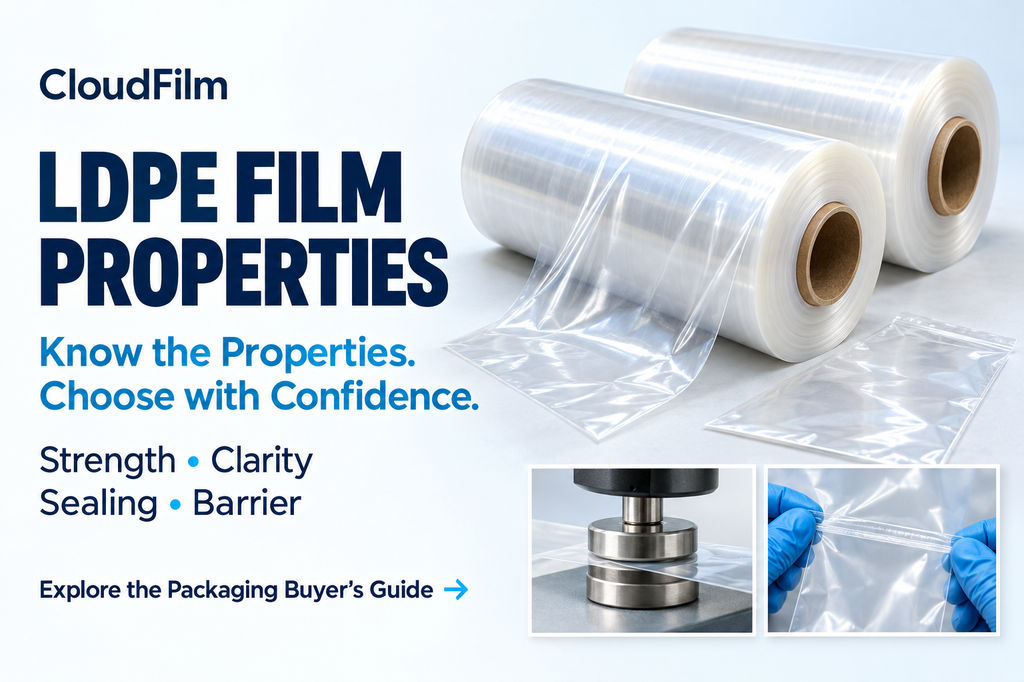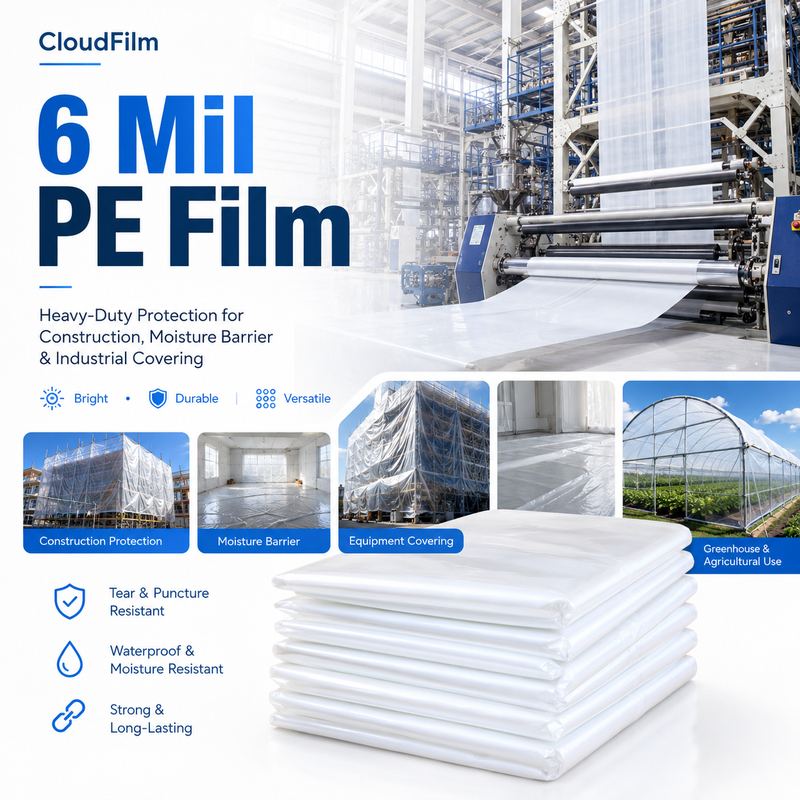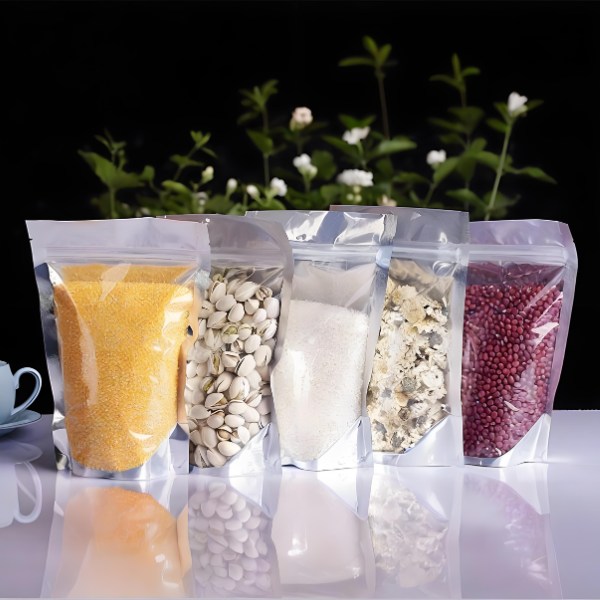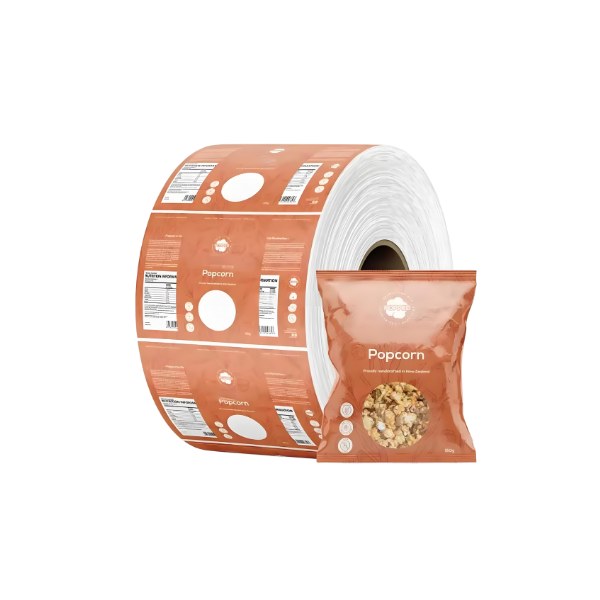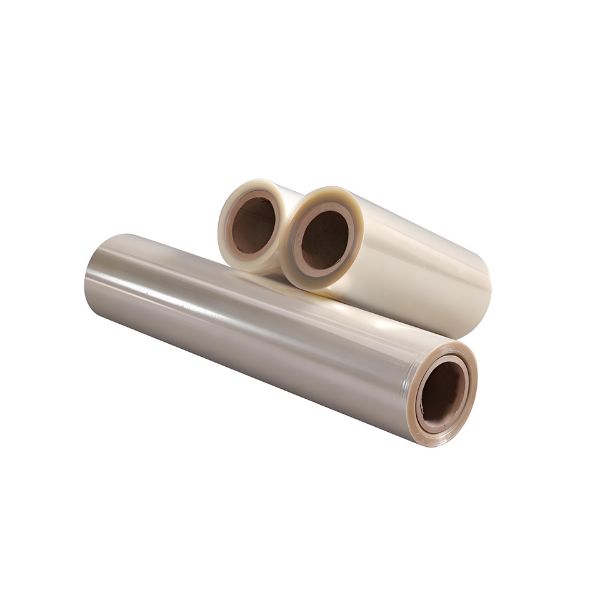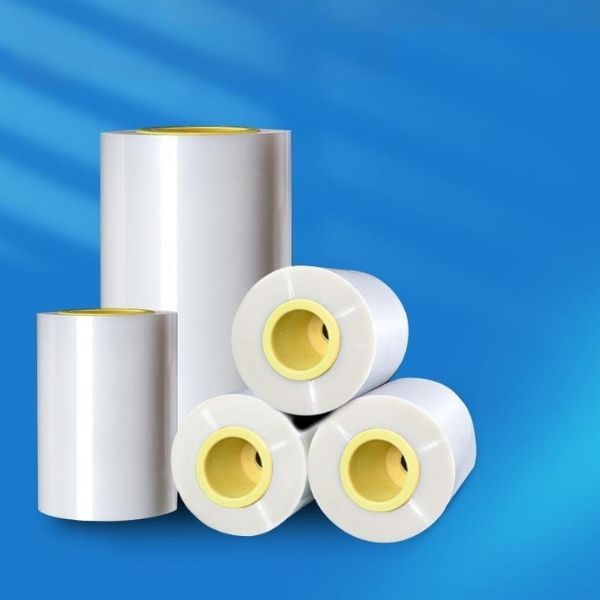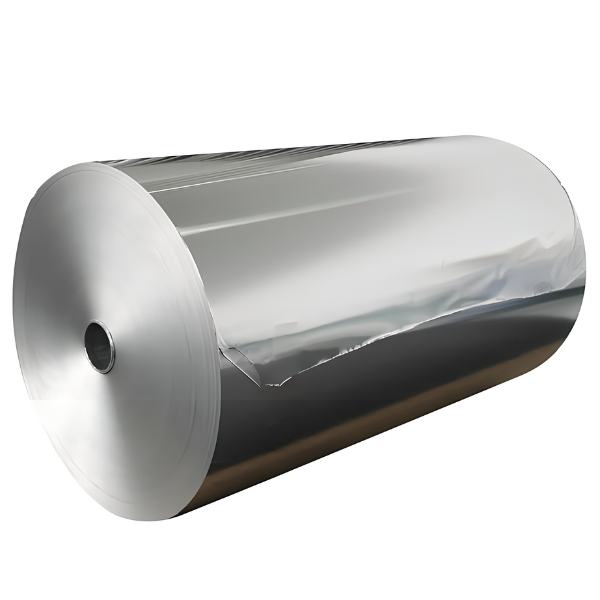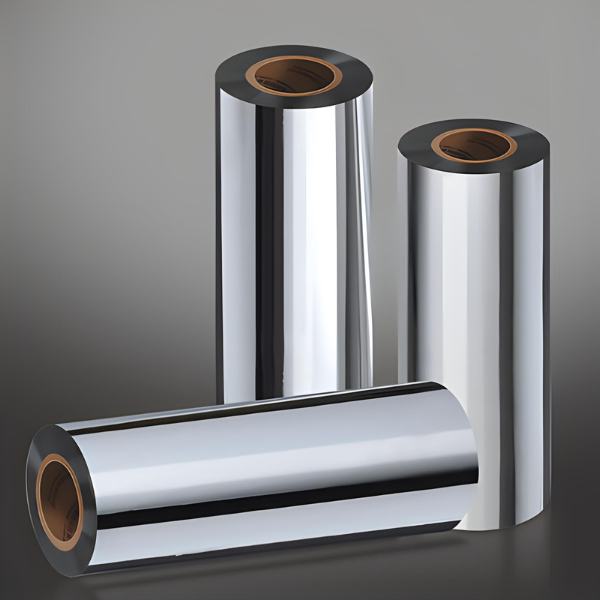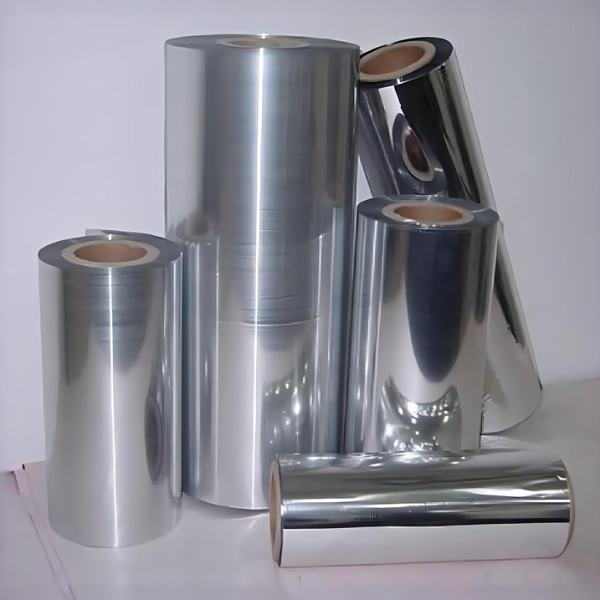
Plastic film sheeting is a broad term used by buyers, engineers, converters, and brand owners when they are looking for plastic film supplied in roll or sheet form. It may refer to simple polyethylene sheeting for covering and protection, but in the packaging industry, it more often refers to plastic film materials used for wrapping, printing, laminating, pouch making, form-fill-seal packaging, lidding, vacuum packaging, and other converting processes.
Because the term is broad, buyers often need more than a simple product list. They need to understand the difference between plastic film, plastic sheeting, roll stock, laminated film, barrier film, and finished pouches. They also need to know which materials are suitable for food packaging, which films work for industrial products, and which structures can support moisture barrier, oxygen barrier, heat sealing, puncture resistance, recyclability, or premium shelf appearance.
This guide explains plastic film sheeting from a packaging buyer’s point of view. It focuses on materials, applications, structure selection, thickness, supplier questions, and practical sourcing decisions. If you are working on a new packaging project, it also helps to understand the broader category of flexible packaging, because many plastic film sheeting materials are eventually converted into flexible packaging rolls, bags, or pouches.
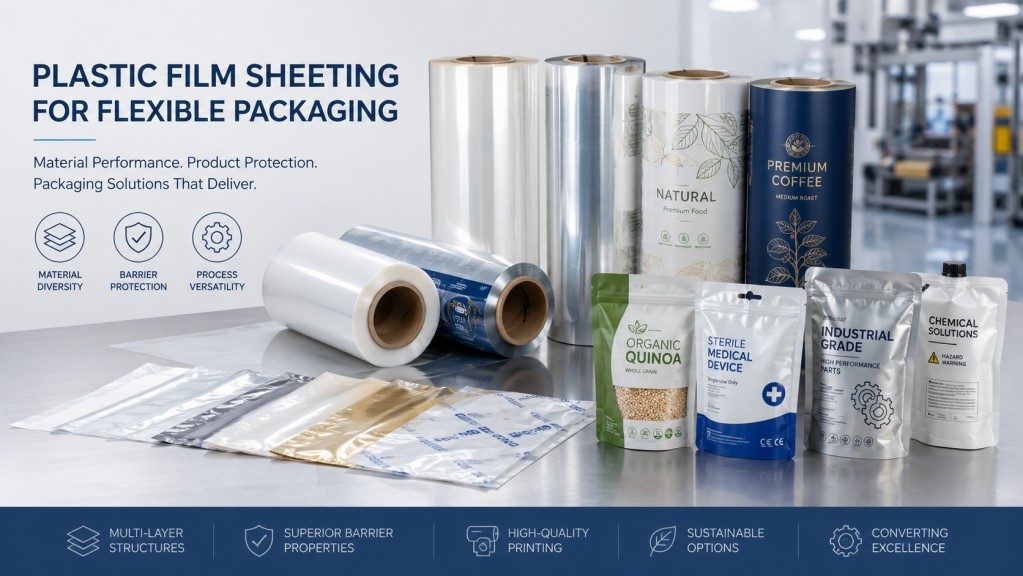
What Is Plastic Film Sheeting?
Plastic film sheeting refers to thin plastic materials supplied as flat sheets, folded sheets, center-folded film, or continuous rolls. In many industries, the phrase may describe polyethylene sheeting used for covering, lining, masking, pallet protection, surface protection, or temporary barrier purposes.
In flexible packaging, however, plastic film sheeting usually has a more technical meaning. It can refer to base films such as BOPP, BOPET, CPP, PE, or BOPA. It can also refer to laminated structures such as PET/PE, BOPP/CPP, PA/PE, PET/CPP, metallized laminates, or high-barrier films used for finished pouches and roll stock packaging.
The main difference is function. General-purpose plastic sheeting is often used as a protective material. Packaging-grade plastic film sheeting must do more. It may need to print clearly, seal reliably, protect product freshness, resist puncture, run on machines, meet food-contact requirements, and support export logistics.
For this reason, buyers should not choose plastic film sheeting only by thickness or price. The better approach is to start with the packed product, shelf life target, filling process, packaging machine, and final market.
Plastic Film Vs. Plastic Sheeting: What Is The Difference?
In everyday language, “film” and “sheeting” are often used together. In technical purchasing, however, there is a useful difference.
Plastic film usually refers to thinner flexible materials supplied in rolls. These films can be printed, laminated, slit, heat sealed, wrapped, or converted into pouches. Packaging film often requires controlled thickness, surface treatment, coefficient of friction, tension performance, corona treatment, seal strength, and barrier properties.
Plastic sheeting often suggests a wider, sometimes thicker plastic web or flat sheet used for covering, lining, protection, construction, agriculture, or industrial use. It may not always require food packaging performance or printing performance.
Plastic film sheeting sits between these two meanings. It is a search term that can include both general plastic sheet materials and packaging-grade plastic film rolls. For packaging buyers, the key is to narrow the meaning quickly: Are you looking for a protective sheet, a packaging film roll, a sealing layer, a printable outer film, or a complete laminated structure?
If your target is packaging, terms such as packaging film roll, flexible packaging film, laminated plastic film, form-fill-seal film, pouch film, or roll stock packaging film are often more precise than plastic film sheeting alone.
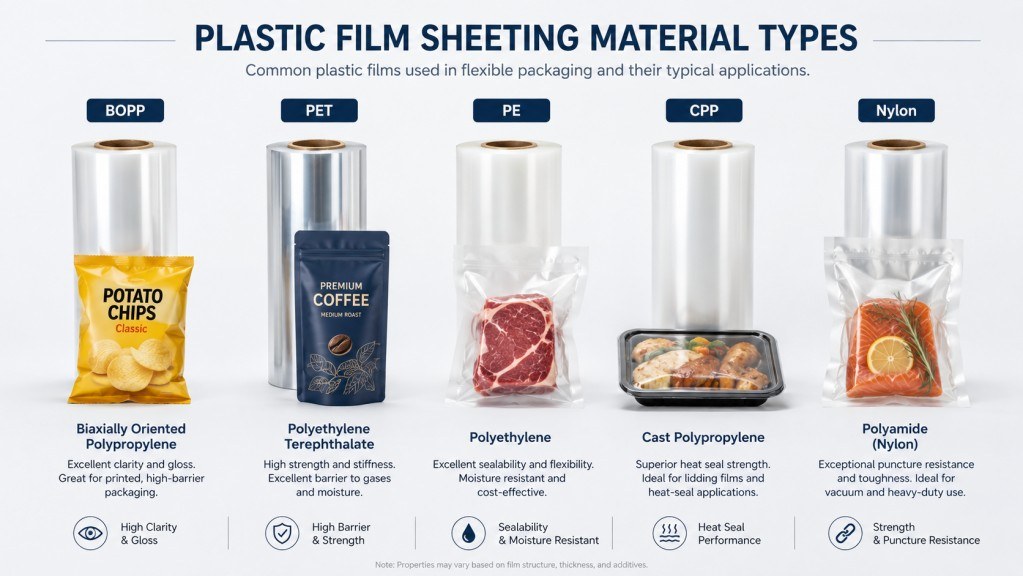
Main Plastic Film Sheeting Materials Used In Packaging
Different plastic films solve different packaging problems. Some offer clarity and printability. Some provide heat sealing. Some improve puncture resistance. Some provide barrier against oxygen, moisture, light, aroma, or grease.
1. BOPP Film
BOPP film is widely used in food packaging, labels, overwraps, snack packaging, confectionery, bakery packaging, and printed laminates. It offers good clarity, stiffness, printability, and moisture resistance. Buyers who need a printable and cost-effective outer layer often start with the BOPP Film category.
BOPP can be supplied as plain film, printing film, matte film, heat-sealable film, metallized film, pearlized film, or other specialty grades. In flexible packaging, it is often laminated with CPP, PE, metallized film, or other layers to create a finished package structure.
2. BOPET Film
BOPET, often called polyester film in the packaging field, is chosen when buyers need higher stiffness, better dimensional stability, heat resistance, print quality, and mechanical strength. It is often used as the outer layer in laminated food packaging, coffee bags, medical packaging, electronics packaging, and industrial barrier structures.
BOPET is especially useful when the package must remain stable during printing, lamination, filling, or heat exposure. It is also frequently combined with PE, CPP, aluminum foil, metallized film, or high-barrier coatings.
3. PE Film
PE film is one of the most important sealing and packaging materials. It can be used as a mono-layer film, a sealant layer, a pouch material, a shrink film, a protective film, or part of a recyclable mono-material structure. PE offers flexibility, toughness, good sealing behavior, and strong compatibility with many packaging processes.
In many laminated packaging structures, PE is used as the inner sealing layer because it can provide reliable heat seals, good hot tack, and product-contact performance when properly selected.
4. CPP Film
CPP film is a cast polypropylene film widely used as a sealing layer in laminated packaging. Compared with oriented PP films, CPP is softer and easier to heat seal. It is often used in snack packaging, bread bags, textile packaging, retort structures, and automatic packaging machine films.
When buyers need a PP-based sealing layer, a PET CPP film structure can be a practical option for food, powder, retort, medical, and industrial applications where PET gives outer-layer strength and CPP provides sealing performance.
5. BOPA Or Nylon Film
BOPA film, also known as nylon film in packaging, is used when puncture resistance, toughness, flexibility, and oxygen barrier are important. It is widely used for vacuum packaging, meat packaging, seafood packaging, frozen food, thermoforming bottom webs, and heavy-duty pouches.
For example, PE PA PE film combines nylon and PE layers to balance puncture resistance, barrier, and heat sealing for vacuum pouches, thermoforming films, and demanding food packaging applications.
6. Laminated Plastic Films
Many packaging projects require more than one material. Laminated plastic film combines two or more layers to achieve a balance of printability, barrier, stiffness, sealing, puncture resistance, and appearance.
Common structures include PET/PE, BOPP/CPP, PET/CPP, PA/PE, PET/VMPET/PE, PET/AL/PE, and PE-based recyclable structures. A PET/PE film is a common example where PET provides clarity, strength, and printability, while PE provides heat sealing.
Common Applications Of Plastic Film Sheeting
Plastic film sheeting is used across many industries, but packaging buyers should separate general protection uses from packaging conversion uses.
Food Packaging
Food packaging is one of the largest application areas for plastic film sheeting. Films are used for snacks, coffee, tea, dried fruit, nuts, bakery products, frozen meat, seafood, sauces, rice, powders, instant foods, and ready meals.
Different foods need different performance. Dry snacks may need moisture barrier and good print appearance. Coffee needs aroma protection and oxygen barrier. Frozen meat may need puncture resistance and strong sealing. Ready meals may require heat resistance or retort performance.
Medical And Healthcare Packaging
Medical packaging often requires clean sealing, stable barrier, puncture resistance, and compatibility with sterilization or clean production conditions. Plastic film sheeting may be used for medical pouches, device packaging, lidding films, blister backing structures, and sterile barrier systems.
Industrial Packaging
Industrial products may need plastic film sheeting for moisture protection, dust protection, corrosion protection, surface protection, or heavy-duty packing. Electronics, metal parts, chemical powders, tools, and machinery components often need strong films or laminated structures to survive storage and shipping.
Personal Care And Household Refill Packaging
Refill pouches for shampoo, hand wash, laundry liquid, cosmetics, and household products often use plastic film sheeting structures designed for sealing strength, drop resistance, puncture resistance, and convenient handling. Refill packs can reduce rigid packaging weight while keeping good shelf appearance.
Roll Stock For Automatic Packaging
Many buyers do not need finished bags at the beginning. They need roll stock film for form-fill-seal machines. Roll stock plastic film sheeting must have stable width, thickness, winding quality, slip properties, printing registration, seal initiation temperature, and machine compatibility.
How To Choose Plastic Film Sheeting For Packaging
The right film is not chosen by material name alone. The right structure depends on the full packaging situation.
Start With The Product
The packed product decides the main risk. Is it dry, oily, powdery, frozen, sharp-edged, liquid, acidic, aroma-sensitive, oxygen-sensitive, light-sensitive, or moisture-sensitive? A light dry product may only need a simple structure, while a high-fat coffee or meat product may require stronger barrier.
Define Shelf Life
Shelf life directly affects material selection. A product sold locally within a short time may need a simpler film structure. A product shipped overseas or stored for months may need stronger oxygen and moisture protection. For sensitive products, the High Barrier Film category can help buyers understand the role of barrier structures.
Confirm Filling And Sealing Conditions
Film performance depends heavily on the filling process. Hot filling, frozen filling, vacuum packing, powder filling, liquid packing, and high-speed automatic lines all place different demands on the sealing layer. The seal window, hot tack, contamination resistance, and sealing temperature must match the equipment.
Choose The Right Thickness
Thickness affects cost, stiffness, strength, puncture resistance, yield, and machine performance. Thicker film may feel stronger, but it also increases material cost and reduces yield per kilogram. Thinner film may reduce cost but may fail if the product is heavy, sharp, or difficult to pack.
Consider Printing And Appearance
For retail packaging, appearance matters. The outer film must support high-quality printing, stable color, good ink adhesion, and the desired finish. Some projects need high gloss, some need matte finish, some need metallized effects, and some need transparent product windows.
Consider Recyclability Early
If recyclability is a target, it should be discussed before the structure is finalized. Recyclable pouches are usually built around mono-material PE or PP structures, but they must still match the product’s barrier, sealing, and shelf-life requirements.
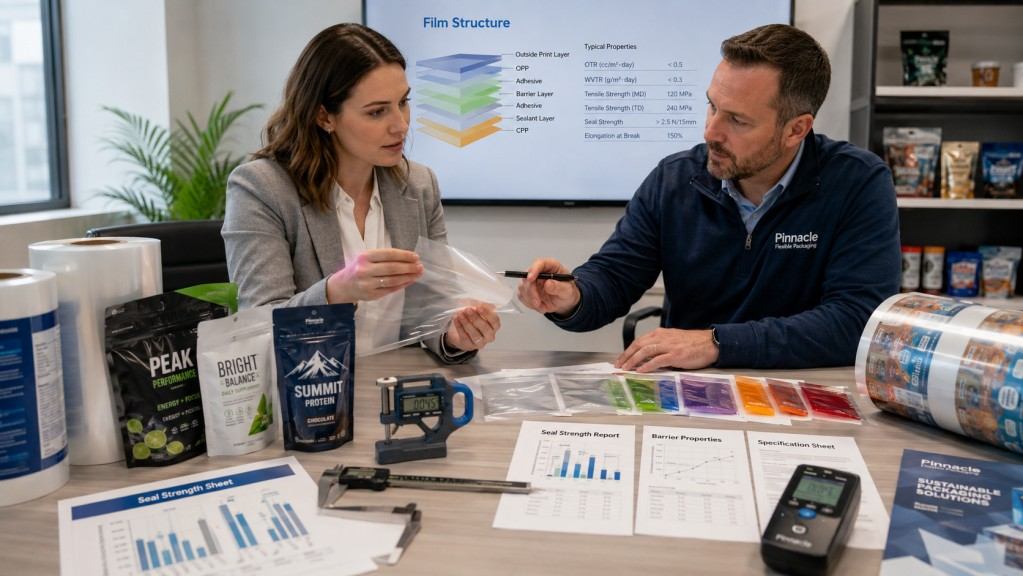
Plastic Film Sheeting Structures For Different Packaging Needs
A simple material list is not enough. Most professional packaging projects are based on structures.
For dry snacks, a structure such as BOPP/CPP or BOPP/PE may provide good print appearance, moisture resistance, and sealing performance. For premium snacks or coffee, PET/PE, PET/VMPET/PE, or other barrier laminates may be better.
For vacuum packaging, PA/PE or PE/PA/PE structures are common because they combine toughness, puncture resistance, and sealing. For retort or hot-fill applications, buyers may need PET/CPP, PET/AL/CPP, or other heat-resistant structures. For recyclable packaging, MDOPE/PE, BOPE/PE, or PP/PP options may be considered when product performance allows.
This is why packaging film selection should be application-driven. A good supplier or manufacturer should not simply sell one film to every buyer. It should ask about product type, filling method, shelf life, target market, machine type, storage conditions, and sustainability goals before recommending a structure.
For buyers comparing film, foil, and laminate options, this film and foil in flexible packaging buyer guide is a useful reference for understanding how different layers work together.
Plastic Film Sheeting In Roll Stock Packaging
Roll stock packaging film is plastic film sheeting supplied in roll form for automatic packaging machines. It is commonly used in vertical form-fill-seal, horizontal flow wrapping, thermoforming, lidding, sachet packing, and pouch-making operations.
For roll stock, the supplier must control more than the film structure. Roll width, roll diameter, core size, winding tension, joint quality, surface friction, sealing direction, print repeat length, and packing method all affect the buyer’s production efficiency.
A low-priced film can become expensive if it causes sealing leaks, poor tracking, wrinkles, blocking, telescoping rolls, print misalignment, or machine stoppage. For this reason, roll stock film should always be evaluated together with the final packing line.
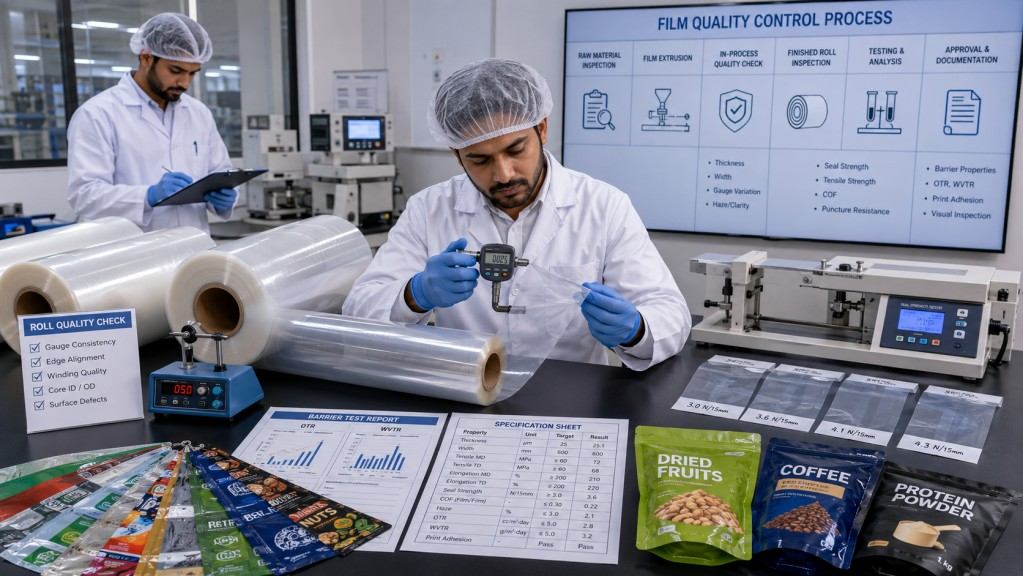
Quality Control Points For Plastic Film Sheeting
Quality control is one of the most important topics in plastic film sheeting supply. Buyers should pay attention to both material properties and converting performance.
Common quality control items include thickness tolerance, width tolerance, roll winding, appearance, haze, gloss, corona treatment, coefficient of friction, tensile strength, elongation, heat seal strength, lamination bond strength, barrier performance, odor, blocking, print quality, and packing condition.
For finished packaging structures, pouch dimensions, seal width, leakage resistance, zipper performance, tear notch quality, valve position, and drop resistance may also be checked. A practical flexible packaging quality control guide can help buyers understand what should be inspected before shipment.
Good quality control reduces risk during filling, storage, transportation, and retail display. It also helps both buyer and supplier communicate clearly when a new project moves from sample testing to mass production.
How To Choose A Plastic Film Sheeting Manufacturer Or Supplier
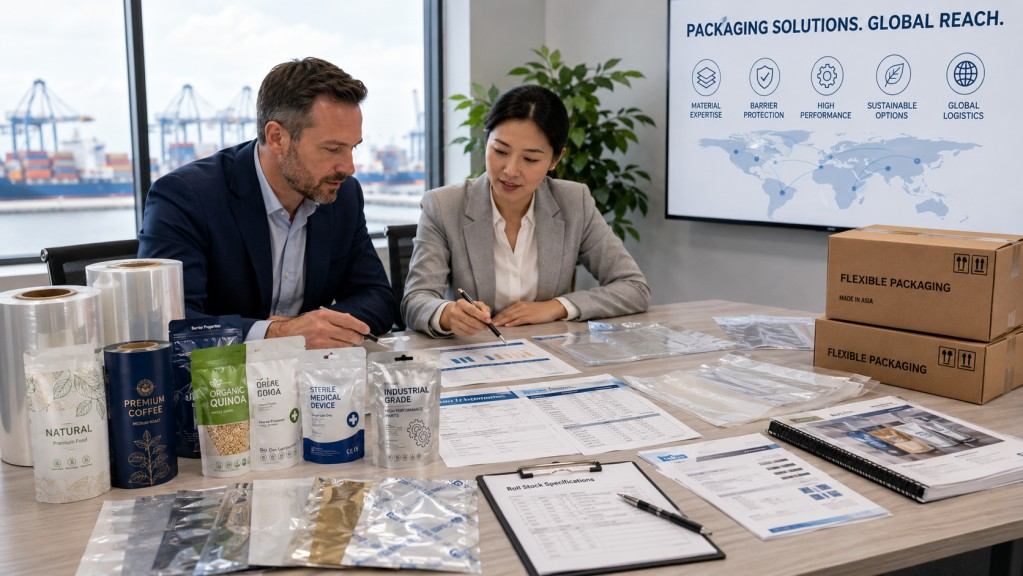
Choosing a plastic film sheeting supplier is not only about price. In packaging projects, the supplier’s technical understanding can directly affect product protection, machine efficiency, shelf appearance, and final customer satisfaction.
A professional plastic film sheeting manufacturer or supplier should be able to support material selection, structure design, sample rolls, printing compatibility, lamination guidance, pouch-making requirements, and export documentation. It should also be able to explain why one structure is more suitable than another for your product.
When evaluating suppliers, ask these questions:
- What materials and structures can you supply?
- Can you recommend film based on product type and shelf life?
- Can you provide roll stock and finished pouches?
- What thickness range and roll width can you produce?
- Can the film run on my packing machine?
- What sealing layer is recommended?
- Can you support food packaging documentation?
- Can you provide samples or trial rolls?
- What quality control items are included?
- Can you help with export packing and shipping documents?
A useful packaging supplier does not only answer “yes” or “no.” It helps you reduce risk, compare options, and move from concept to production with fewer delays. For a wider view of materials, formats, and sourcing logic, you can also review this A To Z packaging supplier guide.
Common Mistakes When Buying Plastic Film Sheeting
One common mistake is buying film only by thickness. Thickness is important, but it does not define barrier, seal strength, puncture resistance, printability, or machine performance by itself.
Another mistake is using one material for all applications. A snack pouch, coffee bag, frozen meat pack, refill pouch, and medical pouch may all use plastic film, but their structures can be completely different.
Some buyers also ignore the packing machine. A film that looks good in sample form may fail on a high-speed line if the friction, sealing temperature, stiffness, or roll winding is not suitable.
Another common issue is discussing price before structure. If the structure is unclear, price comparisons may be misleading. Two suppliers may quote different film structures while using the same general product name.
The better approach is to prepare a clear inquiry sheet: product type, packing format, film width, thickness target, machine type, filling condition, shelf life target, storage conditions, printing requirement, annual volume, and destination market.
Frequently Asked Questions About Plastic Film Sheeting
1. What is plastic film sheeting?
Plastic film sheeting is a thin plastic material supplied as sheets or rolls. In packaging, it usually refers to flexible plastic films used for wrapping, printing, laminating, sealing, pouch making, or roll stock packaging.
2. Is plastic film sheeting the same as packaging film?
Not always. General plastic sheeting may be used for covering or protection. Packaging film requires more controlled performance, such as printability, barrier, sealing, thickness tolerance, and machine runnability.
3. Which plastic film is best for food packaging?
There is no single best film for all food. BOPP, PET, PE, CPP, PA, and laminated structures can all be used depending on the product, shelf life, filling process, and required barrier.
4. What is the difference between PE film and PP film?
PE film is flexible and widely used as a sealing layer or pouch material. PP film includes BOPP and CPP. BOPP is often used for clarity and printability, while CPP is often used for heat sealing.
5. What is laminated plastic film?
Laminated plastic film is made by combining two or more layers to achieve better performance. For example, one layer may provide printability, another provides barrier, and another provides heat sealing.
6. What thickness should I choose?
Thickness depends on product weight, pouch size, required stiffness, puncture risk, machine speed, and cost target. A supplier should recommend thickness based on the application, not only by a standard list.
7. Can plastic film sheeting be printed?
Yes. Many packaging films can be printed by gravure, flexographic, or digital printing methods, depending on the film surface, treatment, ink system, and project volume. For packaging requiring stable printing, BOPP printing film is one common outer film option.
8. Can plastic film sheeting be heat sealed?
Some films seal directly, while others need a sealing layer. PE and CPP are commonly used as heat-sealing layers in laminated packaging.
9. What film should I use for vacuum packaging?
Vacuum packaging often uses PA/PE or PE/PA/PE structures because nylon improves toughness and puncture resistance, while PE provides sealing.
10. What film should I use for coffee packaging?
Coffee packaging usually needs oxygen barrier, aroma protection, and strong sealing. PET/PE, PET/VMPET/PE, PET/AL/PE, and recyclable high-barrier structures may be considered depending on shelf life and brand goals.
11. Can plastic film sheeting be recyclable?
Yes, some structures can be designed for recyclability, especially mono-material PE or PP structures. However, actual recyclability depends on the complete structure and local collection systems.
12. What information should I send to a supplier for quotation?
Send product type, film structure if known, thickness, width, roll length or pouch size, printing requirement, barrier target, sealing method, machine type, quantity, destination country, and any food-contact or regulatory requirements.
13. Can one supplier provide both film rolls and finished pouches?
Some suppliers can provide both roll stock and finished pouches. This can simplify structure development, printing coordination, sampling, and export communication.
14. How can I avoid buying the wrong film?
Start with application requirements instead of material names. Confirm the product risk, shelf life, filling process, machine type, packaging format, and target market before choosing a film.
Final Thoughts
Plastic film sheeting is a useful but broad term. For general industry, it may mean protective sheet material. For packaging buyers, it usually means a film roll, laminated structure, or converting-ready material that must protect the product, run on machines, seal reliably, and support brand presentation.
The best choice depends on the product, not only the film name. BOPP, PET, PE, CPP, nylon, metallized films, high-barrier structures, and recyclable mono-material films all have different strengths. A good packaging project starts by defining product risk, shelf life, filling process, pouch format, and target market.
If you are sourcing plastic film sheeting for food, medical, industrial, coffee, pet food, refill, or retail packaging, work with a manufacturer or supplier that can recommend structure options, provide trial samples, support testing, and communicate clearly from development to shipment. The right film structure can reduce production risk, improve product protection, and create better packaging value over the full supply chain.