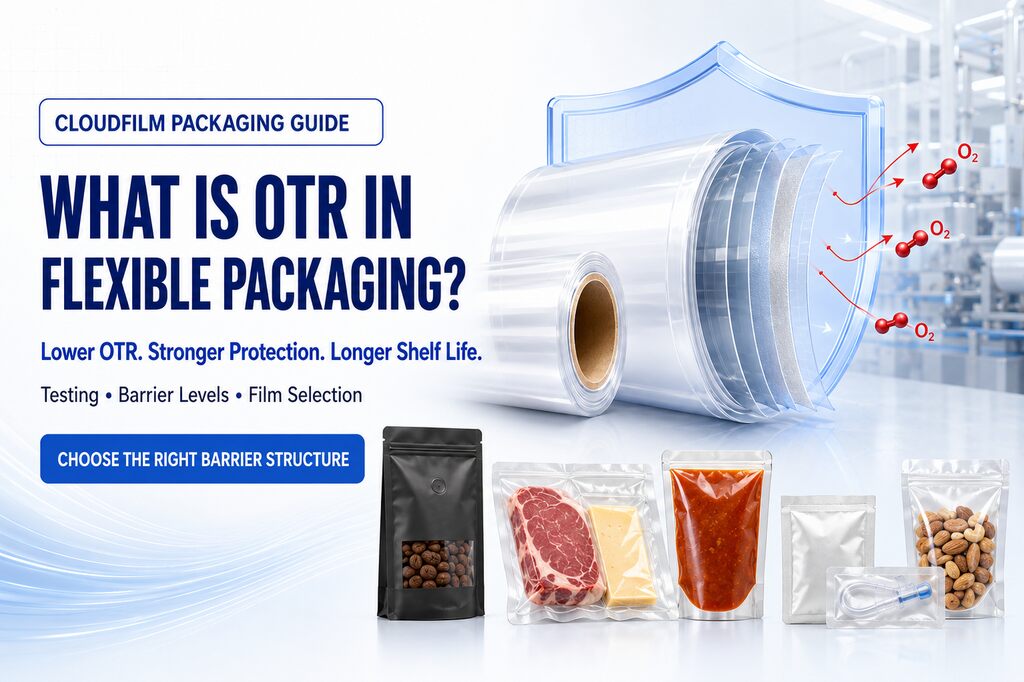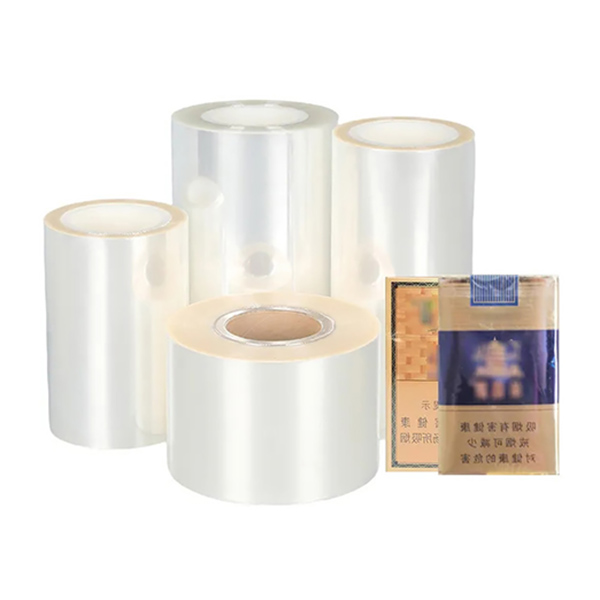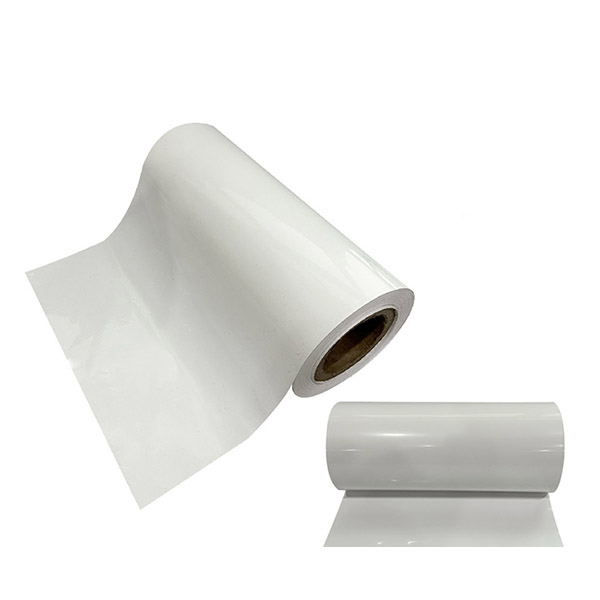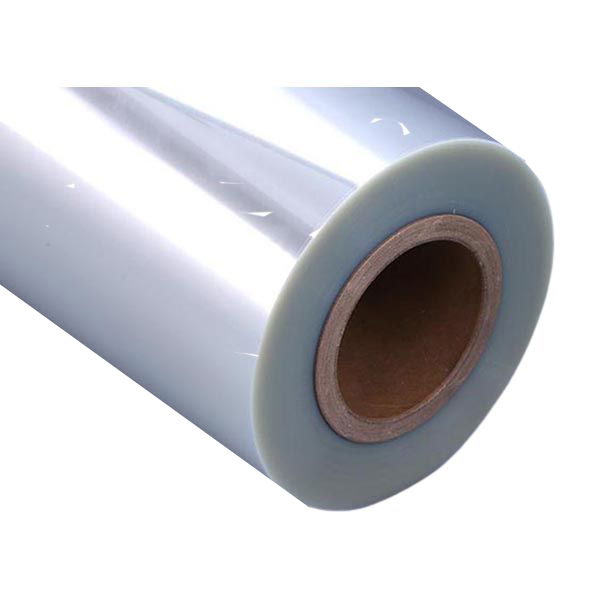
The flexible packaging industry transforms thin, adaptable materials into protective packs that can bend, fold, seal, and change shape. Its products include films, laminates, roll stock, sachets, wraps, lidding webs, vacuum bags, and many styles of premade pouches.
The industry connects resin producers, film manufacturers, ink and adhesive companies, printers, laminators, converters, machinery suppliers, brand owners, retailers, recyclers, and logistics providers. Each participant affects package performance, cost, regulatory compliance, and environmental outcomes.
Readers who need the basic terminology can begin with this practical definition of flexible packaging. This industry guide moves further into the value chain, commercial drivers, material choices, manufacturing risks, and future direction.
Flexible packaging continues to attract food, beverage, pet food, household, personal-care, medical, pharmaceutical, agricultural, and industrial users. Its appeal comes from low weight, efficient product protection, strong graphics, convenient formats, and compatibility with high-speed packing equipment.
However, no format is automatically sustainable or technically suitable. A successful package must protect the product, run on the filling line, survive distribution, meet regulations, communicate clearly, and follow a realistic end-of-life route in its destination market.
Flexible Packaging Industry At A Glance
What The Industry Includes
Flexible packaging is defined by how the pack behaves, not by one resin. A package may contain plastic film, paper, aluminum foil, metallized layers, coatings, inks, adhesives, zippers, valves, spouts, or other functional components.
Primary packaging directly contains the product. Secondary flexible packaging groups units or adds protection. Industrial films may wrap pallets, protect surfaces, line containers, preserve agricultural products, or isolate components from moisture, dust, corrosion, and static electricity.
The boundary between flexible and rigid packaging is sometimes mixed. A pouch with a rigid spout, a tray with a flexible lid, or a paper pack with a barrier liner combines different systems. This flexible and rigid packaging comparison explains the practical differences.
Why The Industry Matters
Flexible packaging can deliver a high product-to-package ratio because a thin structure can combine printing, mechanical strength, barrier, and sealing. Empty rolls and pouches also occupy less storage and transport space than many preformed rigid containers.
Its economic value extends beyond material price. Well-designed films can increase filling speed, reduce leakage, lower shipping weight, extend shelf life, prevent product loss, simplify inventory, and support multiple package sizes without requiring a new rigid mold.
The industry is therefore best understood as a performance system. Film thickness, layer sequence, treatment, friction, stiffness, sealing window, barrier, print protection, roll quality, and converting accuracy all influence the final result.
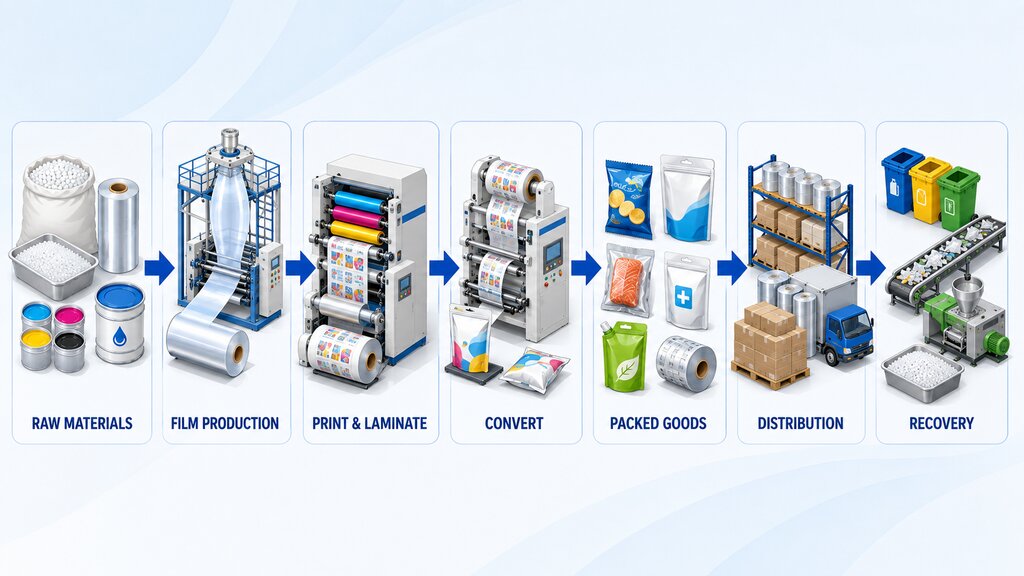
How The Flexible Packaging Value Chain Works
- Raw Materials And Functional Inputs
The chain starts with polymers, aluminum, paper, additives, coatings, inks, primers, and adhesives. Resin grade affects clarity, toughness, sealability, heat resistance, process stability, odor, migration behavior, and suitability for contact with food or sensitive products.
Additives can provide slip, antiblock, antistatic behavior, ultraviolet resistance, processing stability, or optical effects. These ingredients must be selected carefully because they may influence printing, lamination, sealing, odor, recycling compatibility, and regulatory declarations.
- Film And Foil Production
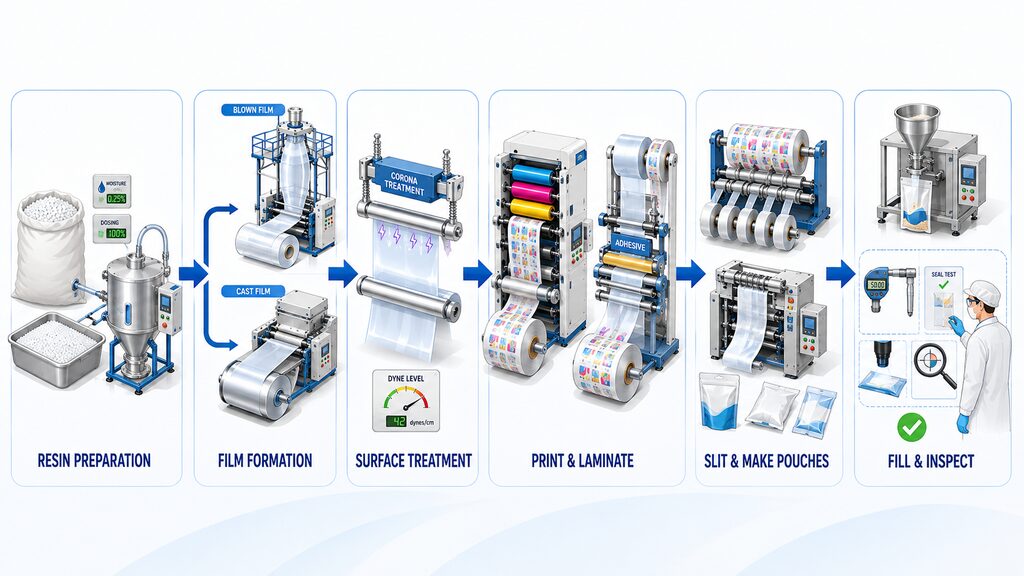
Base film manufacturers use blown extrusion, cast extrusion, biaxial orientation, machine-direction orientation, coating, metallization, or foil rolling. The chosen process determines properties such as orientation, shrinkage, puncture resistance, stiffness, thickness uniformity, transparency, and thermal behavior.
A packaging film roll may be supplied as a single functional web or as a substrate for printing and lamination. Stable winding, accurate width, clean edges, and controlled surface treatment are essential before converting begins.
- Printing, Lamination, And Converting
Printers apply graphics by rotogravure, flexographic, or digital processes. Laminators combine webs with adhesive or molten polymer. Slitters create the required roll width, while pouch machines add seals, gussets, zippers, spouts, valves, notches, and shaped features.
Printing decisions affect more than appearance. Ink adhesion, color consistency, registration, solvent retention, rub resistance, and reverse-print protection can influence safety and performance. This guide to flexible packaging printing methods explains the main converting options.
- Filling, Distribution, Use, And Recovery
Brand owners or contract packers fill the package on vertical, horizontal, flow-wrap, vacuum, tray-sealing, or premade-pouch equipment. The finished pack must tolerate sealing heat, product contamination, transport vibration, stacking, climate changes, display, opening, and storage.
After use, collection and recovery depend on local infrastructure, package design, consumer behavior, sorting capability, contamination, and market demand for recovered material. A technically recyclable structure may still lack an accessible collection route in a particular region.
Core Materials Used Across The Industry
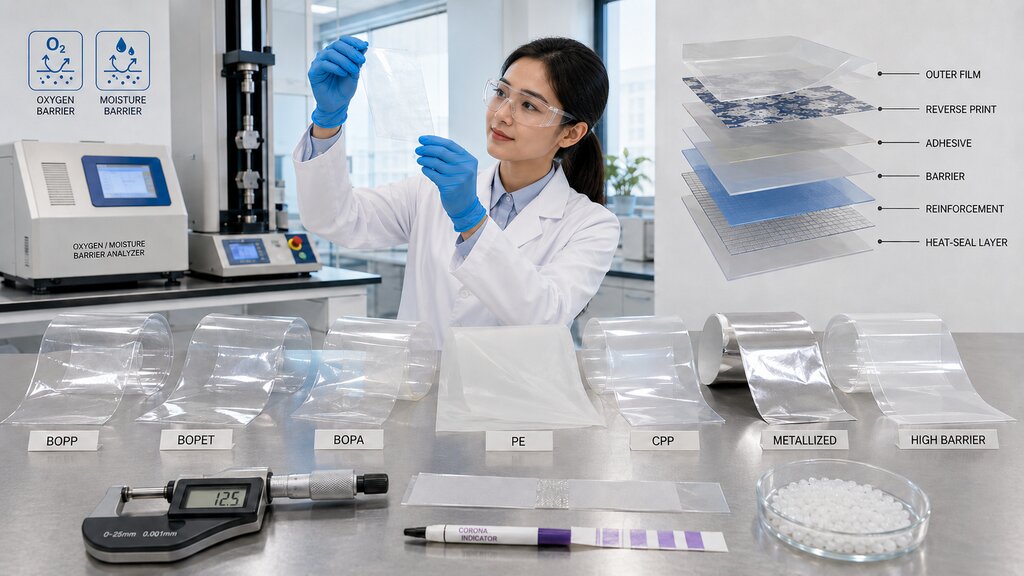
No single material serves every application. Most high-performance packages assign different jobs to different layers, although mono-material designs increasingly use compatible grades within one polymer family.
| Material Family | Main Strengths | Common Industry Roles | Important Limits To Check |
| BOPP | Clarity, stiffness, moisture resistance, efficient printing | Snack wraps, labels, outer webs, overwraps | Heat resistance, puncture needs, seal grade |
| BOPET | Strength, heat resistance, dimensional stability, print quality | Outer print web, lamination, high-speed packaging | Usually needs a separate seal layer |
| BOPA | Toughness, puncture resistance, flex durability | Vacuum, frozen, meat, retort, medical structures | Moisture sensitivity and dimensional behavior |
| PE | Toughness, moisture resistance, broad sealability | Sealant layers, bags, liners, mono-PE packs | Stiffness, heat resistance, printing treatment |
| CPP | Sealability, clarity, heat resistance in selected grades | Inner webs, bakery packs, retort structures | Lower stiffness than oriented PP |
| Foil And Metallized Layers | Strong light, aroma, oxygen, and moisture protection | Coffee, powder, pharmaceutical, sensitive foods | Visibility, flex cracking, recycling complexity |
| EVOH And Barrier Coatings | High oxygen barrier with reduced material use | Coextruded webs, transparent barrier laminates | Humidity, process, thickness, and recycling limits |
BOPP And BOPET
BOPP is widely used when clarity, stiffness, moisture resistance, and print efficiency matter. Heat-sealable, matte, pearlized, barrier, and coated grades extend its range. BOPET offers dimensional stability, heat resistance, strength, and an excellent reverse-printing surface.
These oriented films often function as outer webs rather than sealants. Their role is to protect graphics, provide stiffness, resist processing heat, and improve machine handling. The inner layer is chosen for sealing, product contact, and resistance to contamination.
BOPA, PE, And CPP
BOPA film is valuable for products with bones, sharp edges, heavy weight, or demanding handling. Its toughness supports vacuum meat, seafood, cheese, frozen food, retort, and selected medical applications.
PE is the flexible packaging industry’s main sealing family. Different densities and copolymers can adjust hot tack, low-temperature seal initiation, toughness, stiffness, clarity, friction, and contamination resistance. PE also supports many mono-material redesign projects.
CPP provides a PP-based seal layer with good clarity and useful heat resistance. Standard, retort, anti-fog, antistatic, and specialty grades are available. Its suitability depends on the outer web, sealing temperature, sterilization condition, and required flexibility.
Barrier Materials And Functional Coatings
Aluminum foil, metallized films, EVOH, PVDC, ALOx, and other coatings help control oxygen, moisture, aroma, light, or chemical migration. Barrier selection should begin with a measured shelf-life target, not a general request for the highest possible barrier.
Co-extruded EVOH film can combine oxygen protection with a PE or PP-based structure. ALOx PET film offers transparent barrier when product visibility and microwave compatibility are important considerations.
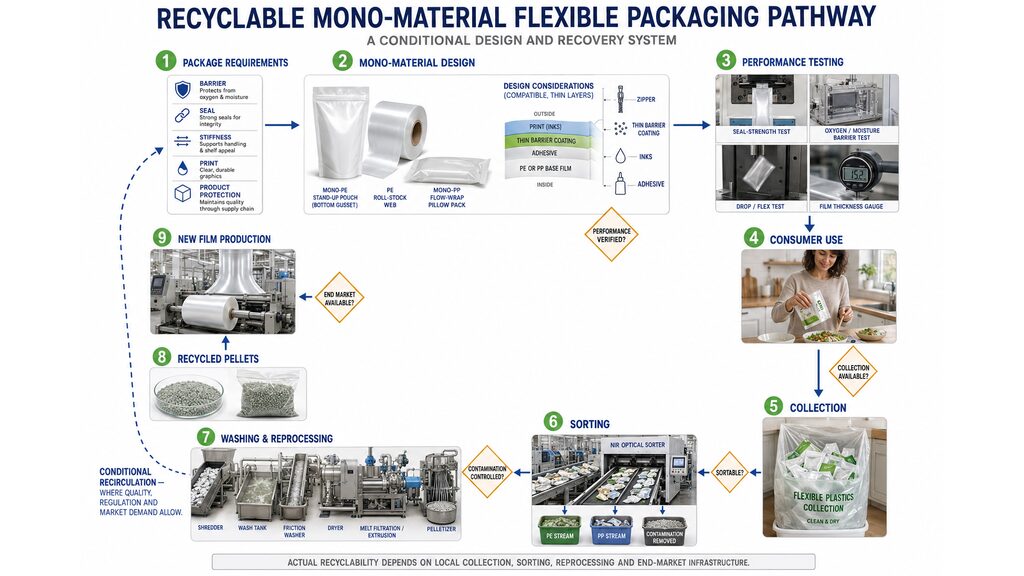
Mono-Material PE Options
MDO PE film adds stiffness, printability, and heat resistance to many mono-PE laminates. BOPE film offers balanced orientation, toughness, and optical performance for selected recyclable structures.
Mono-material does not mean one simple resin grade. A structure may contain several compatible PE grades, tie layers, thin barriers, coatings, inks, and adhesives. Every component still needs performance testing and an end-market recyclability assessment.
Major Formats And End-Use Markets
Roll Stock And Form-Fill-Seal Packaging
Roll stock is converted film supplied for automatic packing machines. It can form pillow bags, sachets, stick packs, flow wraps, lidding webs, or other shapes during filling.
Machinability is critical. Roll width, unwind direction, repeat length, core size, roll diameter, splice position, coefficient of friction, stiffness, curl, and seal behavior must match the equipment. Small inconsistencies can create waste and unplanned downtime.
Premade Pouches And Bags
Premade formats include stand-up, flat, three-side-seal, quad-seal, flat-bottom, vacuum, retort, spout, zipper, shaped, and gusseted pouches. The format influences filling method, shelf appearance, opening experience, product evacuation, pallet efficiency, and material use.
Recyclable pouches require more than a recyclable base film. Zippers, spouts, valves, inks, adhesives, coatings, and labels should be designed as one package and assessed against the intended collection and recycling system.
Food, Beverage, And Pet Food
Food remains a central application because barrier, sealing, hygiene, portioning, and shelf life can create measurable value. Snack foods prioritize moisture protection and speed, while coffee, meat, cheese, frozen foods, sauces, and retort products need different structures.
The flexible food packaging guide provides application-level examples. Buyers can also review food packaging film when comparing roll structures for specific filling and preservation needs.
Household, Personal Care, And E-Commerce
Detergent refill pouches, wipes, cosmetic sachets, shampoo packs, concentrates, and cleaning products benefit from low shipping weight and convenient dispensing. Chemical resistance, stress cracking, drop performance, seal security, odor containment, and child safety may become decisive.
E-commerce places different pressure on packaging. Packs must resist repeated impacts, vibration, leakage, abrasion, and temperature changes. Right-sizing can reduce dimensional weight, but lightweighting must never weaken product protection or create costly returns.
Medical, Pharmaceutical, And Technical Uses
Medical and pharmaceutical packs may require validated seals, cleanliness, sterilization compatibility, high barrier, traceability, controlled peel, puncture resistance, and formal documentation. Material selection must follow the specific device, drug, process, and destination regulations.
This medical flexible packaging market and application guide explains these specialized requirements. Industrial uses may also demand antistatic behavior, corrosion protection, heavy-duty puncture resistance, or controlled release properties.

What Is Driving Industry Demand?
Convenience And Changing Consumption Patterns
Consumers value lightweight packs, easy opening, resealing, portability, portion control, and controlled dispensing. Brand owners also need more sizes, regional variants, promotional designs, and faster launches. Flexible formats can support this variety without rigid-container tooling.
Product Protection And Shelf-Life Economics
Barrier packaging can reduce oxidation, moisture gain, aroma loss, discoloration, contamination, and freezer damage. The commercial return may include fewer rejects, longer distribution, broader export reach, reduced food waste, and more predictable product quality.
The right flexible packaging solution balances barrier with sealing, mechanical strength, printing, machine speed, cost, and end-of-life needs. Increasing one property without checking the whole system can introduce a different failure.
Automation And Filling-Line Productivity
Labor costs and production targets encourage automated filling. Stable films support higher speed, cleaner seals, fewer tracking problems, and less scrap. Low-temperature sealing and strong hot tack can expand the operating window, particularly on fast vertical or horizontal lines.
Brand Differentiation And Shelf Communication
Reverse printing, matte effects, metallic appearance, transparent windows, tactile coatings, shaped packs, and high-definition graphics help brands communicate quality. The challenge is adding visual value without creating unnecessary layers or reducing recyclability.
Global Trade And Local Market Requirements
Flexible packs ship efficiently before filling and can support long distribution routes after packing. However, export projects must account for climate, port delays, palletization, local language, food-contact rules, recycling labels, retailer specifications, and regional collection systems.
Sustainability Is Redesigning The Industry
Start With Product Protection And Material Efficiency
Sustainability should evaluate the complete product-and-package system. A lighter package may reduce material and transport impacts, while effective barrier can prevent a much larger product loss. A recyclable pack that leaks or shortens shelf life is not a successful design.
Downgauging removes unnecessary material, but it must be validated. Thinner films can change stiffness, puncture resistance, sealing, barrier, printing, roll build, and machine handling. The goal is minimum material with reliable performance, not minimum thickness at any cost.
Move Toward Compatible Material Families
Traditional laminates often combine PET, PA, foil, and PE because each provides a valuable function. Mono-PE and mono-PP structures aim to retain those functions while improving compatibility with a defined recycling stream.
This recyclable flexible packaging guide explains the transition process. The mono-material flexible packaging trends article focuses more specifically on MDO PE, BOPE, barriers, and practical design limits.
Recyclability Depends On A Real System
Design is only one part of circularity. Collection, sorting, reprocessing, contamination control, recycled-material demand, and consumer participation must also work. Claims should match the actual destination market rather than assuming one recycling route exists everywhere.
In Europe, Regulation (EU) 2025/40 on packaging and packaging waste applies from 12 August 2026. It strengthens the need for packaging minimization, evidence-based recyclability planning, clear information, and coordinated decisions across the value chain.
Use Recycled Content Carefully
Post-consumer recycled material can reduce virgin-resin demand and support recovery markets. Its suitability depends on source, odor, color, contamination, mechanical consistency, migration requirements, appearance, sealing, and regulatory status, especially for direct food or medical contact.
Recycled content is therefore application-specific. Manufacturers and buyers should agree on the source, percentage, layer position, performance limits, certification, traceability, and acceptable visual variation before pricing or mass production.
Technology Trends Shaping 2026 And Beyond
Higher Performance From Thinner Structures
Resin design, orientation, nanometer-scale coatings, optimized adhesives, and improved process control allow thinner structures to maintain useful strength and barrier. Successful downgauging depends on testing the complete laminate and finished pack, not only the individual film.
Transparent And Selective Barrier Technologies
Transparent oxide coatings, EVOH coextrusion, PVDC coatings, and other barrier systems can protect oxygen-sensitive products while preserving visibility. Designers increasingly match the barrier level to shelf-life data instead of automatically choosing foil or the thickest possible layer.
Wider Use Of Oriented PE
MDO PE and BOPE improve stiffness, optics, print handling, or toughness within PE-rich structures. They help replace some mixed-material laminates, although seal compatibility, heat resistance, shrinkage, stiffness balance, barrier, and line speed still require practical trials.
Faster Sealing And Better Machine Windows
Packaging lines demand stable friction, low seal-initiation temperatures, reliable hot tack, contamination resistance, and consistent thickness. Film suppliers are developing sealant systems that tolerate speed changes and provide stronger seals across a broader temperature range.
Shorter Runs And Connected Packaging
Digital printing supports trials, regional versions, seasonal designs, and multiple stock-keeping units with reduced setup. Codes and connected labels can provide traceability, authentication, instructions, and consumer information, but they should remain readable and compatible with recycling design.
More Precise Quality Data
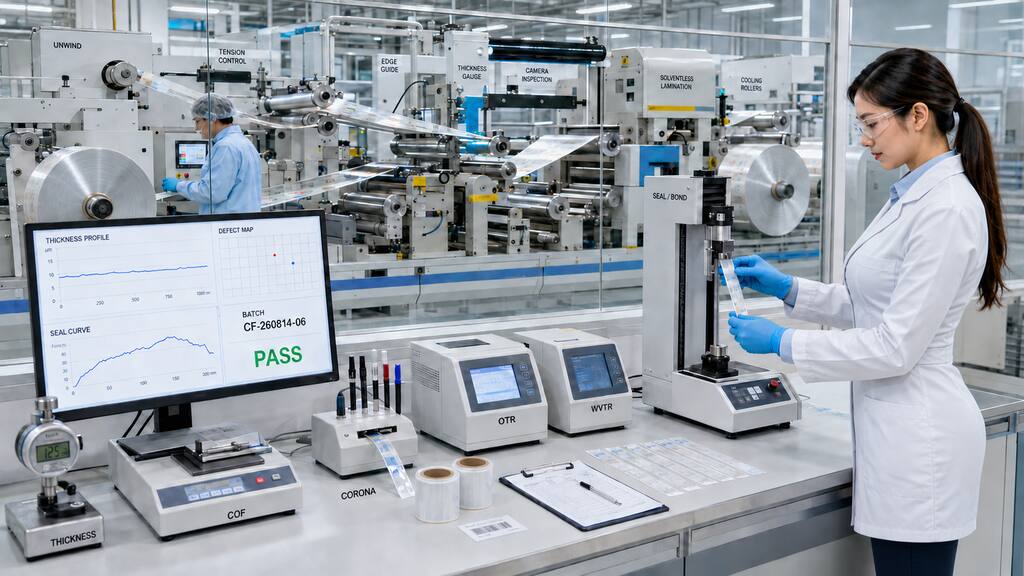
Inline thickness measurement, web inspection, register control, defect mapping, barrier testing, and digital batch records improve consistency. Buyers increasingly expect traceable specifications and change control rather than relying only on a sample that performed well once.
Industry Challenges And Supply Risks
Raw-Material And Energy Volatility
Polymer, aluminum, adhesive, ink, coating, energy, and freight costs can move at different times. Resin availability may also vary by grade. The connection between crude oil and flexible packaging film price volatility is important for contract planning.
Buyers can reduce exposure through forecast sharing, approved alternates, price-review formulas, safety stock for critical grades, and clear validity periods. A very low spot price provides little value if the supplier cannot maintain quality or delivery.
Performance Versus Recycling Compatibility
Removing foil, PA, PET, or a thick barrier may improve material compatibility but weaken shelf life, stiffness, heat resistance, puncture performance, or speed. Redesign should proceed through controlled prototypes and line trials rather than marketing assumptions.
Uneven Collection And Recycling Infrastructure
Flexible materials are lightweight, which benefits logistics but can complicate collection and sorting. Infrastructure differs by country and even municipality. A global brand may need region-specific structures or claims instead of one universal design.
Regulatory And Documentation Complexity
Food-contact declarations, migration limits, sterilization validation, restricted substances, recycled-content rules, labeling, language, and waste regulations vary. Buyers should define the destination market early and obtain documents that correspond to the actual structure, not a generic resin statement.
Quality Drift Between Sample And Production
A successful hand sample does not guarantee stable production. Thickness profile, treatment decay, friction, residual solvent, bond strength, seal window, winding tension, roll hardness, barrier, and pouch dimensions can vary without strong process controls.
How Buyers Should Select A Manufacturer Or Supplier
Begin With The Product And Packing Process
Do not start with a material name alone. Describe the product, filling temperature, shelf-life target, storage, distribution, packing machine, speed, seal type, sterilization, barrier need, opening feature, destination market, and current package problems.
Evaluate Technical Capability, Not Only Catalog Breadth
A capable flexible packaging manufacturer should explain why a structure is suitable, identify risks, provide tolerances, and recommend testing. A supplier should also disclose which processes are performed internally and which are controlled through qualified partners.
Buyers comparing sources can use this packaging film manufacturer and supplier list as an initial research tool. Shortlisting should still include direct technical verification, samples, documentation, references, and commercial evaluation.
Inspect Quality Systems And Change Control
Ask how raw materials are approved, how specifications are controlled, which tests are performed, how nonconforming material is handled, and whether formulation or process changes require notification. The flexible packaging quality control guide provides a detailed audit framework.
Use Samples And Line Trials Correctly
An A4 sheet can show appearance, thickness, and hand feel, but it cannot confirm winding or high-speed performance. A trial roll or pilot pouch batch is more valuable when machinability, sealing, barrier, sterilization, or drop performance is critical.
Agree on trial criteria before testing. Record settings, speed, temperature, pressure, dwell time, waste, seal results, and package appearance. When the trial succeeds, lock the approved specification and retain reference samples.
Compare Total Cost And Supply Reliability
Price per kilogram can hide differences in density, thickness, yield, scrap, roll length, downtime, freight, duties, and product loss. Compare cost per square meter, cost per finished pack, and total delivered performance.
Also examine minimum order quantity, lead time, capacity, seasonal loading, export packing, pallet design, documentation, communication, complaint handling, and business continuity. The best supplier is the one that controls the complete risk, not simply the lowest quotation.

RFQ Checklist For Industrial Buyers
A precise request for quotation helps manufacturers recommend a workable structure and reduces repeated questions. Include the following information whenever it is available.
- Product name, composition, weight, and whether it is dry, oily, liquid, frozen, sharp, or oxygen-sensitive.
- Current film structure, total thickness, individual layer thicknesses, and an existing sample or clear package photographs.
- Roll width, pouch dimensions, gussets, repeat length, unwind direction, core size, maximum roll diameter, and maximum roll weight.
- Filling machine type, operating speed, seal type, temperature range, pressure, dwell time, and known line problems.
- Shelf-life target, oxygen and moisture limits, light protection, aroma retention, puncture, drop, and sterilization requirements.
- Printing method, number of colors, artwork status, surface finish, transparent windows, codes, and special opening or dispensing features.
- Food-contact, medical, chemical, sustainability, certification, test-report, and destination-market documentation requirements.
- Trial quantity, annual demand, order frequency, delivery destination, trade term, desired lead time, and forecast flexibility.
If some data is unknown, send the product, current package, machine manual, and performance problem. A qualified supplier can then identify the missing tests and propose a controlled development path.
Flexible Packaging Industry Outlook
The industry will not move toward one universal material. High-barrier laminates, mono-material structures, coated films, foil systems, paper combinations, and specialty technical webs will coexist because products and recovery systems require different solutions.
Growth will increasingly favor structures that prove both performance and responsible material use. Brands will ask for fewer unnecessary layers, better yield, more reliable sealing, clearer data, lower product loss, and realistic end-of-life claims.
Regional differences will remain important. Regulations, recycling systems, retailer rules, climate, packing equipment, consumer preferences, and supply chains vary. Manufacturers serving global customers will need flexible technical platforms rather than one fixed construction.
Supplier relationships will become more collaborative. Early involvement allows material producers, converters, machinery teams, brand owners, and recyclers to solve conflicts before commercialization. This reduces failed trials, redesign costs, quality claims, and delayed launches.
The strongest companies will combine material science with disciplined manufacturing, application knowledge, documentation, and export execution. They will sell verified performance and problem-solving capability, not only film by weight.
Conclusion
The flexible packaging industry is a connected system of materials, machinery, converting, filling, distribution, use, and recovery. Its value comes from protecting more product with less packaging while supporting convenience, branding, automation, and efficient logistics.
Future success depends on balancing barrier, strength, sealing, appearance, cost, compliance, and circularity. Buyers should define the application clearly, validate structures on real equipment, compare total cost, and choose manufacturers that can control quality from specification through shipment.
CloudFilm Packaging supports brands, converters, distributors, and industrial buyers with films, roll stock, high-barrier structures, recyclable options, and custom pouches. Explore the CloudFilm product portfolio or share your application, size, structure, quantity, and destination for a project review.
Frequently Asked Questions About The Flexible Packaging Industry
1. What is the flexible packaging industry?
The flexible packaging industry produces and converts films, foil, paper, coatings, adhesives, and related components into packs that bend or change shape. It includes material suppliers, film manufacturers, printers, laminators, pouch converters, machinery companies, brand owners, and recyclers.
2. Which products are considered flexible packaging?
Common products include roll stock, pillow bags, sachets, stick packs, stand-up pouches, vacuum bags, retort pouches, spout pouches, shrink films, stretch films, lidding webs, liners, wrappers, and many industrial protection films.
3. What are the main materials used in flexible packaging?
Major materials include BOPP, BOPET, BOPA, PE, CPP, aluminum foil, metallized films, paper, EVOH, PVDC, oxide coatings, inks, and adhesives. The correct combination depends on product protection, filling, sealing, distribution, appearance, cost, and recovery needs.
4. How is flexible packaging manufactured?
Polymers are converted into films by blown, cast, or orientation processes. Films can then be treated, coated, metallized, printed, laminated, slit, rewound, and formed into pouches or supplied as roll stock for automatic filling.
5. What is a flexible packaging converter?
A converter transforms base films, foil, or paper into usable packaging. Converting may include printing, coating, lamination, slitting, rewinding, pouch making, zipper or spout insertion, perforation, and other finishing operations.
6. What is the difference between a manufacturer and a supplier?
A manufacturer performs one or more production processes, while a supplier may coordinate products from several qualified plants. Buyers should confirm actual manufacturing scope, technical responsibility, quality control, traceability, and who manages corrective action.
7. Why is flexible packaging popular for food?
It can provide moisture, oxygen, aroma, grease, light, and contamination protection with low package weight. It also supports high-speed filling, portion sizes, resealing, strong graphics, and formats suited to snacks, coffee, meat, cheese, frozen foods, sauces, and powders.
8. What is roll stock packaging?
Roll stock is a continuous web supplied on a core for automatic packaging equipment. The machine unwinds the film, forms the pack, fills the product, and seals it. Width, repeat length, unwind direction, friction, and seal properties must match the line.
9. Is all flexible packaging recyclable?
No. Recyclability depends on material composition, inks, adhesives, barriers, closures, size, contamination, collection, sorting, reprocessing, and end-market demand. A claim should be verified for the actual package and the market where it will be discarded.
10. What does mono-material flexible packaging mean?
It describes a pack designed mainly around one compatible polymer family, usually PE or PP. Several grades and layers may still be used, together with limited barriers, inks, and adhesives. Mono-material design must still meet protection and processing requirements.
11. When is high-barrier packaging required?
High barrier is useful when oxygen, moisture, light, or aroma can damage the product before its target shelf life. Coffee, meat, cheese, pharmaceuticals, powders, pet food, and sensitive industrial products often need measured barrier performance.
12. How should a buyer choose a film structure?
Begin with the product, shelf life, filling process, storage, distribution, machine, sealing conditions, regulatory market, and end-of-life goal. Then compare candidate structures through laboratory testing, packaging trials, and documented acceptance criteria.
13. Which tests are important before mass production?
Relevant tests may include thickness, width, treatment, friction, tensile strength, puncture, barrier, bond strength, residual solvent, seal initiation, hot tack, seal strength, leakage, drop, sterilization, migration, print registration, and roll-winding inspection.
14. Why can two films with the same thickness perform differently?
Resin grade, layer design, orientation, additives, treatment, coating, density, crystallinity, process conditions, and thickness profile can differ. Nominal thickness alone does not define stiffness, toughness, sealing, barrier, friction, or machine performance.
15. What information should be included in an RFQ?
Provide the product, application, existing structure, thickness, roll or pouch dimensions, machine details, printing, barrier, sealing, certifications, destination, order quantity, annual demand, trial needs, lead time, and photographs or samples when available.
16. How do raw-material prices affect packaging quotations?
Film costs reflect polymers, foil, coatings, adhesives, inks, energy, conversion, scrap, freight, and exchange rates. Price movements can differ by component, so quotation validity, review mechanisms, forecast sharing, and approved alternatives are important.
17. How long does a flexible packaging project take?
Timing depends on material availability, printing cylinders, artwork approval, testing, trial rolls, curing, pouch conversion, documentation, and shipping. Standard repeat orders are faster, while new high-barrier, printed, recyclable, or regulated projects require more validation.
18. What will shape the industry through 2030?
Key forces include material efficiency, mono-material redesign, improved barriers, recycled content, regulation, better collection and sorting, faster sealing, digital printing, traceability, product-loss reduction, and closer cooperation among brands, converters, manufacturers, machinery suppliers, and recyclers.