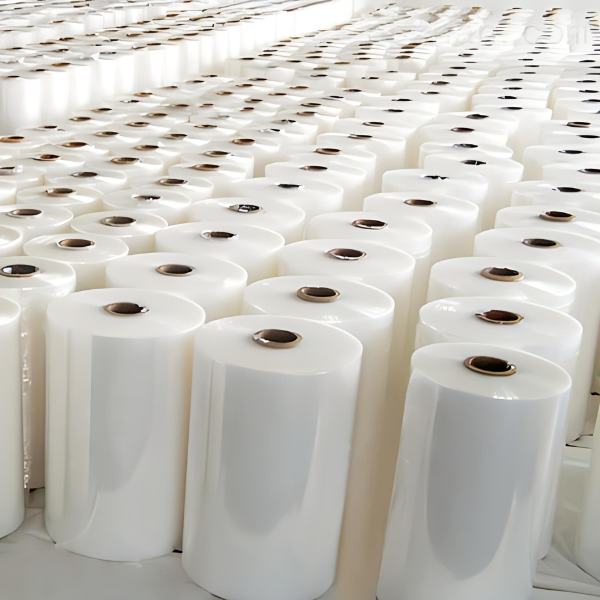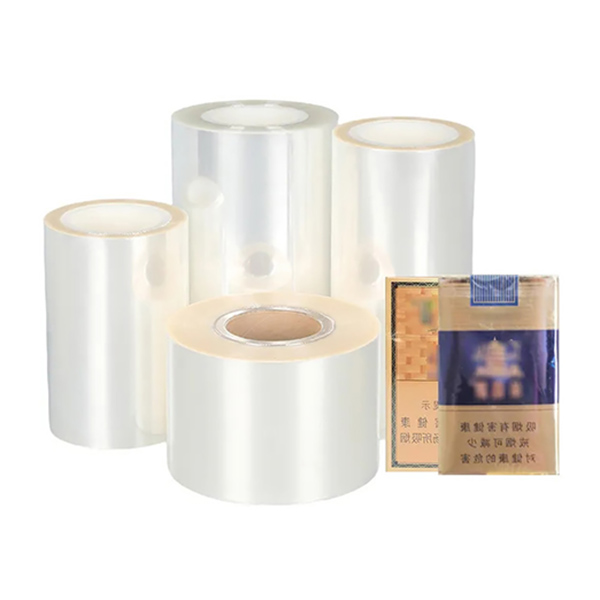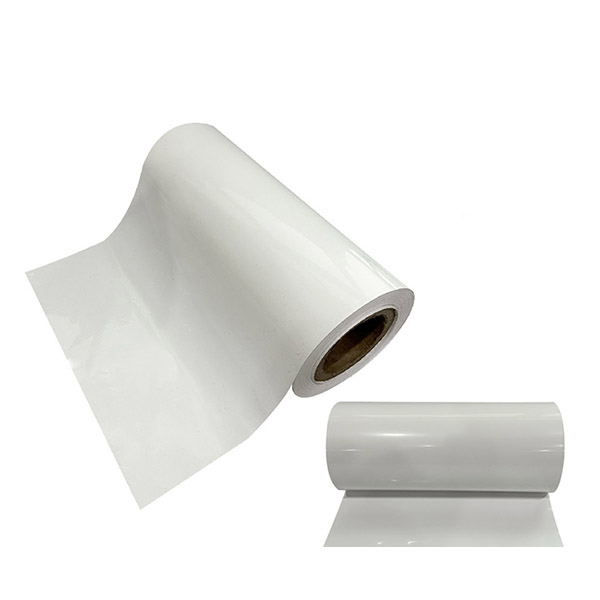
When people compare shrink wrap and stretch wrap, the two terms are often used as if they mean the same thing. In real packaging work, however, they are very different films with different machines, materials, costs and end uses.
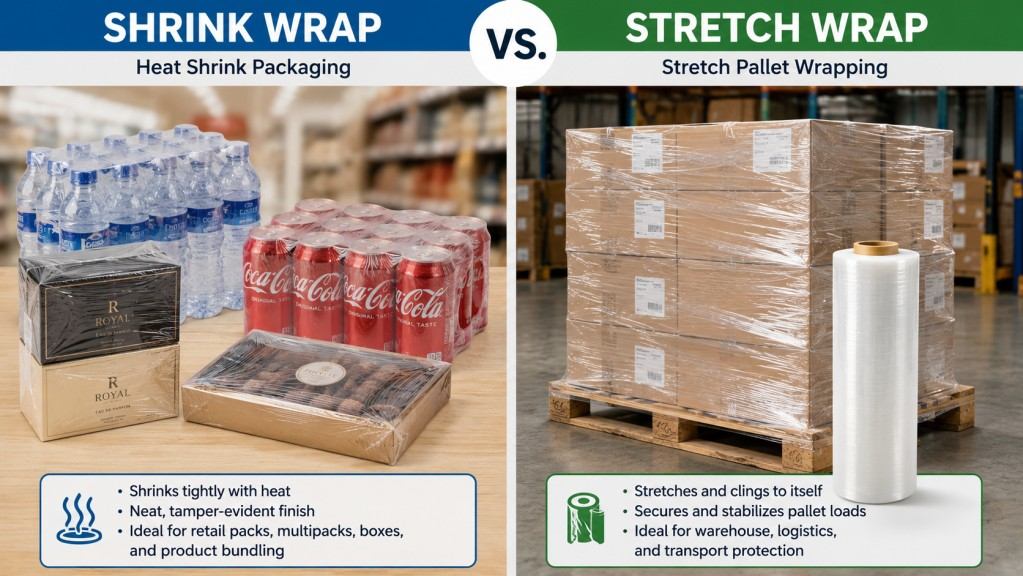
The simplest difference is this: shrink wrap becomes tight after heat is applied, while stretch wrap becomes tight because it is pulled and stretched around a product or pallet.
For a retail pack, gift set, bottle multipack or food tray, shrink wrap is often the better choice because it gives a clean, tight and professional appearance. For pallet wrapping, warehouse handling and export transport, stretch wrap is usually the more practical option because it stabilizes goods without heat.
This guide explains the difference between shrink wrap and stretch wrap from a buyer’s point of view, including materials, applications, cost factors, machine requirements and how to choose a reliable packaging film supplier or manufacturer.
Quick Answer: Shrink Wrap vs Stretch Wrap
Shrink wrap is a plastic film that shrinks tightly around a product when heat is applied. It is commonly used for retail products, beverage multipacks, food trays, books, boxes, cosmetics, pharmaceuticals and promotional bundles.
Stretch wrap is a highly stretchable plastic film that is pulled around cartons, pallets or industrial goods. It does not need heat. The film holds the load together by elastic tension, making it suitable for transport, warehousing and logistics.
If the goal is a neat retail appearance, product protection or tamper-evident packaging, choose shrink wrap. If the goal is pallet stability, load containment and transport protection, choose stretch wrap.
For buyers comparing different heat shrink options, CloudFilm’s shrink film collection gives a useful overview of common shrink packaging materials and applications.
What Is Shrink Wrap?
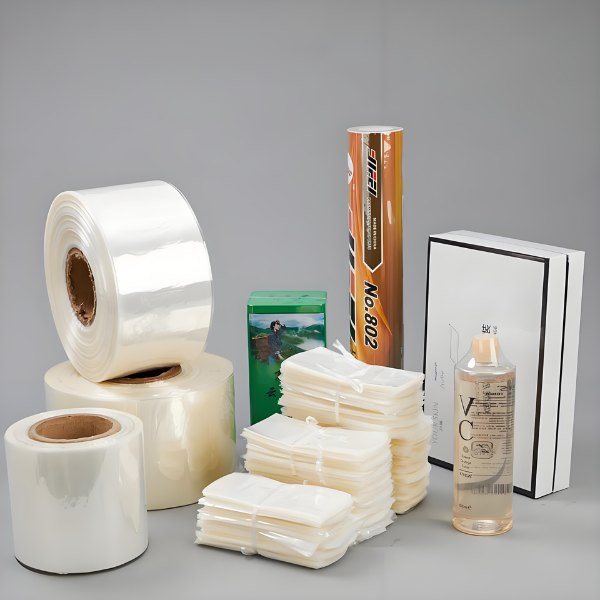
Shrink wrap is a plastic film that contracts when exposed to heat. The product is first covered or sleeved with film, then passed through a heat tunnel or heated with a heat gun. As the film shrinks, it forms a tight layer around the product.
Shrink wrap is used when the package needs a clean appearance, product grouping, dust protection, moisture resistance, shelf presentation or tamper evidence. It can wrap a single item, a multi-pack, a tray, a bottle group or a promotional bundle.
Common shrink wrap materials include POF, PE, PVC, PETG and OPS. The best material depends on the product weight, appearance requirement, sealing method, machine type, temperature resistance and target market.
For example, high-clarity POF shrink film is often used for retail packs, food products, cosmetics, books and gift sets. Buyers looking for this type of film can review CloudFilm’s POF shrink film for typical structure and application reference.
PE shrink film is different. It is usually stronger and tougher, so it is widely used for bottled water, soft drinks, beer multipacks, household products and heavier secondary packaging. For this application, CloudFilm supplies PE shrink film in customized widths, thicknesses and roll formats.
What Is Stretch Wrap?
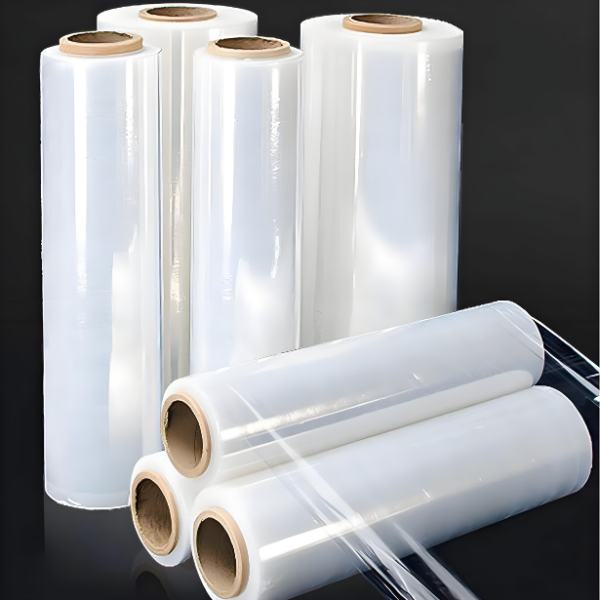
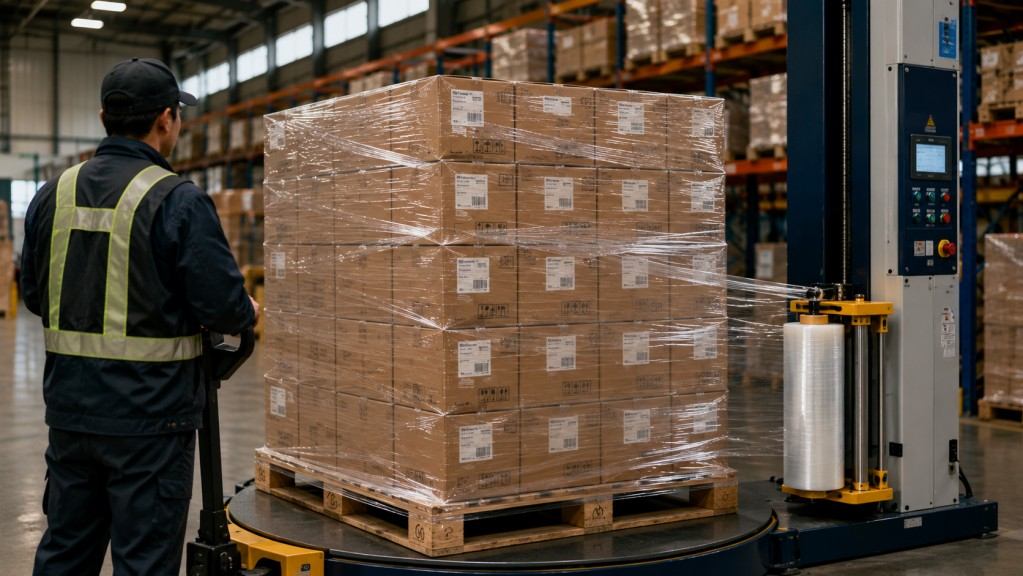
Stretch wrap, also called stretch film or pallet wrap, is a highly stretchable plastic film used to hold products together without heat. During wrapping, the film is pulled and stretched around a pallet or load. After wrapping, the film tries to return to its original shape, creating holding force.
Stretch wrap is mainly used in logistics and warehousing. It helps prevent cartons from falling, shifting, opening or getting dirty during storage and transport. It can be applied by hand, by semi-automatic machines or by fully automatic pallet wrappers.
Most stretch wrap is made from LLDPE-based material. It is designed for stretchability, puncture resistance, cling, load retention and tear resistance. A good stretch film should hold the pallet securely while using as little film as possible.
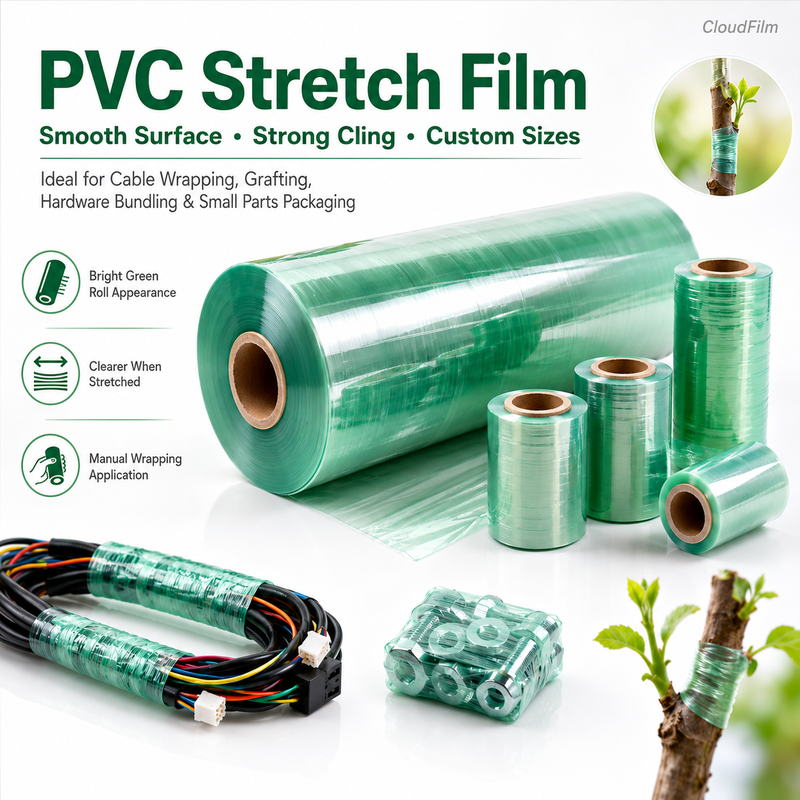
For pallet and carton protection, CloudFilm’s PE stretch film is designed for hand wrapping, machine wrapping and jumbo roll conversion. Buyers can also refer to the stretch film uses guide to compare common applications and selection points.
Side-By-Side Comparison: Shrink Wrap And Stretch Wrap
| Comparison Point | Shrink Wrap | Stretch Wrap |
|---|---|---|
| Main working method | Shrinks with heat | Stretches by tension |
| Heat required | Yes | No |
| Common materials | POF, PE, PVC, PETG, OPS | Mostly LLDPE-based PE |
| Main purpose | Retail packaging, bundling, protection, display | Pallet stability, load containment, logistics protection |
| Typical equipment | L-sealer, sleeve wrapper, heat tunnel, heat gun | Hand dispenser, semi-auto wrapper, automatic pallet wrapper |
| Best for | Single products, multipacks, trays, display packs | Cartons, pallets, industrial loads |
| Appearance | Tight and neat | Functional and logistics-oriented |
| Holding force | From shrink tension after heat | From elastic memory after stretching |
| Common buyers | Food brands, retailers, converters, product manufacturers | Warehouses, exporters, factories, logistics companies |
| Key purchase factors | Clarity, shrink rate, seal strength, thickness, temperature | Stretch ratio, puncture resistance, cling, load retention |
This comparison shows why the two films should not be selected only by price per kilogram. The real question is what the packaging needs to achieve.
A product that needs to look attractive on a supermarket shelf may require shrink wrap. A pallet that must survive long-distance export shipping may require stretch wrap. In some supply chains, both materials are used: shrink wrap for retail bundling and stretch wrap for pallet transport.
Shrink Wrap Materials And Applications
POF Shrink Film
POF shrink film is a popular choice for retail packaging because it offers good clarity, soft touch, strong sealing and attractive appearance after shrinking. It is often used for food packs, bakery products, cosmetics, toys, books, stationery, small boxes and gift sets.
POF is usually selected when the buyer needs a clean retail look and stable sealing performance. It can be used with L-sealers, side sealers and shrink tunnels. For many export packaging projects, POF is preferred over older shrink materials because it is more suitable for modern retail and food-related applications.
PE Shrink Film
PE shrink film is mainly used for heavier secondary packaging. Compared with POF, it normally has lower clarity but better toughness and stronger load-holding performance.
Typical applications include bottled water trays, beverage multipacks, beer packs, canned goods, household chemicals, cartons, bricks, tiles and industrial goods. PE shrink film can also be printed for brand promotion, especially in beverage packaging.
For a beverage plant or converter, the key points are shrink force, seal strength, puncture resistance, printing performance and stable running on high-speed shrink tunnels.
PETG And OPS Shrink Film
PETG and OPS shrink films are commonly used for shrink sleeve labels. They are often applied around bottles, containers and shaped packaging where a full-body label is needed.
These films are not usually used in the same way as PE shrink wrap or POF shrink wrap. They are selected more for label appearance, shrink curve, container shape and printing quality.
Stretch Wrap Materials And Applications
Hand Stretch Film
Hand stretch film is used with a manual dispenser. It is suitable for small warehouses, low-volume pallet wrapping, moving goods and simple carton bundling.
The advantage is low equipment cost. The disadvantage is that wrapping quality depends heavily on the worker’s experience. If the film is not stretched evenly, pallet stability may be poor or film consumption may be too high.
Machine Stretch Film
Machine stretch film is used on semi-automatic or automatic pallet wrappers. It is suitable for factories, exporters, distribution centers and high-volume warehouses.
The main advantage is consistency. A machine can apply controlled pre-stretch and wrapping force, helping reduce film waste and improve pallet stability.
Pre-Stretch Film
Pre-stretch film has already been stretched during production. It is easier to apply by hand, requires less force and can reduce film consumption in some applications.
It is useful for warehouses that want better wrapping efficiency without investing in large automatic equipment.
Stretch Hood Film
Stretch hood film is a more advanced pallet packaging solution. Instead of wrapping film around the pallet many times, a machine pulls a PE hood over the load. The hood then contracts around the pallet by elasticity, not by heat.
For heavy-duty pallet protection, outdoor storage or high-speed industrial lines, stretch hood film can sometimes replace traditional stretch wrap or shrink hood packaging.
Which Film Is Better For Retail Packaging?
For most retail packaging, shrink wrap is better than stretch wrap.
Retail packaging usually needs a clean appearance, product visibility, stable sealing and tamper evidence. Shrink wrap can tightly follow the product shape and make the pack look professional.
Examples include:
- Cosmetic boxes packed in clear film.
- Books and stationery wrapped for dust protection.
- Food trays packed for hygiene and presentation.
- Gift sets and promotional bundles packed as one sales unit.
- Beverage cans or bottles grouped into multipacks.
Stretch wrap is rarely used for retail display packaging because it does not create the same clean, tight and finished appearance. It is more useful after retail products are packed into cartons and placed on pallets.
Which Film Is Better For Pallet Packaging?
For most pallet packaging, stretch wrap is better than shrink wrap.
Stretch wrap is fast, flexible and does not need heat. It can secure cartons, bags, drums, boxes and mixed loads. It is also widely available and easy to use in warehouses.
However, PE shrink film can still be used for pallet unitization, especially when stronger all-around protection is needed. Shrink film can create a tighter outer cover and may offer better weather resistance in some applications.
The best choice depends on:
- Pallet weight.
- Load shape.
- Sharp corners.
- Transport distance.
- Indoor or outdoor storage.
- Manual or automatic packing line.
- Required film consumption.
- Required protection against dust, rain or tampering.
For general warehouse logistics, stretch wrap is usually the first choice. For heavy multipacks, beverage trays or some outdoor loads, PE shrink film may be more suitable.
Cost Factors: Shrink Wrap vs Stretch Wrap
The cost of packaging film is not only the unit price per kilogram. Buyers should consider total packaging cost.
For shrink wrap, cost factors include film thickness, shrink ratio, sealing strength, energy use, heat tunnel settings, scrap rate, printed or unprinted film, and machine speed. If the film does not shrink evenly, product appearance may be poor and waste may increase.
For stretch wrap, cost factors include stretch ratio, pre-stretch performance, puncture resistance, cling, load retention and wrapping pattern. A cheaper film may use more material per pallet if it breaks easily or cannot be stretched enough.
A professional packaging film manufacturer should help buyers compare real usage cost, not only quote a low price. In many cases, a stronger or better-formulated film can reduce total cost because less film is needed per pack or per pallet.
Sustainability And Material Selection
Packaging buyers are paying more attention to recyclable and mono-material solutions. Both shrink wrap and stretch wrap can support better packaging design when selected correctly.
PE shrink film and PE stretch film are both polyethylene-based materials. In suitable recycling systems, mono-PE packaging can be easier to handle than mixed-material packaging.
For companies that want to simplify material structures, CloudFilm’s PE film category can help buyers compare PE-based options for secondary packaging, pallet protection and flexible packaging structures.
The key is to avoid over-packaging while still protecting the product. A damaged product has its own environmental and financial cost. Good packaging should balance material reduction, product protection, transport safety and recyclability.
How To Choose The Right Film As A Buyer
A buyer should start with the packaging purpose.
If the film must make the product look good on the shelf, choose shrink wrap. If the film must keep cartons stable during transport, choose stretch wrap.
Then check the product and packaging line details:
- Product size and shape.
- Pack weight.
- Sharp corners or smooth surfaces.
- Required clarity.
- Direct or indirect food contact.
- Manual or automatic machine.
- Heat tunnel temperature or pallet wrapper setting.
- Storage and shipping conditions.
- Target market documents or compliance requirements.
- Estimated monthly or annual consumption.
For an accurate quotation, a supplier should ask for these details before recommending a film. If a supplier quotes immediately without understanding the product, the result may not match your real packaging line.
Working With A Shrink Wrap Or Stretch Wrap Manufacturer
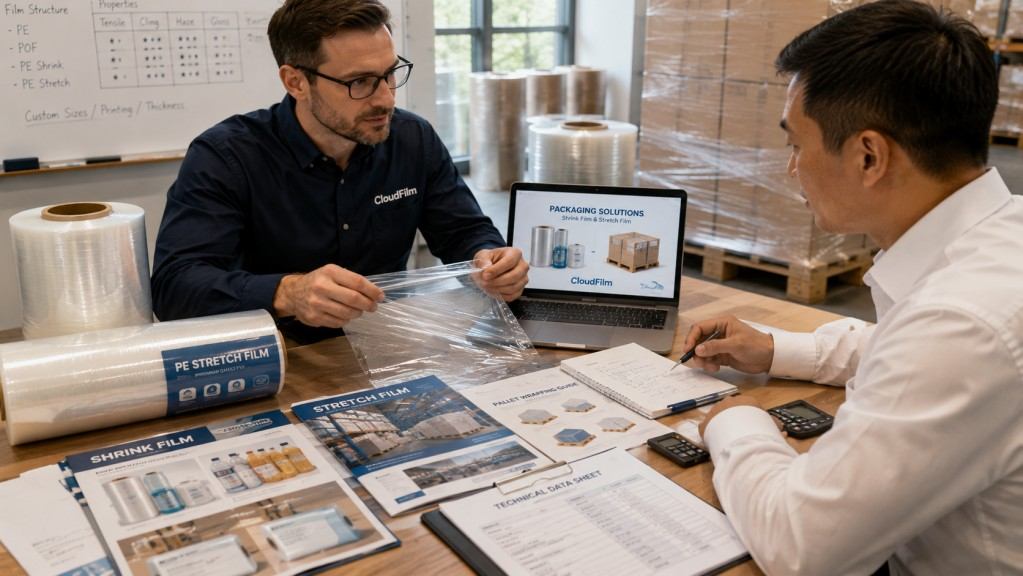
For B2B packaging buyers, choosing the right supplier is as important as choosing the right film. A good film manufacturer should understand raw materials, extrusion, slitting, printing, packing and export logistics.
For shrink wrap, the manufacturer should help you confirm thickness, width, center-fold or single-wound format, shrink temperature, sealing method and carton or pallet packing.
For stretch wrap, the manufacturer should help you confirm roll width, thickness, core size, stretch ratio, cling level, hand or machine use, pallet load type and wrapping method.
If your company needs multiple packaging films, it is more efficient to work with one flexible packaging partner that can support shrink film, stretch film, PE film, BOPP film, PET film and custom flexible packaging. CloudFilm’s custom flexible packaging solutions can be a useful starting point for buyers who need more than one film structure.
Buyer Checklist Before Requesting A Quote
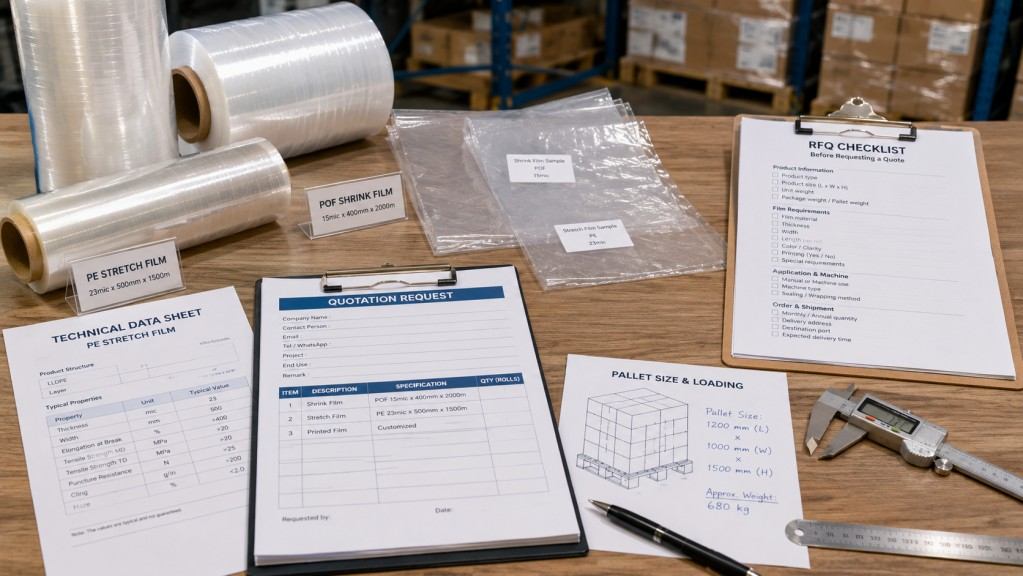
Before asking for a shrink wrap or stretch wrap quotation, prepare the following information.
- For shrink wrap:
- Product type.
- Product size.
- Pack weight.
- Film material preference.
- Film thickness.
- Film width.
- Roll length.
- Single-wound or center-fold film.
- Printed or unprinted film.
- Machine type.
- Heat tunnel temperature.
- Target order quantity.
- Destination port or delivery address.
- For stretch wrap:
- Hand use or machine use.
- Pallet size.
- Pallet height.
- Pallet weight.
- Carton type or product type.
- Sharp edges or regular cartons.
- Required stretch ratio.
- Film thickness.
- Roll width.
- Core size.
- Monthly consumption.
- Indoor or outdoor storage.
- Export or domestic transport.
With this information, the supplier can recommend the correct grade faster and avoid unnecessary sampling mistakes.
Common Mistakes When Choosing Shrink Wrap Or Stretch Wrap
One common mistake is using stretch wrap when the product actually needs retail presentation. Stretch wrap may protect the product, but it usually does not create a clean sales package.
Another mistake is using shrink wrap for every pallet. Shrink wrapping pallets requires heat, equipment and energy. For many warehouse applications, stretch wrap is simpler and more cost-effective.
A third mistake is choosing film only by thickness. Thickness matters, but formulation matters too. A 20-micron high-performance stretch film may work better than a thicker low-quality film. A thinner shrink film may still perform well if the shrink curve and sealing strength are suitable.
A fourth mistake is ignoring machine compatibility. A film that works well on one line may not work well on another. Line speed, sealing temperature, tunnel length, airflow and wrapping tension all affect performance.
FAQ About Shrink Wrap And Stretch Wrap
1. Is shrink wrap the same as stretch wrap?
No. Shrink wrap needs heat to shrink tightly around the product. Stretch wrap does not need heat. It is stretched around a pallet or load and holds goods together by tension.
2. Which is better, shrink wrap or stretch wrap?
Neither is always better. Shrink wrap is better for retail packaging, product bundling and tamper evidence. Stretch wrap is better for pallet wrapping, warehouse handling and transport stability.
3. Can stretch wrap shrink with heat?
No. Stretch wrap is not designed to shrink by heat. If it is heated, it may deform, weaken or fail. It should be used by stretching, not by heating.
4. Can shrink wrap be used for pallets?
Yes, PE shrink film can be used for some pallet and heavy-duty packaging applications. However, for general warehouse pallet wrapping, stretch wrap is usually easier and more economical.
5. What material is shrink wrap made from?
Common shrink wrap materials include POF, PE, PVC, PETG and OPS. The right material depends on product type, appearance, machine, shrink force and regulatory requirements.
6. What material is stretch wrap made from?
Most stretch wrap is made from LLDPE-based polyethylene. It is designed for high stretchability, cling, puncture resistance and load retention.
7. Which film is better for beverage multipacks?
PE shrink film is widely used for bottled water, soft drinks, beer and canned beverage multipacks. It provides good toughness and holding force for heavier packs.
8. Which film is better for food retail packs?
POF shrink film is often used for food retail packs because it provides high clarity, good sealing and a clean appearance. Food-contact requirements should be confirmed with the supplier.
9. Which film is better for export pallets?
Stretch wrap is commonly used for export pallets because it secures cartons without heat and is easy to apply. For stronger weather protection, stretch hood film or PE shrink film may also be considered.
10. Is shrink wrap waterproof?
Shrink wrap can protect against dust and light moisture, but performance depends on sealing, film type and packaging method. It should not be assumed to be fully waterproof unless the structure and sealing design are confirmed.
11. Is stretch wrap waterproof?
Stretch wrap can protect pallets from dust and some moisture, but normal stretch wrapping does not fully seal the top and bottom of a pallet. For outdoor storage, stretch hood film or other protective solutions may be better.
12. What is the difference between PE shrink film and POF shrink film?
PE shrink film is tougher and better for heavier multipacks and transport packaging. POF shrink film has better clarity and is often used for retail packaging and lighter products.
13. What thickness should I choose for shrink wrap?
It depends on product weight, size, machine and required protection. Light retail packs may use thinner POF shrink film, while heavier beverage or industrial packs usually need thicker PE shrink film.
14. What thickness should I choose for stretch wrap?
It depends on pallet weight, load sharpness, wrapping machine and transport conditions. Machine films can often use optimized thickness with higher stretch performance to reduce total film consumption.
15. Can shrink wrap be printed?
Yes. PE shrink film can be printed for beverage multipacks, promotional packs and brand packaging. Printing must consider shrink direction and distortion after heat shrinking.
16. Can stretch wrap be printed?
Yes, stretch wrap can be printed in some cases, but most stretch wrap is clear or tinted for logistics use. If branding on pallet packaging is important, stretch hood film may offer better print visibility.
17. Which film is cheaper?
Stretch wrap is usually cheaper for pallet wrapping because it does not need heat and is fast to apply. Shrink wrap may be more cost-effective for retail bundling because it creates a finished sales pack.
18. Do I need samples before bulk order?
Yes. For both shrink wrap and stretch wrap, samples or trial rolls are strongly recommended. Testing can confirm machine compatibility, sealing, shrink appearance, pallet stability and real film consumption.
19. What information should I send to a supplier?
Send product size, weight, application, machine type, film width, thickness, roll length, quantity, destination and any special requirements such as printing, food contact, UV resistance or high puncture resistance.
20. Can one manufacturer supply both shrink wrap and stretch wrap?
Yes. A flexible packaging film manufacturer with PE film and shrink film capability can often supply both. This helps buyers compare materials, reduce communication cost and build a more consistent packaging supply chain.
Conclusion: Choose By Packaging Purpose, Not By Name
Shrink wrap and stretch wrap are both flexible plastic packaging films, but they solve different problems.
Shrink wrap is best when products need a tight, attractive and protective retail package. It uses heat and is suitable for single products, trays, multipacks, promotional bundles and some heavy-duty secondary packaging.
Stretch wrap is best when pallets or cartons need load stability during storage, handling and transport. It uses tension, not heat, and is widely used in warehouses and export logistics.
For packaging buyers, the right choice depends on product type, machine, pack weight, appearance requirement, transport risk and total packaging cost.
If you are comparing shrink wrap, stretch wrap, PE shrink film, POF shrink film or stretch hood film for your next project, working with a professional packaging film manufacturer can help you test the right material faster and reduce costly packaging mistakes.