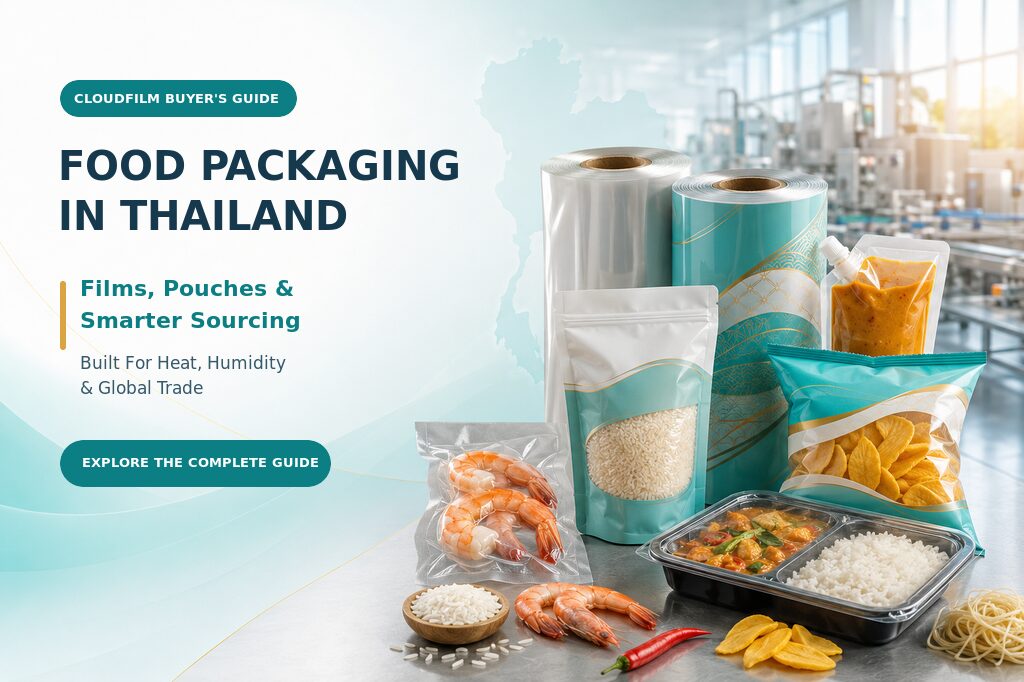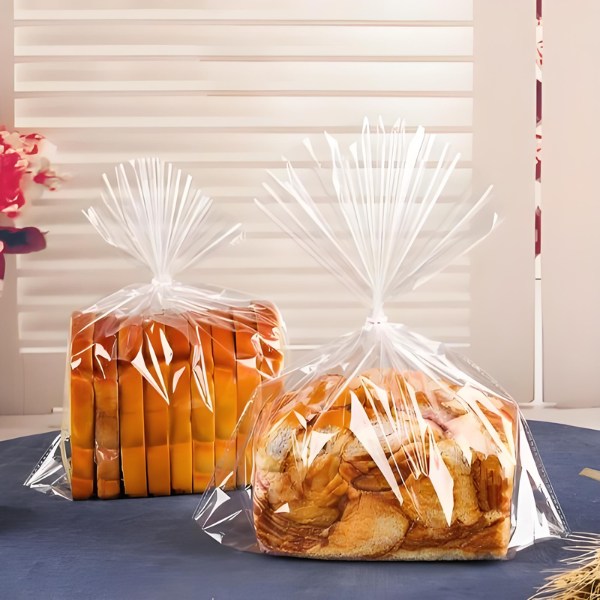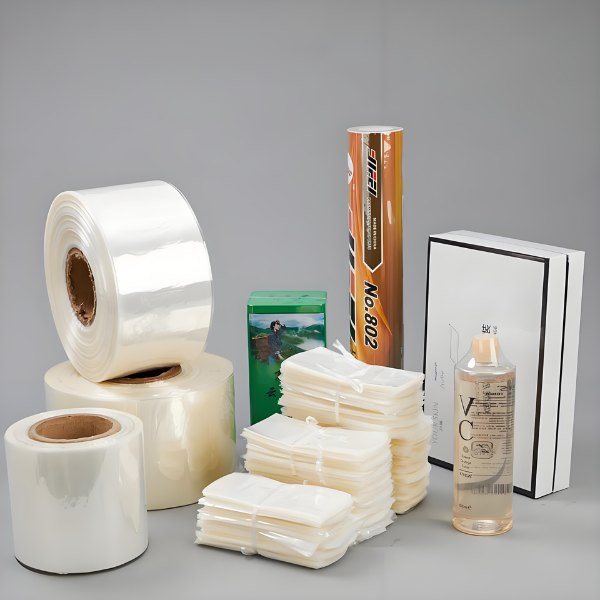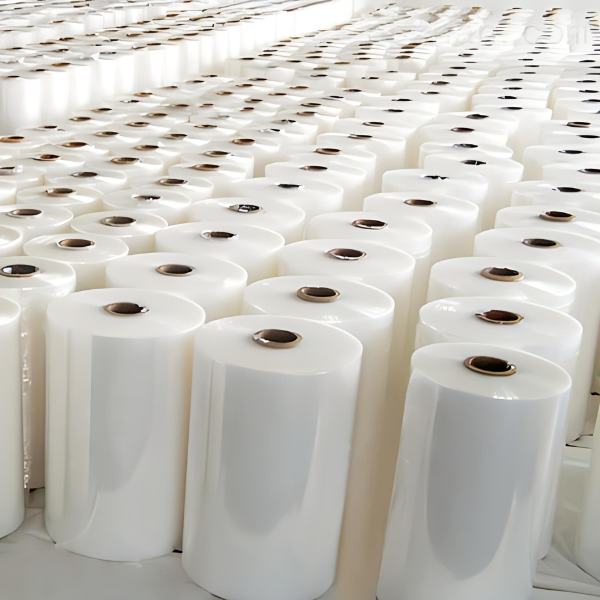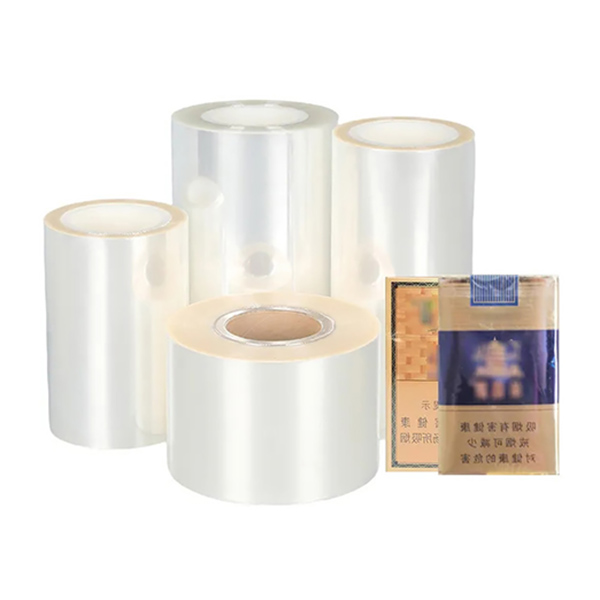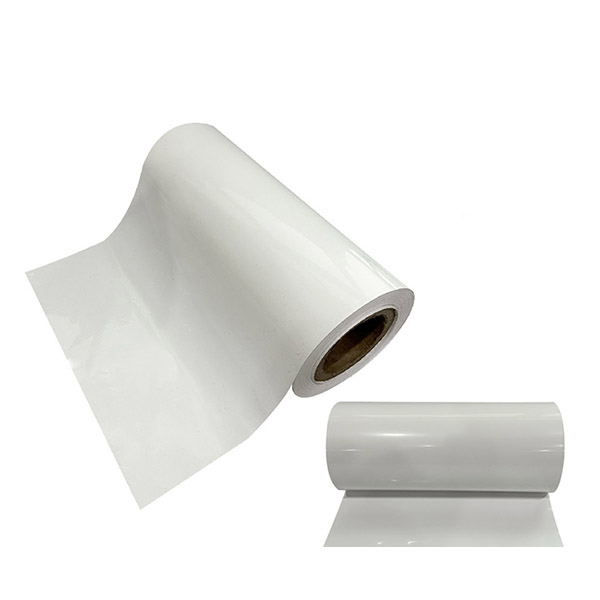
Shrink wrap is one of the most widely used packaging methods for products that need protection, visibility, bundling, and a clean retail appearance. From boxed food and cosmetics to beverage multipacks, industrial parts, electronics, and export cartons, shrink wrap helps turn loose or individual items into a stable, attractive, and easier-to-handle package.
For purchasing managers, brand owners, packaging engineers, and distributors, the real question is not simply “Can shrink wrap be used?” The more important question is: which shrink wrap material is suitable for this product, this machine, this market, and this logistics route?
This guide explains the major shrink wrap applications, the most common material options, key selection points, and the information you should prepare before contacting a shrink film supplier or manufacturer.
What Is Shrink Wrap?
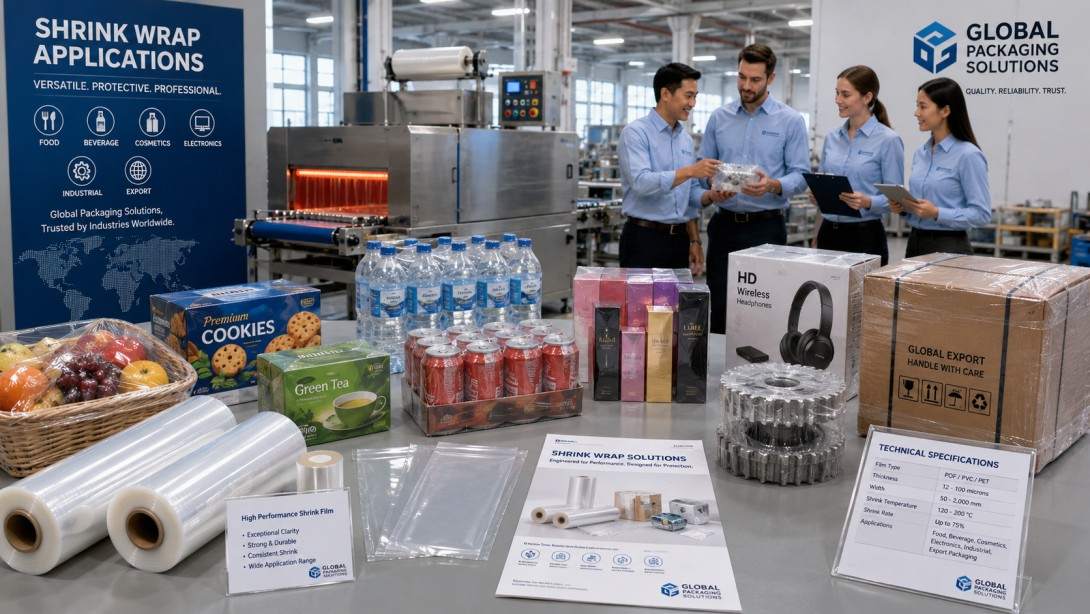
Shrink wrap is a heat-shrinkable plastic film that becomes tighter around a product after heat is applied. The film is usually wrapped around the item first, sealed, and then passed through a heat tunnel or treated with controlled hot air. As the film shrinks, it forms a close protective layer around the product or bundle.
In practical packaging, shrink wrap can serve several purposes at the same time. It can protect products from dust and handling marks, improve tamper evidence, hold multiple products together, improve shelf appearance, reduce loose packaging, and support transport stability.
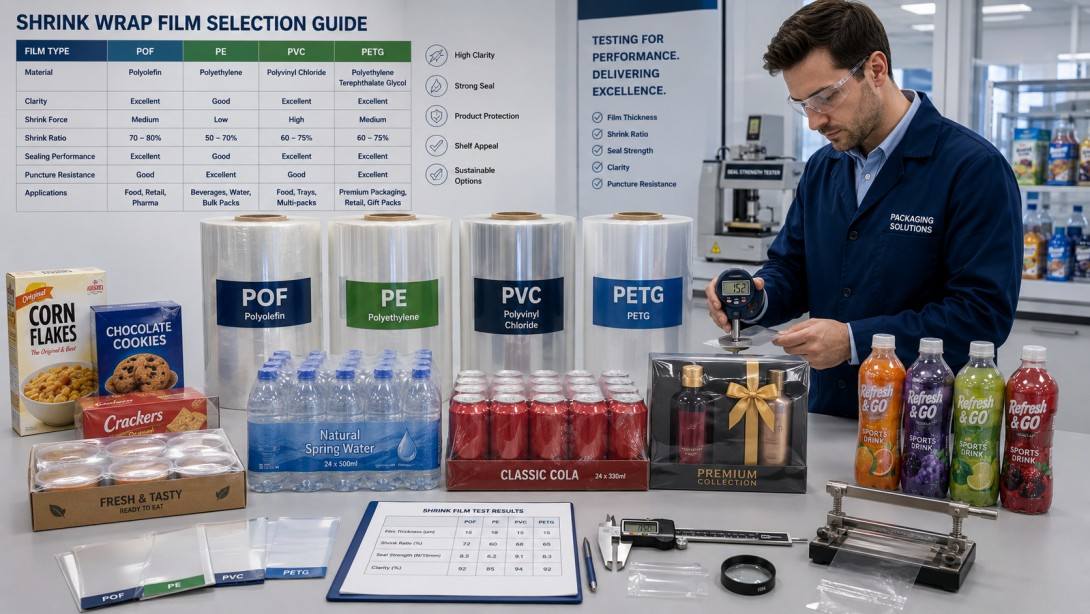
Shrink wrap is not one single material. Buyers may choose POF, PE, PVC, PETG, or other shrink film structures depending on product type, packaging equipment, safety requirements, shrink force, clarity, cost target, and end-use market.
For premium retail packs and food-related overwrap, many buyers choose polyolefin shrink film roll because it offers a strong balance of clarity, seal strength, flexibility, and presentation.
Main Shrink Wrap Applications By Industry
Shrink wrap is used across many industries because it can solve different packaging problems with one material system. The following application areas are among the most common.
1. Food And Beverage Overwrap
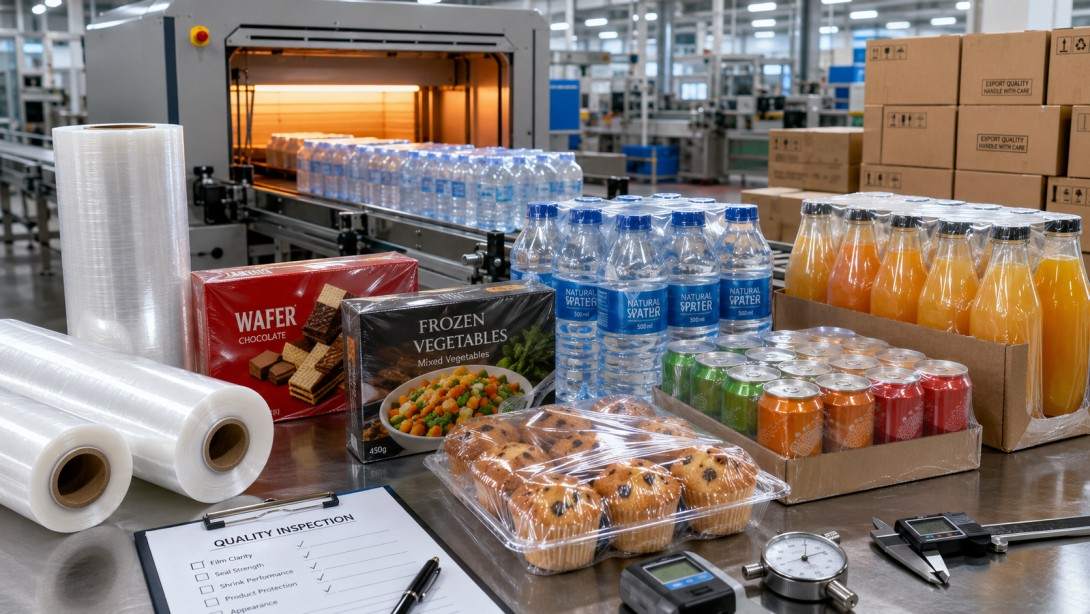
Food and beverage packaging is one of the most important shrink wrap application areas. Shrink wrap can be used for boxed snacks, biscuits, instant noodles, frozen food, bakery packs, pizza boxes, beverage trays, bottled drinks, canned goods, and promotional food bundles.
For food-related packaging, the material should be selected carefully. The film must have suitable food-contact performance, clean appearance, stable sealing, and good machinability. In many cases, POF shrink film is a practical choice for food overwrap because it combines transparency, flexibility, and controlled shrink force.
Shrink wrap does not always need to contact food directly. In many applications, it is used as an outer wrap around cartons, trays, or multipacks. Even in that case, buyers should still consider hygiene, odor, film cleanliness, and storage conditions.
Common food and beverage applications include:
- Snack box overwrap
- Biscuit and bakery outer packaging
- Frozen food carton wrapping
- Beverage multipack bundling
- Instant noodle pack wrapping
- Promotional food set packaging
- Tray pack wrapping for retail display
For these products, a clean shrink appearance can make the package look more secure and professional. It also helps reduce the risk of loose cartons, opened packs, or dusty surfaces during retail handling.
2. Retail And Consumer Product Packaging
Retail packaging often needs to protect the product while keeping it visible. Shrink wrap is useful because it creates a clear outer skin without covering the design of the primary package.
Retail products commonly wrapped with shrink film include:
- Gift boxes
- Books and stationery
- Cosmetics and skincare sets
- Toys
- Small household items
- Candles
- Electronic accessories
- Promotional bundles
- Personal care products
For these applications, high clarity and gloss are important. A cloudy or wrinkled film can reduce shelf appeal. Buyers should also pay attention to seal position, film thickness, shrink temperature, and perforation design.
In retail packaging, shrink wrap can help brands create a premium “new product” feeling. The customer can see that the package has not been opened. For gift sets and promotional kits, shrink wrap also keeps multiple items in position during shipping and shelf display.
When the product is light, delicate, or easily deformed, shrink force must be controlled. A film that shrinks too aggressively may bend boxes, distort labels, or damage soft products. That is why packaging trials are important before mass production.
3. Beverage Multipacks And Tray Bundling
Beverage packaging often needs stronger film than normal retail overwrap. Bottled water, soft drinks, beer cans, juice bottles, and dairy drinks are heavy, and the film must hold the products together during handling, stacking, and transport.
For these heavier applications, PE shrink film is often used because it offers toughness, puncture resistance, and strong shrink performance for multipacks, trays, and logistics bundles.
PE shrink film is commonly used for:
- Bottled water trays
- Canned beverage multipacks
- Beer and soft drink bundles
- Large household product packs
- Detergent bottle multipacks
- Heavy retail bundles
- Distribution packs for supermarkets
Printed PE shrink film can also support branding. Instead of using only plain transparent film, brand owners may print logos, product information, promotional graphics, or color blocks on the film. This turns secondary packaging into a visible marketing surface.
For beverage multipacks, the buyer should check holding force, seal strength, puncture resistance, film gauge, tunnel temperature, and pack stability after cooling. If the pack becomes loose after shrinking, the film or machine setting may need adjustment.
4. Industrial Product Protection
Shrink wrap is not only for retail goods. It is also used for industrial packaging, machinery parts, hardware, construction materials, metal components, tools, and export cargo.
Industrial shrink wrap focuses more on strength, protection, and load stability than shelf appearance. The film may need higher thickness, better puncture resistance, UV resistance, or special formulation depending on the product and storage environment.
Typical industrial applications include:
- Bundling metal profiles
- Wrapping machinery parts
- Protecting tools and hardware
- Covering construction materials
- Securing long or irregular items
- Wrapping spare parts for export
- Protecting cartons from dust and moisture
For industrial users, the key is to match film strength with product weight and edge sharpness. Some products may need corner protection or padding before shrink wrapping. The shrink film alone cannot solve all mechanical damage risks if the product has sharp edges or unstable shapes.
5. Export Packaging And Logistics Stability
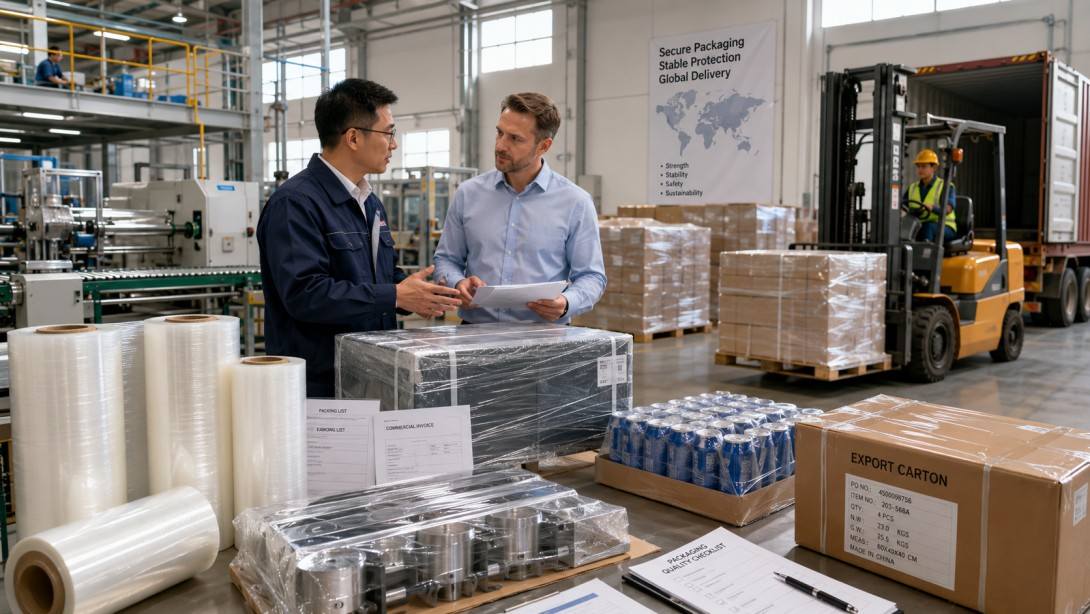
For export packaging, shrink wrap helps reduce product movement, dust contamination, and package tampering during long-distance transport. It is often used together with cartons, trays, pallets, labels, and protective boards.
Shrink wrap is especially useful when products are shipped through multiple handling stages: factory loading, warehouse storage, container loading, port transfer, customs inspection, distributor warehouse, and final delivery.
For pallet-level packaging, shrink wrap may not always be the best solution. In some cases, stretch film or hood packaging may perform better. For heavy palletized goods, buyers can compare shrink wrap with stretch hood film to decide which option better supports load stability, weather protection, energy use, and packing speed.
Export buyers should also check whether the film can withstand temperature changes during shipping. If the film becomes brittle, loose, or deformed, the package may lose protection before reaching the final market.
6. Tamper-Evident Packaging
Shrink wrap can create a visible barrier that shows whether a product has been opened. This is useful for cosmetics, personal care items, healthcare products, food cartons, electronic accessories, and retail products.
Tamper-evident shrink packaging may use full overwrap, neck bands, sleeves, or small shrink seals. The purpose is not only protection but also consumer confidence. When the film is intact, the buyer can see that the product has not been opened during distribution.
For some non-food, cost-sensitive applications, PVC shrink film may still be used because it offers strong shrink force and good gloss. However, for food, export, healthcare, children’s products, and higher-compliance applications, many buyers prefer safer alternatives such as POF or PE.
7. Shrink Sleeves And Bottle Decoration
Shrink wrap is also used in the form of shrink sleeves. A shrink sleeve is a printed film label that shrinks around a bottle, cup, jar, or shaped container. It can cover the full body of the container and provide 360-degree decoration.
Shrink sleeves are commonly used for:
- Beverage bottles
- Cosmetic containers
- Household cleaning bottles
- Dairy drink cups
- Personal care products
- Shaped plastic containers
- Promotional limited-edition packaging
For full-body sleeves and shaped containers, PETG shrink film is widely used because of its high shrink ratio and excellent sleeve appearance.
Shrink sleeve projects require more attention to artwork distortion, shrink curve, container shape, printing method, seaming quality, and tunnel settings. A small technical mistake can lead to twisted graphics, uneven shrinkage, or poor label position.
How To Choose The Right Shrink Wrap Material
Choosing shrink wrap should start with the application, not the material name. Buyers should first define the product, pack size, machine type, logistics route, display requirement, and compliance needs.
A practical material selection approach is:
Choose POF For Clean Retail And Food-Related Overwrap
POF is suitable for many food, retail, cosmetic, gift, stationery, and consumer product applications. It provides good clarity, stable sealing, and a softer shrink feel than some other materials.
Choose PE For Heavy Bundling And Beverage Packs
PE is suitable for beverage trays, multipacks, industrial bundles, and heavier products. It offers stronger toughness and better puncture resistance for transport packaging.
Choose PVC Only For Specific Non-Food Projects
PVC can be economical and glossy, but many buyers now limit its use. It should be considered carefully, especially when the product is food-related, healthcare-related, child-related, or intended for markets with stricter packaging requirements. For a deeper comparison, review the POF vs PVC shrink film guide.
Choose PETG For Shrink Sleeves
PETG is often selected for shrink sleeve labels, especially when containers have curves, shoulders, or irregular shapes.
A professional shrink film supplier should not simply recommend one material for every case. The correct recommendation depends on the whole packaging system.
Key Questions Before Ordering Shrink Wrap
Before contacting a manufacturer, buyers should prepare practical information. This helps the supplier recommend the right film faster and reduces trial errors.
Important questions include:
- What product will be wrapped?
- Is the product food, beverage, cosmetic, industrial, or retail?
- Does the film contact the product directly or only wrap the outer carton?
- What is the product size and pack weight?
- Is the product rigid, soft, sharp-edged, or easily deformed?
- What machine will be used?
- Is the film single wound or center folded?
- What width, thickness, roll length, and core size are required?
- What sealing temperature and tunnel temperature are currently used?
- Does the package need printing, perforation, anti-fog, low-temperature shrink, or high-speed performance?
- What is the target market and compliance requirement?
- Is the priority clarity, cost, strength, speed, sustainability, or shelf display?
If you are still comparing materials, the shrink film collection can help you understand the available product family before final selection.
Common Mistakes In Shrink Wrap Applications
Many shrink packaging problems come from wrong material choice or incomplete project information. The following mistakes are common.
Mistake 1: Choosing Film Only By Price
The lowest film price does not always mean the lowest packaging cost. If the film breaks, shrinks unevenly, causes machine downtime, or creates poor shelf appearance, the total cost may be higher.
Mistake 2: Ignoring Machine Compatibility
A film that works well on one machine may not run well on another. Sealing system, tunnel length, airflow, temperature control, conveyor speed, and film tension all affect the final result.
Mistake 3: Using Too Much Shrink Force
Strong shrink force is not always better. For light cartons, soft boxes, and delicate products, excessive shrink force can distort the package.
Mistake 4: Not Testing Real Products
Film samples should be tested with actual products, real machine settings, and realistic packing speed. A simple hand test cannot fully represent mass production.
Mistake 5: Not Considering Storage And Shipping
Shrink-wrapped products may face heat, cold, pressure, vibration, and humidity during transport. Export packaging should be tested beyond the factory packing line.
Working With A Shrink Wrap Supplier Or Manufacturer
A reliable shrink wrap supplier should help buyers connect material performance with real packaging conditions. This includes product analysis, film selection, trial support, technical adjustment, and stable supply.
When evaluating a supplier or manufacturer, consider:
- Product range and material options
- Custom thickness and width capability
- Experience with export packaging
- Understanding of shrink tunnels and sealing machines
- Support for samples and trial orders
- Consistent quality control
- Printing and perforation options
- Ability to explain problems clearly
- Fast response to technical questions
For buyers who need broader film sourcing beyond shrink wrap, a packaging films manufacturer in China can help connect shrink film with other flexible packaging materials, such as BOPP, BOPET, PE, CPP, BOPA, laminated films, and pouch materials.
Shrink Wrap Application Checklist
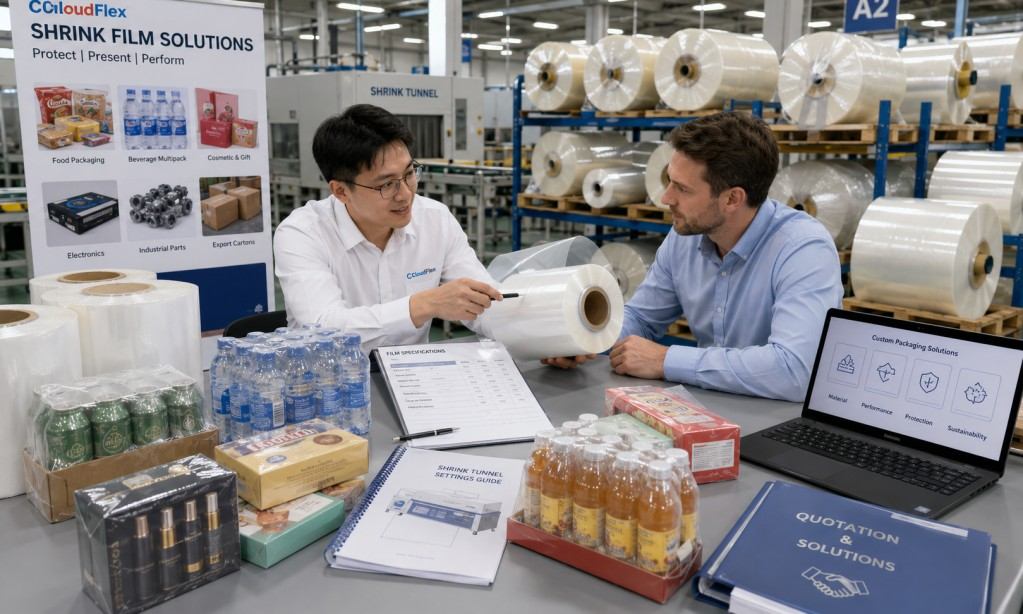
Use the checklist below before starting a new shrink wrap project.
- Define the product category and pack shape.
- Confirm whether the film is primary, secondary, or transport packaging.
- Select the possible material: POF, PE, PVC, PETG, or another structure.
- Confirm food-contact, safety, and market requirements.
- Measure product size and pack weight.
- Check machine type, sealing system, tunnel length, and running speed.
- Decide film format: single wound, center folded, tube, sleeve, or printed roll.
- Confirm thickness, width, roll length, core size, and winding direction.
- Test samples on real products.
- Review shrink appearance, seal strength, wrinkles, tear resistance, and pack stability.
- Confirm export packing method and pallet plan.
- Finalize the specification only after trial feedback.
For a deeper explanation of shrink packaging types and benefits, you can also read this guide on heat shrink film packaging.
FAQ About Shrink Wrap Applications
1. What products can be packed with shrink wrap?
Shrink wrap can be used for food cartons, beverage multipacks, cosmetics, books, stationery, toys, electronics, personal care products, hardware, industrial parts, and export bundles.
2. Is shrink wrap suitable for food packaging?
Yes, but the correct material must be selected. For food-related overwrap, POF is commonly used because it offers clean appearance, good clarity, and suitable packaging performance.
3. What is the best shrink wrap for beverage multipacks?
PE shrink film is commonly used for bottled water, soft drink cans, beer packs, and tray bundling because it provides toughness and strong holding performance.
4. What is the difference between POF and PE shrink film?
POF is often used for clear retail overwrap and food-related packaging. PE is usually better for heavier bundles, beverage trays, and industrial transport packaging.
5. Can shrink wrap be printed?
Yes. PE shrink film and shrink sleeve films are often printed for branding, product information, barcodes, promotional campaigns, and retail display.
6. Can shrink wrap protect products during export shipping?
Yes, shrink wrap can reduce dust, movement, and package tampering. However, for heavy pallets, buyers should compare shrink wrap, stretch film, and stretch hood film.
7. Why does shrink wrap wrinkle after heating?
Wrinkles may come from wrong film size, low tunnel temperature, uneven airflow, poor perforation, incorrect conveyor speed, or unsuitable film grade.
8. Why does the seal break after shrinking?
Seal failure may be caused by low sealing temperature, dirty sealing area, wrong film thickness, excessive shrink force, poor machine pressure, or unsuitable film formulation.
9. How do I choose shrink film thickness?
Thickness depends on product weight, pack size, film material, machine type, and transport conditions. Light retail packs need thinner film, while beverage or industrial bundles usually need stronger film.
10. Is PVC shrink film still used?
Yes, but mainly for specific non-food and cost-sensitive applications. Many buyers prefer POF or PE for food, export, healthcare, and higher-compliance projects.
11. What information should I send to a shrink film supplier?
Send product photos, pack size, weight, machine type, current film specification, target thickness, roll width, application, required quantity, and any problems you want to solve.
12. Can one shrink film fit all applications?
No. Food overwrap, beverage bundling, industrial packaging, and shrink sleeve labeling require different film performance. Material selection should follow the product and machine conditions.
13. Is shrink wrap the same as stretch film?
No. Shrink wrap needs heat to shrink tightly around the product. Stretch film is stretched mechanically around a pallet or product without heat.
14. How can I reduce shrink wrap packaging cost?
You can reduce cost by optimizing thickness, width, film type, machine settings, pack design, roll length, and supplier consistency. The goal is not only lower film price but lower total packaging cost.
Conclusion
Shrink wrap applications cover much more than simple transparent wrapping. The right shrink film can improve product protection, shelf display, tamper evidence, bundling strength, logistics stability, and brand presentation.
For food and retail overwrap, POF is often a strong choice. For beverage multipacks and heavier bundles, PE is usually more suitable. For shrink sleeves, PETG is widely used. PVC may still be used in some non-food applications, but buyers should evaluate it carefully against safety, market, and long-term brand requirements.
A good shrink wrap project starts with clear product information, practical machine data, and sample testing. By working with an experienced shrink film supplier or manufacturer, buyers can reduce trial risk, improve packaging appearance, and build a more stable supply chain for both local and export markets.