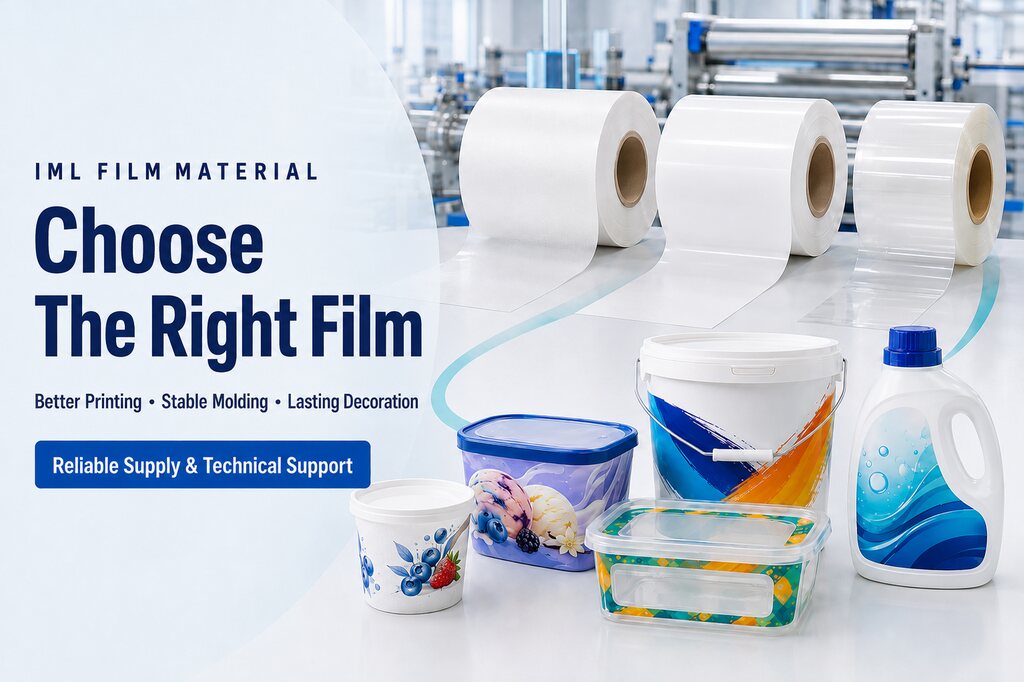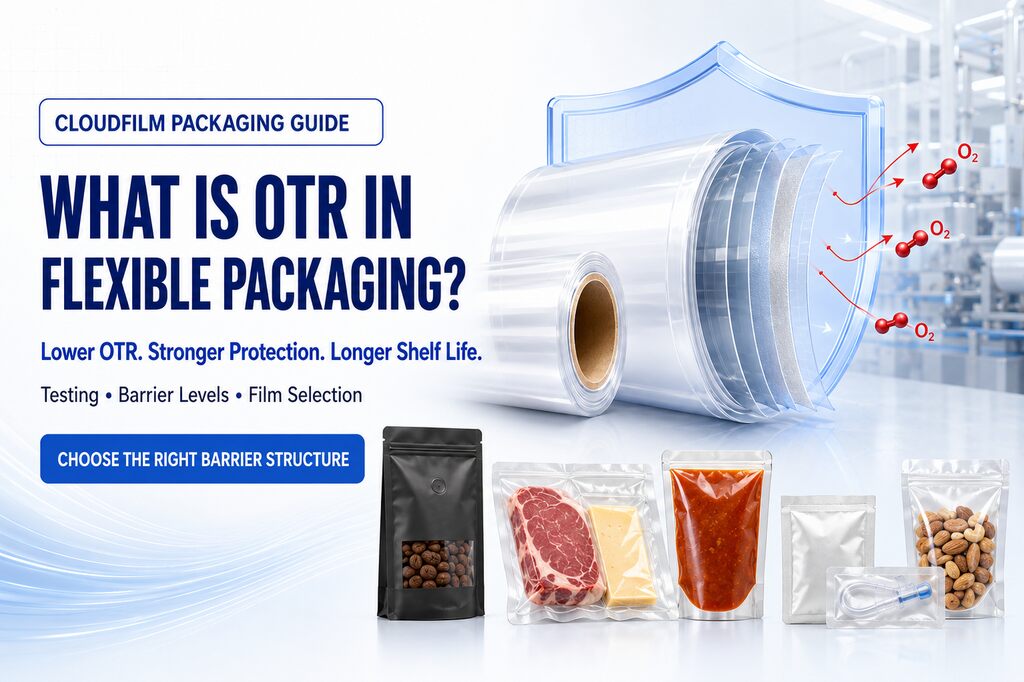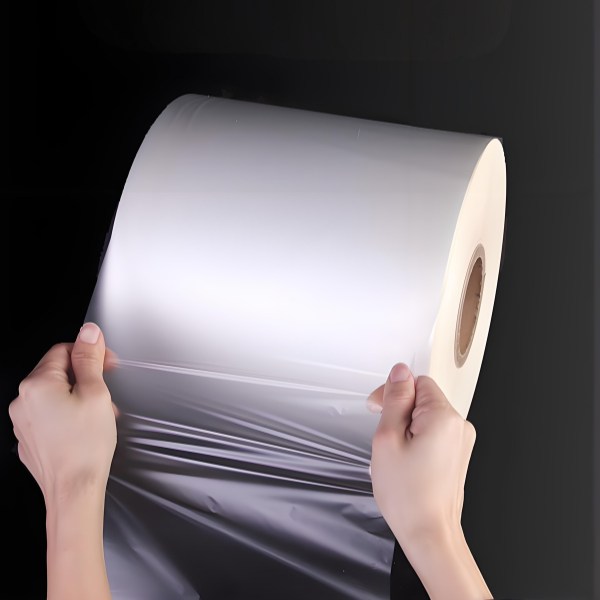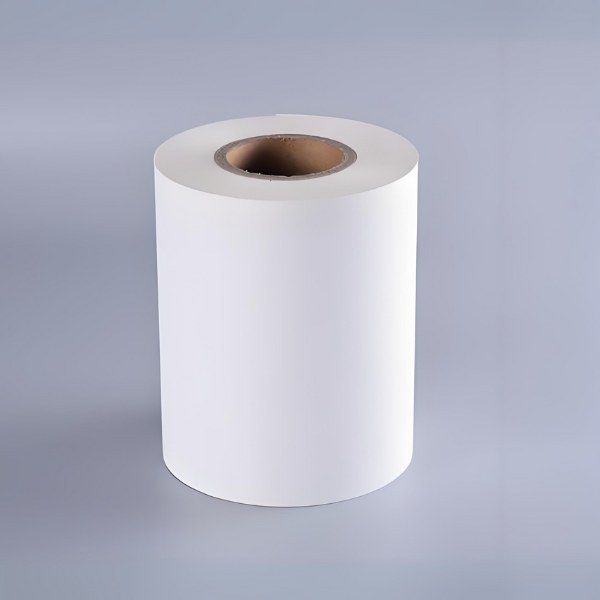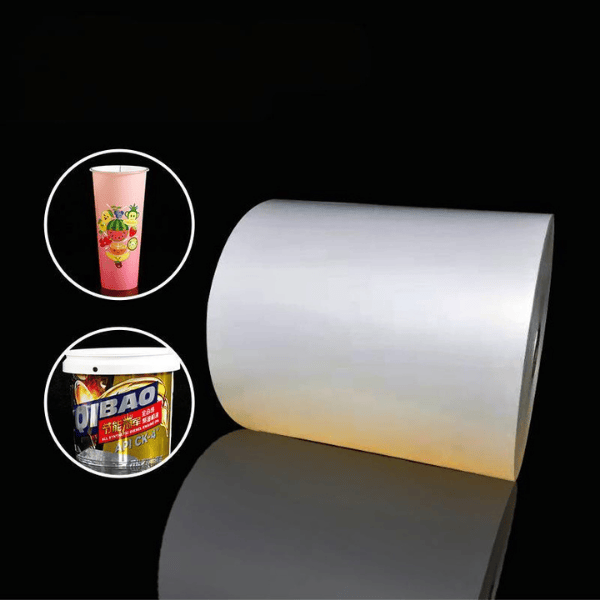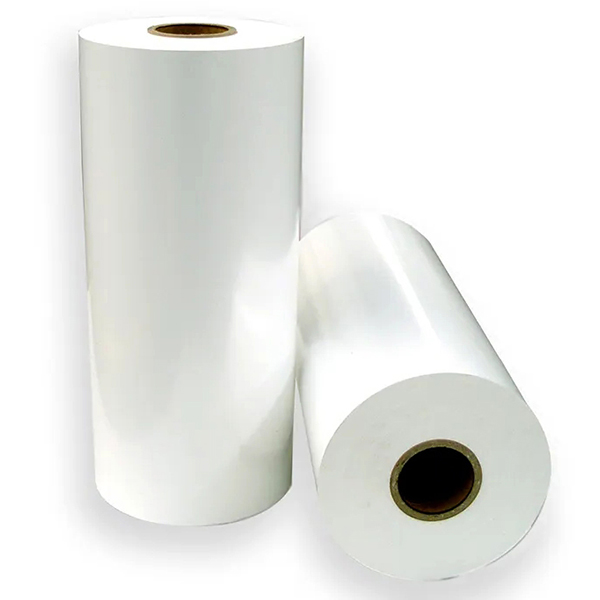
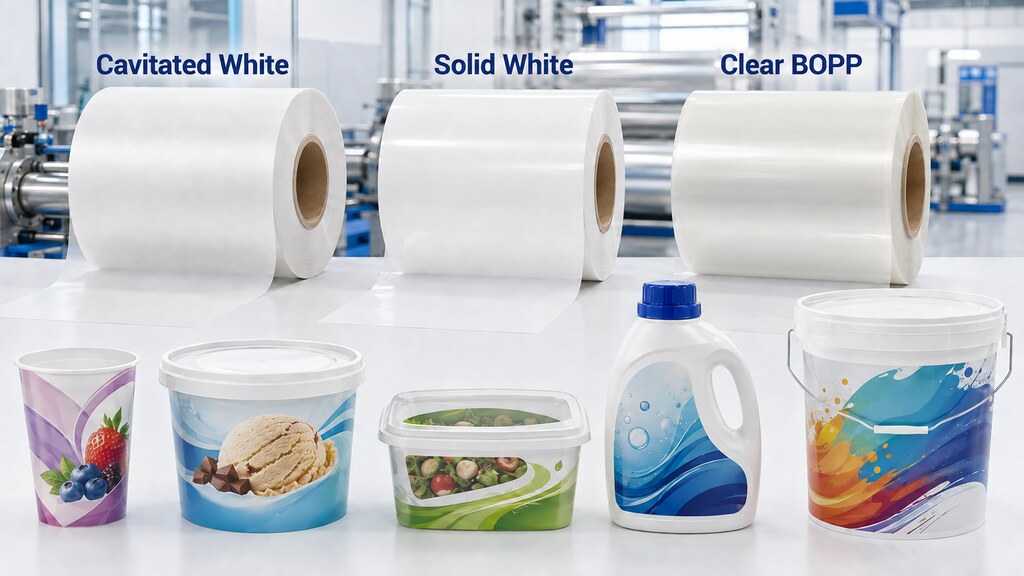
For injection-molded polypropylene packaging, IML film material is normally a PP-based label substrate, most often BOPP or another engineered oriented PP film. The main packaging grades are cavitated white, solid white, and clear BOPP.
The best grade depends on much more than nominal thickness. Container resin, molding method, label geometry, density, stiffness, opacity, printing, die cutting, electrical behavior, and final-use conditions must work together.
Other IML systems may use PE, PET, PS, paper, or specialized films. Therefore, material selection must begin with the actual molded part and process, not with a generic request for “IML plastic.”
This guide helps brand owners, label printers, converters, molders, engineers, and procurement teams define a practical specification before requesting samples or bulk quotations. For process fundamentals, review the complete in-mold labeling process.
What Is IML Film Material?
Film, printed label, and molded container are different products
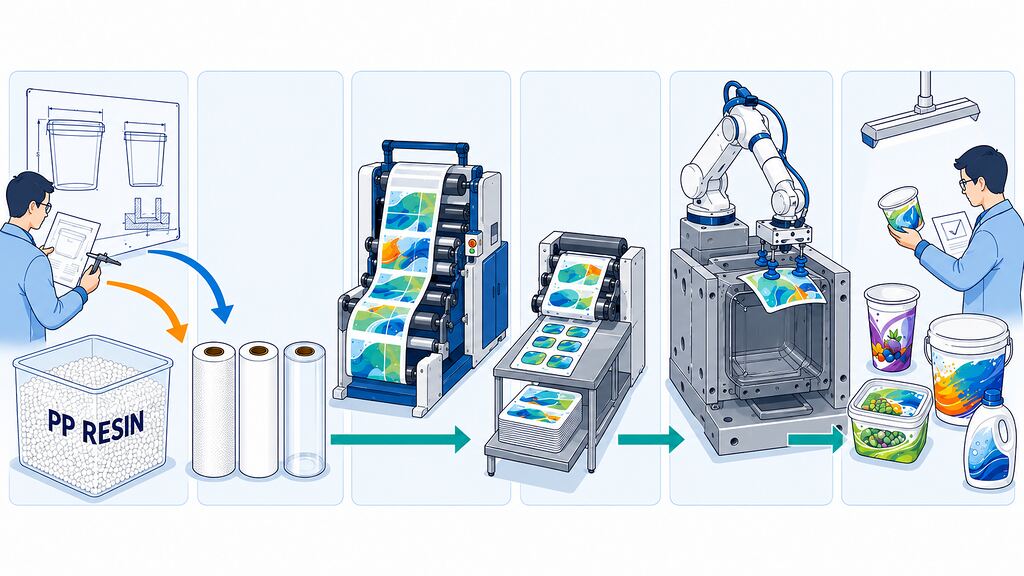
IML film material is the unprinted substrate supplied in rolls or sheets. A converter prints, coats when required, sheets, and die-cuts that substrate to produce finished labels that are ready for molding.
During molding, a robot or handling system places the printed label inside the mold. Molten plastic then forms the container and bonds with the label, creating a decorated surface without a separate post-molding labeling operation.
This distinction matters when requesting quotations. A film supplier, printed-label converter, injection molder, and finished-container producer provide different products, equipment, and quality responsibilities. The BOPP labels material guide explains related label formats outside this specific supply chain.
Why polymer compatibility matters
For an injection-molded PP container, a PP-based label is usually the logical starting point. Similar polymer families can support reliable fusion and may simplify the material composition of the finished decorated container.
Compatibility does not remove the need for trials. Resin grade, filler content, recycled content, pigment, melt flow, wall thickness, injection speed, mold temperature, and cooling conditions can change bonding and appearance.
A label that performs well on one cup may behave differently on another container. Approval must always use the intended resin, artwork, label shape, mold, robot, inks, coatings, and production speed.
Main Types of IML Film Materials
BOPP and oriented PP for injection-molded packaging
BOPP combines low moisture sensitivity, good dimensional stability, useful stiffness, and a printable surface. These characteristics make it a leading substrate for injection-molded PP food containers, dairy tubs, lids, pails, and household packaging.
Orientation improves stiffness and handling compared with many unoriented films. However, the exact film design still controls shrinkage, surface behavior, opacity, static response, and performance during high-speed converting and molding.
Cavitated white BOPP
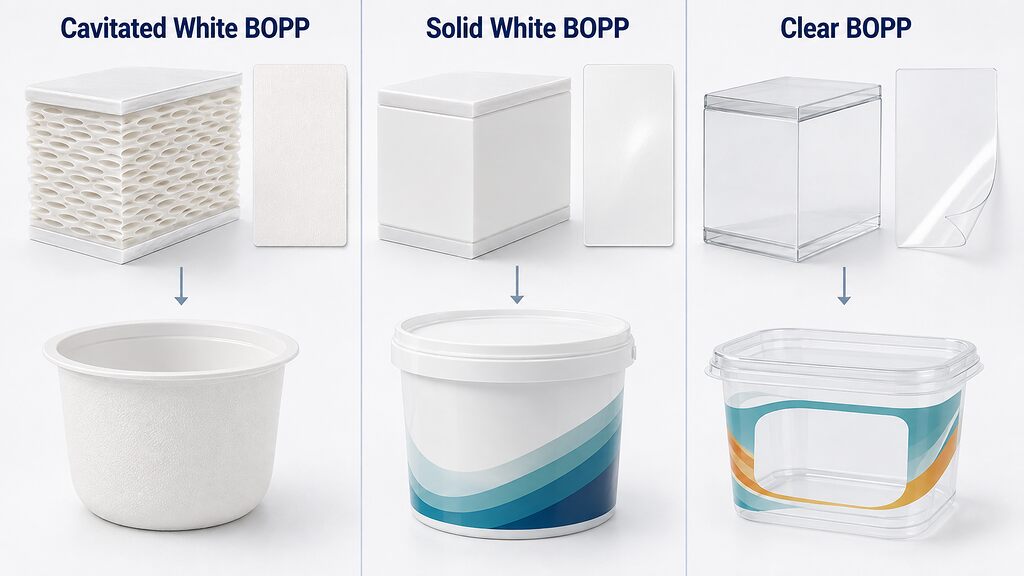
Cavitated film contains microscopic voids created within its structure. These voids lower density, scatter light, increase opacity, and can create the familiar orange-peel, satin, or matte appearance after molding.
Lower density can provide more label area per kilogram, but density must be evaluated with thickness and stiffness. A highly cavitated grade may compress, cut, stack, or respond to large label geometry differently from a solid film.
For a broader explanation of low-density voided structures, CloudFilm’s pearlized BOPP film page shows how cavitation influences opacity, appearance, and square-meter yield. Final IML suitability still requires a dedicated molding trial.
Solid white BOPP
Solid white film uses a denser, non-cavitated or less-cavitated structure to provide an opaque printing background. It can deliver smooth graphics, consistent color evaluation, useful rigidity, and a gloss or semi-gloss molded appearance.
Compared with a low-density grade, solid white BOPP may provide less area per kilogram. Its greater density and mechanical balance can nevertheless be helpful for larger labels, demanding shapes, or projects where stiffness and dimensional control are priorities.
Clear BOPP
Clear IML film supports transparent windows and a no-label appearance. It allows the container resin, product, or selected transparent zones to remain visible through the decorated surface.
Clear constructions require disciplined artwork and printing. White ink coverage, scratches, trapped air, flow marks, resin color, and container surface variations become more visible than they would behind an opaque white label.
Other polymers and paper-based labels
Some blow-molded, thermoformed, or durable-part applications may use PE, PET, PS, paper, or other engineered substrates. These options should not be presented as interchangeable with BOPP used on injection-molded PP packaging.
The correct choice depends on container resin, processing temperature, forming behavior, required durability, recycling route, and the supplier’s tested construction. A material name alone cannot confirm that the label will bond or remain flat.
| Grade | Main Strengths | Critical Checks |
| Cavitated White BOPP | Low density, high opacity, strong area yield, and orange-peel or matte effects | Compression, die-cut edges, curl, stack separation, static response, and large-label rigidity |
| Solid White BOPP | Smooth white print base, stable color presentation, useful rigidity, and gloss options | Density, yield per kilogram, conformability, mold geometry, and final surface appearance |
| Clear BOPP | Transparent windows, no-label look, and visibility of the container or product | White ink, scratches, trapped air, resin color, flow marks, and print opacity |
| Specialty Or Alternative Material | Different tactile, metallic, polymer, or paper effects for defined processes | Resin compatibility, bonding mechanism, process temperature, recycling impact, and validated end use |
How Film Construction Affects Performance
Core and skin layers perform different jobs
An IML film may use a coextruded structure in which the core provides stiffness, density control, opacity, or cavitation. Thin skin layers can manage printing, slip, antiblock, surface appearance, and bonding behavior.
Layer names such as A/B/A or A/B/C are not universal material codes. The function of each side must be confirmed from the technical specification, winding direction, and side identification supplied for the exact grade.
The BOPP film structure guide explains how core and skin functions differ from a finished laminate. That distinction is important when a customer describes an IML label as “multilayer.”
Density and yield must be considered together
Film is commonly purchased by weight, while labels are consumed by area. A lower-density grade can produce more square meters per kilogram, so price per kilogram alone does not show the actual cost per label.
Calculate yield using verified thickness and density from the relevant data sheet. Do not assume that every white, pearlized, or cavitated film has the same density, because formulation and void structure can vary substantially.
Thickness and stiffness are related but not identical
CloudFilm’s typical IML supply range is approximately 40–80 microns, with other gauges evaluated by project. The correct value depends on label size, density, stiffness, robot speed, printing, die cutting, mold geometry, and injection conditions.
A thicker film is not automatically better. Excess thickness may reduce yield, increase cost, or resist conforming to complex surfaces. An underspecified film may curl, buckle, double-feed, shift, or deform during molding.
Use the BOPP film thickness guide to compare thickness with yield and handling, but approve the final specification through the actual IML production chain.
Opacity, gloss, and texture must match the brand design
Opaque white film creates a controlled background for color. Clear film allows windows and transparent effects. Cavitated or textured grades can produce matte, satin, orange-peel, or other tactile appearances after molding.
The final appearance depends on film, ink, varnish, mold surface, resin color, and processing conditions. A beautiful unprinted film sample does not guarantee that the printed and molded container will match the approved visual standard.
Single-web and laminated IML labels have different risks
A single-web label can simplify converting and material composition. A laminated label can bury ink, improve scuff protection, or create a special visual effect, but it introduces adhesive, tension balance, additional thickness, and possible curl.
If lamination is proposed, validate both webs, adhesive, curing, residual solvent, flatness, static behavior, die cutting, stack separation, and molding. Recyclability claims must consider the complete label rather than the outer film alone.
How to Choose the Right IML Film Material
Step 1: Identify the molding process and container resin
State whether the part is injection molded, blow molded, or thermoformed. Provide the exact resin family and grade when possible, including fillers, pigments, and recycled content that may influence shrinkage, fusion, and appearance.
Step 2: Define the required visual result
Choose between opaque white, cavitated white, clear, gloss, matte, textured, metallic, or another controlled finish. Decide whether the artwork needs full opacity, transparent windows, premium sheen, or a tactile molded effect.
Step 3: Match the printing and coating system
Confirm printing method, ink chemistry, primer, varnish, curing conditions, treated side, and winding direction. The film surface must support ink anchorage while remaining stable through drying, sheeting, stacking, and molding.
Step 4: Define label geometry and handling
Provide label drawings, dimensions, shape, orientation, nesting layout, die-cut method, and stack height. Large wraparound labels, small lids, and irregular panels place different demands on stiffness, flatness, and robotic handling.
Step 5: Specify electrical and mechanical behavior
The label must separate from the stack yet accept the electrical or vacuum forces used for placement. COF, resistivity, static decay, stiffness, and surface finish must be balanced for the actual equipment and humidity.
Step 6: Validate the finished-use environment
Define filling temperature, refrigeration, freezing, condensation, grease, cleaners, chemicals, sunlight, abrasion, repeated handling, and distribution conditions. Approval should test the decorated container, not only the unprinted film or flat label.
Printing, Converting, and Molding Requirements
Print surface and corona treatment
Polypropylene has naturally low surface energy, so printing often requires controlled surface treatment or a suitable coating. The target level must match the ink and process rather than relying on one universal dyne value.
Treatment can decline during storage. Verify the treated side, test method, production date, expected printing date, and acceptance level with the printer. The corona treatment guide for plastic film provides additional background.
Printing method and ink system
IML labels may be printed by sheet-fed offset, gravure, flexography, or selected digital systems. The best method depends on roll or sheet format, order size, artwork, color standard, converting route, and available inks.
Printing compatibility must be confirmed with the exact film and ink system. CloudFilm’s BOPP printing film page provides useful context on treated printable surfaces, although a general printing grade is not automatically an approved IML grade.
Die cutting and stack quality
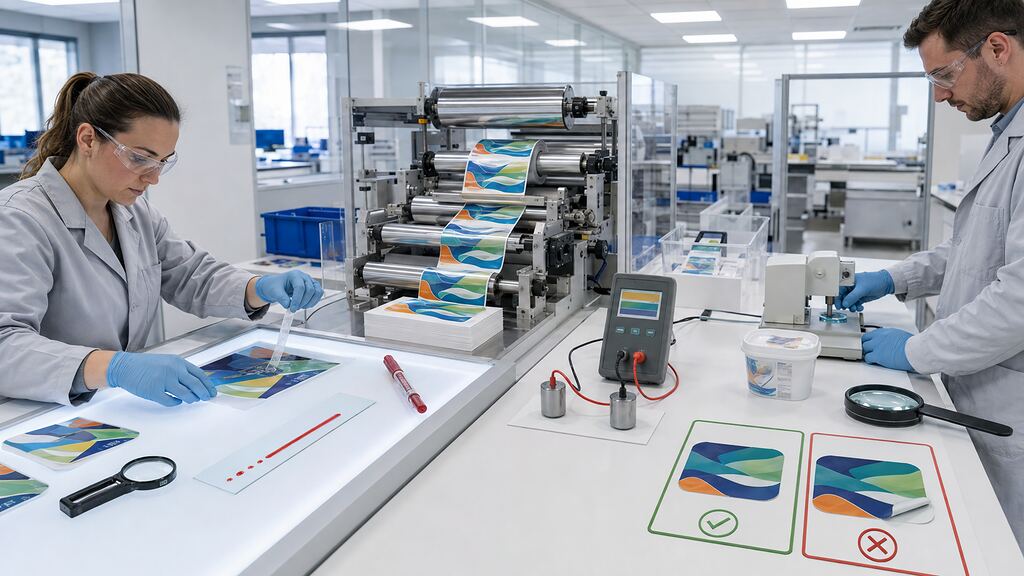
Clean die-cut edges are essential for reliable feeding. Burrs, dust, fused edges, inconsistent dimensions, or damaged corners can cause double picks, mold contamination, poor placement, and visible defects on the finished container.
The die, cutting pressure, sheet condition, label orientation, and stack height should be validated together. Inspect labels at the top, middle, and bottom of production stacks rather than checking only a few ideal samples.
Static control is a balance
Calling an IML film simply “antistatic” can be misleading. Labels must separate cleanly during feeding, yet many systems also require them to accept an electrostatic charge that holds them against the mold surface.
Humidity, ink coverage, varnish, film resistivity, stack pressure, robot design, charging equipment, and storage can change behavior. Test the printed, die-cut label on the intended line under realistic environmental conditions.
Curl, flatness, and dimensional stability
Curl may develop from film imbalance, printing tension, drying heat, uneven ink coverage, lamination stress, humidity, or storage. Even small curl can affect label magazines, robotic pickup, mold placement, and edge bonding.
Measure flatness after every major converting step. Packaging should protect finished labels from moisture, heat, compression, and orientation changes during transport and storage.
Molding heat and resin flow
The label and decoration must withstand molten resin, pressure, mold temperature, injection impact, cooling, and demolding. Ink, coatings, and film must retain appearance without distortion, washout, wrinkling, blistering, or edge lifting.
Resin flow direction and gate position can influence label movement and trapped air. A production trial should use the intended mold cavities and normal cycle speed, not only a slowed laboratory demonstration.
Common Applications and Practical Starting Points
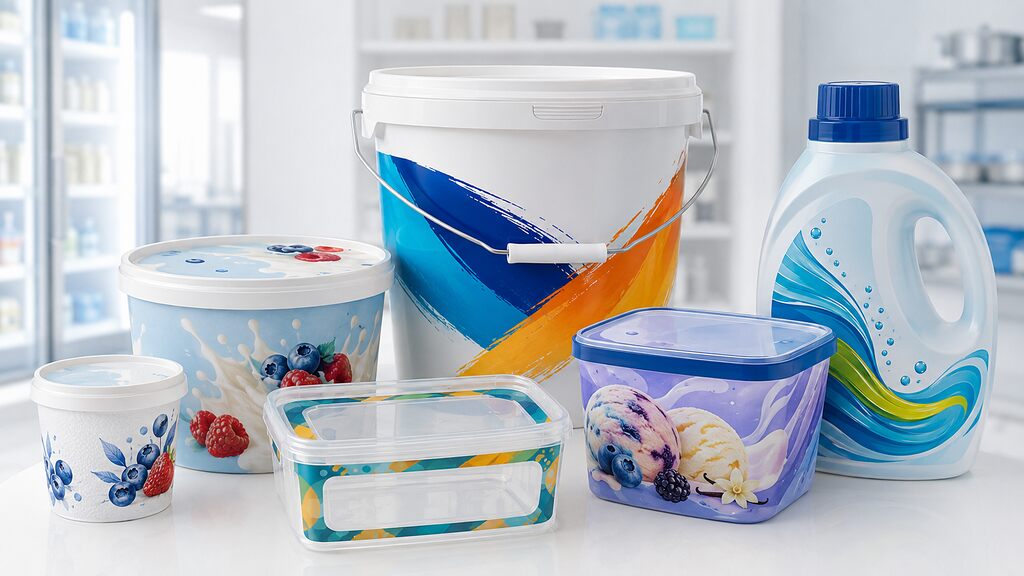
Yogurt cups and dairy tubs
Thin-wall dairy containers need accurate placement, stable label separation, food-contact documentation, and performance through filling, refrigeration, condensation, and stacking. White, cavitated, or clear grades may be selected according to design and mold.
The BOPP IML film guide for yogurt cups and dairy containers provides a more detailed application checklist for converters and molders serving chilled and frozen products.
Ice cream and frozen-dessert containers
Freezer applications require evaluation after cooling and repeated handling. Test low-temperature impact, flexing, condensation, wet rub, ink resistance, edge bonding, lid fit, and container stacking under the defined storage cycle.
Paint pails and industrial buckets
Large labels need sufficient rigidity and dimensional control for handling and placement. Chemical resistance, abrasion, outdoor storage, warning-text legibility, stacking, and resistance to label lifting are common approval priorities.
Detergent and household containers
These packages may encounter surfactants, oils, cleaning chemicals, moisture, repeated handling, and bathroom or laundry-room humidity. The final ink and coating system must be tested against the actual product and use pattern.
Clear windows and premium no-label designs
Transparent film can reveal the product or container color while preserving integrated decoration. Artwork must manage white ink, transparent areas, color shift, scratches, air pockets, resin flow marks, and viewing from multiple angles.
| Application | Practical Starting Point | Critical Trial Focus |
| Single-Serve Yogurt Cup | White or cavitated PP/BOPP grade with controlled flatness and electrical behavior | Multi-cavity pickup, label position, lidding, refrigeration, condensation, and denesting |
| Ice Cream Tub | Validated PP/BOPP grade selected for the intended finish and container geometry | Freeze-thaw cycle, cold drop, wet rub, flexing, edge bond, lid fit, and stacking |
| Paint Or Chemical Pail | Solid white or engineered opaque grade with sufficient rigidity and durable decoration | Large-label placement, abrasion, chemicals, outdoor storage, warning text, and stacking |
| Clear Premium Container | Clear IML grade with controlled print and surface quality | White ink, trapped air, flow marks, scratches, resin color, and transparent-window appearance |
Recyclability and Food-Contact Questions
Material compatibility can support simpler recycling
A PP-based label on a PP container can support a more compatible material combination than an unrelated label substrate. This may reduce the need to separate the label from the container before recycling.
That does not guarantee recyclability in every market. Inks, coatings, adhesives, pigments, fillers, barriers, labels, residual product, sorting technology, and local collection systems all affect the practical outcome.
For responsible design language, review whether BOPP is recyclable in real collection systems. Claims should describe the complete decorated package and the intended market, not only the base polymer.
Food-contact compliance covers the complete construction
Food packaging approval must consider the film, additives, inks, coatings, adhesives, printed surface location, intended food, contact conditions, temperature, and target-market regulations. A food-contact statement for unprinted film does not automatically approve the finished label.
Buyers should request applicable declarations, migration information, traceability, and change-control procedures. The converter and molder must also control inks, curing, storage, contamination, and final package testing.
Avoid unsupported environmental claims
Terms such as recyclable, recycled, lower-carbon, or mono-material should be supported by the actual structure and market guidance. Avoid turning polymer compatibility into an absolute promise about collection or recycling performance.
How to Evaluate an IML Film Supplier or Manufacturer
A capable supplier asks technical questions first
An experienced IML film supplier should ask about the molded part before recommending a grade. Resin, molding process, label drawing, printing, finish, thickness, static system, application, quantity, and destination all affect the recommendation.
A supplier that quotes only from the words “white IML film” may overlook density, stiffness, treated side, winding, stack behavior, or mold compatibility. A technically detailed quotation reduces expensive trial-and-error later.
Confirm the supplier’s actual scope
Determine whether the company supplies unprinted film, printed rollstock, sheeted film, die-cut labels, molded containers, or an integrated service. This prevents misunderstandings about artwork, printing plates, dies, molds, tooling, and responsibility for final approval.
If the project needs a paper-like printable substrate outside the molding process, compare it with BOPP synthetic paper. It should not be treated as identical to a validated IML film grade.
Samples and documentation matter more than a generic claim
Request a technical data sheet, sample identification, production date, side treatment, winding direction, roll dimensions, packaging method, and available compliance documents. Each trial roll should be traceable to its grade and batch.
Test reports are useful only when their method and sample match the intended application. Ask which properties are routine batch controls and which require separate project testing.
Compare total converted cost, not price per kilogram alone
Evaluate density, square-meter yield, print waste, die-cut waste, line speed, reject rate, label placement, molding cycle, and final defects. A cheaper kilogram can become more expensive if it produces unstable converting or fewer acceptable containers.
For export purchasing, also confirm MOQ, lead time, roll packing, pallet dimensions, documents, trade term, destination, and sample arrangements. Commercial details should follow technical alignment, not replace it.
Trial and Approval Checklist
- Record the complete film grade, thickness, density, treated side, winding direction, roll width, core, outer diameter, batch, and production date.
- Inspect roll appearance, edges, winding, joints, blocking, telescoping, contamination, thickness consistency, and surface condition before printing.
- Validate ink adhesion, color, white coverage, curing, rub resistance, heat resistance, and any primer or varnish on the exact film.
- Check sheeting and die cutting for dimensional accuracy, clean edges, dust, burrs, fused edges, nesting, stack height, and label orientation.
- Test separation, pickup, charging or vacuum holding, robot transfer, mold placement, double feeding, and label movement at normal production speed.
- Inspect molded containers for position, distortion, wrinkles, bubbles, edge lifting, bonding, color, gloss, texture, flow marks, and cavity-to-cavity consistency.
- Run application tests for filling, refrigeration, freezing, chemicals, grease, abrasion, drops, stacking, transport, and storage as relevant.
- Freeze the approved specification, artwork, resin, inks, coatings, mold settings, test methods, acceptance limits, packaging, and change-control responsibilities before bulk production.
Frequently Asked Questions
- What is IML film material made from?
For injection-molded PP packaging, it is commonly made from PP-based film, especially BOPP or another oriented PP construction. Other IML processes may use different polymers or paper, depending on the molded part and process.
- Is IML film PP or BOPP?
BOPP is a type of polypropylene film that has been stretched in two directions. Therefore, an IML grade can be both PP-based and BOPP. “PP” describes the polymer family, while “BOPP” describes an oriented film form.
- What are the main BOPP IML grades?
The main packaging families are cavitated white, solid white, and clear BOPP. Specialty grades may add matte, satin, orange-peel, gloss, metallic, or other controlled surface effects.
- Is cavitated BOPP better than solid white BOPP?
Not universally. Cavitated film can provide lower density, opacity, and attractive texture. Solid white film can offer a denser structure and useful rigidity. The better option depends on label geometry, appearance, converting, and molding results.
- Can clear BOPP be used for IML?
Yes. Clear IML film can create transparent windows or a no-label look. It requires careful white ink, artwork, surface-quality, trapped-air, resin-color, scratch, and flow-mark control.
- What thickness is common for IML film?
CloudFilm commonly discusses approximately 40–80 microns for its IML range. The final thickness must be selected with density, stiffness, label size, printing, die cutting, robot handling, mold design, and injection conditions.
- Why is density important?
Density affects square-meter yield and mechanical behavior. Two films with the same thickness can provide different area per kilogram, stiffness, opacity, compression, and converting performance.
- Does IML film need antistatic treatment?
It needs controlled electrical behavior, but “more antistatic” is not always better. Labels must separate from the stack while still working with electrostatic or vacuum mold-placement equipment.
- Which printing methods can be used?
Sheet-fed offset, gravure, flexography, and selected digital systems may be used. The exact film, treatment, ink, primer, coating, curing, and converting route must be tested as one system.
- Does IML film require adhesive?
Standard single-web IML labels normally fuse with the molten container resin without a separate adhesive to the container. Laminated label constructions may use adhesive between label layers and require additional validation.
- Is IML film automatically food safe?
No single material name guarantees final-package compliance. Film, additives, inks, coatings, adhesives, intended food, contact conditions, and target-market regulations must all be reviewed.
- Is a PP IML container recyclable?
A PP label and PP container can support material compatibility, but practical recyclability depends on the complete decoration, local collection, sorting, recycling infrastructure, and applicable design guidelines.
- Can PE, PET, PS, or paper be used for IML?
They may be used in particular molding systems or durable applications. Compatibility must be demonstrated for the exact container resin, temperature, forming behavior, bonding mechanism, and end use.
- What is the difference between IML film and synthetic paper?
IML film is engineered for placement and bonding during molding. Synthetic paper is a printable polymer sheet used for many labels and durable graphics, but a general synthetic-paper grade is not automatically suitable for IML.
- Why do IML labels curl?
Curl can come from film imbalance, printing tension, drying heat, uneven ink, coatings, lamination stress, humidity, compression, or storage. It should be checked after printing, sheeting, die cutting, and transport.
- What information is needed for an IML film quotation?
Provide molding process, container resin, film type, thickness, label drawing, printing method, treated side, finish, static system, roll or sheet format, trial quantity, regular demand, destination, and required documents.
Conclusion
IML film material should be selected as part of a complete printing, converting, handling, and molding system. Polymer name and thickness are only starting points; density, stiffness, surfaces, electrical behavior, label geometry, and finished-container testing determine success.
Cavitated white, solid white, and clear BOPP each solve different visual and production needs. A disciplined trial should compare area yield, print quality, die cutting, stack separation, mold placement, bonding, appearance, and final-use performance.
CloudFilm supplies BOPP and PP-based IML film in customized roll formats for printers, converters, molders, and packaging buyers. Share your container resin, molding process, label drawing, target finish, trial quantity, and destination to begin specification matching.