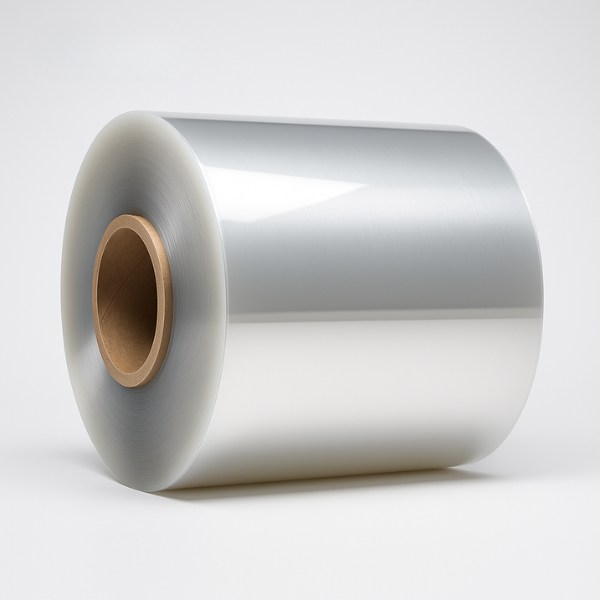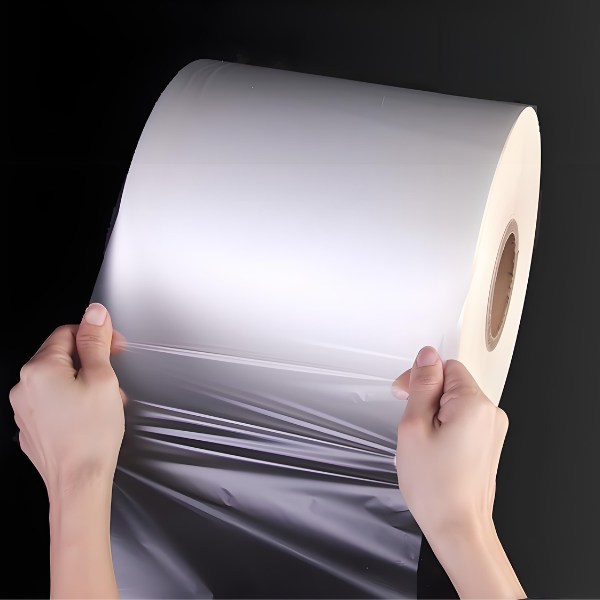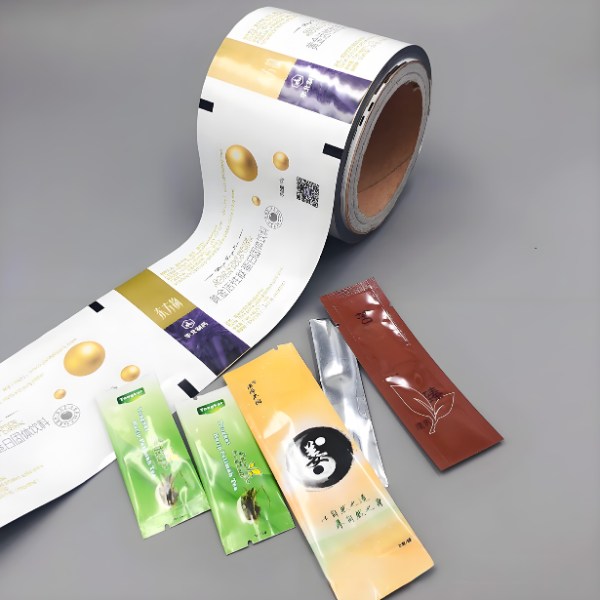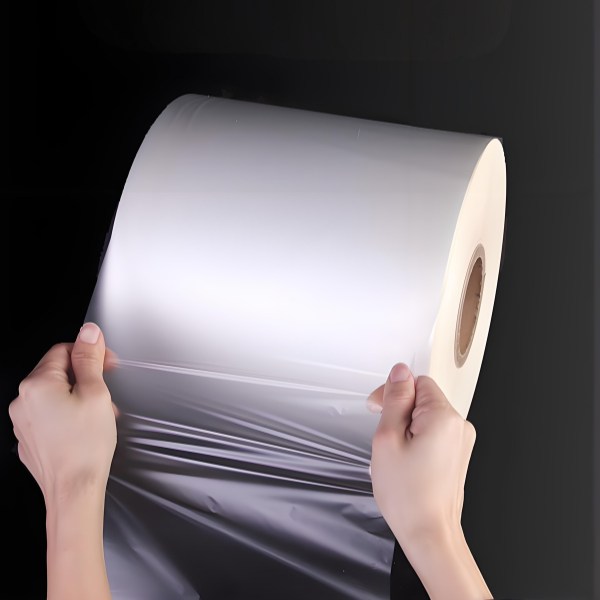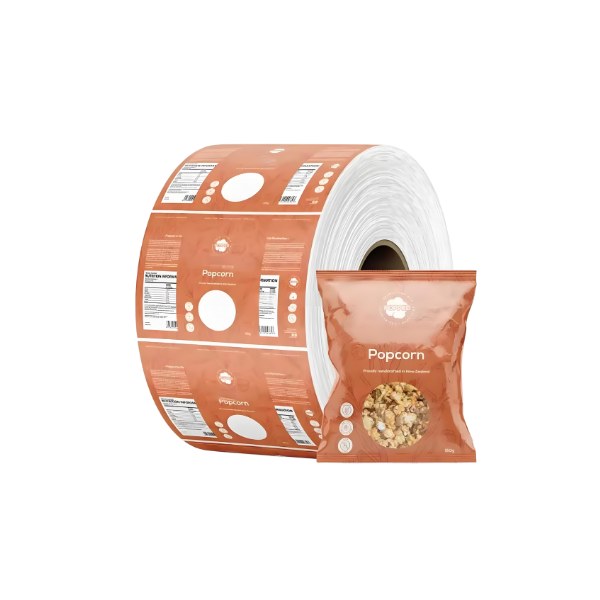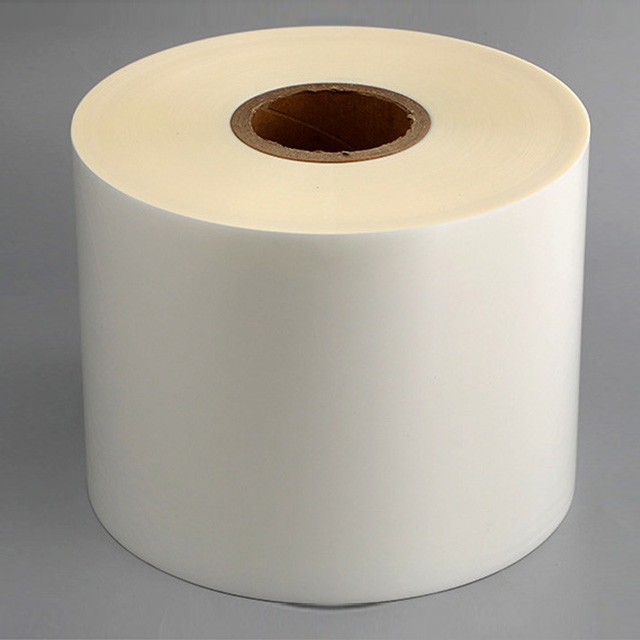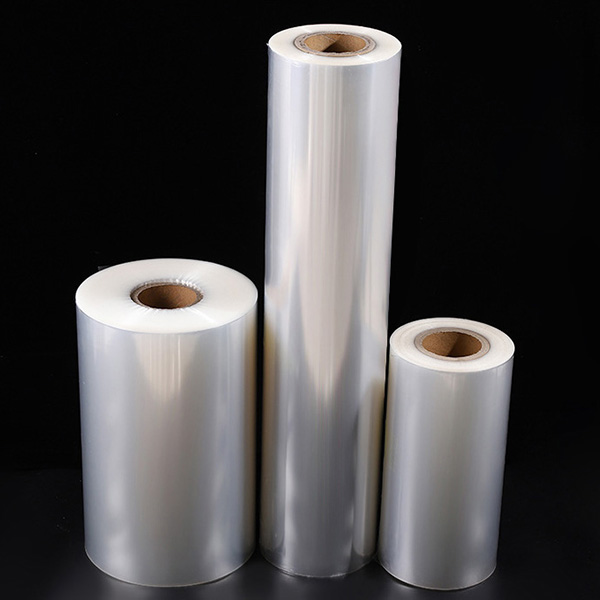
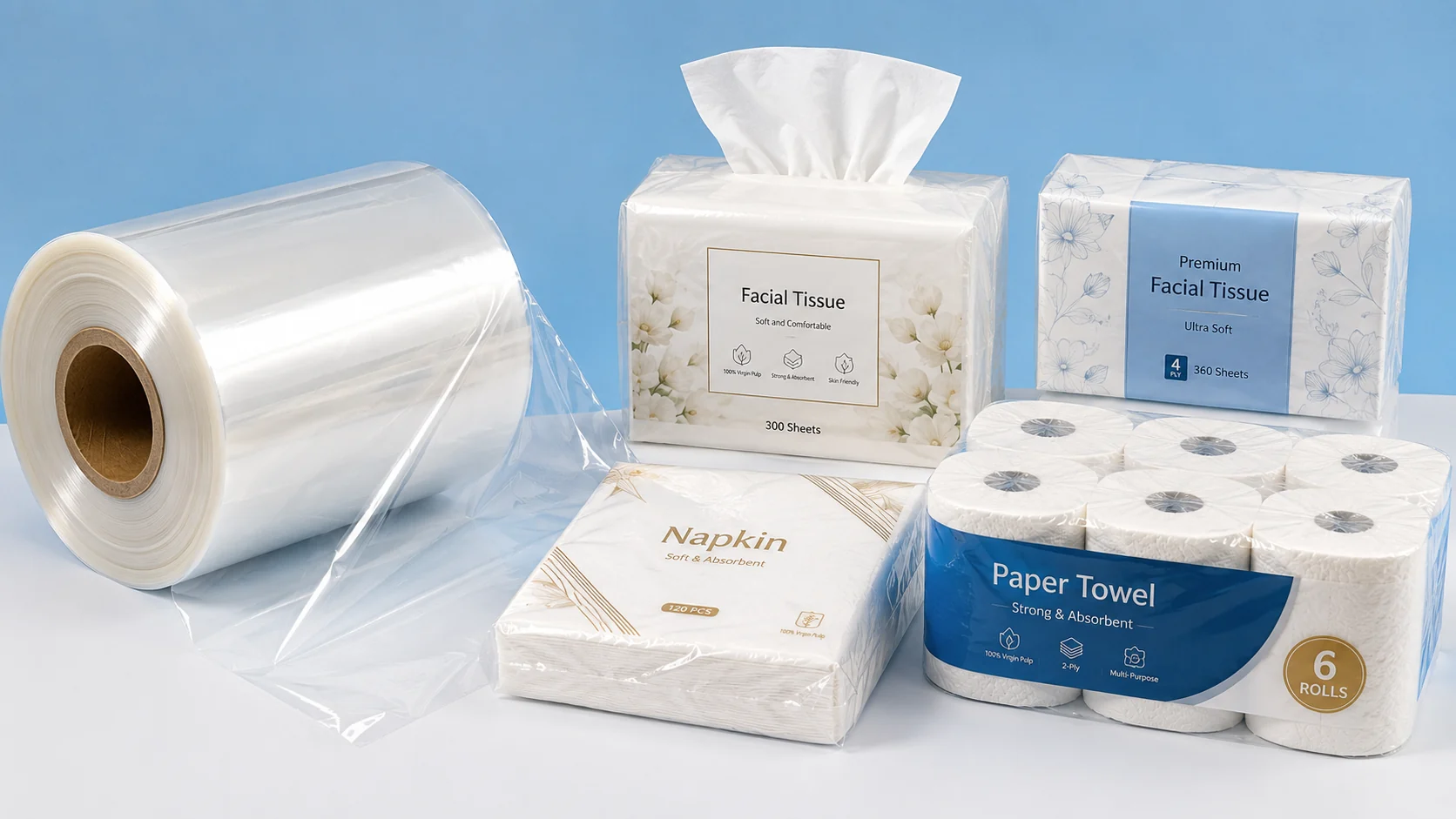
CPP film for tissue packaging is a cast polypropylene film used to wrap facial tissue, toilet paper, napkins, kitchen paper towels, pocket tissues, and multipack hygiene paper products. For many tissue packaging projects, the film must do more than simply cover the product. It needs to protect soft paper from dust and moisture, run smoothly on automatic packaging machines, support clear or printed presentation, and create reliable seals without damaging the product shape.
For tissue manufacturers, converters, private-label brands, and packaging distributors, CPP film is often attractive because it combines a soft hand feel, good transparency, heat sealability, and practical machine performance. Compared with many stiffer films, CPP can provide a quieter and more flexible wrap. Compared with some very soft poly films, CPP can offer a cleaner appearance and more stable hot sealing when the grade is correctly selected.
This guide explains what CPP tissue packaging film is, why it is used, which properties matter most, how it compares with BOPP and PE, what specifications buyers should confirm, and how to work with a reliable supplier or manufacturer for samples, trials, and repeat orders.
What Is CPP Film For Tissue Packaging?
CPP means cast polypropylene. It is produced by melting polypropylene resin and casting it onto a chilled roll to form a clear, flexible plastic film. In tissue packaging, CPP is typically used as a mono-layer overwrap film or as part of a polypropylene-based packaging structure. The goal is to create a clean, protective, printable, and heat-sealable wrap around paper products.
Tissue products are light, bulky, and easily affected by humidity, dust, fingerprints, and poor handling. A good film should keep the pack neat from the packing line to the retail shelf. It should also support high-speed production because tissue packaging lines often run continuously with many packs per minute.
CloudFilm supplies several grades of CPP film for food, tissue, textile, stationery, and industrial packaging. For tissue applications, the most relevant versions usually focus on softness, anti-static performance, controlled slip, heat sealing, and clear appearance.
Common Tissue Products Packed With CPP Film
CPP film can be used for many hygiene paper packaging formats, especially when the buyer wants a neat plastic overwrap and stable machine operation.
- Facial tissue packs for retail shelves, hotels, offices, and private-label brands
- Toilet paper rolls and toilet paper multipacks
- Napkin and table tissue packs for food service and household markets
- Kitchen paper towel overwrap and multipack packaging
- Pocket tissue packs and travel-size hygiene paper packs
- Soft paper product bundles where clarity, sealability, and clean presentation are required
Why Is CPP Film Used For Tissue Packaging?
The main reason CPP film is used for tissue packaging is balance. Tissue packaging does not usually require very high oxygen barrier, retort resistance, or heavy puncture resistance. Instead, buyers usually care about clean appearance, smooth machine running, anti-static behavior, sealing consistency, roll quality, and cost efficiency. CPP can meet these needs when the formula, thickness, COF, corona treatment, and winding quality are controlled correctly.
In real production, a small difference in film slip, static level, or heat-seal response can create big differences on the packing line. Poor film may wrinkle, block, mis-track, attract paper dust, or create weak seals. A well-selected CPP tissue film helps the line run more smoothly and reduces film waste, machine stops, and customer complaints.
Soft Feel And Clean Retail Presentation
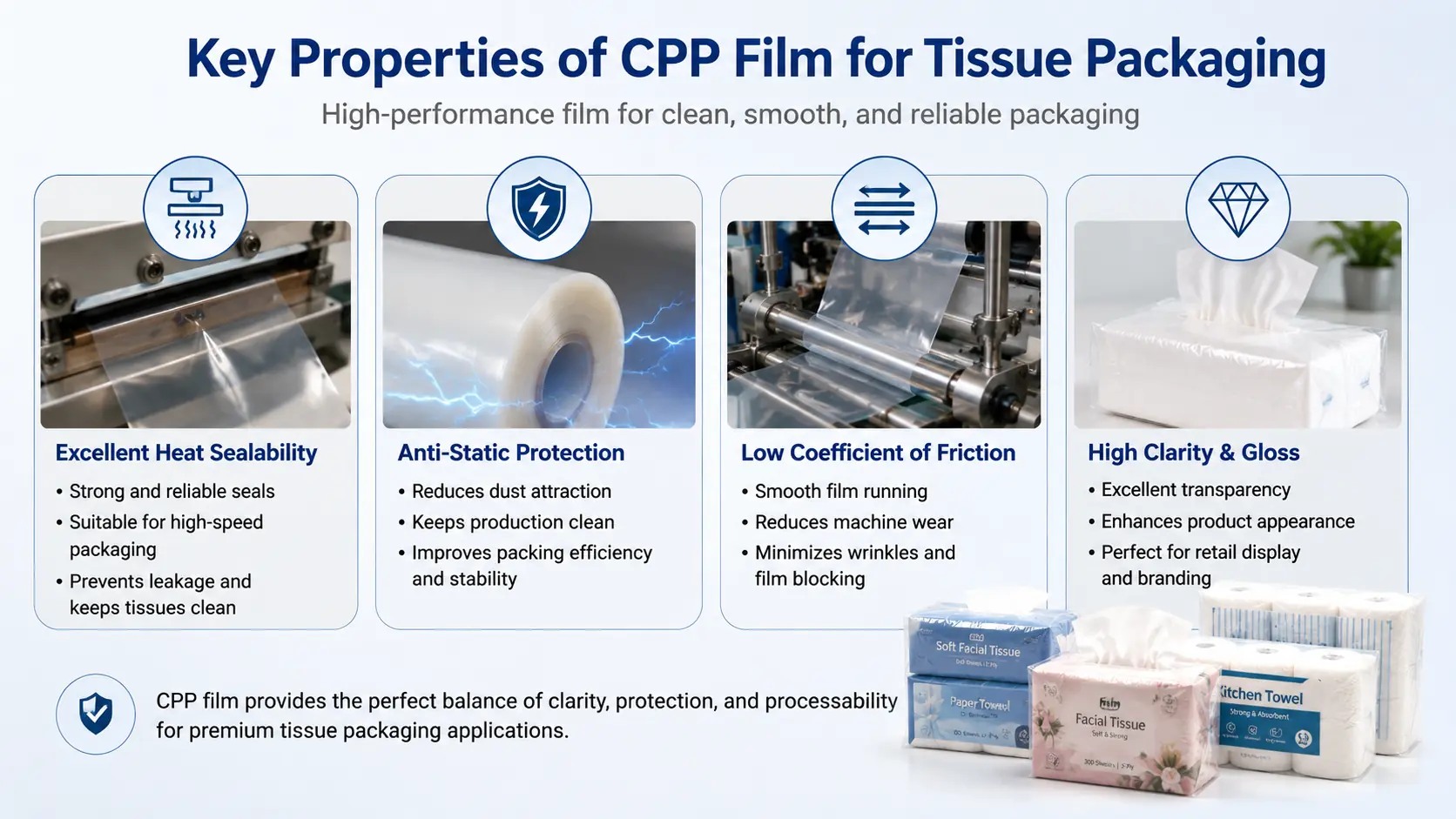
Tissue products are associated with softness, hygiene, and comfort. The outer packaging should support the same impression. CPP film has a softer feel than many oriented films and can give tissue packs a smooth, quiet, and clean presentation. Clear CPP also allows the customer to see the tissue roll or folded tissue inside the pack when transparent packaging is preferred.
Heat Sealability For Automatic Packaging
Heat sealability is one of the most important properties of CPP film. On a horizontal flow-wrap or overwrap line, the film must seal quickly and consistently at the right temperature, pressure, and dwell time. A suitable CPP grade gives stable seal strength without forcing the machine operator to use excessive heat. This is important because tissue products are bulky and can be compressed or distorted if sealing conditions are too aggressive.
Anti-Static Performance For Paper Dust Control
Tissue converting and packing areas often contain paper dust. Static electricity can attract dust onto the film surface, making the pack look dirty or causing problems during unwinding, printing, cutting, or sealing. Anti-static CPP film helps reduce dust attraction and improves pack cleanliness. This is especially useful for napkins, facial tissues, and high-volume toilet paper overwrap where visual cleanliness matters.
Controlled COF For High-Speed Runnability
COF, or coefficient of friction, describes how slippery or grippy the film surface is. For tissue packaging, COF must be controlled rather than simply low or high. If the film is too slippery, it may shift or track poorly. If it is too sticky, it may create drag, wrinkles, blocking, or inconsistent feeding. A controlled low-COF CPP film can support high-speed tissue packaging machines and more stable bag formation.
CPP Film Vs BOPP Film For Tissue Packaging
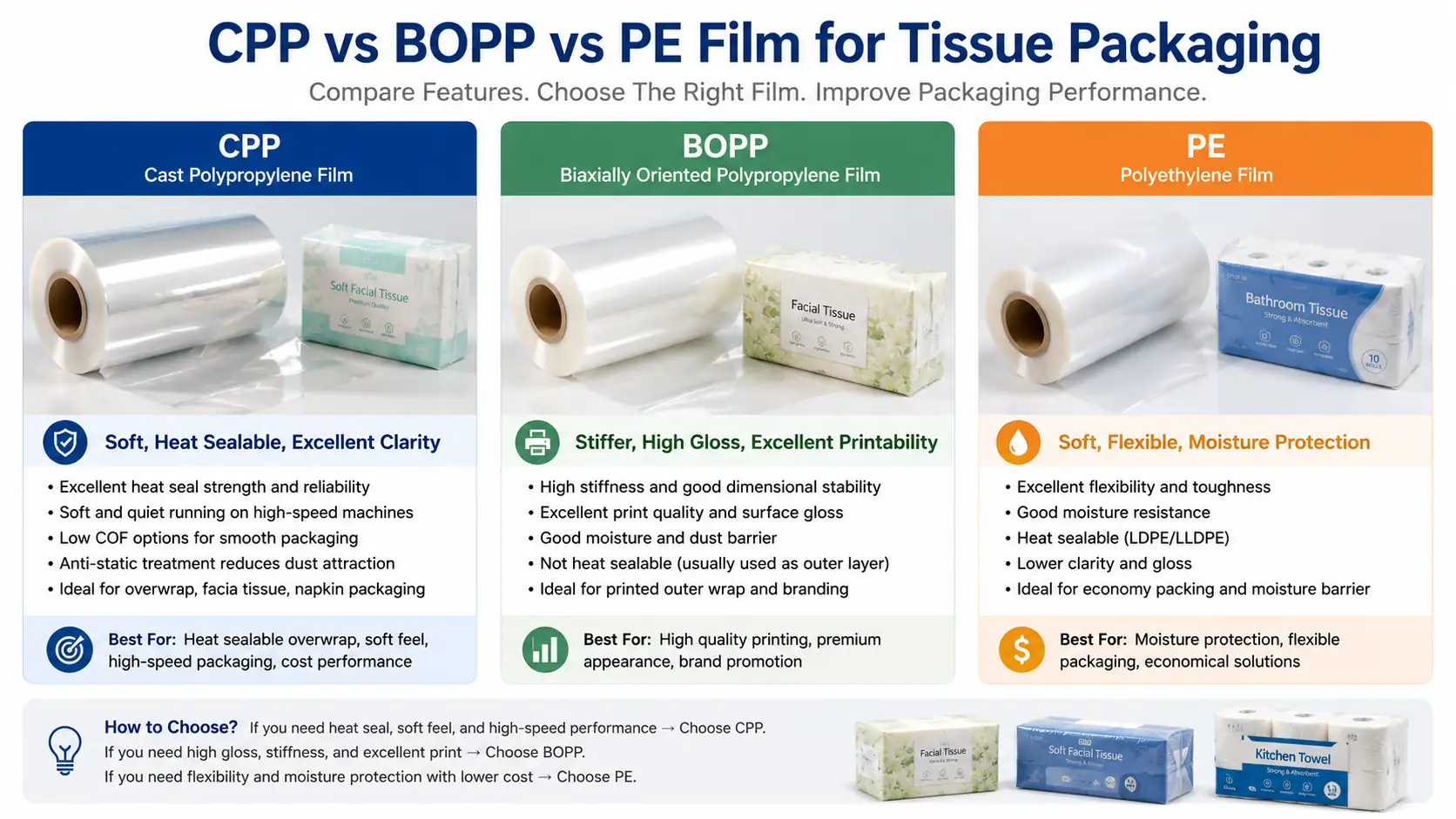
Many buyers compare CPP film with BOPP film because both are polypropylene materials. However, they behave differently. BOPP is biaxially oriented, so it is normally stiffer, stronger in tensile direction, and very suitable for high-quality printing and crisp pack appearance. CPP is cast and less oriented, so it is usually softer, more flexible, and easier to heat seal.
For tissue packaging, the better choice depends on the pack format and machine requirements. If the buyer needs a soft, direct heat-sealable overwrap, CPP is often a practical choice. If the buyer needs a stiffer printed outer web, BOPP may be useful. In some packaging structures, BOPP and CPP can work together, with BOPP acting as the outer printed layer and CPP acting as the inner sealing layer. Buyers who are comparing several film families can also review this BOPP, BOPET, CPP and PE packaging film guide for a wider material comparison.
When CPP May Be Better
- When the pack needs a soft and quiet hand feel
- When direct heat sealing is the main packaging requirement
- When smooth overwrap performance is more important than maximum stiffness
- When anti-static and slip control are important for tissue dust and high-speed machine operation
- When the structure should stay within the PP material family for a mono-PP direction
When BOPP May Be Better
- When the pack needs higher stiffness and crisper appearance
- When the design requires premium reverse printing on a strong outer web
- When the film is mainly used as a printable layer in a laminate
- When high clarity, gloss, and dimensional stability are more important than soft feel
- When the buyer already uses BOPP on existing equipment and wants to keep the same machine setup
CPP Film Vs PE Film For Tissue Packaging
PE film is another common packaging material for tissue products. PE is soft, flexible, moisture-resistant, and widely used in consumer packaging. For some tissue packs, PE can be very suitable, especially when the buyer wants a very soft and economical wrap. CPP, however, may offer a clearer and cleaner surface appearance, a different sealing profile, and better fit for certain polypropylene-based structures.
The decision between CPP and PE should be based on the exact machine, pack size, required stiffness, surface feel, printing method, cost target, and local recycling direction. If a project is moving toward a mono-material PP structure, CPP may be part of the solution. If the target recycling stream is PE, then PE or mono-PE structures may be more appropriate. For buyers evaluating broader material options, CloudFilm also supplies PP film and multiple film families for flexible packaging projects.
Important Properties Of CPP Tissue Packaging Film
A tissue packaging film should be selected by measurable properties, not only by material name. Two CPP films with the same thickness can perform differently if the raw material formula, anti-static treatment, slip package, corona level, and winding quality are different. Below are the most important performance points to confirm before production.
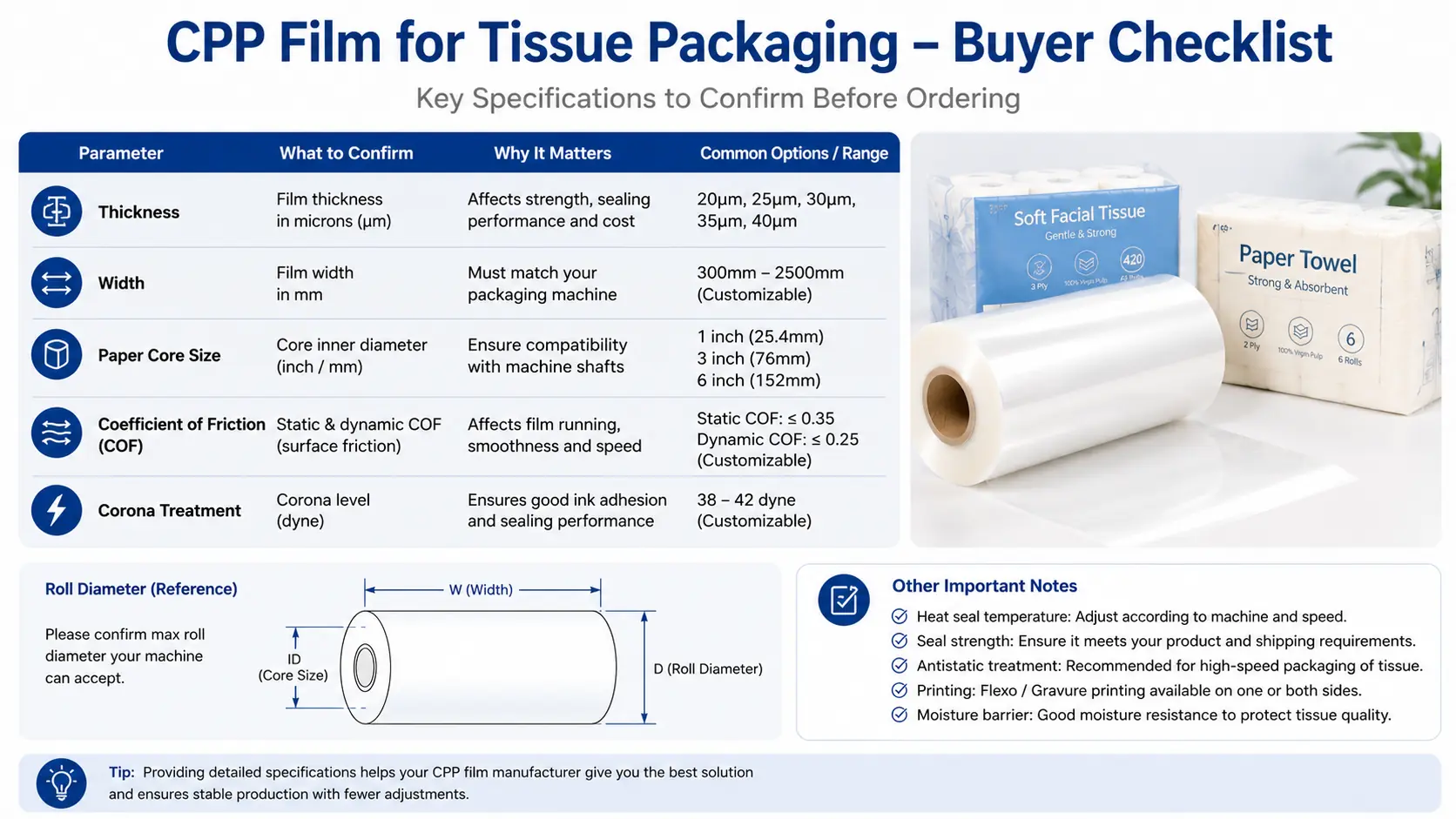
1. Thickness
Common tissue packaging film thickness can vary by product format, pack weight, print requirements, machine speed, and customer preference. Lighter facial tissue packs may use thinner films, while toilet paper multipacks or kitchen towel packs may need stronger films. Buyers should not choose thickness only by cost. A film that is too thin may wrinkle, tear, or seal poorly. A film that is too thick may increase cost and reduce machine efficiency.
2. Heat-Seal Window
The heat-seal window is the temperature range where the film can create a stable seal. A wider seal window makes machine setup easier and helps reduce problems caused by small changes in packing speed, jaw temperature, or product thickness. For tissue overwrap, stable sealing is important because the pack is often bulky and may push against the sealed area.
3. Hot-Tack Strength
Hot tack is the ability of the seal to hold while it is still hot, before it cools completely. If hot tack is weak, the seal may open immediately after sealing, especially on fast lines. For tissue packs, good hot tack can help maintain pack shape and reduce open seals after discharge from the machine.
4. COF And Slip Level
Film slip must match the machine. Buyers should share the packing machine type, packing speed, and current film problem with the supplier. A CPP film supplier can then recommend an appropriate COF range and winding quality. If the film is used for printing first and then packaging, COF should also be considered after ink, coating, and converting.
5. Anti-Static Performance
Anti-static performance is especially valuable in tissue packaging because paper dust is common around converting and packing equipment. Anti-static CPP film can help keep the film surface cleaner and improve unwinding, stacking, and sealing stability. The level required depends on humidity, machine speed, local climate, and dust level in the plant.
6. Corona Treatment And Printability
If the CPP film will be surface printed, corona treatment is usually required to improve ink adhesion. Buyers should confirm treated side, dyne level, printing method, ink system, and storage time before printing. If the film is not printed, corona may still be selected depending on downstream processing. For many roll-stock and converting projects, packaging film rolls should be specified with the exact printing, lamination, and packing route in mind.
7. Clarity And Gloss
Clear appearance matters for retail tissue packaging. The film should not look hazy, dirty, or scratched. High clarity and good gloss can improve shelf appeal and make the pack look more hygienic. Buyers who need several clear film options can also compare clear plastic film for different packaging and display applications.
8. Winding And Slitting Quality
A good film roll should have stable tension, neat edges, correct width, consistent roll diameter, and clean winding. Even a good formula can fail on a packaging line if slitting and winding are poor. Tissue packaging often needs smooth unwinding because the product is light and the machine may run at high speed.
Typical Specifications Buyers Should Confirm
Before requesting a quotation, buyers should prepare the technical information that directly affects production and price. A clear specification also helps the supplier choose the correct grade and avoid unnecessary sample rounds.
Basic Information To Send To Your Supplier
- Application: facial tissue, toilet paper, napkin, kitchen towel, pocket tissue, or multipack
- Packaging machine type: HFFS, flow wrap, overwrap, shrink bundle, or other system
- Current film material and thickness, if available
- Target thickness, width, roll length, roll diameter, and core size
- Printed or unprinted film requirement
- Treated side and dyne level if printing is required
- Required COF, anti-static performance, or known machine issue
- Monthly or annual purchasing volume
- Destination port, delivery terms, and documentation requirements
Common Problems In Tissue Packaging Film And How To Avoid Them
Many tissue packaging problems are not caused by the machine alone. The film, machine settings, product shape, and operating environment all interact. When a buyer changes film supplier or film grade, the first trial should focus on runnability, sealing, appearance, and waste rate.
Wrinkles On The Pack
Wrinkles may be caused by uneven winding tension, wrong film width, poor tracking, unsuitable COF, or machine tension settings. The solution is to check film roll quality, web path alignment, dancer tension, and pack size. A stable CPP film with controlled slip can reduce wrinkles when the machine is set correctly.
Weak Or Open Seals
Weak seals can result from low sealing temperature, short dwell time, contaminated sealing area, insufficient pressure, or a film grade with poor heat-seal response. The supplier should provide a grade with a suitable seal window and hot-tack strength. Machine operators should record sealing jaw temperature, speed, and pressure during trials.
Film Blocking Or Difficult Unwinding
Blocking means the film layers stick together inside the roll. This can occur when slip level, storage temperature, roll pressure, or winding tension is not suitable. Buyers should store rolls in a clean, dry environment and avoid excessive heat. The supplier should control formulation and winding to reduce blocking risk.
Dust Attraction On Film Surface
Static electricity can make film attract tissue dust. This affects appearance and may also disturb sealing or printing. Anti-static CPP film is often recommended when tissue dust is a known issue, especially in dry climates or high-speed workshops.
Poor Print Adhesion
If ink rubs off or fails tape testing, the cause may be low corona level, wrong treated side, expired surface treatment, or unsuitable ink. Buyers should confirm the printing method and storage time before ordering. For high-volume printed tissue packaging, trial printing should be completed before bulk production.
Can CPP Film Support Recyclable Tissue Packaging?
CPP is a polypropylene-based film. In some markets and structures, it can be used as part of a mono-PP packaging direction. For example, a BOPP/CPP structure may support a polypropylene-based design when all layers are selected carefully. However, recyclability is not decided by material name alone. It depends on the whole structure, ink coverage, labels, local collection systems, and the rules of the target market.
If sustainability is part of the project, the buyer should define the target country, retailer requirements, and recycling stream at the beginning. CloudFilm’s recyclable flexible packaging guide explains how mono-PE and mono-PP structures are evaluated and how buyers can brief a supplier for recyclable packaging development.
How To Choose A CPP Tissue Packaging Film Supplier Or Manufacturer
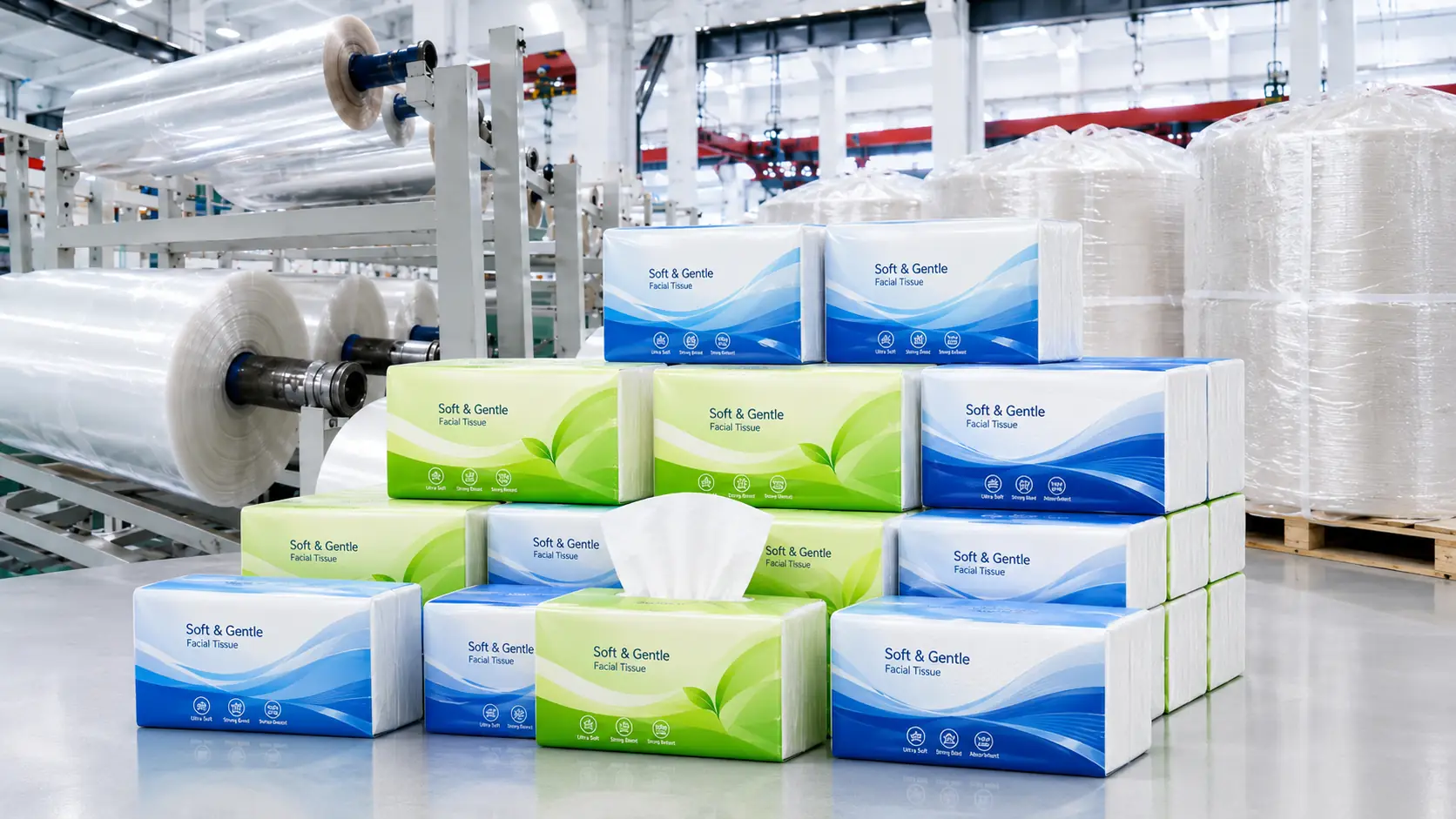
A good CPP tissue packaging film supplier should not only quote a price. The supplier should understand the tissue pack format, machine speed, current pain points, sealing requirements, roll size, and converting process. For tissue packaging, stable repeatability is often more important than a very small price difference because film waste and machine stops can quickly become expensive.
What A Reliable Supplier Should Provide
- A suitable CPP tissue film grade based on application and machine details
- Technical data such as thickness, width, corona treatment, COF direction, and heat-seal behavior
- Sample rolls for machine trial when required
- Consistent slitting, winding, roll diameter, and core size
- Clear communication about MOQ, lead time, packing method, and export documents
- Support for printed, unprinted, mono-layer, or laminated packaging projects
- Long-term supply capability for tissue manufacturers, converters, distributors, and private-label brands
For larger projects, buyers can also discuss the whole packaging structure through flexible packaging solutions, especially when the final pack requires printing, lamination, customized roll stock, or material replacement from BOPP, PE, or mixed laminates to a PP-based structure.
Recommended Project Brief For Fast Quotation
If you want a fast and accurate quotation for CPP film for tissue packaging, prepare a short project brief before contacting the supplier. This helps the manufacturer identify whether a standard grade is suitable or whether the film needs customized slip, anti-static, corona, thickness, or roll dimensions.
Quotation Brief Template
- Product to be packed: for example facial tissue, toilet paper, napkin, or kitchen towel
- Pack size and weight: single pack or multipack
- Film type: clear CPP, anti-static CPP, printable CPP, or current film reference
- Thickness and width: target or current specification
- Roll information: core size, roll length, roll diameter, winding direction, and pallet preference
- Machine information: brand, model, packing speed, sealing temperature, and current problem
- Printing or converting route: unprinted, surface printed, laminated, or slit from jumbo roll
- Annual volume or first trial quantity
- Destination country, port, and preferred trade term
FAQs About CPP Film For Tissue Packaging
What Is CPP Film For Tissue Packaging?
CPP film for tissue packaging is a cast polypropylene film used to wrap facial tissues, toilet paper, napkins, paper towels, and similar hygiene paper products. It protects the product, supports clean retail appearance, and provides heat-sealable performance for automatic packaging lines.
Is CPP Film Suitable For Facial Tissue Packaging?
Yes. CPP film can be suitable for facial tissue packaging when the grade has the right softness, clarity, COF, anti-static level, and heat-seal properties. The final choice should be tested on the buyer’s own packaging machine.
Is CPP Film Suitable For Toilet Paper Packaging?
Yes, CPP can be used for toilet paper rolls and multipacks, especially where heat sealing, clear appearance, and controlled slip are needed. The correct thickness and roll quality should be selected according to pack weight and machine speed.
What Thickness Is Used For CPP Tissue Packaging Film?
There is no single universal thickness. The suitable thickness depends on pack size, product weight, machine speed, sealing method, and customer preference. Buyers should share their current film specification or sample pack so the supplier can recommend a practical range.
Does CPP Film Need Anti-Static Treatment For Tissue Packaging?
Anti-static treatment is strongly recommended when paper dust attraction, dirty pack appearance, or unstable unwinding is a problem. It is especially useful in dry environments and high-speed tissue packaging workshops.
What Does Low COF Mean In Tissue Packaging Film?
Low COF means the film surface has lower friction. For tissue packaging, controlled COF helps the film move smoothly through the machine. The target should not be guessed; it should match the machine, pack format, and converting process.
Can CPP Tissue Packaging Film Be Printed?
Yes. CPP film can be printed if the surface is properly treated and the ink system is suitable. Buyers should confirm corona treatment, treated side, dyne level, printing method, and storage time before production.
Is CPP Better Than BOPP For Tissue Packaging?
CPP is not always better; it is different. CPP is usually softer and easier to heat seal, while BOPP is stiffer and often better for premium printing and crisp appearance. The best choice depends on pack format, machine requirements, and branding needs.
Is CPP Better Than PE For Tissue Packaging?
CPP may offer a different balance of clarity, sealing, and PP-based structure design, while PE offers very good softness and moisture resistance. Buyers should compare the two materials based on machine performance, pack feel, cost, and recycling direction.
Can CPP Film Be Used For Mono-PP Tissue Packaging?
CPP can be part of a mono-PP direction when the total structure is designed mainly from polypropylene materials. However, recyclability depends on the full pack design and local recycling rules, not only the film name.
What Information Should I Send To A CPP Film Manufacturer?
Send the application, pack size, film thickness, width, core size, roll length, roll diameter, machine type, packing speed, printing requirement, COF or anti-static needs, target quantity, and destination port. A clear brief helps the supplier recommend the right grade faster.
Conclusion: Choose CPP Tissue Packaging Film By Performance, Not Only Price
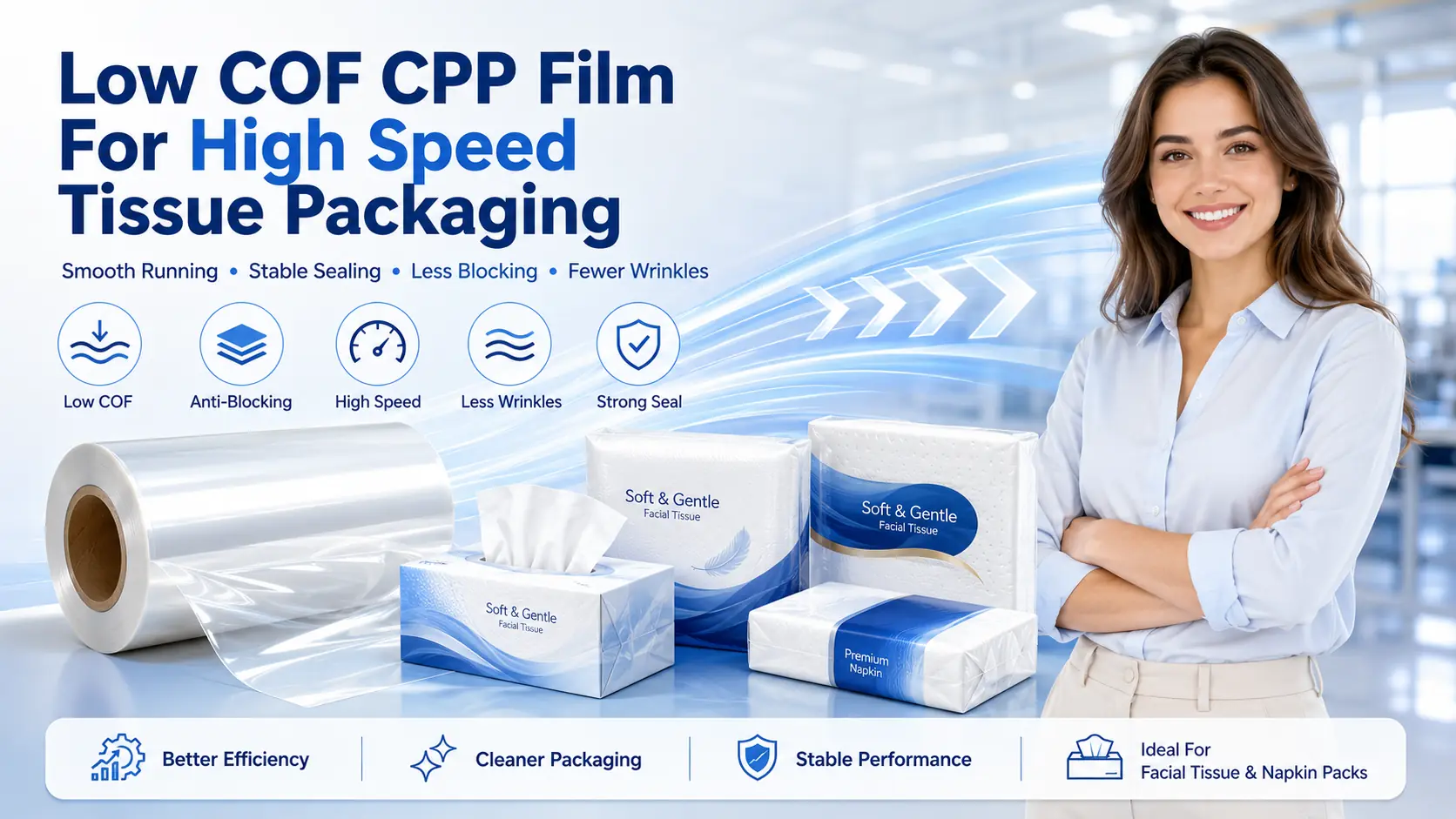
CPP film for tissue packaging is a practical choice when buyers need a soft, clear, heat-sealable, and machine-friendly film for facial tissue, toilet paper, napkin, and paper towel packs. The best CPP film is not simply the cheapest roll. It is the film that runs smoothly, seals reliably, keeps the pack clean, supports the required print appearance, and performs consistently from sample trial to bulk production.
For purchasing teams, converters, and tissue manufacturers, the most efficient approach is to share the real application and machine details with the supplier. Once thickness, width, COF, anti-static level, corona treatment, roll dimensions, and packaging speed are confirmed, the supplier can recommend a suitable CPP film grade and support sampling, testing, and commercial supply.
If you are developing or replacing tissue packaging film, CloudFilm can help evaluate CPP film, BOPP film, PE film, and PP-based packaging options according to your product, machine, and target market. A clear technical brief will help you get the right sample and a more accurate quotation from the beginning.