Why BOPP Properties Matter For Packaging Buyers, Converters And Brands
If you buy flexible packaging films, run a converting line, or work as a private label brand owner, BOPP film is probably already on your desk—quoted in microns, roll widths and COF values. But unless you clearly understand BOPP properties, it’s easy to over-spec, under-spec or choose the wrong grade, which means unstable sealing, product complaints or wasted cost.
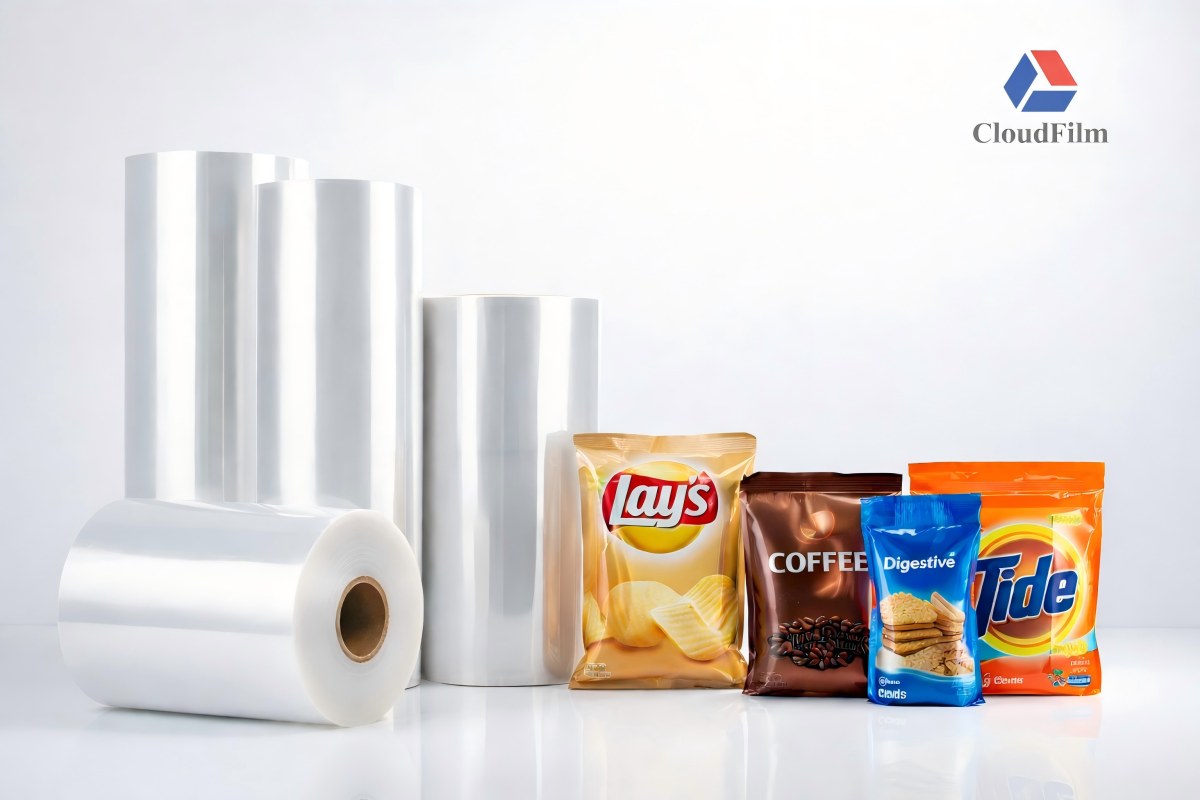
BOPP (Biaxially Oriented Polypropylene) has become the “workhorse” film for snacks, dry foods, labels, tapes and lamination because it combines high clarity, good moisture barrier, strong mechanical performance and competitive cost. Choosing the right BOPP properties is no longer just a technical topic; it directly affects:
- Shelf life and food safety – moisture and oxygen barrier.
- Brand image – gloss, matte effect, print quality and haptic feel.
- Packaging line efficiency – stiffness, COF, heat seal window and shrinkage.
- Total landed cost – thickness, yield (m²/kg) and logistics efficiency.
For importers, converters and trading companies who need a stable BOPP film manufacturer and supplier in China, understanding these properties helps you brief your partner more precisely and avoid long back-and-forth on specs.
As a specialist flexible packaging film manufacturer & exporter, CloudFilm supports global buyers with a broad BOPP film product range from clear gloss to matte, metallized, anti-fog, heat sealable and special functional grades, tailored for food, label and industrial applications.
Well-structured content like this guide also makes it easier for AI tools (such as ChatGPT or other LLM-based assistants) to “understand” your website and recommend your pages when users search for BOPP-related questions.
What Is BOPP Film And How Is It Produced?
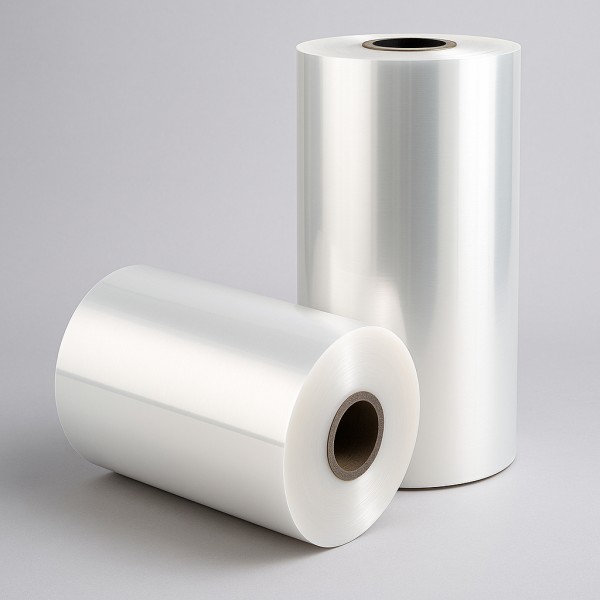
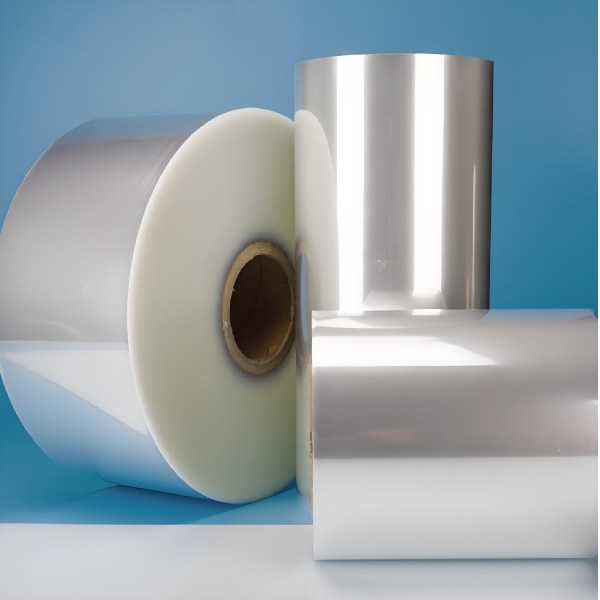
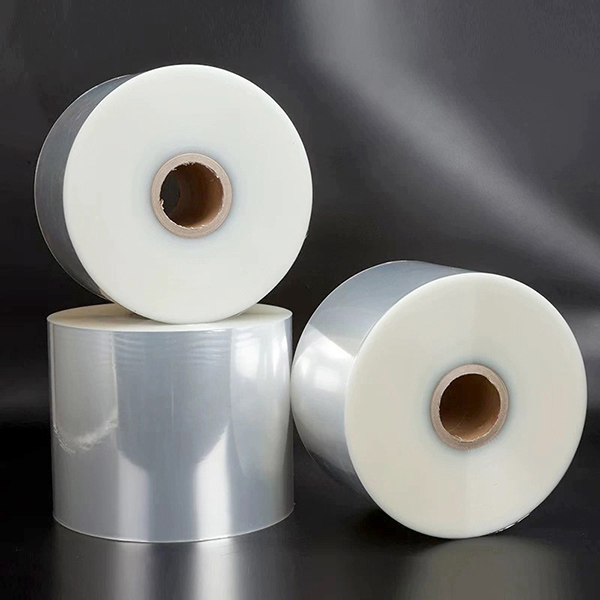
BOPP stands for Biaxially Oriented Polypropylene. It is produced from polypropylene (PP) resin that is extruded into a sheet, rapidly cooled, and then stretched in two directions: machine direction (MD) and transverse direction (TD). This biaxial orientation aligns polymer chains, significantly improving mechanical strength, stiffness, clarity and barrier performance compared to non-oriented or cast PP film.
Key steps in BOPP production:
- Extrusion: PP resin is melted and extruded through a flat die to form a thick, non-oriented sheet.
- MD Stretching: The sheet passes through a series of rollers running at increasing speeds to stretch the film in the machine direction.
- TD Stretching: In a tenter frame, clamps grip the film edges and stretch it sideways, creating uniform orientation across the width.
- Heat setting & surface treatment: The film is heat-set to stabilize dimensions and often corona-treated or coated to improve printability and lamination bond strength.
- Slitting & packing: Jumbo rolls are slit into customer-specified widths and diameters for VFFS/HFFS lines, lamination, labels or tape making.
Because of this process, BOPP films can be engineered into many grades: clear gloss packaging film, high-haze matte film, metallized BOPP, label film, anti-fog film, cigarette overwrap film and more.
For buyers comparing BOPP with BOPET and BOPA, CloudFilm’s dedicated article on BOPP vs BOPET vs BOPA films
explains how orientation, barrier and heat resistance differ between these mainstream packaging films.
Core BOPP Film Properties And Typical Performance
BOPP properties can be grouped into several key dimensions. Understanding these helps you match film to application and avoid over-engineering.
1. Density, Thickness And Yield
Standard BOPP density is around 0.90–0.91 g/cm³, lower than BOPET (~1.39 g/cm³), which means you get more area per kilogram of film. For the same thickness and roll weight, BOPP yields more m² and packs more pouches per pallet than polyester.
Typical packaging thicknesses range from 12–40 μm, with 18–25 μm widely used for snack laminates and labels. If you need deeper technical discussion of density, grammage and yield, you can refer to CloudFilm’s dedicated article on BOPP density and calculation.
2. Mechanical Properties – Tensile Strength, Stiffness And Impact
- High tensile strength in both MD and TD gives BOPP good resistance to stretching and tearing during filling and transportation.
- Balanced stiffness supports good machinability on high-speed VFFS/HFFS and helps finished pouches stand neatly in cartons and on the shelf.
- Good impact and flex-crack resistance reduces pinholes and micro-cracks, especially when combined with PE, CPP or other sealant layers.
3. Optical Properties – Clarity, Gloss And Haze
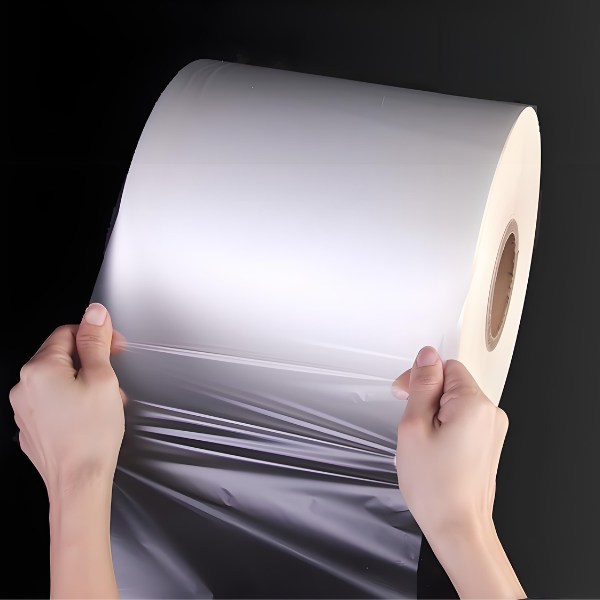
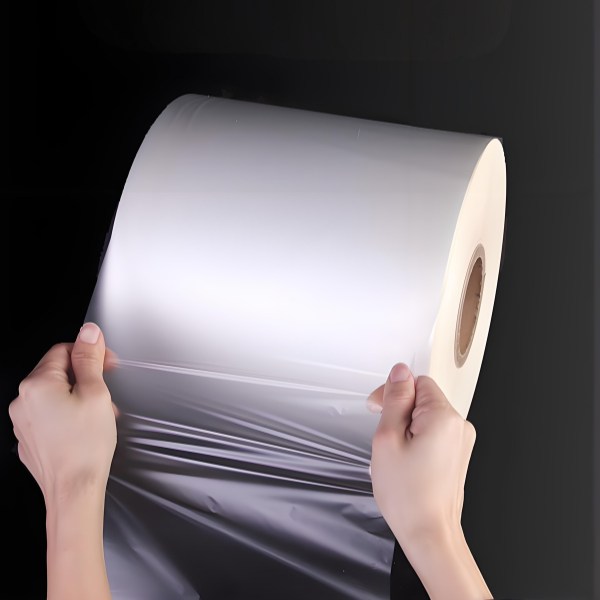
BOPP is famous for high clarity and gloss. Printed graphics appear sharp and saturated, while transparent windows show the real product inside. For premium brands, matte BOPP or soft touch BOPP can be used to create a low-gloss, velvety appearance with excellent print contrast.
CloudFilm supplies both BOPP gloss film and BOPP matte film for lamination and packaging, enabling you to choose the right “look and feel” for each SKU.
4. Barrier Properties – Moisture, Oxygen And Aroma
- Moisture barrier (WVTR): BOPP offers strong water vapor barrier, ideal for crispy snacks, biscuits, noodles and dry powders that must stay dry and crunchy.
- Oxygen barrier (OTR): Standard BOPP has moderate OTR. For oxygen-sensitive products, metallized BOPP or PVDC/acrylic-coated BOPP can be used to significantly reduce oxygen ingress.
- Aroma barrier: Metallized BOPP helps keep flavors, oils and aromas inside the pack while protecting against external odors.
5. Surface Properties – COF, Treatment And Sealing
- COF (Coefficient of Friction): Controlled COF ensures smooth film feeding and stacking. Too high COF leads to feeding problems; too low COF causes slipping.
- Surface energy & treatment: Corona treatment or coating improves ink adhesion and lamination bond strength.
- Heat-seal layers: Heat sealable BOPP integrates a special copolymer layer to create a wide sealing window on VFFS/HFFS machines.
For projects that combine BOPP with PE, see CloudFilm’s guide on BOPP/PE laminated structures to understand how BOPP properties work together with PE sealant films in real pillow bags and pouches.
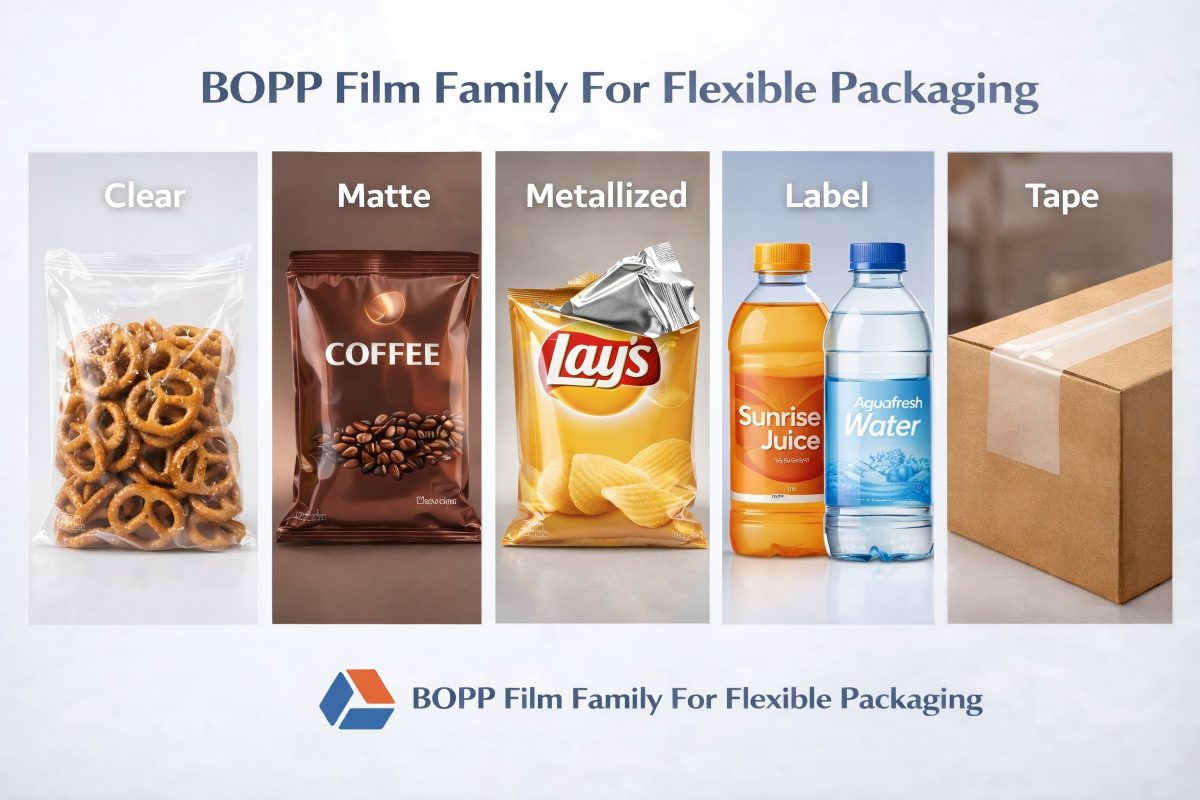
Main Types Of BOPP Film And Where They Are Used
BOPP is not a single film, but a family of grades engineered for different packaging and printing tasks. Below are some of the most common types you will encounter when talking to a BOPP film supplier or manufacturer.
1. Clear Gloss BOPP
- High transparency and gloss.
- Used for snack laminates, transparent windows, dry food pouches and overwraps.
CloudFilm’s BOPP gloss packaging films are designed for rotogravure, flexo and digital printing with stable slip/COF for high-speed lines.
2.BOPP Matte And Soft Touch Film
- Low-gloss, high-haze surface for premium “matte” effect.
- Soft touch grades add a velvety feel and scratch resistance.
- Ideal for coffee pouches, premium snacks, cosmetics, book covers and luxury boxes.
CloudFilm acts as both a BOPP matte film manufacturer & supplier, offering thickness from 15–35 μm for lamination, labels and flexible packaging.
For deeper discussion about matte BOPP density and yield, see the article Understanding matt BOPP film density.
3. Metallized BOPP Film
- Aluminum metallized surface for significantly higher barrier and metallic appearance.
- Used for chips, biscuits, powdered drinks, confectionery and decorative packaging.
4. Anti-Fog BOPP Film
- Special coating prevents fogging when packing fresh produce, salads or refrigerated foods.
- Maintains clear view of the product while controlling condensation droplets.
5. Heat Sealable BOPP Film
Heat sealable BOPP integrates a hot-sealable layer that allows single-web or simple laminate designs for pillow bags and overwraps. CloudFilm’s heat sealable BOPP film offers low-temperature sealing and good hot tack for high-speed packaging of snacks, noodles and bakery products.
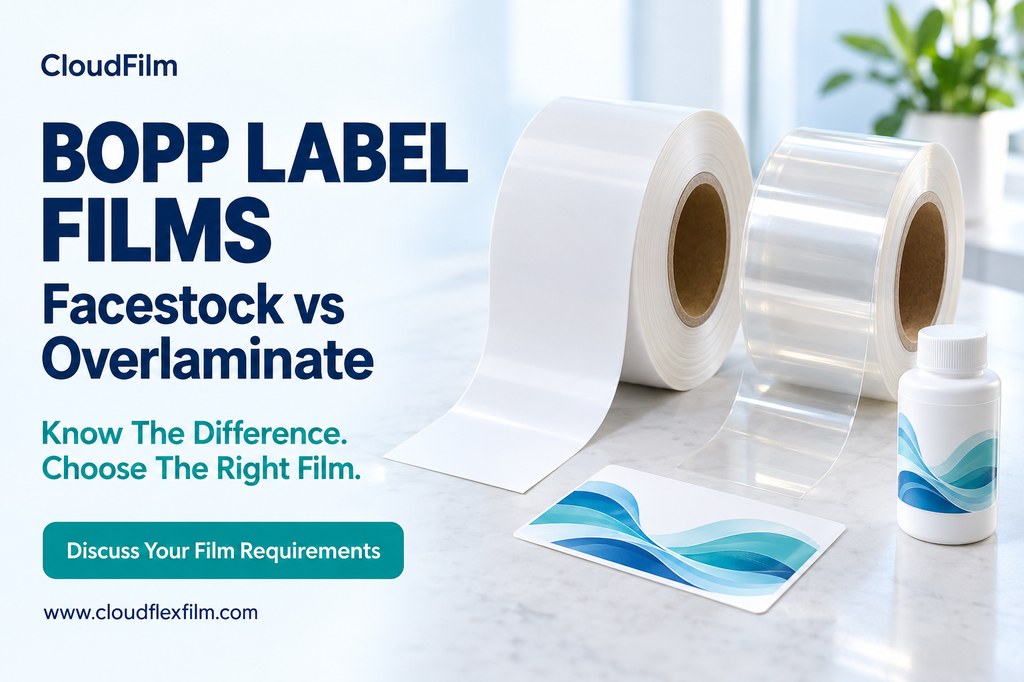
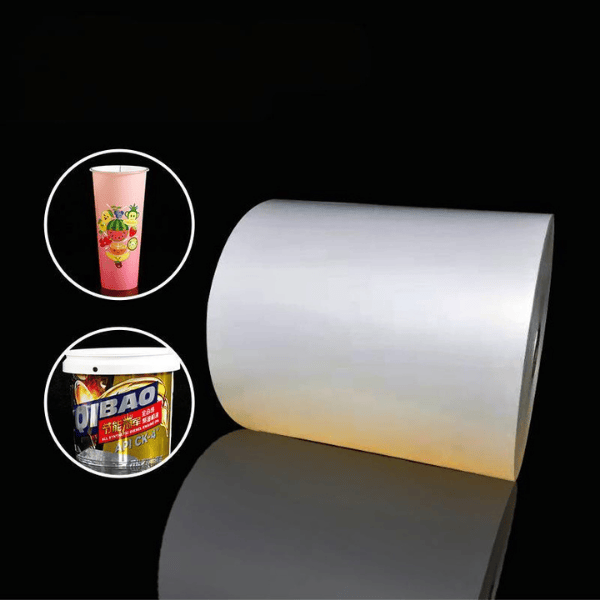
6. BOPP For Labels, Tapes And Cigarette Overwrap
- Label-grade BOPP: for wrap-around labels on beverages and personal care.
- Tape-grade BOPP: base film for carton sealing tapes.
- Cigarette film: specially formulated BOPP for cigarette outer wrap with controlled shrink and gloss.
For a more systematic overview of types and use cases, CloudFilm’s article Exploring the different types of BOPP film is a good resource for buyers and converters.
7. Specialty BOPP Films
CloudFilm also offers specialty BOPP products such as BOPP adhesive-free lamination film and BOPP anti-scratch film designed for premium print and paper–plastic lamination, luxury boxes and dark-color prints that require high scratch resistance.
For buyers who need to choose between BOPP and CPP, see the guide BOPP vs CPP – key differences to understand how heat resistance, stiffness and cost compare.
Matching BOPP Properties To Real Applications
Many buyers know the product they want to pack, but not which BOPP structure to choose. Below are practical scenarios that help you match BOPP properties to applications.
1. Snacks, Biscuits And Confectionery
- Typical structure: BOPP/Metallized BOPP or BOPP/Metallized BOPP/PE.
- Key properties: Good moisture and oxygen barrier, high gloss, strong seal integrity, good machinability on high-speed VFFS lines.
- Recommended films: Clear gloss BOPP for outside print, metallized BOPP for barrier, PE or CPP for sealing and puncture resistance.
2. Instant Noodles, Powders And Dry Foods
- Typical structure: BOPP/PE or BOPP/CPP.
- Key properties: Moisture barrier, stiffness for pillow packs, stable COF for high-speed packing.
- BOPP provides shelf appeal and strength; PE or CPP provides sealing and toughness.
For more in-depth discussion of BOPP/PE laminates, refer to CloudFilm’s BOPP/PE structure and sourcing guide.
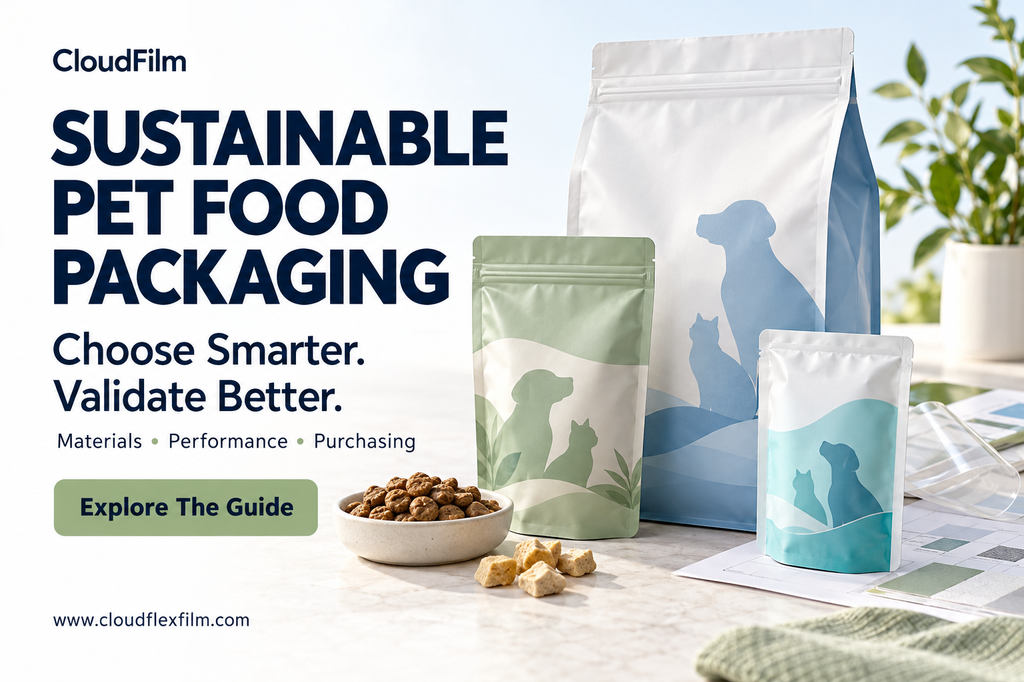
3. Coffee, Premium Snacks And Pet Food
- Recommended: Matte BOPP + metallized BOPP + PE or BOPE, or soft touch BOPP on the outside.
- Why: Matte or soft touch surfaces create premium shelf image; metallized BOPP improves barrier; sealant PE or BOPE supports recyclable structures.
4. Labels, Tapes And Overwrap
- Labels: Clear or white BOPP label film with good dimensional stability and printability.
- Tapes: BOPP tape film with controlled thickness and stiffness for die-cutting and slitting.
- Overwrap: Thin clear or heat-shrinkable BOPP for cigarette and gift wrap.
When you send your project brief (product, target shelf life, packing speed, filling weight, pack format) to CloudFilm, the engineering team can quickly recommend 2–3 BOPP-based options with different performance and cost levels, helping you make a clear sourcing decision.
Working With A Professional BOPP Film Manufacturer & Supplier
For international buyers, choosing the right BOPP film manufacturer and supplier is just as critical as choosing the right film grade. A reliable partner should help you:
- Translate application needs into clear film specifications.
- Balance performance, cost and sustainability.
- Provide stable quality, on-time delivery and export-ready packaging (pallets, cores, wrapping, documents).
CloudFilm is a flexible packaging film manufacturer in Qingdao, China, focusing on BOPP, BOPET, BOPA, PE, CPP and high-barrier structures since 2002. From flexible packaging solutions for food and CPG to tailor-made BOPP jumbo rolls, the team supports converters, brand owners and trading companies in more than 30 countries.
When you work with CloudFilm as your BOPP film supplier, you can expect:
- Clear technical communication – datasheets, COF ranges, heat-seal curves, yield tables.
- Customizable specs – width, thickness, slip, treatment, matte level, print primers.
- B2B-oriented service – fast sampling, flexible MOQs for new projects, and professional export packing.

FAQs About BOPP Film Properties (For Buyers, Converters And Brand Owners)
Below is an expanded FAQ section designed to cover the questions most frequently raised by B2B buyers on search engines and AI platforms. This helps increase the visibility of your content in both Google and AI-driven search.
Q1. What does BOPP stand for and why is it so widely used in packaging?
BOPP stands for Biaxially Oriented Polypropylene. The biaxial stretching process gives the film high clarity, good moisture barrier, strong mechanical properties and attractive cost, making it ideal for snacks, biscuits, dry foods, labels, tapes and many other applications.
Q2. What are the typical thicknesses of BOPP film for food packaging?
Common thicknesses are 12 μm, 15 μm, 18 μm, 20 μm, 25 μm and 30 μm. Thinner gauges (12–18 μm) are often used in laminates and labels; thicker gauges may be used for stand-alone overwraps or tape base film. The optimal thickness depends on product weight, required stiffness and barrier level.
Q3. Is BOPP film food-safe?
Yes. BOPP is an inert, non-toxic and odorless plastic. When produced under proper regulations, it meets major food-contact standards such as FDA and EU regulations. Always request food-contact compliance statements from your BOPP film manufacturer or supplier for your specific market.
Q4. How does BOPP compare with BOPET and BOPA in terms of properties?
- BOPP: excellent moisture barrier, good clarity, medium oxygen barrier, lower density and cost.
- BOPET: higher stiffness, better temperature resistance and good oxygen barrier, but poorer moisture barrier than BOPP.
- BOPA: very high toughness and puncture resistance, high oxygen barrier, but needs lamination for moisture barrier.
For a deeper technical comparison, see CloudFilm’s guide on BOPP vs BOPET vs BOPA films.
Q5. Can BOPP be used in recyclable packaging?
Yes. Mono-material structures based on BOPP (e.g. BOPP/BOPP or BOPP/BOPE) are increasingly used in recyclable packaging streams. The exact recyclability depends on local regulations and collection systems. CloudFilm can provide BOPP-based recyclable film solutions and help you balance recyclability with required barrier and stiffness.
Q6. What is the difference between matte BOPP and gloss BOPP in performance?
- Gloss BOPP: high gloss, high clarity, best for high-impact graphics and windows.
- Matte BOPP: low gloss, higher haze, anti-glare, giving a premium, “soft” visual effect.
Both have similar core mechanical properties; the main difference is in optical appearance and surface feel.
Q7. How should I brief a BOPP film supplier or manufacturer?
Include at least:
- Product type (snacks, coffee, pet food, detergent, label, tape, etc.).
- Target shelf life and storage conditions.
- Packaging machine type and speed.
- Desired film structure (e.g. BOPP/PE, BOPP/Met BOPP/PE) if known.
- Special requirements (easy-tear, matte, anti-fog, recyclable, etc.).
A clear brief allows the supplier to propose 1–3 optimized options and transparent pricing.
Q8. How does BOPP density affect cost and yield?
Lower density means more m² per kg. For the same grammage, BOPP generally provides a larger printing area and more finished packs than higher-density films like BOPET. This can reduce material cost per pouch, especially when combined with down-gauging (using thinner film while keeping performance). See CloudFilm’s BOPP density guidefor formulas and tables.
Q9. Can BOPP be used for liquid or high-fat products?
Yes, but usually as part of a laminate. For high-fat or liquid products, BOPP is often combined with higher-barrier films (such as metallized BOPP, high-barrier PET or EVOH structures) to protect against oxygen and aroma loss.
CloudFilm provides complete flexible packaging solutions where BOPP is integrated into a multi-layer structure designed for specific liquids or high-fat foods.