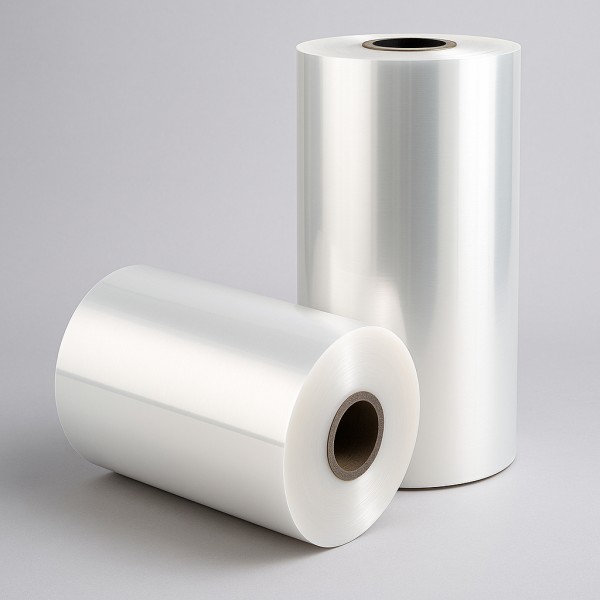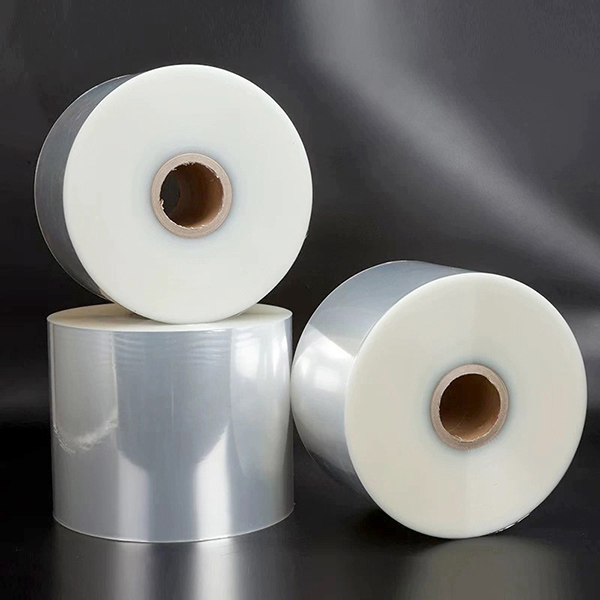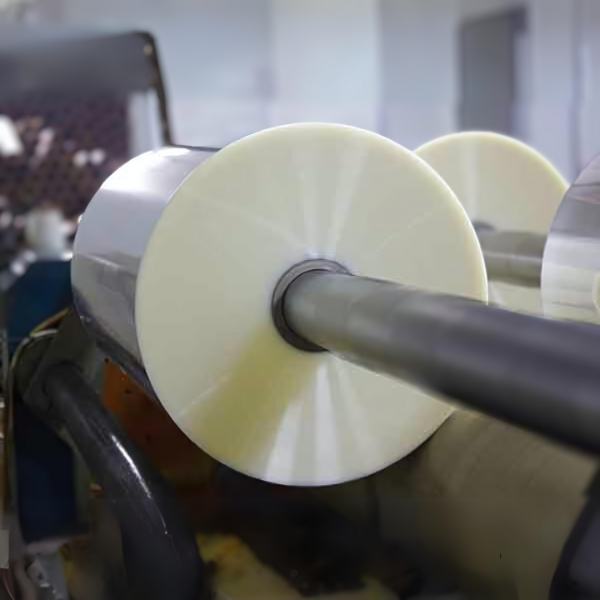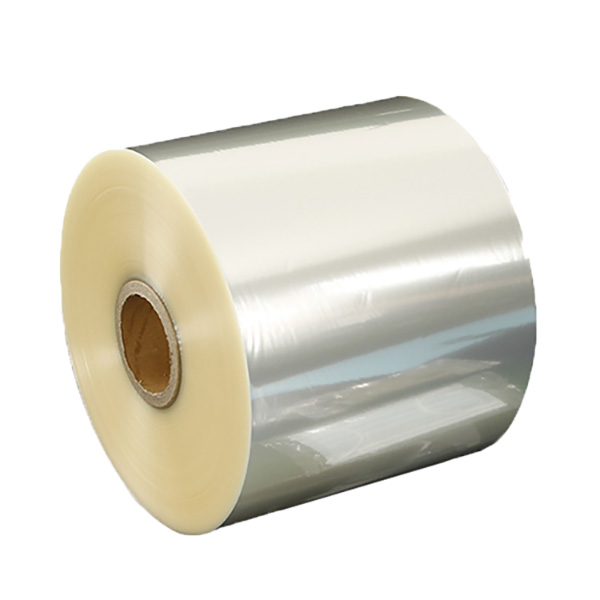
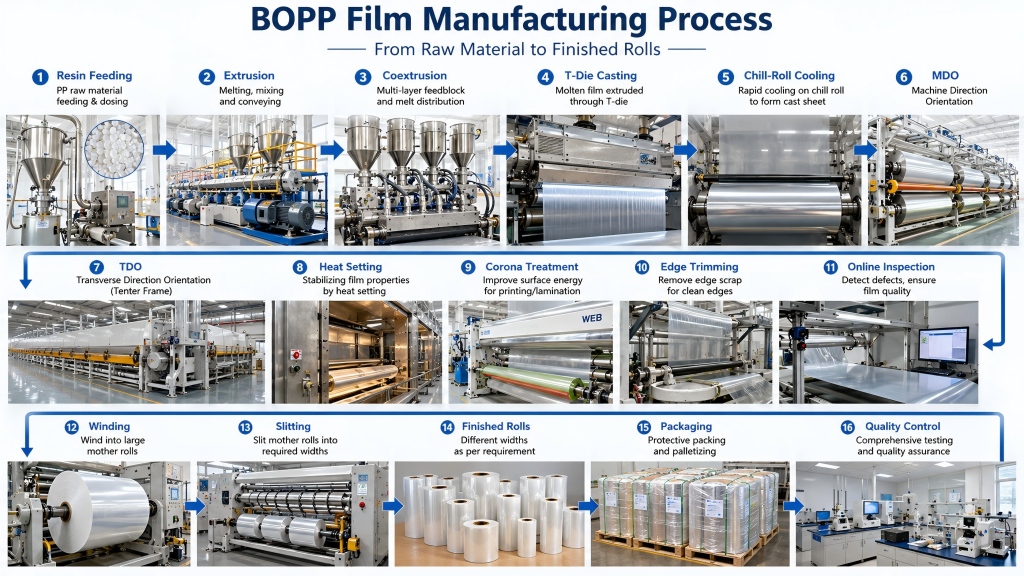
BOPP film is usually manufactured by melting polypropylene resin, forming a thick cast sheet through a flat T-die, stretching that sheet first in the machine direction and then in the transverse direction, heat-setting the oriented film, treating its surface, winding it into mother rolls, and finally slitting it to the buyer’s required roll specifications.
This sequence is known as the sequential tenter process, and it is the dominant industrial route for producing packaging-grade BOPP. It explains why BOPP is not simply a cast film and not normally a conventional blown film. It begins with extrusion and casting, but its defining step is biaxial orientation.
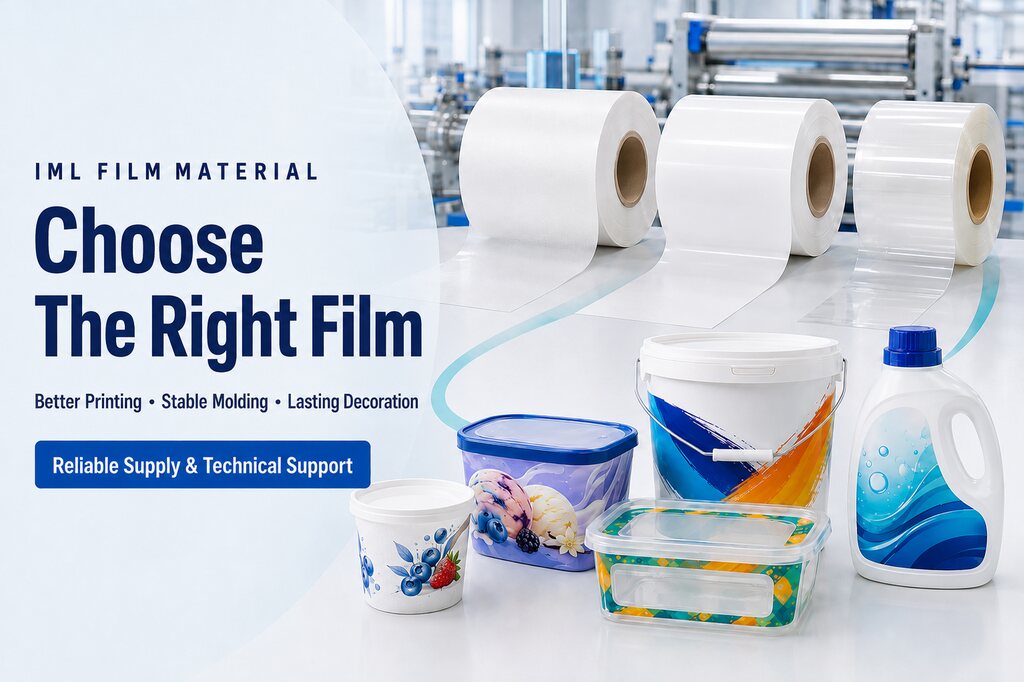
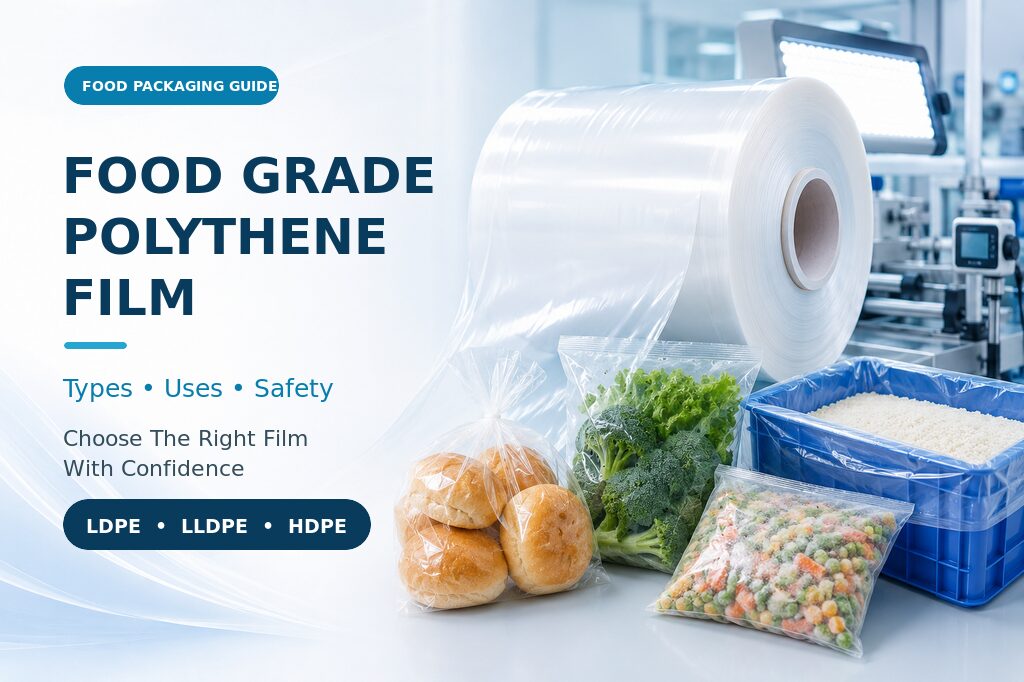
For buyers, converters, printers, and brand owners, understanding this process makes it easier to specify the correct grade, identify the cause of converting problems, and evaluate whether a BOPP film manufacturer and supplier can control the variables that matter. CloudFilm’s BOPP Film Series includes clear, printable, heat-sealable, matte, anti-fog, metallized, and other functional grades for packaging, labels, lamination, and industrial use.
What BOPP Manufacturing Actually Means
BOPP stands for biaxially oriented polypropylene. “Biaxially oriented” means that the polymer sheet is stretched in two perpendicular directions: the machine direction, which follows the running direction of the line, and the transverse direction, which runs across the film width.
Orientation aligns and reorganizes the polymer structure. After controlled stretching and heat setting, the film becomes thinner, stiffer, stronger, clearer, and more dimensionally stable than the original cast sheet. The final balance of properties depends on resin selection, layer design, stretching conditions, heat setting, additives, surface treatment, coating, and winding quality.
BOPP should not be confused with CPP. CPP is normally formed through a flat die and cooled as a finished cast film without the same biaxial stretching sequence. It is generally softer and more naturally heat-sealable. The practical differences are explained in BOPP vs CPP Film: Key Differences.
BOPP is also different from ordinary blown polypropylene film, which exits an annular die as a tubular bubble. A double-bubble orientation process does exist, but most high-volume packaging BOPP is produced on wide sequential tenter lines.
Raw Materials and Multilayer Design
Polypropylene base resin
The main raw material is usually isotactic polypropylene selected for stable extrusion, controlled crystallization, and good orientation behavior. Standard PP is not strongly hygroscopic, so it is not automatically dried in the same way as some moisture-sensitive polymers. However, resin handling must still prevent dust, contamination, condensation, and incorrect blending.
Additives and masterbatches
Depending on the grade, the formulation may include slip additives, antiblock particles, antistatic agents, processing aids, cavitating agents, pigments, or functional concentrates. These materials influence coefficient of friction, winding, optical appearance, machinability, density, and surface behavior.
Single-layer, three-layer, and five-layer films
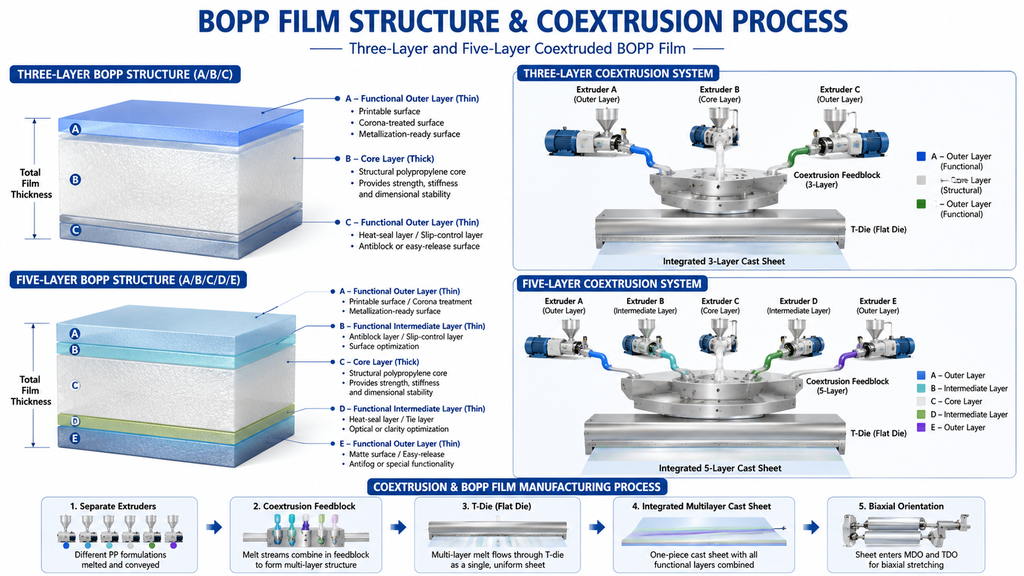
A simple BOPP web may be monolayer, but many packaging grades are coextruded. A three-layer structure can separate a strong core from two functional skin layers. A five-layer design provides more freedom to control sealing, printability, gloss, matte effect, metallization, antiblock, and processing behavior without changing the whole film formulation.
The layers are not separate films laminated together. They leave the coextrusion system as one integrated sheet and are stretched as one web. For a detailed distinction between internal layers and finished laminates, see BOPP Film Structure: 3-Layer, 5-Layer and Laminate Structures Explained.
The BOPP Film Manufacturing Process Step by Step
1. Resin storage, conveying, and gravimetric feeding
Polypropylene pellets and additive masterbatches are stored in clean silos, bins, or sealed bags. Vacuum conveying systems transfer each material to gravimetric feeders. Accurate dosing is essential because small changes in skin-layer additives can affect haze, slip, blocking, treatment, sealing, and metallization.
A modern line records recipe settings and material consumption by production lot. This improves traceability and helps operators compare film performance with the exact formulation used.
2. Extrusion, melting, mixing, and filtration
The resin enters one or more heated extruders. A rotating screw conveys, compresses, melts, and mixes the polymer into a homogeneous melt. Barrel temperature, screw speed, melt pressure, residence time, and shear must remain within a stable processing window.
The melt then passes through screens or continuous filtration equipment. Filtration removes contamination, unmelted particles, and degraded material that could otherwise cause gels, lines, weak spots, or optical defects in the finished film.
3. Coextrusion and melt distribution
For multilayer grades, separate extruders prepare different formulations for the core and skin layers. The melts meet in a feedblock or multi-manifold die system. The equipment distributes each layer evenly across the full width while maintaining the designed layer ratio.
Uniform melt flow is critical. Uneven distribution can create cross-web gauge variation, unstable skin thickness, inconsistent sealing, or non-uniform optical appearance.
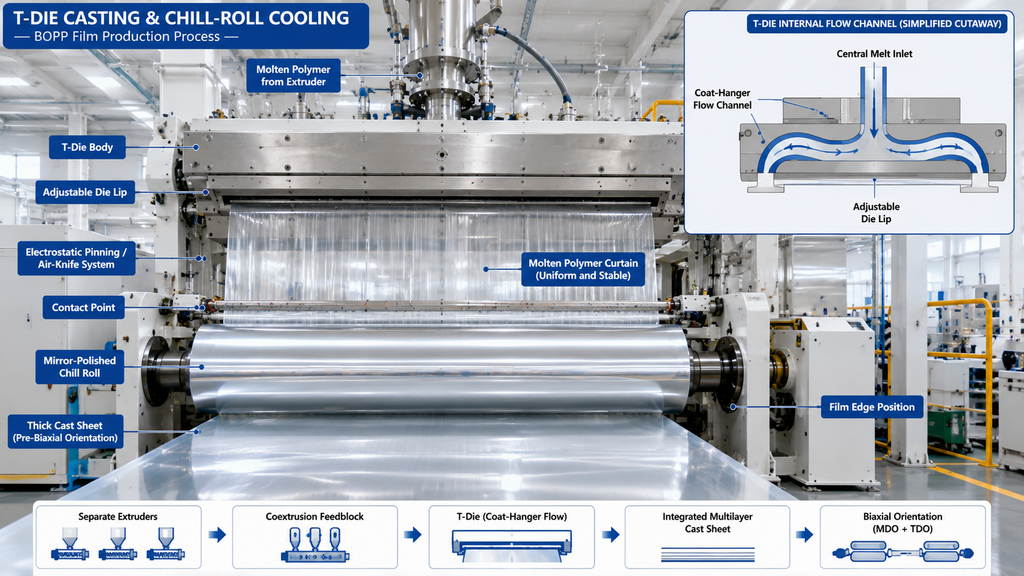
4. T-die casting and chill-roll cooling
The combined melt enters a wide flat die, commonly called a T-die. The internal flow channel spreads the polymer from the central inlet across the entire die width. The melt exits through a narrow adjustable gap as a continuous curtain.
This hot curtain is pinned against a polished chill roll by an air knife, electrostatic pinning system, or another controlled contact method. Rapid and uniform cooling forms a thick, non-oriented cast sheet with stable surface contact and limited air entrapment.
At this stage, the sheet is much thicker than the final film. It has not yet gained the characteristic strength, stiffness, clarity, and dimensional stability associated with BOPP.
5. Machine-direction orientation (MDO)
The cast sheet passes through a series of controlled-temperature rollers. Some rollers preheat the sheet, while subsequent rollers rotate at progressively higher surface speeds. The speed difference stretches the sheet in the machine direction.
MDO conditions affect tensile strength, stiffness, shrinkage, thickness profile, optical properties, and downstream stretch stability. The film must be heated enough to stretch uniformly but not so much that it becomes unstable or sticks to rollers.
After stretching, cooling rollers stabilize the web before it enters the next stage. Tension control is important because uneven tension can create wrinkles, neck-in variation, or orientation imbalance.
6. Optional in-line coating between MDO and TDO
Some BOPP lines include an in-line coating station after machine-direction stretching and before transverse stretching. A water-based primer or functional coating can be applied to improve printability, adhesion, barrier, sealing, or another surface property.
Because the coated web is later stretched in the transverse direction, coating formulation and application weight must be designed for this sequence. Not every coated BOPP grade is made in-line; many coatings are applied later on separate equipment.
7. Transverse-direction orientation (TDO)
The film enters a tenter frame. Continuous clips or chains grip both edges of the web. The clip rails gradually move farther apart, stretching the film sideways across its width while the web passes through controlled heating zones.
The TDO usually includes preheating, stretching, heat-setting, and cooling zones. Air temperature, rail geometry, clip condition, web tension, and ventilation must be uniform across the line. Any imbalance can lead to bowing, uneven thickness, edge instability, or optical distortion.
The combination of MDO and TDO creates biaxial orientation. This is the defining transformation that converts the thick cast sheet into thin BOPP film.

8. Heat setting, relaxation, and dimensional stabilization
After stretching, the film is held under controlled temperature and tension to stabilize the oriented structure. Heat setting reduces unwanted shrinkage and helps establish the final dimensional behavior required for printing, lamination, sealing, labeling, or tape conversion.
A small amount of controlled relaxation may be introduced to balance shrinkage and improve flatness. The correct settings depend on film thickness, resin system, layer structure, and end use.
9. Edge trimming and surface treatment
The tenter clips hold the film edges, so those edge zones are thicker and mechanically marked. Rotary knives remove the edge trim before winding. Trim can often be collected, ground, and reused in controlled proportions where product specifications allow.
Corona treatment or flame treatment increases surface energy so that inks, primers, adhesives, or metal deposition can bond more reliably. Treatment may be applied to one side or both sides. The required treated side, dyne level, and treatment retention should be confirmed in the film specification.
A printable outer web should be selected for its treatment stability and converting performance. CloudFilm’s BOPP Printing Film is designed for controlled ink adhesion, flatness, and dimensional stability during printing.
10. Winding and mother-roll formation
The finished web is wound into large mother rolls under controlled tension, nip, and torque. The objective is a roll that is firm enough for handling but not so tight that it blocks, deforms the core, creates hard bands, or develops excessive internal stress.
Winding settings often change as roll diameter increases. Clean edge alignment, stable web tracking, and defect detection are essential because a winding fault can affect many downstream slit rolls.
Some grades are allowed to condition or “season” before final slitting. This can help the roll reach a more stable temperature and stress state.
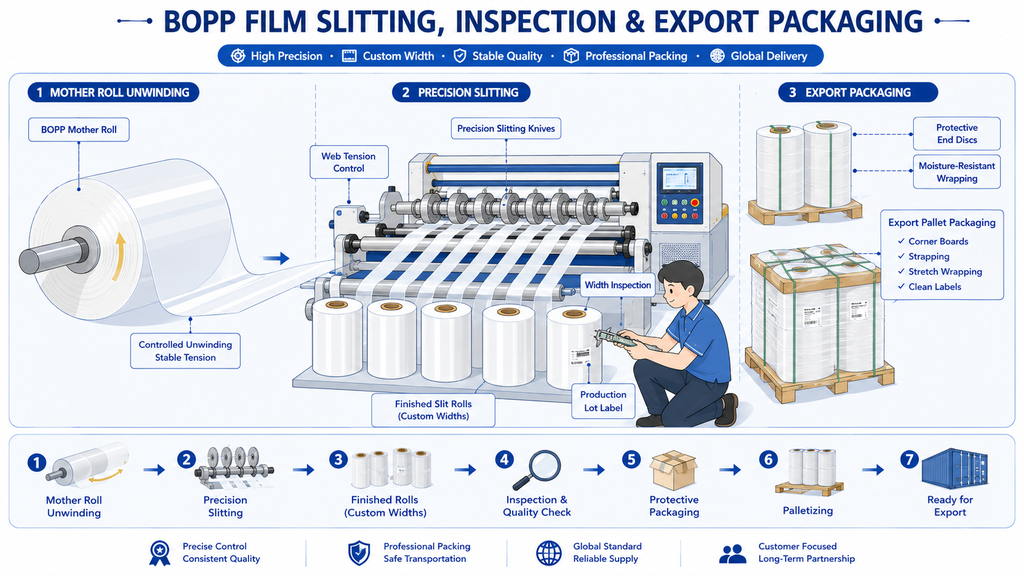
11. Slitting, inspection, and export packing
Mother rolls are transferred to precision slitters. Razor, shear, or score slitting systems cut the web into customer widths. Each finished roll is wound onto the specified 3-inch or 6-inch core and controlled for roll diameter, weight, edge quality, and splice requirements.
Finished rolls are labeled by grade and production lot, wrapped against dust and moisture, protected at the edges, and palletized for transport. Export packing should prevent movement, impact, telescoping, and humidity damage during container loading and ocean shipment.
How Process Conditions Determine Final BOPP Properties
BOPP performance is not created by one machine section alone. It is the result of the complete process interacting as a system. A stable resin recipe cannot compensate for poor stretching, and excellent orientation cannot compensate for weak treatment or defective winding.
The broader relationship between orientation and film performance is covered in BOPP Film Properties, Benefits & Uses.
| Process Variable | Main Film Effect | Why It Matters to Buyers |
|---|---|---|
| Resin and additive selection | Clarity, stiffness, slip, sealing, density | Determines whether the grade fits printing, packaging, labels, or special functions |
| Layer ratio | Surface function and core strength | Controls seal layer, matte layer, antiblock, or metallization surface consistency |
| Cast-sheet cooling | Crystal structure and optical uniformity | Influences haze, stretch stability, and defect risk |
| MDO conditions | MD strength, stiffness, shrinkage | Affects machine handling and dimensional behavior |
| TDO conditions | TD strength, width profile, flatness | Affects web stability, thickness uniformity, and converting yield |
| Heat setting | Residual shrinkage and dimensional stability | Important for printing registration, lamination, labels, and high-speed packing |
| Surface treatment | Ink, adhesive, coating, or metal adhesion | Determines bond reliability and shelf-life of treated surfaces |
| Winding tension | Roll hardness, blocking, telescoping | Directly affects storage, slitting, and customer machine performance |
How Different BOPP Grades Are Created
Clear and gloss BOPP
Clear grades rely on clean resin, controlled crystallization, stable stretching, smooth skin layers, and low defect levels. The objective is high transparency, gloss, and consistent thickness for printing or lamination.
Heat-sealable BOPP
Standard homopolymer BOPP is not automatically a reliable sealing film. A lower-melting sealable skin layer or suitable coating is engineered into the product. Seal initiation temperature, seal range, hot tack, coefficient of friction, and blocking resistance must be balanced. Buyers developing single-web wraps or sealable laminates can review Heat Sealable BOPP Film.
Matte BOPP
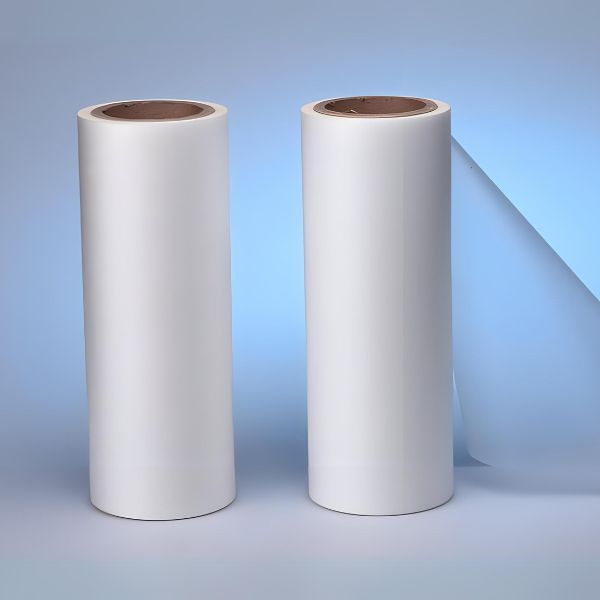
A matte appearance can be generated through a specially formulated surface layer or a later coating. The process must control haze, gloss, surface texture, print appearance, and lamination bond. BOPP Matte Film is commonly used when a low-gloss, premium visual effect is required.
Metallized BOPP
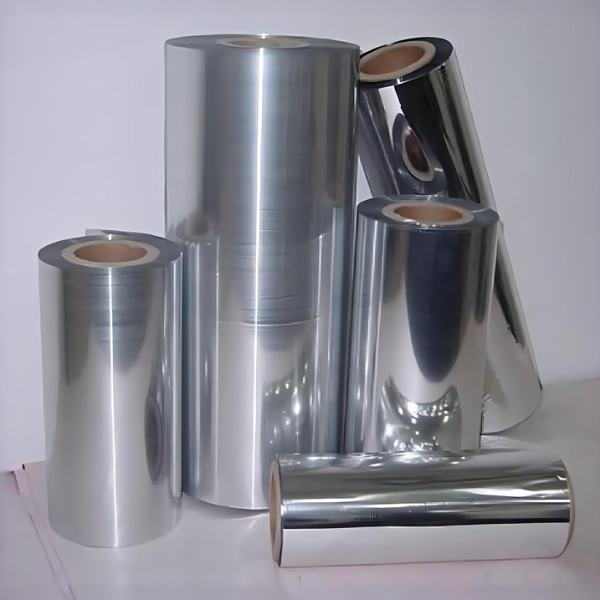
A metallization-grade base film needs a clean, uniform, and suitably treated surface. After BOPP production, a very thin metal layer is deposited in a vacuum metallizer. Base-film defects, contamination, treatment variation, or roughness can reduce metal adhesion and barrier consistency. Metallized BOPP Film is used when moisture barrier, light protection, and metallic appearance are important.
Anti-fog BOPP
Anti-fog performance is created through a functional formulation or coating that changes how condensed water behaves on the surface. The film must also retain clarity, sealing, slip, and food-packaging suitability. Anti Fog BOPP Film is typically selected for chilled produce, bakery, and other products where condensation can obstruct visibility.
Pearlized and cavitated BOPP
Cavitating agents create microscopic voids during orientation, lowering density and producing an opaque or pearlescent appearance. Process control is important because stretching conditions determine void formation, thickness, stiffness, and surface quality.
A wider overview of functional grades is available in Types of BOPP Film and Their Uses.
Quality Control From Resin to Finished Roll
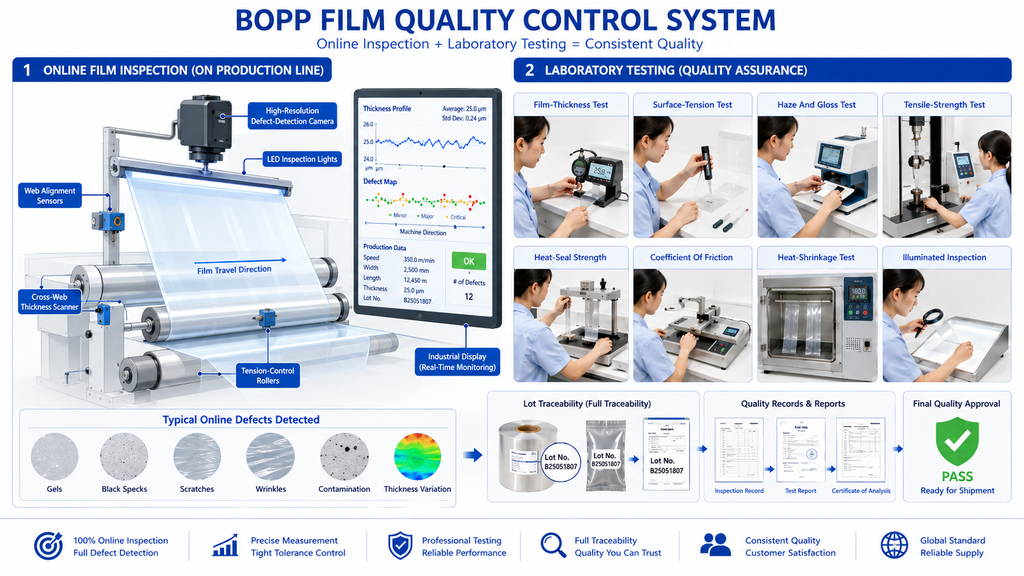
A reliable BOPP supplier does not inspect only the final roll. Quality control starts with incoming resin and continues through extrusion, casting, orientation, treatment, winding, slitting, and packing.
Typical online controls
Online systems may monitor melt pressure, temperature, filter condition, cast-sheet thickness, cross-web gauge profile, line speed, web tension, treatment power, edge position, defects, and winding parameters. Automatic thickness control can adjust die settings or process conditions to reduce gauge variation.
Typical laboratory and finished-roll tests
Common tests include thickness, width, yield, tensile strength, elongation, heat shrinkage, haze, gloss, coefficient of friction, surface tension, seal initiation temperature, seal strength, treatment retention, optical defects, and roll hardness. The exact test plan should match the grade and customer specification.
Traceability and documentation
Each roll should be linked to a production lot, recipe, process record, inspection result, and packing record. For food-contact or regulated applications, buyers may also request declarations, migration reports, certificates of analysis, and other compliance documents.
Common BOPP Defects and Their Process Causes
Gauge variation
Uneven thickness can result from unstable extrusion, poor die adjustment, non-uniform cooling, incorrect stretching conditions, or inconsistent edge behavior. Cross-web variation affects yield, winding, printing, and sealing.
Gels, black specks, and fisheyes
These defects may come from contamination, degraded resin, poor filtration, dead spots in the melt path, or improper cleaning. They are especially visible in clear printing and metallization grades.
Wrinkles and poor flatness
Wrinkles can be caused by uneven web tension, temperature imbalance, misaligned rollers, tenter-chain differences, edge instability, or winding errors. Poor flatness creates registration and lamination problems.
Low or unstable surface tension
Insufficient corona power, contamination, incorrect electrode settings, treatment decay, or treating the wrong side can reduce ink and adhesive adhesion. The supplier and converter should agree on the treatment side, minimum level, and expected shelf life.
Blocking or excessive slip
A film that sticks within the roll may have an unsuitable additive balance, excessive winding pressure, high storage temperature, or insufficient antiblock. Excessive slip can create poor web control, while insufficient slip can limit machine speed.
Telescoping and soft edges
These winding defects usually relate to tension profile, nip pressure, torque control, core quality, roll handling, or temperature differences. They can worsen during long-distance shipping if rolls are not packed securely.
Weak or inconsistent heat seals
Possible causes include incorrect seal-layer formulation, uneven skin thickness, contamination, excessive slip, wrong sealing temperature, insufficient dwell time, or incompatible machine settings. Film and packaging-machine conditions must be evaluated together.
How Packaging Buyers Should Specify BOPP Film
A request that says only “BOPP film, 20 microns” is not enough for a technically reliable quotation. Buyers should describe the application, converting route, functional surfaces, and roll format.
A practical inquiry should include:
- Application and product being packed
- Film role: printing web, sealant web, label, tape base, overwrap, lamination, or metallization base
- Film type and layer function
- Total thickness and acceptable tolerance
- Width, roll length, roll weight, or outside diameter
- Core size and maximum roll weight
- Corona-treated side and required surface tension
- Heat-seal side, seal temperature range, and seal-strength target where applicable
- Optical requirements such as haze, gloss, transparency, matte level, or opacity
- Coefficient-of-friction range and packaging-machine speed
- Printing method, ink system, adhesive, and lamination process
- Food-contact, regulatory, and documentation requirements
- Splice limits, edge quality, pallet format, and labeling needs
- Trial quantity, annual demand, destination port, and commercial terms
For lightweight snack and confectionery laminations, 12 Micron BOPP Film is a common starting point, but the final selection must also consider stiffness, printing, barrier, machine speed, and laminate structure.
Choosing a BOPP Film Manufacturer and Supplier
A qualified supplier should be able to translate the buyer’s application into a controlled film specification rather than quoting only by thickness and width. The supplier should explain which properties are typical, which are guaranteed, and which depend on the converter’s inks, adhesives, machine settings, and storage conditions.
Buyers should evaluate:
- Grade-development and technical communication capability
- Control of thickness profile, treatment, slip, sealing, and winding
- Availability of jumbo rolls and custom slitting
- Lot traceability and certificate support
- Sample-roll and machine-trial support
- Export packing and container-loading experience
- Complaint analysis and corrective-action process
- Realistic MOQ, production scheduling, and lead-time communication
Companies comparing regional supply options can also review BOPP Film Manufacturers in the USA as a sourcing reference. For a new project, the fastest route is to send the current structure, application, roll drawing, and test targets through the CloudFilm contact page.
BOPP Manufacturing Process FAQs
FAQ 1. Is BOPP film a cast film?
BOPP begins with a cast-sheet stage, but the cast sheet is not the final film. It is subsequently stretched in the machine and transverse directions, heat-set, treated, and wound. Therefore, BOPP should be described as a biaxially oriented film made through a casting-and-orientation process, not as ordinary CPP cast film.
FAQ 2. Is BOPP film made by blown-film extrusion?
Most packaging BOPP is made on a flat-die sequential tenter line, not a conventional blown-film line. A double-bubble orientation process exists, but it represents a different and less common route for mainstream wide BOPP packaging film.
FAQ 3. What does the T-die do in BOPP production?
The T-die spreads molten polypropylene across a wide, narrow outlet and forms a continuous melt curtain. This curtain contacts the chill roll and becomes the thick cast sheet used for later biaxial stretching.
FAQ 4. Why is BOPP stretched in two directions?
Stretching in both directions improves the balance of tensile strength, stiffness, clarity, thickness, and dimensional stability across the film. One-direction stretching alone would produce a more strongly unbalanced property profile.
FAQ 5. What are MDO and TDO?
MDO means machine-direction orientation, usually created by rollers operating at different speeds. TDO means transverse-direction orientation, created in a tenter frame where clips move apart and stretch the film across its width.
FAQ 6. Is all BOPP film coextruded?
No. BOPP may be monolayer or multilayer. However, three-layer and five-layer coextruded structures are common because they allow the core and surface functions to be adjusted separately.
FAQ 7. Is all BOPP film heat-sealable?
No. Standard BOPP may not form a strong commercial heat seal. Heat-sealable grades require a specially designed skin layer or coating with a lower seal activation temperature and controlled hot-tack behavior.
FAQ 8. Why does BOPP need corona treatment?
Polypropylene has naturally low surface energy. Corona treatment increases surface energy and improves wetting and adhesion for inks, adhesives, primers, coatings, or metallization. Treatment can decay over time, so storage and conversion timing matter.
FAQ 9. Can both sides of BOPP be treated?
Yes. A grade may be untreated, one-side treated, or two-side treated. The specification should identify the treated side and the intended print, laminate, seal, or metallization function.
FAQ 10. Why are BOPP film edges trimmed?
The tenter clips hold the film edges during transverse stretching. These edge zones are thicker and contain clip marks, so they are removed before final winding.
FAQ 11. What creates matte BOPP?
Matte appearance is normally created by a specially formulated coextruded surface layer or a functional coating. The exact process determines gloss, haze, surface feel, print contrast, and lamination behavior.
FAQ 12. How is metallized BOPP produced?
First, a suitable BOPP base film is manufactured and slit. It is then placed in a vacuum metallizer, where a very thin metal layer is deposited on the prepared surface. Base-film cleanliness and surface consistency strongly affect adhesion and barrier.
FAQ 13. What controls BOPP thickness uniformity?
Thickness uniformity depends on melt stability, filtration, die profile, cast-sheet cooling, MDO and TDO conditions, edge behavior, automatic gauge control, and stable web tension.
FAQ 14. Why can a BOPP roll telescope during shipment?
Telescoping can result from poor winding tension, unsuitable roll hardness, weak cores, temperature changes, rough handling, or inadequate pallet restraint. Correct winding and export packing must work together.
FAQ 15. What information is required for a BOPP quotation?
The supplier normally needs film type, thickness, width, roll length or diameter, core, treatment, sealing requirement, optical targets, application, printing or lamination process, quantity, destination, and packaging requirements.
FAQ 16. How should BOPP rolls be stored before converting?
Store rolls upright or in the supplier’s recommended orientation in a clean, dry area away from direct sunlight, high heat, and condensation. Allow cold rolls to acclimatize before opening the wrapping or running them on a printing, lamination, or packaging line.
Conclusion
The BOPP manufacturing process combines extrusion, flat-die casting, machine-direction stretching, transverse-direction stretching, heat setting, surface treatment, winding, slitting, inspection, and controlled packing. Each stage contributes to the final film, and a weakness in one stage can appear later as a printing, sealing, lamination, metallization, or winding problem.
The most effective purchasing approach is to begin with the application and converting process, then define the film surfaces, layer functions, thickness, optical properties, sealing behavior, coefficient of friction, treatment, and roll format. A technically capable manufacturer can then match those requirements to the correct formulation and production route.
For additional application examples, see BOPP Film Uses in the Packaging Industry. CloudFilm supports international buyers with custom BOPP grades, jumbo rolls, slit rolls, technical documentation, sample arrangements, and export-ready packaging.