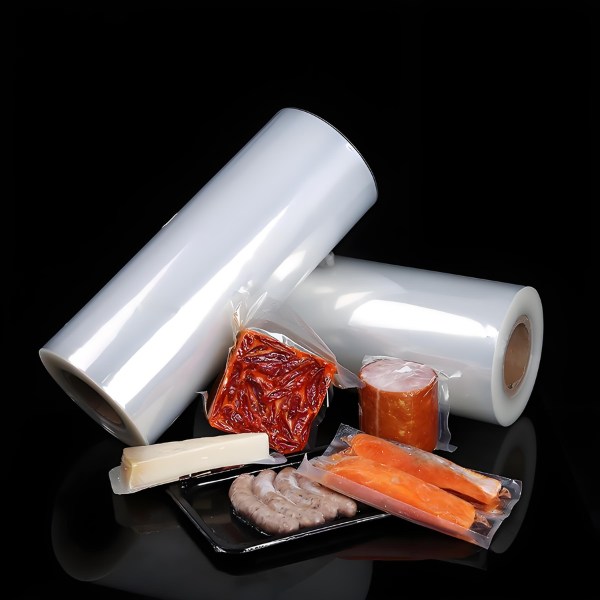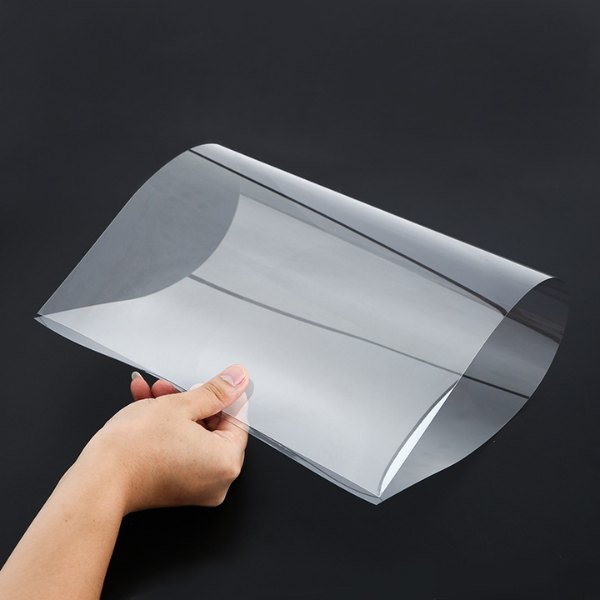
Modified atmosphere packaging works when the food, gas environment, packaging materials and storage conditions are designed together. For a film buyer, the practical task is to select a package that maintains suitable conditions throughout distribution, then demonstrate that performance with filled-product trials.
Start with the food and its failure modes. Define the required atmosphere, choose the package format, match the film and sealing surfaces, and validate the finished pack. Ordering a generic “MAP film” without those inputs leaves essential decisions unresolved.
This guide follows that purchasing sequence. It explains which questions belong in a film specification, how to separate material performance from sealing performance, and what evidence to collect before approving regular supply.

What Modified Atmosphere Packaging Means
Modified atmosphere packaging, usually shortened to MAP, changes the gaseous environment surrounding a product inside its package. In active MAP, equipment introduces a selected gas or mixture, commonly involving nitrogen, carbon dioxide and sometimes oxygen.
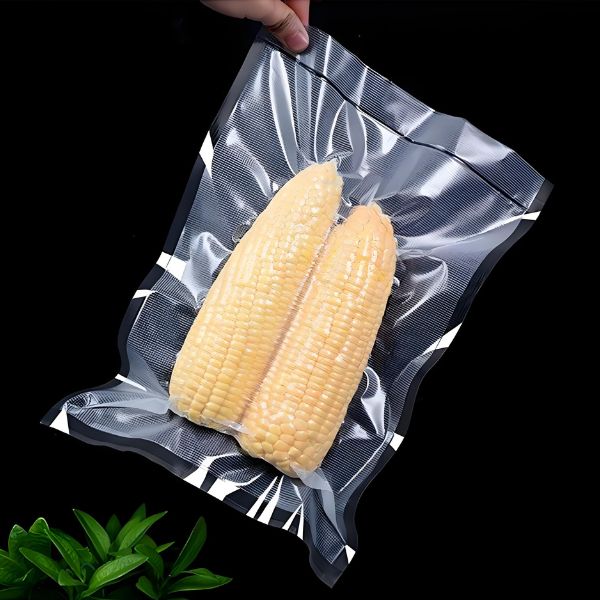
Vacuum packaging primarily removes air and commonly draws flexible material around the product. MAP can retain a defined headspace. A machine may evacuate a chamber before adding gas, but that processing step does not make the final gas-filled pack a vacuum pack.
Fresh produce can also develop a modified atmosphere through respiration interacting with gas transfer through the packaging. The target is a suitable balance over time. Gas flushing and permeability design may be used together, depending on the product and process.
MAP is therefore neither a single polymer nor a universal preservation recipe. Two transparent packs that look similar can require different gas transmission, sealing and mechanical properties.
Set the product objective first
Write down what currently limits saleable life: oxidation, microbial spoilage, discoloration, moisture change, texture loss, leakage or physical damage. More than one mechanism may matter. The selected atmosphere and packaging must address the relevant mechanisms without creating a different unacceptable condition.
MAP does not sterilize food. Temperature control, hygiene and the product’s food-safety controls remain necessary. Packaging qualification should involve the food producer’s technical team, with qualified laboratory support where needed; a film supplier’s data sheet cannot establish a safe shelf life alone.
Match the Atmosphere to the Food
Foods requiring restricted gas exchange
Many oxygen-sensitive foods need a structure that limits oxygen entry and retains the intended atmosphere. Depending on the food, carbon dioxide can inhibit some spoilage organisms, while nitrogen can displace air and help maintain package volume.
Gas composition still needs product-specific assessment. Carbon dioxide can dissolve in food, changing the amount remaining in the headspace. Oxygen may be deliberately included in certain fresh red-meat systems, so “remove all oxygen” is not a universal MAP specification.
Ask the food technologist and gas supplier to define the intended gas conditions, rather than copying a mixture from another product. Give the film supplier those requirements together with the storage profile and pack geometry.
Fresh produce requiring controlled exchange
Fruit and vegetables continue to respire after harvest. Their packaging may need sufficient oxygen entry and carbon dioxide release, through suitable film permeability or designed perforation. Selecting the strongest available oxygen barrier can be inappropriate for these products.
Produce type, preparation, fill weight and temperature all affect this assessment. A pack designed for whole produce should not automatically be approved for a cut version, and a different portion size may require a different gas-exchange design.
Turn the distinction into a purchase brief
Describe whether the package must restrict exchange or provide a validated exchange pathway. Then specify how the result will be checked. Appearance alone cannot confirm the correct route, and anti-fog performance does not demonstrate a suitable atmosphere.
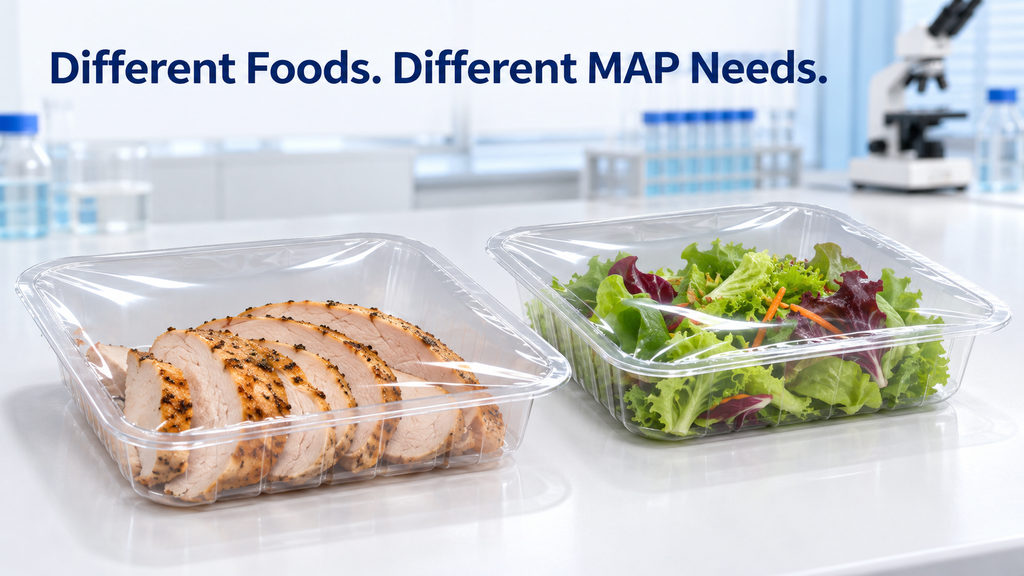
For example, a sliced cooked-food tray and a fresh-cut salad tray may both need clear lids. The former may prioritize gas retention; the latter requires respiration-aware design. Their shared appearance is not evidence that the same lid will work for both.
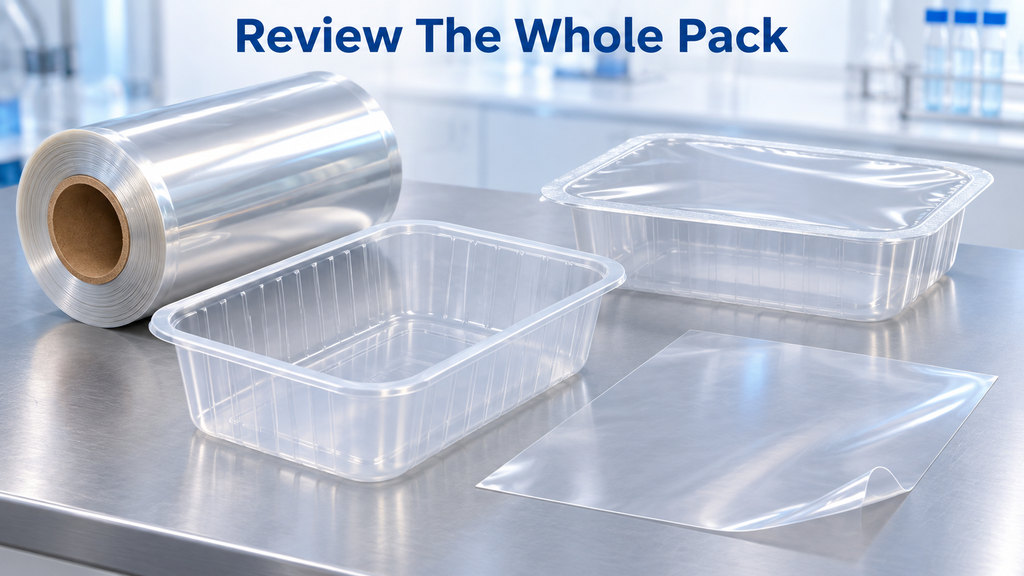
Specify the Complete Package Before the Film Grade
The film is one part of the gas-control system. Identify every material boundary and closure that separates the product from its environment. A barrier lid cannot compensate for an unsuitable tray, and a strong base film cannot compensate for an open seal channel.
Tray and lidding systems
Record the tray material, sealing surface, flange dimensions, rigidity and whether a coating or sealing layer is present. The surface contacting the lid matters more than the broad description “plastic tray.” Include the desired opening behavior: peelable, cut-open or another validated format.
CloudFilm’s peelable lidding film selection guide explains tray matching and opening requirements in more detail. Use it when assessing the lid interface; the MAP project still needs a separate assessment of gas retention and product life.
Thermoforming systems
Identify both the forming bottom web and the non-forming top web. Forming redistributes material, so corner thickness and post-form integrity matter. An incoming flat-film result should not be treated as proof of performance after the web has been drawn into cavities.
Use the thermoforming bottom-web specification guide to document cavity geometry and forming conditions. Keep the approved top-web pairing in the same project record so a later substitution does not silently change the package.
Pouches and flow-wrap packs
Specify the seal layout, gussets, folds, product clearance and any closure features. Check areas where several layers meet or the product may contaminate the sealing zone. Include orientation and winding details when the roll has different functional surfaces.
Headspace also belongs in the package drawing. Changing fill weight or tray depth changes the space available for gas and can alter product-to-gas interactions. Treat those changes as qualification inputs, not merely commercial adjustments to portion size.
Select Material Functions That Match the Project
Choose the functions first: oxygen or carbon dioxide barrier, moisture control, toughness, forming behavior, sealing, printing and visibility. Several functions may be combined in a laminate or coextrusion. The structure name alone does not define their performance.
PA and PE combinations
PA contributes toughness and gas-barrier support; PE commonly provides a sealing surface and moisture resistance. PA/PE film is a useful candidate where flexible packaging needs mechanical durability, but its suitability depends on the actual construction and application.
For forming projects, PE/PA/PE film can be evaluated as a bottom-web option. Confirm the supplier grade, sealing side and functional layers. Similar shorthand names can describe constructions with different processing behavior, and tie layers may be omitted from the shorthand.
Structures containing EVOH
When the gas-barrier requirement exceeds a simpler structure’s capability, an EVOH-containing construction may be appropriate. Evaluate the complete structure, including protective layers and humidity conditions, rather than transferring a resin’s laboratory value directly into a finished-pack specification.
CloudFilm’s co-extruded films provide a relevant starting point for discussing PA, EVOH, PE and related layer combinations. Ask for evidence for the proposed grade and intended process; the presence of EVOH alone is not an approval criterion.
Visibility and moisture behavior
Anti-fog treatments change how condensed moisture appears on a film surface. They do not remove moisture from the food or prove gas-barrier performance. Check their behavior under the actual chilled-display conditions, including the correct film-side orientation.
The anti-fog film guide covers those checks. Keep visibility requirements separate from atmosphere requirements in the specification so a clear-looking pack is not mistaken for a fully validated one.
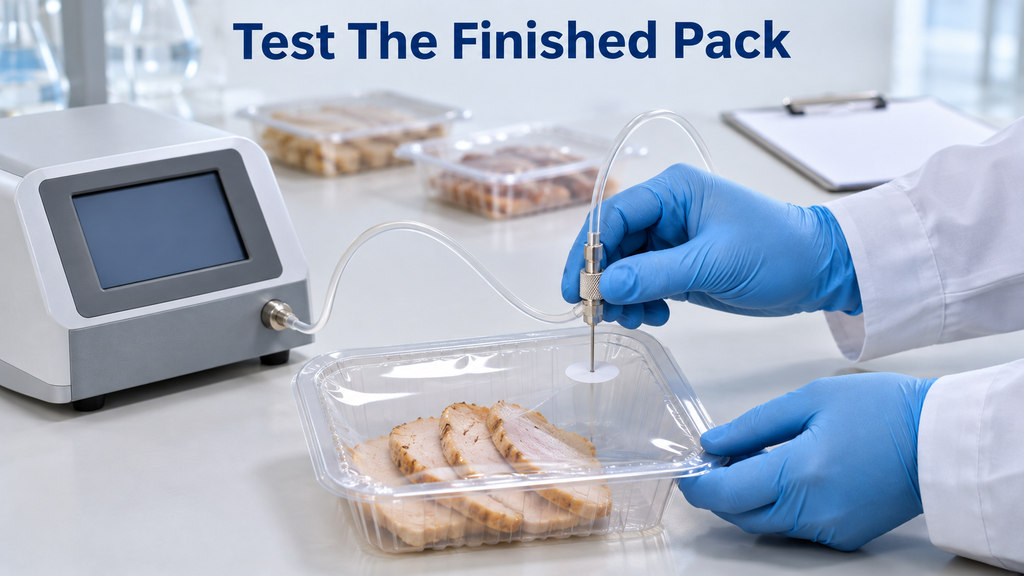
Read Barrier Data in Its Test Conditions
An oxygen transmission rate, or OTR, is meaningful only with its unit, method and test conditions. Compare the same basis: temperature, relative humidity, specimen thickness, orientation and whether the result describes flat film or a whole package.
Common film methods include ASTM D3985 and, for controlled-humidity measurement, ASTM F1927. They identify measurement approaches, not a universal MAP acceptance limit. Agree the appropriate method and conditions with the laboratory for the proposed structure.
Also identify whether a value is typical, a controlled range or a guaranteed specification. A typical development result should not become a contractual maximum simply because it appears on a quotation. Ask which finished grade and production stage the data represents.
For a detailed explanation of units and comparisons, use CloudFilm’s OTR testing and film selection guide. Keep the purchasing decision focused on the package’s actual gas-control requirement rather than selecting the smallest number in a supplier table.
Oxygen data does not describe every gas or moisture pathway. Where carbon dioxide retention or moisture transfer affects performance, request relevant additional data. For perforated structures, include the perforation specification and the conditions under which effective gas exchange was assessed.
Processing can also change the result. Identify whether testing should represent printing, lamination, forming, flexing or another relevant operation. The acceptance evidence should correspond to the material as used, including any process that can damage or redistribute a functional layer.
Qualify the Seal Separately From the Barrier
A well-specified barrier material can still fail at the seal. Build trials around the actual tray or opposing web, equipment, product and line conditions. Record temperature, pressure, dwell time and speed instead of approving a sample made under undocumented settings.
Establish a practical operating window. Check performance at intended production settings and relevant variations, including startup and restart conditions. If acceptable packs exist only at one fragile setting, investigate the material-machine pairing before increasing production volume.
Test realistic sealing-zone conditions. Product particles, fat, moisture, wrinkles and misalignment may affect the result. Do not intentionally accept contaminated seals; use representative challenges to understand the process’s limits and define controls that prevent unacceptable packs.
Strength and tightness answer different questions
Seal-strength testing measures resistance to separation and records failure behavior. ASTM F88/F88M is a commonly referenced method. A high separation force does not, by itself, establish the absence of a narrow channel or another leak elsewhere in the pack.
Leak testing evaluates package integrity using a method suited to the construction and the defect of concern. Bubble, pressure-based and tracer-gas approaches have different limitations. Ask the laboratory to document the method’s sensitivity and controls rather than calling any passing result “leak-free.”
Peelable packs need an opening range as well as closure integrity. Record whether opening causes film tearing, delamination, an irregular peel or product splash. A stronger seal is not automatically a better result when consumers must peel the lid.
Validate Filled Packs Across the Intended Shelf Life
Use a written protocol agreed before the trial. Define what will be measured, which results constitute acceptance, who owns the decision and what happens when a result falls outside the agreed limit. Testing becomes much more useful when those decisions precede the samples.
Stage 1 Establish the starting condition
Run the intended food, fill weight, package and atmosphere on representative equipment. Identify material lots and machine settings. Include samples that represent relevant lanes, cavities and production stages, rather than selecting only the best-looking packs from a short stable run.
Measure initial headspace composition at a defined interval after sealing. The gas supplied to the machine and the gas actually left in a package are different control points. Residual air, filling conditions and product interaction can affect the measured starting condition.
Headspace analyzers may withdraw gas through a needle and septum. Confirm that sampling volume, sensor suitability and procedure fit the package. Small headspaces need particular attention; the measurement itself can disturb the sample or introduce an error if the method is unsuitable.
Stage 2 Follow the atmosphere and package condition
Schedule observations through the proposed storage period, including the intended end point. Use documented storage conditions and relevant distribution handling. Evaluate credible temperature variation through a controlled study designed by the food technical team, not by casually leaving trial food unrefrigerated.
Record gas composition alongside appearance, package shape, seals and product condition. Use separate packs for destructive measurements unless a validated protocol permits another approach. An opened or punctured package should not silently return to the untouched storage group.
Stage 3 Connect package results to food results
Agree product-specific quality and safety assessments. These may include microbiological testing, sensory criteria, discoloration, texture, moisture loss or oxidation measures. Select the relevant endpoints with qualified specialists; an acceptable gas reading alone does not prove acceptable food.
Likewise, do not approve shelf life from photographs alone. A package can remain visually attractive while another endpoint fails. Review the combined evidence before setting a commercial storage claim or accepting a film change.
Stage 4 Release a controlled specification
Once the system passes, record the approved material grade, structure, tolerances, pack drawing, sealing window, storage profile and test methods. Include the supporting reports and agreed incoming checks. Keep a retained sample or other reference suitable for later comparison.
The trial record below is a working template. Fill in project-specific values and limits; the blank fields are decisions to resolve, not permissions to skip testing.
| Record group | Information to capture | Decision it supports |
| Food and pack | Product state, fill weight, dimensions, headspace, tray and film grades | Whether the trial represents the intended product |
| Process | Material lots, machine, cavity or lane, gas supply, sealing settings, speed | Whether a result can be traced and reproduced |
| Starting checks | Sampling time, headspace gases, seal result, leak method and result | Whether the package begins within agreed limits |
| Storage checks | Time, temperature history, gas readings, package condition, product endpoints | Whether protection continues through the intended period |
| Approval | Deviations, investigation, limits, responsible approver and revision | Whether commercial supply may proceed |
Investigate Gas Drift Before Changing the Film
An unexpected gas reading is a finding to investigate, not a diagnosis. Compare it with the starting result, storage history and other packs from the same trial. Confirm the measuring method before attributing the change to material quality.
| Observation | Possibilities to investigate | Useful comparison |
| Initial gas result outside target | Gas supply, flushing or evacuation, residual air, sampling error | Supply check versus immediate pack measurements |
| Oxygen rises during storage | Leaks, permeation, damaged material, changed storage conditions | Integrity results, package location and temperature history |
| Carbon dioxide falls or pack collapses | Dissolution into food, gas transfer, leakage, changed headspace | Product and gas-volume records alongside integrity checks |
| Pack swells unexpectedly | Gas formation, temperature effects or another product/process change | Food assessment and handling history, not appearance alone |
| Failures cluster by lane or corner | Tooling, alignment, local forming damage or sealing variation | Location-specific records rather than an overall average |
These observations can have multiple causes. A collapsed pack does not automatically prove a hole, and a low oxygen reading does not automatically prove that no oxygen entered: the product may consume oxygen. Interpret gas trends together with package and food measurements.
Unexpected swelling or suspected food deterioration requires assessment under the producer’s quality and food-safety procedures. Changing film thickness alone is not an adequate corrective action without identifying the cause and verifying the revised system.
Preserve failed samples and their history where practical. Photographs, batch identification, timing and the location of a defect help separate a random handling event from a repeating process problem. Change one investigated factor at a time when the trial design allows meaningful comparison.
Prepare a Film Enquiry That Can Produce a Useful Offer
Begin with a short application brief: what food is packed, its condition at filling, package format, target shelf life, storage conditions and current problem. Attach a pack drawing or existing sample where available. This gives the supplier a usable starting point.
Then add the technical information already established: approved atmosphere requirements, tray or opposing web, current structure, roll width, thickness, core, maximum roll diameter, winding direction and printing needs. Mark uncertain fields as open questions rather than supplying guessed values.
Commercial information should include trial quantity, expected recurring volume, destination market and required documentation. Food-contact suitability must match the complete proposed construction and intended use, including relevant inks, adhesives or coatings where applicable. A generic company certificate is not a substitute for that assessment.
Compare offers on the same agreed basis. Include trial costs, usable yield, stoppages, rejected packs and evidence requirements, as well as price per kilogram. A cheaper film that changes the sealing window or fails the validated package requirement may cost more in operation.
Ask for an agreed change-notification process. A resin, coating, layer ratio, additive or manufacturing change may affect the qualified design even when nominal thickness stays constant. Decide what requires review or renewed testing before accepting future substitutions.
Frequently Asked Questions
1 Can the same MAP film be used for a different pack size
Possibly, but do not assume approval transfers. Surface area, headspace, fill weight, seal geometry and forming strain can change. Review those differences against the original qualification and decide which tests must be repeated.
2 Can a printed version replace the clear trial film
Treat printing or lamination as a change to assess. Check the finished construction, sealing surfaces, curing requirements where applicable, food-contact documentation and relevant package performance. Approval of an unprinted base film does not automatically cover every converted version.
3 Can a recyclable-oriented structure replace the current laminate
It can be evaluated against the same atmosphere, sealing and product requirements. Verify recycling claims separately for the complete structure and target market. A different material route must demonstrate the required packaging performance before commercial substitution.
4 What if we do not have in-house gas or leak testing
Agree a plan with a qualified laboratory, equipment provider or other suitable technical partner before the trial. Confirm sample handling, test timing, methods and reporting responsibilities. Outsourcing measurement does not remove the need for a clear approval decision.
Discuss Your MAP Film Project With CloudFilm
CloudFilm can discuss relevant film structures and trial requirements for your packaging project. Share your food type, package format, storage profile, current construction and purchasing quantity through CloudFilm’s enquiry page.
Use that discussion to shortlist materials for testing. Final approval should connect the film, matching package components, production settings and filled-product results, so routine orders reproduce a defined packaging system rather than only a material name.