Introduction
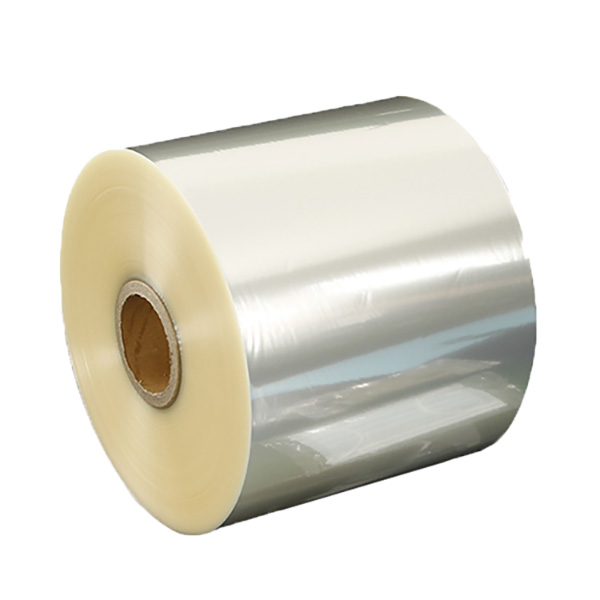
BOPP anti fog film and CPP anti fog film are both used to keep food packaging clear when moisture and temperature changes would normally create fog inside the pack. They are common in fresh produce, salad, mushrooms, chilled meat, seafood, bakery and ready-meal packaging.
However, they are not the same material. BOPP is biaxially oriented polypropylene, while CPP is cast polypropylene. Both belong to the polypropylene family, but their production processes create different performance profiles.
For packaging buyers, the real question is not simply “Which film is better?” The better question is: Which anti fog film is more suitable for my product, packing machine, sealing condition, packaging format and cost target?
This guide compares BOPP anti fog film and CPP anti fog film from a practical buying perspective.
For buyers who need BOPP-based clarity and stiffness, CloudFilm supplies BOPP Anti Fog Film for fresh produce, salad, meat, bakery and chilled food packaging.
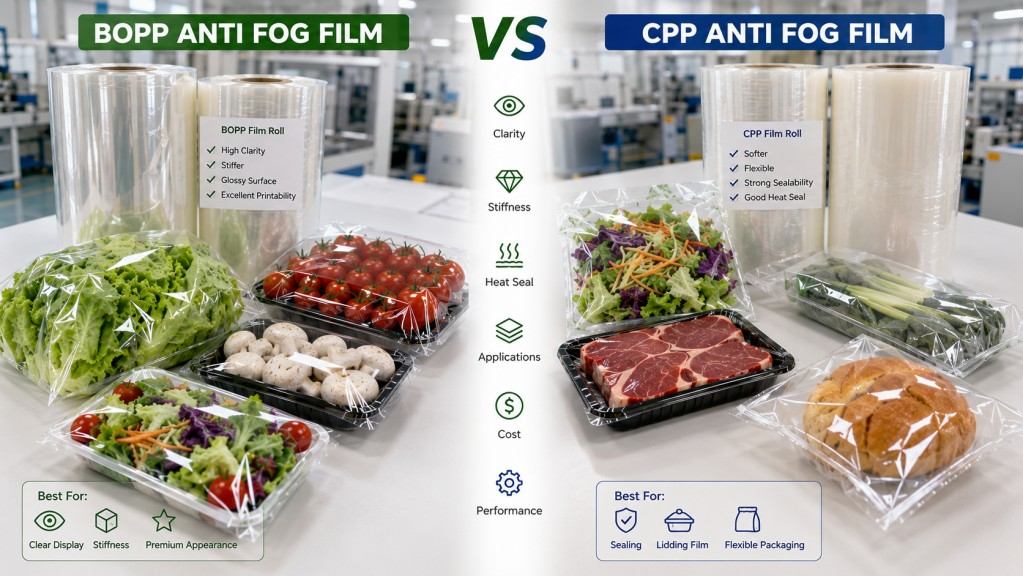
Quick Comparison Table
| Item | BOPP Anti Fog Film | CPP Anti Fog Film |
|---|---|---|
| Material | Biaxially oriented polypropylene | Cast polypropylene |
| Feel | Stiffer, crisper | Softer, more flexible |
| Clarity | High clarity and gloss | Good clarity, softer appearance |
| Heat sealing | Needs heat-sealable grade | Naturally strong sealability |
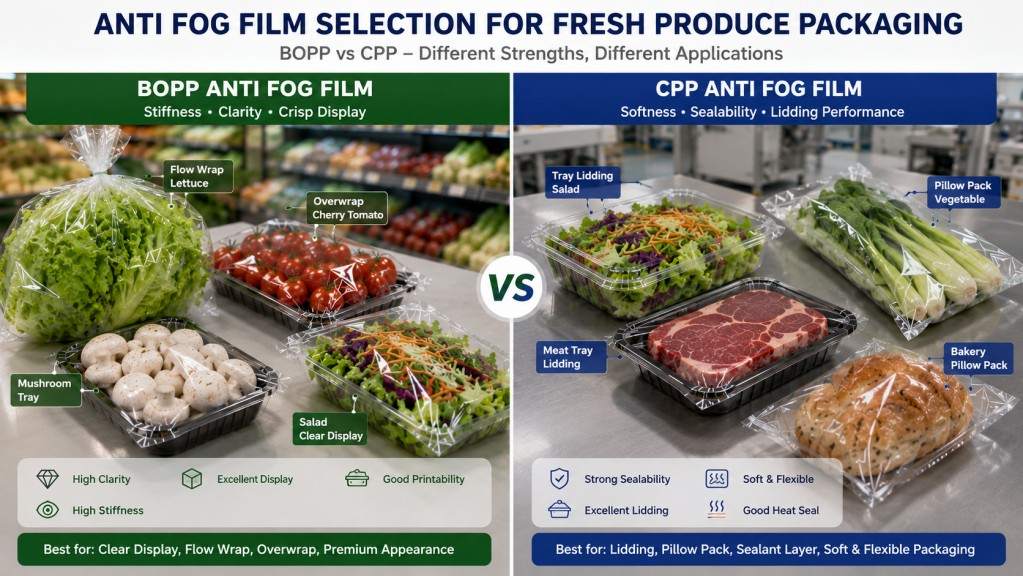
| Common role | Flow-wrap, overwrap, clear display packaging, printed structures | Lidding film, pillow packs, sealant layer, softer packs |
| Fresh produce use | Excellent for clear display and pack shape | Excellent for sealing, lidding and flexible packs |
| Machine performance | Good stiffness and runnability on flow-wrap lines | Good sealing and flexibility on various packing lines |
| Best for | Products needing clear appearance, stiffness and dimensional stability | Products needing softness, seal strength or tray lidding performance |
This table is only a starting point. Final material selection should be based on real product trials.
What Is BOPP Anti Fog Film?
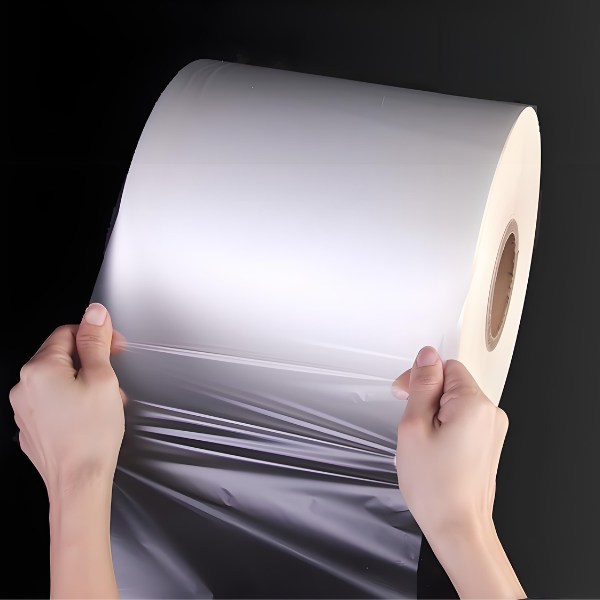
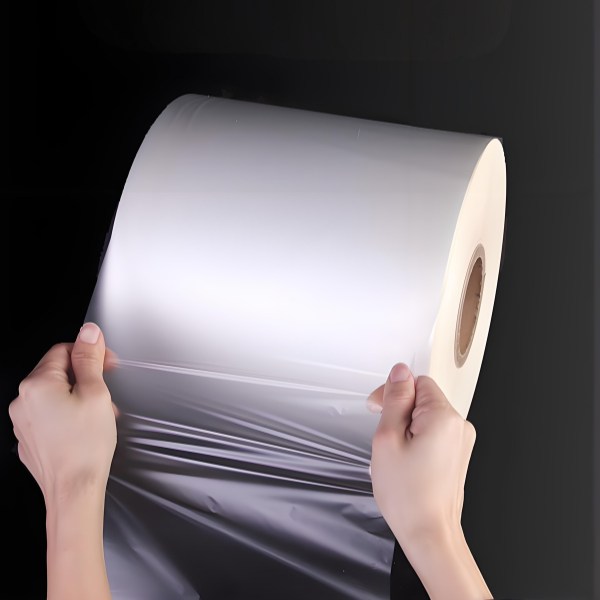
BOPP anti fog film is a biaxially oriented polypropylene film with anti-fog functionality. The film is stretched in two directions during production, which gives it better stiffness, clarity, gloss and dimensional stability.
The anti-fog function helps condensed moisture spread more evenly on the film surface instead of forming visible water droplets. This keeps the pack clearer in refrigerated display cabinets, cold-chain logistics and humid conditions.
BOPP anti fog film is commonly used for:
- Fresh vegetables
- Mushrooms
- Fresh fruit
- Salad mixes
- Chilled meat
- Seafood
- Bakery items
- Sandwiches
- Ready meals
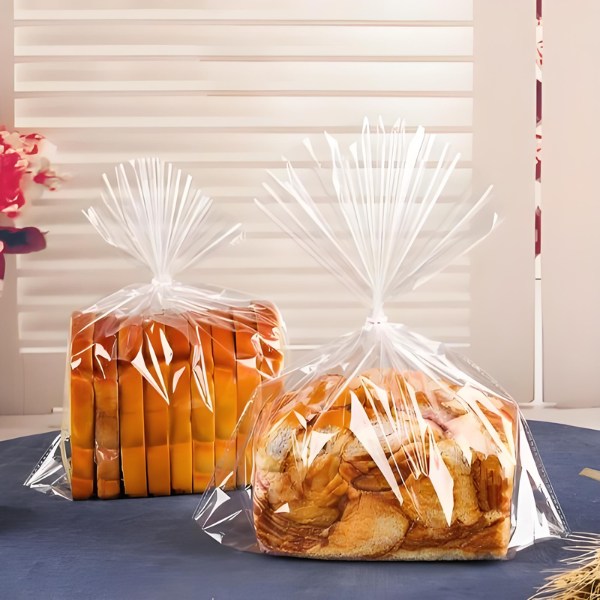
- Fresh product flow-wrap packs
If your package needs a clear, glossy and neat appearance, BOPP anti fog film is often a strong option.
For a wider view of BOPP grades, buyers can also review CloudFilm’s BOPP Film range.
What Is CPP Anti Fog Film?
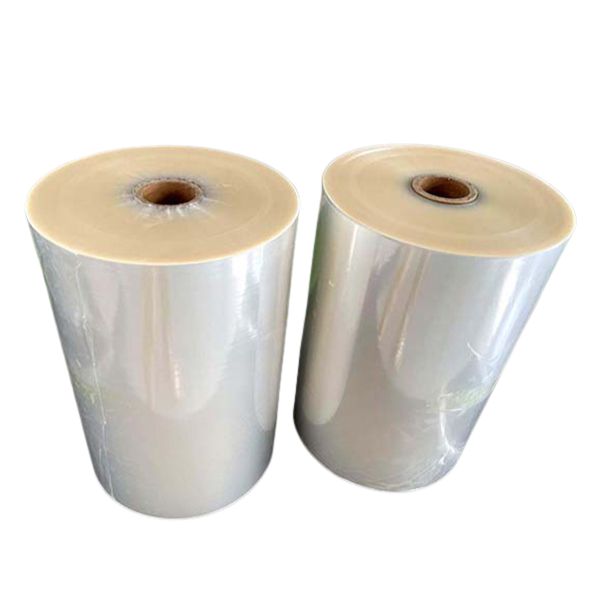
CPP anti fog film is cast polypropylene film with anti-fog treatment. Unlike BOPP, CPP is not biaxially oriented. It is produced by casting molten polypropylene onto a chill roll, creating a film that is softer, more flexible and generally easier to heat seal.
CPP anti fog film is often selected when packaging needs strong sealing, softness, lidding performance or better flexibility.
It is commonly used for:
- Fresh vegetable pillow packs
- Fruit trays
- Salad lidding film
- Chilled ready-meal trays
- Bakery flow-wrap packs
- Frozen vegetables
- Sausage and ready-to-cook food packaging
- Tray lidding applications
For buyers who need softer film behavior and strong sealing performance, CloudFilm’s CPP Anti Fog Film page provides a more specific product reference.
Clarity And Shelf Display
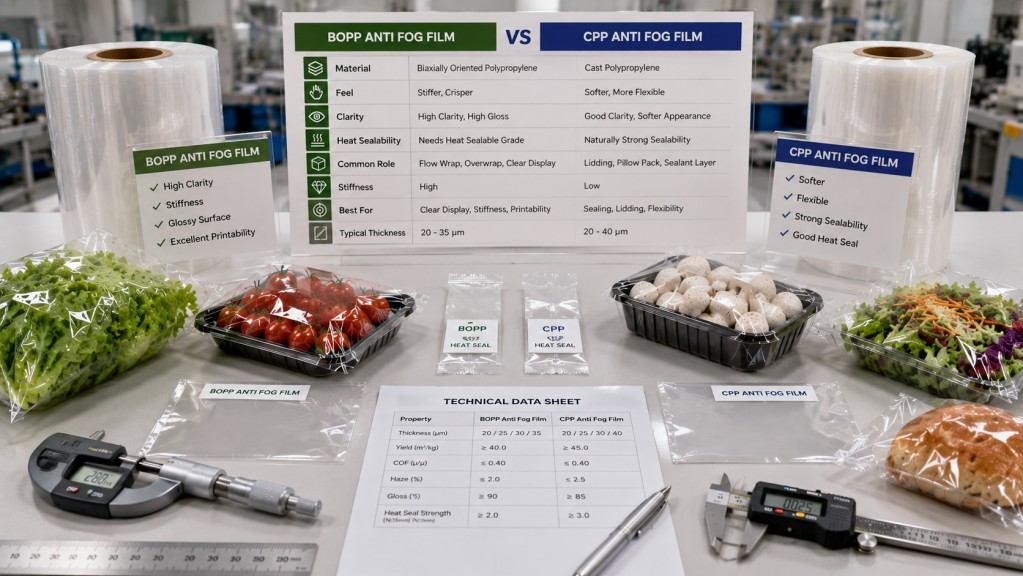
BOPP anti fog film usually has a stronger visual advantage when the package needs high gloss, crisp presentation and a premium clear window. This is useful for retail fresh produce packs where consumers judge freshness by color and appearance.
For example, packed lettuce, cherry tomatoes, mushrooms and fresh-cut fruit need a clear package surface. If the film looks cloudy, the product may appear old or wet even when it is fresh.
CPP anti fog film can also provide good product visibility, but its visual feel is usually softer. It may not look as crisp as BOPP, but it performs well when the package needs flexibility or strong sealing.
Practical choice:
Choose BOPP anti fog film when shelf appearance, stiffness and glossy clarity are the priority. Choose CPP anti fog film when clear visibility is needed but sealing and flexibility are more important.
Stiffness And Pack Shape
One of the biggest differences between BOPP and CPP is stiffness.
BOPP anti fog film is stiffer. It helps the pack keep a neat shape during packing, handling and retail display. This is useful for flow-wrap packs, overwraps and clear bags where appearance matters.
CPP anti fog film is softer. This can be helpful when the film needs to conform to the product, seal well around the pack, or work as a lidding or inner sealing layer.
For large or irregular products, a softer film may be easier to use. For products that need a flat, crisp, retail-ready appearance, BOPP may perform better.
Heat Sealing Performance
Heat sealing is one of the most important buying factors.
BOPP itself is not naturally as easy to seal as CPP, so packaging buyers should choose heat sealable BOPP anti fog grades when the film needs to be sealed directly. The sealing window, hot tack, sealing jaw temperature, pressure and dwell time must be checked during machine trials.
CPP has a natural advantage in heat sealing. CPP anti fog film usually provides strong sealability and good flexibility, making it suitable for lidding, pillow packs and sealant-layer applications.
For buyers comparing sealing behavior, CloudFilm’s Heat Sealable BOPP Film page can help explain how BOPP heat-sealable structures are used in packaging.
Practical choice:
If your main problem is weak sealing or poor lidding performance, CPP anti fog film may be easier to start with. If your main goal is a glossy, stiff, clear pack with direct sealing, heat sealable BOPP anti fog film may be suitable.
Flow-Wrap, Pillow Pack And Lidding Applications
Flow-Wrap Packaging
For horizontal flow-wrap packaging of vegetables, salad, bakery and sandwiches, both BOPP and CPP anti fog films can be used.
BOPP anti fog film is useful when the pack needs higher stiffness and a clean retail appearance. CPP anti fog film is useful when the pack needs more softness and sealing comfort.
Pillow Packs
For pillow packs, CPP anti fog film can be a strong option because of its sealing performance and flexibility. BOPP anti fog film can also work if the correct heat sealable grade is selected.
Tray Lidding
For tray lidding, CPP anti fog film often has advantages because it can seal well and conform to tray edges. It is widely used for salad trays, fruit trays and chilled food trays.
BOPP anti fog film may be used in some lidding or overwrap applications, but it should be tested with the actual tray material, sealing temperature and line speed.
For buyers working with trays, lidding or broader food pack structures, CloudFilm’s Food Packaging Film page provides a wider material selection view.
Printing And Lamination
BOPP is often selected as an outer web because it provides stiffness, printability and dimensional stability. If the anti fog film also needs branding, printed graphics or lamination, a structure such as one-side anti-fog plus one-side corona-treated BOPP can be considered.
CPP is often used as a sealing layer in laminated structures. It can also be used in printed or laminated packs, but its most common role is usually related to sealing, flexibility and inner-layer performance.
For more detailed material comparison, buyers can read CloudFilm’s BOPP Vs CPP Film Guide.
Moisture, Breathability And Fresh Food Behavior
Fresh produce packaging is not only about preventing fog. It also needs to consider product respiration, moisture release, perforation, gas exchange and shelf life.
BOPP anti fog film can provide a clear and attractive pack while helping maintain product visibility. For some fresh vegetables and mushrooms, optional perforation may be needed to support respiration.
CPP anti fog film can provide good sealing and flexibility. It may be useful for lidding and packs that need softer handling.
Neither film should be selected only by material name. The better approach is to match the film to:
- Product moisture level
- Storage temperature
- Packing speed
- Tray or bag format
- Required shelf life
- Seal strength requirement
- Anti-fog side direction
- Roll width and winding direction
If you need custom roll specifications, CloudFilm’s Packaging Film Roll page can help buyers prepare quotation details.
Cost And Supply Considerations
Cost depends on thickness, width, structure, order quantity, treatment, customization and delivery terms.
In many projects, CPP anti fog film may be more cost-effective when the application mainly needs sealing and flexibility. BOPP anti fog film may provide better value when the pack needs premium clarity, stiffness, printability and better shelf presentation.
For international buyers, price alone should not be the only decision factor. A professional manufacturer or supplier should help confirm:
- Film structure
- Thickness
- Anti-fog side
- Heat-seal side
- Corona side
- Roll width
- Roll length
- Core size
- Packing method
- Food-contact documents
- Sample availability
- Trial roll options
- Export packing
A lower film price can become expensive if the film runs poorly on the machine or causes sealing failure.
How To Choose Between BOPP And CPP Anti Fog Film
Use the following simple rule:
Choose BOPP anti fog film if you need:
- Higher stiffness
- Better glossy appearance
- Stronger retail display effect
- Clear flow-wrap or overwrap packaging
- Good printability or lamination options
- A crisp pack shape
Choose CPP anti fog film if you need:
- Stronger heat sealing
- Softer film feel
- Better flexibility
- Tray lidding performance
- Pillow pack sealing comfort
- A sealant-layer function in laminates
Choose a combined structure if you need both stiffness and sealing performance. In some laminated packaging, BOPP can work as the outer layer while CPP works as the inner sealant layer.
For broader flexible food packaging formats, you can also review CloudFilm’s Flexible Food Packaging guide.
FAQ About BOPP Anti Fog Film Vs CPP Anti Fog Film
1. Which is clearer, BOPP anti fog film or CPP anti fog film?
BOPP anti fog film usually provides a glossier and crisper visual appearance. CPP anti fog film can also be clear, but its appearance is generally softer.
2. Which film has better sealing performance?
CPP anti fog film usually has stronger and easier heat sealing. BOPP anti fog film needs a heat sealable grade if it is used for direct sealing.
3. Which film is better for salad tray lidding?
CPP anti fog film is often a strong choice for salad tray lidding because it seals well and has good flexibility. Final selection still depends on tray material and sealing conditions.
4. Which film is better for flow-wrap vegetables?
Both can work. BOPP anti fog film is better when stiffness and clear retail appearance are important. CPP anti fog film is better when softness and sealing comfort are more important.
5. Can BOPP and CPP anti fog films be laminated together?
Yes. In some structures, BOPP can provide stiffness and printability, while CPP provides heat sealing. The anti-fog side must be designed correctly.
6. Which film is more suitable for printing?
BOPP is often preferred for printing and outer web applications because of its dimensional stability and surface treatment options.
7. Which film is more flexible?
CPP anti fog film is more flexible and softer than BOPP anti fog film.
8. Which film is better for mushrooms?
Both can be used. If the pack needs a crisp and clear display, BOPP may be suitable. If the pack needs stronger sealing or lidding performance, CPP may be better.
9. Which film is better for meat and seafood packaging?
It depends on the packaging format. BOPP can improve clear appearance, while CPP can support sealing and lidding. Chilled meat and seafood may also need additional barrier considerations.
10. What information should I provide before asking for a quotation?
Provide product type, packaging format, thickness, roll width, roll length or roll weight, sealing method, anti-fog side, storage temperature, target shelf life, quantity and destination.
11. Can I test samples before bulk order?
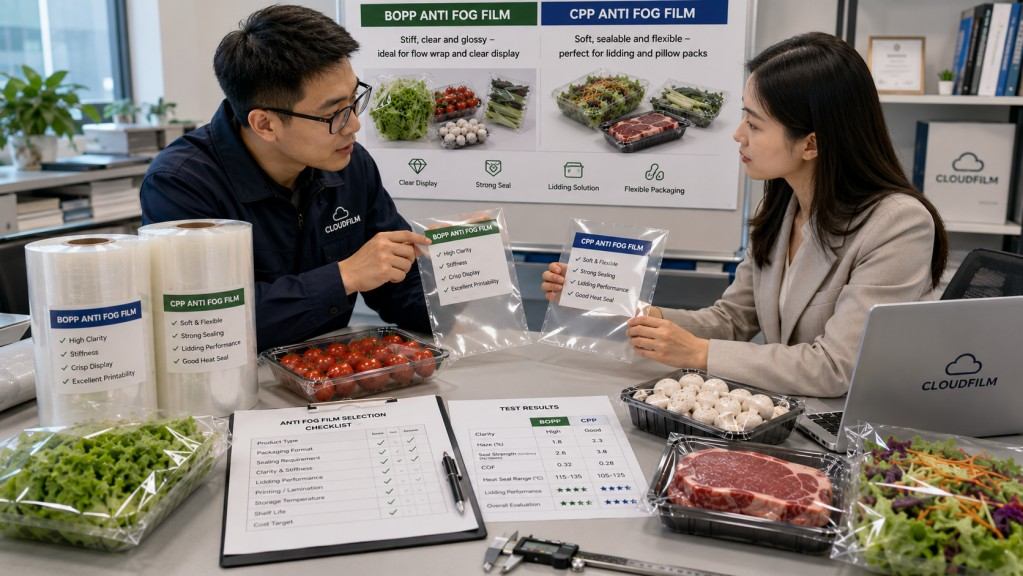
Yes. Sample testing is strongly recommended. Buyers should test clarity, anti-fog effect, sealing performance, roll running and pack appearance on their own equipment.
12. How do I choose a reliable supplier?
Choose a supplier that can provide both material options, technical guidance, samples, food-contact documents, custom roll specifications and export support. CloudFilm can support both BOPP and CPP anti fog film projects. You can Contact CloudFilm for samples or a custom quotation.
Conclusion
BOPP anti fog film and CPP anti fog film solve similar packaging problems, but they are suitable for different priorities.
BOPP anti fog film is usually better when the pack needs high clarity, gloss, stiffness, printability and a neat retail appearance. CPP anti fog film is usually better when the pack needs strong heat sealing, softness, flexibility and tray lidding performance.
For fresh produce, salad, mushrooms, bakery, chilled meat and seafood packaging, the best choice depends on the real product and machine conditions. The safest approach is to compare samples, test on the actual line and confirm the film structure before bulk order.
A capable packaging film supplier should not only sell one film type. It should help buyers choose the right anti fog film based on product moisture, packing format, sealing requirement, storage temperature and total packaging cost.