Introduction
The packaging market is no longer just about putting a product into a bag, bottle, tray, or box. Today, packaging plays an important role in product protection, transportation, shelf presentation, user convenience, and brand value.
For food companies, beverage brands, personal care businesses, medical suppliers, and industrial manufacturers, packaging is now closely connected with product quality and market performance. A good packaging solution can help protect the product, improve appearance, support transportation, and create a better experience for the end user.
Because of this, the packaging market continues to grow and change. Different industries require different materials, structures, and packaging formats. At the same time, many buyers are paying more attention to quality, sustainability, functionality, and supplier reliability.
This guide explains the packaging market from a practical business and product point of view. It covers the main market drivers, common packaging materials, popular packaging formats, sustainability trends, and the key points buyers should consider when choosing a packaging supplier or manufacturer.
What Is the Packaging Market?
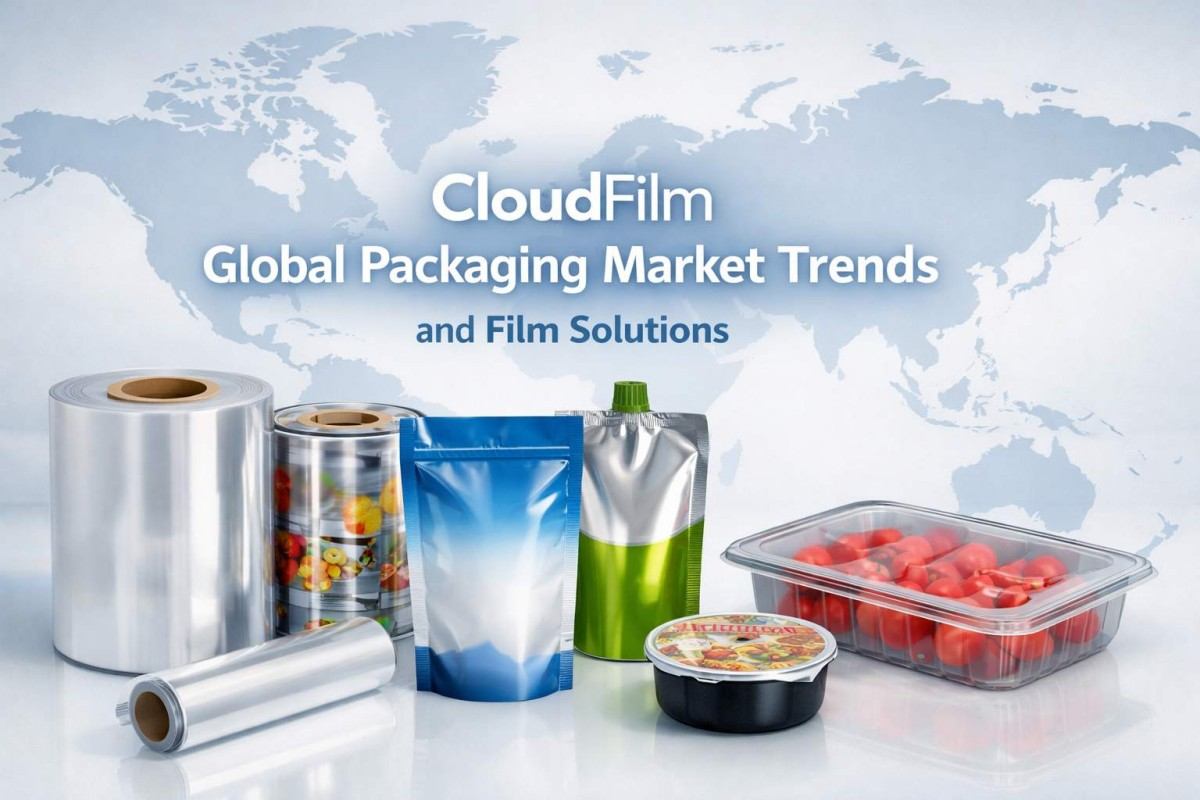
The packaging market includes all materials, products, processes, and suppliers used to pack, protect, transport, display, and sell goods. It covers a wide range of industries, such as food, beverage, healthcare, cosmetics, agriculture, electronics, and industrial products.
Packaging can be divided into several broad categories:
- flexible packaging
- rigid packaging
- paper packaging
- plastic packaging
- metal packaging
- glass packaging
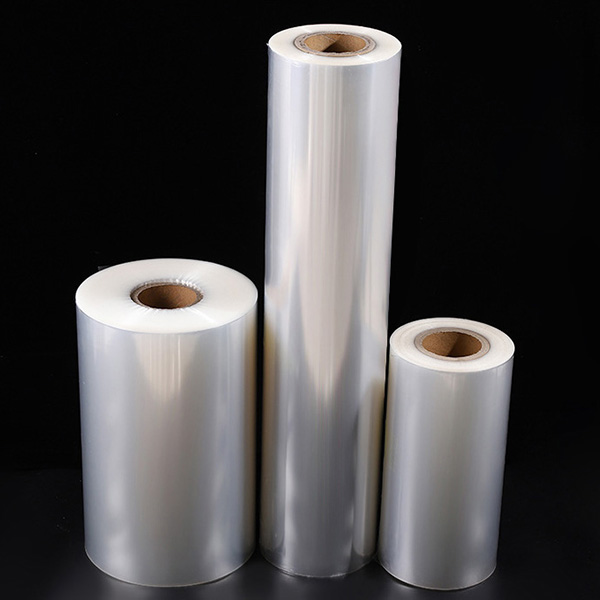
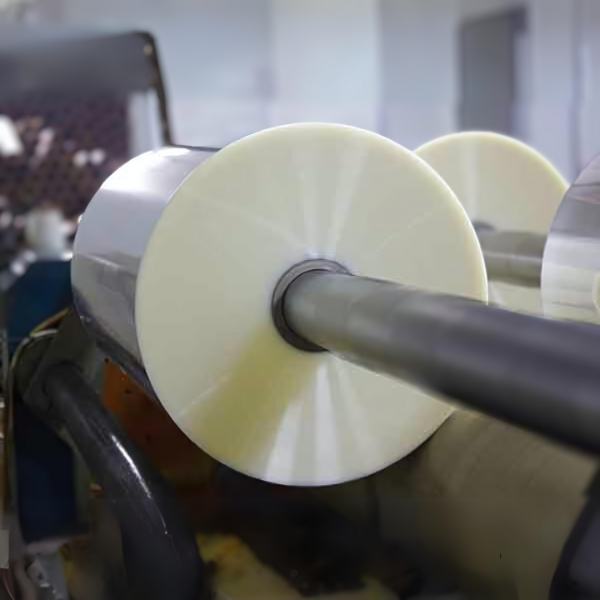
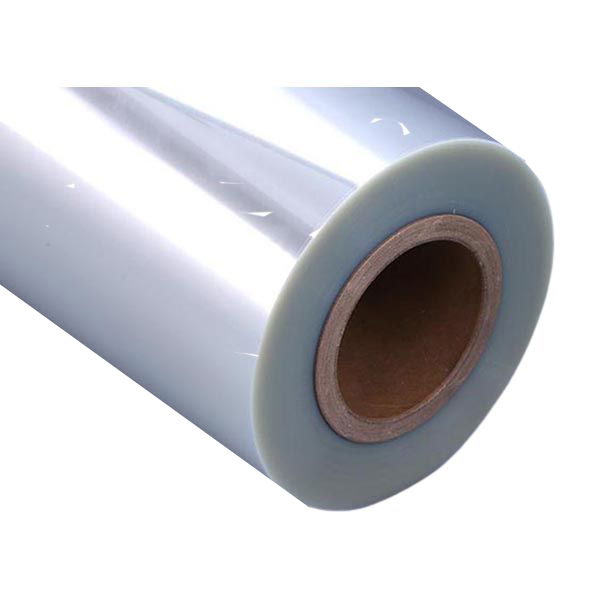
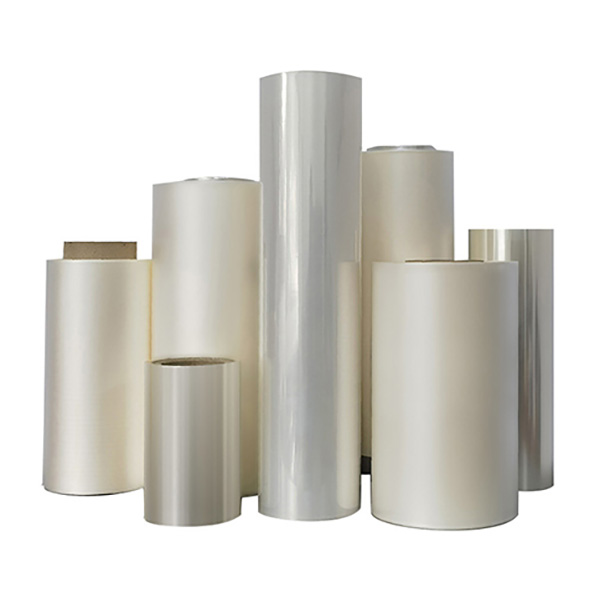
Among these, flexible packaging has become one of the most important segments because it combines light weight, strong printing performance, good sealing, and efficient transportation.
In simple terms, the packaging market is not only about packaging materials. It is also about how those materials are designed, converted, printed, laminated, sealed, and delivered for real product use.
What Is Driving the Packaging Market?
Several factors are shaping the packaging market today.
1. Product Protection Remains the Core Need
No matter how packaging trends change, product protection remains the first function of packaging. A package must protect the contents from moisture, oxygen, light, contamination, impact, and handling damage.
For example, dry foods need protection from moisture. Vacuum-packed meat may need strong puncture resistance and good oxygen barrier. Liquids need safe sealing and leak prevention. Medical and industrial products may require clean, stable, and highly reliable packaging structures.
Because products have different protection needs, the market continues to demand many packaging materials and structures.
2. Consumer Expectations Are Rising
Modern consumers expect packaging to do more than simply hold a product. They want packaging that looks attractive, feels convenient, opens easily, closes well when needed, and supports product freshness.
This is why packaging design now influences not only product safety but also shelf performance and user experience.
3. Transportation and Logistics Matter More Than Before
As supply chains become more global, packaging must also support efficient transportation and storage. Lightweight packaging can help reduce shipping cost. Strong packaging can reduce damage during handling. Efficient packaging formats can improve pallet loading and warehouse use.
For many exporters and manufacturers, packaging is closely linked to logistics performance.
4. Sustainability Is Changing Material Choices
Many brands and buyers are reviewing packaging materials more carefully than before. They want to reduce unnecessary material use, improve recyclability where possible, and explore structures that better fit long-term sustainability goals.
This does not mean every package must use the same material or follow the same path. It means that packaging decisions are increasingly influenced by resource efficiency, recyclability, and realistic environmental performance.
Why Flexible Packaging Continues to Grow
Flexible packaging has become a major part of the packaging market because it offers a useful balance of performance, appearance, and efficiency.
Compared with many rigid formats, flexible packaging often uses less material and takes less space before filling. It can also be converted into many forms, including pillow bags, three-side-seal pouches, stand-up pouches, spout pouches, lidding films, shrink films, and printed rollstock.
This flexibility makes it suitable for many different markets, such as:
- snacks and dry food
- frozen food
- coffee and tea
- sauces and liquids
- personal care products
- household products
- medical and industrial applications
A well-designed flexible package can offer strong print quality, good sealing, useful barrier performance, and efficient shipping at the same time.
This is why many companies choose flexible packaging solutions when they want packaging that combines product protection, branding, transport efficiency, and production practicality.
Main Materials in the Packaging Market
Different materials serve different functions. In flexible packaging, some materials appear again and again because they offer proven performance for a wide range of applications.
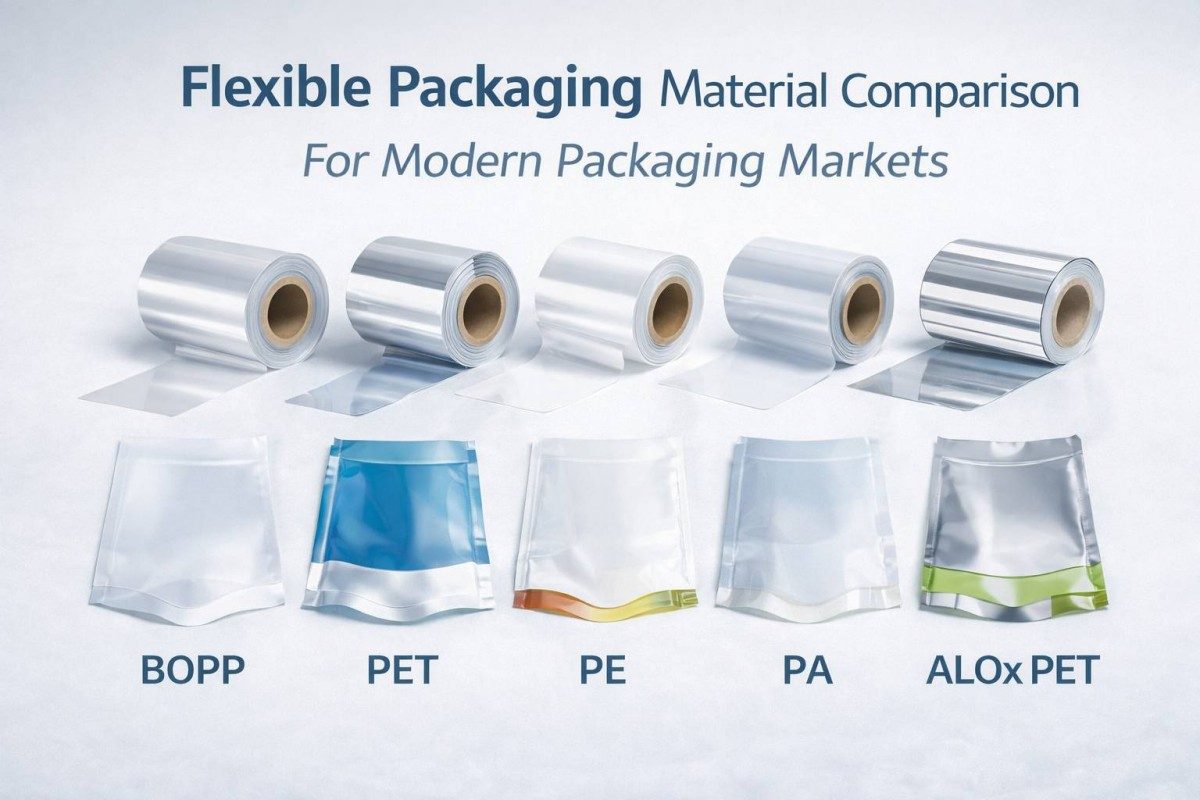
BOPP Film
BOPP is one of the most widely used materials in flexible packaging. It is known for its clarity, printability, stiffness, and cost performance. It is often used for snacks, bakery products, confectionery, labels, overwraps, and many dry food applications.
Depending on the requirement, BOPP can be supplied in different versions, such as gloss film, matte film, heat seal film, anti-fog film, pearlized film, metalized film, and coated film. You can explore more options in CloudFilm’s BOPP film range.
BOPP is often chosen when the package needs good visual appearance, stable converting performance, and practical cost control.
PET Film
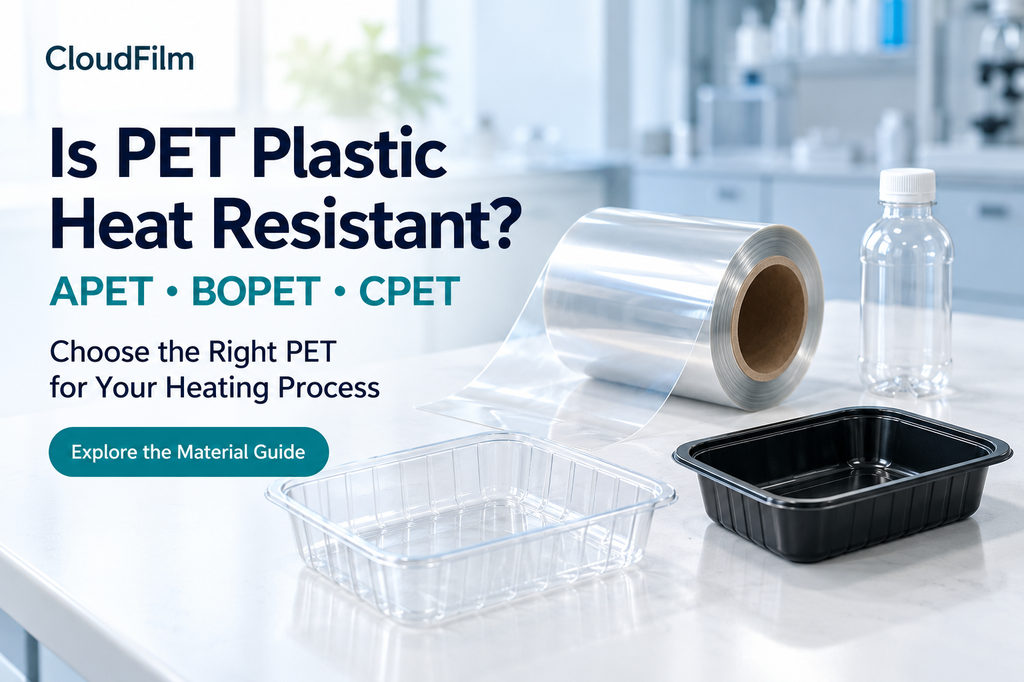
PET is another very important packaging material. It is often used as the outer layer in laminated structures because of its strength, print surface, dimensional stability, and heat resistance.
PET is widely used in food packaging, medical packaging, and industrial packaging. It performs well when the package needs a more stable outer web and a premium printing surface.
A common example is PET/PE film, which combines the structural and print advantages of PET with the sealability of PE.
PE Film
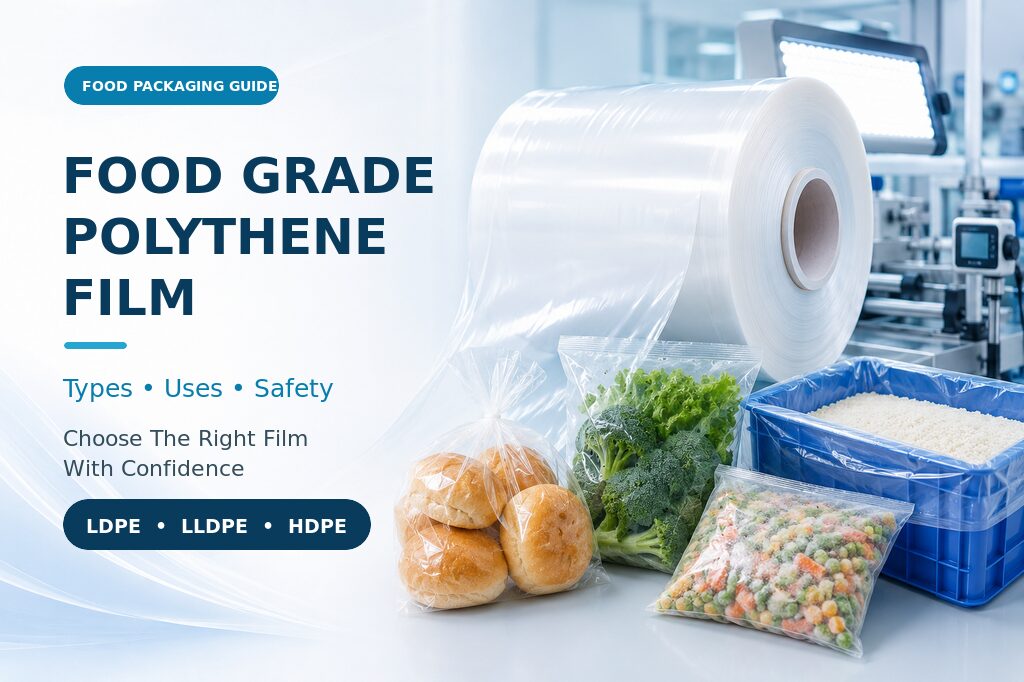
PE is one of the most common sealing materials in the packaging market. It is valued for its flexibility, softness, seal performance, moisture resistance, and toughness.
PE is widely used as the inner layer in laminated structures, but it is also important in mono-material packaging design. As more companies look at simplified packaging structures, PE has become even more important.
For a broader understanding of this material, see PE packaging film.
PA Film
PA, often called nylon, is used in packaging applications that need stronger puncture resistance and better mechanical strength. It is especially useful in vacuum packaging, frozen food packaging, and meat or cheese applications.
A familiar structure is PA/PE film, which combines the toughness of PA with the sealability of PE.
High-Barrier Films
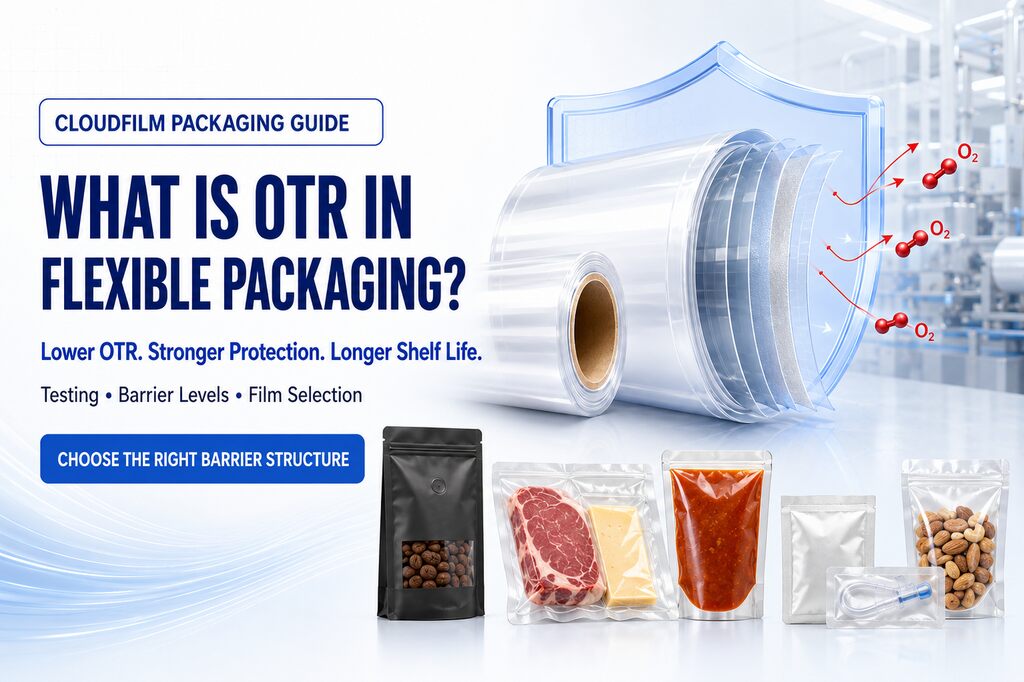
Some products need higher protection against oxygen, aroma, or moisture. In these cases, high-barrier materials become important. Transparent high-barrier options such as ALOx PET film can help protect sensitive products while still allowing product visibility.
These materials are often used for coffee, nuts, pet food, medical products, and other items that need stronger shelf-life support.
From Material Selection to Complete Packaging Solutions
In real projects, buyers rarely choose packaging based on material name alone. Most of the time, they begin with a product need.
For example:
- a snack brand may need strong shelf appearance and moisture protection
- a frozen food buyer may need puncture resistance and seal strength
- a liquid product manufacturer may need leak prevention and strong pouch performance
- a medical product supplier may need stable and compliant packaging materials
This is why packaging decisions usually involve more than one question. Buyers often need to consider:
- product type
- filling method
- storage condition
- target shelf life
- barrier requirement
- sealing performance
- print design
- packaging format
- logistics condition
- market expectation
Because of this, many companies do not simply buy film. They look for a supplier that can recommend the right structure, support sampling, and provide stable production quality.
That is why complete packaging development often moves from product need to structure design, then to sampling, testing, and final production.
Sustainability in the Packaging Market
Sustainability has become one of the most discussed topics in packaging, but the practical meaning of sustainability can vary from project to project.
For some companies, sustainability means reducing total material use. For others, it means improving recyclability, adding recycled content where possible, or simplifying package structures.
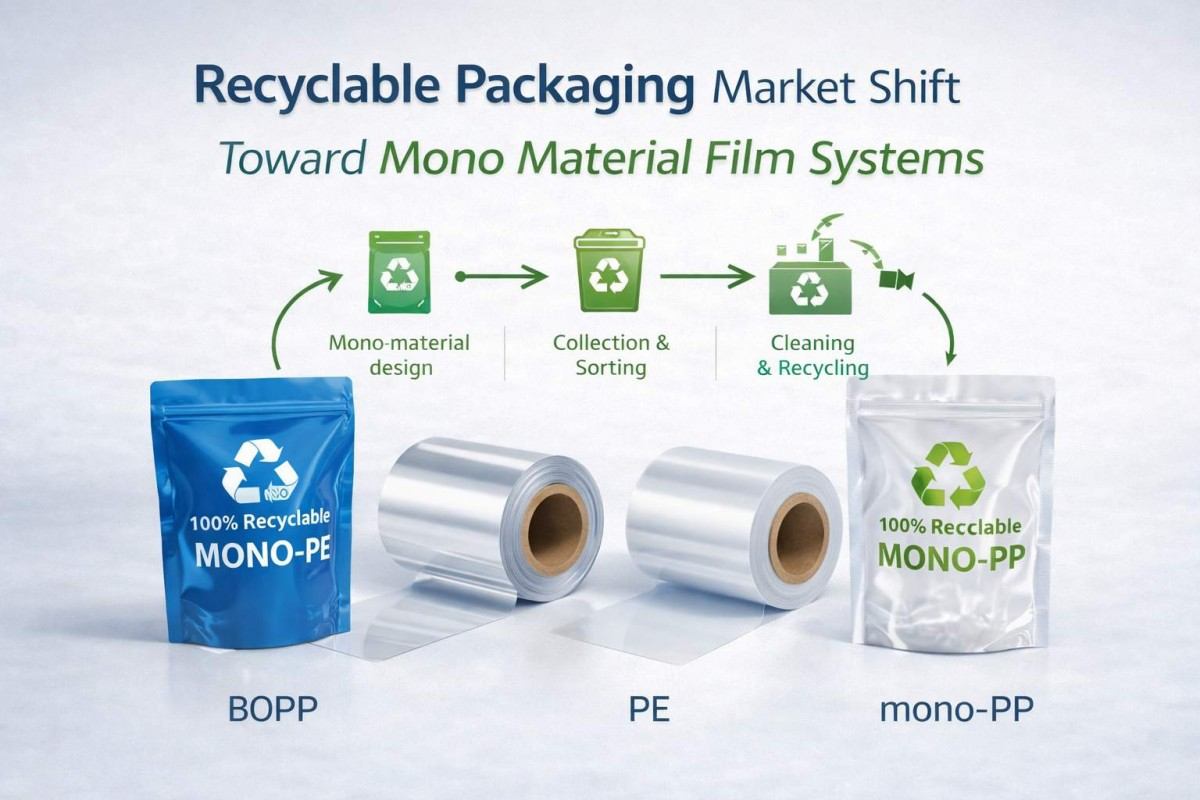
One important direction in flexible packaging is mono-material design. Compared with mixed-material laminates, mono-material structures can offer a clearer recycling path in some markets.
CloudFilm’s mono-material films guide explains how mono-material PE and PP structures are being used in different packaging applications. Another useful reference is the guide to recyclable flexible packaging, which discusses the relationship between material design and real recycling conditions.
At the same time, sustainability must be approached realistically. Not every product can use the same structure. Some applications still need higher barrier performance, stronger puncture resistance, or more complex lamination.
A practical packaging solution should balance:
- product protection
- production efficiency
- transportation performance
- material efficiency
- user convenience
- long-term packaging goals
Packaging Formats That Are Gaining Attention
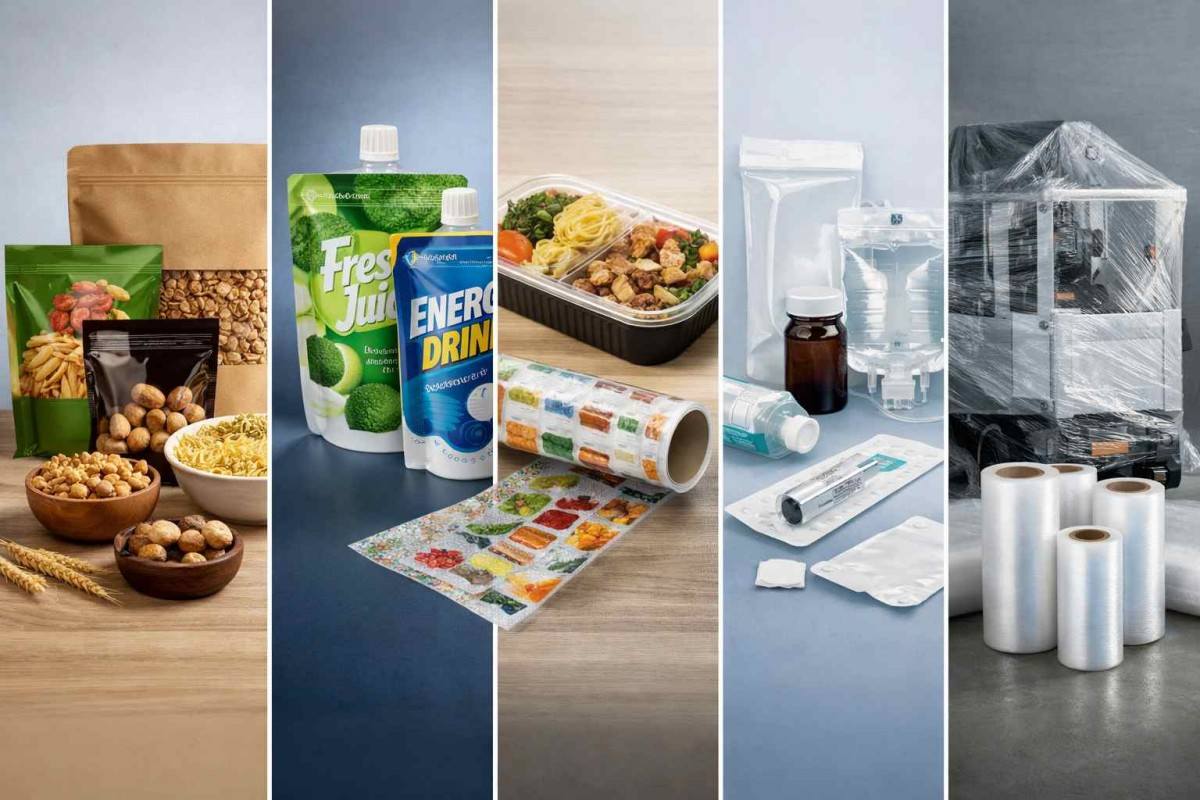
The packaging market includes many different packaging forms, but several flexible packaging formats remain especially popular because they combine function and convenience very well.
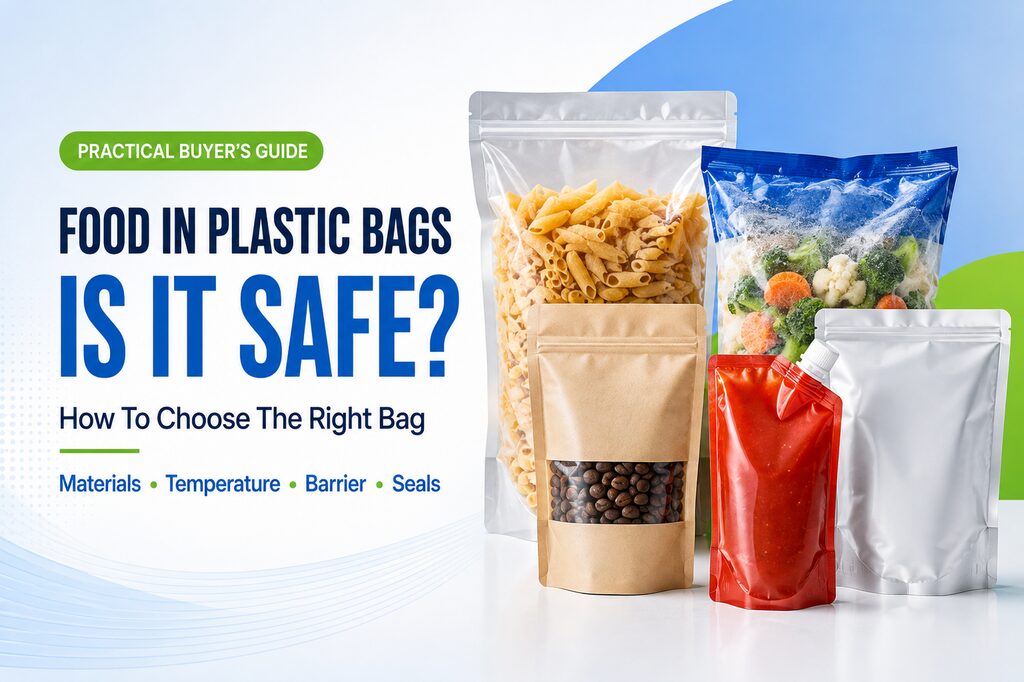
Stand-Up Pouches
Stand-up pouches are widely used because they offer a good display effect and efficient space use. They can be used for snacks, powders, dry foods, supplements, pet food, and personal care products.
CloudFilm’s stand-up pouches show how this format can be customized for many different applications.
Spout Pouches and Liquid Pouches
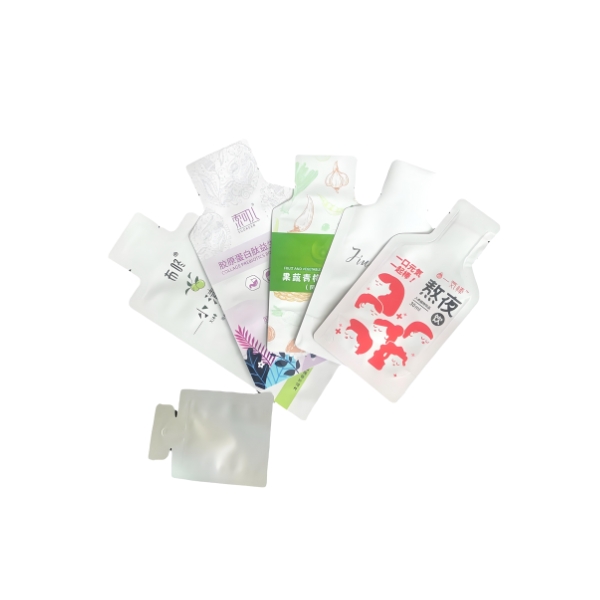
Spout pouches and liquid pouches are increasingly used for beverages, sauces, baby food, detergents, and refill packaging. These formats are convenient, lightweight, and practical for transportation.
For more details, you can explore liquid pouches and spout pouches.
Dry Food Packaging
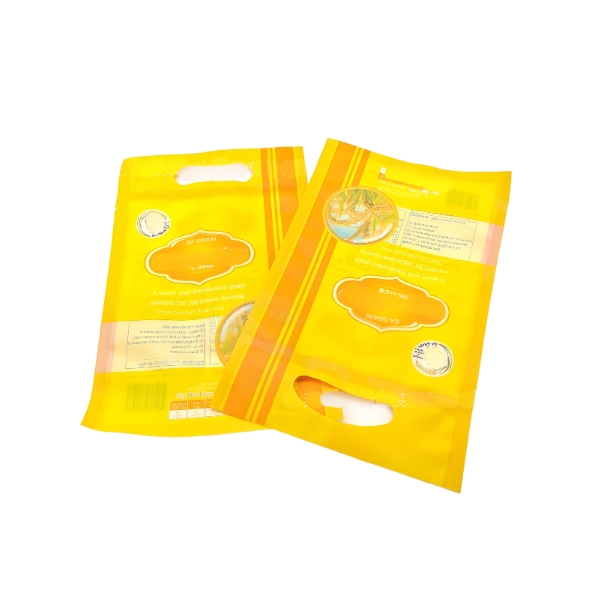
Dry food packaging remains a very important part of the packaging market. Products such as rice, pasta, snacks, flour, nuts, and cereals all require packaging that balances barrier performance, seal strength, and shelf appearance.
A useful reference is CloudFilm’s dry food packaging guide, which explains key points from freshness to shelf presentation.
Recyclable and Mono-PE Pouches
As packaging design continues to evolve, many buyers are also exploring recyclable pouch structures and mono-PE systems. These developments are especially important for brands that want to simplify material systems while maintaining package function.
If you want to compare two important PE-oriented directions, MDO PE vs BOPEis a useful place to start.
How to Choose the Right Packaging Supplier or Manufacturer
Choosing a packaging supplier is an important part of any packaging project. The lowest price is not always the best choice. In many cases, stable quality, technical communication, and reliable production support are even more important.
Here are some of the main points buyers should review.
1. Product Range
Can the supplier support different films, structures, and pouch types? A broader product range usually makes project development easier, especially when requirements change during testing.
2. Technical Understanding
A strong supplier should understand product needs and recommend suitable materials or structures. This includes barrier needs, sealing requirements, thickness, printability, roll width, bag style, and application conditions.
3. Sampling Support
Many packaging projects begin with film samples, A4 sheets, trial rolls, or test pouches. A good supplier should be able to support this process clearly and efficiently.
4. Production Stability
Consistent quality matters in every repeat order. Buyers should pay attention to production control, quality management, and communication during order execution.
5. Export Experience
For overseas buyers, export experience is very important. It affects specification confirmation, shipping preparation, pallet planning, document support, and delivery coordination.
6. Ability to Support Both Rollstock and Finished Pouches
Some projects need roll film only. Others need ready-made pouches. Some need both at different stages. A supplier that can support both material supply and pouch conversion can often simplify the whole project.
For companies that want integrated support, custom packaging solutions
can be a helpful starting point.
Common Questions Buyers Ask About Packaging Projects
In real business discussions, buyers often ask practical questions before moving forward with a packaging project.
1. What information should I provide for a quotation?
To receive a more accurate quotation, it is helpful to provide:
- product type
- packaging application
- material preference if known
- thickness or structure if known
- package size
- bag style or roll specification
- print requirement
- estimated order quantity
- destination market
The more complete the information, the easier it is to recommend a suitable packaging solution.
2. Should I choose a finished pouch or printed rollstock?
This depends on the production model. Some buyers already have their own pouch-making or filling systems and prefer rollstock. Others want ready-made pouches for easier use. The right choice depends on equipment, order volume, and supply chain planning.
3. Is a mono-material pouch always the best option?
Not always. Mono-material packaging can be a very good direction for some products, but every application must still be evaluated by shelf-life need, barrier target, sealing demand, and filling condition.
4. Why does packaging testing matter so much?
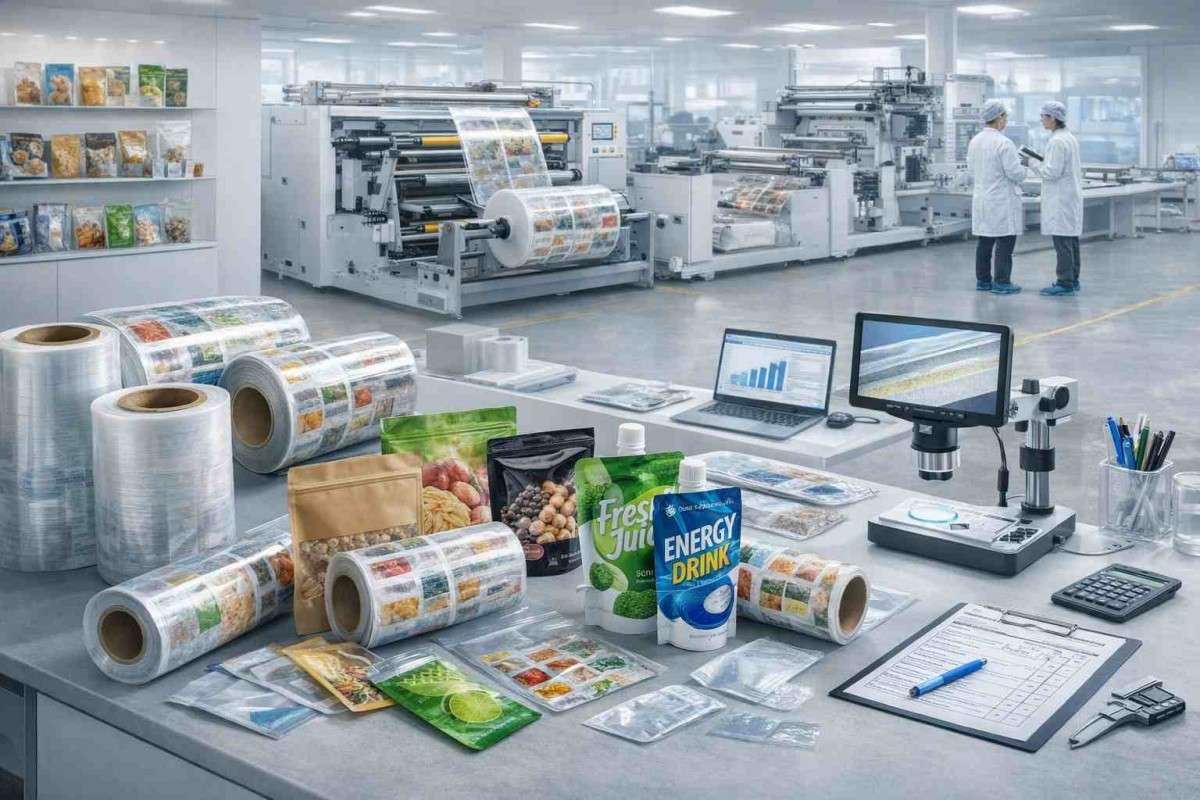
Testing helps confirm whether the selected material or structure performs well in real conditions. It reduces the risk of sealing problems, poor barrier performance, print issues, or transportation damage.
Conclusion
The packaging market continues to develop as products, brands, and supply chains become more demanding. Today, packaging is expected to do many things at once: protect the product, improve presentation, support transportation, match production needs, and respond to changing material expectations.
For this reason, packaging decisions should not be based on price alone. Material choice, packaging format, performance level, and supplier capability all play important roles.
Whether the need is for BOPP films, PET laminates, PE sealing structures, high-barrier packaging, stand-up pouches, liquid pouches, or recyclable packaging systems, the most effective approach is to begin with the product requirement and then build the packaging solution around it.
With the right material knowledge and the right manufacturing partner, packaging can become more than a protective layer. It can become a practical and valuable part of the product itself.