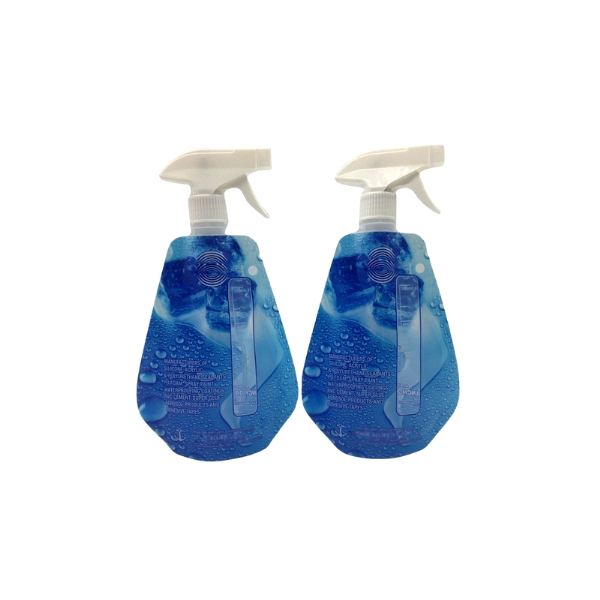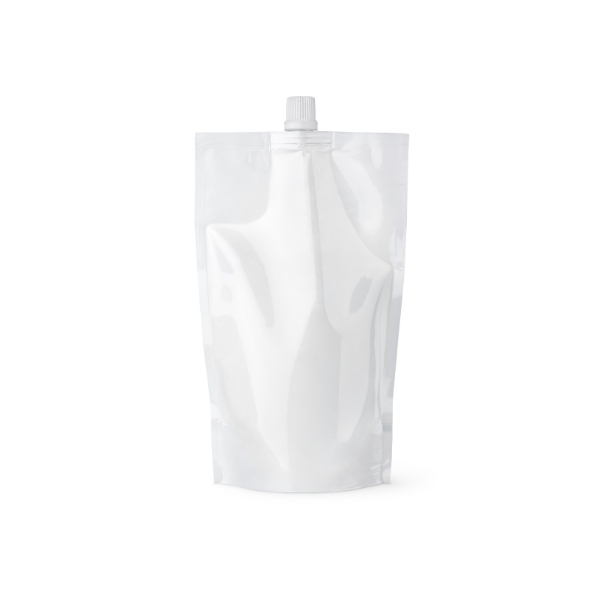
A 500ml laundry detergent pouch is small enough to look simple, yet heavy enough to expose weak seals, brittle corners and poor spout welding. The correct film is therefore not the cheapest laminate on a quotation. It is the structure that remains compatible with the detergent, survives the filling line, stands well, pours cleanly and reaches the customer without leaking.
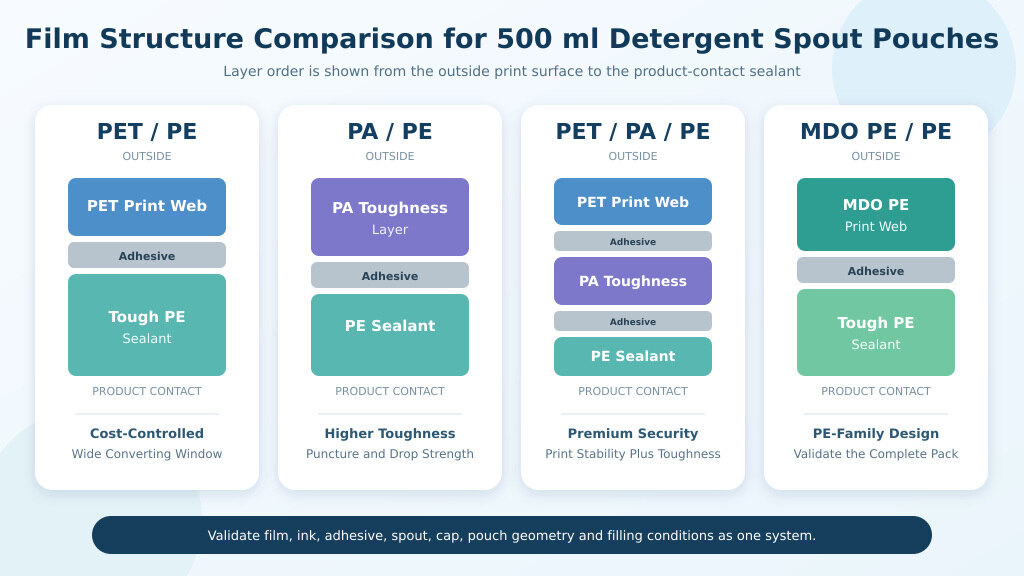
For most conventional projects, PET/PE is the cost-controlled starting point, PA/PE adds toughness, and PET/PA/PE provides both a stable print web and a nylon reinforcement layer. An MDO PE/PE structure is worth evaluating when the project has a PE-family recycling objective. The final choice for spout pouches should be made with the real formula, spout, cap, pouch geometry and distribution test—not by material name alone.
Quick Answer: Which Film Is Best?
There is no universal “best film,” but there is a practical first choice for each commercial situation.
| Structure | Best Starting Use | Main Advantage | Main Watchout |
| PET/PE | Mild detergent, controlled retail distribution and cost-sensitive projects | Stiffness, print stability and an established converting window | May need more toughness for severe drops, e-commerce or weak pouch geometry |
| PA/PE | Pouches that need better flex, puncture and impact resistance | Nylon improves mechanical durability | Less outer-web stiffness than PET; printing and dimensional behavior must be confirmed |
| PET/PA/PE | Demanding transport, premium graphics or a conservative high-strength design | Combines PET print stability with PA toughness and PE sealing | Higher material and conversion cost; two bond interfaces require proper curing |
| MDO PE/PE | Recyclable-oriented refill projects with development time | Keeps the main film family within PE and can provide useful stiffness | Not a drop-in PET replacement; heat, web direction, sealing and the complete pack require trials |
For a typical 500ml laundry liquid pouch moving through normal retail distribution, PET/PE may be sufficient when the sealant is tough and the pouch passes testing. If the route includes parcel delivery, repeated drops, long export handling or a demanding bottom gusset, PA/PE or PET/PA/PE is often a safer conventional starting point.
For a sustainability-led project, review the development logic in the MDO PE film for detergent refill pouches guide. MDO PE/PE can be promising, but a recycling objective should never override leak prevention, chemical compatibility or legal requirements.
Why a 500ml Detergent Pouch Needs Careful Engineering
Five hundred milliliters of liquid creates a meaningful hydraulic load. When the pouch hits a floor, the liquid moves rapidly and transfers force into the bottom gusset, side seals, upper corners and spout flange. A pouch can look perfect when empty and still fail within seconds when filled.
Detergent also presents a chemical challenge. Surfactants, fragrances, solvents, salts, alkaline ingredients, enzymes and oxidizing components can affect the sealant, adhesive, ink or fitment over time. The package must therefore be evaluated as a product-contact system, not simply as two film names separated by a slash.
Shelf appearance matters too. A 500ml refill pouch should stand evenly, resist excessive paneling, support clear graphics and feel controlled when squeezed. An overly stiff structure may concentrate stress at folds; an overly soft structure may collapse on shelf or feed poorly on the filling line.
What Each Layer Does
Understanding layer roles makes supplier proposals easier to compare. Two structures with the same total thickness can perform very differently because resin selection, layer distribution, adhesive, orientation and pouch design are different.
PET/PE: the established cost-performance option
In PET/PE film, PET normally serves as the outer print web. It contributes stiffness, dimensional stability, gloss and resistance to heat during printing and lamination. PE forms the product-contact side and controls most of the heat sealing, hot tack, flexibility and chemical-contact behavior.
PET/PE is a logical first trial for mild laundry liquid, fabric softener or general household cleaner sold through controlled retail channels. It is familiar to many converters and usually provides a broad production window. However, PET alone does not guarantee drop strength. The PE sealant, gusset geometry, seal width and spout joint still determine whether the filled pouch survives impact.
PA/PE: more toughness where the pouch bends and drops
PA/PE film uses nylon for toughness, flex resistance and puncture resistance, while PE provides the sealing and product-contact surface. This can help when the package is repeatedly squeezed, packed tightly in cartons or exposed to more severe distribution conditions.
PA/PE may feel softer and less dimensionally rigid than a PET-faced laminate. The converter must confirm printability, web handling, curl and pouch-opening behavior. Nylon also absorbs more moisture than PET, so conditioning and actual line behavior deserve attention. Its value is mechanical security, not a claim that it is automatically superior in every property.
PET/PA/PE: print stability plus mechanical reinforcement
PET/PA/PE adds a PA layer between the PET print web and PE sealant. PET supports graphics and converting stability; PA strengthens the body against flexing and local stress; PE creates the seal and contacts the detergent. This is a sensible structure for tougher logistics, heavier refill formats or brands that want a conservative margin against pouch failure.
The trade-off is complexity. A triplex laminate has additional adhesive, curing and bond-control requirements. The buyer should request pre- and post-aging bond data instead of assuming that an extra layer automatically produces a better pouch.
PE/PA/PE: a coextruded nylon-core option
A PE/PA/PE film places nylon inside PE layers and is often supplied as a coextruded web. For some liquid or industrial bag projects, it can provide a uniform tough inner web that is later combined with a printed outer layer. It should not be confused with a printed PET/PA/PE triplex laminate; the layer order, printing route and pouch-making plan are different.
MDO PE/PE: a recyclable-oriented development route
MDO PE film can act as a stiffer printable outer web and be laminated to a purpose-designed tough PE sealant. Keeping the main film family within polyethylene can support a PE-stream design where suitable collection and recycling systems exist.
MDO PE is more sensitive to heat and machine direction than PET. The project may require lower dryer temperatures, controlled web tension, suitable inks and adhesives, and careful pouch orientation. The spout, cap, label, barrier layer and adhesive must also be assessed before any recyclability claim is made. Buyers needing finished formats can compare current recyclable pouches rather than evaluating the outer film in isolation.
What about PA/PA/LDPE?
A double-nylon structure may be proposed for unusually demanding packs, but it is rarely the first economical choice for an ordinary 500ml laundry liquid pouch. Extra PA can increase toughness, yet it also raises cost and may add stiffness or moisture-related conversion considerations in places where better sealant resin, gusset design or a single PA reinforcement would solve the problem.
Use it only when a defined test target justifies it. Packaging should be engineered to pass the required conditions with a reasonable safety margin, not simply with the largest number of layers.
Is 150 Microns the Right Thickness?
About 150 μm can be a reasonable development starting point for a robust 500ml detergent spout pouch, especially when the pack must withstand export handling, parcel delivery or conservative drop testing. It is not a universal specification.
A well-designed 120 μm pouch may outperform a poorly designed 150 μm pouch. High-performance PE resins, balanced layer distribution, wider seals and a well-shaped gusset can produce excellent results at a lower gauge. Conversely, a thick pouch can still leak if the flange joint has channels, the adhesive is under-cured or the sealant is attacked by the formula.
The following ranges are screening points, not guaranteed specifications:
| Development Direction | Possible Total-Gauge Starting Area | When It May Fit |
| Lightweight, controlled distribution | About 110–130 μm | Mild formula, strong sealant, efficient pouch geometry and validated retail transport |
| Balanced 500ml commercial pouch | About 130–150 μm | General laundry liquid or household cleaner with normal drop and carton requirements |
| Conservative or demanding distribution | About 150–180 μm | E-commerce, long export routes, higher drop targets or extra reinforcement needs |
Thickness should be agreed together with the individual layer gauges. Ask the supplier for the tolerance across the web, not only a nominal average. Local thin spots near folds or seals can become the real failure point.
Match the Film to the Detergent Formula
Before selecting a laminate, give the packaging manufacturer enough chemistry information to screen compatibility. A full confidential formula is ideal, but an initial brief can include:
- Product type and use, such as laundry liquid, fabric softener, dishwashing liquid or concentrated cleaner.
- pH range and whether the formula contains oxidizers, bleach, alcohol, solvents or essential oils.
- Surfactant class, fragrance level and any known tendency to stress-crack polyethylene.
- Viscosity, fill temperature, headspace and expected shelf life.
- Storage temperature range and destination markets.
Fragrance retention can be as important as oxygen barrier. Some formulas lose volatile components or change odor even when the pouch does not visibly leak. For these products, weight-loss tracking, odor comparison and barrier targets should be included in aging trials.
The broader daily chemical packaging guide explains why detergent, shampoo, disinfectant and cosmetic refill packs cannot all use one standard structure.
The Spout and Sealant Must Work Together
The spout flange is a frequent weak point because it introduces a rigid component into a flexible pouch. Heat and pressure must travel evenly around the flange without burning the film, leaving channels or deforming the fitment.
A PE-contact layer is normally paired with a compatible PE spout for a PE-based pouch, but resin family alone is not enough. Flange geometry, thickness, surface condition, preheating, jaw profile, pressure, dwell time and cooling all influence the joint. Cap torque and tamper evidence must also remain consistent after storage and transport.
For a 500ml pouch, corner spouts generally support controlled pouring and efficient emptying. Top-center spouts can improve symmetry and may suit some filling systems. The right position depends on the intended use and line configuration. Buyers comparing different dispensing formats can also review nozzle pouches and broader liquid pouches.

Validation Plan Before Commercial Production
A4 sheets can help compare feel, clarity and basic lamination, but they cannot approve a detergent spout pouch. Commercial validation requires trial rolls or finished trial pouches made with the intended ink, adhesive, sealant, spout and settings.
- Establish the current-package baseline
Record the existing structure, total gauge, pouch dimensions, gusset depth, spout model, cap torque, fill weight, line speed, seal settings, carton configuration and complaint history. Keep filled control samples for side-by-side comparison.
- Screen film and laminate properties
Check thickness profile, tensile behavior, elongation, puncture or dart impact where relevant, surface treatment, coefficient of friction, heat shrinkage, bond strength and seal curves. The acceptable result is a stable range, not one perfect laboratory value.
- Run chemical compatibility and aging
Fill the real detergent into sealed laminate specimens and complete pouches. Store samples under normal and accelerated conditions agreed by the buyer and supplier. At planned intervals, inspect appearance, dimensions, odor, mass change, swelling, whitening, cracking, bond strength and seal retention.
- Validate the spout joint
Section or peel representative flange areas to look for continuous bonding and channel paths. Compare all positions around the flange, not only the easiest section. Test cap application torque, removal torque, reclosing and leakage after repeated use.
- Test filled-pouch durability
Use defined drop orientations, including the base, side, corner and spout area as appropriate. Add burst, compression, creep, vibration and carton tests based on the actual distribution route. A parcel-delivery project normally needs a more severe protocol than palletized retail distribution.
- Confirm production repeatability
Approval should cover more than a few hand-selected pouches. Run enough material to observe start-up, steady production, roll changes and normal variation. Record the successful process window and acceptance criteria for future batches.
For additional context on format and distribution trade-offs, the spout pouch packaging guide explains how pouch weight, closure design and e-commerce conditions affect performance.

Common Failures and Corrective Direction
| Failure | Likely Causes | Corrective Direction |
| Side or bottom seal leaks | Narrow seal window, detergent contamination, insufficient pressure or misaligned gusset | Adjust sealant, jaw settings and gusset alignment; compare seal strength across the operating window |
| Leakage around spout | Incompatible fitment, uneven heating, flange contamination or poor jaw profile | Match fitment and sealant; optimize preheat, pressure, dwell and cooling |
| Corner or gusset cracking | Local strain, environmental stress cracking, thin inner web or excessive stiffness | Improve PE toughness, rebalance thickness, soften the local design or change structure |
| Delamination after storage | Formula attacks adhesive or ink, coating weight is low, or cure is incomplete | Select compatible chemistry, correct adhesive weight and allow full cure before filling |
| Pouch becomes soft or deformed | Formula plasticizes the structure or outer web is too weak | Run aging comparison; change outer web, inner formulation or total construction |
| Poor opening or feeding | Wrong COF, static, curl or insufficient stiffness | Adjust surface properties, web balance and machine settings |
| Fragrance or weight loss | Barrier is insufficient or closure leaks | Define a measurable target, improve barrier or closure, and repeat aging |
Corrective action should follow evidence. Increasing thickness is not the automatic answer to every failure. A leak path at the spout will not disappear simply because the pouch body becomes thicker.
Recommended Starting Point by Use Scenario
Standard retail laundry liquid
Start with PET/PE when the formula is mild, the line already runs similar structures and cartons protect the pouches well. Specify a tough sealant, a practical seal width and a filled-pouch test plan.
Long export route or demanding handling
Evaluate PA/PE or PET/PA/PE. The added toughness can provide a better margin against flexing, gusset stress and drops, especially when the pouch passes through several warehouses or mixed handling systems.
E-commerce and parcel delivery
Use a conservative structure and test the pouch inside the real secondary carton. Reinforce the spout area, control cap torque and consider how other items in the parcel may load the pouch. Film selection and secondary packaging must be developed together.
Recyclable-oriented refill program
Evaluate MDO PE/PE with a compatible PE spout and cap. Compare its heat stability, printing, stiffness and drop performance against the current laminate. The MDO PE vs PET/PE laminate comparison provides a more detailed view of the conversion trade-offs.
Aggressive concentrate, bleach or unusual chemistry
Do not choose from a generic chart. Run dedicated compatibility testing and retain a proven conventional structure until the alternative has completed the full approval plan.
What to Send a Manufacturer for an Accurate Proposal
A precise inquiry helps a manufacturer or converter recommend a useful trial instead of quoting an undefined “150-micron pouch.” Send:
- The detergent type, pH range and important chemical characteristics.
- Net volume and fill weight; liquid density if it differs significantly from water.
- Pouch width, height, gusset dimensions and preferred spout position.
- Current structure and thickness, plus a physical sample if available.
- Fill temperature, line type, filling method and target speed.
- Spout drawing, resin, flange dimensions, cap type and torque requirement.
- Required shelf life, storage temperatures and destination market.
- Drop, burst, compression, vibration or e-commerce standards to be passed.
- Printing method, artwork coverage, finish and number of SKUs.
- Trial quantity, expected annual demand, delivery term and destination.
This information allows the supplier to compare cost per finished pouch, not only price per kilogram. It also reduces the risk that a low quotation is based on a weaker sealant, lower adhesive weight or an unsuitable fitment.
How to Evaluate a Pouch Manufacturer or Supplier
A qualified detergent pouch supplier should be able to discuss the complete package. Look for:
- Film and pouch knowledge, including PET, PA, PE, adhesives and fitments.
- Control of printing, lamination, curing, slitting and pouch conversion.
- Documented thickness, bond and seal specifications with batch traceability.
- Access to chemical aging, leak, drop, compression and closure testing.
- Trial support before a full commercial order.
- Clear change-control rules for resin, adhesive, ink, spout and production route.
- Export packing, documentation and realistic lead-time planning.
Price remains important, but compare it with yield, scrap, line speed, reject rate, claims risk and service. A supplier that prevents one leaking shipment may create more value than a slightly lower film price. Buyers building a shortlist can use the packaging pouch supplier in China guide and review CloudFilm’s company profile before requesting samples or a trial proposal.

Cost, Sustainability and Commercial Balance
The lowest USD/kg price is not necessarily the lowest packaging cost. Compare film yield per square meter, adhesive use, cylinder or plate cost, scrap, line speed, pouch rejects, freight, carton efficiency and claim risk. A tougher structure that allows stable high-speed production may cost less in use than a nominally cheaper laminate.
Sustainability decisions should use the complete package. A mono-PE film paired with an incompatible fitment, excessive non-PE components or no local collection route may not deliver the intended result. At the same time, a conventional structure can sometimes be improved through downgauging, better yield, lower scrap and refill-format material reduction.
The commercial goal is not to select the thinnest or most complex pouch. It is to achieve the required protection, process stability and consumer experience with no unnecessary material.
Final Recommendation
For a new 500ml laundry detergent spout pouch, begin with the real risk profile:
- Choose PET/PE for a cost-efficient, established structure when distribution is controlled and testing confirms adequate strength.
- Choose PA/PE when flexibility, puncture resistance and drop durability need a stronger margin.
- Choose PET/PA/PE when you need PET print stability plus PA reinforcement for demanding logistics.
- Evaluate MDO PE/PE when PE-family design is a genuine project objective and the team can complete printing, sealing, chemical and distribution trials.
Treat 150 μm as a possible trial point, not a universal rule. Ask the manufacturer to propose the layer structure, sealant, spout match and validation plan together. The best pouch is the lightest commercially reasonable structure that repeatedly passes the real filling, aging and transport conditions.
Frequently Asked Questions
- What is the best material for a 500ml laundry detergent spout pouch?
PET/PE is a common cost-performance starting point. PA/PE or PET/PA/PE is usually considered when higher drop, flex or puncture strength is required. MDO PE/PE is an option for recyclable-oriented development after full validation.
- Is 150 μm always necessary?
No. About 150 μm can be a useful robust starting point, but resin quality, layer balance, seal width, gusset design and test requirements matter as much as total thickness. Some projects can pass at a lower gauge; others need more.
- Can a 120 μm pouch hold 500ml of detergent?
It may, particularly with a mild formula, tough sealant, good pouch geometry and controlled distribution. Approval should depend on filled-pouch aging, drop, compression and leak tests—not volume alone.
- Is PA/PE stronger than PET/PE?
PA generally provides better toughness, flex and puncture resistance, while PET usually provides better stiffness, heat stability and print-web dimensional control. The complete pouch can reverse a simple material-level comparison.
- When should PET/PA/PE be used?
Use it when the project needs stable premium printing plus additional nylon reinforcement, such as demanding export routes, parcel delivery or conservative high-strength designs.
- Is PA/PA/LDPE a good standard structure?
It can be used for special high-strength requirements, but it is usually not the first economical choice for a normal 500ml detergent pouch. A single PA layer, stronger PE sealant or better pouch geometry may achieve the target more efficiently.
- Can MDO PE/PE replace PET/PE directly?
Not as a drop-in substitution. Printing temperature, web tension, directional stiffness, adhesive, sealant, pouch orientation and machine settings must be adjusted and validated.
- Is an MDO PE detergent pouch automatically recyclable?
No. The complete package—including film layers, adhesive, ink, barrier, spout, cap, label and local collection system—determines whether a recycling claim is appropriate.
- Does detergent require an oxygen barrier?
Not every formula does. Barrier needs may be driven by fragrance retention, volatile loss, ingredient stability or shelf-life targets rather than oxygen alone. Set measurable targets with the product team.
- What spout material should be used?
A compatible PE spout is commonly evaluated for PE-sealant pouches, but resin name alone is insufficient. Flange design, heat response, jaw profile, cap torque and leak performance must be proven.
- What tests are essential before ordering in bulk?
At minimum, run chemical aging, seal-window, spout-flange, leak, drop and compression tests with the actual detergent. Add burst, creep, vibration and e-commerce tests when the distribution route requires them.
- Are A4 film samples enough for approval?
No. They help with appearance and initial material review, but cannot validate printing, lamination, pouch making, spout welding or filled-pouch durability. Use trial rolls or finished trial pouches.
- Why does a pouch leak only after several weeks?
Delayed leakage can result from adhesive attack, incomplete cure, sealant swelling, environmental stress cracking, slow channel formation or cap-torque loss. Accelerated and real-time aging helps identify the mechanism.
- Should the pouch be filled through the spout or through an open top?
Both methods are used. The decision affects spout design, pouch supply format, filling speed, contamination control and final top sealing. Confirm the filling route before finalizing the pouch.
- What information is required for a quotation?
Provide product chemistry, 500ml fill weight, pouch dimensions, structure or performance target, spout details, filling conditions, printing, quantity, test standards and destination. A physical sample of the current pouch is especially useful.
- How should two supplier quotations be compared?
Compare layer gauges, resin and adhesive assumptions, spout specification, printing method, tolerances, testing, MOQ, lead time, yield and the cost per finished pouch. A price without a complete specification is not a like-for-like quotation.
- Can CloudFilm supply both rollstock and finished pouches?
Yes. A combined film-and-pouch development route can help keep the print web, sealant, adhesive, fitment and finished-pouch criteria aligned from trial through commercial production.