When buyers, packaging engineers and converters compare “APET vs PET”, they are usually looking at two different ways of using the same polyester family.
APET is most often supplied as a clear, rigid sheet for thermoformed trays and clamshells. PET film (BOPET), on the other hand, is supplied as a thin, flexible film roll for printing, lamination and lidding structures.
In real projects, you rarely choose APET or PET film in isolation. You combine them:
- An APET tray on the bottom and a PET-based lidding film on the top
- PET/PE laminates running as pouches or flow-wrap next to rigid APET packs
- PET-based barrier films working together with APET trays in high-barrier systems
This guide explains the technical differences, typical applications and buyer-focused selection tips so you can specify the right structure with confidence and talk clearly with your APET and PET film manufacturers and suppliers.
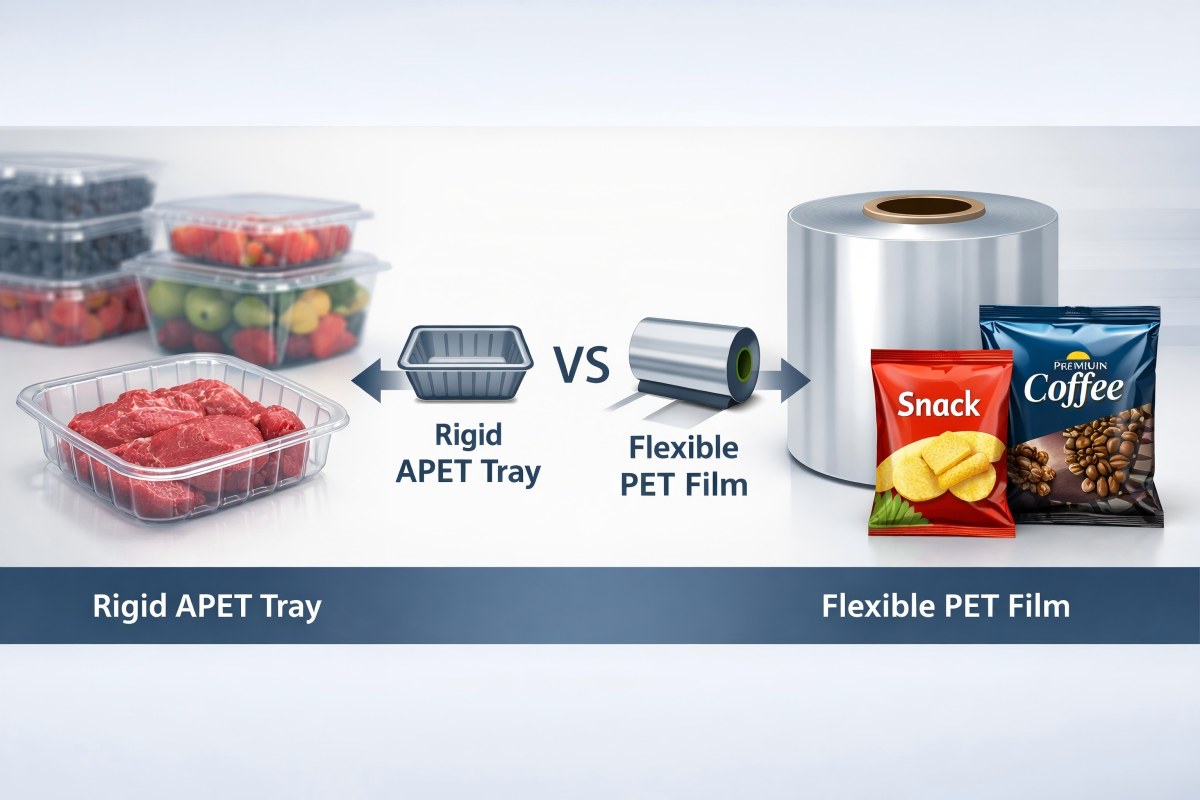
APET And PET In The Polyester Family
What Is PET Film?
PET film is a biaxially oriented polyethylene terephthalate (BOPET) polyester film. It is supplied as thin, flexible rolls from about 12–250 μm and is widely used for printing, laminating, lidding films, labels, insulation, industrial tapes and other technical applications.
Thanks to its high tensile strength, dimensional stability and good temperature resistance, PET film runs reliably on high-speed printing, coating and slitting equipment.
Typical roles of PET film in packaging include:
- Outer printable layer in laminates such as PET/PE, PET/CPP or PET/VMPET/PE
- High-clarity top web in lidding films, often combined with sealant and barrier layers
- Base film for metallization, PVDC coating or other barrier treatments
- Functional films such as anti-static PET, heat sealable PET or easy-tear PET
If you want deeper background on polyester chemistry and PET variations, you can also review CloudFilm’s guide on the difference between PET film and polyester film, which explains how PET sits inside the wider polyester family.
For projects that require a ready-to-use laminate, many buyers choose PET/PE laminated film
so they can move directly from film roll to pouch, lidding or flow-wrap without doing their own lamination.
What Is APET Sheet Or Film?
APET (Amorphous PET) uses the same PET chemistry, but it is processed into clear, rigid sheet rather than thin flexible film. APET sheet is typically supplied in thicknesses from around 200–1000 μm and is thermoformed into trays, clamshells and blister packs for fresh meat, ready meals, bakery, salads, fruit and medical devices.
Compared with many other rigid plastics, APET offers:
- High clarity and gloss for “glass-like” shelf appearance
- Good impact strength and stiffness for tray stability
- Food-contact safety when produced under the right conditions
- Compatibility with common lidding films based on PET or PE structures
For rigid tray and blister projects, it is useful to review a dedicated product page such as APET film for thermoformed food and medical trays, which shows typical specifications and forming performance.
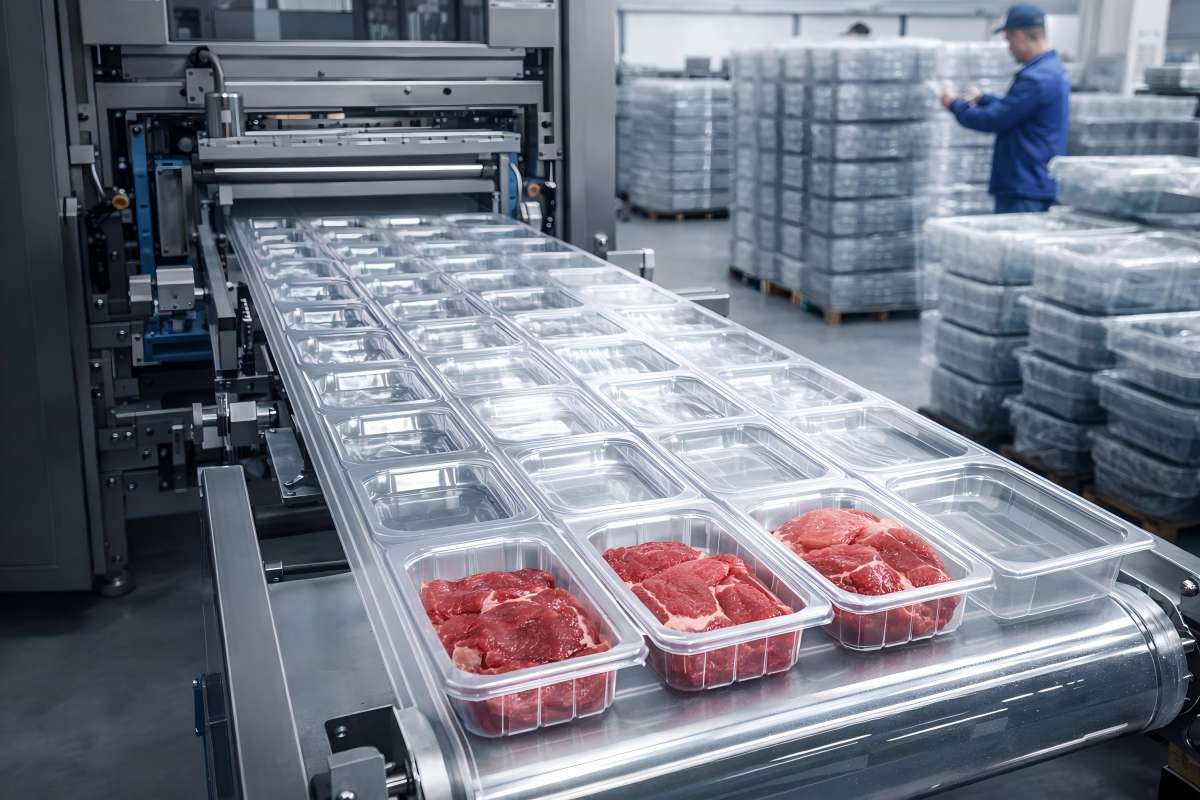
APET vs PET: Key Technical Differences
Format And Rigidity
Although APET and PET share the same base polymer, they appear very different on your line:
- APET – rigid, thick sheet for thermoforming, delivered as flat sheet or large-diameter rolls, holding its shape after forming.
- PET film – thin, flexible BOPET rolls for printing, lamination, slitting, lidding and specialty coatings.
From a mechanical point of view, APET behaves more like a tray or structural component, while PET film behaves like a high-performance web in your flexible packaging or label process.
Processing And Converting
APET is designed for thermoforming. Processors heat the sheet, form it over a mold, then trim the finished tray or clamshell. Key parameters include forming temperature window, thickness distribution, wall stability and trimming quality.
PET film is designed for printing, coating and lamination. Converters care about thickness tolerances, surface treatment, winding quality and dimensional stability on high-speed gravure, flexo or digital presses. PET film can then be:
- Laminated to PE or CPP
- Metallized into PET/VMPET
- Coated with PVDC or other barrier layers
- Slit into roll sizes that match your lines
CloudFilm’s BOPET film for packaging guide
gives a broader overview of PET film behaviour on FFS machines, laminators and printing presses.
Sealing, Temperature Resistance And Lidding Performance
For lidding and flexible packaging, PET film offers a wide heat-resistance window and stable seals, especially when combined with a dedicated sealant layer. A typical solution is a PET-based lidding web made from heat sealable PET film that bonds to APET, CPET or PP trays.
CloudFilm supplies heat sealable PET film, which is a high-quality BOPET with a heat-seal layer coating designed for both self-sealing and lamination sealing applications.
For more application-level insight, you can refer to the article on the versatility of heat sealable PET films, which explains sealing windows and typical line conditions in detail.
Barrier And Shelf Life
Standard APET and PET provide good mechanical properties and basic moisture and oxygen barrier compared with many commodity plastics. However, for demanding shelf-life targets – coffee, ready meals, dehydrated foods or pharmaceuticals – buyers often combine PET film with a barrier layer such as Al metallization, ALOx coating or PVDC coating.
One common option is PVDC coated PET high barrier film, which uses a strong BOPET base and a dense PVDC layer to significantly reduce oxygen and water vapour transmission while keeping packs clear and printable. A more general overview of PVDC technology can be found in CloudFilm’s PVDC film barrier guide.
Recyclability And Mono-Material Design
Because APET and PET film share the same base polymer, many markets treat them as part of the same PET recycling stream. Rigid APET trays and clear PET lidding films are increasingly used in mono-material “tray + lid” systems, especially in regions where PET recycling infrastructure is strong.
In practice, recyclability still depends on local regulations, adhesives, inks and additional layers. APET trays laminated with PE or EVOH, or PET films laminated to PE, may have more complex recyclability than pure PET structures.
CloudFilm’s article on mono-material packaging discusses how PET-dominant structures (including PVDC PET and ALOx PET) can be engineered to meet design-for-recycling guidelines when combined with compatible PE sealing layers.
APET vs PET For Common Packaging Applications
Fresh Meat And Ready-Meal Trays
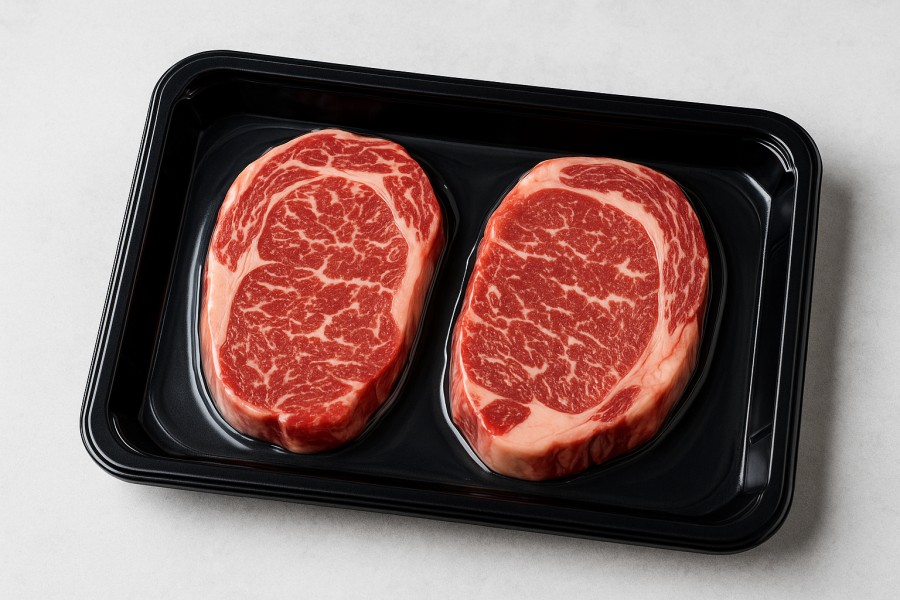
In chilled meat and ready-meal lines, APET trays are popular because they combine rigidity, clarity and good impact strength. The top web is usually a PET-based lidding film with a sealant layer tailored to APET or CPET tray rims.
To understand how different lidding structures interact with trays, CloudFilm has a comprehensive lidding packaging guide
that compares PET-based high-barrier webs, easy-peel films and aluminium-foil systems. For definitions and basic concepts, you can also refer to “What Is Lidding Film?” in their dedicated lidding film introduction.
Salads, Dairy, Bakery And Convenience Foods
Clear APET trays and hinged clamshells are widely used for salads, fresh fruit, bakery and chilled convenience foods where shelf appearance and rigidity matter. For simple wraps or flow-packs, a PET/PE or BOPP/CPP flexible film is often more economical than an APET tray, especially for lighter products.
A typical approach is to use rigid APET trays for premium SKUs (for example, decorated cakes or high-value salads) and PET/PE pouches or flow-packs for everyday SKUs where lower weight and cost per pack are more important.
Medical Trays And Blister Packs
Medical device trays and blister packs also make strong use of APET due to its clarity and stability under forming. PET film can appear as a lidding layer, coated for sealing to APET or laminated with PE or EVA sealant layers.
For a wider view on film choices in healthcare, CloudFilm’s medical flexible packaging guide explains how PET, nylon, PVDC PET and easy-peel films can be combined in tray and pouch systems.
Pouches, Sachets And Roll-Fed Packaging
For pillow bags, stand-up pouches, quad-seal bags and VFFS/HFFS wraps, APET is rarely used directly. Instead, converters rely on PET film as the stiff, printable outer layer combined with PE or CPP sealant layers.
A typical solution is PET/PE or PET/VMPET/PE, built from a gloss or matte PET film as the print web plus a PE sealing web. CloudFilm’s PET/PE laminated film is often used as a ready-to-run structure for food, beverage and medical packs.
If you want to design your own PE-based structures, the article on PE film classification explains how to select mono-PE webs, coextrusions and laminates like PET/PE or PA/PE step by step.
High-Barrier And Specialty Flexible Packs
For coffee, dehydrated foods, medical products and technical goods, barrier performance becomes critical. PET film is a robust carrier for ALOx, PVDC or aluminium metallization, making it ideal for high-barrier laminates.
CloudFilm’s PET ALOx high-barrier packaging guide shows where PET/ALOx structures fit compared with PET/VMPET/PE, PVDC PET and EVOH-based options. For a more generic view of branded polyester films, the Mylar properties guide explains how “Mylar film” relates to PET-based barrier laminates in both packaging and industrial uses.
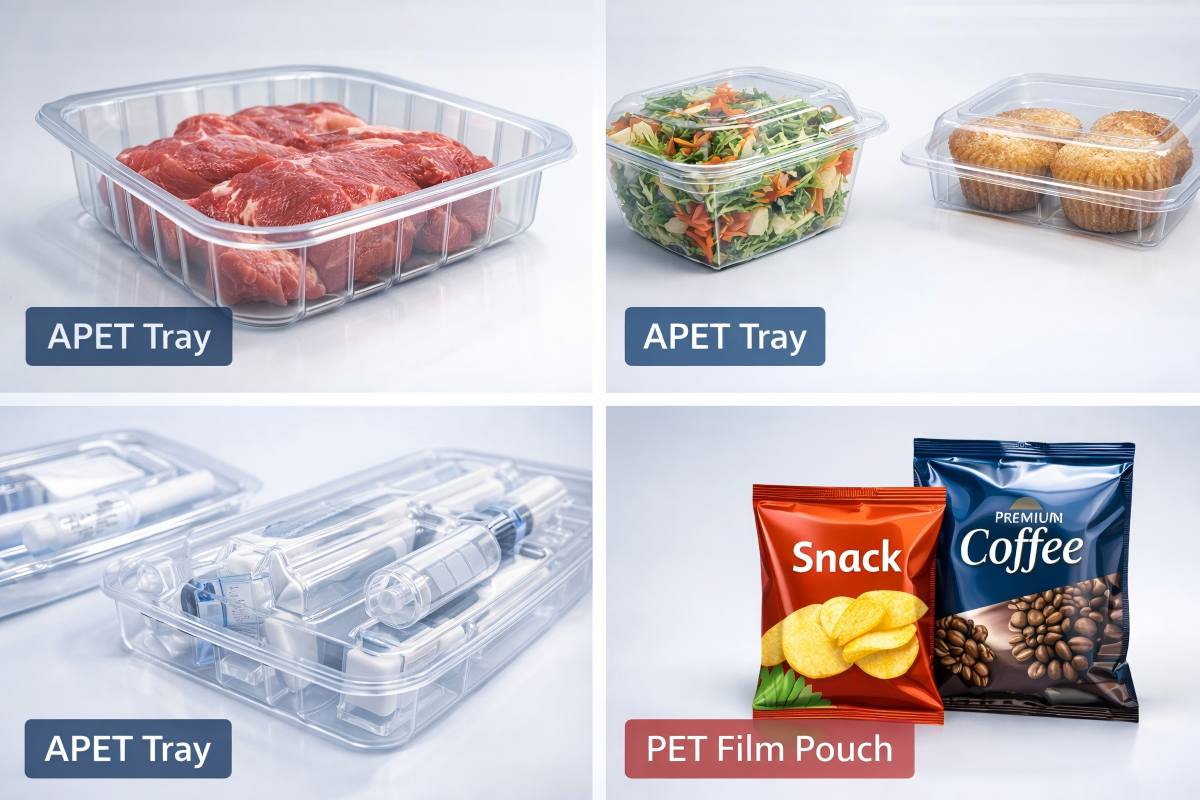
How APET And PET Work Together In Tray And Lidding Systems
In practice, the most common “APET vs PET” question is not “Which one should I choose?” but “How do I design a complete tray and lidding system that uses both materials efficiently?”
A typical chilled or ready-meal pack might look like this:
- Bottom web: APET or APET/PE tray, thermoformed for the required depth and footprint
- Top web: PET-based lidding film (PET/PE, PVDC PET/PE, PET/CPP or mono-PE easy-peel film) that seals to the tray rim
- Barrier options: metallized or PVDC-coated PET layers inside the lidding film to reach the necessary oxygen and moisture barrier
To design such systems, packers often combine technical references such as the “What Is Lidding Film” introduction and the detailed lidding packaging guide with APET tray data sheets and heat-sealable PET film data. The goal is to match seal strength, peelability, barrier and clarity while still fitting your tray-sealing machines and line speeds.
How CloudFilm Supports Your APET And PET Projects
When you specify APET and PET structures, you need a film manufacturer and supplier who can support both rigid and flexible solutions from one source. CloudFilm is a China-based flexible packaging film manufacturer and exporter focused on BOPET, APET and multi-layer films, together with custom laminates and recyclable pouch structures.
For buyers and converters who work with both APET trays and PET-based films, CloudFilm can provide:
- High-clarity APET sheet for thermoformed food and medical trays
- PET film portfolios covering gloss, matte, white, black, anti-static and heat sealable grades
- PET-based barrier films such as PVDC PET and ALOx PET for high-barrier laminates
- Application-ready laminates such as PET/PE film for pouches and lidding
- Technical support on forming windows, sealing parameters and line trials
If you want to simplify sourcing across films, pouches and lidding webs, you can start from the main site of CloudFilm flexible packaging films and custom pouches, then share your current specification or sample so the technical team can recommend equivalent or improved APET and PET-based solutions.
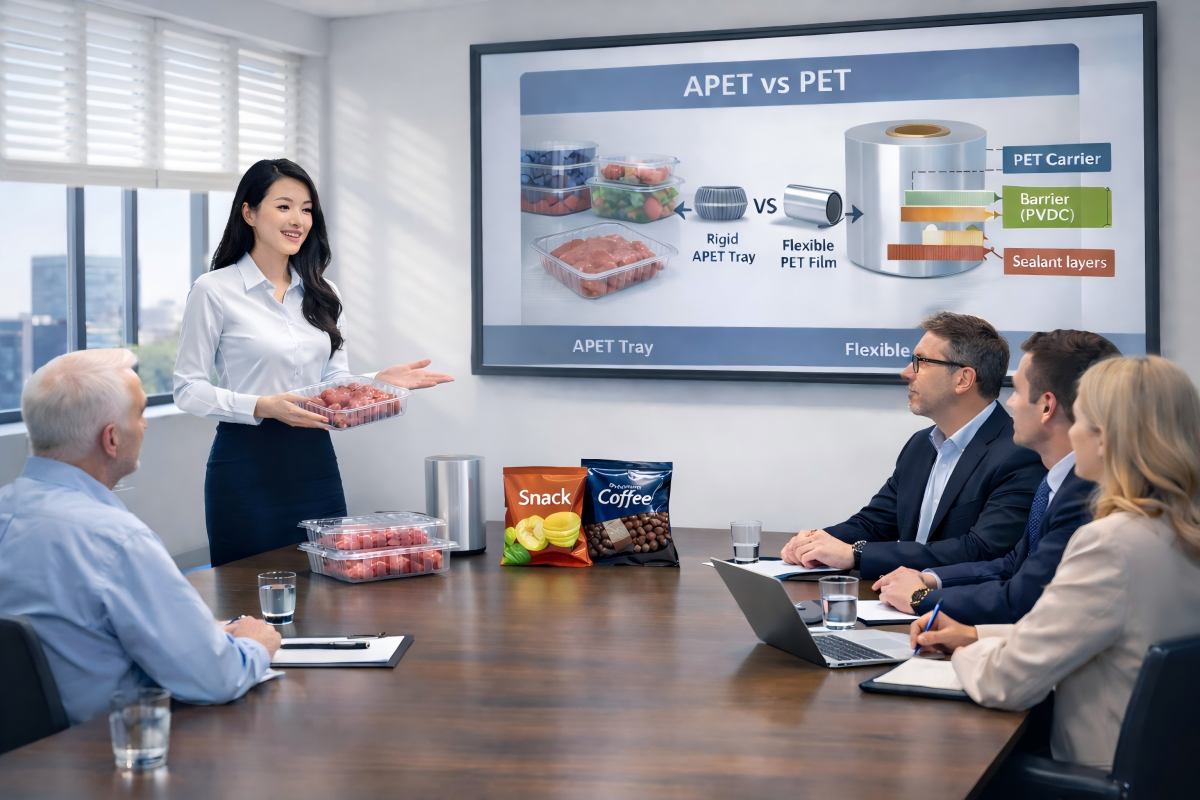
Buyer Checklist: Choosing Between APET And PET Film
When you qualify APET vs PET for a new project, work through the following checklist with your film supplier or manufacturer:
- Product type and shelf-life target
Is this fresh meat, ready meals, dairy, salad, snacks, frozen food, medical or industrial content? What is the required shelf life? - Pack format
Tray and lidding, hinged clamshell, pillow bag, stand-up pouch, sachet, label or shrink sleeve? - Mechanical requirements
Do you need rigid protection (APET tray) or only flexible films (PET-based laminate)? What about impact and puncture resistance? - Sealing conditions
Which sealing equipment do you use? What are the temperature, dwell time and pressure windows? Are you sealing to APET, CPET, PP or PE? - Barrier requirements
Do you need standard barrier (APET + PET) or high barrier with metallized or coated PET layers? - Recycling and sustainability
Does your target market favour mono-PET or PET/tray systems? Are there specific EPR or recyclability guidelines to follow? - Graphic and branding needs
Should graphics sit on a label, on a sleeve, or directly on a printed PET film? - Volumes and changeover
Do you need short-run, digital-ready flexible packs, or high-volume, long-run APET + PET lidding systems? - Supplier capability
Can your APET and PET film supplier provide data sheets, samples, trial support and stable monthly capacity?
Working through this checklist with a single APET and PET film manufacturer helps reduce miscommunication and speeds up time to market, because you align material structures, sealing windows and quality expectations from the start.
APET vs PET: FAQs For Buyers, Engineers And Converters
Q1. Is APET A Different Polymer From PET Film?
No. APET and PET film are based on the same polymer, polyethylene terephthalate. APET refers to amorphous PET sheet or film in a rigid format, mainly for thermoformed trays and clamshells, while PET film usually refers to biaxially oriented flexible BOPET rolls for printing, lamination and lidding.
Q2. How Is APET Different From CPET?
APET is amorphous, clear and primarily used for chilled or ambient trays that are not exposed to very high oven temperatures. CPET (crystallized PET) is modified to withstand higher heat, so it is used for ovenable ready-meal trays.
From a sourcing point of view, APET and CPET trays may come from the same or different suppliers. Always check temperature ratings and forming recommendations in the technical data sheet.
Q3. Can I Seal PET Film Directly To APET Trays?
Yes, many heat sealable PET films are formulated to seal directly to APET or CPET tray rims. However, sealability depends on the specific heat seal layer, sealing temperature, dwell time and pressure.
When you discuss with your film manufacturer, always specify:
- Tray material
- Sealing equipment
- Target peel strength (easy-peel, controlled peel or weld-seal)
Q4. When Should I Choose APET Trays Instead Of Fully Flexible PET/PE Pouches?
Choose APET trays when you need rigid protection, premium shelf presentation, portion control and strong impact resistance – for example in fresh meat, salads, ready meals and delicate confectionery.
Choose PET/PE or PET/CPP pouches when you prioritize lightweight materials, lower transport cost per unit, high line speed and the ability to use vertical or horizontal form-fill-seal equipment.
Q5. Are APET Trays And PET Films Recyclable Together?
In many markets, clear APET and clear PET films can enter similar PET recycling streams, especially when labels, inks and sealant layers are chosen carefully. However, local recycling rules and sorting technologies vary.
Always check local recyclability guidelines and share them with your APET and PET film supplier so they can recommend structures that align with your target recycling logos or EPR requirements.
Q6. What Thickness Range Should I Expect For APET And PET Film?
APET trays are commonly formed from sheet around 200–800 μm, sometimes thicker for very deep or heavy-duty trays.
PET film for flexible packaging is typically 12–23 μm for outer layers, with thicker gauges available for labels, insulation films or specialty industrial uses. Your film manufacturer can recommend thickness based on pack size, product weight, drop tests and line conditions.
Q7. Does APET Offer Better Barrier Than PET Film?
Both APET and PET film offer similar base-level barrier as polyester materials. The big difference is that PET film is easier to metallize or coat with PVDC, acrylic or other barrier layers, which can then be laminated into high-barrier structures.
APET trays normally rely on the combination of tray wall thickness and lidding film barrier to reach the required shelf life.
Q8. Can I Replace APET Trays With PET Film-Based Pouches To Save Cost?
Sometimes yes, but not always. Flexible PET/PE pouches can reduce material weight and logistics cost, and they work very well for many dry foods, snacks, frozen products and powders.
However, for fresh meat, delicate bakery, premium ready meals or retail formats where the product must be displayed in a rigid shape, APET trays still offer clear advantages. The best approach is to compare the full cost per packed unit, including product damage, retail presentation and logistics.
Q9. How Should I Talk To My Film Supplier About APET And PET Specifications?
When you contact an APET or PET film supplier, prepare the following information in advance:
- End product and filling conditions (chilled, frozen, ambient, hot-fill, microwave or ovenable)
- Target shelf life and distribution environment
- Tray material (APET, CPET, PP, PS) and sealing equipment
Desired peelability (easy-peel, controlled peel or weld-seal)
- Preferred pack format (tray and lidding, pouch, sachet or label)
- Annual or monthly volume and expected order pattern
Clear information allows the film manufacturer to propose realistic APET and PET solutions, send suitable samples and quote accurate prices faster.
Q10. Where Can I Find An APET And PET Film Manufacturer Or Supplier?
If you need a single partner able to supply rigid APET sheet and flexible PET-based films and laminates, look for a dedicated flexible packaging film manufacturer that focuses on BOPET, APET and related structures.
CloudFilm, for example, acts as both manufacturer and exporter of PET-based films and APET film, helping overseas buyers and converters match APET trays with PET lidding films, PET/PE laminates and other structures in one coordinated project.
Q11. How Does APET vs PET Compare To PET vs PETG?
APET vs PET is mainly about format(rigid vs flexible)within the same PET chemistry. PET vs PETG, by contrast, compares two related but different polymer modifications. PETG introduces glycol modification to improve toughness and ease of forming for applications such as shrink sleeves, thick sheets and some specialty packaging.
If your project involves PETG shrink sleeves, cosmetic containers or 3D-printed components, you can also refer to CloudFilm’s article on PET vs PETG to see where standard PET, APET and PETG each make the most sense.