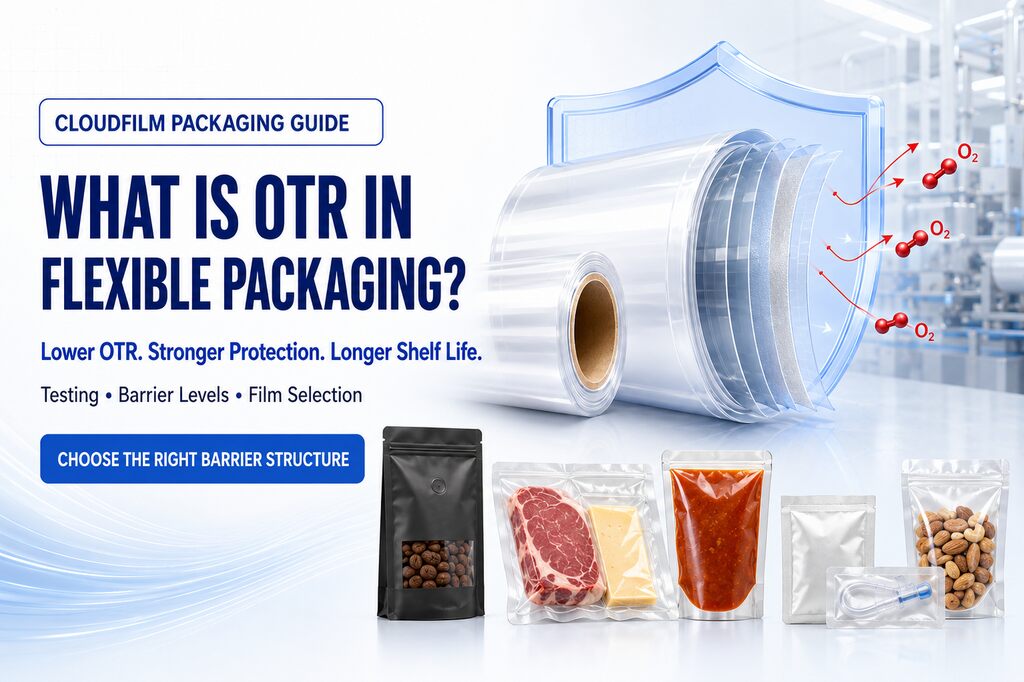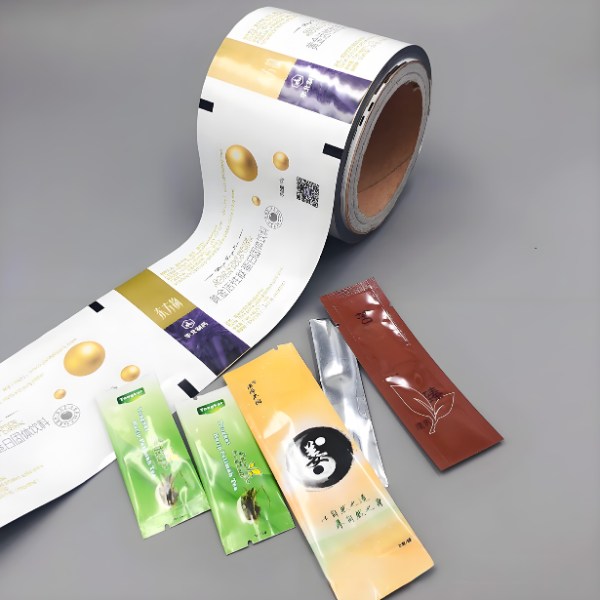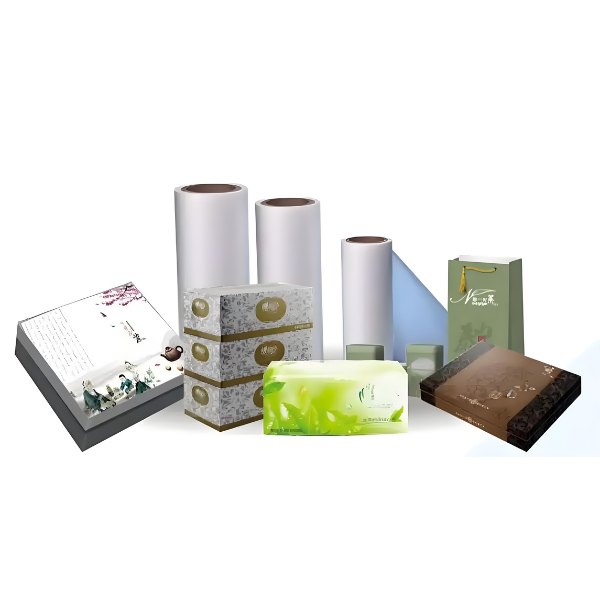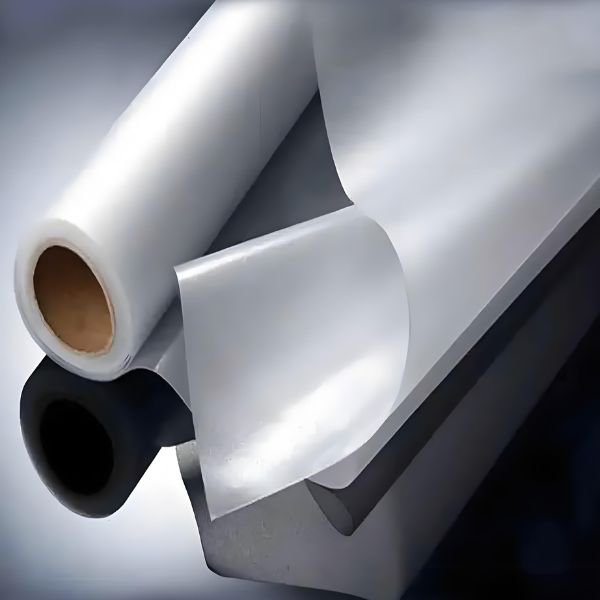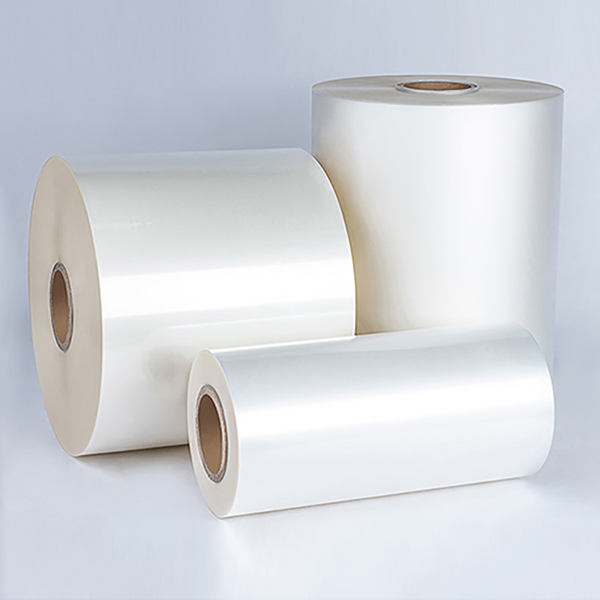
Thermal lamination is one of the most widely used finishing processes in packaging, publishing, labels, commercial printing, and premium brand materials. It combines a printed substrate with a pre-coated laminating film through heat, pressure, and controlled line speed. The result is a smoother surface, better scuff resistance, improved moisture protection, and a more attractive appearance for the final package.
For packaging buyers, converters, printers, and sourcing teams, understanding the thermal lamination process is important before choosing a film supplier or manufacturer. A good lamination result is not decided by film price alone. It depends on film type, adhesive layer, substrate surface, ink condition, machine temperature, nip pressure, running speed, roll tension, and the final converting process.
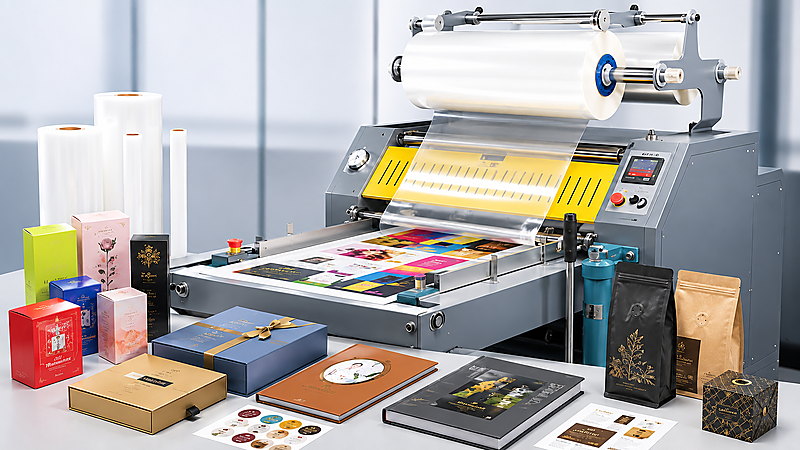
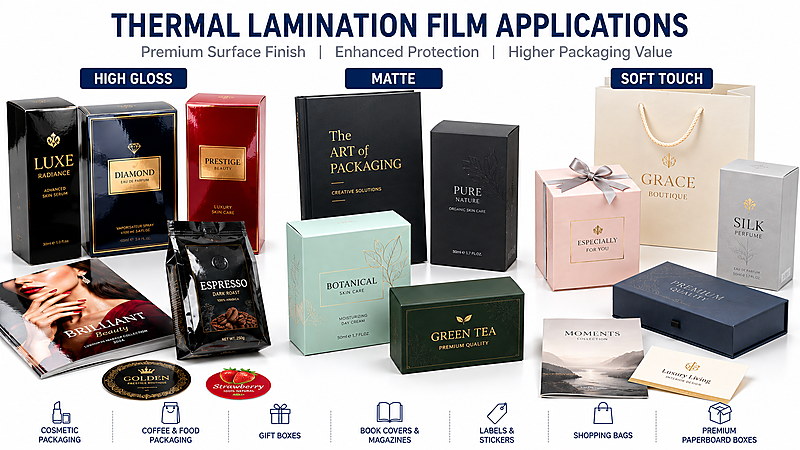
In many packaging projects, thermal lamination is used for paperboard boxes, book covers, catalog covers, labels, folding cartons, shopping bags, gift boxes, cosmetic boxes, food packaging sleeves, coffee packaging, and luxury retail packaging. It can create a glossy surface, a matte surface, or a special tactile finish such as soft touch.
What Is Thermal Lamination?
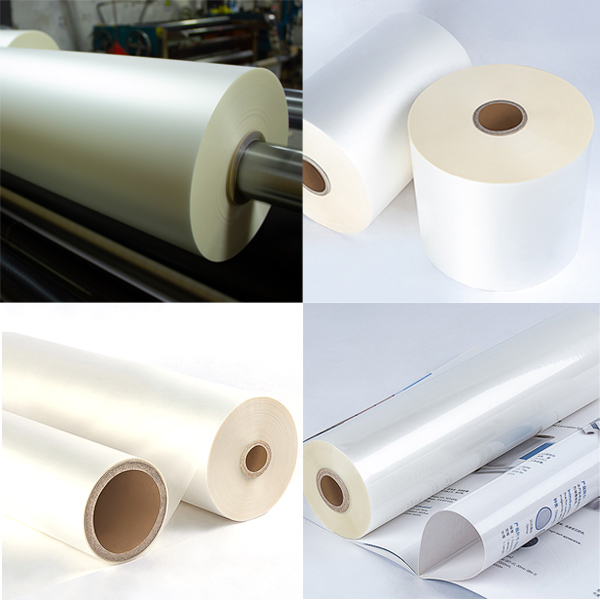
Thermal lamination is a process in which a pre-coated plastic film is bonded to a printed or unprinted substrate through heat and pressure. The film usually has a base layer, such as BOPP or PET, and a heat-activated adhesive layer, commonly EVA. When the film passes through a heated laminating roller, the adhesive layer softens and bonds to the surface of paper, paperboard, printed sheets, labels, or selected flexible packaging materials.
Unlike wet lamination or dry lamination, thermal lamination does not require liquid adhesive to be applied during the process. This makes it cleaner, easier to operate, and suitable for many printing and finishing workshops. For many buyers, it also reduces the need for adhesive mixing, drying ovens, and solvent handling.
Thermal lamination is widely used because it improves both appearance and performance. It can make printed packaging look brighter, deeper, more refined, and more durable. At the same time, it helps protect the printed surface from scratches, fingerprints, moisture, dirt, and handling damage.
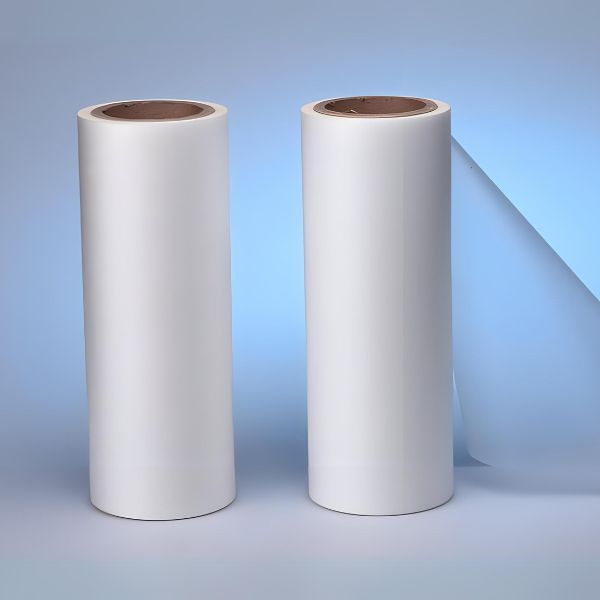
For customers who need a ready-to-use film roll, BOPP Thermal Lamination Film is often a practical choice for books, labels, paperboard boxes, and general packaging applications.
How The Thermal Lamination Process Works
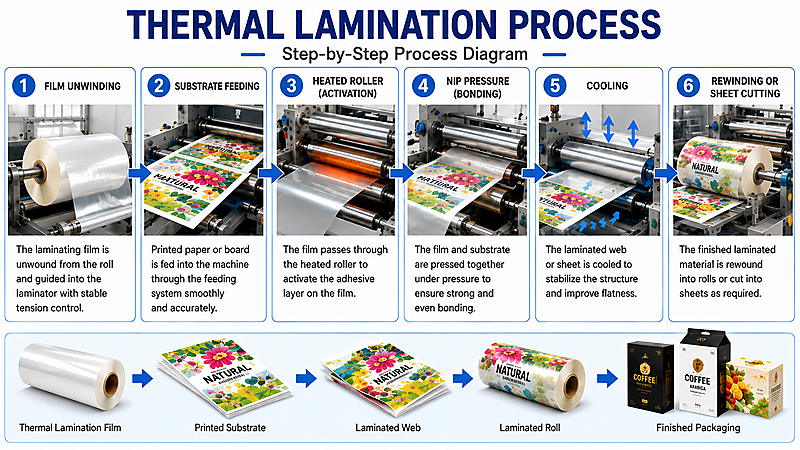
The thermal lamination process looks simple from the outside, but every stage affects the final bond strength and surface quality. A stable process should control film feeding, substrate feeding, heating, pressure, cooling, slitting, rewinding, and post-lamination curing time.
1. Film Unwinding And Web Tension
The laminating film is unwound from a roll and guided into the laminator. Stable web tension is important because excessive tension may stretch the film, while low tension may cause wrinkles, tracking problems, or uneven bonding. The core size, roll diameter, edge quality, and roll hardness also influence smooth unwinding.
2. Substrate Feeding
The printed paper, paperboard, label stock, or flexible material enters the machine from a separate feeding path. The surface must be clean, dry, flat, and fully cured. Wet ink, excessive spray powder, dust, oil, or rough coating can reduce adhesion and cause bubbles or delamination.
3. Heating The Film
The heated roller raises the temperature of the adhesive side of the thermal film. The goal is not to melt the base film, but to activate the adhesive layer enough to create a strong bond. Common running temperatures depend on film grade, adhesive type, substrate, ink coverage, and machine speed.
4. Nip Pressure And Bonding
The film and substrate meet at the nip roller. Heat softens the adhesive, pressure pushes the film into full contact with the substrate, and dwell time allows the adhesive to wet the surface. If pressure is too low, the bond may be weak. If pressure is too high, paper may be crushed or the film may show marks.
5. Cooling And Stabilization
After bonding, the laminated web or sheet needs to cool and stabilize. Proper cooling helps reduce curl, blocking, and surface distortion. For some heavy ink coverage or demanding converting work, buyers should allow enough time before die-cutting, creasing, folding, or hot stamping.
6. Slitting, Cutting, And Rewinding
The laminated material may be sheeted, slit, rewound, or converted into finished packaging. Edge quality matters because poor slitting can create dust, edge cracks, telescoping rolls, or downstream machine problems.
Main Types Of Thermal Lamination Film
The right film type depends on the final product, surface finish, durability requirement, cost target, and converting process. For most packaging and printing projects, BOPP and PET are the two main base films.
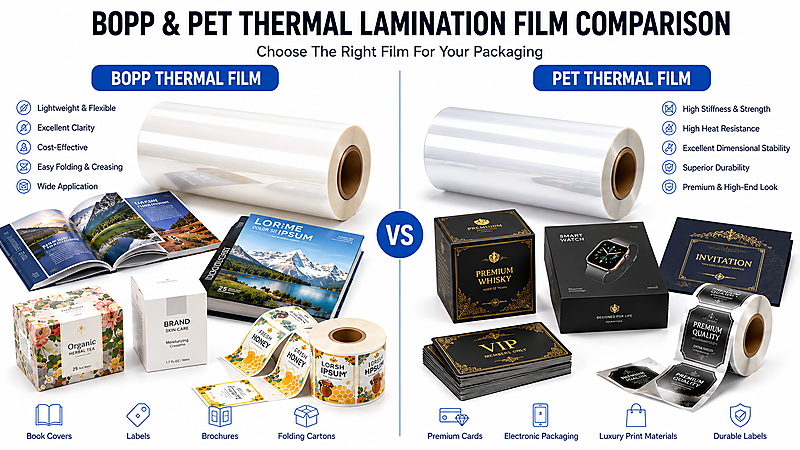
BOPP Thermal Lamination Film
BOPP thermal film is lightweight, cost-effective, flexible, and widely used for book covers, paperboard boxes, catalogues, labels, brochures, and folding cartons. It is suitable when buyers need good clarity, gloss, matte appearance, moisture resistance, and balanced cost. BOPP is also easier to crease and fold than stiffer films, making it useful for printed cartons and paper bags.
PET Thermal Lamination Film
PET thermal film has higher stiffness, better heat resistance, and stronger dimensional stability. It is commonly selected for premium packaging, cards, certificates, industrial labels, electronic product packaging, and applications that need a more rigid laminated structure. When buyers need better durability or a higher-end surface, PET Thermal Lamination Film can be a better option than standard BOPP.
Gloss Thermal Lamination Film
Gloss film increases brightness, color depth, and visual impact. It is often used for promotional packaging, catalogs, gift boxes, book covers, and retail display materials. Gloss finish works especially well when the artwork uses vivid colors, product photos, or high-contrast graphics.
Matte Thermal Lamination Film
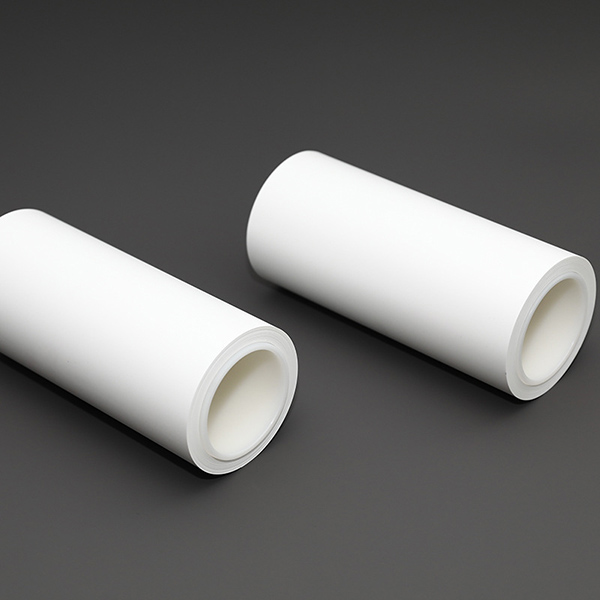
Matte film reduces glare and gives packaging a calm, premium, non-reflective appearance. It is popular for luxury boxes, cosmetic packaging, book covers, electronics packaging, and high-end printed materials. For buyers comparing matte grades, BOPP Matte Film is a practical option for low-gloss packaging and publishing projects.
Soft Touch Thermal Lamination Film
Soft touch film provides a velvet-like, peach-skin surface that makes packaging feel warmer and more premium in hand. It is especially suitable for luxury cartons, perfume boxes, premium labels, wine and spirits packaging, and high-end book covers. For this tactile finish, buyers can compare Soft Touch BOPP Film with Soft Touch Polyester Film based on cost, stiffness, heat resistance, and application.
Key Process Parameters Buyers Should Understand
Even a high-quality thermal lamination film can fail if the process settings are wrong. Before confirming a bulk order, buyers should test the film under real production conditions and record the best machine parameters.
Temperature
Temperature must be high enough to activate the adhesive layer, but not so high that it causes film shrinkage, curl, orange peel, bubbles, or ink damage. Higher machine speed usually requires higher temperature because the film has less dwell time on the heated roller.
Pressure
Pressure helps the softened adhesive wet the substrate surface. Uneven pressure can cause silvering, bubbles, weak adhesion, or streaks. For paperboard packaging, pressure should be strong enough for bonding but controlled enough to avoid crushing the board.
Speed
Speed affects heat transfer and adhesive activation. Running too fast may cause weak bonding, while running too slow may overheat the film or substrate. A stable production window usually balances speed, temperature, and pressure together.
Ink And Surface Condition
Ink must be fully dry and cured before lamination. Heavy ink coverage, metallic ink, UV coating, anti-setoff powder, varnish, and low-surface-energy coatings can all influence adhesion. For flexible packaging or labels, surface treatment and ink compatibility should be confirmed during trial production.
Storage Conditions
Thermal lamination film should be stored in a clean, dry environment away from high heat, direct sunlight, and moisture. Paper and paperboard should also be conditioned properly. If the film and substrate absorb different levels of moisture, the laminated product may curl or warp.
Common Thermal Lamination Problems And Causes
Lamination defects are usually caused by a combination of film, substrate, printing, and machine conditions. Understanding the cause helps buyers communicate more clearly with their supplier and production team.
Poor Adhesion
Poor adhesion may be caused by low temperature, insufficient pressure, fast speed, uncured ink, too much spray powder, unsuitable coating, or an incompatible adhesive layer. If the film peels easily after cooling, buyers should check both machine settings and surface compatibility.
Bubbles Or Silvering
Bubbles can appear when air is trapped between film and substrate. Silvering often appears on rough paper, textured paperboard, or heavy ink areas where the adhesive does not fully fill the surface. Increasing temperature, pressure, or using a more suitable adhesive grade may improve the result.
Wrinkles
Wrinkles can come from uneven web tension, poor roll alignment, unstable substrate feeding, damaged rollers, or incorrect pressure balance. Roll quality and machine setup should both be checked.
Curling
Curling may happen when film shrinkage, paper moisture, temperature, and tension are not balanced. Thin paper, one-side lamination, and high heat increase the risk. Cooling and conditioning are important before further converting.
Delamination After Creasing Or Die-Cutting
If laminated cartons open or peel after creasing, the film may be too stiff, the bond may be weak, or the crease design may be too aggressive. Buyers should test creasing, folding, embossing, hot stamping, and glue performance before mass production.
Applications In Packaging And Printing
Thermal lamination is used wherever printed materials need a better surface and longer service life. In packaging, the process is especially useful because products are handled, shipped, displayed, opened, and sometimes stored for long periods.
Luxury Paperboard Packaging
Cosmetic boxes, perfume boxes, chocolate boxes, wine boxes, gift boxes, and electronics cartons often use gloss, matte, or soft touch lamination to improve shelf appeal. A premium surface can make the package feel more valuable before the customer opens it.
Food And Beverage Packaging
Thermal lamination can be used on food sleeves, labels, paperboard cartons, coffee packaging, bakery boxes, and printed overwrap structures when the material design is suitable. For flexible rollstock or custom laminated structures, buyers can also review Packaging Film Roll options.
Publishing And Commercial Printing
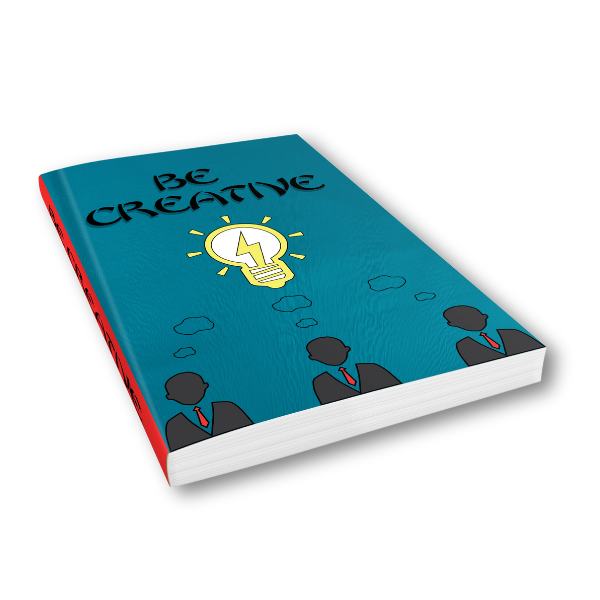
Book covers, magazine covers, catalogues, notebooks, presentation folders, brochures, and business cards often use thermal lamination for scuff resistance and a professional finish.
Labels And Tags
Thermal film can protect printed labels and tags from handling, moisture, fingerprints, and abrasion. For label printing, the printing surface, adhesive label stock, die-cutting performance, and final use environment should be tested together.
Flexible Packaging Projects
In flexible packaging, thermal lamination is not the only process. Many pouches, rollstock structures, and high-barrier packs use adhesive lamination, extrusion lamination, or other converting methods. However, thermal lamination remains useful for selected printed surfaces, paper-based packaging, labels, and premium finishing work. For brands and converters planning complete structures, Flexible Packaging Solutions can help connect film choice, packaging format, barrier needs, sealing performance, and sustainability targets.
How To Choose A Thermal Lamination Film Supplier Or Manufacturer
For international packaging buyers, selecting the right thermal lamination film supplier is not only about asking for the lowest price. A reliable manufacturer should help you reduce trial risk, control quality, and match film performance with your printing and converting conditions.
Check Film Structure And Technical Data
Ask for film type, total thickness, base film thickness, adhesive layer, roll width, core size, roll length, surface finish, and recommended processing window. For special applications, request a technical data sheet and sample before bulk production.
Match The Film To The Final Package
A book cover does not need exactly the same film as a luxury cosmetic box, folding carton, label, or electronics package. Tell your supplier the substrate, printing method, ink type, finishing process, and end-use requirements. If the printed layer is BOPP-based, BOPP Printing Film may also be relevant for the outer print layer of flexible structures.
Request Samples For Real Machine Testing
A sample should be tested on the buyer’s actual laminator whenever possible. Test adhesion after cooling, surface appearance, curl, die-cutting, creasing, folding, hot stamping, spot UV, glue compatibility, and packing performance.
Evaluate Export And Communication Capability
For overseas buyers, the supplier should understand export packing, pallet protection, container loading, documentation, and shipping communication. Clear communication is especially important when custom widths, multiple roll sizes, or urgent replenishment orders are involved.
Consider Total Cost, Not Only Unit Price
A cheaper film can become expensive if it causes high scrap, slow speed, delamination, customer complaints, or late delivery. A stable thermal lamination film can improve line efficiency and reduce hidden cost in the whole packaging project.
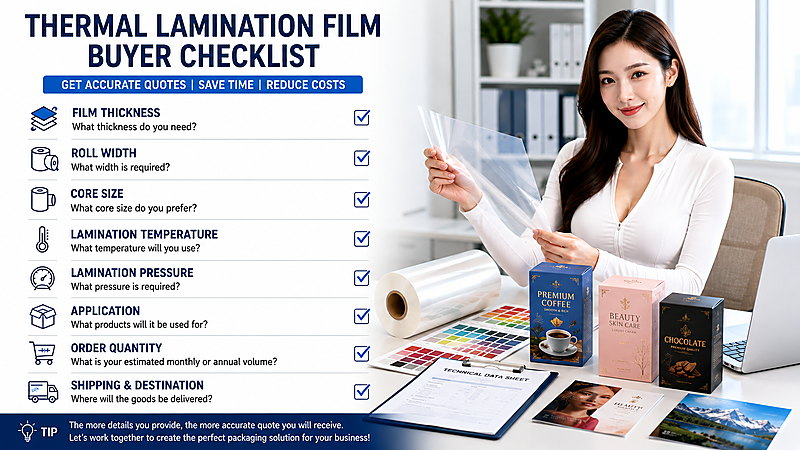
Buyer Checklist Before Requesting A Quote
To receive an accurate quotation, buyers should prepare the following details:
- Film type: BOPP, PET, matte, gloss, soft touch, anti-scratch, or special finish.
- Required thickness and tolerance.
- Roll width, roll length, core size, and maximum roll diameter.
- Substrate type: paper, paperboard, label stock, printed film, or other material.
- Printing method: offset, gravure, flexo, digital, or screen printing.
- Ink type and surface coating, including UV varnish, water-based coating, metallic ink, or heavy ink coverage.
- Application: book cover, folding carton, luxury box, label, sleeve, shopping bag, or other use.
- Post-processing: die-cutting, creasing, folding, embossing, hot stamping, spot UV, gluing, or pouch converting.
- Order quantity, destination port, delivery schedule, and required documents.
Frequently Asked Questions About Thermal Lamination Process
What is the purpose of thermal lamination?
The purpose is to bond a protective and decorative film onto a printed or unprinted substrate. It improves appearance, touch, scuff resistance, moisture resistance, and overall product presentation.
What is the difference between thermal lamination and cold lamination?
Thermal lamination uses heat and pressure to activate a pre-coated adhesive layer. Cold lamination uses pressure-sensitive adhesive and does not require heat, but it is usually more expensive and used for heat-sensitive materials or small-format applications.
What is the difference between thermal lamination and dry lamination?
Thermal lamination uses a film that already has a heat-activated adhesive layer. Dry lamination applies adhesive separately, dries it, and then bonds materials together. Dry lamination is common in flexible packaging structures that need stronger performance or special barrier combinations.
Which is better, BOPP or PET thermal lamination film?
BOPP is usually more cost-effective and flexible, making it suitable for books, cartons, labels, and general packaging. PET is stiffer, stronger, and more heat resistant, so it is better for premium cards, durable labels, electronic packaging, and applications that need higher dimensional stability.
Can thermal lamination film be used for food packaging?
Yes, it can be used in suitable food packaging structures, especially as an outer finishing layer on cartons, sleeves, labels, and selected flexible packaging. Buyers should confirm food-contact requirements, migration limits, and local regulations with the supplier before production.
Why does thermal lamination sometimes peel off?
Peeling may happen because of low temperature, weak pressure, high speed, uncured ink, spray powder, unsuitable varnish, rough paper, poor adhesive compatibility, or insufficient cooling and curing time.
Why do bubbles appear after lamination?
Bubbles may come from trapped air, rough substrate, wet ink, high moisture, dust, insufficient heat, or uneven pressure. Testing the same film on different substrates can help identify whether the main cause is the film, paper, ink, or machine setting.
What temperature should be used for thermal lamination?
The correct temperature depends on film grade, adhesive type, substrate, ink coverage, and machine speed. Buyers should follow the supplier’s recommended processing window and adjust based on real production results.
Can thermal lamination be used on digital prints?
Yes, but digital prints may have toner, oil, wax, or special ink surfaces that affect adhesion. Buyers should test the exact print system and, when necessary, choose a digital-compatible thermal film.
Can I do hot stamping or spot UV after thermal lamination?
Yes, but not all films and surfaces perform the same. Matte, soft touch, and anti-scratch surfaces may need special hot stamping foil, UV varnish, or process adjustment. Always test before mass production.
How long should laminated sheets rest before die-cutting?
The required resting time depends on substrate, ink, adhesive layer, temperature, and downstream process. For demanding carton work, allowing the laminated sheets to cool and stabilize before die-cutting and creasing can reduce peeling and curl.
What information should I send to a thermal lamination film supplier?
Send film type, thickness, width, core size, roll length, substrate, printing method, ink type, application, post-processing requirements, quantity, destination, and any test standard you need.
Can thermal lamination make packaging look more premium?
Yes. Gloss lamination can make colors brighter. Matte lamination can create a calm, elegant surface. Soft touch lamination can add a velvet-like hand feel that is often used for luxury packaging.
Is thermal lamination suitable for recyclable packaging?
It depends on the material combination and local recycling stream. Mono-material designs are generally easier to recycle than mixed-material structures. Buyers should discuss recyclability goals with the supplier at the beginning of the project.
Conclusion
The thermal lamination process is more than simply adding a film to printed packaging. It is a controlled combination of material selection, adhesive activation, heat, pressure, speed, substrate quality, and post-processing performance. When all these factors are matched correctly, thermal lamination can give packaging a cleaner look, stronger protection, better shelf appeal, and a more professional hand feel.
For buyers, the best approach is to choose the film according to the final product, not only according to price. BOPP thermal lamination film is practical for many general packaging and printing projects. PET thermal lamination film is better for stiffness, durability, and higher heat resistance. Matte and soft touch films help create premium finishes for luxury packaging, labels, and retail products.
A reliable thermal lamination film manufacturer should support buyers with samples, technical data, stable roll quality, suitable processing guidance, export packing, and clear communication. Before placing a bulk order, test the film on your real substrate, real ink system, and real converting process. This is the safest way to turn a good-looking sample into stable commercial production.