The printing and packaging industry is no longer only about putting graphics on a bag, label, carton, or pouch. For modern brands, importers, converters, and distributors, packaging is a complete business system. It connects product protection, shelf appeal, filling-line efficiency, logistics safety, consumer convenience, and long-term brand value.
For buyers in food, beverage, pet food, coffee, personal care, household products, medical packaging, and industrial goods, the right packaging decision starts much earlier than artwork. Before choosing colors, finishes, and logo position, buyers need to understand the material structure, printing process, barrier level, sealing layer, pouch format, and supplier capability.
This guide explains how the printing and packaging industry works from a practical buyer’s point of view, especially for companies that use flexible packaging films, laminated roll stock, and custom pouches.
What Is The Printing And Packaging Industry?
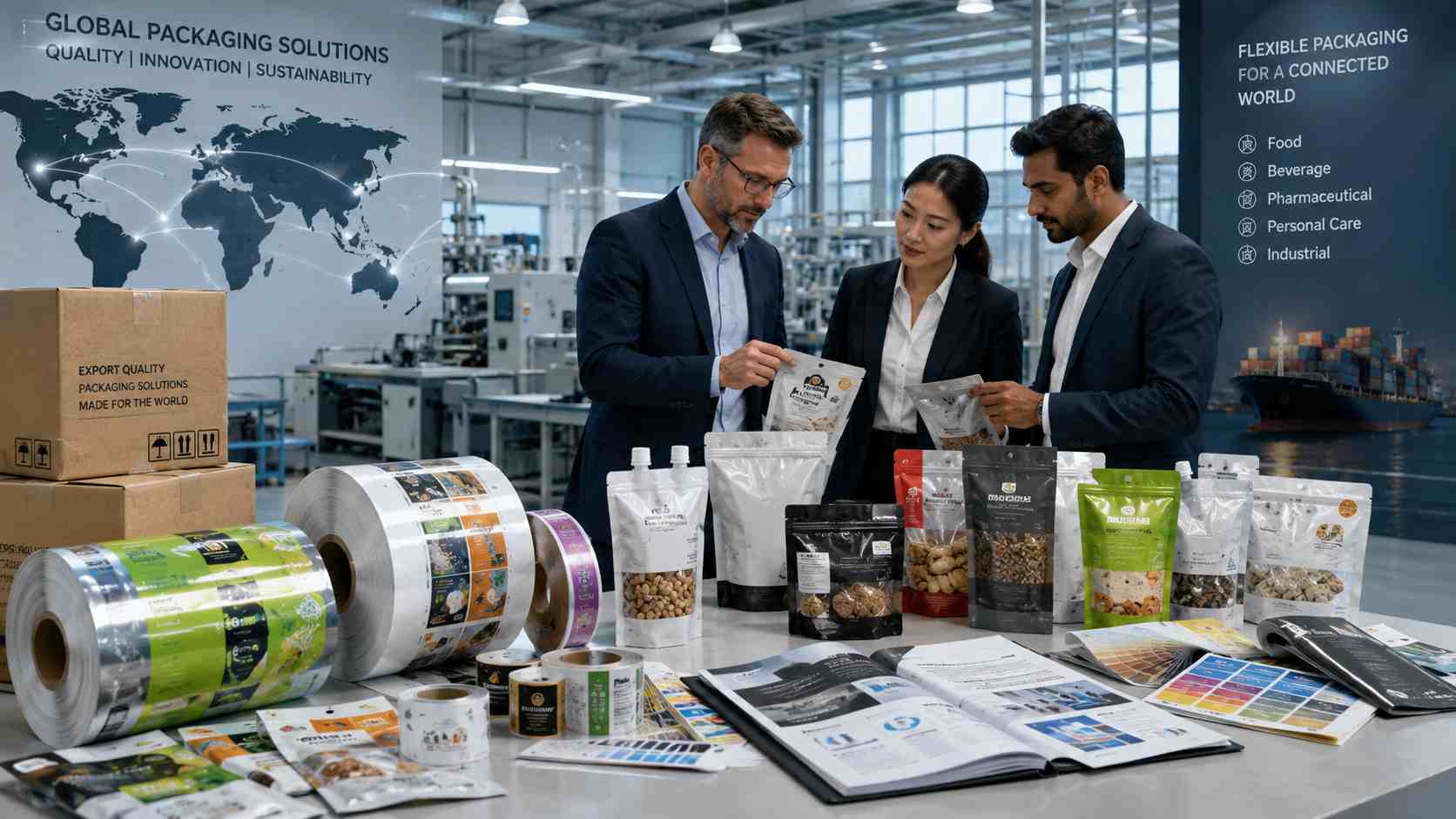
The printing and packaging industry includes all activities related to designing, printing, converting, and supplying packaging materials for commercial products. It covers flexible films, pouches, labels, folding cartons, corrugated boxes, rigid containers, shrink sleeves, lidding films, and other formats used to protect and present goods.
In flexible packaging, the industry often starts with polymer films such as BOPP, PET, PA, CPP, PE, EVOH, aluminum foil, metallized films, coated films, or recyclable mono-material films. These materials can be printed, laminated, slit, sealed, and converted into roll stock or pre-made pouches.
For buyers who are comparing different packaging options, flexible packaging solutions can help connect product requirements with suitable film structures, pouch formats, and converting methods.
Why Printing And Packaging Matter To Product Success
Packaging has several important jobs. It must protect the product, communicate the brand, fit the filling machine, survive transport, and meet the expectations of retailers and consumers. A beautiful package that leaks is a failure. A strong package with poor print quality may also fail because it cannot support the brand image on the shelf.
This is why professional packaging buyers usually evaluate both appearance and performance. They look at color accuracy, gloss or matte effect, barrier performance, seal strength, puncture resistance, stiffness, transparency, heat resistance, and machinability.
For food and beverage products, packaging also needs to protect freshness. Oxygen, moisture, aroma loss, grease, light, and temperature can all affect shelf life. For this reason, many buyers start with food packaging film before deciding the final printed structure.
Main Materials Used In Flexible Printed Packaging
Flexible packaging materials are selected according to product type, shelf life, packing machine, storage conditions, and brand positioning.
PET is widely used as an outer layer because it offers good clarity, stiffness, printability, and dimensional stability. In many laminated structures, PET is printed on the reverse side and laminated to a sealant layer. For general food, medical, and industrial packaging that needs clarity and sealing performance, PET/PE film is a common structure.
PA, also known as nylon, is valued for puncture resistance, toughness, and oxygen barrier. It is often used for vacuum packaging, meat, cheese, seafood, medical products, and sharp or heavy products. When a package needs strong barrier and reliable sealing, PA/PE film is often considered.
PE is commonly used as the inner sealant layer because it provides heat sealing, flexibility, moisture resistance, and good contact with filling lines. CPP can also be used as a sealing layer, especially for some retort, high-clarity, or PP-based structures.
EVOH is used when the product is oxygen-sensitive and needs stronger barrier protection. Metallized PET, aluminum foil, PVDC-coated films, and ALOx-coated films may also be used when higher barrier performance is required.
Common Printing Methods In Packaging
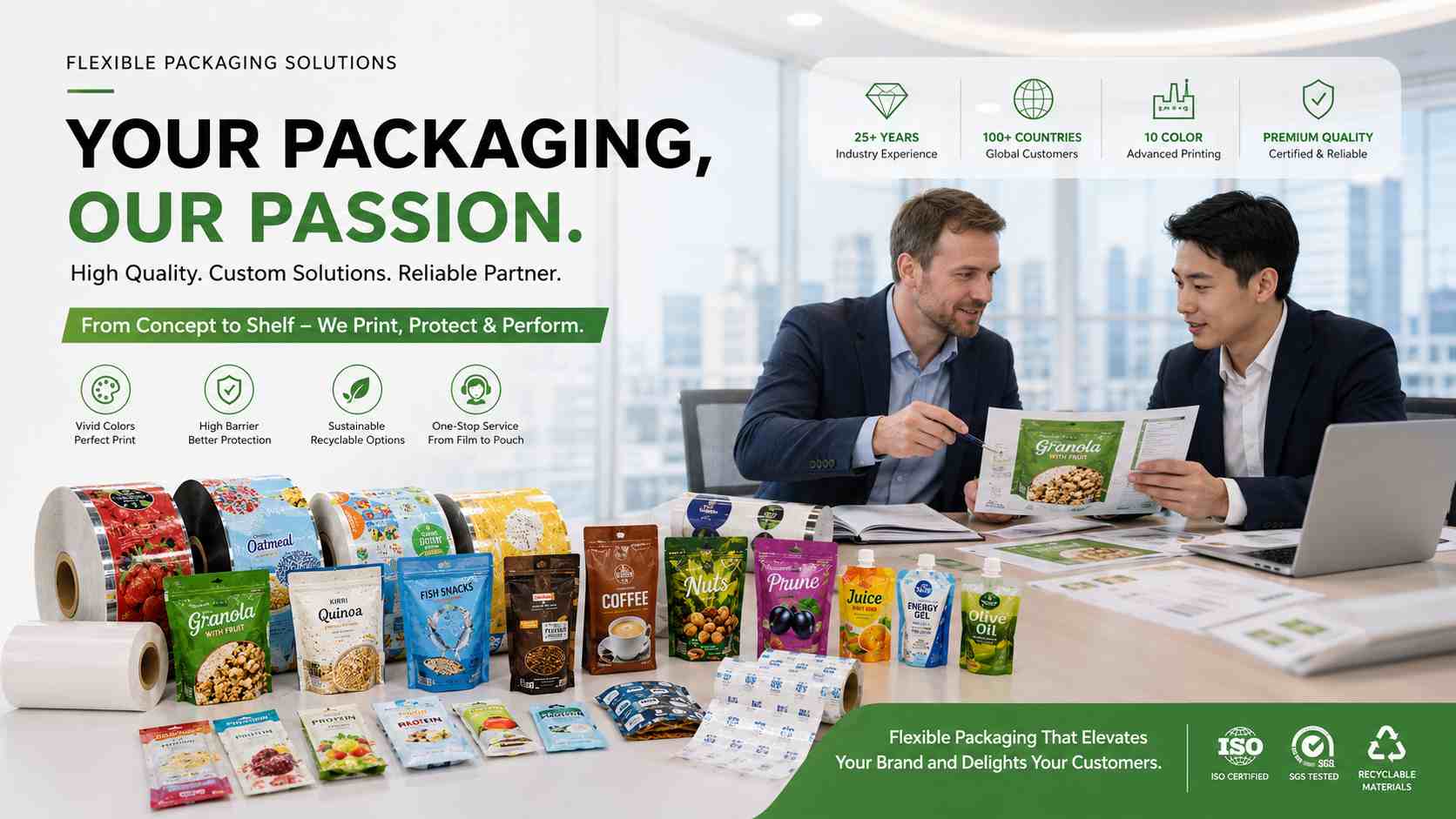
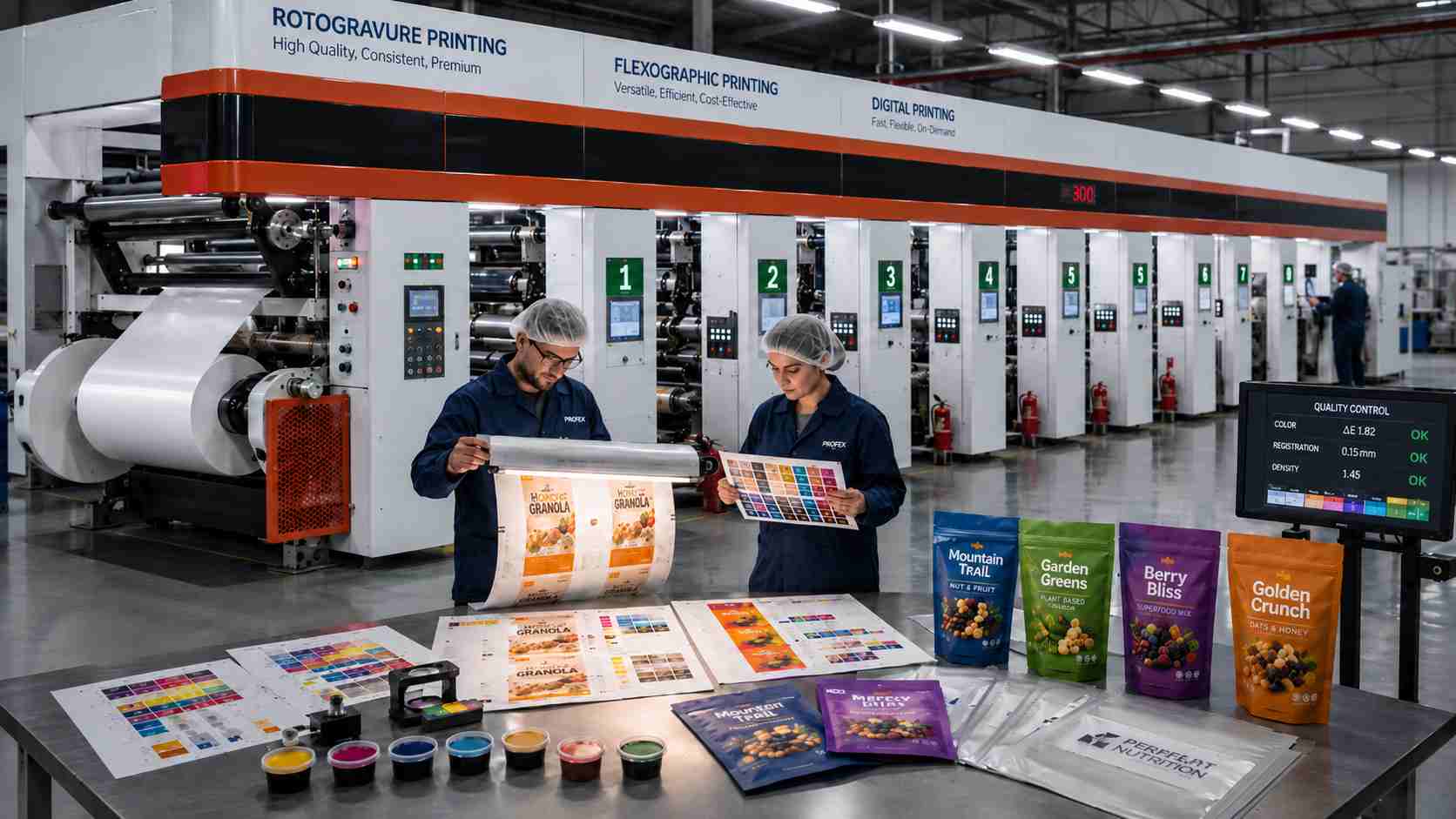
The most common printing methods for packaging include rotogravure printing, flexographic printing, digital printing, and offset printing. Each method has its own strengths.
Rotogravure printing is widely used for high-volume flexible packaging. It delivers strong color density, stable repeat quality, and excellent results for complex graphics. It is suitable for large orders of roll stock, snack bags, coffee bags, pet food pouches, and liquid packaging.
Flexographic printing is flexible and efficient for many packaging formats. It can be suitable for films, labels, paper, corrugated packaging, and medium-to-large production runs. Flexo is often used when buyers need a balance between cost, quality, and production speed.
Digital printing is useful for short runs, test markets, seasonal designs, private labels, and multiple SKUs. It reduces plate costs and helps brands launch packaging faster. However, the final choice depends on order quantity, artwork complexity, substrate, color standard, and budget.
For a deeper explanation of printing methods and supplier evaluation, buyers can also review this guide to flexible packaging printing.
From Printed Film To Finished Packaging
Printed packaging is usually not finished immediately after printing. In flexible packaging, the printed film may need lamination, curing, slitting, and pouch making.
For example, a snack brand may use printed PET laminated with PE. A coffee brand may use PET/AL/PE or high-barrier recyclable PE structures. A meat processor may use PA/PE vacuum film. A beverage or baby food brand may need spout pouches with high-barrier layers and strong sealing around the fitment.
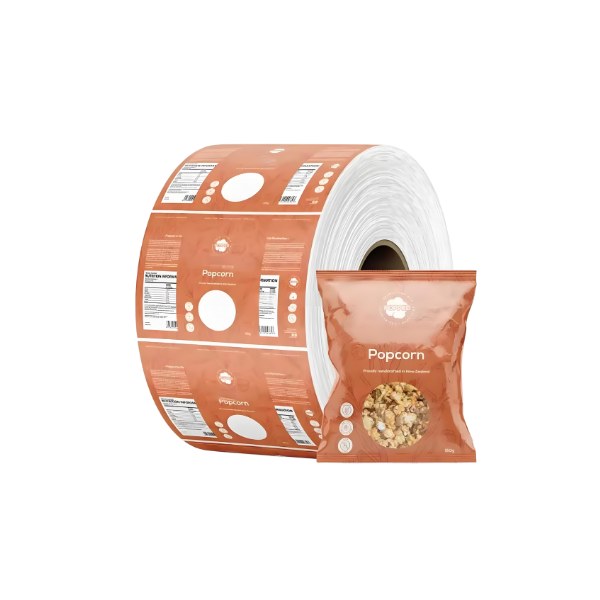
When buyers use automatic packing machines, roll stock film is often supplied in reels for VFFS, HFFS, or flow-wrap lines. Roll stock must have stable thickness, smooth unwinding, correct COF, accurate roll width, and reliable sealing behavior.
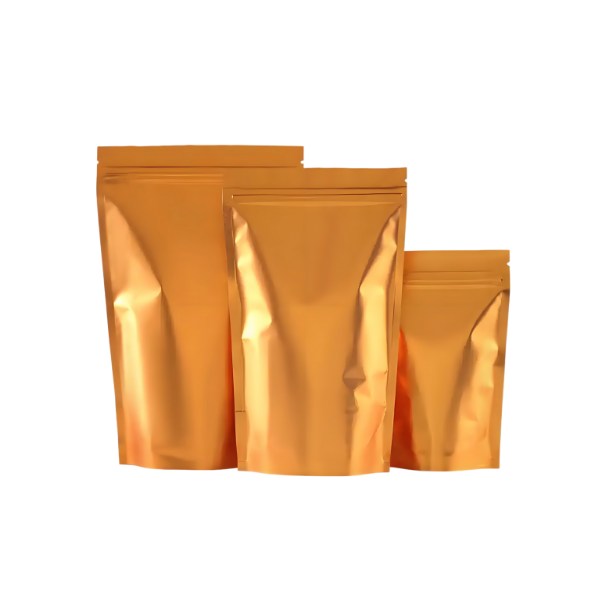
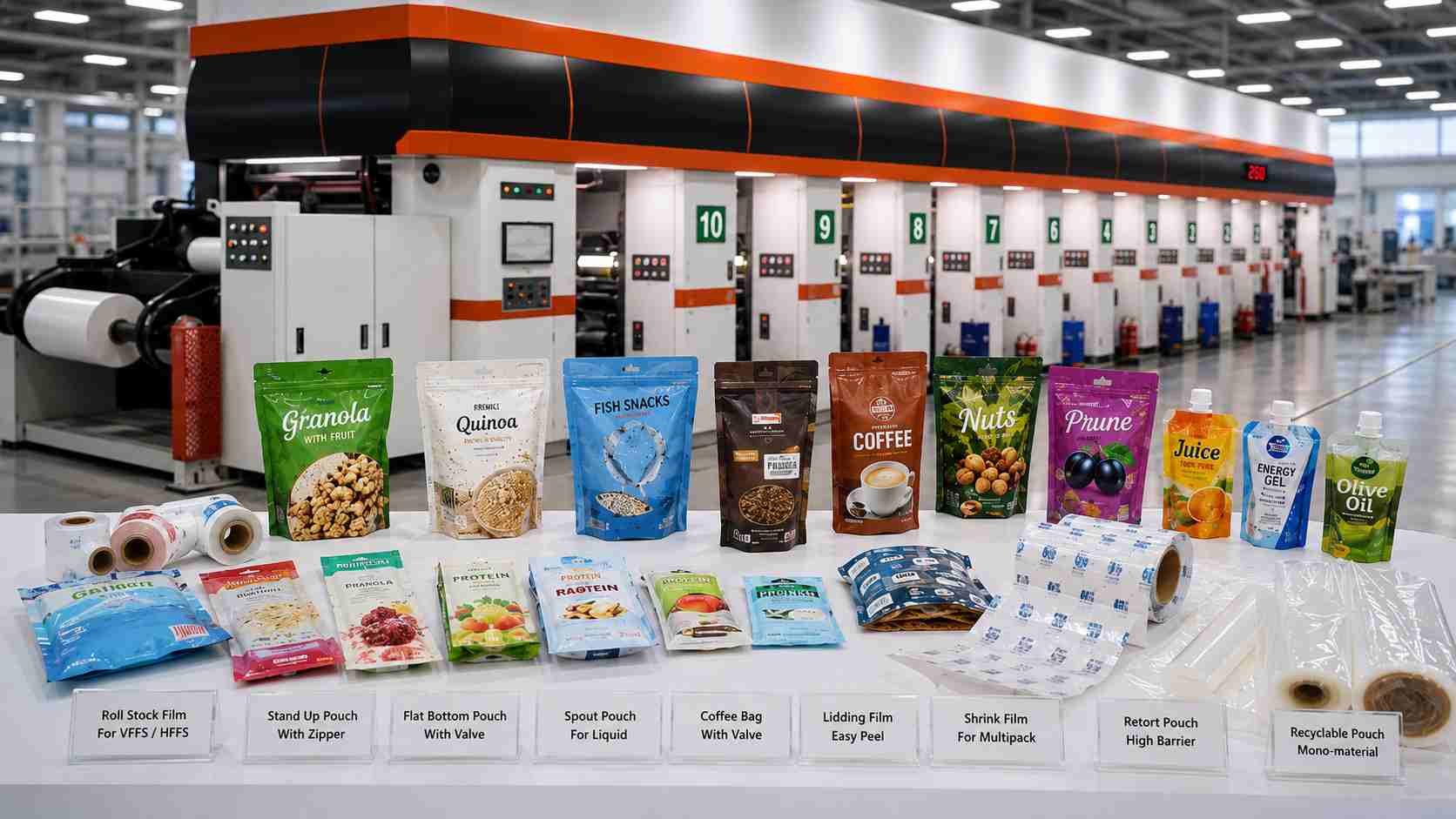
When buyers need retail-ready packaging, pre-made pouches may be a better choice. Common formats include stand up pouches, flat bottom pouches, three-side seal pouches, spout pouches, shaped pouches, retort pouches, vacuum pouches, and recyclable pouches.
Main Packaging Formats In The Industry
Different packaging formats serve different product needs.
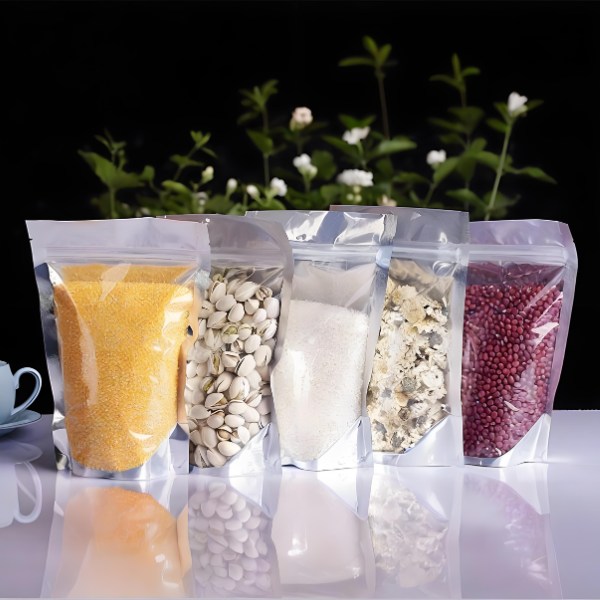
Stand up pouches are popular for snacks, pet food, dried fruit, coffee, powder, supplements, cosmetics, and refill products. They offer good shelf display and can include zipper, valve, window, handle, tear notch, or spout. For many brand owners, stand up pouches are a practical choice when they want both function and shelf impact.
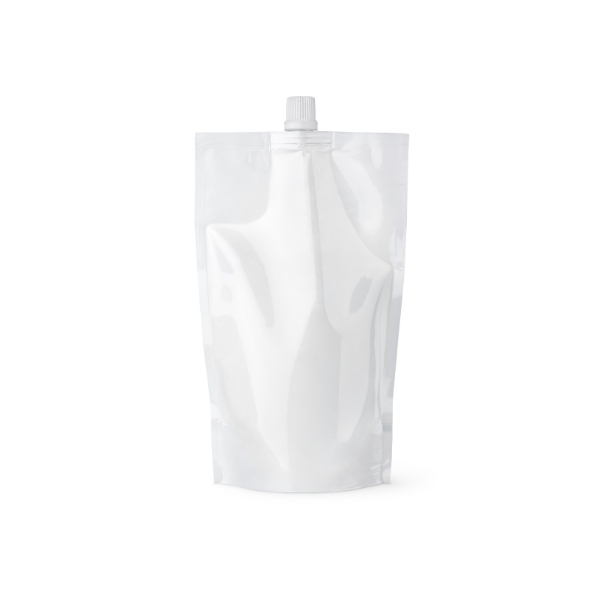
Spout pouches are widely used for beverages, baby food, sauces, detergents, cosmetics, and liquid refills. They reduce weight compared with rigid bottles and offer consumer convenience through reclosable caps. For liquid and semi-liquid products, spout pouches can support brand differentiation and logistics efficiency.
Coffee packaging bags require aroma protection, oxygen barrier, and often a degassing valve. For roasted coffee beans and grounds, coffee packaging bags can use high-barrier structures and premium finishes to protect freshness and strengthen brand image.
Lidding films and easy-peel structures are widely used for trays, ready meals, dairy, fresh food, medical trays, and convenience products. When easy opening is important, easy peel film can improve the consumer experience while maintaining sealing performance.
Packaging Applications Across Different Industries
The printing and packaging industry serves almost every consumer and industrial market.
Food packaging needs freshness protection, attractive printing, food-contact safety, and stable sealing. Snacks, frozen food, meat, cheese, dried fruit, bakery, rice, sauces, coffee, and ready meals all require different structures.
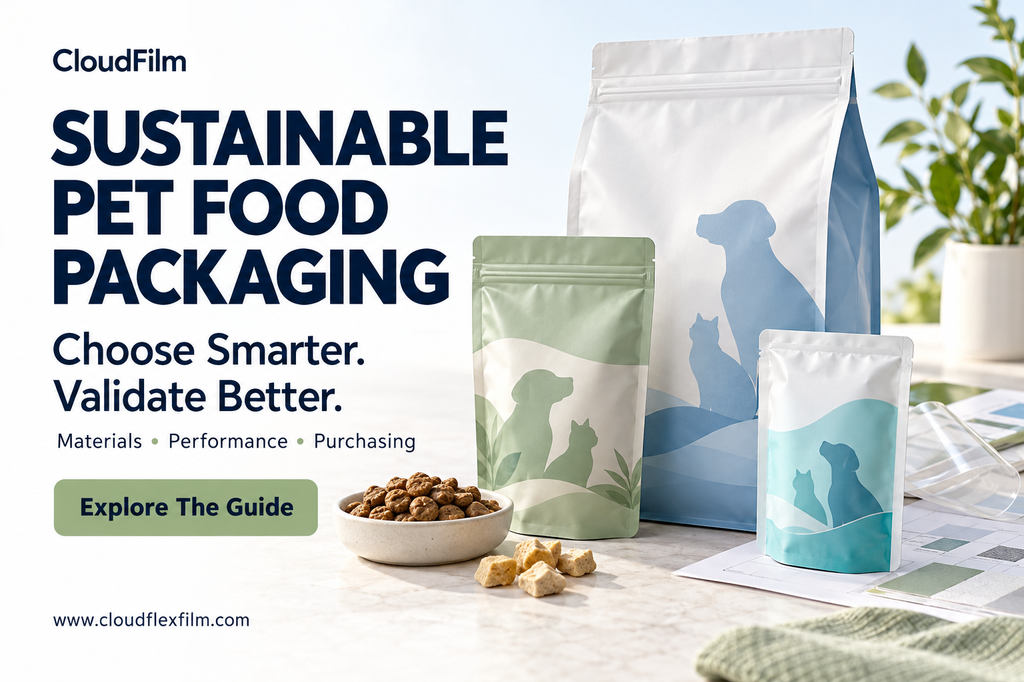
Pet food packaging often needs strong puncture resistance, odor barrier, grease resistance, and large-format pouch strength. Flat bottom pouches, quad seal pouches, stand up pouches, and heavy-duty laminated bags are common choices.
Personal care packaging focuses on shelf appeal, touch feeling, leak resistance, and refill convenience. Liquid pouches, shaped pouches, matte finishes, soft-touch effects, and recyclable structures are increasingly used.
Medical and pharmaceutical packaging requires clean sealing, stable barrier, traceability, and strict quality control. Materials must be selected carefully according to sterilization, storage, and regulatory requirements.
Household and industrial packaging may need chemical resistance, strong seals, larger capacity, and transport durability. For detergents, lubricants, refills, and concentrates, liquid pouches can be designed with robust multilayer films.
Sustainability And Recyclable Packaging
Sustainability has become one of the most important forces in the printing and packaging industry. Buyers are asking how to reduce material use, improve recyclability, lower transport weight, and meet retailer or regional packaging requirements.
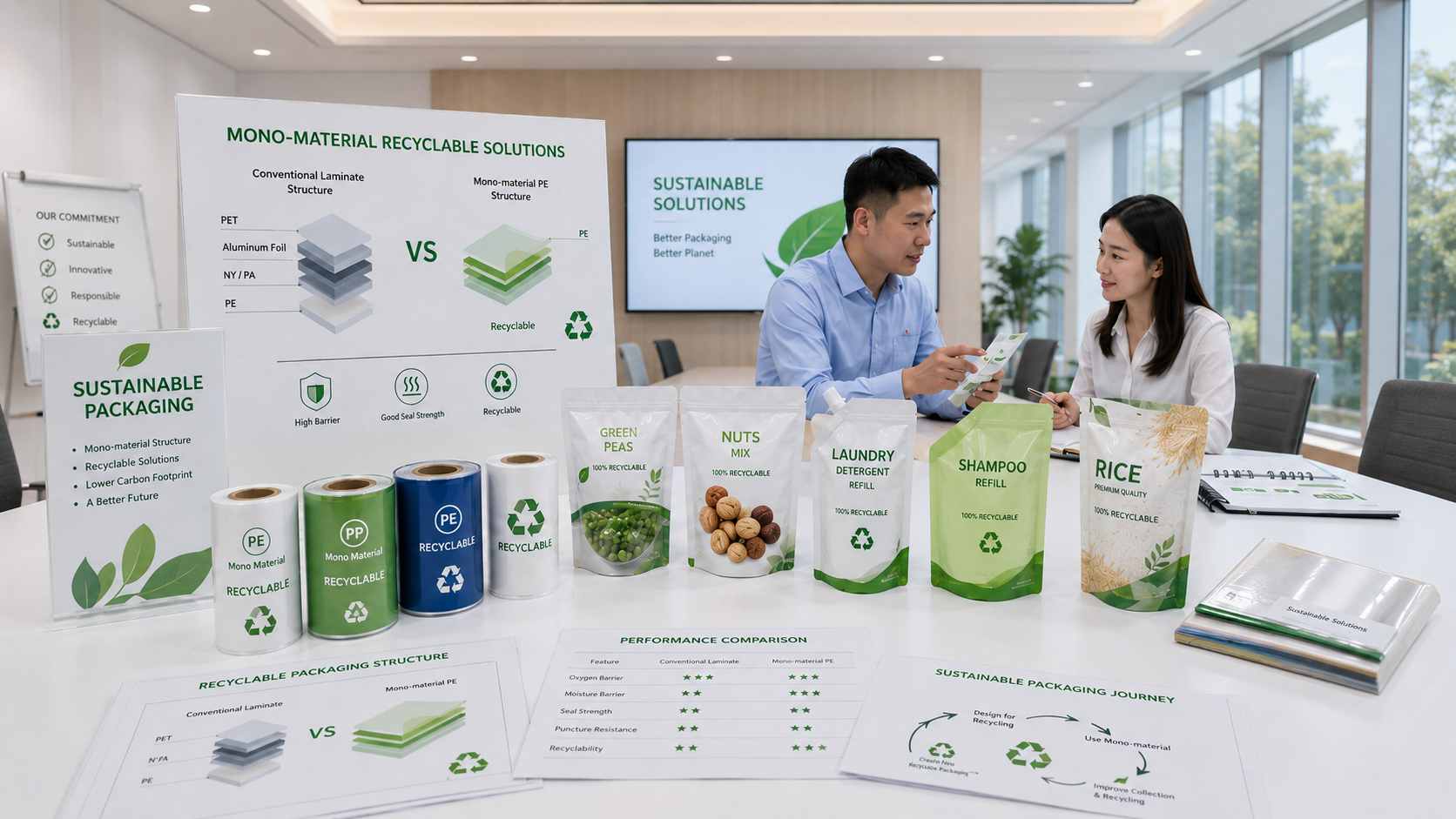
In flexible packaging, one common direction is mono-material design. Instead of using mixed-material structures that are difficult to recycle, brands may choose PE-based or PP-based recyclable structures where suitable collection and recycling systems exist.
However, recyclable packaging must still protect the product. A structure that is easier to recycle but fails during filling, transport, or storage can create product waste. Therefore, sustainability should be balanced with barrier, stiffness, sealing, shelf life, and machine performance.
For brands developing recyclable formats, recyclable pouches can be considered for stand up, flat, spout, zipper, and other pouch styles.
Shrink Packaging And Retail Presentation
Shrink packaging is another important part of the printing and packaging industry. It is used for food overwrap, retail products, promotional packs, multipacks, beverage bundling, and transport packaging.
POF shrink film is often used for clear retail overwrap because it offers clarity, flexibility, and strong shrink performance. For food, gift boxes, cosmetics, and consumer goods, POF shrink film can help create clean and attractive packaging.
PE shrink film is commonly used for beverage multipacks, tray wrapping, and pallet unitization. When buyers need stronger packaging for heavier products, PE shrink film can provide toughness and load stability.
How To Choose A Printing And Packaging Supplier
Choosing the right packaging supplier or manufacturer is one of the most important decisions for global buyers. Price is important, but it should not be the only factor.
A good supplier should understand materials, printing, lamination, pouch making, packing machines, export documentation, and shipment requirements. Buyers should evaluate whether the supplier can recommend suitable structures instead of only quoting the cheapest film.
Important questions include:
Can the supplier recommend a structure based on product type, shelf life, and filling process?
Can they support printed roll stock and pre-made pouches?
Can they provide samples for testing?
Can they control color, thickness, sealing, and roll quality?
Can they support export packaging, documents, and stable communication?
Can they explain trade-offs between cost, performance, and sustainability?
For international buyers, working with a professional packaging film manufacturer and custom pouch supplier can reduce communication mistakes and speed up project development.
Information Buyers Should Prepare Before Requesting A Quote
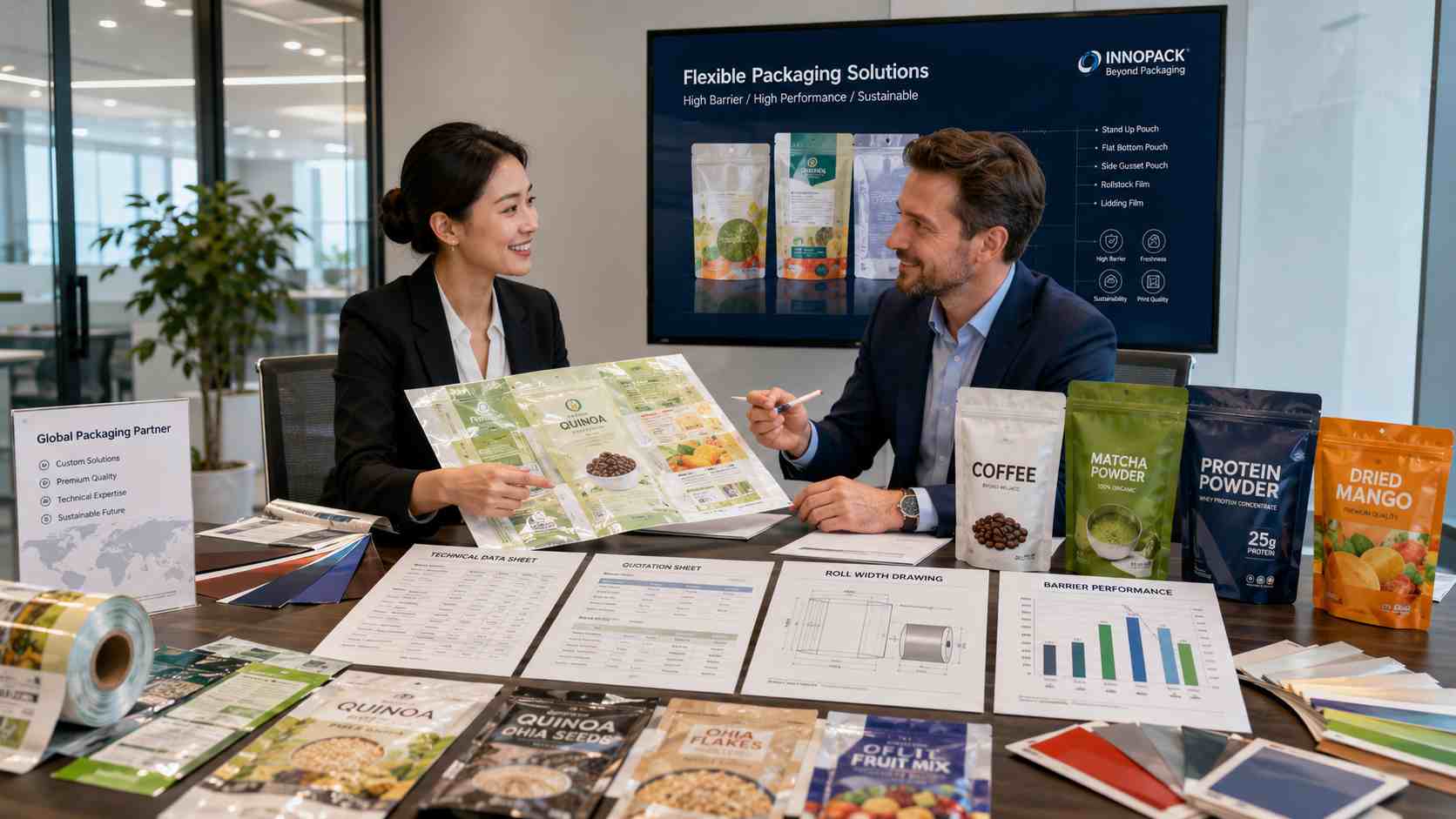
To get an accurate quotation, buyers should prepare practical information. This includes product type, filling weight, target shelf life, storage temperature, packing machine type, bag size, film thickness, printing colors, order quantity, destination port, and special requirements.
For printed packaging, artwork files are also important. Buyers should confirm whether they can provide AI, PDF, or other editable design files. They should also confirm the number of SKUs, color standards, matte or gloss finish, window position, zipper, valve, spout, handle, or easy-tear features.
A complete inquiry helps the manufacturer recommend a more accurate structure, avoid unnecessary sampling delays, and reduce the risk of wrong quotations.
Frequently Asked Questions
1. What is included in the printing and packaging industry?
It includes material selection, package design, printing, lamination, slitting, pouch making, labeling, shrink wrapping, quality control, and packaging supply for consumer and industrial products.
2. What is the difference between printing and packaging?
Printing focuses on graphics, colors, artwork, text, and brand communication. Packaging includes the complete structure that protects, contains, displays, and transports the product.
3. What packaging materials are commonly used for flexible packaging?
Common materials include PET, BOPP, PA, PE, CPP, EVOH, aluminum foil, metallized PET, PVDC-coated film, ALOx-coated film, and mono-material PE or PP structures.
4. Which printing method is best for flexible packaging?
It depends on order quantity, artwork, budget, and quality needs. Rotogravure is strong for large-volume high-quality printing. Flexo is flexible for many substrates. Digital printing is useful for short runs and multiple SKUs.
5. What is laminated packaging film?
Laminated packaging film combines two or more layers to achieve better printing appearance, barrier performance, sealing strength, puncture resistance, or heat resistance.
6. Why do food brands need barrier packaging?
Barrier packaging helps protect food from oxygen, moisture, aroma loss, grease, light, or contamination. It can help maintain freshness, flavor, texture, and shelf life.
7. What is roll stock packaging?
Roll stock packaging is flexible film supplied in rolls for automatic packing machines such as VFFS, HFFS, and flow-wrap lines. It is suitable for high-speed production.
8. What is the difference between roll stock and pre-made pouches?
Roll stock is formed and sealed by the buyer’s packing machine. Pre-made pouches are already converted by the supplier and are filled later by the buyer or co-packer.
9. What information is needed for a custom pouch quotation?
A supplier usually needs product type, pouch size, filling weight, structure, thickness, printing colors, order quantity, accessories, shelf-life target, and destination.
10. Can flexible packaging be recyclable?
Yes, some flexible packaging can be designed with recyclable mono-material PE or PP structures. Actual recyclability depends on material design and local recycling systems.
11. Why do some packages need EVOH or aluminum foil?
EVOH and aluminum foil provide stronger barrier protection for oxygen-sensitive, aroma-sensitive, or long-shelf-life products.
12. What is MOQ in printed packaging?
MOQ means minimum order quantity. It depends on material, printing method, structure, pouch format, and production setup cost.
13. Can suppliers provide samples before mass production?
Many professional suppliers can provide stock samples, similar structures, or custom trial samples. Final printed samples may require plate, cylinder, or setup costs.
14. How can buyers reduce packaging cost?
Cost can be reduced by optimizing structure, thickness, roll width, pouch size, order quantity, printing method, and shipment planning without sacrificing required performance.
15. How long does custom printed packaging production take?
Lead time depends on artwork confirmation, printing plates or cylinders, material availability, lamination curing, pouch making, inspection, and shipping schedule.
16. How should buyers choose a packaging manufacturer?
Buyers should evaluate technical knowledge, product range, sample support, quality control, communication speed, export experience, and the ability to recommend practical packaging solutions.
Conclusion
The printing and packaging industry is a bridge between product protection and brand growth. For buyers, the best packaging is not simply the cheapest bag or the most beautiful design. It is the structure that protects the product, runs smoothly on the packing line, looks attractive on the shelf, supports logistics, and fits the brand’s long-term market strategy.
Whether you need printed roll stock, food packaging film, stand up pouches, spout pouches, coffee bags, lidding film, shrink film, or recyclable pouches, the key is to work with a supplier who understands both materials and real packaging applications.
A strong packaging project starts with clear product information, practical material selection, reliable printing, professional conversion, and open communication between buyer and manufacturer.