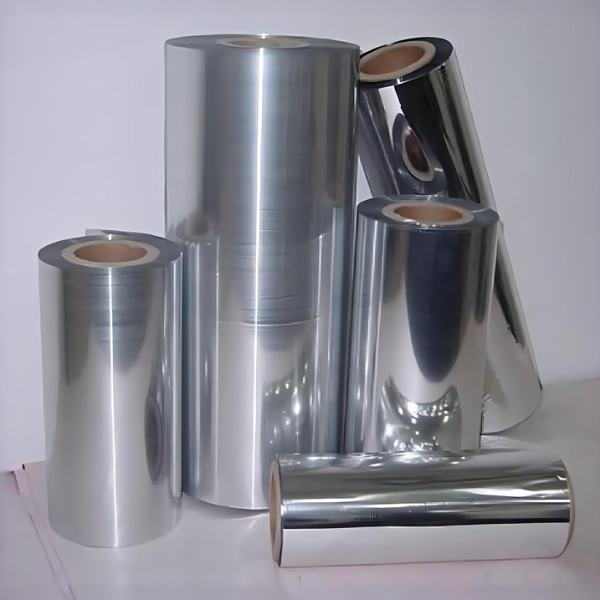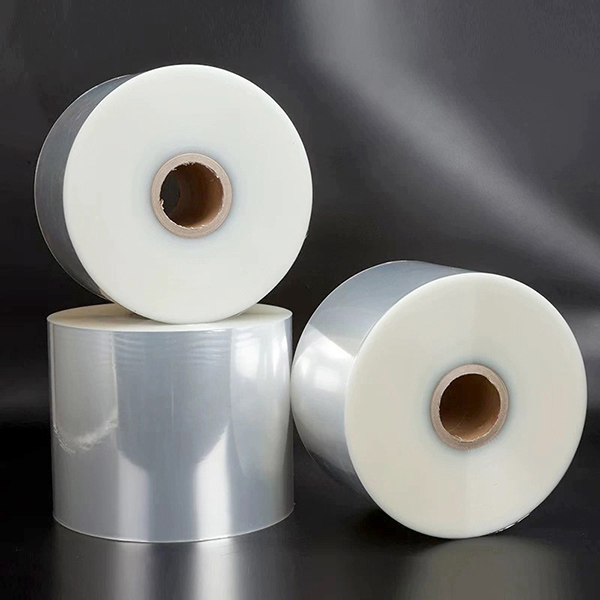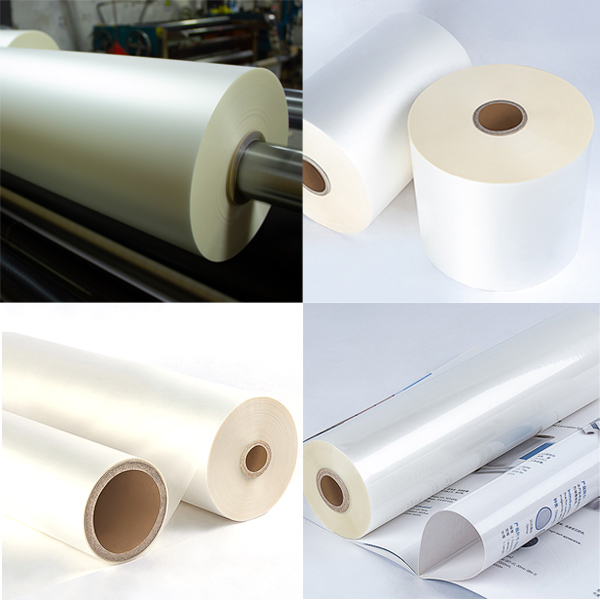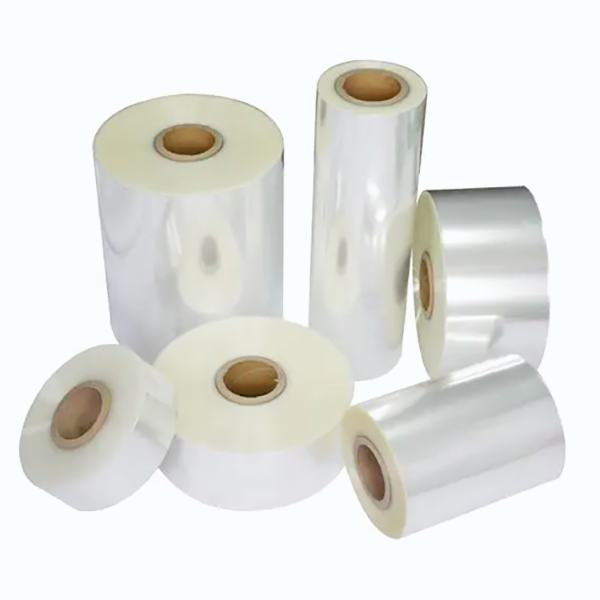
When people search for the melting point of BOPP, they often expect a single number and a simple answer. In practice, the topic is more useful than that. For packaging buyers, converters, and product developers, the real question is not only “At what temperature does BOPP melt?” but also “How does that temperature affect sealing, lamination, machine performance, and end-use safety?”
BOPP is widely used in snacks, bakery, confectionery, labels, overwraps, tapes, and many other packaging applications because of its clarity, stiffness, and moisture resistance.
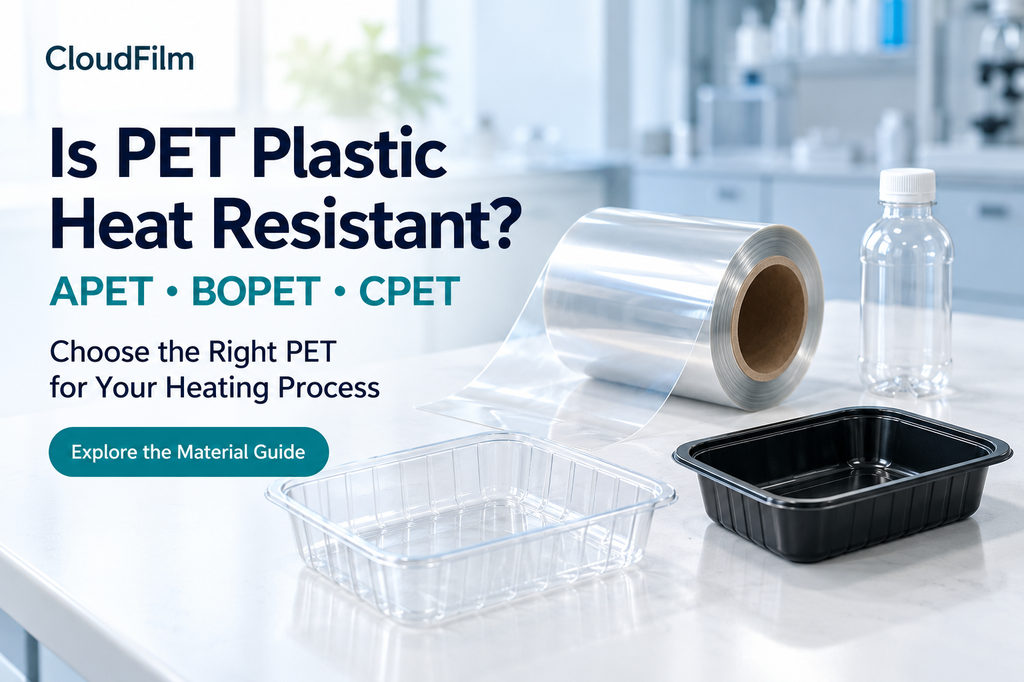
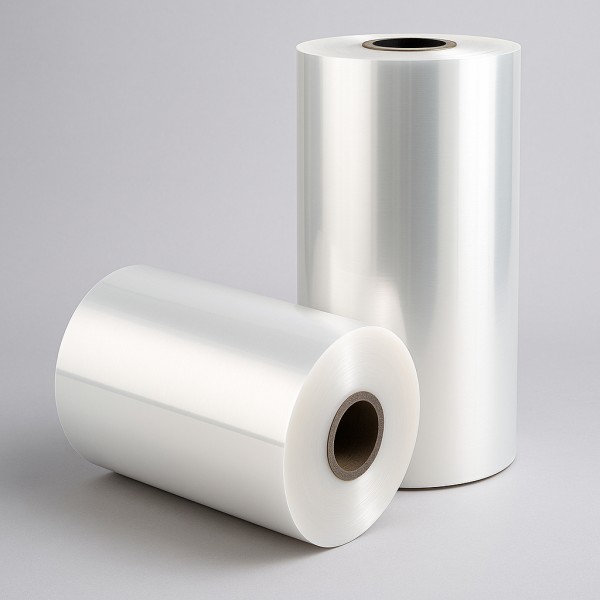
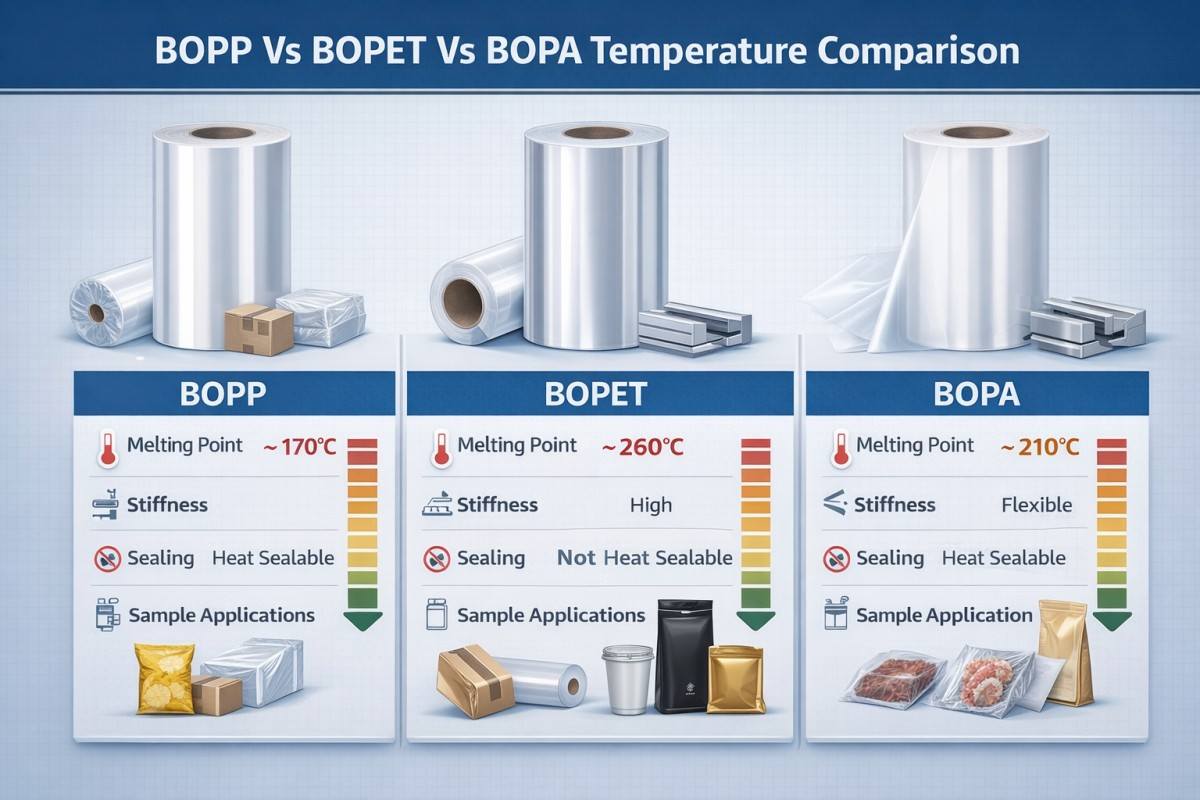
BOPP is short for biaxially oriented polypropylene. It is made from polypropylene resin and stretched in both machine and transverse directions to improve strength, stiffness, gloss, and dimensional stability. On CloudFilm’s current comparison page, BOPP is shown with a melting point of about 170°C, while BOPET is listed at 260°C.
That difference matters, because it explains why BOPP performs very well in many everyday flexible packaging applications but is not the best choice for every high-temperature use.
The most important point is this: melting point is not the same as sealing temperature, softening behavior, or recommended use temperature. Many packaging mistakes happen when these terms are mixed together. A buyer may see “170°C” and assume the film can work safely anywhere below that number.
Real production is more complicated. Film structure, seal layer design, dwell time, pressure, machine speed, and what the package will face after filling all matter.
Why BOPP Melting Point Matters In Packaging
In flexible packaging, temperature influences more than one stage of the process. It affects printing stability, lamination, sealing, storage conditions, and sometimes even product appearance on shelf.
If you are running a flow-wrap line, making pillow bags, or producing laminated snack packaging, you do not usually operate near the actual melting point of the BOPP core. But you do need to understand how the film behaves under heat. That is especially true if your structure includes a sealable layer, a coating, or a special functional surface such as anti-fog or metallization.
For this reason, the melting point of BOPP is best understood as a reference property. It helps you compare materials, estimate heat resistance, and decide whether standard BOPP is enough or whether another film, such as PET or nylon, may be better for the application.
What Is The Typical Melting Point Of BOPP?
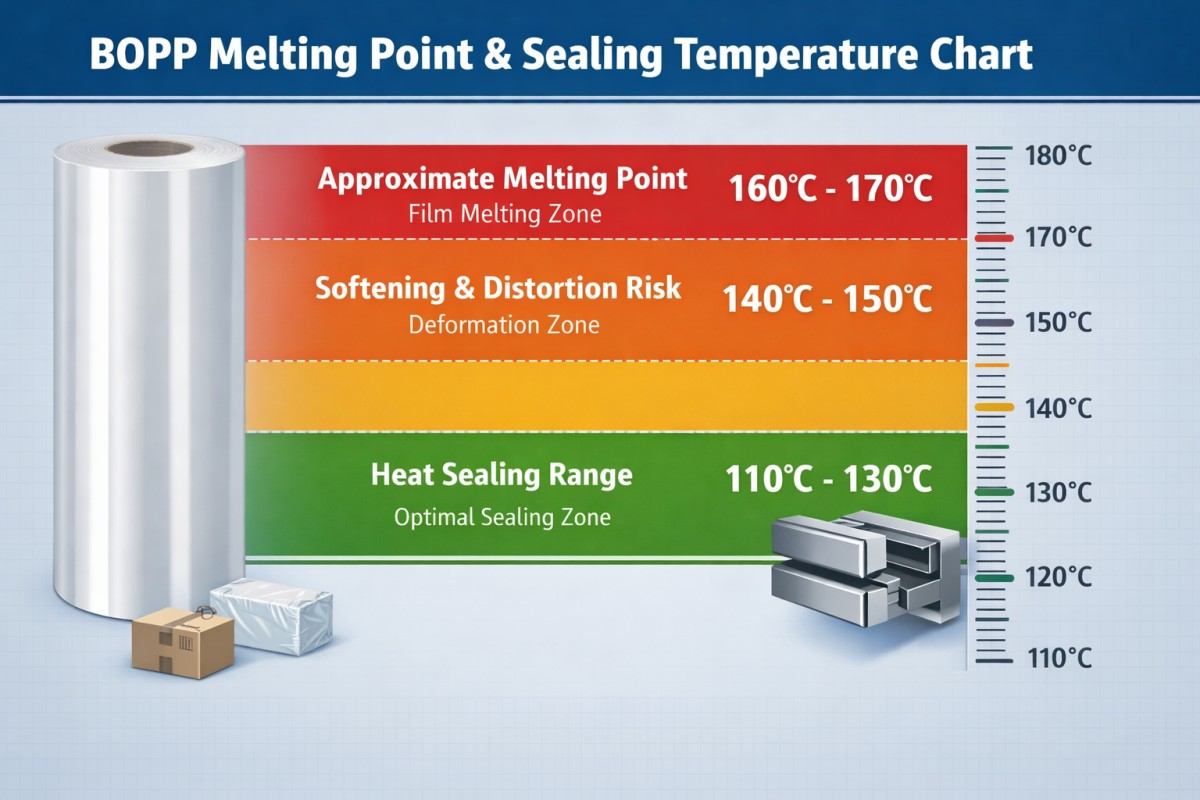
A practical way to answer the question is this: BOPP film is commonly associated with a melting point around 170°C. That aligns with both general polypropylene behavior and CloudFilm’s BOPP vs BOPET comparison page.
However, buyers should remember that commercial film performance is influenced by more than the base resin alone. A finished BOPP film may include special skin layers, additives, coatings, or metallization. These do not usually change the basic meaning of the polypropylene melting point, but they can change how the film responds to heat in real conversion conditions.
This is why experienced packaging engineers usually discuss temperature in four different ways:
1. Melting Point
This refers to the temperature where the crystalline structure of the polypropylene-based film loses integrity and the material transitions toward melt behavior.
2. Heat Sealing Temperature
This is the temperature range where the film’s sealable layer can form a usable seal under pressure and dwell time. CloudFilm’s current heat sealable BOPP page states a typical range of about 110°C to 140°C, depending on type and thickness.
3. Softening Or Distortion Behavior
A film may wrinkle, shrink, lose flatness, or show deformation before it ever reaches its true melting point.
4. End-Use Heat Resistance
This is the real-world temperature exposure the finished package can tolerate during filling, transport, storage, or consumer use.
For most packaging decisions, these last three are often more important than the melting point alone.
BOPP Melting Point vs Heat Sealing Temperature
This is one of the most common areas of confusion.
A standard BOPP film may have a melting point around 170°C, but a heat sealable BOPP film is designed to seal much earlier because it includes a heat-sealable surface layer. According to CloudFilm’s product page, the typical heat-sealing range is about 110°C to 140°C.
That means a packaging machine does not need to bring the whole film anywhere close to 170°C in order to make a seal. Instead, the sealing process activates the seal layer under controlled pressure and contact time. In other words, a good seal happens because the seal layer is engineered for sealing, not because the whole BOPP web has melted.
This distinction matters when buyers compare quotations from different suppliers. One supplier may offer a general printing-grade BOPP, while another may offer a coextruded heat sealable grade. On paper, both are “BOPP film.” In production, they behave very differently.
What Affects BOPP’s Thermal Behavior?
Even when two films are both called BOPP, they may not behave exactly the same way on a packaging line. Several factors influence heat response.
Film Structure
Mono-layer and coextruded films behave differently. A heat sealable grade often includes a lower-temperature seal layer. A non-sealable printing grade does not.
Thickness
Thicker film may carry heat differently, resist wrinkling better in some cases, and show different sealing windows. Thickness does not completely redefine the melting point of polypropylene, but it absolutely affects machine behavior.
Orientation
Because BOPP is biaxially oriented, it has improved stiffness and dimensional stability. But orientation also means heat can cause shrinkage or distortion if process conditions are not well controlled.
Surface Treatment And Functional Layers
Corona treatment, matte finish, anti-fog treatment, acrylic coating, or metallization may all influence processing windows, friction, appearance, and conversion performance.
Machine Conditions
Jaw temperature alone is not enough. Dwell time, pressure, line speed, pattern design, and cooling all influence the final result.
For this reason, technical discussions with a supplier should never stop at “What is the melting point?” A better question is: What sealing window, line speed, and end-use temperature can this specific grade support?
Is BOPP Suitable For High-Temperature Packaging?
The answer depends on what “high temperature” means in your project.
For ordinary snack packaging, biscuits, confectionery, labels, overwraps, and many dry-food applications, BOPP is an excellent and economical choice. It offers strong visual appeal, good moisture barrier, and efficient machine performance. CloudFilm’s own content highlights these common uses across packaging and labeling.
But if your structure must tolerate more demanding thermal conditions, such as retort sterilization, aggressive hot filling, or sustained high-temperature exposure, you should evaluate whether BOPP is really the best outer or functional layer. CloudFilm’s BOPP vs BOPET page shows BOPET at a much higher melting point than BOPP, which is one reason PET is often chosen where greater heat resistance is needed.
That does not mean BOPP has no place in temperature-sensitive structures. It means the application must be judged correctly. For many everyday packages, BOPP is exactly the right material. For hotter processes, the full laminate design becomes critical.
Common BOPP Film Types And How Temperature Matters
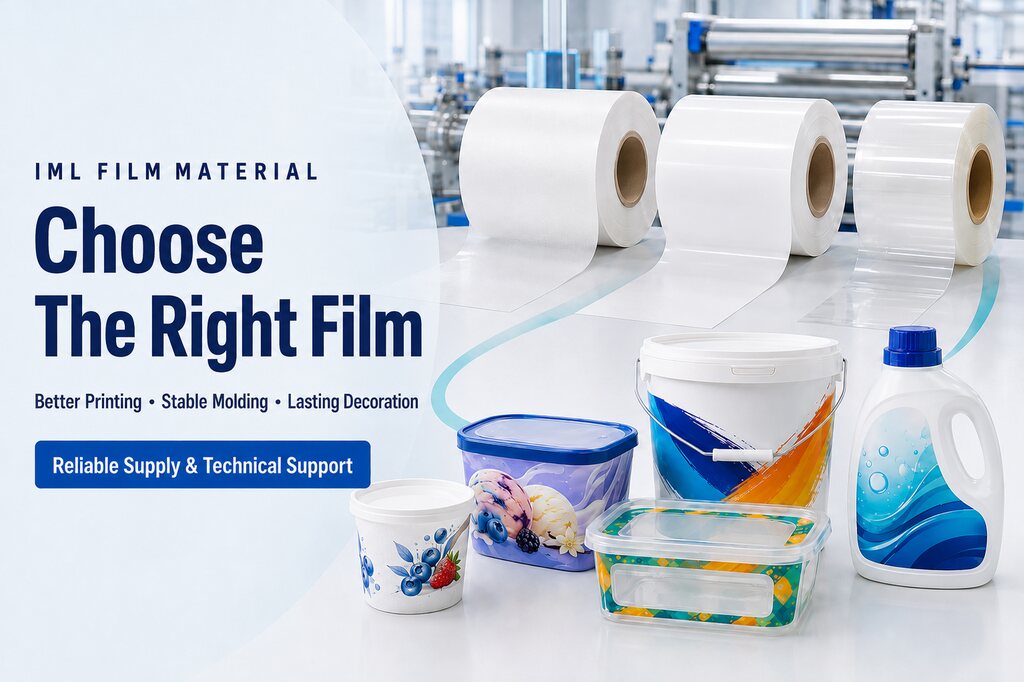
If you look through CloudFilm’s current BOPP film product range, you can see that “BOPP” is not just one simple item. It includes multiple grades designed for different converting goals and packaging results.
A heat sealable BOPP film is built for packaging lines that need practical sealing performance at normal machine temperatures. It is relevant when the package itself must be formed and sealed efficiently without adding a separate sealant web.
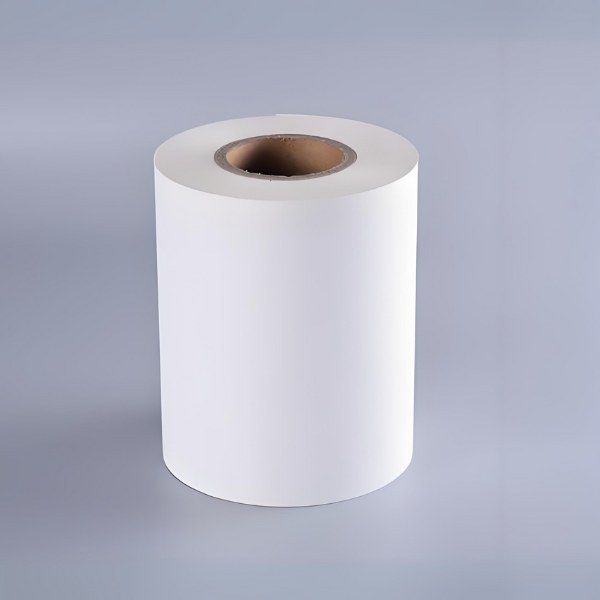
A BOPP printing film is more about printability, surface treatment, and dimensional stability during printing and lamination. It is usually selected as a printing layer rather than as the final sealing layer.
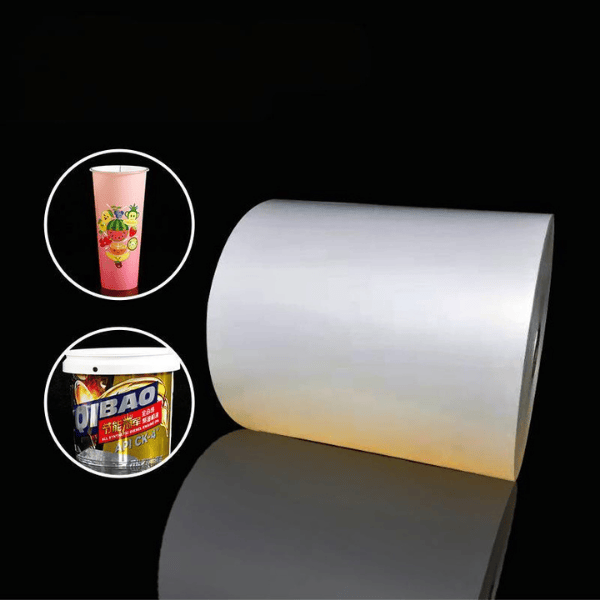
A BOPP matte film is used when buyers want a low-gloss, anti-glare appearance and a more premium surface look. CloudFilm describes it as suitable for food packages, labels, and book covers.
A BOPP gloss film is chosen when high clarity, high sheen, and good visual impact matter. It is often used as an outer web or printing base in flexible packaging structures.
An anti fog BOPP film is designed for refrigerated and moisture-sensitive applications where condensation would otherwise make the package look cloudy. CloudFilm’s page describes anti-fog grades for fresh produce, salads, chilled meat, bakery, and ready meals, including AF/AF and AF/CO structures in typical gauges such as 20–35 μm.
A metallized BOPP film adds a metalized layer for stronger barrier performance and a metallic look. It is widely used where shelf appearance and barrier are both important.
If you want a broader application view, CloudFilm’s article on BOPP film uses helps connect these grades to real packaging categories. And if your project also involves material comparison, the site’s BOPP vs BOPET film comparison is useful for understanding when a higher-temperature material may be more suitable.
Where BOPP Temperature Performance Matters Most
Snack And Confectionery Packaging
This is one of the most common BOPP application areas. Buyers need good gloss, machinability, seal consistency, and moisture protection. In these applications, the issue is usually not whether BOPP can survive extreme heat. The real issue is whether the chosen grade gives a stable sealing window and good roll-to-roll performance.
Bakery And Fresh Food Packaging
In fresh bakery, sandwiches, produce, or salad packaging, fogging and visual presentation become important. That is where anti-fog functionality can matter as much as thermal behavior. A film that keeps the pack clear can directly improve shelf appeal and buyer confidence.
Labels, Overwraps, And Print Laminates
For these uses, heat resistance still matters, but often in a different way. The film may need to remain flat during printing, lamination, or later conversion. It may not be the sealant layer at all.
Higher-Barrier Laminates
When BOPP is combined with PE, CPP, PET, or metallized layers, the full structure must be evaluated, not just one web. A buyer should look at the total converting process, the filling process, and the final storage environment.

How Buyers Should Evaluate A BOPP Film Supplier Or Manufacturer
If you are sourcing BOPP film for export packaging, price per kilogram is only one part of the decision. A reliable manufacturer or supplier should be able to explain temperature-related performance in practical terms.
First, ask whether the quoted grade is a printing film, sealable film, matte film, anti-fog film, metallized film, or another specialized structure. These are not interchangeable.
Second, ask for the sealing window, not just the resin name. A good supplier should discuss temperature, dwell time, pressure, machine type, and recommended use.
Third, ask about surface treatment and converting compatibility. CloudFilm’s printing film page emphasizes controlled surface treatment and stronger ink adhesion for printing applications, which is exactly the kind of detail buyers should confirm before trial orders.
Fourth, ask for application guidance and sample support. CloudFilm’s anti-fog page notes the availability of A4 sheets or short trial rolls so customers can test clarity and sealing on their own machines. That kind of trial support is valuable because packaging performance should be confirmed in the actual line environment.
Fifth, ask about food-contact documentation, consistency, and quality control if the application is food packaging. For many importers, converters, and procurement teams, stable roll quality is more important than saving a small amount on nominal unit price.
A serious BOPP film supplier should help you match the film to the end use, not push one grade for every project.
Is BOPP Recyclable After Use?
This is another question buyers ask together with melting point, especially when they are reviewing future packaging formats.
CloudFilm’s recyclable BOPP article gives a practical answer: pure BOPP film is technically recyclable as a PP material, but whether a specific package is recyclable in practice depends on structure design, local collection systems, and recycling infrastructure.
That means a mono-material PP approach may be more favorable than a mixed-material laminate if recyclability is a key target. For many buyers, the best approach is to review performance, shelf-life needs, and end-of-life expectations together instead of treating them as separate decisions.
If recyclability matters in your project, the question should not be only “Is BOPP recyclable?” but also “What structure gives the right balance between barrier, machinability, cost, and end-of-life compatibility?” For that topic, CloudFilm’s article on is BOPP recyclable is a useful internal reference.
Practical Advice Before You Order BOPP Film
Before you place a trial or production order, prepare a clear technical brief.
Tell the supplier what product you pack, whether the film is an outer web or a sealant web, your target thickness, machine type, line speed, sealing temperature range, storage condition, and whether the package faces chilled, ambient, or hotter conditions.
Also share whether you need gloss or matte appearance, printability, anti-fog performance, metallization, or recycling-friendly structure design.
The more specific your brief is, the easier it is for the manufacturer to recommend the correct grade. This reduces trial time, avoids material mismatch, and improves quotation accuracy.

FAQ About BOPP Melting Point
What is the typical melting point of BOPP film?
A practical industry reference is around 170°C for BOPP. Exact behavior can vary with formulation and structure, but that number is a useful baseline.
Is BOPP melting point the same as heat sealing temperature?
No. Melting point and heat sealing temperature are different. Heat sealable BOPP may seal at about 110°C to 140°C, well below the melting point of the BOPP core.
Can standard BOPP film be heat sealed?
Not all standard BOPP grades are intended for direct sealing. If sealing is required, it is safer to choose a dedicated heat sealable grade.
Is BOPP good for hot-fill packaging?
It depends on the product temperature, structure, and process. For hotter filling conditions, buyers should evaluate whether BOPP alone is suitable or whether another film layer is needed for better heat resistance.
Is BOPP suitable for retort packaging?
Standard BOPP is usually not the first choice for demanding retort conditions. Higher-temperature structures often require different material combinations.
Does thicker BOPP have a higher melting point?
Not in the basic chemical sense. Thickness changes handling and thermal response, but it does not fundamentally redefine the polypropylene melting point.
Does matte, anti-fog, or metallized BOPP have the same melting point as regular BOPP?
The base polymer family is still polypropylene, but coatings, skin layers, and functional treatments can change practical conversion behavior. That is why end-use testing is important.
Which is better for higher-temperature use, BOPP or BOPET?
For higher-temperature resistance, BOPET is generally stronger than BOPP. CloudFilm’s own comparison page lists BOPET at a significantly higher melting point.
Is BOPP recyclable?
Pure BOPP is technically recyclable as PP, but the real answer depends on the full package structure and local recycling systems.
What information should I send to a BOPP film supplier before asking for a quote?
Send the application, thickness, width, roll length, machine type, sealing conditions, print requirements, end-use environment, and whether you need gloss, matte, anti-fog, metallized, or recyclable structure options.
Final Thoughts
The melting point of BOPP is an important technical property, but by itself it does not tell the whole story. For real packaging decisions, buyers should also look at sealing range, structure design, machine conditions, and final use environment.
If you treat BOPP as a broad family of packaging films rather than a single generic material, selection becomes much easier. A clear understanding of temperature behavior helps you avoid the wrong grade, reduce trial risk, and build more reliable packaging structures.
For most everyday flexible packaging, BOPP remains one of the most useful and cost-effective materials in the market. The key is choosing the right grade for the right job.