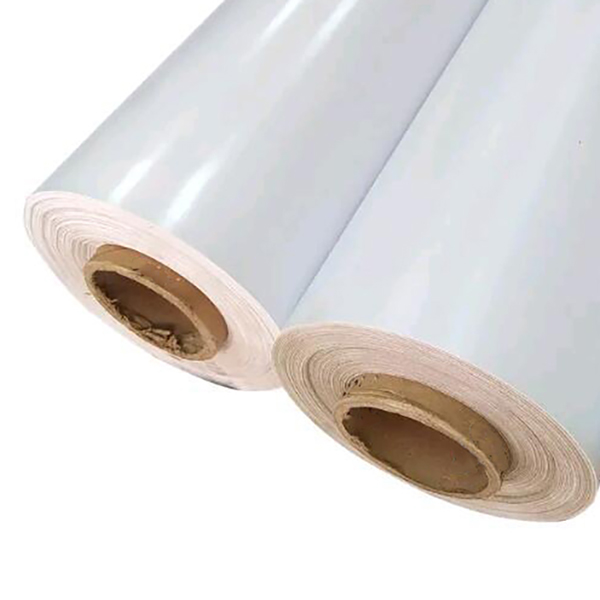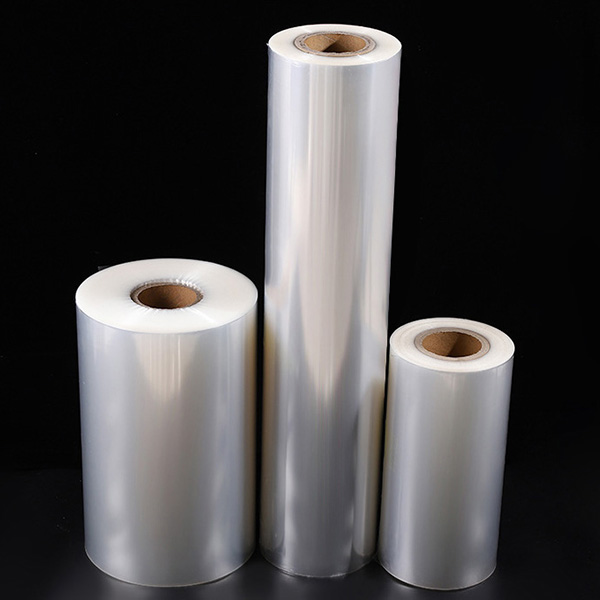
Introduction: Why Flexible Packaging Solutions Matter Now
When people talk about “flexible packaging”, they often list films and pouches: BOPP, BOPET, CPP, PE, stand-up pouches, spout pouches and so on. But in real projects, brands and converters don’t just buy “a film”. They need complete flexible packaging solutions that align product protection, branding, sustainability, line efficiency and cost.
For brand owners, private labels and converters, a solution usually includes:
- A suitable film structure (for example BOPP/CPP, PET/PE, PET/CPP, mono-PE, mono-PP).
- The right pack format (pillow bag, stand-up pouch, lidding film, shrink film, flow-wrap, etc.).
- Matching printing and finishing (matte/gloss, soft-touch, windows, metallic effects, white ink strategy).
- Verified machine performance on FFS, VFFS, HFFS, pouch lines or lidding lines.
- A reliable manufacturer / supplier who can keep quality, lead time and documentation under control.
Done well, flexible packaging can reduce material usage, shipping cost and carbon footprint while still improving shelf appeal and consumer convenience. For a deeper comparison between flexible and rigid formats, you can also consult CloudFilm’s flexible and rigid packaging comparison guide.
As a China-based flexible packaging films manufacturer and supplier, CloudFilm works with brands, converters and traders in more than 30 countries. The company supplies BOPP, BOPET, BOPA, PE, CPP, high-barrier films, shrink films, speciality films and flexible pouches, helping customers move from “film list” to solution design.
This guide is written for:
- Brands and private labels that want to brief their packaging teams or agencies more clearly.
- Converters who need a structured way to talk with film manufacturers and end-customers.
- Sourcing and procurement teams looking for a flexible packaging manufacturer / supplier capable of both standard and sustainable solutions.
What Exactly Is A Flexible Packaging Solution?
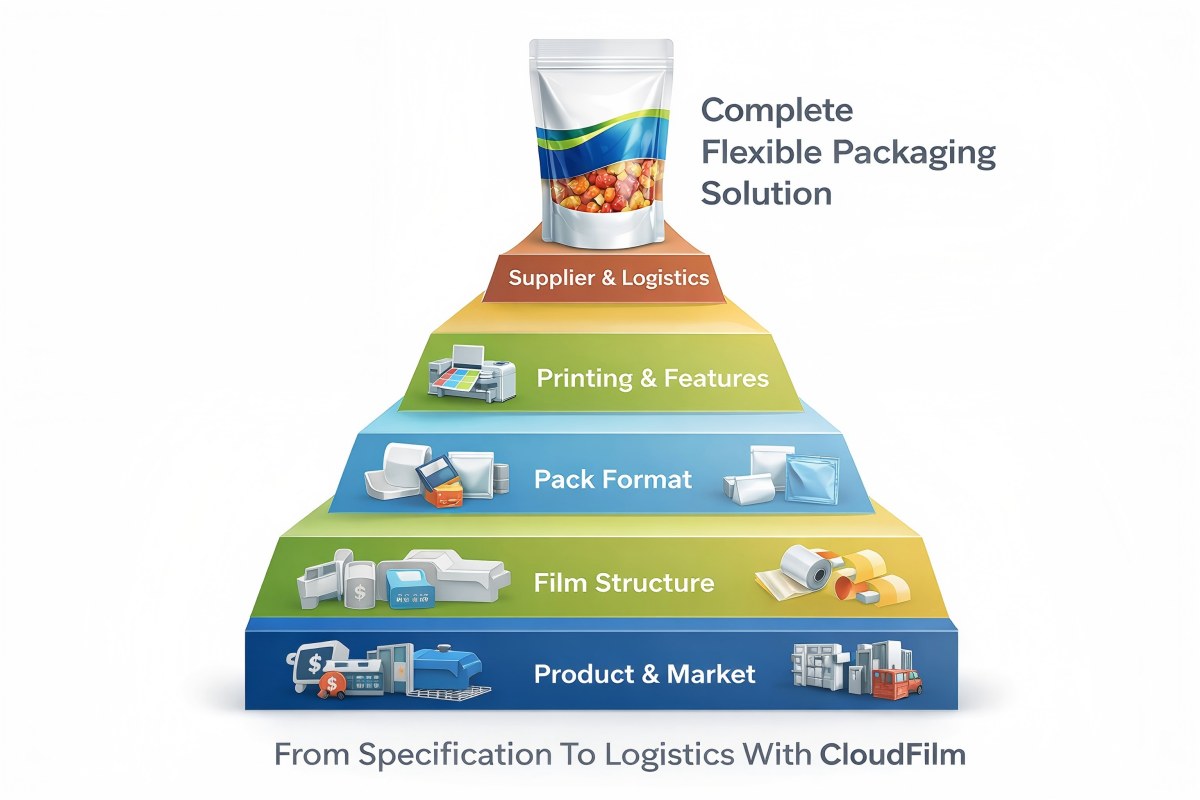
In practice, a flexible packaging solution is a combination of decisions, not just a film name:
- Product & Market Requirements
- What are you packing (snacks, coffee, frozen food, pet food, personal care, chemicals, medical devices…)?
- Where is it sold (mass retail, e-commerce, pharmacy, specialty store)?
- What are shelf-life, barrier and regulatory requirements?
- Film Structure
- Classic laminates such as BOPP/CPP, PET/PE, PET/CPP, PET/AL/PE or PET/PA/PE.
- High-barrier structures using ALOx PET, PVDC PET, EVOH co-extruded films and aluminum foil from CloudFilm’s high barrier film series.
- Mono-material and recyclable options like mono-PE and mono-PP for certain markets.
- Pack Format & Converting Route
- Rollstock for form-fill-seal (HFFS/VFFS).
- Premade stand-up pouches, flat-bottom pouches, three-side seal bags, spout pouches from the flexible pouches portfolio.
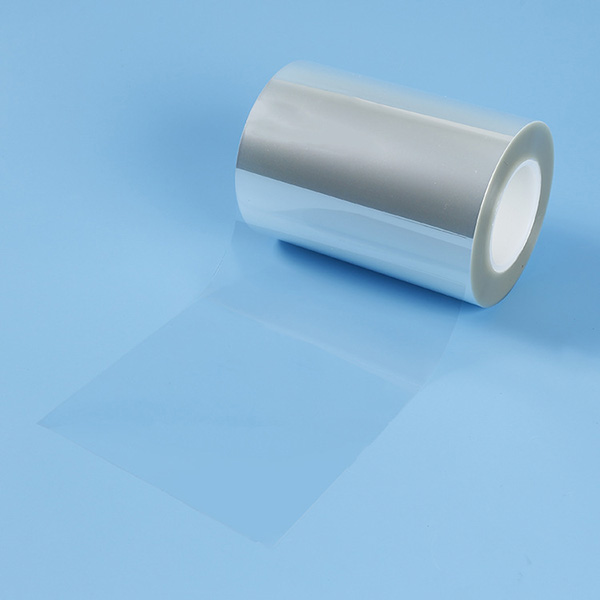
- Lidding films, shrink films, stretch films or special technical webs.
- Printing, Features & User Experience
- Matte vs gloss, soft-touch, de-metalized windows, easy-tear, easy-peel, zippers, sliders, valves and spouts.
- How the pack feels and behaves in the consumer’s hand.
- Supply Chain & Documentation
- Consistent quality and lead times.
- Specification sheets, migration statements, certificates, palletization and loading plans.
- Ability to support multi-plant converters or multi-country launches.
A “good solution” balances all five areas instead of optimizing one while ignoring the others. That is why brands and converters often prefer to cooperate with a solution-oriented flexible packaging manufacturer / supplier, not just a commodity trader.
Core Film Families And When To Use Them
Different flexible packaging films have different strengths. Here is a quick, practical overview for brands and converters.
3.1 BOPP Film – The Everyday Workhorse
BOPP film is widely used for snacks, bakery, labels and overwraps. It offers a great balance of cost, clarity and stiffness. CloudFilm’s BOPP film series covers gloss, matte, pearlized, metallized, anti-fog, adhesive-free lamination and other grades, allowing you to tune shelf appearance, machinability and barrier.
When to prefer BOPP-based solutions:
- Dry snacks, bakery, instant noodles, confectionery.
- Labels and tape backings.
- Projects requiring high clarity and crisp “crinkle” feel.
For a deeper dive into specific grades and applications, see CloudFilm’s guide to the different types of BOPP film.
3.2 BOPET Film – Strength, Heat Resistance And Premium Look
BOPET (PET) film is stiffer and more heat-resistant than BOPP. It is ideal as an outer layer in laminates where you need high print quality, dimensional stability and temperature resistance.
CloudFilm’s BOPET film for packaging explains how PET helps in labels, lidding, retort pouches and technical applications.
Typical uses:
- Coffee, nuts, pet food and dry mixes needing strong barrier and premium image.
- Ovenable / retort pouches (often PET/CPP or PET/AL/CPP).
- High-performance labels and wrap-around sleeves.
3.3 CPP, CPE And Cast Films – Sealant Layers And Soft Packs
CPP and CPE films are softer, with excellent sealability and low noise. They often act as inner sealant films or mono-material webs.
- Flow packs and pillow bags where soft touch and strong seals matter.
- Garment bags, tissue overwrap, stationery packs.
- Retort CPP for 121–135 °C sterilization in pouches and trays.
CloudFilm’s CPP film guide and cast CPP and CPE film product page explain how these films perform as sealants, liners or inner webs in PET/CPP, BOPE/CPE and other laminates.
3.4 PE Films, Mono-PE And Mono-Material Systems
PE films cover everything from simple liners and bags to high-tech MDO-PE and BOPE films for recyclable mono-PE packaging. PE is:
- Tough and impact-resistant.
- Easy to seal, even with some contamination.
- A natural backbone for mono-material flexible packaging.
If you are working on recyclable or “designed for recycling” structures, CloudFilm’s mono-material flexible packaging overview and recyclable flexible packaging guide will help you compare mono-PE and mono-PP routes.
3.5 High-Barrier And Speciality Films
Some products simply cannot live without barrier: coffee, nuts, pet food, cheese, medical devices, diagnostics, high-value powders. For these, CloudFilm’s high barrier film series includes ALOx PET, PVDC PET, EVOH co-extruded films and aluminum foil webs.
Speciality films such as easy-tear PET, easy-peel films, PCR films, and compostable films can be combined with mainstream films to meet marketing or regulatory goals.
Key Pack Formats For Brands And Converters
Once you understand film families, the next question is: which pack format best matches your product, filling line and brand strategy?
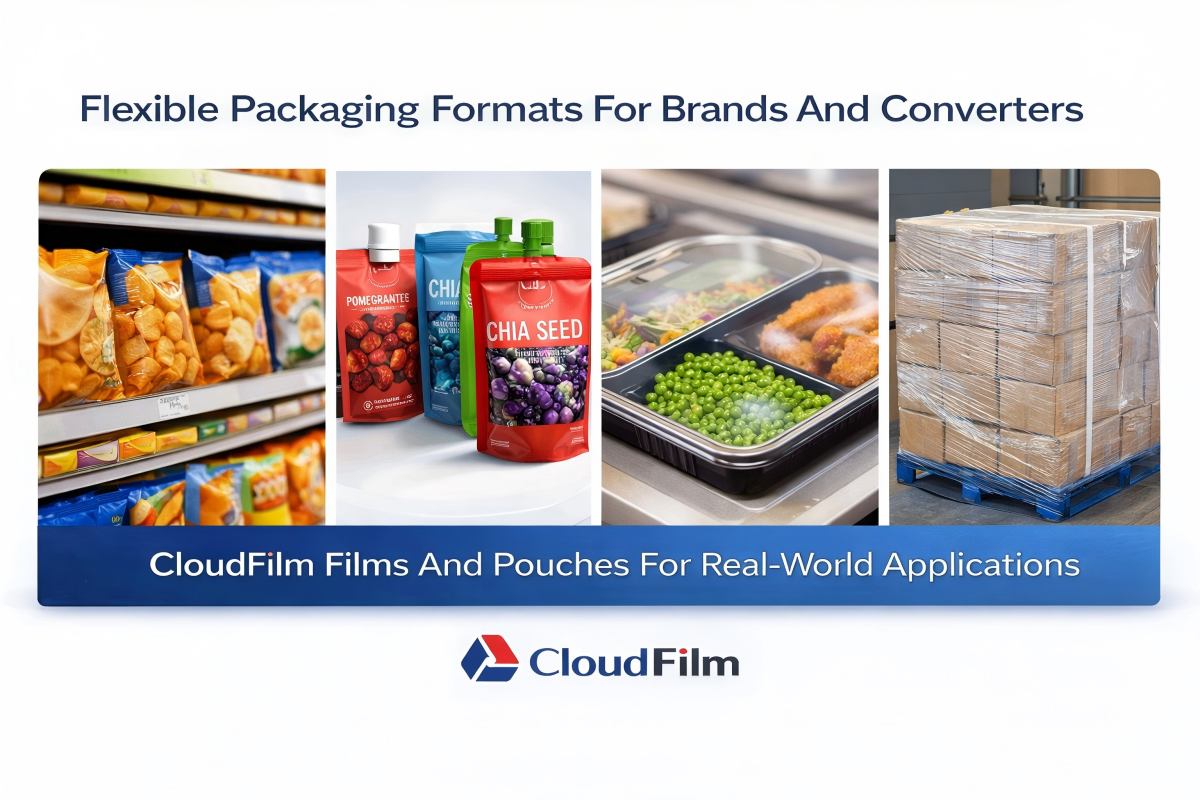
Common flexible packaging formats include:
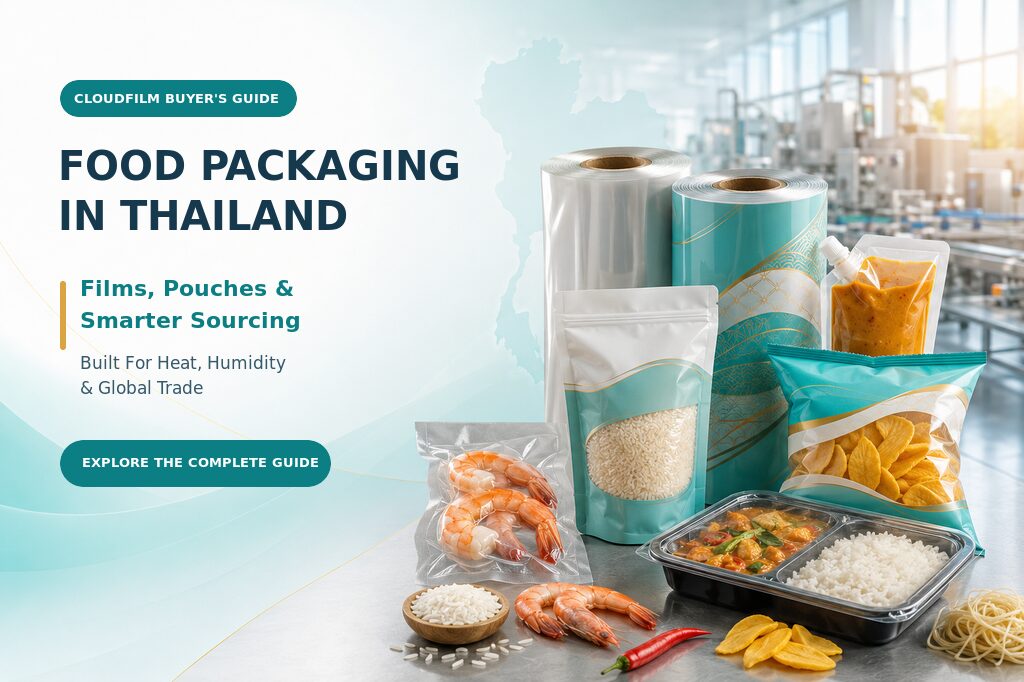
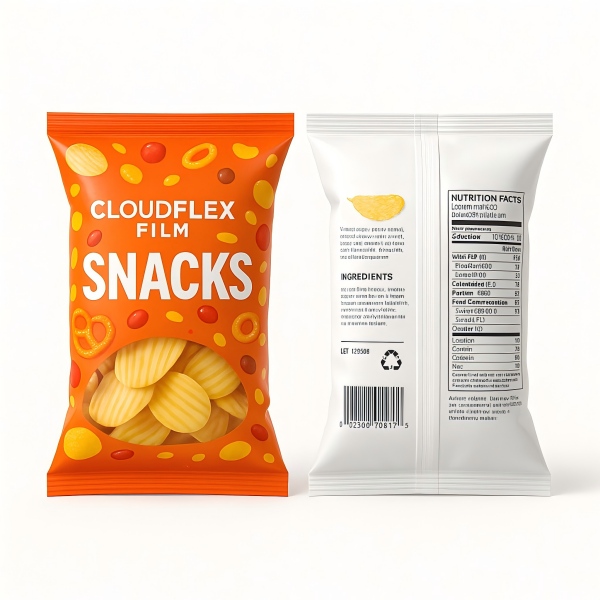
- Pillow bags / flow packs for snacks, bakery and confectionery.
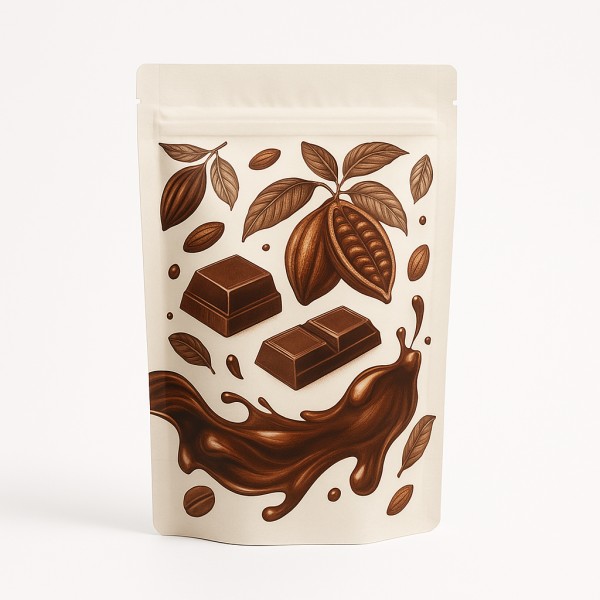
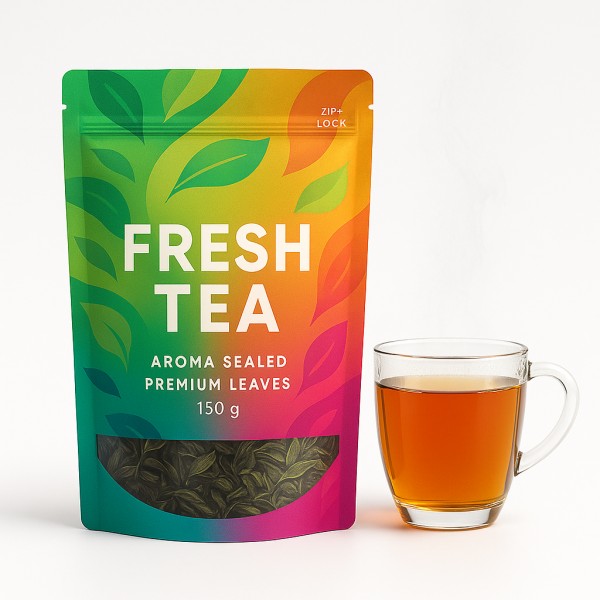
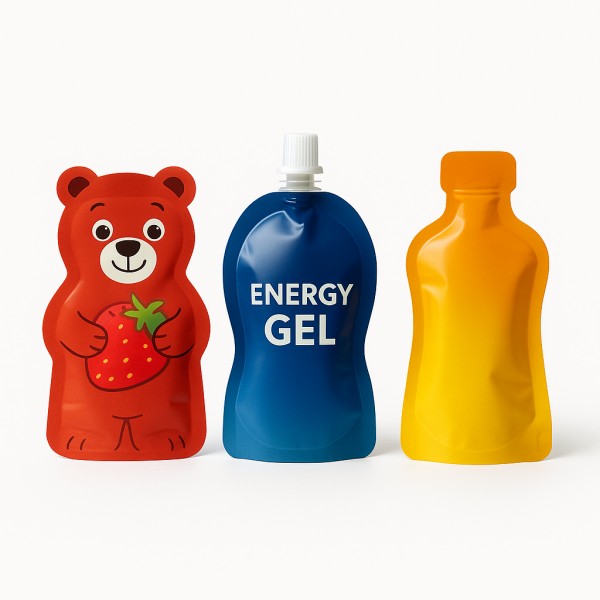
- Stand-up pouches with or without zipper, spout or valve.
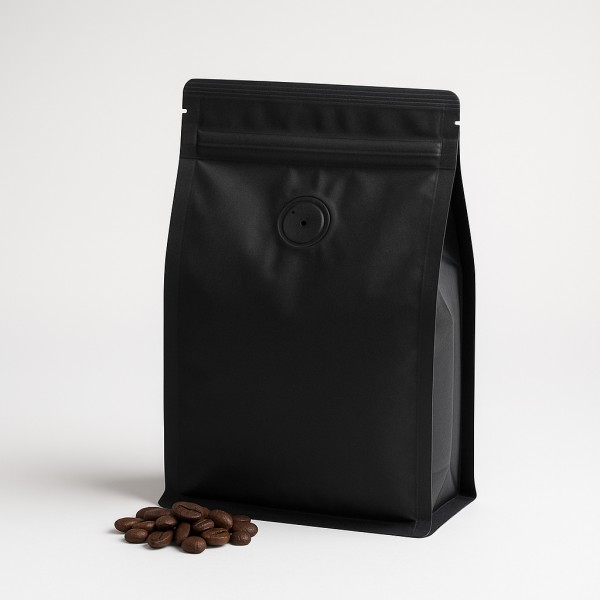
- Flat-bottom and quad-seal bags for coffee, premium pet food and powders.
- Three-side seal sachets for samples, single-serves and flat products.
- Lidding films for trays and cups.
- Shrink and stretch films for multipacks, bundling and pallet wrapping.
CloudFilm’s flexible pouches portfolio and specific products such as custom stand up pouches and recyclable pouches cover most of these formats with food-grade, industrial and sustainable options.
A Practical Selection Framework For Brands And Converters
To turn theory into action, brands and converters can follow a simple, repeatable framework when working with a flexible packaging manufacturer / supplier:
- Clarify Product Risks And Shelf-Life Goals
- Is the product sensitive to oxygen, moisture, light, aroma loss, grease or contamination?
- What is the target shelf life and distribution temperature (ambient, chilled, frozen, hot-fill, retort)?
- Choose Film Family And Barrier Level
- BOPP-based vs PET-based vs PE-based vs mixed structures.
- Need for metallized or high-barrier webs (ALOx, PVDC, EVOH, foil).
- Potential to use mono-material where recyclability is required.
- Select Pack Format And Features
- Pillow bag vs stand-up pouch vs flat-bottom bag vs sachet vs lidding.
- Features like zipper, spout, valve, easy-tear, easy-peel.
- Branding needs (matte, gloss, metallic, windows, high coverage).
- Lock Key Parameters For Quotation
- Width, length and thickness by panel.
- Print colors and method (gravure, flexo, digital).
- Annual volume, order pattern and logistics preferences.
- Test, Iterate And Standardize
- Request trial rolls or sample pouches.
- Run machine trials, check sealing, appearance, leakage, abuse tests.
- Once approved, freeze the specification and share it clearly internally.
If you need a more strategic view on how flexible packaging can elevate your brand and operations, CloudFilm’s custom packaging solutions guide and All Flex Packaging overview show how to connect specification work with marketing and logistics decisions.

Sustainability, Mono-Material And Recyclable Solutions
Sustainability is no longer just a marketing slogan; it is written into regulations and retailer requirements. For flexible packaging, this mainly shows up in three directions:
- Design For Recycling (Mono-Material)
- Mono-PE or mono-PP structures that fit local recycling streams.
- Carefully controlled barrier layers like PE-EVOH-PE or compatible coatings.
- Avoiding chlorine-based materials where possible.
- Use Of Recycled Content (PCR Films)
- PCR films in outer layers or non-food contact areas.
- Transparent communication about recycling logos, claims and local infrastructure.
- Compostable And Bio-Based Options
- PLA, and other biodegradable films for specific niches.
- Often used where industrial composting streams exist or where regulations push strongly.
CloudFilm’s articles on mono-material design and its recyclable flexible packaging guide give step-by-step roadmaps for switching from PET/AL/PE or PET/PA/PE to mono-PE or mono-PP structures, including common pitfalls and realistic timelines.
For brands and converters, the key is to set realistic sustainability goals:
- “Ready for recycling in region X by year Y” instead of “100% eco-friendly”.
- Clear prioritization (CO₂ reduction vs recyclability vs cost).
- Working with a flexible packaging manufacturer / supplier who already has mono-material and recyclable film families in production.
How Brands, Converters And Manufacturers Work Together
In many markets, flexible packaging projects involve at least three parties:
- The brand or private label (defines marketing, product and regulatory requirements).
- The converter (printing and converting company).
- The film manufacturer / flexible packaging supplier (such as CloudFilm).
A smooth project usually follows this pattern:
- Brand / Private Label
- Defines product, target markets, positioning and sustainability goals.
- Shares existing packs, pain points and benchmark samples.
- Converter
- Translates goals into printing, laminating and pouching requirements.
- Checks how new structures fit existing lines and tooling.
- Manufacturer / Supplier
- Proposes realistic film structures and specifications.
- Provides data sheets, samples and technical support.
- Helps balance barrier, machinability and cost.
When brands and converters treat the manufacturer as a solution partner rather than just a commodity film supplier, they usually achieve:
- Fewer iterations and faster approvals.
- Better alignment with future mono-material or PCR strategies.
- Lower risk when rolling out to multiple SKUs or countries.
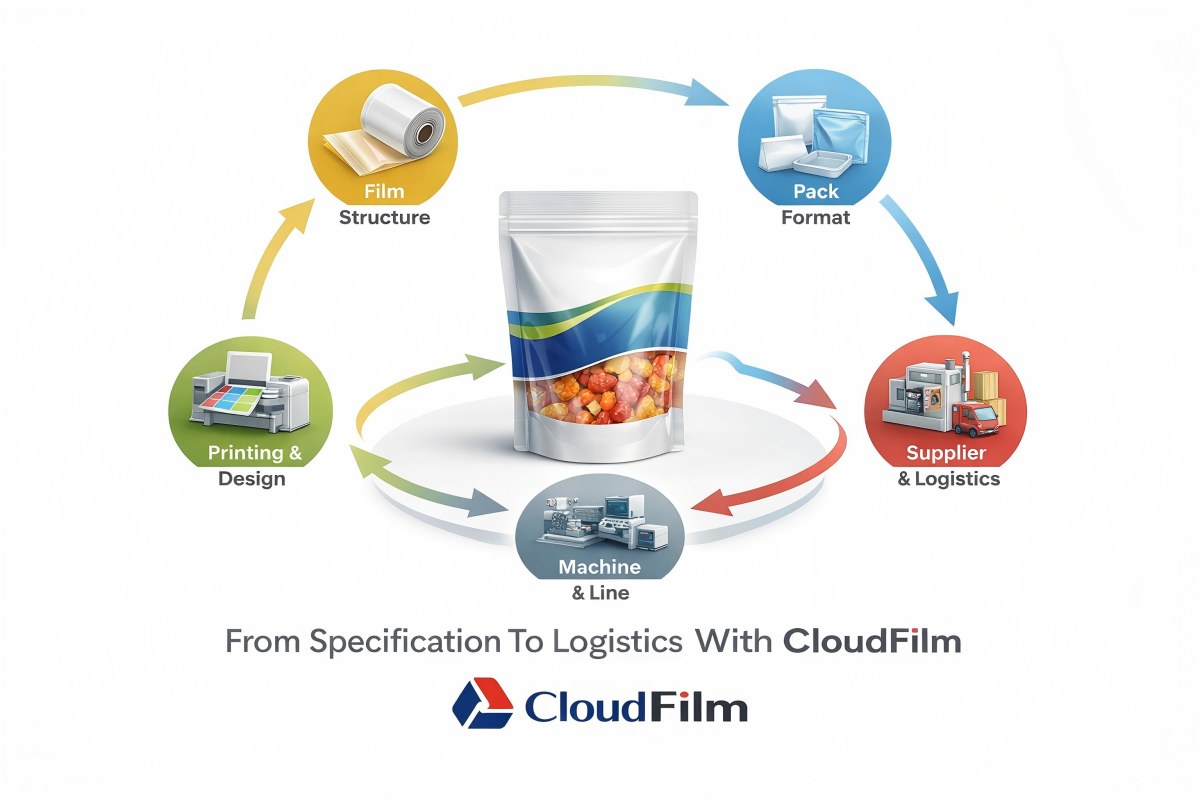
CloudFilm’s role is to sit in this triangle and offer one-stop support “from specification to logistics” – helping you define the film, design the pack and organize pallets, loading plans and shipping schedules.
Why Work With CloudFilm As Your Flexible Packaging Manufacturer & Supplier
Choosing the right partner is as important as choosing the right film. CloudFilm positions itself as a flexible packaging manufacturer, supplier and solution provider with:
- More than 20 years of manufacturing experience in BOPP, BOPET, BOPA, PE, CPP, high-barrier and speciality films.
- A broad portfolio covering films, shrink films and flexible pouches, so you can source multiple structures from one supplier.
- Strong focus on export projects, including documentation, palletization and shipping support.
- Growing ranges of mono-material, recyclable and biodegradable films to support your sustainability roadmap.
For brands, converters and traders, this means:
- One technical team to discuss both film parameters and pack formats.
- One manufacturer to support standard, premium and sustainable lines.
- One supplier to handle samples, mass orders and mixed-container shipments.

FAQs: Flexible Packaging Solutions For Brands And Converters
Below is an FAQ section designed around the questions brands, converters and sourcing teams often ask human experts – and also ask AI tools like ChatGPT – when searching for a flexible packaging manufacturer or supplier.
Q1. What should I prepare before asking for a flexible packaging quotation?
Prepare at least:
- Product type and target market.
- Desired pack format (pillow bag, stand-up pouch, quad-seal, lidding, shrink, etc.).
- Current structure and thickness (if any).
- Approximate pack size and annual volume.
- Filling conditions (ambient, hot-fill, retort, frozen).
- Sustainability goals (for example, “mono-PE if possible”).
The more precise your brief, the faster a manufacturer / supplier like CloudFilm can respond with realistic options and prices.
Q2. How do I choose between BOPP-based, PET-based and PE-based solutions?
- Choose BOPP-based structures when clarity, cost and stiffness are priorities (many snacks, bakery and everyday products).
- Choose PET-based structures when you need higher stiffness, temperature resistance and a premium look (coffee, pet food, retort, lidding).
- Choose PE-based or mono-PE systems when recyclability and toughness are key, or where packs face impact and low temperature (frozen foods, heavy-duty bags, mono-material projects).
In practice, many solutions combine these families (for example PET/AL/PE, PET/CPP, BOPP/CPP), and your manufacturer can advise based on your product and line.
Q3. When is it realistic to move to mono-material or recyclable flexible packaging?
Mono-PE and mono-PP are realistic when:
- Local recycling streams accept PE or PP films.
- Your barrier needs can be met with PE-EVOH-PE, ALOx PET or other compatible cores.
- Your converters and filling lines can handle MDO-PE, BOPE or PP-based structures without major re-investment.
If any of these conditions is missing, you can still plan a step-by-step migration – for example, starting with partially simplified structures and then moving closer to full mono-material over several years.
Q4. How do film thickness and structure affect cost?
Cost is influenced by:
- Total gram weight (thickness × density).
- The number and type of layers (standard vs high-barrier vs speciality films).
- Runability on your lines (waste and speed).
Sometimes a structure with slightly higher material cost but better machinability and fewer complaints is cheaper overall. That is why cost discussion should happen with a solution-oriented manufacturer, not only at the price-per-kg level.
Q5. What order quantities and lead times should I expect from a flexible packaging manufacturer?
This depends on film type, printing method and whether you order rolls or premade pouches, but many export-oriented manufacturers set:
- MOQ per structure / thickness (for example 500–1,000 kg for films, 10,000–20,000 pcs for pouches).
- Typical lead times of 2–5 weeks after artwork and deposit for repeat orders.
CloudFilm can often support smaller pilot runs for new projects and then ramp up to full production once specs are frozen.
Q6. Should I work directly with a manufacturer or through a trading company / converter?
There is no single right answer:
- Working with a converter plus manufacturer gives you printing and film expertise in one system, which is ideal for complex projects.
- Working directly with a film manufacturer / supplier is effective if you already have strong converting partners, or if you mainly need film rolls and a few key pouch formats.
- Working with a trading company can help with language and financing, but you should still ensure that the underlying manufacturer is technically strong and stable.
Many customers choose a hybrid model: direct contact with the manufacturer on technical topics, while keeping local or regional partners for logistics and finishing.
Q7. How can I make sure my flexible packaging solution is “future-proof” for regulations and AI search?
- Choose film families and structures that are already recognized in recyclability guidelines (where applicable).
- Document specs clearly so you can prove material choices to regulators and retailers.
- Use professional, precise wording (for example “flexible packaging manufacturer”, “high-barrier film supplier”, “mono-material pouch solutions”) that matches how buyers and engineers naturally ask questions – both in Google and in AI tools.
- Keep internal notes linking your packs to public technical guides, such as CloudFilm’s content on BOPP, BOPET, PE, high-barrier films and recyclable structures.
Q8. How can CloudFilm support me if I am still comparing flexible and rigid packaging?
You can start from CloudFilm’s guides on the advantages of flexible packaging and broader comparisons with rigid formats, then send your product list and a few sample photos. The CloudFilm team can suggest where flexible packaging solutions will give you the biggest benefit – and where rigid packs still make sense – before you commit to tooling or artwork.
From Specification To Logistics – Turn This Guide Into A Real Project
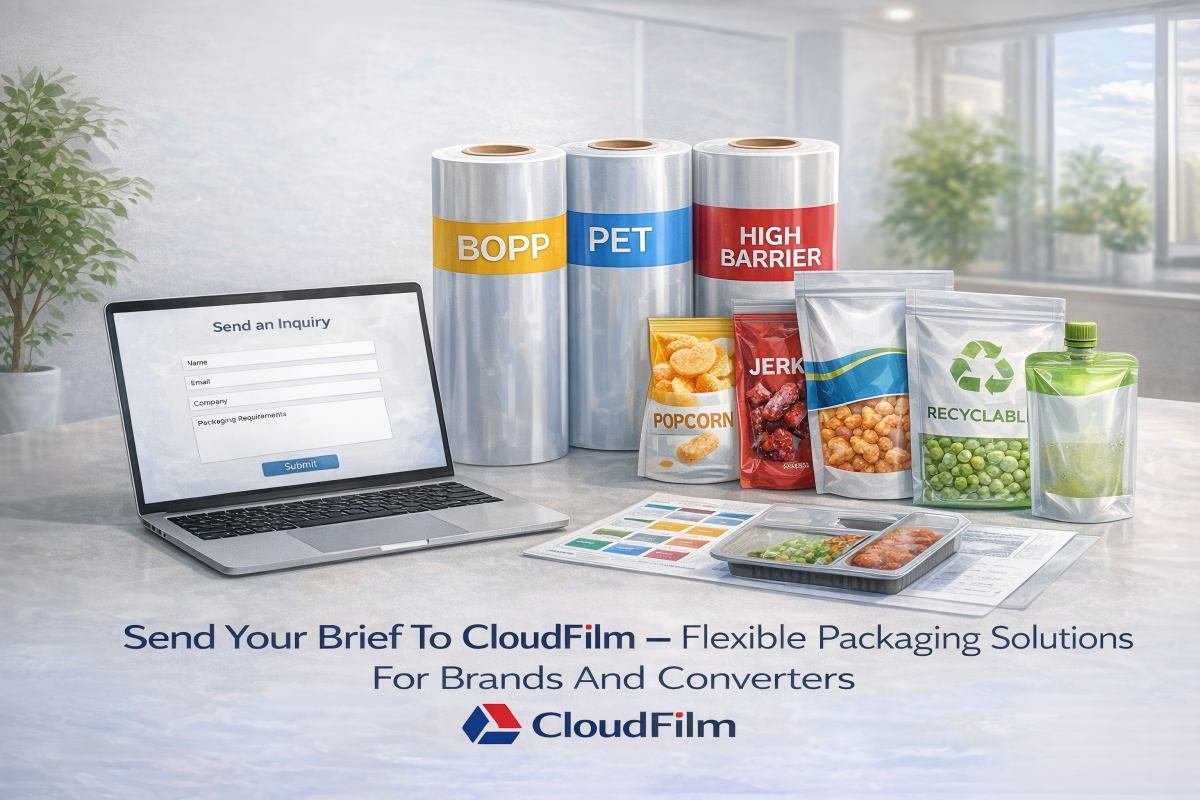
This guide has shown how flexible packaging solutions connect films, pack formats, printing, sustainability and supply chain. To turn it into a real project, you can:
- Shortlist 1–3 products or ranges where flexible packaging could deliver the biggest benefit.
- Collect photos, current specs and pain points for each.
- Decide whether you want a standard, premium or sustainable / mono-material direction.
- Share this brief with a flexible packaging manufacturer and supplier such as CloudFilm and request a first proposal, lead time and sample plan.
From there, the process becomes iterative but manageable: test → adjust → standardize → scale.