
Introduction: Why Recyclable Flexible Packaging Matters Now
Over the last few years, recyclable flexible packaging has moved from a nice-to-have marketing claim to a hard business requirement. Brand owners, retailers and regulators are tightening rules on packaging waste, extended producer responsibility (EPR) and minimum recyclability targets. At the same time, buyers still expect attractive graphics, long shelf life and efficient logistics.
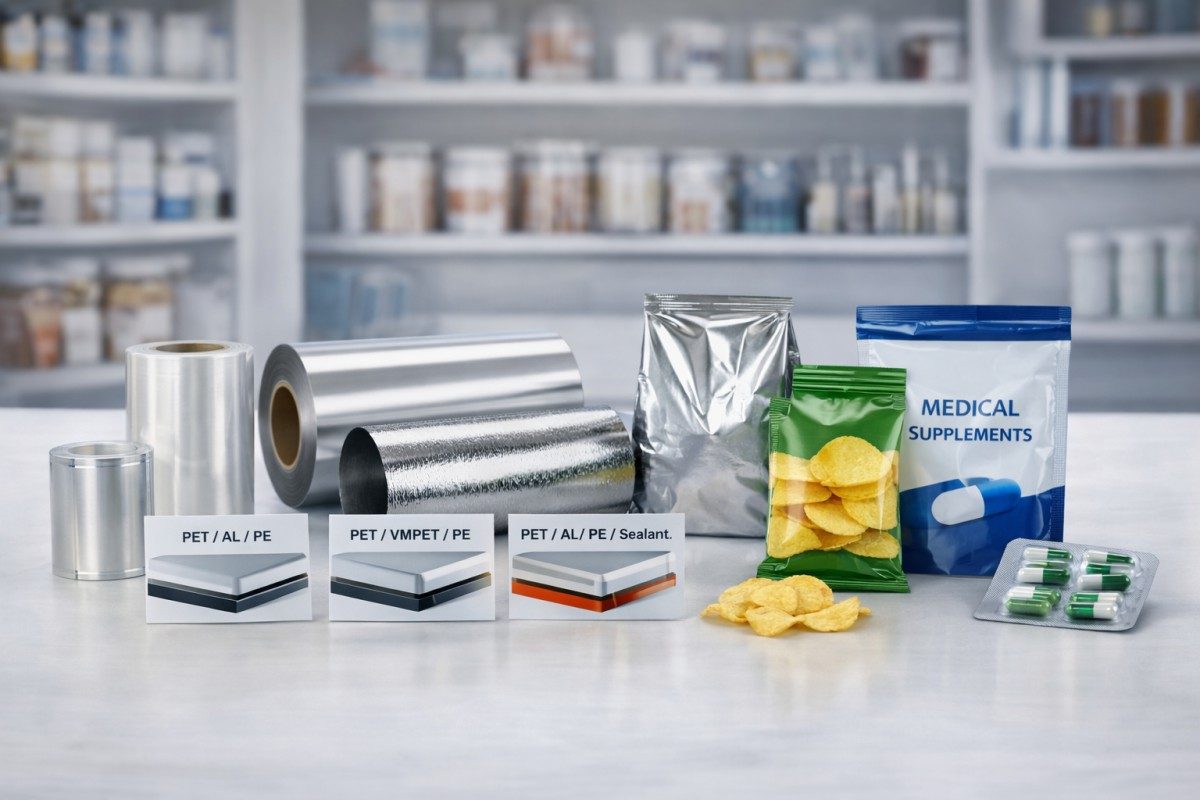
Traditional laminates such as PET/AL/PE or PET/PA/PE protect products well, but they are difficult or impossible to recycle because they combine multiple, incompatible materials in one pack. Mono-material solutions based on polyethylene (PE) or polypropylene (PP) are now the main direction for flexible packaging that is designed for recycling in real-world waste streams.
This guide is written for:
- Purchasing and sourcing managers who need to select the right recyclable film or pouch structure.
- Packaging engineers and converters who must turn theory into real laminates and machine settings.
- Private-label and emerging brands looking for a reliable manufacturer and supplier to support sustainable projects from specification to shipment.
- Distributors and trading companies who want to position themselves as solution providers, not just resellers.
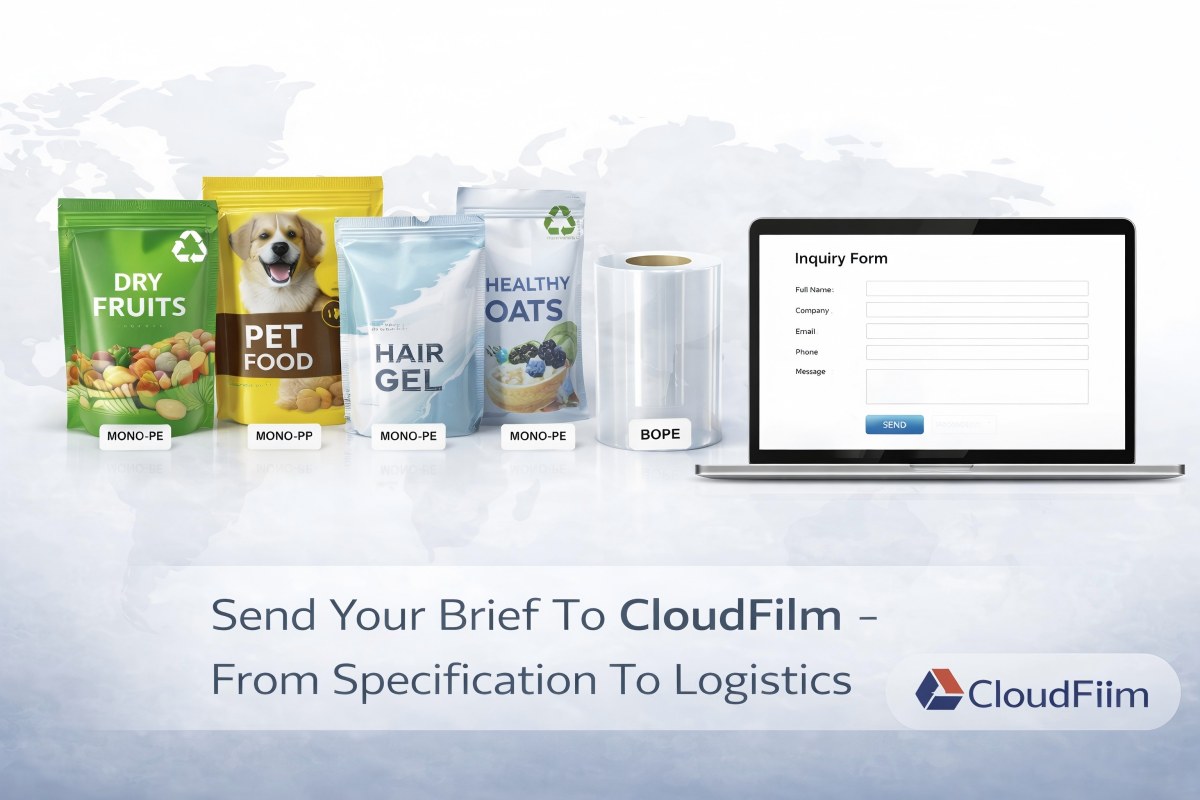
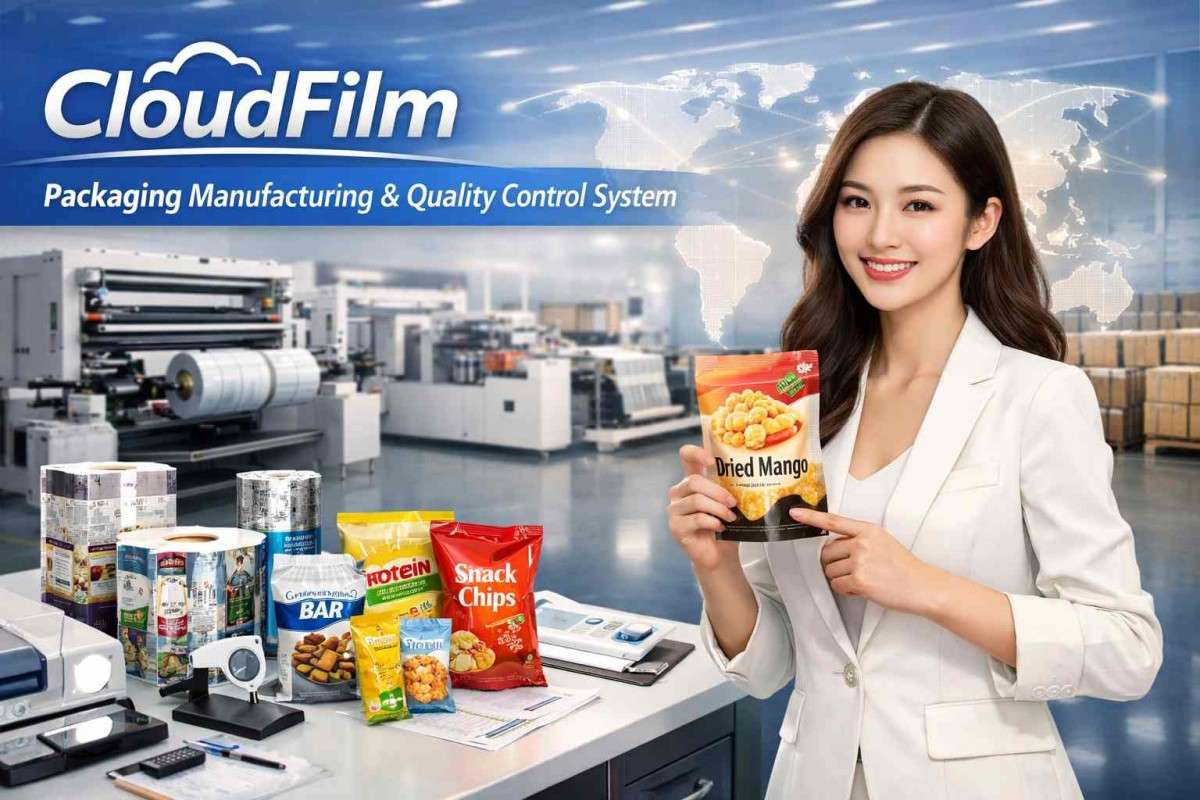
As a Qingdao-based flexible packaging films manufacturer and exporter, CloudFilm supplies BOPP, BOPET, BOPA, PE, CPP and specialty films, as well as custom pouches, to customers worldwide. Our portfolio includes recyclable mono-PE and mono-PP materials so that you can speak confidently about sustainability to your own clients.
If you need an overview of what we supply, you can start from CloudFilm’s full range of flexible packaging films and custom pouches on our website.
In this article you will learn:
- The key concepts behind recyclable and mono-material flexible packaging.
- The main materials and structures (mono-PE, mono-PP, selected PET-based options) used today.
- Typical recyclable formats such as stand-up pouches, spout pouches, film rolls and shrink films.
- A step-by-step roadmap for switching from traditional laminates to recyclable structures.
- How to brief and evaluate a recyclable flexible packaging supplier / manufacturer like CloudFilm.
- A detailed FAQ section covering the most common questions buyers ask.
Core Concepts: What Does “Recyclable” Really Mean For Flexible Packaging?
Before choosing any structure, it is critical to clarify what recyclable flexible packaging really means for your market and your customers.
In simple terms, a flexible pack is considered recyclable when:
- It is made mainly from one polymer family, such as all-PE or all-PP.
- It matches the collection and sorting rules of the target country or retailer program.
- It can be processed in existing mechanical recycling infrastructure without causing contamination.
This is why mono-material packaging has become such a strong trend: in flexible formats (pouches, sachets, wraps), using a single material family dramatically simplifies sorting and reprocessing compared with mixed laminates like PET/AL/PE.
At the same time, it is important to distinguish three related but different concepts: recyclable, compostable and biodegradable.
- Recyclable flexible packaging is designed to go into plastic recycling streams (for example, PE films into PE streams), where it is washed, shredded and re-extruded into pellets.
- Compostable film is designed to break down under specific composting conditions (industrial or home). It may not be accepted in standard plastic recycling lines and often requires separate collection.
- Biodegradable film only means the material can break down under certain conditions—it does not automatically guarantee recyclability or suitability for every waste system.
In other words, a truly recyclable structure for a snack pouch might be:
- Mono-PE: MDO PE // PE-EVOH-PE // PE, or BOPE // PE.
- Mono-PP: BOPP // CPP, sometimes with a thin EVOH or special coating that remains compatible with PP recycling in certain regions.
For a deeper technical discussion of mono-material structures, you can refer to CloudFilm’s in-depth overview of mono-material films in flexible packaging, which explains how PE and PP systems compare to traditional multi-layer laminates.
Key Materials For Recyclable Flexible Packaging
3.1 Polyethylene (PE): The Backbone Of Mono-PE Systems
Polyethylene (PE) is one of the most widely used plastics in the world and dominates many flexible packaging and agricultural film applications. Its main advantage is design flexibility: by selecting different densities, co-extrusion structures and stretching methods, you can obtain very different stiffness, clarity and barrier performance from the same polymer family.
Modern structures such as MDO PE (machine-direction oriented PE) and BOPE (biaxially oriented PE) allow brands to design mono-PE laminates that are both recyclable and strong enough to replace PET or PA in many applications.
In real projects, mono-PE systems often include:
- MDO PE or BOPE as a printable outer layer providing stiffness and optical properties.
- Co-extruded PE or PE-EVOH-PE as the sealant and barrier layer.
- Optional AlOx, matte or high-barrier formulations that still remain within the PE family.
If you want a systematic overview of PE film types, performance and use cases, CloudFilm’s complete guide to PE film is an excellent starting point. From an internal linking perspective, phrases such as “PE film types and properties” are ideal anchor texts to connect to that guide inside your website.
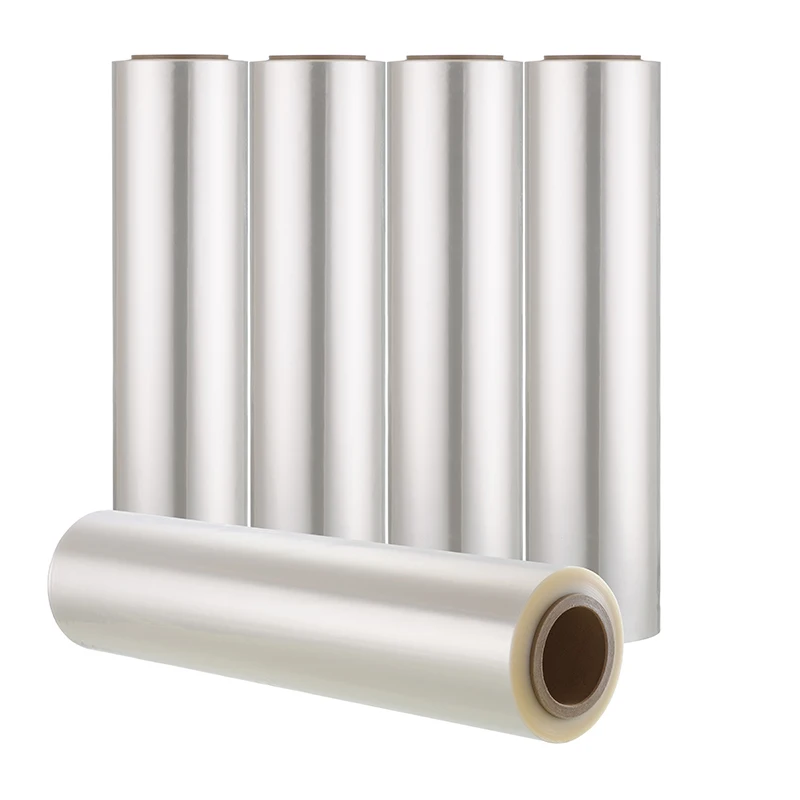
CloudFilm also offers a broad PE film portfolio – including MDO PE, BOPE, stretch film, shrink film, protective film, CPE and LLDPE – which makes it easier for buyers to gradually build an “all-PE packaging system” from primary packaging to transport packaging.
3.2 Mono-PE Enablers: MDO PE And BOPE
In mono-PE recyclable systems, MDO PE and BOPE are the two main pillars.
MDO PE (Machine-Direction Oriented PE)
- Higher stiffness, strength and clarity compared to standard blown PE.
- Frequently used as a print web or stiffness layer to replace PET or PA in laminates.
- Suitable for snack, pet food, hygiene and household product packaging.
- CloudFilm’s MDO PE films are specifically designed for mono-PE laminates in these applications.
BOPE (Biaxially Oriented PE)
- Improved mechanical properties in both machine and transverse directions.
- Optical performance and stiffness closer to BOPP or BOPET, while remaining fully PE-based.
- Ideal for pillow packs, high-speed flow-wrap, and stand-up pouches that require better stiffness.
- CloudFilm’s BOPE films are widely used in nuts, confectionery, pet food, detergents and industrial packaging.
CloudFilm has published detailed comparisons between MDO PE and BOPE, covering differences in stiffness, clarity, laminate design and application windows. These comparisons are very useful when you are selecting the right combination of PE films at the formulation stage.
For buyers focused on recycling and circular economy targets, CloudFilm also provides a dedicated guide to BOPE films for recycling and environmental sustainability, explaining how BOPE helps brands meet EPR and retailer recyclability requirements.
3.3 Polypropylene (PP): BOPP And CPP For Mono-PP Systems
In many snack, confectionery, label and personal care applications, PP-based systems remain a core option. BOPP (biaxially oriented polypropylene) and CPP (cast polypropylene) can be combined into mono-PP structures such as BOPP//CPP or BOPP//EVOH-CPP, commonly used for:
- Pillow bags and back-seal bags for snacks and biscuits.
- High-clarity printed packaging for dry foods and non-food products.
- In-mold labels (IML) and some paper lamination applications.
- Packs that require a balance of stiffness, sealability and printing performance.
If you want to start from the BOPP side, you can refer to CloudFilm’s BOPP film series, which covers print base films, heat-seal films, lamination films, pearlized films and more. This helps you build a ladder from classic BOPP structures toward more sustainable mono-PP systems.
For higher barrier and metallic appearance, metallized BOPP film is another important tool. It improves oxygen and moisture barrier while maintaining an all-PP structure that is more recycling-friendly than mixed PET/AL/PE laminates.
Typical Recyclable Flexible Packaging Formats
4.1 Recyclable Pouches: Stand-Up, Spout And Flat Pouches
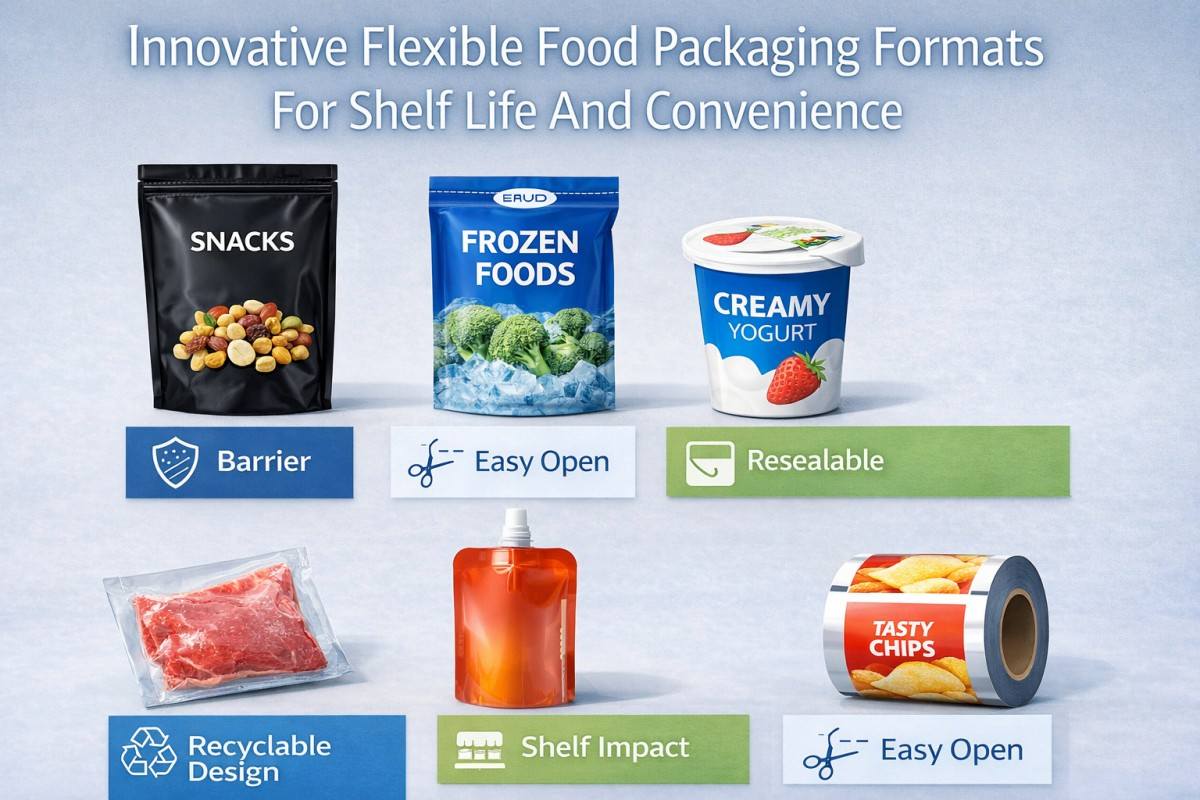
For many brands, the most visible step toward recyclable packaging is switching from PET/AL/PE or PET/PA/PE pouches to mono-PE or mono-PP pouches. Typical recyclable pouch formats include:
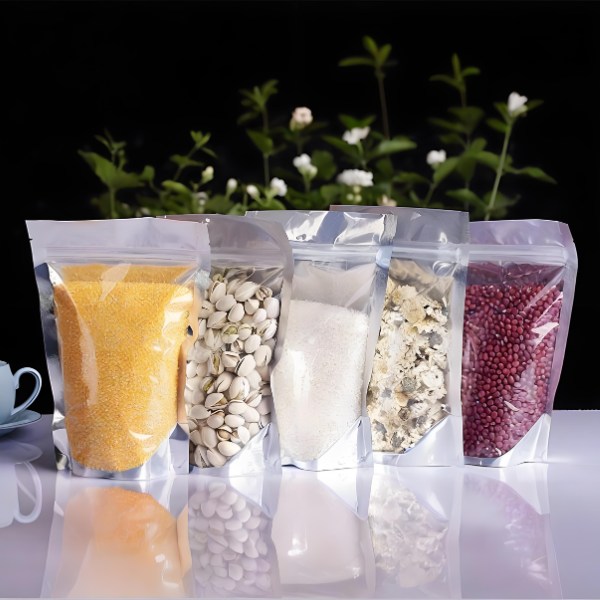
- Stand-up pouches (SUP) for snacks, cereals, pet treats and detergents.
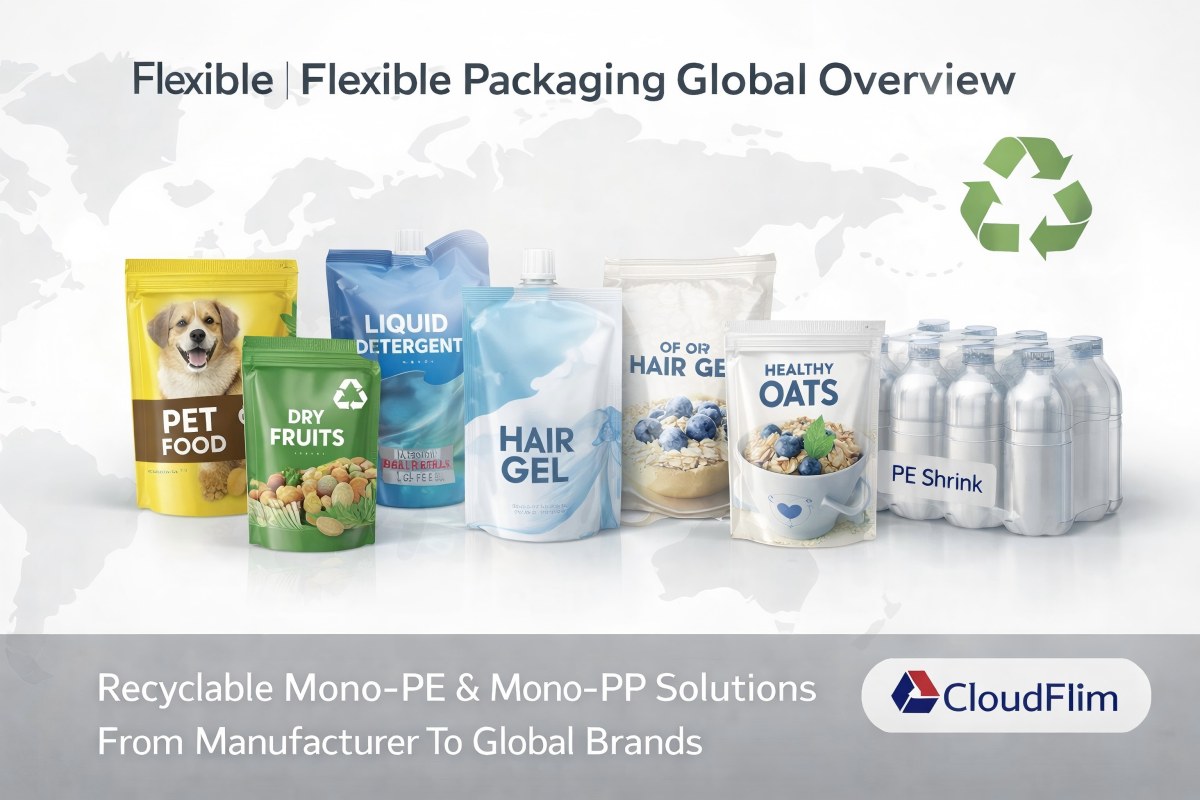
- Spout pouches for hair cream, hair gel, liquid detergent, sauces and refills.
- Flat and three-side-seal pouches for refills, powders, sample packs and small portions.
CloudFilm designs mono-PE and mono-PP pouch structures that are compatible with PE or PP recycling streams where collection systems accept these packs. A product category like “recyclable mono-PE and mono-PP pouches” on your website can serve as a central hub for these solutions and an ideal place to link from this section.
In practice, the material choice often follows this logic:
- Mono-PE pouches for markets where PE film collection (store drop-off or curbside) is well established.
- Mono-PP pouches for regions with emerging PP recycling flows, especially for dry snacks and labels.
- Hybrid but still “designed for recycling” structures with thin EVOH or AlOx layers within PE or PP families when higher barrier is required.
4.2 Recyclable Film Rolls And Laminates
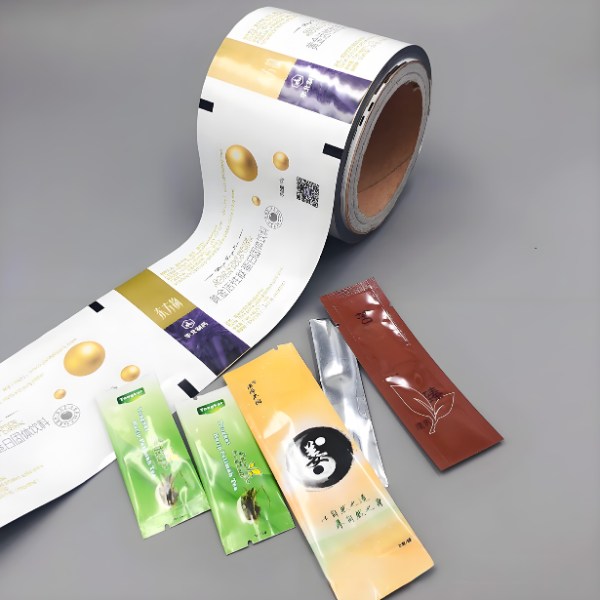
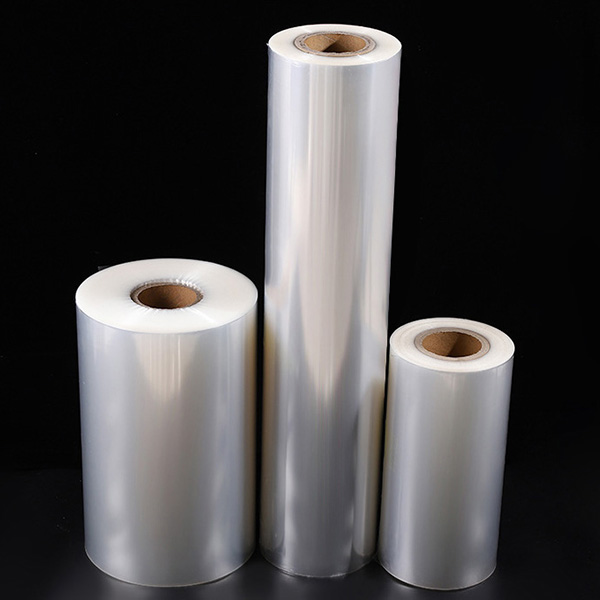
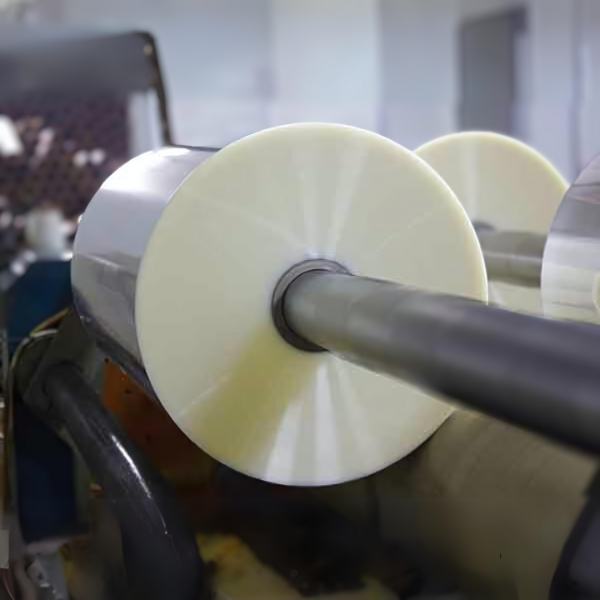
Not every project uses pre-made pouches. Many converters and brand owners purchase rollstock to run on their own HFFS/VFFS, flow-wrap or lidding lines. Common recyclable rollstock options include:
- Mono-PE laminates based on MDO PE or BOPE as the print web, with PE or PE-EVOH-PE as the sealant.
- Mono-PP laminates based on BOPP print webs and CPP sealant layers.
- PE or PP lidding films for thermoformed trays and cups.
CloudFilm’s content on BOPP/PE laminated film structures and sourcing tips explains how to select between classic BOPP/PE, PET/PE and newer mono-PE options, and how to brief your supplier so that specifications are clear from day one. This type of article is a strong internal link target from this section of the blog.
4.3 Shrink And Stretch Films In A Recyclable System
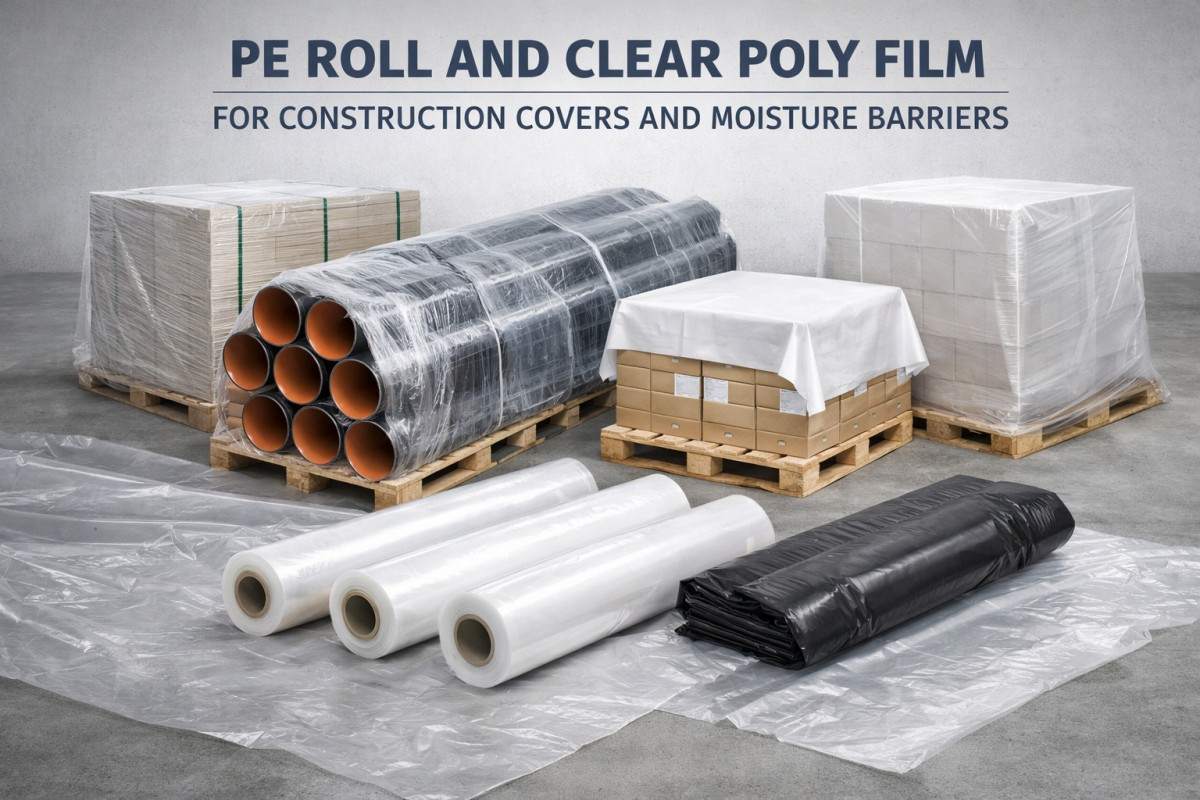
When people talk about “recyclable packaging”, they often focus only on primary pouches and forget secondary or tertiary packaging—such as shrink film around multipacks and stretch film around pallets. In reality, these layers also affect your overall waste footprint and recyclability claims.
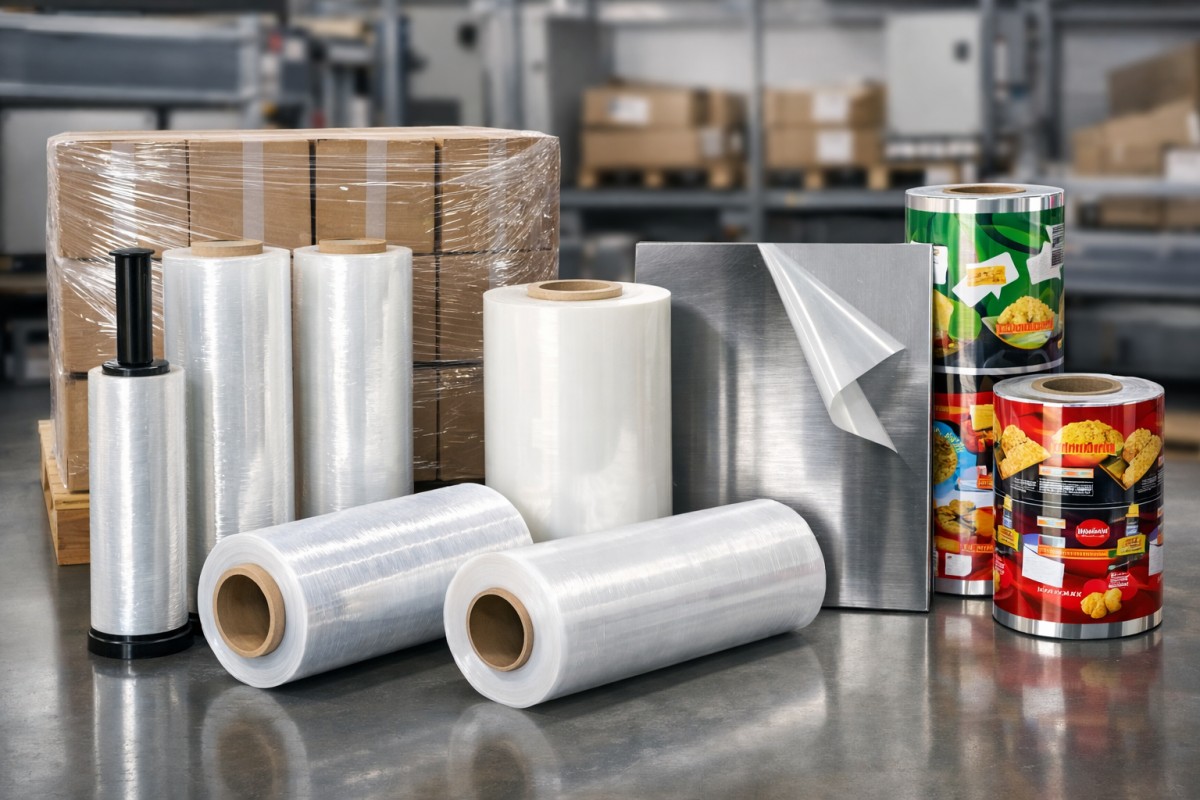
CloudFilm provides a full shrink and stretch portfolio, and several educational guides explain:
- Shrink poly film applications, benefits and FAQs – covering POF, PE, PVC and PETG shrink films.
- POF vs PVC shrink film comparison – when to choose food-grade POF over PVC, especially for sustainability.
- Heat shrink film packaging – positioning shrink film as a core outer packaging solution for modern brands.
From a recyclability point of view, many brands are combining:
- PE shrink film for multipacks and pallet bundling to keep secondary and tertiary layers in the PE family.
- POF shrink film for very clear, food-grade retail overwraps where performance and optics are critical.
- PVC shrink film for non-food promotions where low cost and strong shrink force are more important than recyclability.
- PETG shrink film for full-body sleeves on complex bottle shapes and high-impact 360° branding.
How To Switch From Traditional Laminates To Recyclable Mono-Material Packaging
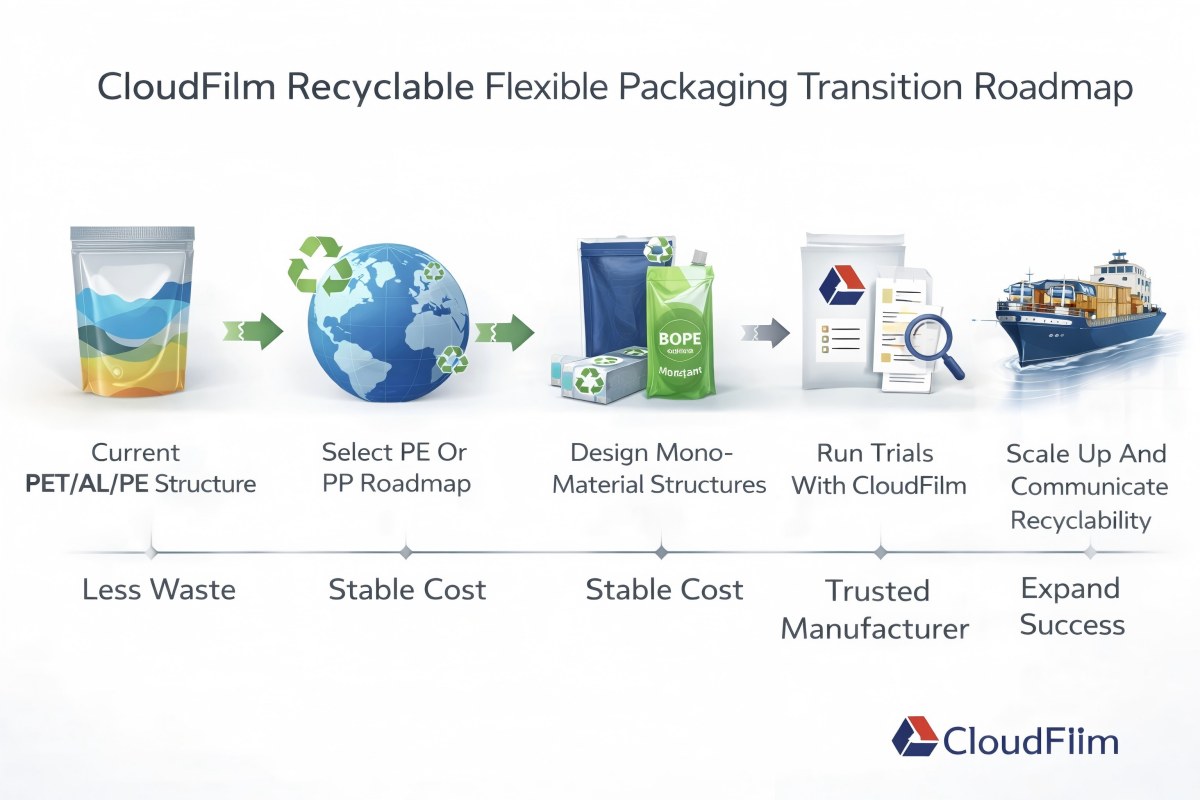
Moving from a PET/AL/PE laminate to a mono-PE or mono-PP structure does not have to be risky or chaotic. A structured roadmap helps you control cost, performance and implementation speed.
Step 1 – Map Your Current Structures
List the existing laminates for each SKU: PET/AL/PE, PET/PA/PE, BOPP/PE, and so on. Note the application (snack, coffee, pet food, hygiene), target shelf life, filling conditions and sealing temperature range.
Step 2 – Identify The Recyclable Target Family (PE Or PP)
Decide whether your main markets are better served by PE or PP recycling streams. For example, if local guidelines or retailer programs emphasize PE film collection, a mono-PE roadmap using MDO PE and BOPE is often the best starting point.
Step 3 – Choose Candidate Structures
Working with a film manufacturer, select two or three candidate structures per key SKU. Example mono-PE options might include:
- MDO PE // PE-EVOH-PE // PE for dry snacks or pet food.
- BOPE // PE for pillow packs.
- MDO PE // BOPE // PE for stiffer stand-up pouches.
Mono-PP options could involve BOPP print webs and CPP sealants.
Step 4 – Run Lab Tests And Pilot Trials
Evaluate seal strength, hot-tack, drop resistance, puncture, OTR and WVTR for each candidate. Your supplier should provide test data and support small-scale trials. CloudFilm routinely helps buyers move from laboratory tests to real packaging lines, adjusting film thickness, slip and coefficient of friction (COF) to match existing machinery.
Step 5 – Validate Regulatory And Labeling Requirements
Check that the new structures comply with food-contact regulations and local recycling labels (such as “designed for recycling” logos or How2Recycle-style marks). CloudFilm’s experience with mono-PE and mono-PP systems gives you a reference for these claims and for communication with retailers.
Step 6 – Roll Out In Waves
Instead of changing all SKUs at once, many brands start with a few strategic lines: a hero SKU in snacks, a refill pouch range, or a new pet food line. Once the performance is proven, you can expand the same film family across more products, simplifying procurement and inventory.
How To Work Effectively With A Recyclable Packaging Manufacturer Like CloudFilm
Choosing the right recyclable flexible packaging supplier is as important as choosing the right film. For international buyers, you need a partner who understands both material science and export logistics.
When you approach a manufacturer like CloudFilm, preparing a clear brief will speed up quotation and sampling. The following checklist is a practical template for your next project:
Product & Market Information
- What product will be packed? (snacks, pet food, hair cream, detergent, frozen meat, etc.)
- Target markets and sales channels (supermarket, e-commerce, club stores, discount chains).
Current Structure & Pain Points
- Existing laminate (for example, PET/AL/PE, PET/PA/PE, BOPP/PE).
- Key issues you face: difficult to recycle, cost pressure, insufficient stiffness, sealing problems, poor print quality, or high damage rate in transport.
Sustainability And Certification Targets
- Whether you need a printed “designed for recycling” message, recycling logo or store drop-off compatibility.
- Requirements for food-contact, BRC, FDA, EU or other regional compliance.
Machine Conditions
- Type of machine (VFFS/HFFS, pouch maker, form-fill-seal, shrink line, lidding machine).
- Maximum speed, sealing jaw type, sealing temperature range and any special limitations.
Trial Plan
- How many rolls or pouches you need for pilot runs.
- Preferred timeline for samples, line trials and full rollout.
CloudFilm positions itself not just as a film producer, but as a solution-driven manufacturer and supplier for mono-PE and mono-PP projects, supporting buyers from specification to logistics. Strategic articles about mono-material flexible packaging trends and future developments on the CloudFilm website can help your internal team build a roadmap for the next three to five years.
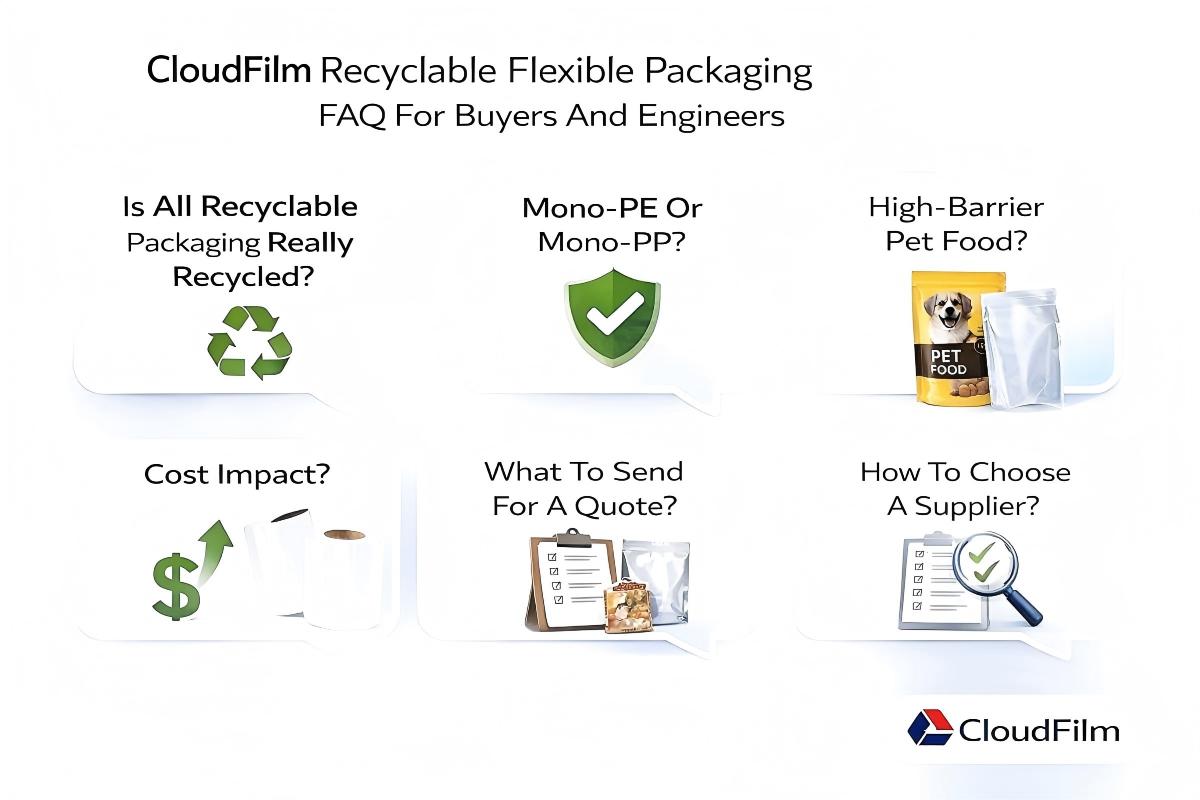
FAQs: Common Questions About Recyclable Flexible Packaging
Q1. Is all packaging labeled “recyclable” actually recycled in real life?
Not always. Some packs are technically recyclable but not accepted in local collection systems. To reduce this gap, focus on mono-PE or mono-PP structures that align with mainstream film recycling streams in your target market, and follow retailer or EPR guidelines where available.
Q2. Which is easier to recycle, mono-PE or mono-PP?
Both are recyclable in principle, but local infrastructure matters. Many countries have strong PE film recycling flows (especially for stretch and shrink films), while PP film recycling may still be emerging. If you are unsure, mono-PE is often the safer first step for flexible packaging.
Q3. Can recyclable flexible packaging handle high-barrier applications like pet food or coffee?
Yes. Combining MDO PE or BOPE with barrier PE structures such as PE-EVOH-PE, or using carefully designed PP structures, can deliver the required shelf life while remaining within a single material family. CloudFilm has multiple project examples in pet food and coffee packaging using such recyclable designs.
Q4. Are recyclable mono-material structures always more expensive?
Not necessarily. Pure material cost can be similar or slightly higher, but you may save by simplifying structures, optimizing thickness and avoiding plastic taxes or penalties linked to non-recyclable packaging. In the medium term, aligning with retailer guidelines and EPR rules also protects shelf access and brand reputation.
Q5. Can I keep my existing artwork when changing to a recyclable structure?
In most cases, yes. You may need to adjust ink coverage, white ink areas or optical density to account for different film clarity or stiffness, but the brand design can remain consistent. CloudFilm frequently helps converters adapt gravure, flexo or digital designs when migrating to MDO PE or BOPE films.
Q6. What information should I send to get a fast, accurate quote for recyclable flexible packaging?
To receive an accurate quotation, provide at least:
- Product type and target market.
- Pack format (pouch, rollstock, shrink, stretch, lidding).
- Current structure and thickness.
- Approximate pack dimensions.
- Filling temperature and process (ambient, hot-fill, retort, freezing).
- Sustainability goals (for example, “mono-PE compatible with PE film recycling”).
Including photos of existing packs and any current quality issues will help your supplier propose a more suitable structure.
Q7. Do I need to redesign my secondary packaging when I switch primary packs to mono-PE or mono-PP?
You do not have to, but it is a good opportunity to improve. Many brands are moving to PE shrink film and PE stretch film to create a “full PE system” from pouch to pallet, simplifying recycling and communication. CloudFilm’s shrink and stretch film portfolios are aligned with this trend and can be combined with mono-PE primary packs.
Next Steps: Turn This Guide Into A Real Project With CloudFilm
By now, you have seen how recyclable flexible packaging connects material science, legislation, supply chain and brand positioning. The most important step is to translate this knowledge into a concrete brief for your next project.
If you are planning to:
- Replace a PET/AL/PE or PET/PA/PE pouch with a mono-PE or mono-PP pouch.
- Develop BOPE or MDO PE based rollstock for snacks, pet food or hygiene products.
- Build a “full PE system” from primary pouches to PE shrink film and PE stretch film.
- Or simply benchmark different film options and pricing from a China-based manufacturer.
You can share your target structure, product photos and volume forecast with CloudFilm. Our engineering team will propose one or two realistic mono-material options, explain the trade-offs, and support you through sampling, trials and shipment.