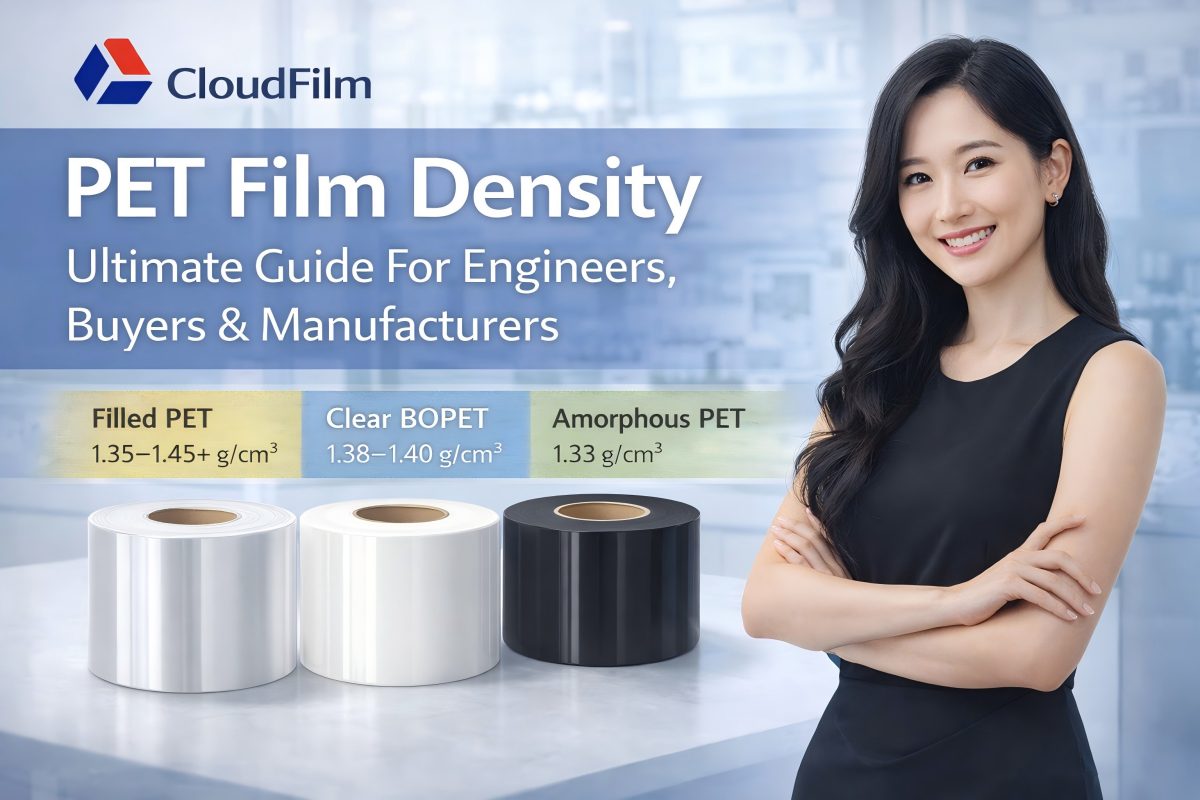
Introduction: Why PET Film Density Matters For Engineers, Buyers And Manufacturers
In the world of engineering, manufacturing, and product design, precision is paramount. When working with materials like PET (Polyethylene Terephthalate) film, understanding its fundamental properties is not just a matter of technical curiosity—it’s a critical factor that impacts cost, performance, and quality. One of the most fundamental yet frequently searched properties is PET film density.
If you’ve found yourself searching for this term, you’re likely looking for a specific number, a way to calculate weight, or an understanding of how density influences your application. This guide is designed to be your definitive resource. We will cover everything from the standard density value and the factors that influence it, to practical calculation methods and how to select the right film for your needs.
This article is written from CloudFilm’s perspective as a specialist manufacturer of PET and BOPET films for flexible packaging, electronics, industrial insulation and other technical uses, so every explanation is designed to match real-world purchasing, converting and quality-control scenarios.
If you also work with other materials like BOPP, CPP, PE or BOPA films, you can compare PET density against these materials using CloudFilm’s in-depth guide on flexible film density, formulas and yield, so that your whole material portfolio is calculated on a consistent basis.
In practice, density is one of the most important bridges between “technical data” and “commercial decisions” – it links thickness, roll weight, yield (m²/kg), freight cost and stock planning together. Getting it right helps engineers, buyers and manufacturers avoid hidden costs and performance problems.

{ The Ultimate Guide To PET Film Density }
What is PET Film Density? The Quick Answer
Let’s start with the most direct answer. Density is defined as mass per unit of volume. For PET film, this is typically expressed in grams per cubic centimeter (g/cm³) or kilograms per cubic meter (kg/m³).
The standard, widely accepted density for amorphous PET film is approximately 1.33 g/cm³ (or 1330 kg/m³).
However, this is not a universal constant. The actual density of a specific PET film roll can vary slightly based on several factors, which we will explore next.
Key Takeaway: When you need a quick reference, use 1.33 g/cm³. But for precise engineering calculations, always confirm the exact density with your supplier, as it can be influenced by crystallinity and additives.
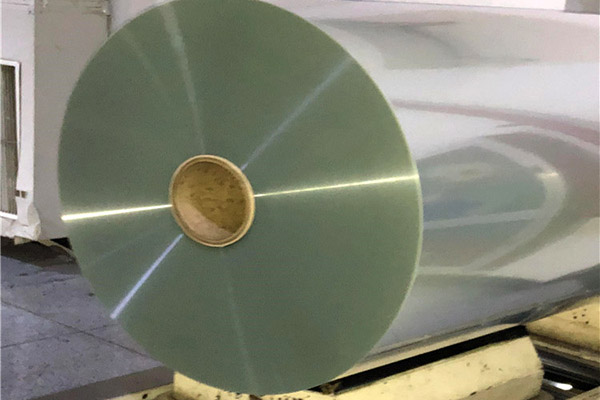
For biaxially oriented PET (BOPET) films commonly used in packaging, electrical insulation and industrial tapes, CloudFilm typically works with a practical density window of about 1.38–1.40 g/cm³, which reflects the higher crystallinity of these oriented grades. This is why datasheets and roll-weight calculations for BOPET films will often differ slightly from amorphous PET sheet data.
If you are evaluating PET density because you plan to buy film in roll form, the fastest way is to ask CloudFilm for the latest Technical Data Sheet (TDS) of the specific grade you want to use and verify the nominal density value before you calculate roll weights or freight costs.
Why Isn’t PET Film Density Always 1.33 g/cm³? Factors That Influence It
While 1.33 g/cm³ is the benchmark, understanding why it can change is crucial for making informed decisions. The primary factors affecting PET film density are crystallinity and additives.
A. The Role of Crystallinity
PET can exist in two primary structural forms: amorphous and crystalline.
- Amorphous PET: This is the standard form for most packaging and industrial films. The polymer chains are arranged randomly, creating a less dense structure. This is the source of the 1.33 g/cm³ value. It offers excellent clarity, gloss, and thermoformability.
- Crystalline PET: When PET film is stretched (biaxially oriented) or heat-treated at temperatures above its glass transition point, the polymer chains can align into a more ordered, tightly packed crystalline structure. This process increases the density. Biaxially Oriented PET (BOPET) film, for example, can have a density ranging from 1.38 to 1.40 g/cm³. Higher crystallinity improves the film’s tensile strength, thermal stability, and chemical resistance.
B. The Impact of Additives and Fillers
Pure PET is rarely used in its final application. Additives are incorporated to enhance specific properties, and they directly affect the overall density.
- Increasing Density: Inorganic fillers like silica (SiO₂), barium sulfate (BaSO₄), or titanium dioxide (TiO₂) are often added to create matte films, improve whiteness and opacity, or modify surface properties. These fillers are denser than PET, so a film with a high filler content will have a higher overall density.
- Decreasing Density: While less common, it’s theoretically possible to incorporate additives or create micro-voids (as in some cavitated films) that lower the overall density. This is usually done to achieve specific optical or insulation properties.
| Factor | Effect on Density | Typical Density Range (g/cm³) | Common Application |
|---|---|---|---|
| Amorphous PET | Baseline | ~1.33 | Clamshell packaging, printing overlays |
| BOPET (Crystalline) | Increases | 1.38 – 1.40 | Electrical insulation, capacitors, high-strength tapes |
| PET with Fillers (e.g., TiO₂) | Increases | 1.35 – 1.45+ | Matte films, white opaque labels, release liners |
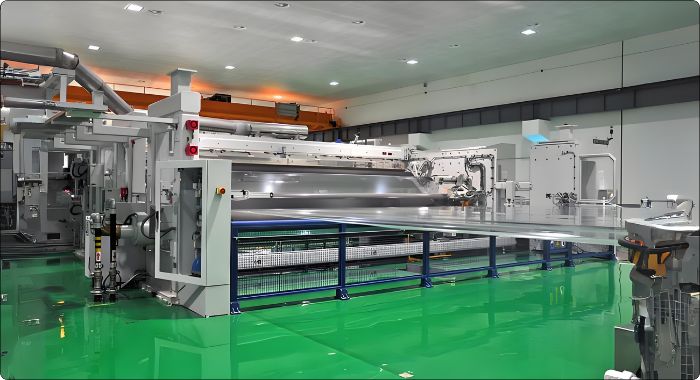
{ BOPET Film Production Line }
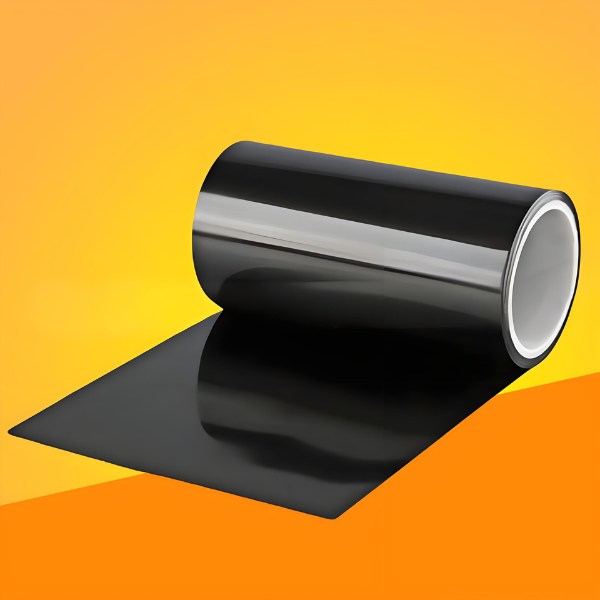
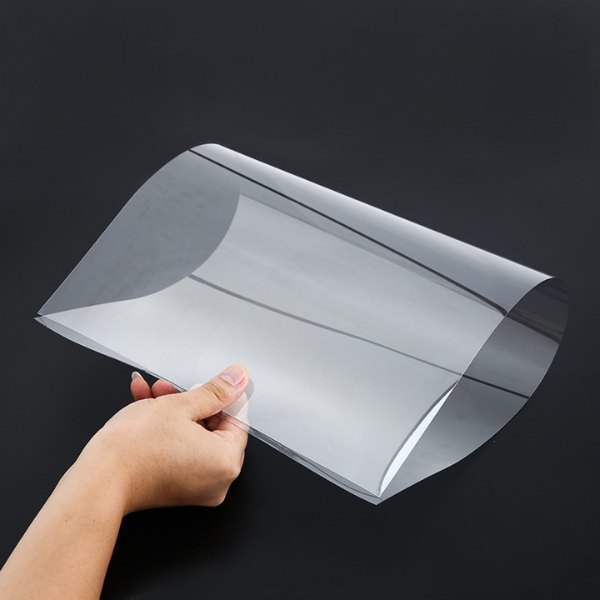
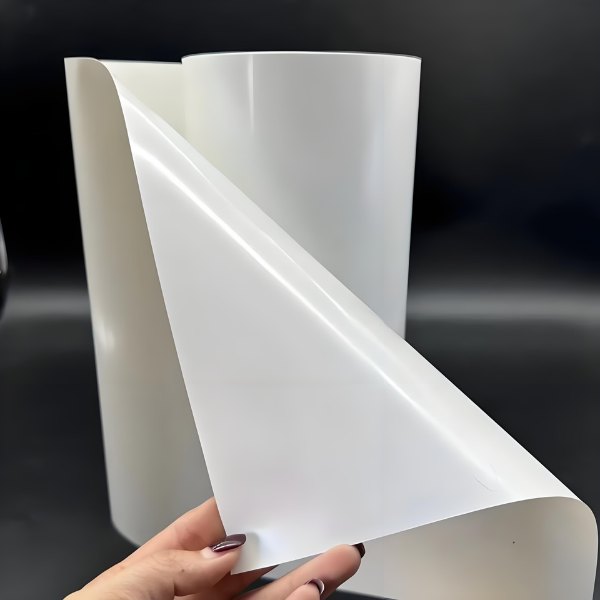
In CloudFilm’s portfolio, clear Gloss PET Film represents low-filler, high-clarity grades, while Matte PET Film and White PET Film contain carefully controlled levels of TiO₂ and other fillers to adjust opacity, surface gloss and density. For applications that require light-blocking or anti-halation, Black PET Film uses carbon black to achieve higher density and strong optical shielding.
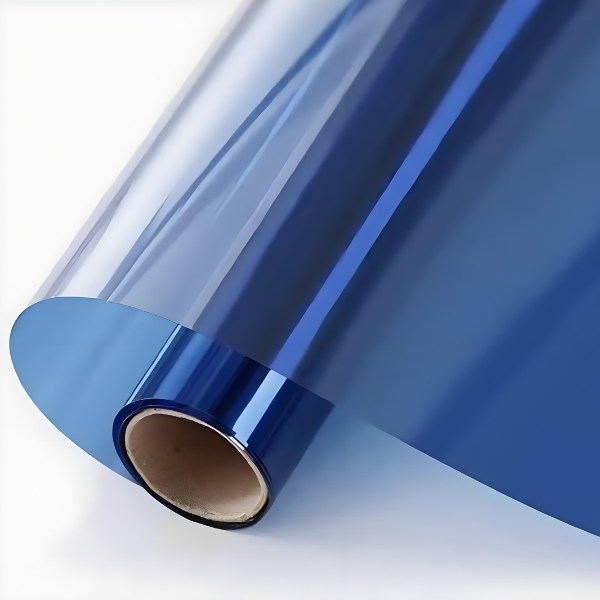
For high-barrier structures, CloudFilm also supplies coated and metallized PET grades such as ALOx PET Film and Aluminized PET Film. These surface layers contribute slightly to the overall density but, more importantly, give you the oxygen and moisture barrier needed for demanding food, pharma and technical packs.
Typical PET Film Density Values For Common CloudFilm Grades
To help engineers and buyers move from theory to practice, it is useful to think about PET film density not just as a single number, but as a range linked to specific types of film and applications. The following indicative ranges are based on typical BOPET products similar to those supplied by CloudFilm and should always be confirmed against the TDS of the exact grade you intend to use:
- Clear packaging and industrial grades (e.g. standard PET Film Roll or Gloss PET Film): usually around 1.38–1.40 g/cm³.
- Matte and white opaque grades (e.g. Matte PET Film and White PET Film): often in the 1.35–1.45+ g/cm³ range depending on filler level and target opacity.
- Black, light-blocking and anti-halation grades (e.g. Black PET Film): density may be slightly higher than clear grades due to pigment loading, while also delivering strong optical density.
- High-barrier structures such as ALOx PET Film or Aluminized PET Film: the PET base density is similar to clear BOPET, but the thin barrier layers contribute marginally to overall mass while dramatically improving barrier performance.
When you send a new project brief to CloudFilm, sharing your target density range (or at least the end-use and desired opacity/clarity) helps our team recommend a shortlist of suitable PET grades and provide realistic roll-weight and yield estimates from day one.
Why Does PET Film Density Matter? Practical Applications
Understanding density isn’t just an academic exercise. It has direct, real-world implications across various industries.
- For the Engineer & Designer:
- Weight and Mass Calculations: This is the most common use. If you are designing a component where weight is critical (e.g., in aerospace, automotive, or portable electronics), you need to calculate the mass of the PET film used. The formula is simple:
Mass = Density × Volume = Density × (Length × Width × Thickness) - Cost Estimation: Since PET film is often sold by weight (or by area, which is tied to weight), knowing the density allows you to accurately estimate material costs for a project.
- Weight and Mass Calculations: This is the most common use. If you are designing a component where weight is critical (e.g., in aerospace, automotive, or portable electronics), you need to calculate the mass of the PET film used. The formula is simple:
- For the Procurement Manager & Buyer:
- Quality Control & Specification: Density can be a quick indicator of whether a film batch meets the required specifications. A significant deviation from the expected density could signal a manufacturing error or a change in material composition.
- Comparing Quotes: When comparing quotes from different suppliers, ensure you are comparing apples to apples. A lower price per kilogram for a film with higher density might not be a better deal if you need a specific thickness and area coverage.
- For the Manufacturer & Converter:
- Process Control: Consistency in density is key to stable manufacturing processes. Variations can affect how the film handles on machinery, its tension, and its final dimensions.
- Performance Prediction: Density is linked to other properties like crystallinity, which in turn affects barrier properties (against moisture and oxygen), stiffness, and thermal performance. Monitoring density can help predict the final performance of the film.
In flexible packaging, density is directly linked to yield (m²/kg). For example, when CloudFilm helps a customer compare PET/PE, PET/VMPET/PE and high-barrier PET ALOx laminates, accurate density input ensures that material usage per pouch, roll-change frequency and logistics cost are all calculated on a fair and transparent basis.
For technical markets such as photovoltaic backsheet, electrical insulation and optical films, density is also one of the checkpoints CloudFilm uses together with tensile strength, shrinkage and haze to ensure that each PET grade is fit for its intended function.
How to Calculate Weight Using PET Film Density: A Practical Example
Let’s put the theory into practice. Imagine you are a product designer needing to source a PET film for a protective cover.
- Your Requirements:
- Film Type: Standard Amorphous PET
- Length: 100 meters
- Width: 1 meter (1000 mm)
- Thickness: 250 micrometers (µm), which is 0.025 cm or 0.00025 meters
- Step 1: Identify the Density
- For standard amorphous PET, we’ll use the standard density: 1.33 g/cm³.
- Step 2: Calculate the Volume
- First, ensure all units are consistent. Let’s use centimeters.
- Length = 100 m = 10,000 cm
- Width = 1 m = 100 cm
- Thickness = 250 µm = 0.025 cm
- Volume = 10,000 cm × 100 cm × 0.025 cm = 25,000 cm³
- Step 3: Calculate the Mass (Weight)
- Mass = Density × Volume
- Mass = 1.33 g/cm³ × 25,000 cm³ = 33,250 grams
- Step 4: Convert to a More Useful Unit
- 33,250 grams =33.25 kilograms
Now you know you need to purchase approximately 33.25 kg of this specific PET film for your project.
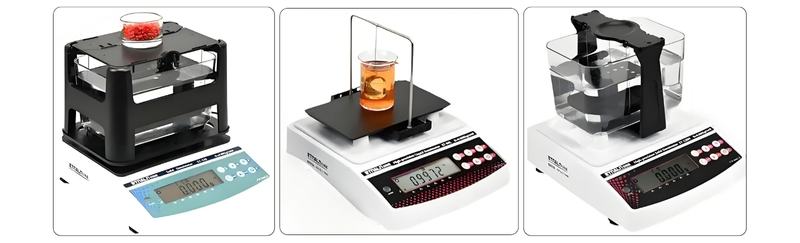
{ Various Density Testing Instruments }
If you are working with oriented BOPET films from CloudFilm, you can repeat the same calculation using a density of 1.38–1.40 g/cm³ (or the exact value from the TDS) to check whether a proposed roll length, width and thickness will fit within the maximum roll weight your equipment can handle.
For multi-material laminates such as PET/PE or PET/VMPET/PE, CloudFilm recommends combining PET density from this guide with PE or CPP density data from our dedicated Flexible Film Density: Formulas, Tables & Yield article, so you can build accurate weight and yield models for the entire structure.
How is PET Film Density Measured? The Scientific Methods
For quality assurance and R&D, density is measured using highly standardized methods. The two most common are:
- ASTM D792 / ISO 1183 (Density Gradient Column): This is the most accurate method. A column is filled with a liquid mixture that creates a density gradient (denser at the bottom, less dense at the top). Small, calibrated standards of known density are floated in the column to create a reference curve. The PET film sample is then immersed, and its density is determined by the level at which it floats.
- ASTM D1505 / ISO 1183 (Density by Displacement): This method involves weighing the sample in air and then weighing it again while immersed in a liquid of known density (often distilled water). The difference in weight is equal to the weight of the displaced liquid, allowing for the calculation of the sample’s volume and, subsequently, its density.
These methods ensure the accuracy and consistency required for industrial and scientific applications.
In CloudFilm’s laboratories, density testing is combined with other key measurements such as tensile properties, shrinkage, haze and surface tension, so that each production batch of PET and BOPET film can be certified with a complete Certificate of Analysis (COA) when requested by customers.
If you need third-party verification for critical projects (for example, in medical packaging, photovoltaic modules or high-end electronics), CloudFilm can coordinate density measurements according to ASTM or ISO standards and share the results together with full TDS and processing guidelines.
Conclusion: Selecting the Right PET Film with Confidence
Understanding PET film density is more than just knowing a number. It’s about understanding the material’s structure, its performance characteristics, and its role in your specific application.
From the standard 1.33 g/cm³ of amorphous films to the higher densities of filled or crystalline BOPET, this property is a key to unlocking precise calculations, effective cost management, and guaranteed quality.
When selecting a PET film, don’t just ask for the thickness and width. Ask for the Technical Data Sheet (TDS) and confirm the density. A reliable supplier will provide this information and help you understand how it impacts your final product.

{ CloudFilm Is Your Reliable Supplier }
At CloudFilm, we are committed to providing not just high-quality films, but also the technical expertise to help you succeed. Our range of PET films is manufactured to the strictest standards, with consistent properties and full technical documentation.
Ready to find the perfect PET film for your application? Contact the CloudFilm team today for a consultation and to request a technical data sheet.
Whether you need clear PET Film Roll for general packaging, specialty grades like White PET Film or Black PET Film for labels and electronics, or high-barrier solutions such as ALOx PET Film and Aluminized PET Film , CloudFilm can recommend suitable densities and thicknesses based on your exact project requirements.
If your project also involves other materials – for example PET/PE, PET/CPP, PET/VMPET/PE or PET/PA/PE structures – our team can combine PET density data with information from related guides like PET VMPET PE: The Ultimate Guide to High-Barrier Packaging Film and CPP Film Properties: The Ultimate Guide for Packaging Professionals , helping you optimize both performance and cost.
PET Film Density FAQ: CloudFilm Answers Common Questions
Q1. What is the typical density of standard PET and BOPET film?
For amorphous PET sheet or film, a commonly used density is about 1.33 g/cm³. For biaxially oriented PET (BOPET) films used in packaging, insulation and industrial tapes, practical density values are typically around 1.38–1.40 g/cm³. CloudFilm’s PET Film Roll and Gloss PET Film grades fall within this range, and the exact value can be confirmed in the TDS of each grade.
Q2. How do I convert PET film thickness and width into roll weight?
Use the formula: Mass = Density × Length × Width × Thickness, making sure all units are consistent (for example, centimeters and g/cm³). Once you know the density of your PET grade, you can calculate the approximate roll weight for any length and width.
If you work with multiple materials (PET, BOPP, CPP, PE, BOPA etc.), CloudFilm’s Flexible Film Density: Formulas, Tables & Yield article provides additional examples and conversion tips.
Q3. Does color (white, black, matte, holographic) change PET film density?
Yes, color and surface finish are often achieved by adding fillers or pigments, which can change the density. White and matte PET films often use TiO₂ and other inorganic fillers, usually increasing density, while black PET films use carbon black to achieve high optical density and may also have slightly higher overall density.
CloudFilm supplies White PET Film, Black PET Film and PET Holographic Film, each with its own typical density range.
Q4. How does PET film density compare to BOPP, CPP and PE films?
PET/BOPET typically has a higher density than BOPP, CPP and most PE films, which means that for the same thickness and area, PET will usually weigh more. This also means PET often provides higher stiffness and better dimensional stability at the same gauge.
If you are comparing different structures such as PET/PE versus BOPP/CPP for flexible packaging, it is useful to combine this PET density guide with CloudFilm’s articles on BOPET Film for Packaging and CPP Film Properties.
Q5. Which CloudFilm PET grades should I consider if roll weight or yield is critical?
If you need maximum yield and lower roll weight at a given thickness, clear PET Film Roll or Gloss PET Film are good starting points. For high-barrier packs, ALOx PET Film or Aluminized PET Film can provide excellent barrier with moderate impact on density.
For special optical requirements, consider Soft Touch Polyester Film or PET Holographic Film, and CloudFilm can advise on the expected density and yield for each option.
Q6. Can CloudFilm provide density data, TDS and COA for PET films?
Yes. For every PET / BOPET product family, CloudFilm can provide up-to-date Technical Data Sheets with nominal density, and upon request can also share Certificates of Analysis (COA) for specific batches, including density, thickness, tensile strength, shrinkage and other key properties.
If you have a project that requires documented compliance (for example food, pharma or technical applications), simply send your requirements to CloudFilm and our team will recommend suitable PET grades and documentation packages.