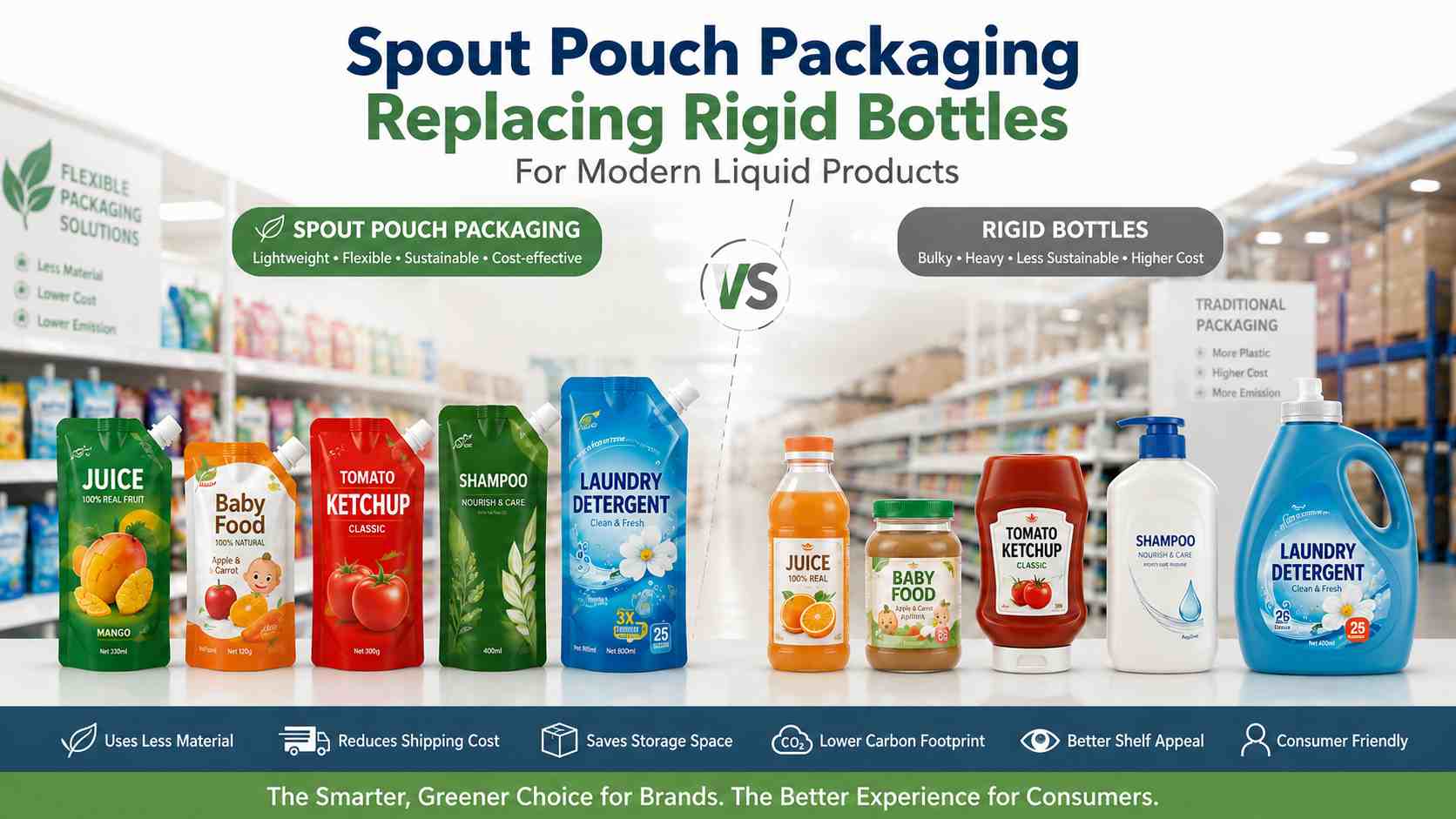
Rigid bottles used to be the default choice for many liquid and semi-liquid products. They were strong, familiar, and easy for consumers to understand. For decades, beverages, sauces, baby food, shampoo, detergent, hand wash, and many refill products were mainly packed in PET bottles, HDPE bottles, glass jars, or other rigid containers.
Today, many brands are rethinking that choice.
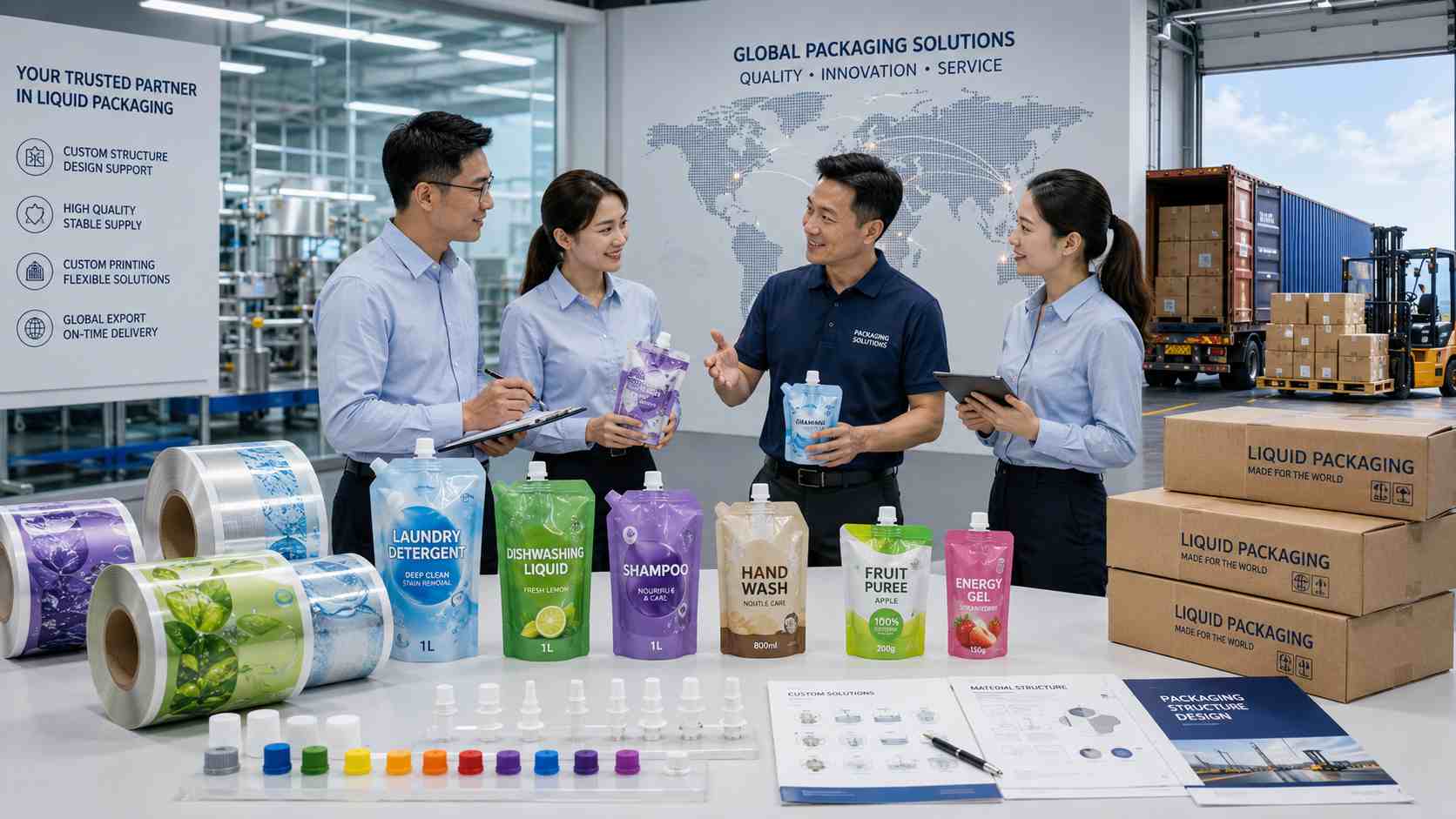
Spout pouch packaging is becoming a practical alternative to rigid bottles because it combines the convenience of a cap with the material efficiency of flexible packaging. A spout pouch can stand on the shelf, pour smoothly, reclose after use, reduce empty package volume, and support strong shelf impact with custom printing.
For many brands, the question is no longer “Can a pouch replace a bottle?” The better question is “Which products can move from rigid bottles to spout pouches without losing performance, safety, or consumer trust?”
For buyers, brand owners, food companies, cosmetic brands, and packaging engineers, this guide explains why spout pouches are replacing hard bottles, where they work best, how to choose the right material structure, and what to check before selecting a spout pouch manufacturer or supplier.
What Is Spout Pouch Packaging?
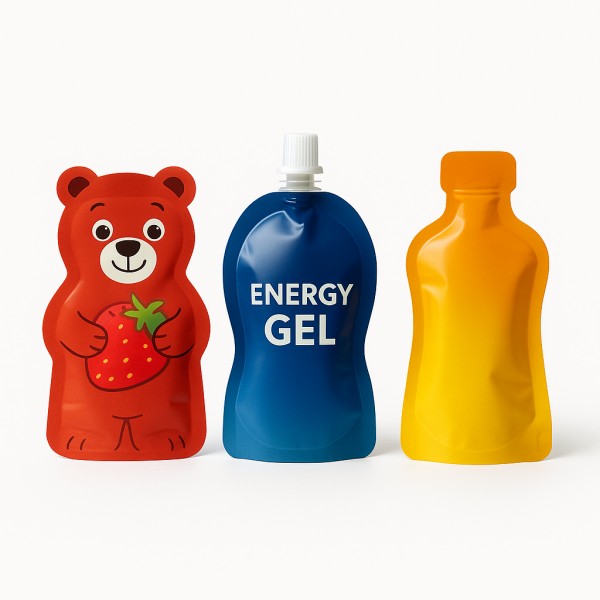
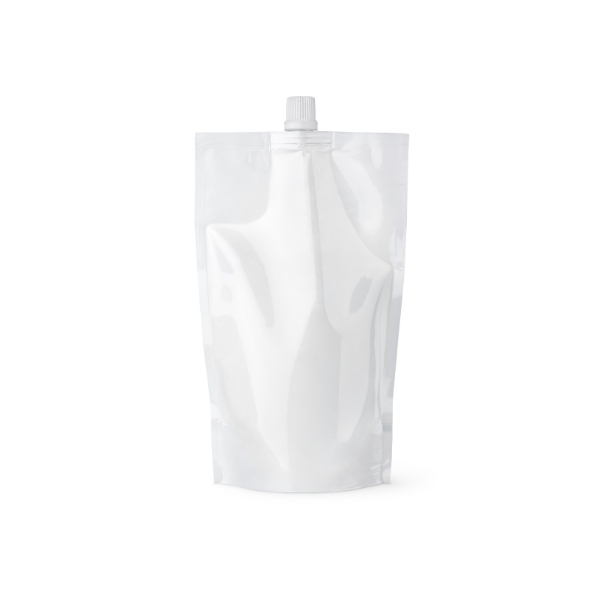
Spout pouch packaging is a flexible pouch fitted with a plastic spout and cap. The pouch body is usually made from laminated films, while the spout allows controlled pouring, drinking, squeezing, and reclosing.
Unlike a normal flat sachet, a spout pouch can be used several times after opening. Unlike a rigid bottle, it can reduce empty packaging volume and improve transportation efficiency. This makes it especially useful for products that need both convenience and material reduction.
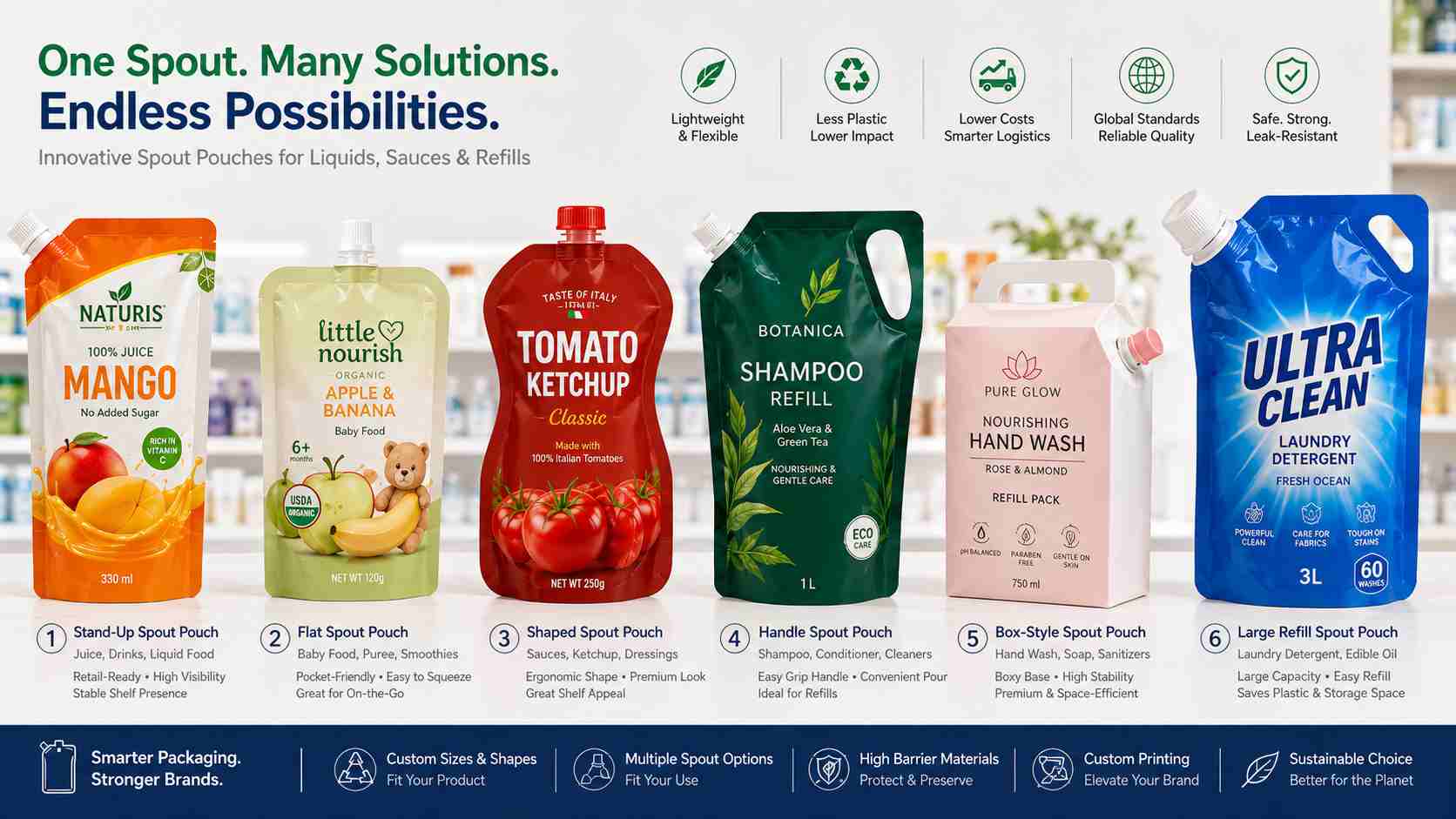
A typical spout pouch may be designed as a stand-up pouch, flat pouch, shaped pouch, or large refill pouch. The spout can be placed at the top center, top corner, or customized position depending on the product, filling line, and user experience.
For brands that are already using liquid flexible packaging, spout pouches are often a natural upgrade when the product needs easy pouring, reclosure, or on-the-go consumption.
Why Spout Pouches Are Replacing Rigid Bottles
The main reason is simple: a spout pouch can perform many of the same functions as a bottle while using a more flexible, lightweight format.
A bottle provides structure, protection, and a familiar user experience. A spout pouch provides many of those benefits but adds advantages in storage, transport, refill systems, shelf differentiation, and material efficiency.
This does not mean bottles will disappear. Rigid bottles still make sense for carbonated drinks, premium glass-positioned products, products that require high stacking strength, or markets where consumers strongly prefer bottles. However, for many non-carbonated liquid and semi-liquid products, spout pouch packaging gives brands a serious alternative.
The shift is especially clear in baby food, fruit puree, juice, sports drinks, sauces, condiments, cosmetic refills, detergent refills, and household cleaning products.
Spout Pouches Reduce Packaging Weight
Weight matters in modern packaging.
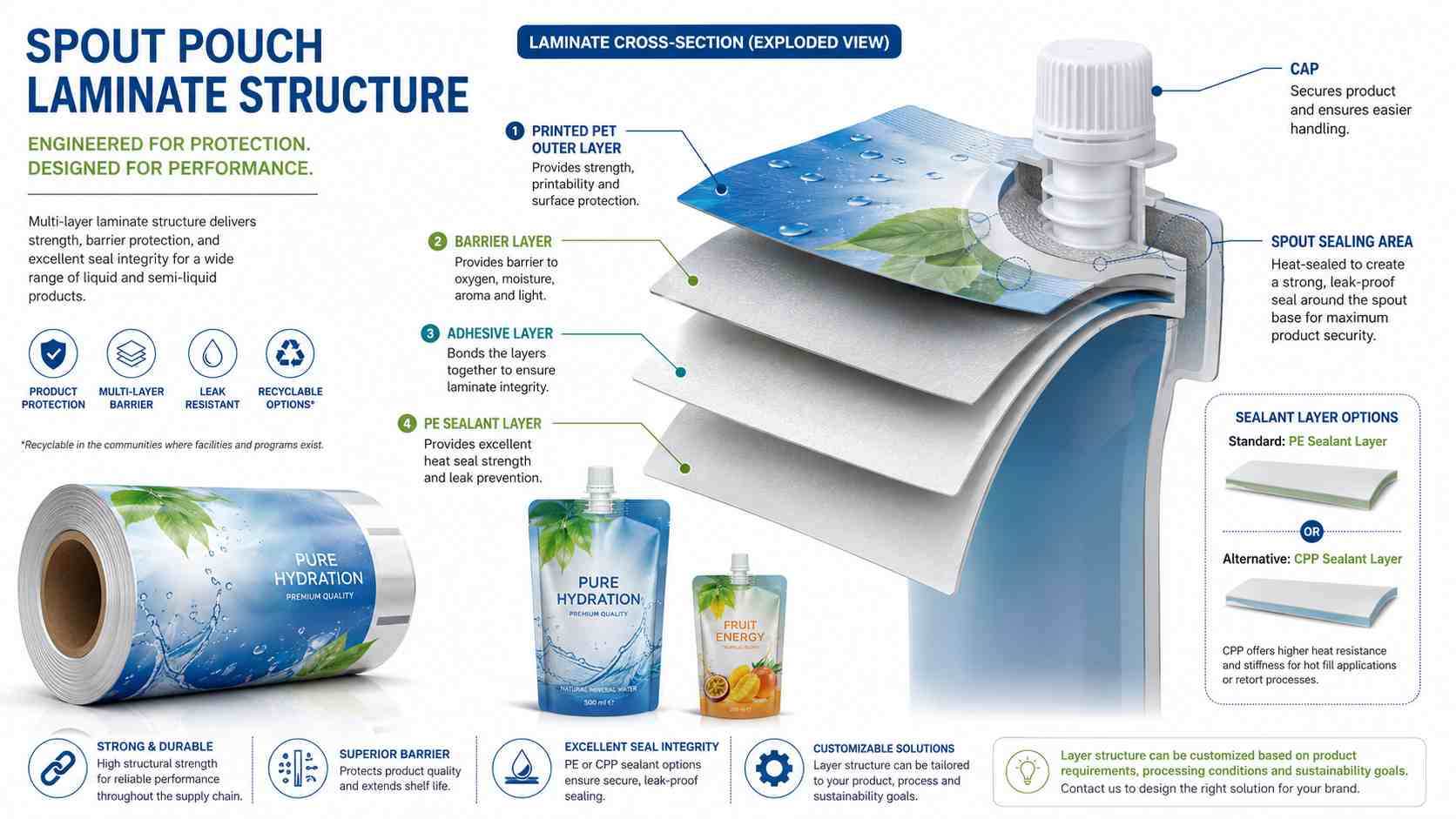
Rigid bottles need enough wall thickness to maintain shape. They also take up fixed space even when empty. Spout pouches, by contrast, use laminated flexible films. The pouch body is thin but can be engineered with strong seal layers, barrier layers, puncture-resistant layers, and high-quality printed outer films.
For export brands, this difference can affect shipping efficiency. Empty spout pouches can be packed more compactly than empty bottles. Finished pouches may also reduce total package weight, which can help lower logistics pressure across warehousing, transportation, and e-commerce distribution.
This is one reason many brands use spout pouches for refill products. A consumer may keep a durable bottle at home, then buy refill pouches to reduce repeated rigid packaging use.
Spout Pouches Improve Shelf Differentiation
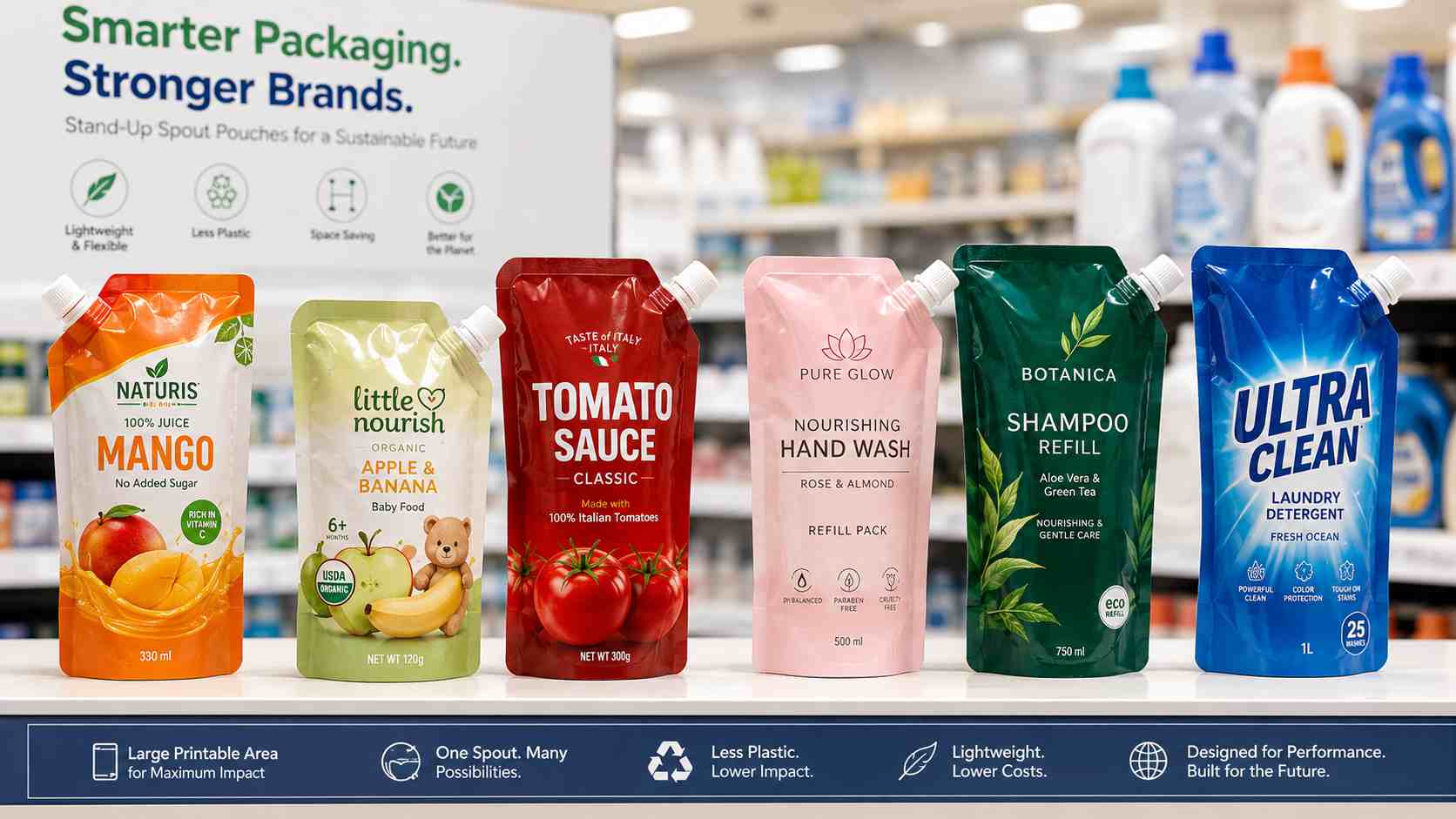
A bottle can look premium, but it also has design limitations. The printable area may be limited to labels or shrink sleeves. A spout pouch can use the full front and back panel for branding, instructions, nutrition information, product windows, matte finishes, metallic effects, and high-impact graphics.
For products in crowded categories, packaging shape and print area matter. A stand-up spout pouch can create a large visual surface on the shelf while using less rigid material than a bottle.
Brands can also choose clear windows, matte surfaces, gloss effects, soft-touch finishes, shaped edges, and custom cap colors. For children’s drinks or baby food, the pouch can feel friendly and portable. For cosmetics and personal care refills, it can look clean, modern, and premium. For detergents and household products, it can communicate value, refill convenience, and lower storage space.
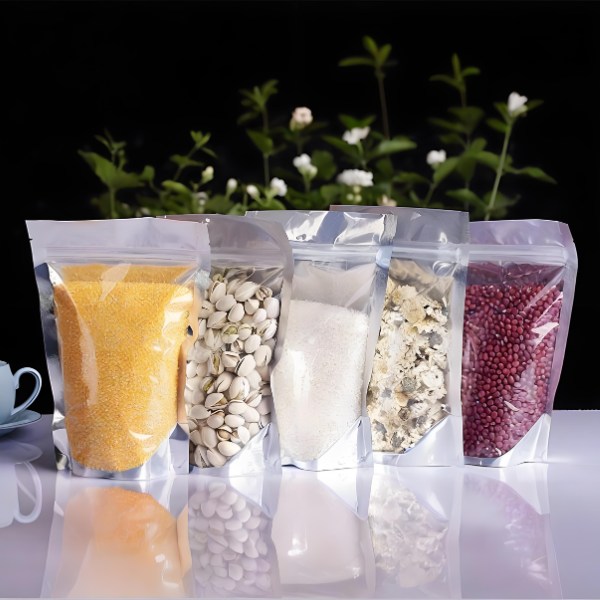
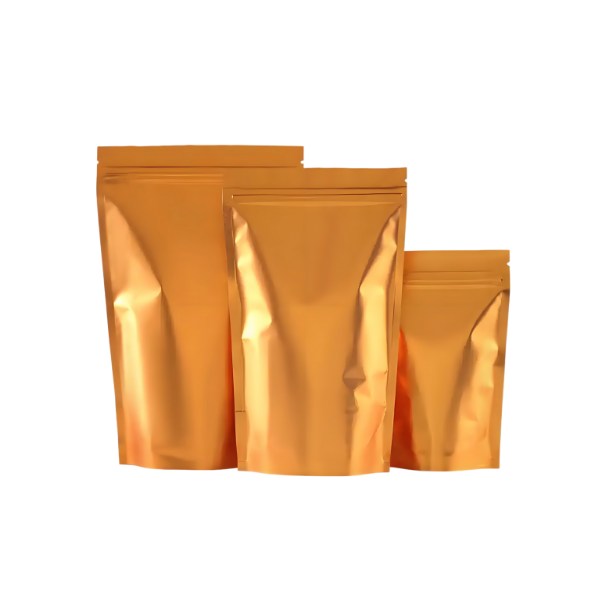
If your product range includes both dry items and liquids, stand up pouches can also help create a consistent packaging family across different SKUs.
Spout Pouches Support Refill Packaging Models
Refill packaging is one of the strongest reasons brands move from hard bottles to spout pouches.
In many categories, the first purchase may still be a rigid bottle, pump bottle, jar, or dispenser. After that, consumers can refill the original container with a flexible pouch. This model is common for shampoo, shower gel, hand wash, laundry detergent, dishwashing liquid, body lotion, cleaning products, and some foodservice liquids.
The benefit is not only material reduction. Refill pouches also save space in retail stores, warehouses, and consumer homes. A pouch can be stored flat or semi-flat before filling and takes less space after use.
For large-volume household products, a pouch with a corner spout can make pouring easier and cleaner. For small personal care refills, a slim spout pouch can be designed for accurate dispensing into the original container.
When sustainability goals are important, brands may also explore recyclable pouches based on mono-material PE or PP structures, depending on the product, market, and available recycling systems.
Spout Pouches Can Improve Consumer Convenience
Modern consumers want packaging that is easy to carry, open, pour, and store. Spout pouches perform well in many daily-use situations.
For children’s drinks and fruit puree, the pouch can be squeezed directly. For sauces, the spout helps control the amount poured. For energy gels or sports nutrition, the package is light and portable. For cosmetic refills, the pouch can be pressed to remove most of the product. For detergent refills, the spout helps reduce mess compared with cutting open a bag.
This user experience is one of the strongest advantages over ordinary sachets. A sachet may be low-cost, but it is usually single-use after opening. A spout pouch can be opened, used, closed, and stored again.
Compared with rigid bottles, the pouch can also be easier to carry during travel, outdoor activities, sports events, or e-commerce delivery. It is less bulky and can fit more easily into bags, cartons, and storage areas.
Spout Pouches Are Suitable For Many Product Categories
Spout pouch packaging is not limited to one industry. It can be customized for different filling conditions, product viscosities, shelf-life targets, and retail channels.
Common applications include:
Beverages such as juice, tea drinks, sports drinks, energy drinks, fruit drinks, and non-carbonated ready-to-drink products.
Baby food such as fruit puree, vegetable puree, yogurt-based snacks, and nutritional semi-liquid products.
Sauces and condiments such as ketchup, mayonnaise, salad dressing, tomato paste, cooking sauce, chili sauce, and liquid marinades.
Personal care products such as shampoo, shower gel, hand wash, body lotion, hair mask, facial cleanser, and cosmetic refill packs.
Household products such as laundry detergent, fabric softener, dishwashing liquid, surface cleaner, disinfectant, and concentrated cleaning liquids.
Industrial liquids such as lubricants, additives, agricultural liquids, and chemical refills that require stronger films and reliable sealing.
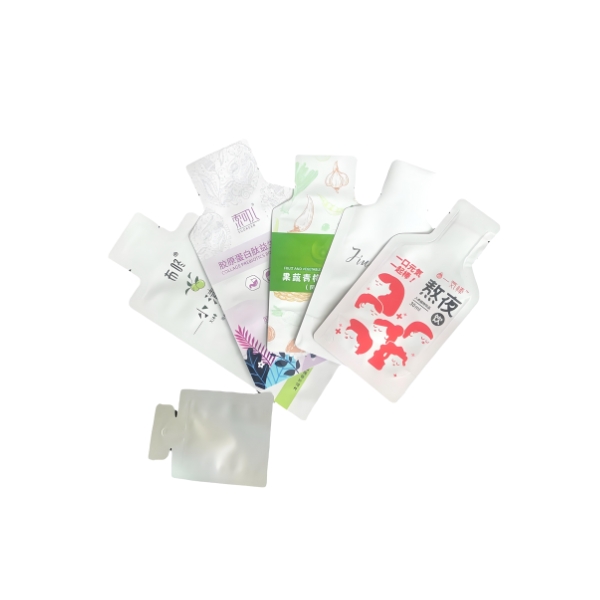
For brands comparing several liquid formats, liquid pouches can provide more options, including stand-up liquid pouches, spout pouches, and smaller sealed liquid formats.
The Right Film Structure Is Critical
A spout pouch looks simple from the outside, but its performance depends heavily on film structure.
Different products need different combinations of stiffness, puncture resistance, oxygen barrier, moisture barrier, aroma protection, chemical resistance, heat resistance, seal strength, and print quality. A juice pouch, baby food pouch, detergent refill pouch, and retort sauce pouch should not all use the same structure.
Common spout pouch structures may include PET/PE, PET/AL/PE, PET/NY/PE, PA/PE, PET/CPP, PET/AL/CPP, or mono-material PE-based structures. The best choice depends on the product.
For general liquid and semi-liquid products, PET/PE Film is often used when brands need good printability, stiffness, and heat sealing. For hot-fill or higher-temperature applications, PET/CPP Film may be considered as part of the structure design.
For products that are oxygen-sensitive, aroma-sensitive, oily, acidic, or require longer shelf life, high-barrier layers may be necessary. In some projects, EVOH high-barrier film can help improve oxygen barrier while keeping the structure suitable for flexible pouch applications.
Spout Selection Matters As Much As Film Selection
A good pouch body is not enough. The spout and cap system must match the product and usage scenario.
A small spout may be suitable for children’s drinks, fruit puree, energy gels, and single-serve products. A larger spout may be better for detergent, shampoo refill, thick sauces, edible oil, or industrial liquids. Some products need tamper-evident caps. Others require child-friendly cap shapes, anti-choking cap designs, or easy-grip caps.
The spout position also matters. A top-center spout may look symmetrical and convenient for drinking. A corner spout may work better for pouring into another container. A side or shaped spout design may help the product stand out on the shelf.
Before mass production, buyers should test pouring speed, squeezing force, leakage resistance, cap torque, sealing around the spout, and compatibility with the filling line.
Filling Temperature Changes The Packaging Design
One major mistake is choosing a pouch structure before confirming the filling process.
Cold-fill products may use one structure. Hot-fill products need heat-resistant films, sealant layers, and spout materials. Pasteurized products need additional temperature stability. Retort products require even more demanding structures that can survive high-temperature sterilization.
For example, a simple beverage pouch for ambient distribution may not be suitable for 121°C retort processing. A sauce pouch filled at high temperature may need stronger seals and a structure that resists distortion. A cosmetic refill pouch may need chemical resistance more than oxygen barrier.
This is why a professional spout pouch supplier should ask about filling temperature, sterilization method, product pH, viscosity, shelf life, storage conditions, and packing machine type before recommending a structure.
For buyers who are still comparing pouch types, the complete guide to liquid pouch packaging can help clarify how different liquid pouch formats are selected.
Spout Pouches Can Help E-Commerce Packaging
E-commerce has changed packaging requirements. Products now need to survive parcel delivery, warehouse handling, vibration, drops, and pressure changes. A bottle can crack, dent, leak from the cap, or require extra protective packaging. A well-designed pouch can offer flexibility under pressure and may reduce breakage risk in some applications.
However, e-commerce pouches must be engineered carefully. The seal strength, pouch thickness, corner design, spout welding area, cap tightness, and secondary carton protection all need testing.
For heavier liquids, a pouch may need a stronger laminate, wider seals, reinforced spout area, and drop-test validation. For high-value products, brands may use both an inner spout pouch and outer carton to improve presentation and logistics protection.
Spout Pouches Are Not Always The Best Choice
A balanced packaging decision should also understand the limits of spout pouches.
Spout pouches may not be ideal for carbonated beverages unless the structure and pressure resistance are specially designed. They may not provide the same premium glass-like image as rigid jars. They may not be suitable where local recycling systems cannot handle flexible packaging. They may require filling line adjustments if the brand currently uses bottle-filling equipment.
Large-volume liquid pouches also need careful handling. A poorly designed pouch may deform, fall over, leak, or feel unstable to consumers. Thick or particulate products may require a larger spout to avoid clogging. Aggressive chemicals may require special inner layers and compatibility testing.
Therefore, replacing bottles with spout pouches should be treated as a packaging engineering project, not only a cost-saving decision.
How To Choose A Spout Pouch Manufacturer Or Supplier
Choosing the right manufacturer is important because a spout pouch combines film engineering, printing, lamination, pouch making, spout insertion, sealing, and quality control.
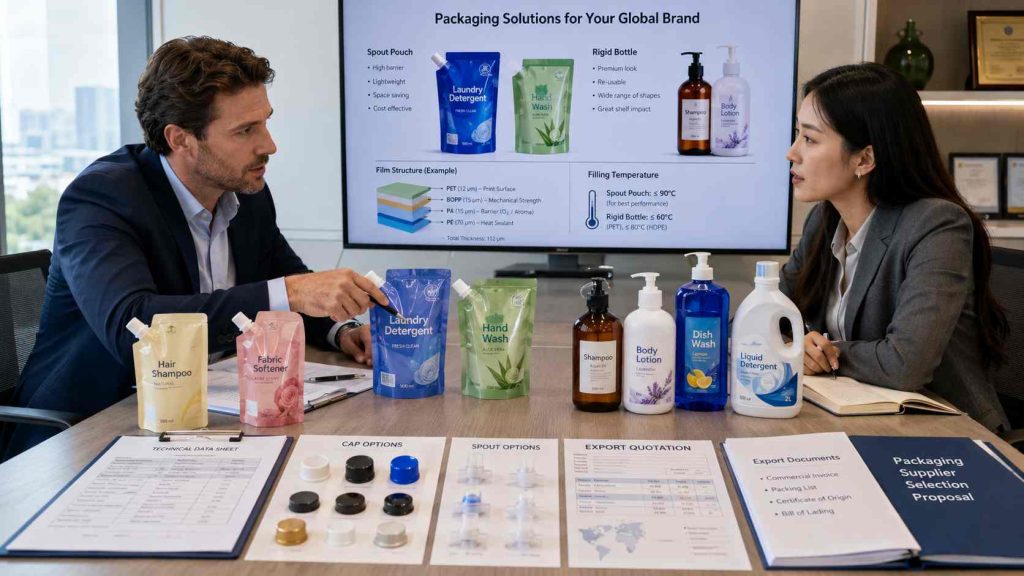
A qualified spout pouch manufacturer should be able to discuss the product, not just the pouch size. The supplier should understand viscosity, barrier needs, filling temperature, shelf life, shipping conditions, spout type, cap type, printing requirements, and target market regulations.
For international buyers, the supplier should also support export packing, stable lead time, clear specifications, samples, technical documents, and communication during trial production.
A good supplier should help answer questions such as:
Which laminate structure is suitable for this liquid?
Does the product need oxygen barrier or moisture barrier?
Should the pouch use PE sealant, CPP sealant, nylon, aluminum foil, EVOH, or a mono-material structure?
Can the pouch pass filling, sealing, drop, leakage, compression, and storage tests?
Can the design be adjusted to improve shelf standing, pouring, and user experience?
If a supplier only quotes the lowest price without asking these questions, the risk of leakage, poor sealing, weak shelf appearance, or failed filling trials becomes higher.
What Information Should Buyers Provide For A Fast Quote?
To get an accurate quote, buyers should provide clear packaging details. This avoids repeated communication and helps the supplier recommend the correct structure from the beginning.
Useful information includes product name, product ingredients, viscosity, acidity or pH if available, target filling volume, pouch size, spout diameter, cap style, filling temperature, sterilization method, required shelf life, storage condition, printing design, order quantity, destination country, and whether the pouch is for retail, foodservice, refill, or industrial use.
If you already have a bottle or pouch sample, send photos, dimensions, filled weight, and current material structure if known. If you are replacing a rigid bottle, explain what problem you want to solve: lower shipping cost, refill format, better shelf impact, less plastic use, e-commerce safety, or easier consumer use.
For brands that are exploring more recyclable structures, MDO PE film can be considered in PE-based flexible packaging designs, depending on barrier requirements and recycling conditions.
Common Mistakes When Replacing Bottles With Spout Pouches
The first mistake is focusing only on pouch price. A cheaper pouch that leaks, fails drop testing, or cannot run smoothly on the filling line is more expensive in the long term.
The second mistake is copying a competitor’s pouch without checking whether the product, filling process, and shelf-life target are the same. Similar appearance does not mean the same structure.
The third mistake is ignoring the spout area. Many leakage problems happen near the spout seal, cap, or top corner. This area needs careful testing.
The fourth mistake is using a pouch that is too soft. If the pouch cannot stand well on the shelf, consumers may see it as low-quality. Film stiffness, pouch shape, bottom gusset design, and filled weight must work together.
The fifth mistake is choosing a recyclable-looking structure without confirming performance. Mono-material solutions can be valuable, but they must still protect the product, run on the machine, seal well, and meet shelf-life targets.
For buyers who are still learning the difference between pouch formats, this pouch types guide can help compare spout pouches with stand-up pouches, flat pouches, side gusset pouches, and other flexible packaging styles.
Why Spout Pouch Packaging Fits Modern Brand Strategy
Spout pouch packaging fits several major packaging trends at the same time.
It supports lightweight packaging. It supports refill systems. It gives brands a large printable area. It improves portability. It can be designed for multiple product categories. It can reduce empty package storage space. It can also help brands test new SKUs with more flexible packaging formats.
For start-up brands, spout pouches can make a product look modern and different from traditional bottle competitors. For established brands, they can become refill packs, travel packs, children’s packs, value packs, or e-commerce-friendly formats. For private-label buyers, they can help build a full liquid product range with customized sizes, structures, and printing.
This is why spout pouches are not only a packaging cost topic. They are part of product positioning, channel strategy, and consumer experience.
Final Thoughts: Bottles Still Matter, But Spout Pouches Are Growing
Rigid bottles still have their place. They offer strong shape, familiar handling, and a premium impression in many categories. But for products where lightweight packaging, refill convenience, shelf differentiation, and transport efficiency are important, spout pouches are becoming a strong alternative.
The key is not to replace every bottle with a pouch. The key is to choose the right packaging format for the right product.
A good spout pouch should protect the product, fit the filling line, stand well on the shelf, pour cleanly, reclose securely, survive shipping, and match the brand image. When the film structure, spout design, and supplier support are all correct, spout pouch packaging can help brands move beyond traditional hard bottles and build a more flexible packaging system.
For companies that need custom liquid packaging, what flexible packaging means is also useful background before comparing rigid bottles, roll stock, sachets, stand-up pouches, and spout pouches.
Spout Pouch Packaging FAQ
1. What is spout pouch packaging?
Spout pouch packaging is a flexible pouch with a built-in spout and cap. It is used for liquid and semi-liquid products that need pouring, squeezing, drinking, or reclosing after opening.
2. Why are spout pouches replacing rigid bottles?
Spout pouches are lighter, more space-saving, and often more convenient for refill packaging. They also provide a large printable area and can reduce empty package storage and transportation volume compared with rigid bottles.
3. Are spout pouches suitable for beverages?
Yes. Spout pouches are widely used for non-carbonated beverages such as juice, tea drinks, sports drinks, energy drinks, fruit drinks, and children’s drinks. Carbonated beverages need special pressure-resistant packaging evaluation.
4. Can spout pouches be used for baby food?
Yes. Baby food puree is one of the most common spout pouch applications. The pouch should use food-grade materials, safe cap design, suitable barrier, and reliable sealing.
5. Can spout pouches be used for sauces?
Yes. Spout pouches can be used for ketchup, mayonnaise, salad dressing, tomato paste, chili sauce, cooking sauces, and marinades. The spout diameter should match the viscosity and any particles in the sauce.
6. Can spout pouches replace shampoo and detergent bottles?
Yes. Many personal care and household products use spout pouches as refill packs. Common examples include shampoo, shower gel, hand wash, body lotion, laundry detergent, fabric softener, and dishwashing liquid.
7. What materials are used for spout pouches?
Common materials include PET/PE, PET/AL/PE, PET/NY/PE, PA/PE, PET/CPP, PET/AL/CPP, and mono-material PE or PP structures. The right material depends on product type, barrier needs, filling temperature, and shelf life.
8. Are spout pouches recyclable?
Some spout pouches can be designed with mono-material PE or PP structures to improve recycling compatibility where suitable collection and recycling systems exist. Traditional multi-material laminates may be harder to recycle but can offer stronger barrier performance.
9. Can spout pouches be hot-filled?
Yes, but the structure, sealant layer, spout, and cap must be designed for the filling temperature. Hot-fill products should be tested before mass production.
10. Can spout pouches be retorted?
Some spout pouches can be designed for retort processing, but they require special high-temperature materials and strict testing. A normal spout pouch should not be used for retort sterilization without confirmation.
11. What spout size should I choose?
Small spouts are usually used for baby food, drinks, and gels. Larger spouts are better for sauces, detergents, shampoo refills, edible oil, and thicker liquids. The best size depends on viscosity, pouring speed, and user experience.
12. Do spout pouches leak easily?
A well-designed spout pouch should not leak. Leakage risk depends on film structure, sealing quality, spout welding, cap torque, filling process, and transportation testing.
13. Are spout pouches safe for food contact?
Food spout pouches should be made with food-grade films, inks, adhesives, and spouts suitable for the target market. Buyers should ask the supplier for available compliance information when needed.
14. What is the difference between a spout pouch and a stand-up pouch?
A stand-up pouch may have a zipper or tear notch but no spout. A spout pouch includes a spout and cap, making it better for pouring, drinking, squeezing, and reclosing liquid products.
15. What information is needed for a spout pouch quotation?
Useful information includes product type, filling volume, pouch size, spout size, cap type, material structure, filling temperature, shelf life, printing design, order quantity, and destination country.