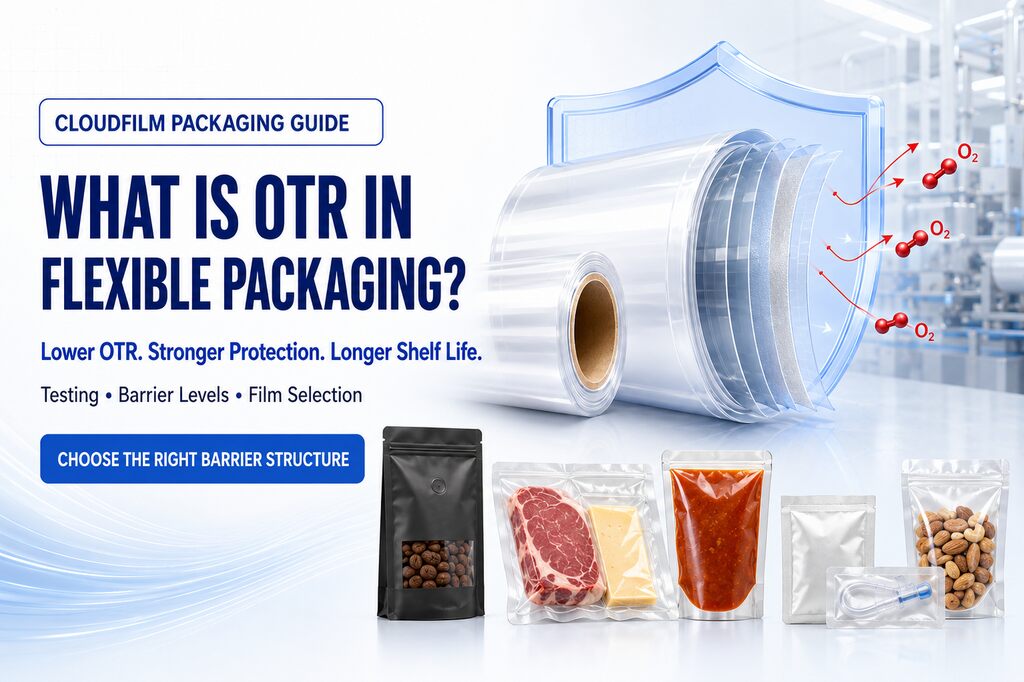
Flexible packaging buyers often hear two words again and again: film and foil. They sound simple, but in real projects, the difference can decide shelf life, sealing performance, machine speed, appearance, cost, and even whether a structure is suitable for food, liquid, pharmaceutical, or industrial use.
In daily packaging work, “film” usually refers to plastic-based webs such as BOPP, BOPET, PE, and CPP. “Foil” usually refers to aluminum foil used by itself or as part of a laminate.
On CloudFilm’s own material pages, these materials are positioned differently: BOPP for clarity and moisture resistance, BOPET for strength and heat resistance, PE for sealability and recyclable PE-based systems, CPP for soft heat-seal performance, and aluminum foil for very strong barrier protection.
That is why buyers should not ask only, “Do I need film or foil?” A better question is: What job must the material do? Does it need to show the product? Block light? Resist puncture? Seal through powder?
Run on a high-speed machine? Support retort or hot fill? Fit a recyclable design target? Once those questions are clear, the right structure becomes much easier to choose.
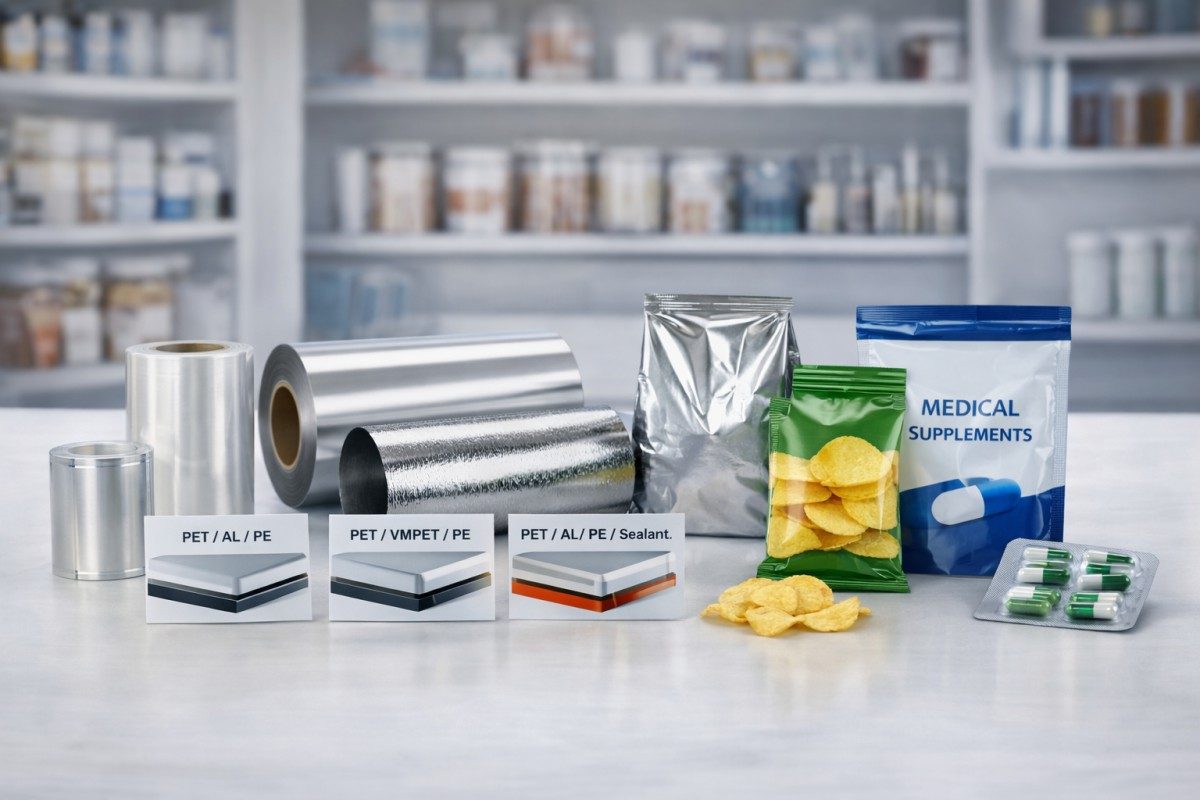
What Do “Film” And “Foil” Really Mean?
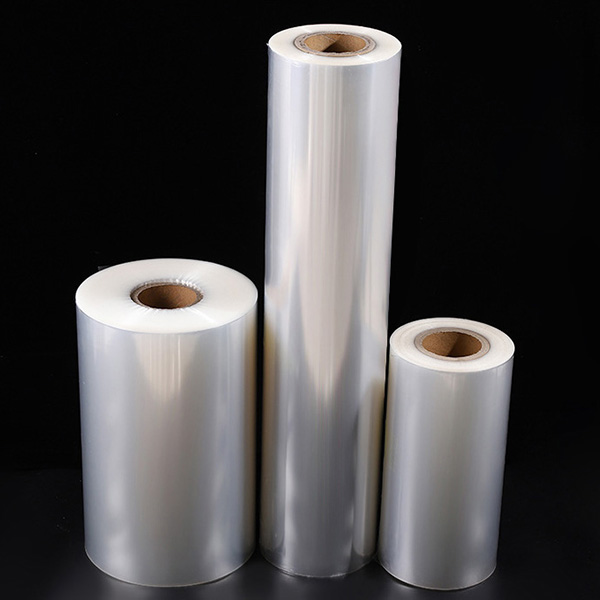
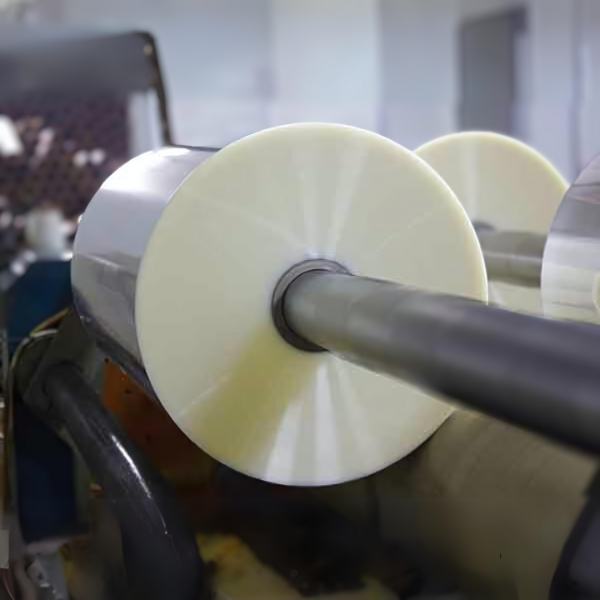
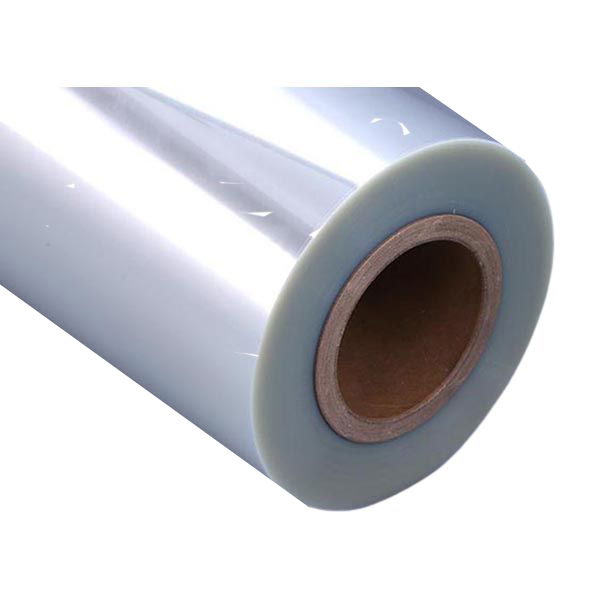
In flexible packaging, film is the broader family. It includes oriented and non-oriented plastic materials that can serve as outer layers, sealing layers, printable webs, barrier layers, or protective layers. Common examples include BOPP film, BOPET film, PE film, and CPP film. Each one solves a different problem.
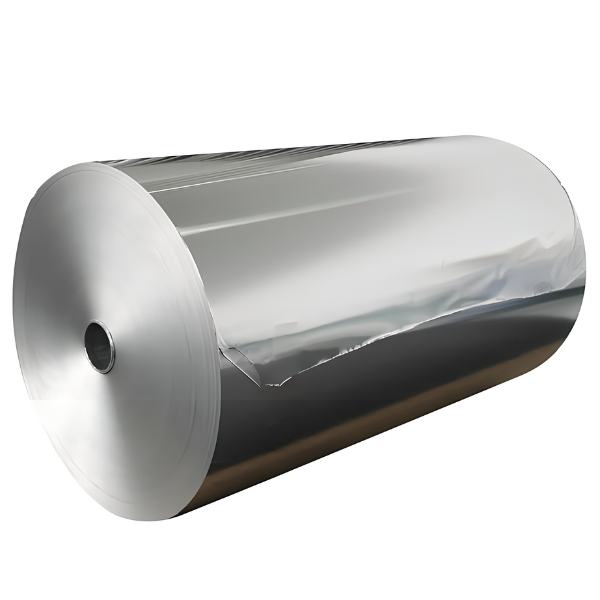
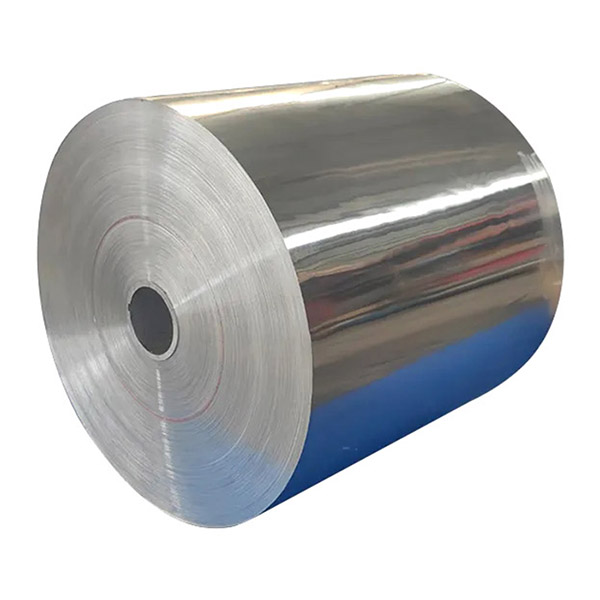
Foil, in most packaging discussions, means aluminum foil. It is usually combined with plastic films or paper to create a laminate. Foil is valued because it is one of the strongest barrier materials in flexible packaging. It helps block light, oxygen, moisture, and aroma transfer.
In many demanding applications, foil is not used alone. It is laminated into structures such as PET/AL/PE, PET/AL/CPP, or Paper/AL/PE to balance printability, strength, barrier, and sealability. CloudFilm’s foil pages describe both flexible packaging aluminum foil and PET foil laminate as high-barrier solutions for food, pharma, and technical applications.
Between standard film and full foil, there are also “middle” solutions. These include metallized films and transparent high-barrier films. Metallized PET, for example, can offer a metal-like barrier effect at lower weight and cost than full foil in some applications.
ALOx PET can provide transparent barrier performance while keeping the product visible on shelf. That middle zone is often where real packaging optimization happens.
Why The Difference Matters In Real Packaging Projects
The difference between film and foil is not academic. It changes practical packaging results.
A film-based structure may give you product visibility, lower material weight, softer hand feel, and better fit for certain recyclable designs. A foil-based structure may give you stronger light protection, stronger aroma retention, and more confidence for sensitive products with demanding shelf-life targets.
A metallized or coated barrier structure may sit in the middle, giving a balance between performance, appearance, and cost. CloudFilm’s laminate and barrier pages show this clearly: transparent high-barrier structures such as ALOx PET and PVDC PET are used when visibility matters, while foil laminates are chosen when maximum protection is required.
So when a buyer compares film and foil, the real comparison is usually across these decision points:
- Barrier level
- Product visibility
- Seal performance
- Heat resistance
- Pack stiffness and premium feel
- Machine compatibility
- Sustainability target
- Total packaging cost
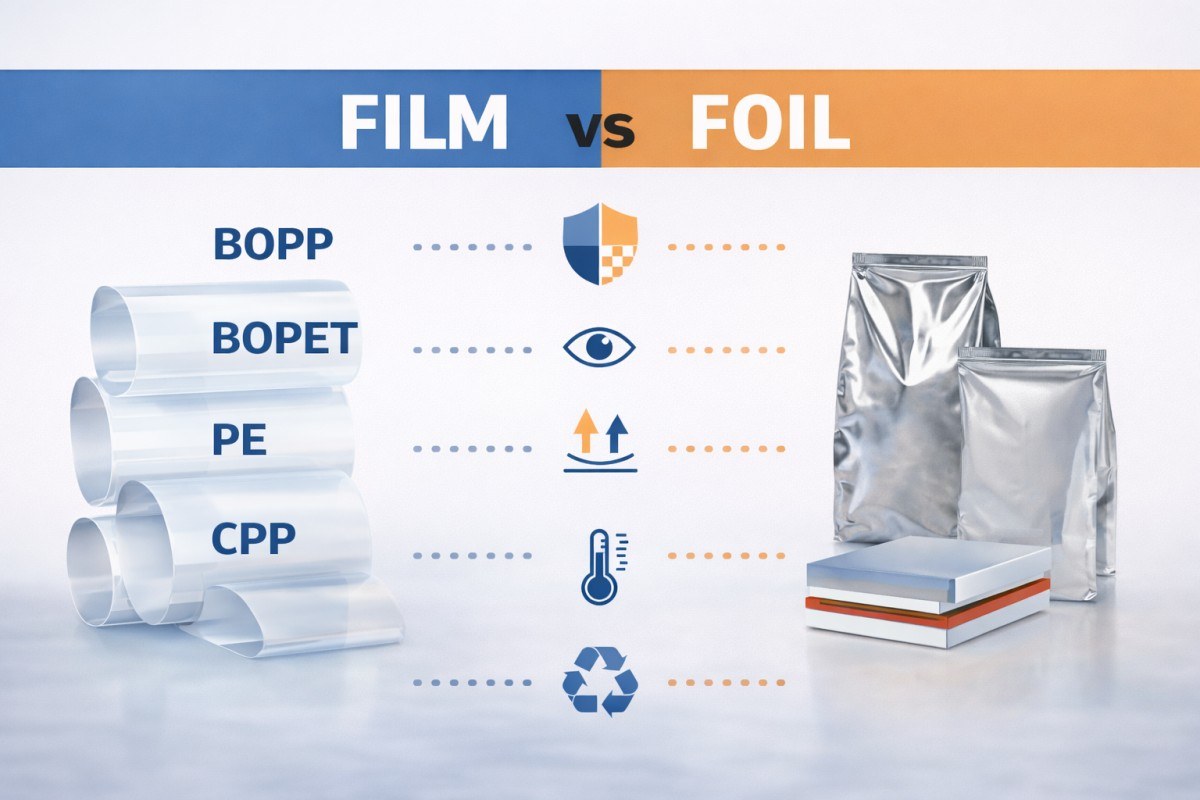
Common Film Families And What They Do
BOPP Film
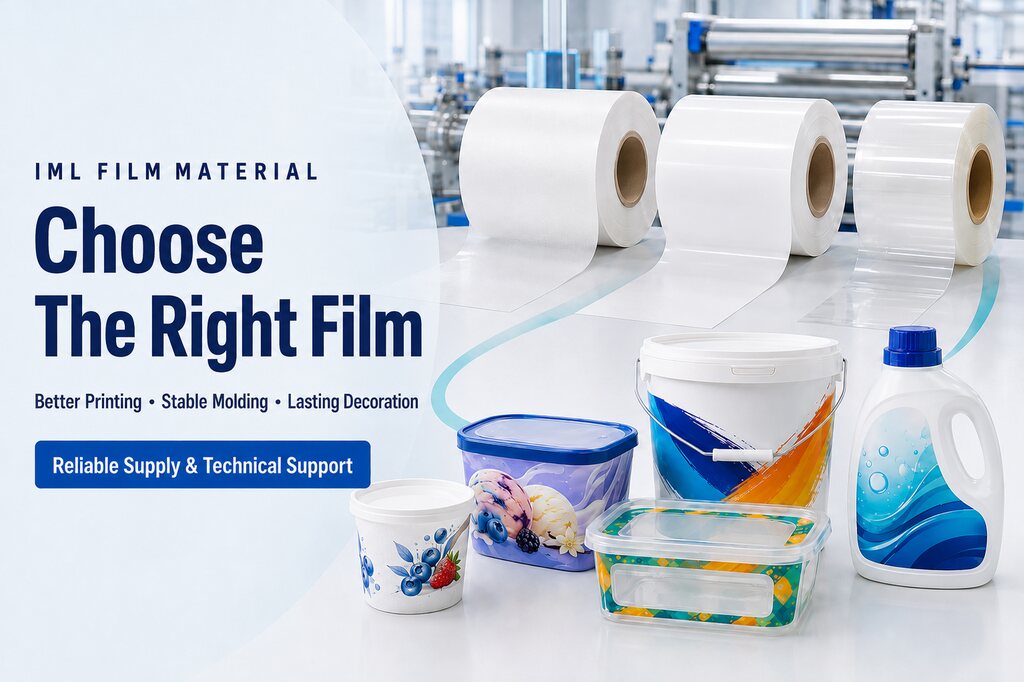
BOPP is often chosen when you need clarity, gloss, good print surface, stiffness, and moisture resistance at a competitive cost. It is widely used for overwrap, labels, flow packs, and as a laminate outer web. CloudFilm’s BOPP pages highlight strength, clarity, moisture resistance, and suitability for packaging, labeling, and lamination.
BOPET Film
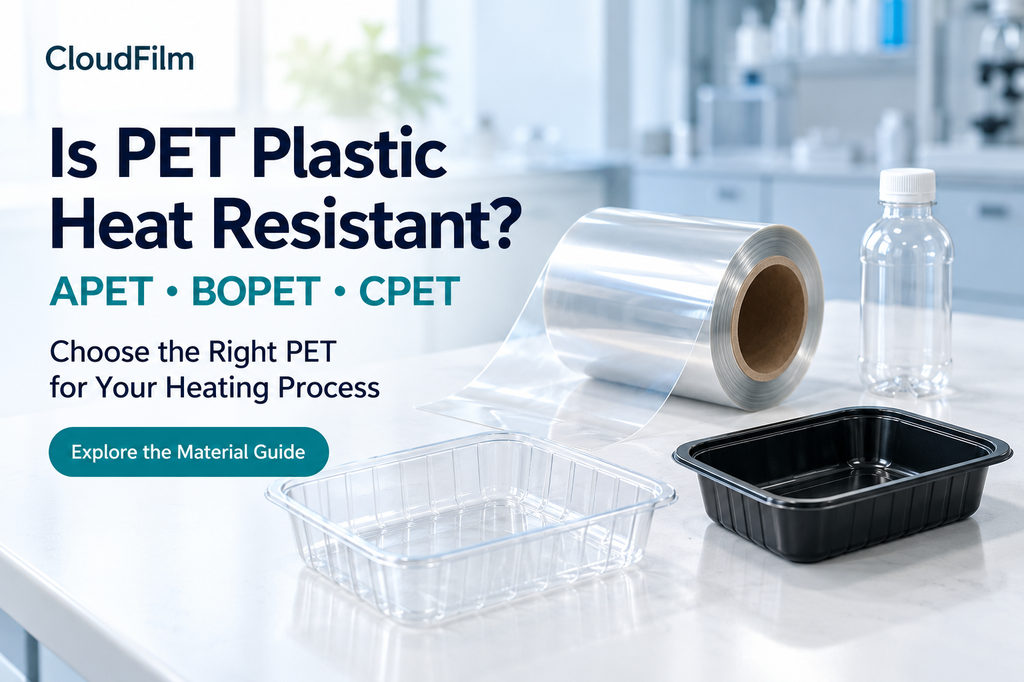
BOPET is a stronger and more heat-resistant outer film. It is useful when dimensional stability matters, when the package must look flat and premium, or when the structure needs higher temperature resistance than BOPP can normally offer. CloudFilm describes BOPET as combining tensile strength, dimensional stability, heat resistance, and clarity.
PE Film
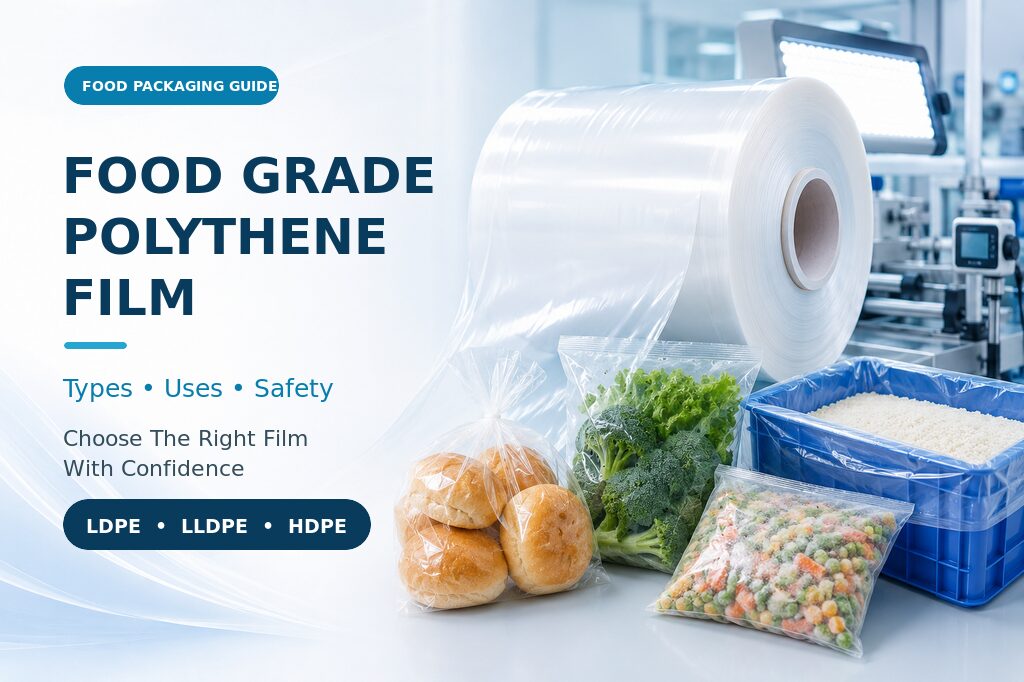
PE is essential because it seals well, gives flexibility, and supports many mono-PE or PE-rich packaging systems. In many laminates, PE serves as the sealing layer. In recyclable design projects, PE also becomes a core building block because it can fit PE recycling streams when the full structure is designed correctly.
CPP Film
CPP is a soft, heat-sealable film with good clarity and moisture resistance. It is often used as an inner layer in laminated packs, especially where smooth sealing and machinability matter. CloudFilm positions CPP as a common sealing layer for converters and brands running laminated structures on packaging lines.
What Foil Does Best
When buyers choose foil, they usually want one thing above all: protection.
Foil is especially valuable when the product is sensitive to light, oxygen, moisture, or aroma loss. Coffee, powders, pharmaceuticals, seasonings, and certain industrial or technical products often move toward foil-based structures because failure is costly.
CloudFilm’s foil pages describe aluminum foil as a material with very strong resistance to moisture, oxygen, and light, and show PET/AL/PE-style laminates as common high-barrier structures.
But foil is not automatically the right answer for every product. It is usually less transparent, often less suitable when product display is important, and may be more than you need for simple dry products with short shelf-life targets. Good packaging selection is not about choosing the “strongest” material. It is about choosing the right level of performance.
Film, Metallized Film, Transparent Barrier, Or Foil?
This is one of the most important decisions in modern packaging.
If the product must be visible, a transparent structure may be better than foil. In that case, a buyer may look at PET/PE, PET/CPP, or transparent barrier options such as ALOx PET film. CloudFilm’s ALOx PET page specifically positions it as a transparent high-barrier solution that protects against oxygen, moisture, and aroma loss while keeping the product visible.
If the product needs stronger barrier but the project still needs cost control or a metallic look, metallized films may be a practical middle path. If the product is highly sensitive and visibility is not important, full foil laminates often remain the safer choice. If the project requires a broader evaluation across multiple layers, CloudFilm’s guide to laminates in flexible packaging is the best way to compare material roles inside a structure.
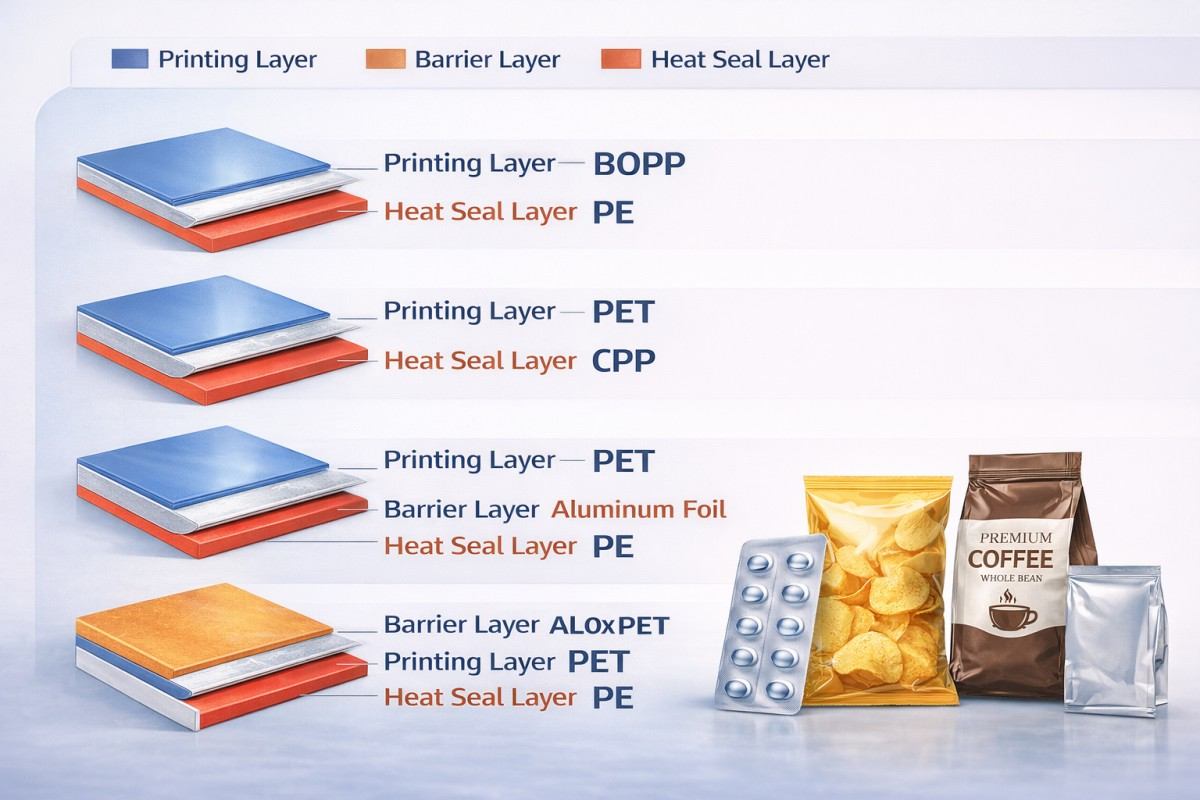
Typical Structures And Where They Fit
Below are some common logic paths buyers use:
BOPP/PE
A practical choice for many dry products where cost control, printability, and sealing are important.
PET/PE
Useful when you want stronger outer stiffness, better appearance, and a dependable PE seal layer.
PET/CPP
A strong choice when you want PET outside and a smooth, heat-sealable CPP inside.
PET/AL/PE
A classic foil laminate for high-barrier applications that need strong protection and reliable sealing.
PET/AL/CPP
Often chosen when the project needs high barrier plus CPP-related sealing behavior.
ALOx PET/PE
Useful when you want both product visibility and stronger barrier performance than simple clear laminates.
Paper/AL/PE
A good option when the project also wants a paper look or extra body.
These are not “best structures” in general. They are only starting points. Real selection depends on the product, filling process, shelf-life target, and pack format.
Which Pack Formats Commonly Use Film And Foil?
Film and foil are not just raw materials. They become real formats. That is where performance becomes visible.
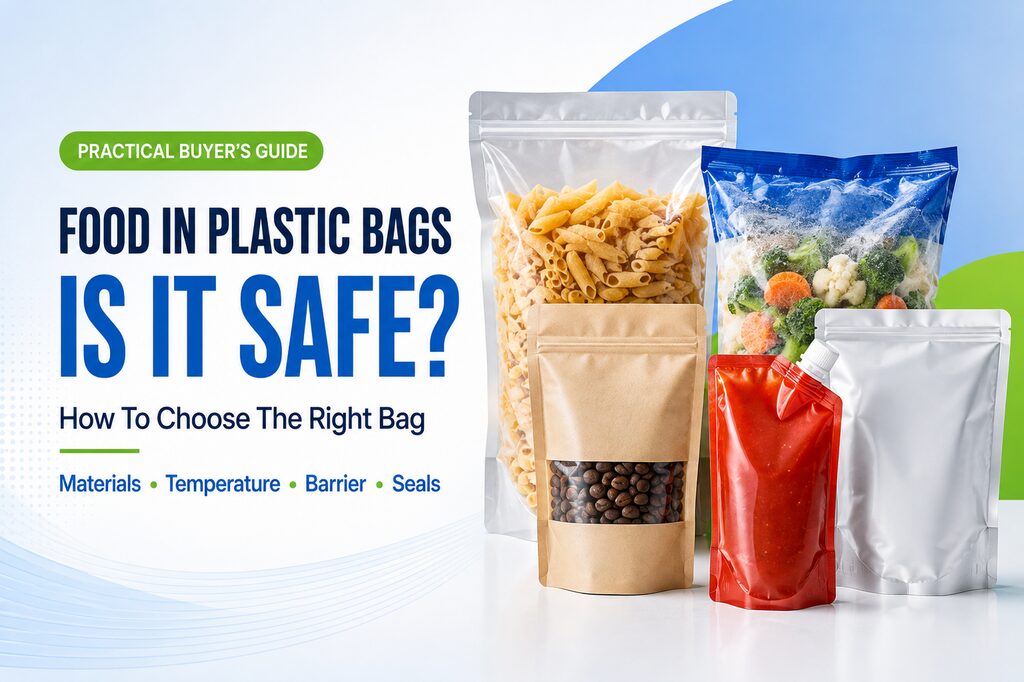
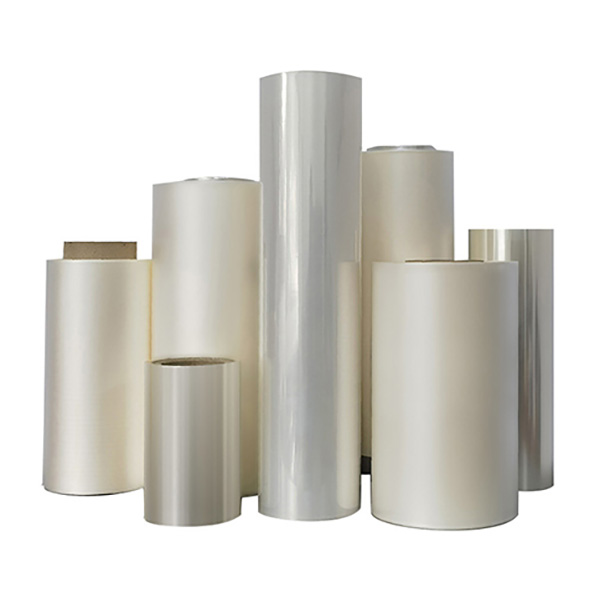
Roll stock is common for VFFS and HFFS production. Pouches are common for retail and premium formats. Lidding is common for trays, cups, and tubs. CloudFilm’s own content shows that film choice and format choice should be discussed together, not separately.
For finished pouch projects, stand up pouches are one of the most common solutions. For tray, cup, and tub sealing projects, lidding film becomes a separate but closely related discussion because it may be based on plastic film, aluminum foil, or both.
That is why a good manufacturer or supplier will usually ask not only for material preference, but also:
- What product are you packing?
- What pouch or lidding format do you need?
- What filling and sealing method do you use?
- What shelf life do you need?
- Do you want transparency or full light blocking?
- Do you need standard or high barrier?
- Do you need roll film, premade pouches, or both?
How To Choose The Right Structure For Your Product
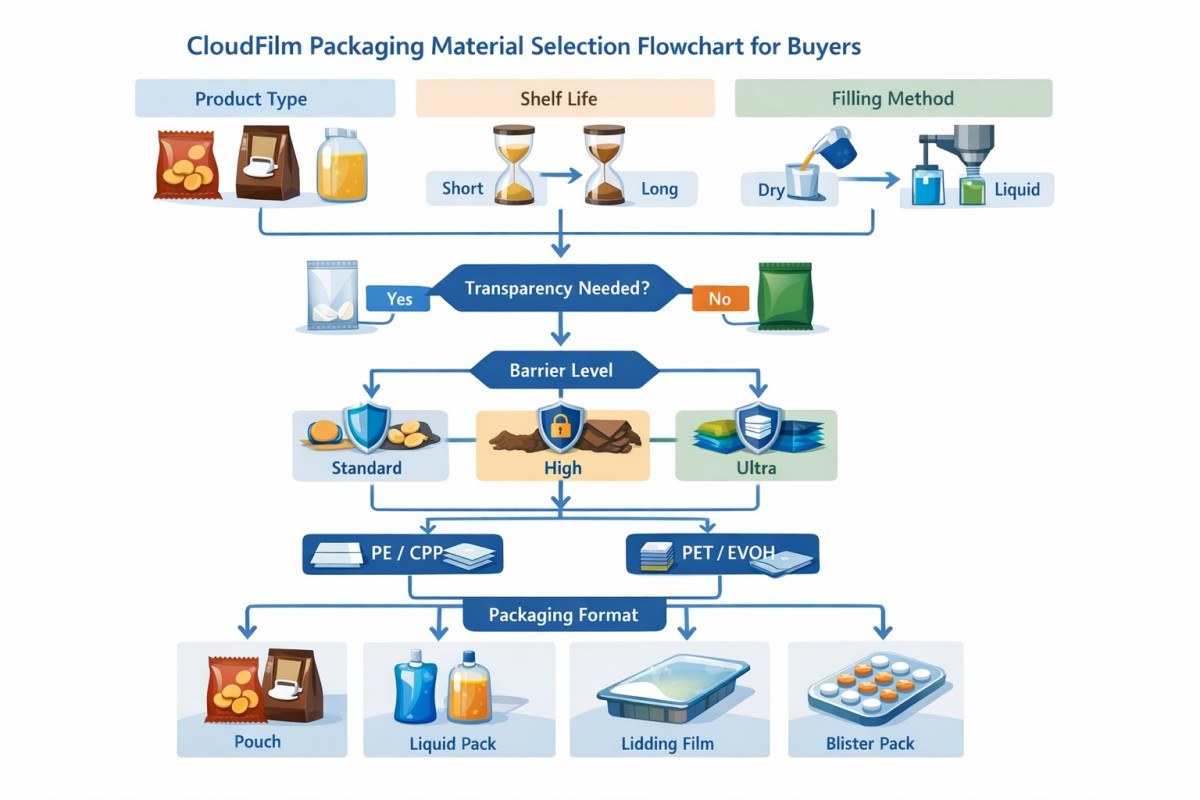
A simple selection framework is often enough to avoid expensive mistakes.
1. Start With The Product Risk
Is the product dry, oily, acidic, liquid, powdery, sharp-edged, light-sensitive, or aroma-sensitive?
2. Define Shelf Life Clearly
Do you need short retail turnover, medium distribution stability, or long export shelf life?
3. Clarify The Filling Process
Cold fill, hot fill, vacuum, nitrogen flush, pasteurization, or retort can all change the structure choice.
4. Decide Whether Visibility Matters
If shelf display and product show-through are important, transparent or semi-transparent structures may be better than foil.
5. Check The Seal Layer
Many packaging failures are not barrier failures. They are sealing failures.
6. Match The Pack Format
A dry food roll stock, a spout pouch, a coffee bag, and a yogurt cup lid do not ask the same things from the structure.
7. Review Sustainability Goals Early
If the project is trying to move toward PE-only or PP-only systems, that should be discussed before artwork and tooling move too far.
For buyers exploring PE-based recyclable paths, CloudFilm’s recyclable flexible packaging guide is useful because it explains recyclable packaging in terms of actual recycling streams rather than vague claims.
Common Mistakes When Comparing Film And Foil
One common mistake is thinking that metallized film and aluminum foil are the same. They are not. Metallized films can offer valuable barrier improvement, but they are not simply “foil with another name.”
Another mistake is choosing the highest barrier structure by default. This can raise cost, reduce transparency, and complicate the pack without adding real commercial value.
A third mistake is focusing on the outer layer and ignoring the sealing layer. In real production, poor sealing can destroy the value of a good barrier design.
A fourth mistake is discussing sustainability too late. If the buyer wants a move from mixed laminates toward mono-material design, that target should influence the structure from the beginning, not at the end. CloudFilm’s materials and sustainability pages consistently treat structure design as a system question, not a one-layer question.
Can Film Replace Foil?
Sometimes yes. Sometimes no.
Film can replace foil in many applications where the original structure was over-specified, where product visibility has commercial value, or where a transparent barrier solution can do the job. Metallized films and ALOx PET also expand the number of projects where buyers do not need full foil.
But for highly sensitive products, extreme shelf-life targets, or cases where light protection is critical, foil laminates may still be the better choice. The decision should come from testing, not assumptions.
Why Buyers Often Prefer A Solution-Oriented Manufacturer Or Supplier
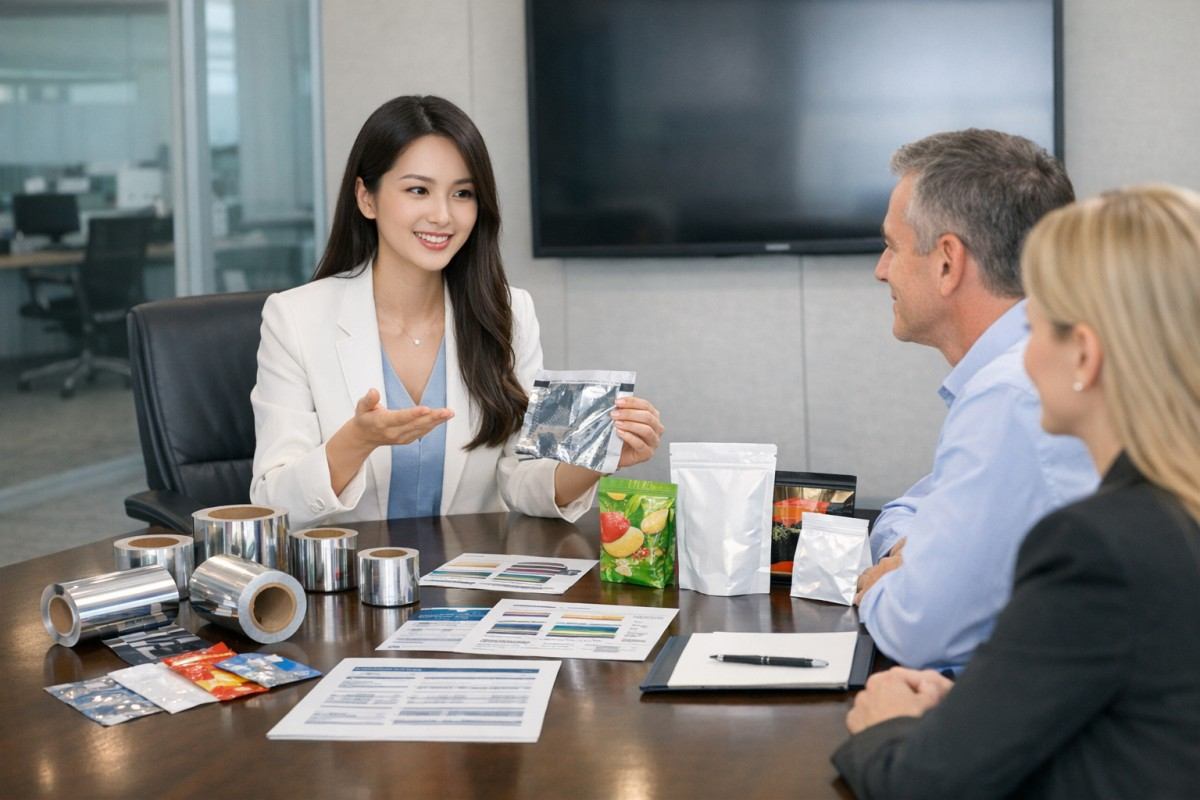
In real sourcing work, buyers rarely need just a roll of material. They need support with structure choice, thickness balance, printability, converting, sealing, pouch format, and documentation.
CloudFilm’s own buyer-oriented pages repeatedly frame the job this way: not only as raw film supply, but as support across printing, lamination, pouch making, and application matching. That solution-oriented approach is especially important when the customer is comparing film, metallized film, barrier-coated film, and foil-based laminates inside the same project.
FAQs About Film And Foil In Flexible Packaging
1. What is the main difference between film and foil in packaging?
Film usually refers to plastic-based packaging materials such as BOPP, BOPET, PE, and CPP. Foil usually refers to aluminum foil, often laminated with plastic or paper for stronger barrier performance.
2. Is foil always better than film?
No. Foil is often better for light, oxygen, and moisture protection, but film may be better when visibility, flexibility, lighter weight, or simpler structures are more important.
3. Which film is best for sealing?
That depends on the structure, but PE and CPP are commonly used as sealing layers in flexible packaging.
4. Which outer film is better for premium appearance?
BOPET is often preferred when you want stronger stiffness, dimensional stability, and heat resistance, while BOPP is also widely used for good clarity and gloss at competitive cost.
5. What is a good option if I need barrier but still want to show the product?
Transparent high-barrier materials such as ALOx PET can be a strong option. They can improve oxygen and moisture protection while keeping visibility.
6. Are metallized films the same as foil laminates?
No. Metallized films can improve barrier and give a metallic look, but they are different from full foil laminates.
7. When should I choose a foil laminate like PET/AL/PE?
It is commonly chosen when the product needs very strong barrier protection, especially against light, oxygen, and moisture.
8. Can film and foil both be used for pouches?
Yes. Both can be used in premade pouches or roll stock that is later converted into pouches, depending on the required structure and application.
9. Can film and foil both be used for lidding?
Yes. Lidding structures may be based on plastic film, aluminum foil, or combined structures, depending on the container, sealing method, and barrier need.
10. Can film replace foil in recyclable packaging projects?
Sometimes. In some projects, PE-based or PP-based structures, metallized films, or transparent barrier films can reduce dependence on foil. But suitability depends on product risk and testing.
11. What information should I send a manufacturer or supplier before asking for a quotation?
At minimum: product type, pack format, approximate size, filling method, shelf-life target, barrier requirement, and whether you need rolls or premade pouches. CloudFilm’s buyer-focused pages consistently treat this as the practical starting point for project discussion.
12. What is the safest way to choose between film and foil?
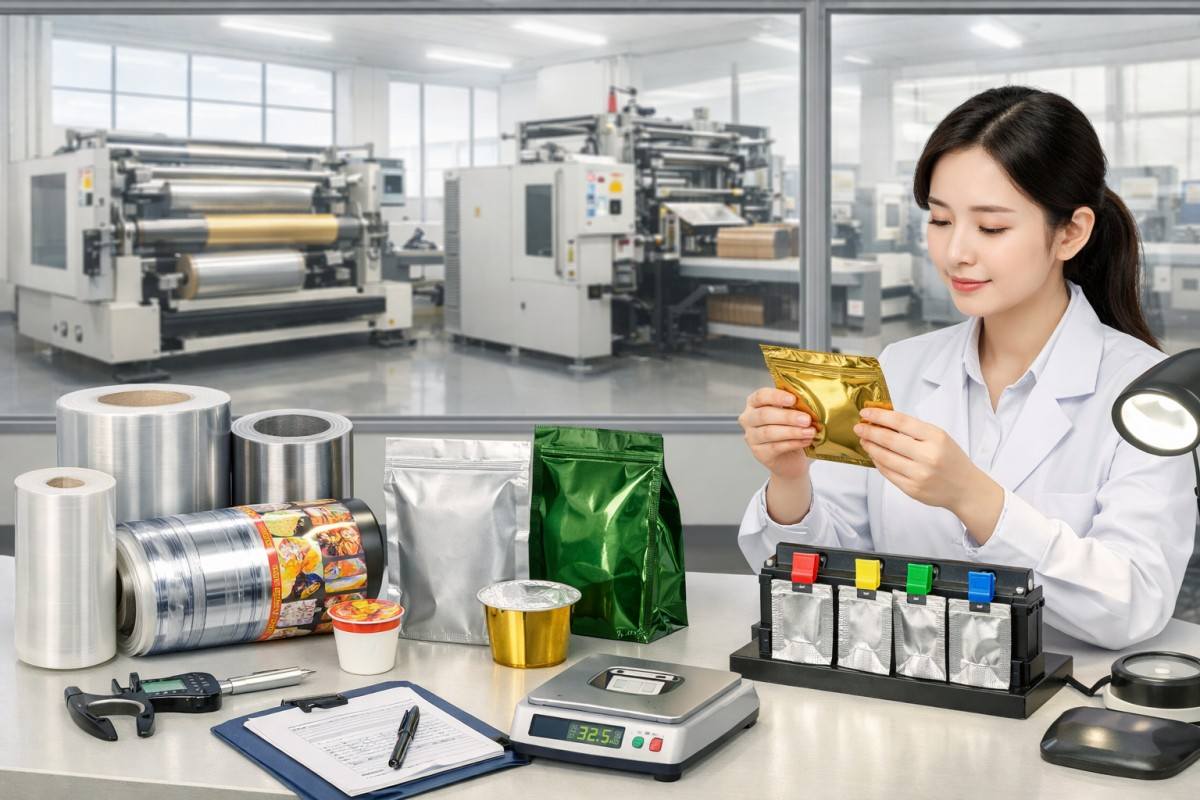
Start from the product and the process, narrow the structure options, and confirm the final choice through sample testing and line trials. That is more reliable than choosing by habit or by headline price alone.
Final Thoughts
Film and foil are not competing words. They are tools. The best packaging result comes from understanding what each material does well, where each one fits, and how to combine performance, cost, appearance, sealing, and application needs into one workable structure.
For simple projects, a standard film laminate may be enough. For demanding projects, foil may be the better answer. For many modern packs, the best answer sits somewhere in between: a well-designed laminate that uses the right outer film, the right barrier layer, and the right seal layer for the real job.
If you are comparing film, metallized film, transparent barrier film, and foil for your next packaging project, the most practical next step is to define the product, pack format, filling method, and shelf-life target first. After that, structure selection becomes a technical discussion instead of guesswork.