Introduction: The Science Behind Packaging
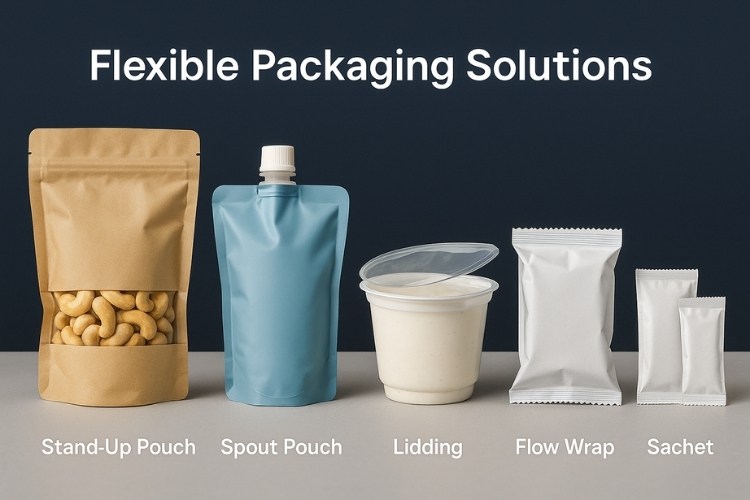
In our daily lives, we encounter a vast array of packages. From snack bags on supermarket shelves to the meat stored in our refrigerators, packaging not only protects products but also, subtly, extends the shelf life of food. But have you ever wondered what allows these packages to so effectively “lock in” freshness and shield contents from the external environment?
Today, let’s peel back the layers on a high-performance packaging material – PE-EVOH-PE film – and explore its crucial role in food preservation.
For packaging buyers and technical teams who are comparing EVOH co-extruded films, vacuum bags and thermoforming webs, this guide will help you understand how PE-EVOH-PE works and how to specify the right structure when discussing projects with CloudFilm.
If you need a quick overview of barrier food packaging options, you can also review CloudFilm’s food packaging film portfolio to see typical structures used for meat, cheese, coffee and ready meals.
The Wisdom of Multilayer Co-extrusion: Decoding the PE-EVOH-PE Structure
PE-EVOH-PE, this seemingly complex name, actually describes the structure of a multilayer co-extruded film. Imagine it like a sandwich, composed of three distinct layers fused together precisely.
The outer layers are made of Polyethylene (PE). PE is a plastic we encounter frequently; most plastic bags and cling wraps are made from it. It offers excellent flexibility, chemical resistance, and most importantly, heat sealability, meaning it can be easily heated and fused to create a seal, making it convenient for everyday use.
In the PE-EVOH-PE structure, the PE layers primarily provide basic physical support and the function of heat sealing. Depending on the specific requirements, this PE layer can be LDPE (Low-Density Polyethylene), offering good flexibility and heat sealability, or LLDPE (Linear Low-Density Polyethylene), adding strength and puncture resistance.
The middle layer is EVOH, short for Ethylene-Vinyl Alcohol Copolymer. This layer is the “heart” of the film and the source of its core value. EVOH possesses outstanding barrier properties, particularly against oxygen and oils. It acts like a strong fortress, effectively preventing oxygen from entering the package interior, thus stopping food from oxidizing, losing nutrients, and changing flavor.
Without EVOH, many oxygen-sensitive foods (like meat, cheese, coffee, etc.) would struggle to maintain their fresh taste for long periods. EVOH film itself is already a high-performance evoh film and a key component in evoh barrier film solutions.
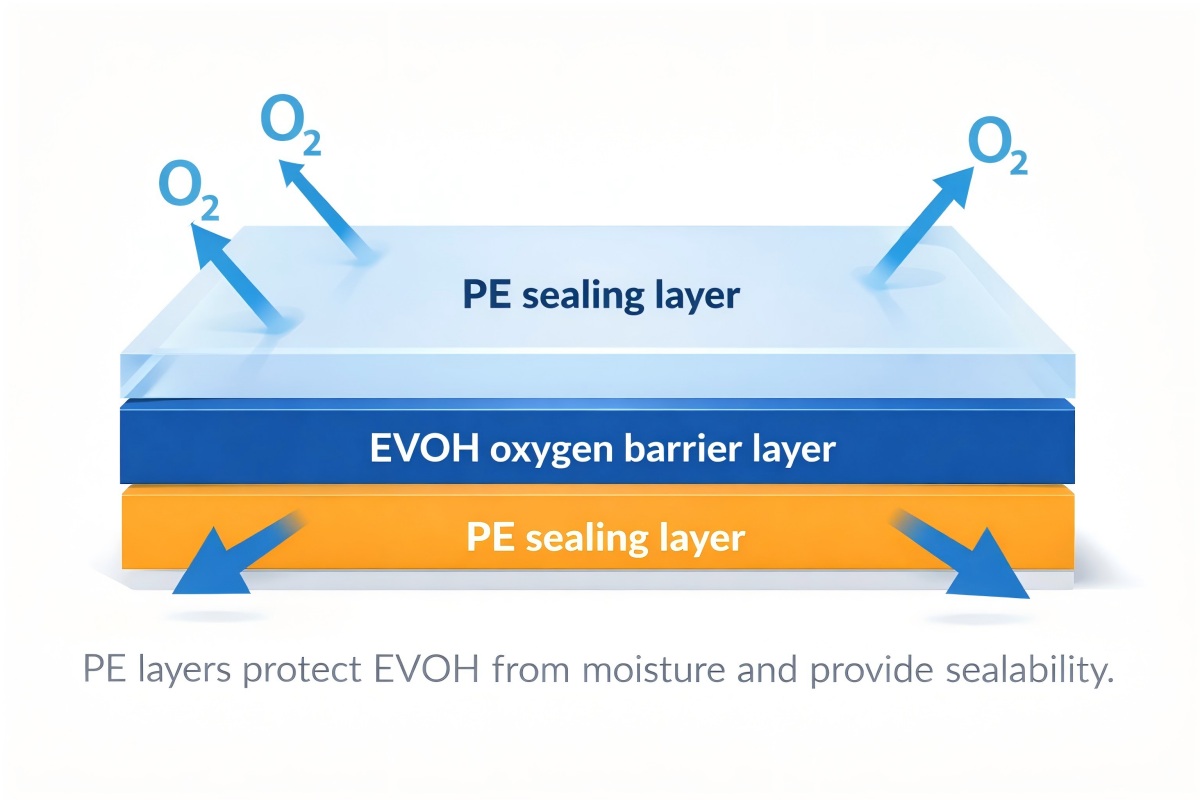
The inner layer is PE again. This inner PE layer is equally crucial, serving two key purposes: first, it protects the middle EVOH layer. While EVOH has excellent gas barrier properties, it has a notable “weakness” – it is sensitive to moisture. Higher humidity can significantly reduce its barrier performance.
The inner PE layer acts as a protective barrier, effectively shielding the EVOH from moisture that might be generated inside the package, ensuring its performance remains stable. Second, it improves contact with the packaged item and ensures compatibility with other potential inner layers (like the food itself).
This technique of combining different materials through a co extrusion film process creates a multilayer co extrusion structure, yielding a combination of properties that no single material could achieve alone. This type of film, incorporating EVOH, is also referred to as coex evoh.
For standard PE/EVOH/PE three-layer structures, CloudFilm can also engineer solutions based on its dedicated 3 layer film platform, allowing you to balance barrier level, stiffness and cost for different meat, cheese or coffee applications.
EVOH’s Exceptional Performance: Why is it So Important?
EVOH’s prominence in the packaging field stems primarily from its unique molecular structure. The presence of vinyl alcohol groups allows the EVOH polymer chain to interact strongly with oxygen molecules, drastically reducing the rate at which oxygen can permeate. This makes it an ideal choice for extending the shelf life of food.
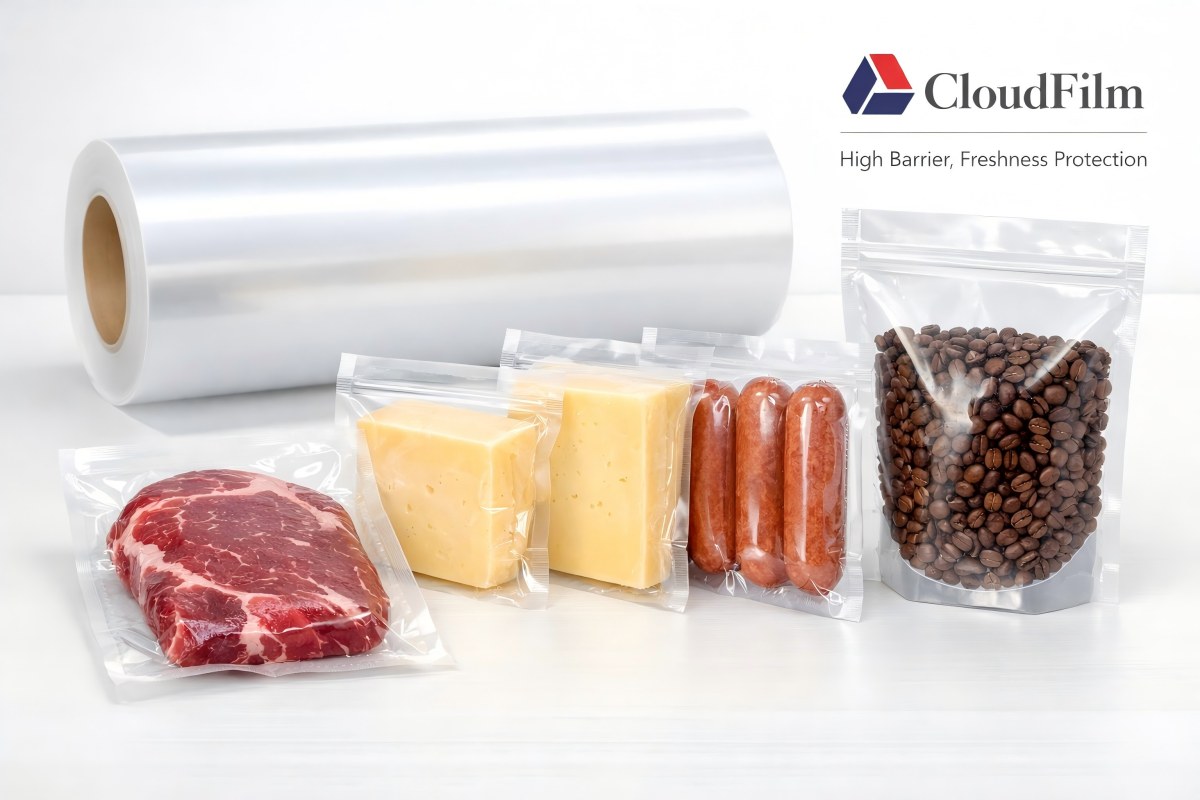
Imagine a scenario without EVOH: a carefully packaged piece of meat might discolor and lose its flavor just days later due to oxygen ingress; a bag of coffee beans exposed to air would quickly lose its rich aroma. With EVOH serving as the core of the evoh packaging material, these issues are effectively mitigated.
The use of evoh in packaging, especially in evoh food packaging, has become a key technology for prolonging shelf life and reducing food waste.
In real projects, CloudFilm often combines PE-EVOH-PE with printed outer webs (such as PET/PE or BOPP/PE) to create high-barrier rollstock for vacuum pouches, thermoforming packs and lidding films, so that brand owners can maintain color, flavor and aroma while still achieving efficient high-speed packing.
Co-extrusion Technology: The Art of Perfectly Fusing Different Materials
The production of PE-EVOH-PE film relies on advanced co extrusion in packaging technology. Simply put, it involves heating and melting different types of plastics (PE and EVOH) separately using multiple extruders. These molten materials are then simultaneously extruded through a special die (a multi-layer die).
At the exit of the die, they fuse together almost instantaneously, forming a cohesive multi-layer structure. This combined stream is then rapidly cooled, possibly stretched, and set, resulting in a uniform multi-layer film.
This process might sound straightforward, but it demands extremely high technical precision. It requires meticulous control over the melting temperatures of each material, the extrusion speeds, the thickness ratios of each layer, and the bonding strength between the layers, ensuring the multi-layer structure is robust, uniform, and free from delamination or defects.
Whether using co extrusion blown film or co extrusion cast film technology, high-quality PE-EVOH-PE film can be produced. This coextruded plastic films manufacturing process is a cornerstone of modern packaging industry.
CloudFilm operates co-extrusion lines that can produce PE/EVOH/PE, PA/EVOH/PE and PP/EVOH/PP structures. By tuning screw design, die configuration and cooling conditions, our engineers can deliver stable film thickness, low pinhole rate and reliable sealing performance for export-grade food packaging.
Advantages and Applications of PE-EVOH-PE Film
PE-EVOH-PE film combines the advantages of each layer material, forming a unique set of product characteristics:
- Excellent Barrier Properties: Effectively blocks oxygen and oils, preserving food freshness and flavor.
- Good Flexibility and Heat Sealability: Convenient for processing and consumer use.
- Water Resistance: The inner and outer PE layers protect EVOH, ensuring its performance is not compromised by humidity.
- Safety: Both PE and EVOH meet the safety standards for food contact materials.
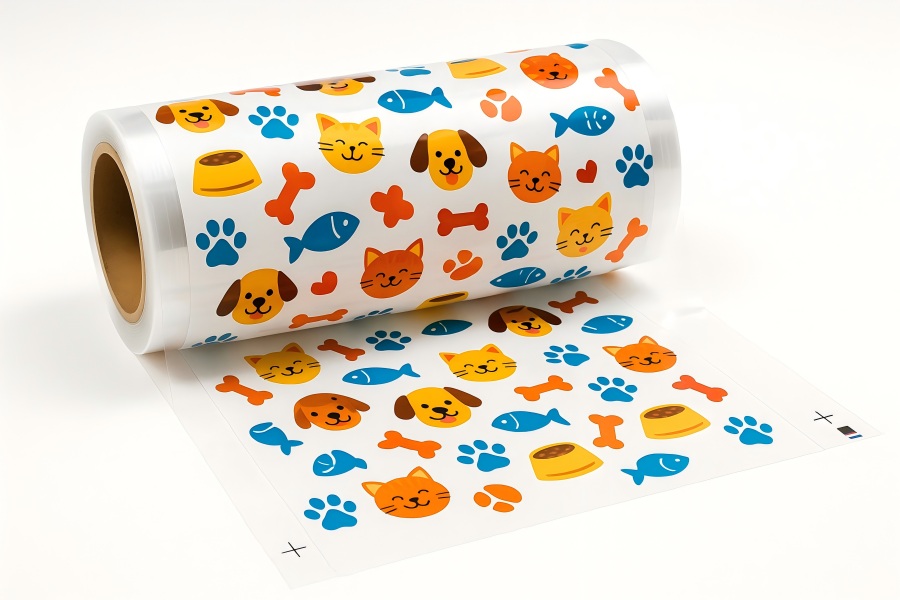
- Processing Adaptability: Easy for subsequent processing like printing and lamination.
– Customizable Structures and Formats: CloudFilm can adjust total thickness, PE/EVOH/PE layer ratios, slip and sealing properties to match vacuum bags, thermoforming webs, lidding film or pillow pouches.
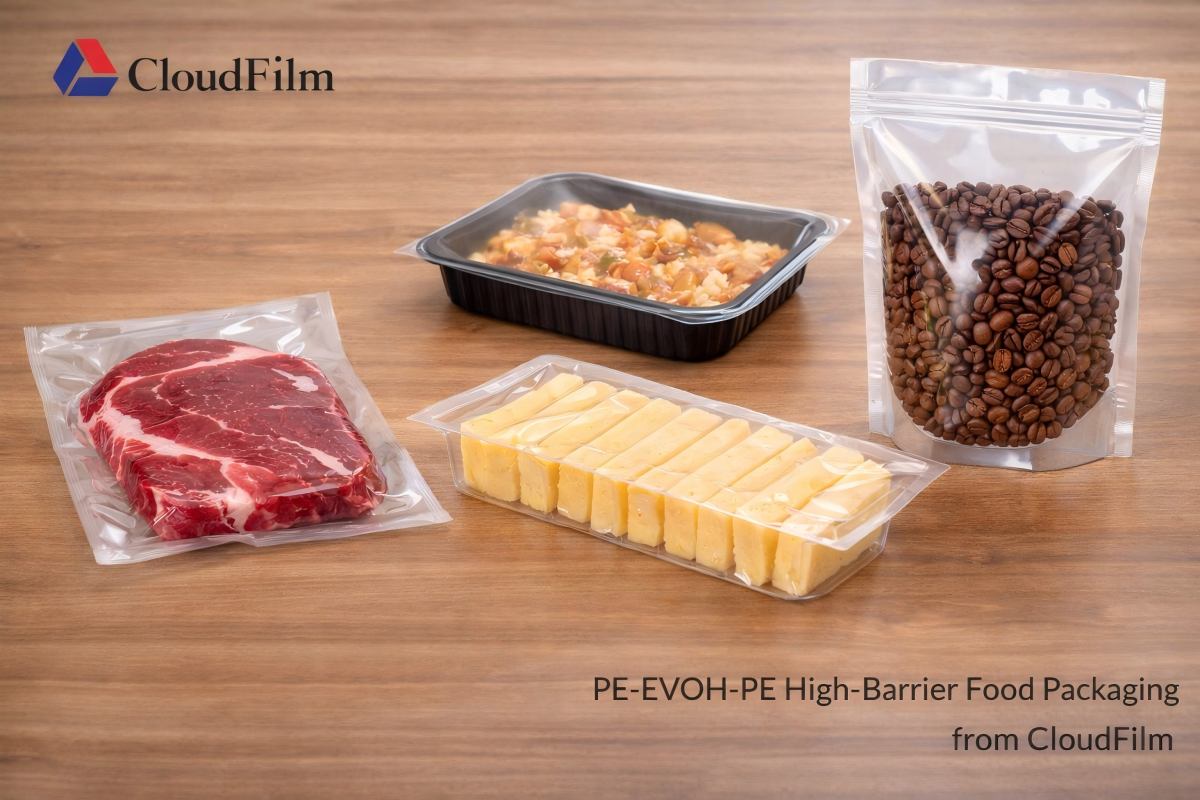
These advantages make PE-EVOH-PE film a significant player in the evoh films for packaging market. Its main applications are concentrated in the realm of evoh food packaging:
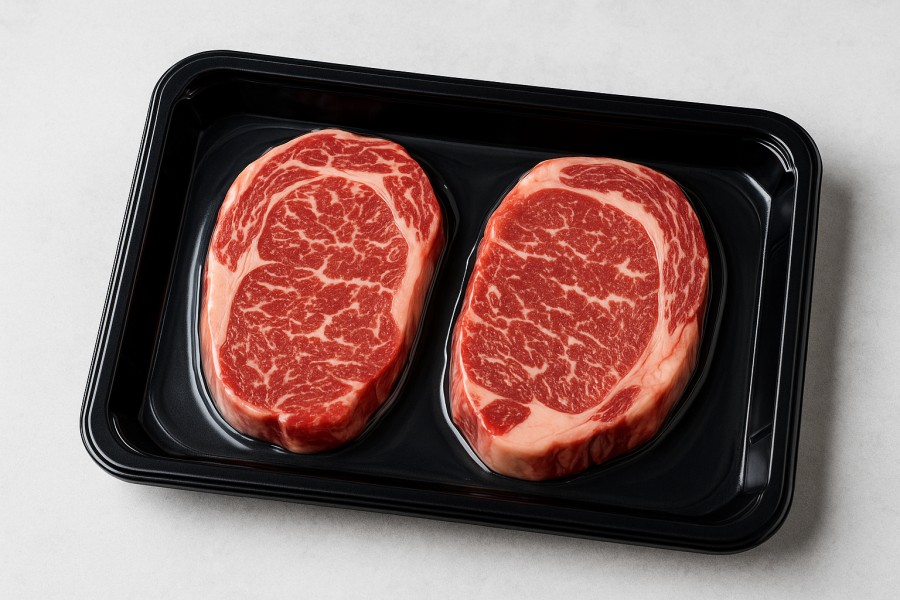
- Meat, Fish, and Poultry Packaging: Prevents oxidation and discoloration, extending shelf life.
- Cheese and Deli Packaging: Maintains texture and flavor.
- Coffee, Tea, and Snack Packaging: Locks in aroma and prevents oil oxidation.
- Dairy Products, Soy Sauce, and other Oil-Containing Product Packaging: Prevents oil rancidity.
Additionally, it is used for non-food packaging requiring gas barrier properties, such as industrial product rust prevention packaging, etc.
For ready-to-use bags, CloudFilm can supply finished EVOH bags based on PE-EVOH-PE or PA/EVOH/PE structures, suitable for vacuum-packed meat, cheese and high-value sauces. For form-fill-seal lines, we can provide PE-EVOH-PE rollstock as thermoforming bottom webs or lidding films via our co-extruded EVOH film and 3 layer film ranges.
Choosing PE-EVOH-PE Film with CloudFilm: Structures, Thickness and Formats
When you are ready to source PE-EVOH-PE film, it is important to define the application and film format clearly before requesting a quotation from CloudFilm. Typical formats include vacuum pouches, thermoforming bottom and top webs, lidding film for trays and high-barrier PE pouches.
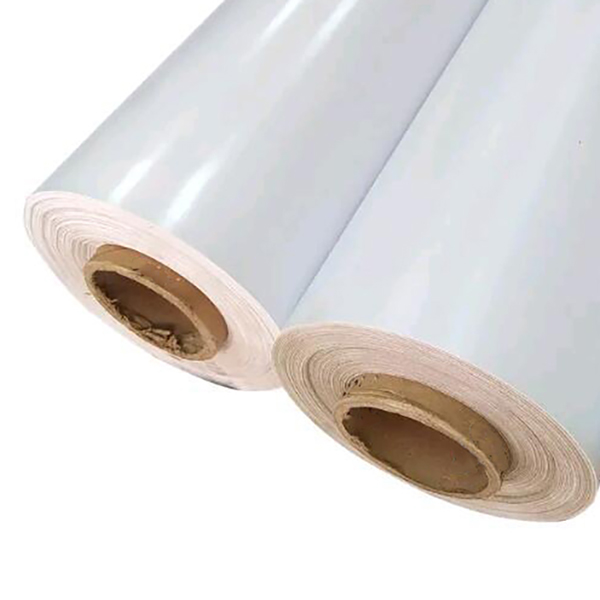
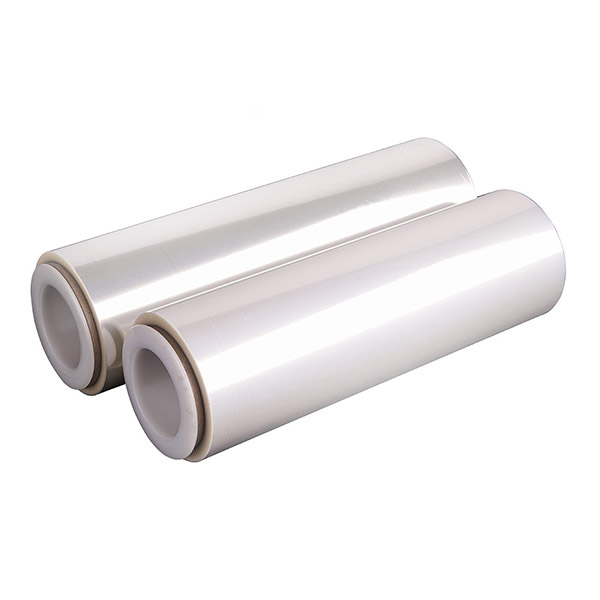
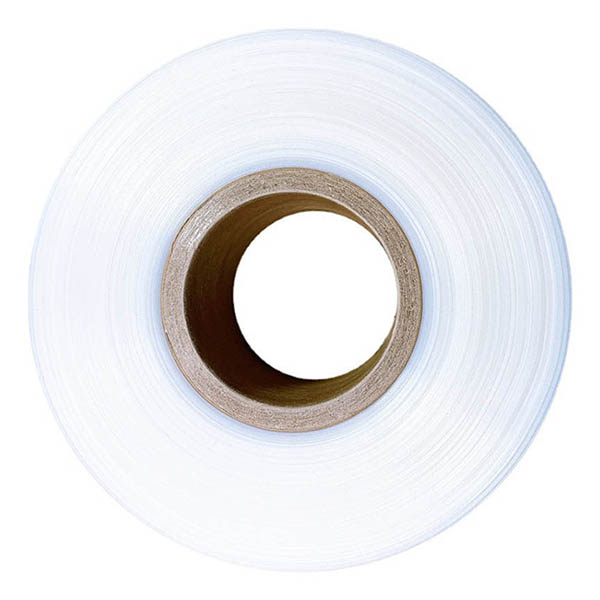
For rollstock users, CloudFilm can supply PE-EVOH-PE as custom PE roll or laminated packaging film roll, tailored to your printing, laminating and bag-making equipment. If you prefer finished bags rather than rolls, our EVOH bags and PE pouches can be delivered ready for filling and sealing.
For higher mechanical strength or deep-draw thermoforming, CloudFilm may recommend combining PE-EVOH-PE with nylon-based structures such as PE PA PE film or PA/PE film. This allows you to choose between simpler PE/EVOH/PE three-layer films and more robust PA/EVOH/PE solutions depending on product weight, bone content and shelf-life targets.
If you share your existing structure (for example 80 μm PE/EVOH/PE or 150 μm PA/EVOH/PE), CloudFilm’s technical team can cross-reference it with our co-extruded EVOH film, 3 layer film and related high-barrier film ranges, and then recommend equivalent or optimized structures with trial rolls for validation.
FAQ: PE-EVOH-PE Film for Food and High-Barrier Packaging
Q1. What is a typical thickness range for PE-EVOH-PE film in food packaging?
A1. For most vacuum pouches and thermoforming packs, PE-EVOH-PE films are commonly designed in the range of about 60–150 μm total thickness, depending on product weight, bone content and required shelf life. CloudFilm can fine-tune layer ratios within this range based on your target application and packaging line conditions.
Q2. Can PE-EVOH-PE film be used on existing vacuum and thermoforming machines?
A2. In many cases, PE-EVOH-PE films can run on standard vacuum and thermoforming equipment, as long as the forming temperature, vacuum level and sealing parameters are adjusted correctly. When you send CloudFilm details of your current film and equipment, we can suggest PE-EVOH-PE specifications and pre-set trial parameters to reduce your testing time.
Q3. How does PE-EVOH-PE compare with PA/PE or PE PA PE film?
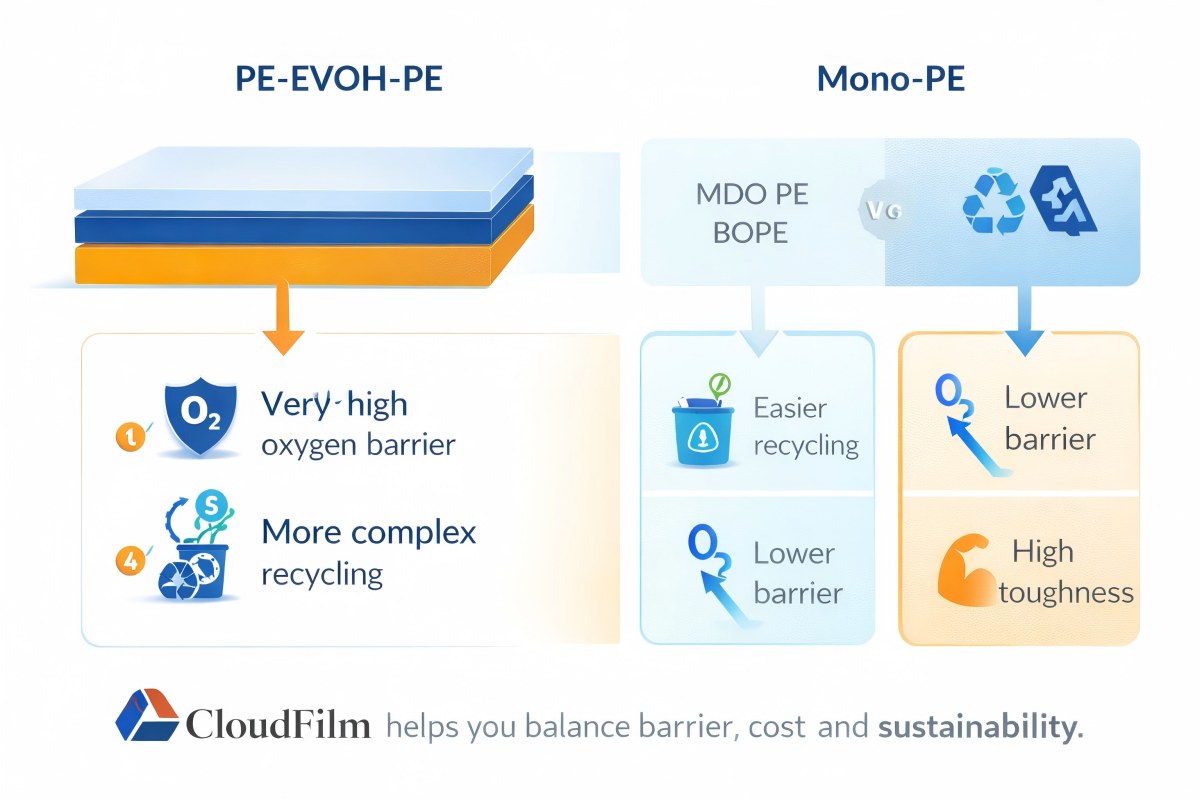
A3. PA/PE and PE PA PE films, such as CloudFilm’s PA/PE Film and PE PA PE Film, focus more on mechanical strength and puncture resistance, while PE-EVOH-PE emphasizes very high oxygen barrier. Many customers use PE-EVOH-PE when long shelf life and aroma retention are critical, and choose PA/PE or PE PA PE structures when bone puncture resistance and deep-freeze toughness are more important.
Q4. Is PE-EVOH-PE film suitable for MAP (Modified Atmosphere Packaging) and extended shelf-life products?
A4. Yes, PE-EVOH-PE is widely used in MAP packs for fresh meat, cooked meat and cheese where the oxygen content in the pack must stay very low over a long period. By combining PE-EVOH-PE barrier webs with properly designed gas mixtures and tray systems (including solutions like PP EVOH PP trays), CloudFilm can help you build complete high-barrier packaging systems for chilled and refrigerated products.
Q5. Can PE-EVOH-PE structures be combined with recyclable mono-PE packaging?
A5. While PE-EVOH-PE is not yet as easy to recycle as mono-PE structures, it can be combined with mono-PE outer webs or used in downgauged barrier layers to reduce overall material usage. For projects that prioritize recycling, CloudFilm can compare PE-EVOH-PE with mono-PE solutions based on MDO PE film and BOPE film, so you can choose the best balance between barrier performance and recyclability.
Q6. What information should I prepare before asking CloudFilm for a PE-EVOH-PE quotation?
A6. It is very helpful if you can share your product type, target shelf life, pack format (vacuum bag, thermoforming pack, lidding, pouch), current film structure if any, and approximate monthly volume. With this information, CloudFilm can quickly suggest a suitable PE-EVOH-PE or related high-barrier film, provide a technical proposal and arrange samples for testing.
Challenges and the Future: Considering Sustainable Development
Despite its excellent performance, PE-EVOH-PE film also faces some challenges.
First is the cost. The multilayer co-extrusion process is more complex than producing single-layer film, and EVOH material itself is more expensive than common PE, making PE-EVOH-PE film relatively costly.
Second is the issue of recycling. Multilayer structures, especially those containing different types of plastics (like PE and EVOH), pose difficulties for recycling. Standard plastic recycling processes often struggle to effectively separate and reuse these different layers. While EVOH itself is biodegradable, its recyclability value within a multilayer film is significantly diminished.
This is driving the industry to seek more sustainable solutions, such as developing more easily recyclable formulations, exploring chemical recycling technologies, or finding alternative materials with comparable performance that are easier to recycle.
However, with the continuous increase in consumer demand for food safety and longer product shelf lives, coupled with growing attention to the issue of food waste, the demand for high-performance barrier packaging materials remains strong. evoh packaging material, particularly multilayer structures like PE-EVOH-PE, will remain a crucial choice for the packaging industry in the foreseeable future.
The industry is also continuously researching and developing, such as creating EVOH resins with even higher barrier properties, improving co-extrusion processes for greater efficiency, and exploring bio-based or recyclable EVOH materials.

For buyers who must meet specific recycling regulations, CloudFilm can compare PE-EVOH-PE with alternatives from our PE film, high-barrier film and speciality film ranges, and propose hybrid packaging roadmaps—starting with PE-EVOH-PE for current shelf-life needs and gradually transitioning to more recyclable mono-PE or PA-based structures as technology and local recycling systems evolve.
Conclusion: Guarding Every Bit of Freshness
PE-EVOH-PE film, this multilayer structure precisely combined from PE and EVOH through the co extrusion film process, is an outstanding representative of modern packaging technology. It acts as a silent guardian within food packaging, playing a vital role in helping us preserve the freshness and deliciousness of our food, reducing waste.
While it faces challenges related to cost and recycling, with continuous technological advancements and the deepening commitment to sustainable development, we have reason to believe that future packaging materials will be smarter, more efficient, and more environmentally friendly. The story of PE-EVOH-PE film is also the story of the packaging industry’s relentless pursuit of innovation and balance.
If you are evaluating PE-EVOH-PE or other high-barrier films for your next project, you can share your current specifications and targets with CloudFilm via our contact page. Our team will respond with a tailored proposal, sample plan and logistics support to help you turn complex barrier requirements into export-ready packaging solutions.