Chemical Treated PET Film For Labels And Graphic Printing
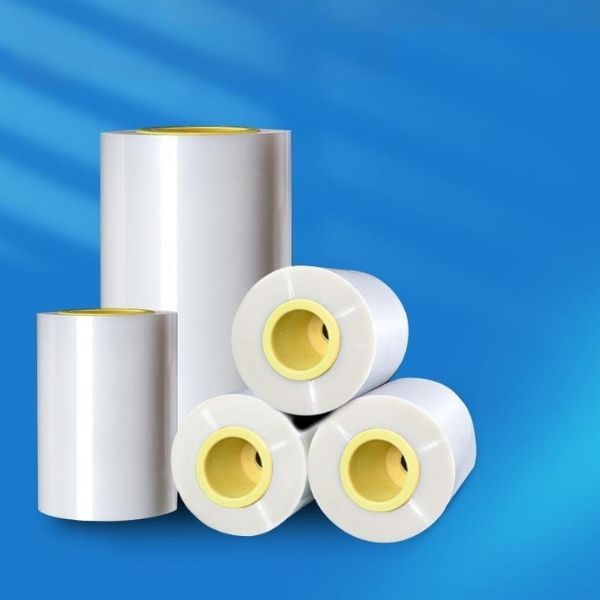
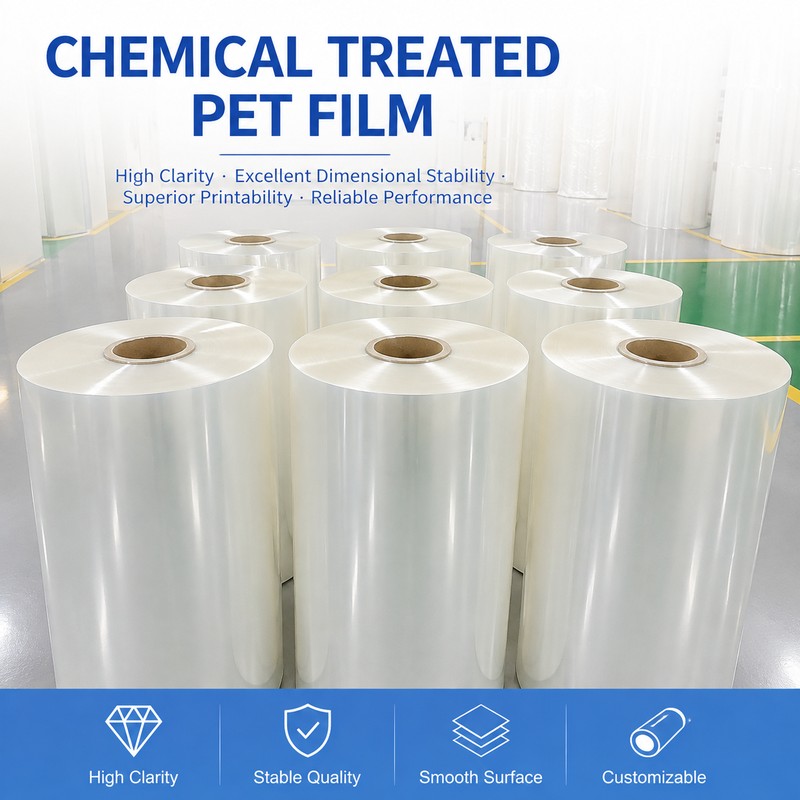
Chemical Treated PET Film Jumbo Rolls
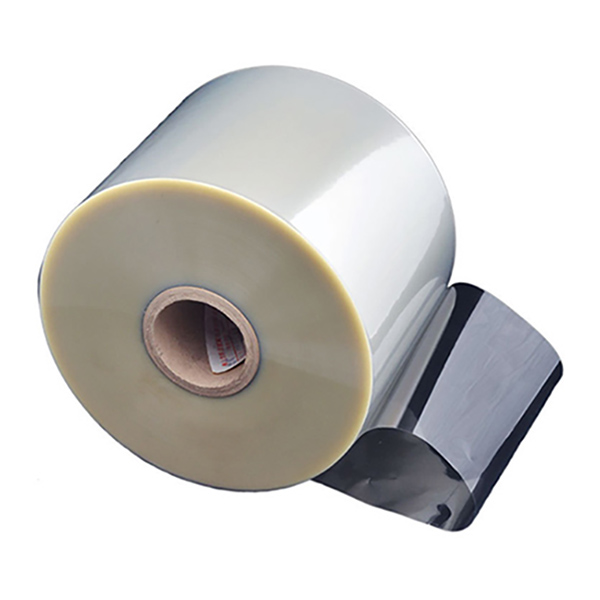
Chemical Treated PET Film For Lamination Applications
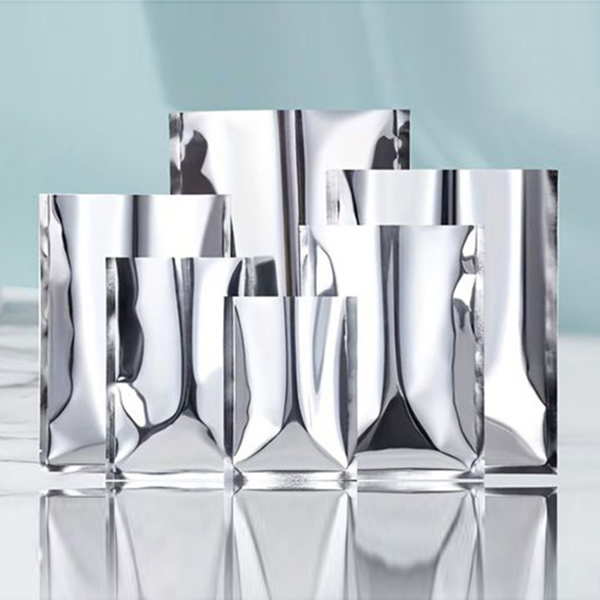
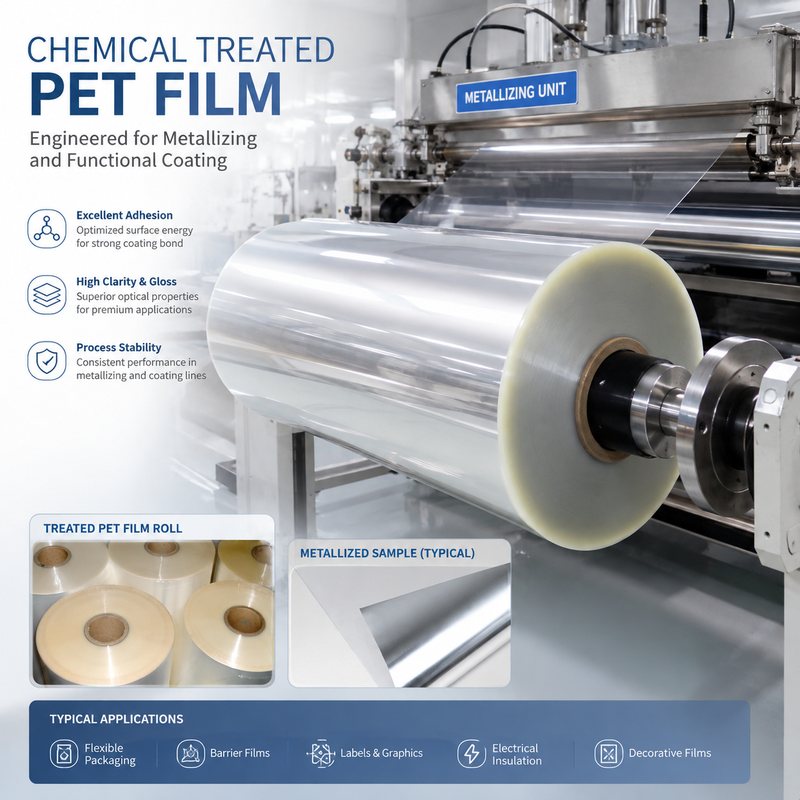
Chemical Treated PET Film For Metallizing And Coating
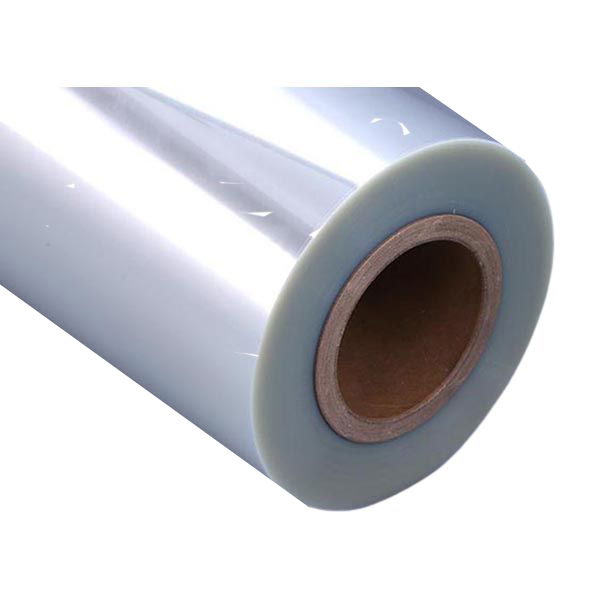
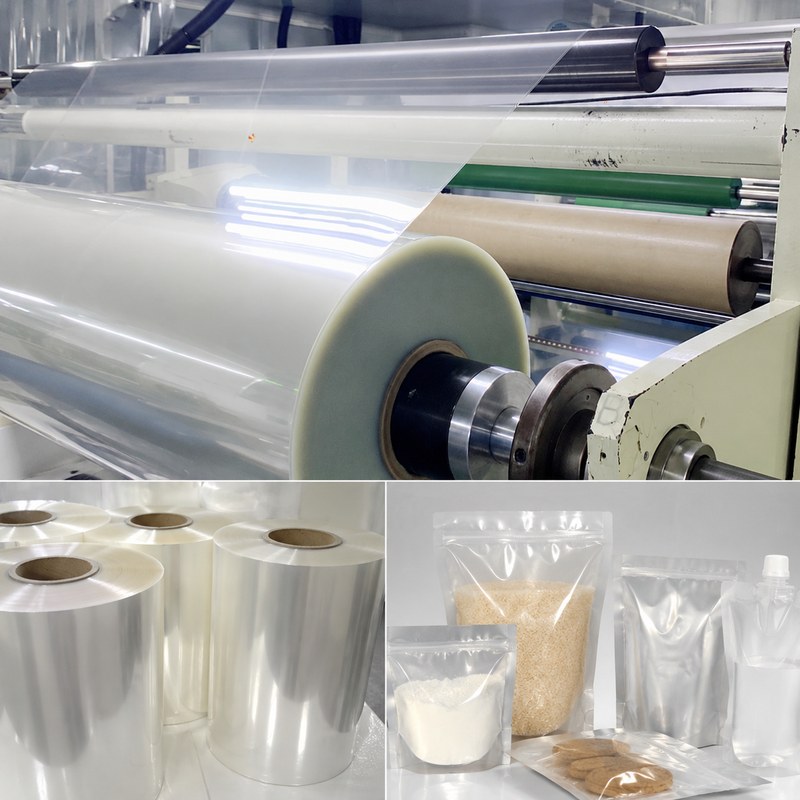
Chemical Treated PET Film For Labels And Graphic Printing
Chemical Treated PET Film Jumbo Rolls
Chemical Treated PET Film For Lamination Applications
Chemical Treated PET Film For Metallizing And Coating

Chemical Treated PET Film

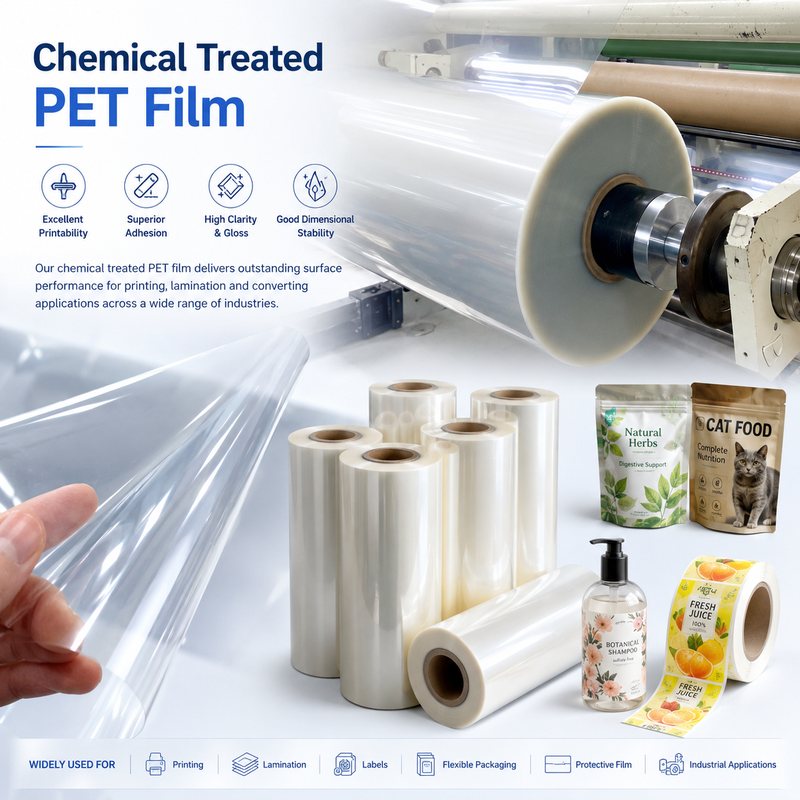
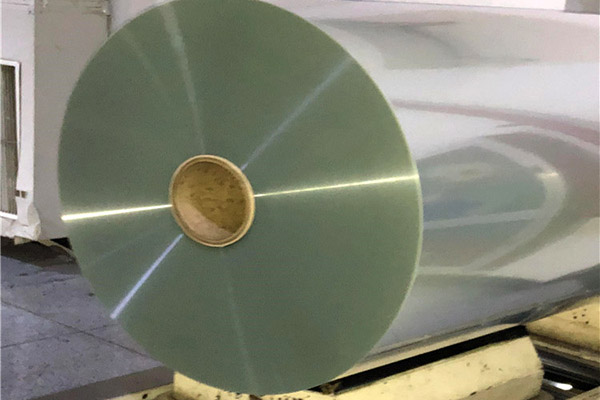
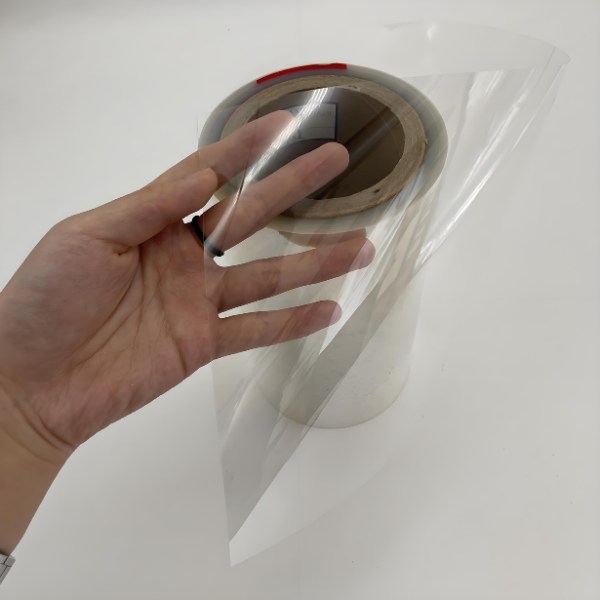
Chemical treated PET film is a clear BOPET film with enhanced surface adhesion for printing, lamination, coating and metallizing processes.

  • Enhanced Surface Adhesion – The chemically treated surface improves compatibility with printing inks, laminating adhesives and functional coatings.
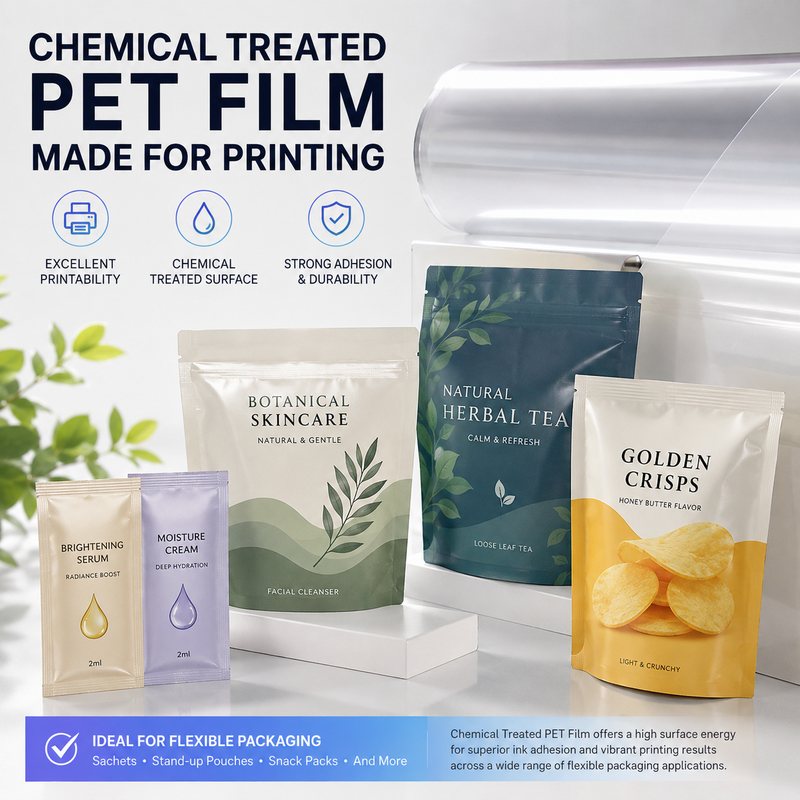
  • Reliable Printing Performance – Provides a more receptive printing surface for stable ink anchorage and durable graphics.
  • Improved Lamination Bonding – Designed for converters requiring dependable adhesive bonding in multilayer flexible packaging structures.
  • Excellent Clarity & Dimensional Stability – Retains the transparency, strength and thermal stability of BOPET film while adding a functional treated surface.
  • Flexible Converting Options – Suitable for printing, lamination, coating and selected metallizing processes across packaging and industrial applications.

Chemical Treated PET Film Description

What Chemical Treatment Adds to PET Film


Chemical treated PET film starts with a strong, dimensionally stable BOPET substrate and adds a surface treatment designed to improve interfacial adhesion. The treated face is more receptive to inks, adhesives, coatings or deposited layers than ordinary untreated PET, supporting dependable downstream converting.

For buyers already using standard BOPET Film, the purpose is not to change the bulk PET structure. It is to improve how the film surface interacts with other materials during printing, lamination, coating or metallizing.


Designed for Printing and Lamination


In printing applications, the treated surface can support stronger ink anchorage and more stable graphics when the ink system and process conditions are correctly matched. This makes the film useful for flexible packaging, labels, graphic laminates and other applications where print durability matters.

For adhesive lamination, improved surface receptivity can help converters pursue stronger laminate bonds. Performance should still be evaluated together with adhesive chemistry, curing conditions, coat weight and the second web in the laminate. Learn more about the Film Lamination Process.


A Practical Base for Metallizing and Functional Coating


Chemical treated PET can also serve as a prepared substrate for selected metallizing and functional coating processes. Where strong metal or coating adhesion is required, surface design becomes important because the interface must remain stable through slitting, lamination, bag making and end use.

Projects focused mainly on barrier performance may instead compare Aluminized PET Film, ALOx PET Film or PVDC PET. Chemical treated PET should be selected primarily for surface adhesion and converting compatibility rather than treated as a universal barrier film.


CloudFilm Chemical Treated PET Film Supply


CloudFilm is a China-based BOPET film manufacturer and supplier supporting printing, lamination, packaging and industrial converting projects. Our polyester film portfolio includes plain, corona-treated, chemically coated, metallizable and specialty grades, allowing buyers to compare several surface options from one source.

Depending on the project, CloudFilm can discuss treatment side, corona requirement on the opposite side, thickness, roll width, core size, winding direction and downstream process. If you have a current film sample or technical datasheet, we can use it as a reference during grade matching.


How to Specify the Right PET Film


For the fastest recommendation, tell us whether the film will be printed, laminated, metallized, coated or used through several processes. Also share your ink or adhesive type, thickness, width, roll format, target bond performance and final application.

If your main need is high clarity and conventional printing, Gloss PET Film may be sufficient. For a finished multilayer package, PET/PE Film may be more relevant. For converters facing unstable adhesion on standard PET, chemical treated PET is the more targeted starting point.

Get Free Quote of Chemical Treated PET Film

Need better adhesion for printing, lamination, coating or metallizing?

CloudFilm helps converters match chemical treated PET film to their actual process instead of simply supplying a standard roll.

Tell us your application, treatment requirement, thickness, width, ink or adhesive system and expected order quantity.

Our team can evaluate the specification, recommend a suitable PET grade and arrange samples for testing.

Submit your inquiry today and let us help you build a more reliable converting process.

Products Categories
Get A Free Quote
Contact Form Demo (#3)

Chemical Treated PET Film Applications

Flexible Packaging Printing

Used as a high-performance PET printing substrate where reliable ink adhesion and stable graphics are important.

Adhesive Lamination

Suitable for multilayer flexible packaging structures requiring dependable bonding between PET and PE, CPP or other films.

Vacuum Metallizing

A prepared PET surface can support applications where stable adhesion between the PET substrate and deposited metal layer is required.

Labels & Graphic Films

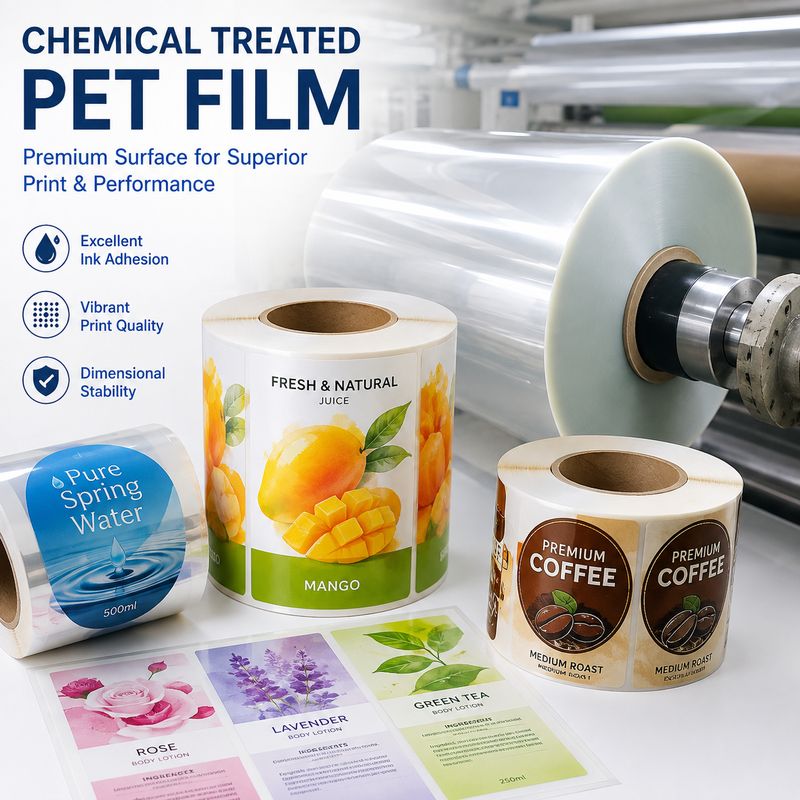
Ideal for printed labels, decorative films and graphic laminates that need clarity, dimensional stability and durable print performance.

Functional Coating

Provides a suitable substrate for selected primers, protective coatings and other functional surface treatments used in industrial converting.

Chemical Treated PET Film Detail Display


Chemical Treated PET vs Corona Treated PET


This section helps buyers compare two common PET surface-treatment approaches and understand when each one may be appropriate for printing, lamination, coating, and metallizing processes.

Comparison Chemical Treated PET Corona Treated PET
Main Purpose Improve compatibility and adhesion with selected inks, adhesives and coatings Increase surface energy for better wetting and adhesion
Surface Modification Functional chemical treatment or adhesion-promoting surface Electrical discharge surface treatment
Printing Suitable for demanding printing applications Widely used for standard printing
Lamination Useful when stronger or more controlled adhesion is required Suitable for many conventional lamination processes
Metallizing Selected grades can be designed for metallizing applications Corona-treated surfaces are also widely used for metallizing
Selection Basis Ink, adhesive, coating and final bond requirement Required surface energy and converting process


Which One Should You Choose?


Chemical treated PET and corona treated PET are not simply “better” or “worse” versions of each other. Selection should be based on the actual downstream process.

If standard corona-treated PET already provides stable printing and lamination, changing the material may not be necessary. If the converter has demanding ink, adhesive, coating or metal adhesion requirements, a chemical treated grade may provide a more targeted solution.


How to Choose Chemical Treated PET Film


The correct grade should be selected around the actual converting process, the material that contacts the treated surface, and the required performance in commercial production.


1. Define the Converting Process


First determine whether the PET film will be:

  • Printed
  • Adhesive laminated
  • Metallized
  • Functionally coated
  • Used through several converting processes

The treatment requirement should always follow the process rather than simply choosing a “treated PET film” specification.


2. Identify the Contact Material


Tell the supplier what will contact the treated PET surface:

  • Solvent-based ink
  • Water-based ink
  • UV ink
  • Polyurethane adhesive
  • Other laminating adhesives
  • Metal deposition
  • Functional coating

Different systems may interact differently with the treated surface.


3. Confirm Which Side Requires Treatment


Clearly identify:

  • Chemical treated side
  • Printing side
  • Lamination side
  • Metallizing side
  • Required treatment on the opposite side

This is particularly important when winding direction determines which surface enters the next process.


4. Confirm Roll Specifications


Provide:

  • Film thickness
  • Roll width
  • Roll length or roll weight
  • Paper core size
  • Maximum roll diameter
  • Winding direction
  • Required quantity


5. Test Before Commercial Production


Whenever possible, test the selected PET film with the actual ink, adhesive, coating and converting line before commercial production.

A successful film specification should be based on the entire converting system rather than the PET film alone.

 

Young Professional Women Celebrating Teamwork And Positive Company Culture


Typical Chemical Treated PET Film Configurations


Chemical treated PET film can be designed around different converting requirements. The final configuration should be confirmed according to the customer’s process rather than selected only by thickness.


Chemical Treated / Untreated


One functional surface is intended for the target printing, lamination or coating process, while the opposite surface remains untreated where additional surface functionality is unnecessary.


Chemical Treated / Corona Treated


This configuration can be considered when one side requires a specialized chemically treated surface while the opposite side also needs controlled surface treatment for another converting step.


Chemical Treated PET for Printing


The treated side is selected according to the intended ink system and required print adhesion.


Chemical Treated PET for Lamination


Designed for projects where PET is laminated with another flexible substrate and reliable adhesive bonding is a key requirement.


Chemical Treated PET for Metallizing


Selected grades can be evaluated when PET is used as a substrate for vacuum metallization and metal adhesion is particularly important.
FAQ

What is chemical treated PET film?

Chemical treated PET film is a BOPET film with a specially modified surface designed to improve adhesion with inks, adhesives, coatings or other materials used during downstream converting.

What is chemical treated PET film mainly used for?

Its common applications include flexible packaging printing, adhesive lamination, labels, graphic films, functional coating and selected metallizing processes.

Is chemical treated PET film the same as standard PET film?

No. Both use PET as the main substrate, but chemical treated PET includes a functional surface treatment intended to improve adhesion and converting compatibility.

Is chemical treated PET film the same as corona treated PET film?

Not exactly. Corona treatment modifies the PET surface energy, while chemical treatment introduces a specially designed surface treatment or adhesion-promoting layer. The appropriate option depends on the ink, adhesive, coating and converting process.

Can chemical treated PET film be used for printing?

Yes. Printing is one of its primary applications. The treated surface is designed to provide improved compatibility with printing inks compared with an untreated PET surface. Actual performance should be verified with the customer’s ink system.

Can chemical treated PET film be laminated with PE or CPP?

Yes. Chemical treated PET can be used as the PET layer in structures combined with PE, CPP and other compatible films. Adhesive type and curing conditions should be confirmed during laminate development.

Can chemical treated PET film be metallized?

Selected chemical treated PET grades can be used as substrates for metallizing where enhanced surface adhesion is required. The required treatment configuration should be confirmed according to the metallizing process.

Can CloudFilm customize chemical treated PET film?

CloudFilm can evaluate customized requirements including treatment configuration, thickness, width, roll size, core size and winding direction according to the converting process and final application.

What information should I provide when requesting a quotation?

Please provide the application, thickness, width, required treatment side, printing or lamination process, ink or adhesive type, roll dimensions, quantity and destination. A current TDS or reference sample is also helpful.

Can I test a sample before placing a bulk order?

Sample availability depends on the required grade and current production schedule. Tell CloudFilm your specification and intended process so we can check the most suitable sample option.

Related Products

Related News

  BOPET film is one of the most important polyester films used in modern flexible packaging. It combines high strength, […]

  Introduction   From the oxygen-blocking layer in your food packaging, to the scratch-resistant protector on your smartphone screen, and […]

    Introduction   In the world of plastic films, terms like “PET film” and “polyester film” are often used […]

  Introduction – Why Adhesion Fails on Plastic Film   In flexible packaging, labels, and industrial laminates, one of the […]

  Unveiling the World of BOPP And BOPET Films   BOPP film and BOPET film are the two most common […]

Scroll to Top

Get A Free Quote Now !

Contact Form Demo (#3)