Introduction
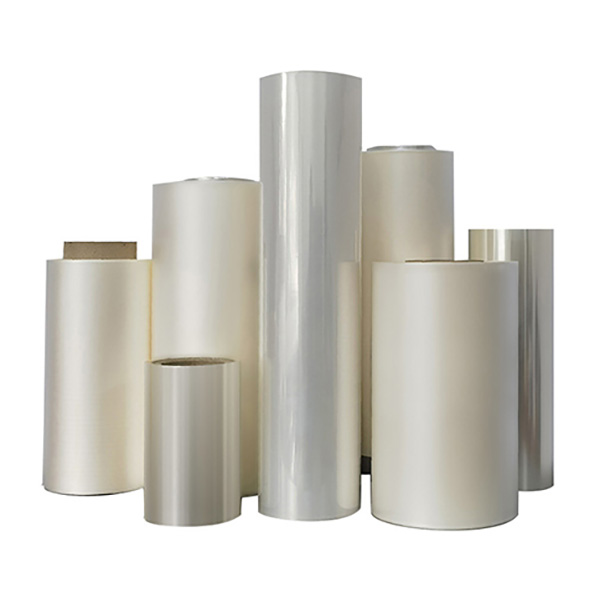
Nylon film – especially BOPA (biaxially oriented polyamide) and cast nylon – is one of the key materials behind modern retort pouches for ready meals, soups, pet food, sauces and shelf-stable convenience foods.
Its high temperature resistance, excellent puncture strength and oxygen barrier help protect products during sterilization and long-term storage in demanding supply chains.
However, the same properties that make nylon ideal for boiling and retort packaging also make it challenging to print and laminate. Nylon absorbs moisture, shrinks under heat, and can lose surface energy quickly – all of which can lead to mis-registration, curling, color shift, ink adhesion issues and, in the worst cases, delamination after retort.
This guide from CloudFilm summarizes practical, production-tested tips to help printers, converters and brand owners achieve stable, high-quality printing on nylon film for high-temperature retort applications.
We will cover:
- How nylon (BOPA / PA) behaves in retort packaging
- Best practices for storage, handling and surface treatment before printing
- How to choose inks, solvents and adhesives for 121–135°C retort processes
- Press setup, drying and tension control on nylon film
- How to avoid – and troubleshoot – delamination and bag failure
- A simple QC and testing plan for retort pouch projects
Why Nylon (BOPA / PA) Is Used in Retort Pouches
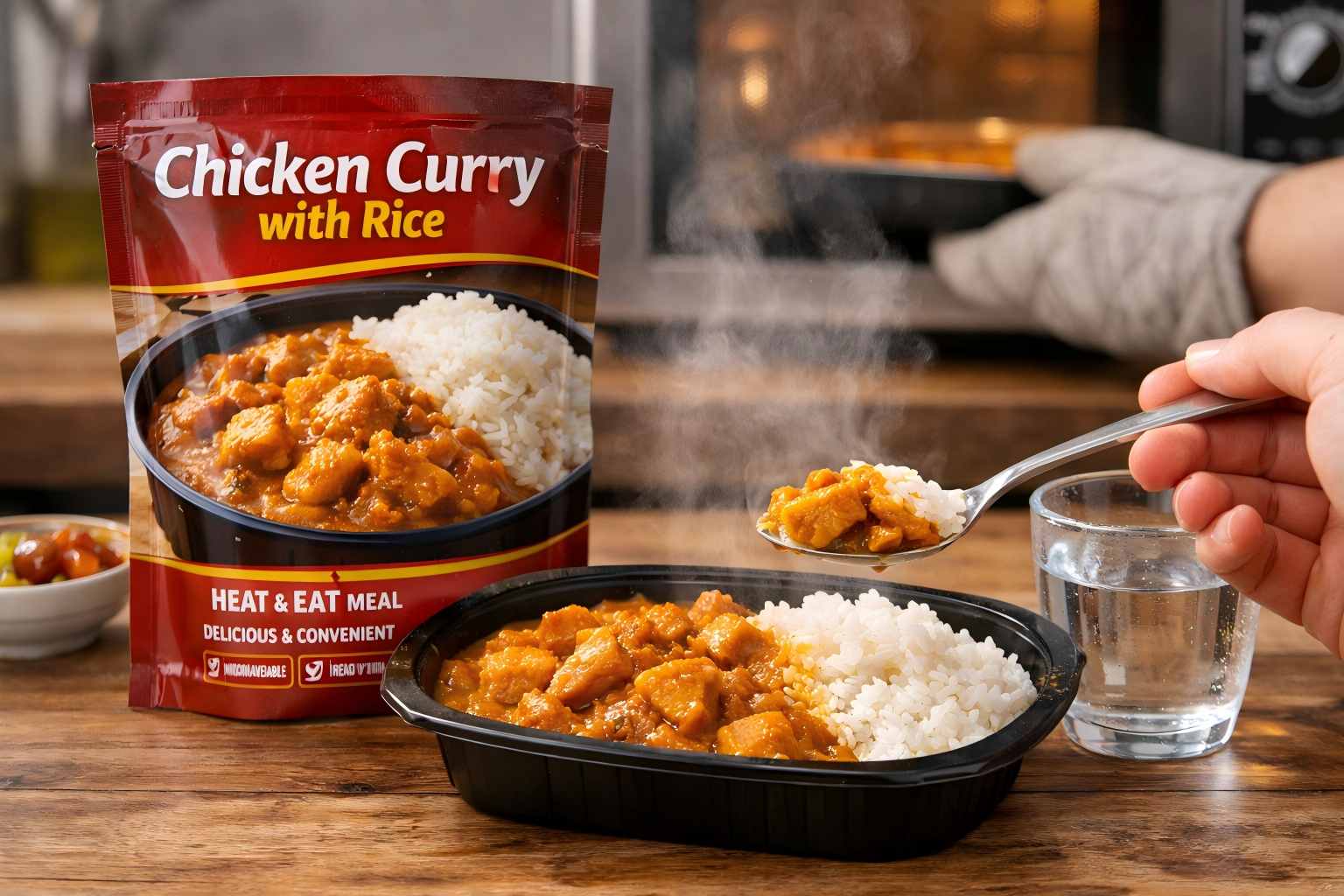
Nylon film (polyamide, PA) is widely used as a key layer in retort packaging structures such as:
• PET / BOPA / RCPP (transparent high-barrier retort pouches)
• BOPA / Alu foil / RCPP (high-barrier aluminum retort pouches)
• BOPA / CPP or BOPA / PE co-ex structures
Key properties that make nylon suitable for boiling and retort:
• High temperature resistance – withstands typical retort conditions around 121–135°C under pressure
• Excellent puncture and tear resistance – protects against bones, sharp edges and impacts during distribution
• Strong oxygen barrier – helps extend shelf life of meat, pet food, sauces and ready meals
• Good toughness and flexibility – allows thin structures while maintaining mechanical strength
Main challenges for printing and lamination:
• High moisture absorption – dimensional changes and curl when humidity is not controlled
• Wet-heat shrinkage – size and shape change after passing through heated ovens or retort
• Surface energy decay – corona treatment can drop quickly, reducing ink and adhesive adhesion
Understanding these advantages and challenges is the starting point for a stable printing process.
Before You Print: Storage, Conditioning & Handling of Nylon Film
2.1 Control temperature and humidity
Nylon film absorbs moisture much faster than BOPP or PET. At higher humidity levels, this moisture uptake can cause:
• Dimensional changes and curling of the web
• Variation in web tension and registration
• Changes in barrier performance
Best practices in the warehouse and pressroom:
• Store nylon (BOPA / PA) film in a dry, air-conditioned room, away from doors and windows.
• Avoid long-term storage in high humidity seasons; use “first in, first out” (FIFO) for nylon film.
• Keep original packaging (usually aluminum-coated or moisture-barrier wrap) intact until just before printing.
• After opening, re-wrap semi-used rolls immediately with moisture-barrier film when stopping for more than a short break.
2.2 Pre-conditioning and pre-heating
For high-precision printing (multi-color, tight registration, narrow tolerances):
• Allow nylon film rolls to acclimate in the printing workshop for 24 hours before use, so temperature and humidity equalize.
• For very strict register jobs, you can pre-heat nylon rolls at about 30–40°C for 2–4 hours in an aging room, then print as soon as possible after conditioning.
• Avoid moving conditioned rolls back and forth frequently between hot and cold areas.
2.3 Handling after printing
After printing and before lamination:
• Keep printed rolls tightly wrapped with aluminum-coated or other barrier film.
• Avoid long idle periods between printing and lamination, especially in hot and humid seasons.
• For jobs using ink hardener, do not store printed semi-finished rolls loosely; re-wrap them carefully to limit moisture absorption and shrinkage.
Surface Treatment & Dyne Level: Foundation of Stable Ink Adhesion
3.1 Understand nylon’s surface energy
Nylon films naturally have relatively high surface energy, with untreated dyne levels often close to 50 dynes/cm. After corona treatment, dyne level can be raised into the mid-50s or low-60s, which is ideal for printing and laminating.
However, nylon’s strong moisture absorption and storage conditions can quickly reduce the effective dyne level on the surface.
3.2 Recommended dyne levels for nylon printing
As a practical guideline for retort structures:
• Printing surface (nylon side to be printed): target ≥ 52 dynes/cm
• Back side for lamination (in sandwich structures such as PET / BOPA / RCPP): target ≥ 50 dynes/cm
• For water-based inks or high-solids systems, higher dyne levels may be needed compared with solvent-based inks.
3.3 Check dyne level on every roll
Do not assume the dyne level is still sufficient just because a roll was treated at the film factory. During storage and handling, treatment can decay.
Basic dyne test workflow:
- Use dyne pens or test inks of incremental values (e.g., 40, 44, 48, 52, 56 dynes/cm).
- Wipe the test liquid quickly on the surface of the film.
- If the test line remains continuous and does not bead for at least 2 seconds, the surface energy is at or above that dyne level.
- The highest dyne value that still wets out gives you an approximate surface energy of the film.
If the dyne level is too low:
• Re-treat the film inline with corona just before printing (if your press has treatment capability).
• Avoid over-treating to the point of damaging the film or generating too much surface oxidation.
• If dyne cannot be raised or remains unstable, consider rejecting that roll for retort jobs.
Choosing Inks, Solvents & Adhesives for Retort Packaging
4.1 Match inks to retort conditions
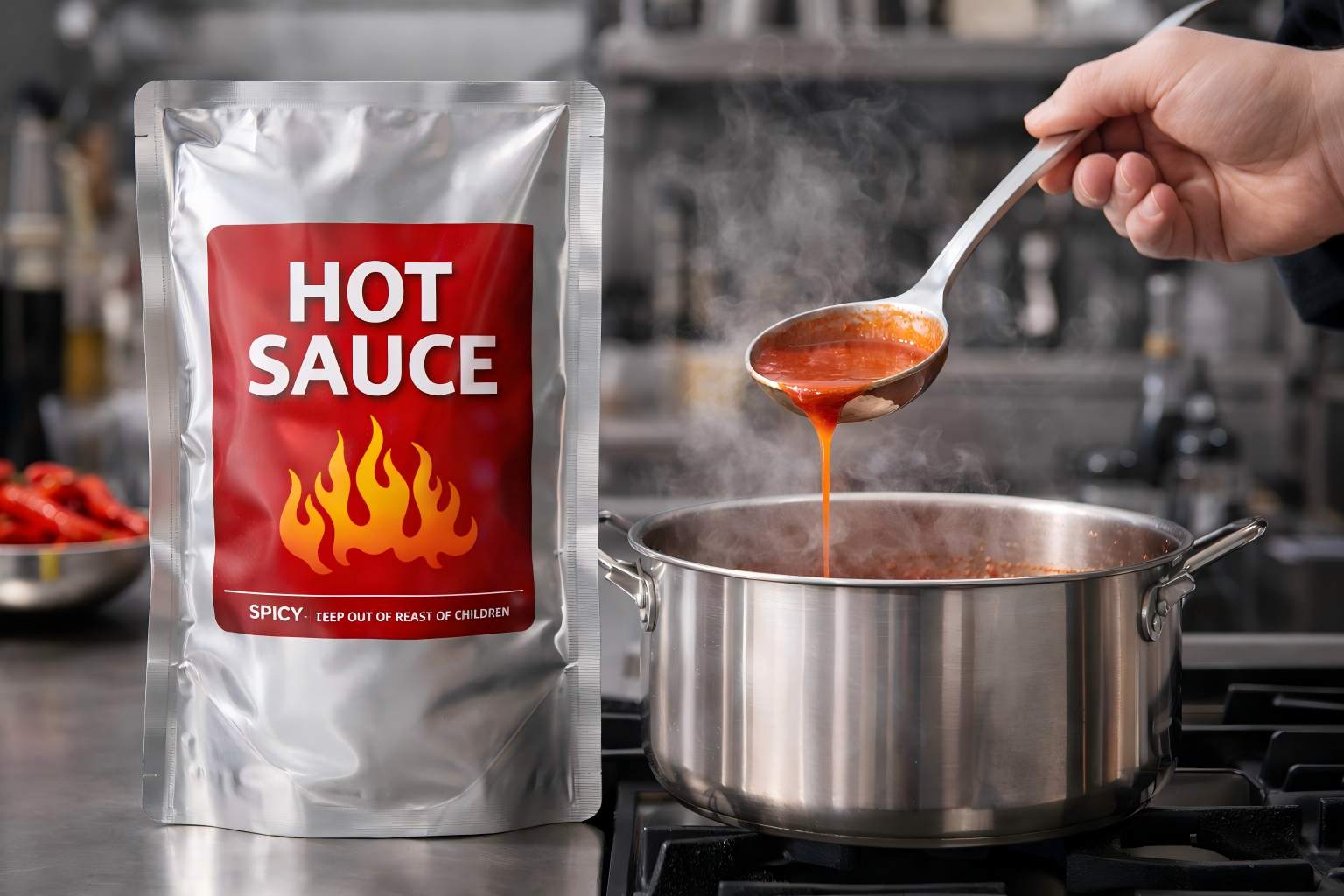
Retort pouches are typically sterilized at:
• 116–121°C for 30–60 minutes (standard retort)
• 130–135°C for shorter cycles in some products
Ink systems for nylon retort applications must handle both high temperatures and high moisture. When specifying ink:
• Confirm that the ink is explicitly rated as “boilable” or “retort-grade” to at least your maximum retort temperature.
• Ask your ink supplier for recommendations specific to nylon/BOPA substrates and retort CPP inner layers.
• For large solid areas, reverse white or heavy spot colors, use ink hardeners according to the supplier’s technical data.
• Do not mix or reuse residual ink that already contains hardener for non-retort jobs – this can cause unstable curing and adhesion issues.
4.2 Control solvents, moisture and –OH groups
Solvents such as isopropanol (IPA) and some alcohols leave –OH functional groups that can react with the curing agents of polyurethane adhesives. If drying is insufficient, excessive –OH residues in the ink layer may disturb the balance between adhesive main agent and hardener, leading to under-cured lamination and potential delamination during retort.
Best practices:
• Minimize use of high –OH content solvents in inks intended for retort structures.
• Ensure adequate drying – especially for large solid areas and inks with hardener – by raising oven temperature and checking exhaust air volume.
• Control solvent moisture content (e.g., ethyl acetate) within specification; excessive water in solvents can also weaken adhesive performance.
4.3 Use retort-grade adhesives and allow full curing
For retort structures, 2-component solvent-based polyurethane adhesives are widely used. They must provide:
• Sufficient bond strength after sterilization at the highest intended temperature
• Good resistance to hot water, oil, salt and other food media
• Compatibility with both nylon and the heat-seal layer (RCPP or CPP)
Key points:
• Follow adhesive supplier’s recommendations on mix ratio, coating weight and curing time.
• For retort jobs, allow full curing (often 48–72 hours or longer, depending on temperature) before slitting, bag-making and retort testing.
• Avoid excessive adhesive coating weight, which can trap residual solvents and increase the risk of delamination.
Press Setup: Tension, Registration & Drying on Nylon Film
5.1 Tension control
Compared with BOPP or PET, nylon film shows more rapid changes in tension due to moisture absorption and relaxation. If tension is not controlled carefully, you may see:
• Lateral wandering of the web (if tension is too low)
• Stretching and deformation (if tension is too high)
• Overprint mis-registration, especially in multi-color designs
Recommendations:
• Set initial web tension based on film thickness and width; thinner and wider webs usually require more precise control.
• Monitor and adjust tension zone-by-zone (unwind, infeed, between printing units, oven and rewind).
• Maintain stable tension through the heated oven; sudden changes amplify distortion on nylon.
5.2 Oven temperature and drying
After passing through 60–80°C drying tunnels, nylon may show more dimensional change than other plastic films.
Cloud Film
To balance drying and dimensional stability:
• Use the minimum oven temperature that still guarantees complete solvent evaporation.
• For inks with hardener and large solid areas, raise oven temperature by about 8–15°C above that of other colors and ensure adequate exhaust air flow.
• Keep web speed and oven temperature changes small and gradual – large jumps increase risk of curl and mis-registration.
5.3 Plate cylinder and engraving quality
Because nylon’s tensile and elastic behavior differs from other substrates, plate cylinder precision has a direct impact on overprint quality:
• Ensure good roundness and concentricity of the plate cylinders.
• Avoid poor-quality plate materials that may deform under pressure.
• For demanding designs, work closely with your plate supplier to control engraving depth, screen count and cell geometry suitable for nylon.
Lamination, Curing and Retort Performance
6.1 Laminate as soon as possible
To reduce moisture uptake and dimensional change between printing and lamination:
• Laminate printed nylon film as soon as practical after printing, especially in hot and humid seasons.
• Keep printed rolls wrapped with barrier material during waiting periods.
6.2 Choose suitable structures and partner films
Common nylon-based retort structures include:
• PET / BOPA / RCPP – transparent retort pouches for sauces, soups and pet food
• BOPA / Alu foil / RCPP – aluminum retort pouches for high-barrier needs
• BOPA / CPP or BOPA / PE – where clear, boilable or pasteurization-resistant packaging is required
When designing structures:
• Check wet-heat shrinkage in both machine (MD) and transverse (TD) directions. Smaller differences (ideally <0.5%) help reduce curling and corner lifting during retort.
• Evaluate oxygen barrier at normal conditions and at high temperature / high humidity.
6.3 Curing and slit/bag-making
Before slitting and making bags:
• Confirm that bond strength meets minimum requirements both before and after lab retort testing.
• Avoid aggressive slitting conditions (too much tension or sharp angle paths) that may stress partially cured laminates.
• Re-test bond strength and appearance after changes to adhesive, film supplier, or process parameters.
Troubleshooting Delamination and Bag Failure After Retort
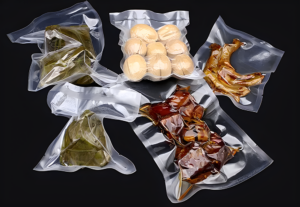
Even with good materials and processes, high-temperature retort pouches can fail due to bag breakage, leakage, weak heat seals, off-odors, wrinkles or delamination.
Below is a simple troubleshooting guide:
Symptom 1: Bag breaks at heat-seal edges (“root cutting”)
Likely causes:
• Inner layer (RCPP or CPP) has insufficient boiling or retort resistance
• Heat-seal temperature, pressure or dwell time are too low
• Contamination in the seal area (ink, adhesive, oil, powder)
Countermeasures:
• Use retort-grade RCPP films designed for high-temperature sealing.
• Optimize heat-seal window in lab with a heat-seal tester at real production conditions.
• Keep sealing jaws and film surfaces clean and free of contaminants.
Symptom 2: Delamination – nylon separates from inner layer, ink stays on nylon
Likely causes:
• Adhesive not fully cured or incompatible with inner layer
• Poor surface treatment or excessive additives on the inner layer
• Excess moisture in adhesive or solvent
Countermeasures:
• Increase curing time or temperature according to adhesive supplier recommendations.
• Check dyne level and cleanliness of the inner film surface.
• Verify solid content and moisture of adhesive and solvents.
Symptom 3: Delamination – ink transfers to inner layer, nylon separates from ink
Likely causes:
• Ink layer has weak adhesion to nylon
• Corona treatment on nylon is insufficient or has decayed
• Residual solvents in the ink layer or too heavy adhesive coating
Countermeasures:
• Check and restore dyne level on the nylon side; avoid using nylon rolls with low or unstable treatment.
• Use inks with better affinity for nylon and compatible with your adhesive system.
• Reduce ink viscosity and improve drying to minimize residual solvents.
Symptom 4: Severe curl or corner lifting after retort
Likely causes:
• Large difference between MD and TD wet-heat shrinkage of nylon and other layers
• Excessive web tension or high oven temperature during printing
• Inconsistent film quality between lots
Countermeasures:
• Choose nylon films with balanced wet-heat shrinkage in both directions and small diagonal shrink differences.
• Optimize oven temperature profile and tension settings.
• Qualify film suppliers with strict quality specifications and incoming inspection.
Quality Control & Testing Plan for Nylon Retort Pouches
To prevent costly complaints and product recalls, establish a simple but robust testing plan:
- Define target retort conditions
• Temperature (e.g., 121°C or 135°C)
• Hold time and pressure
• Type of packed product (water, oil, high salt, acid, etc.) - Lab retort simulation
• Prepare sample pouches from production film.
• Fill with water or a suitable simulant.
• Run a retort cycle matching (or slightly stricter than) your intended commercial process. - Post-retort evaluation
• Peel strength and bond strength across multiple positions and directions.
• Heat-seal strength and visual appearance of seals (no whitening, voids or bubbles).
• Check for wrinkles, curl, leakage and any signs of delamination. - Sampling strategy
• Take samples across the full width of the sealing knives.
• Re-sample after key process changes (film roll change, adhesive batch change, speed/temperature adjustment).
How CloudFilm Supports Nylon Film Printing & Retort Projects
CloudFilm has more than 20 years of experience in high-performance flexible packaging films, including:
• BOPA (nylon) film for boiling and retort applications
• Cast nylon film for thermoforming and deep-draw packs
• Retort-grade CPP and RCPP inner-layer films
• High-barrier PET, aluminum foil and co-extruded structures
For converters and brands, we can help you:
• Select the right nylon grade with controlled wet-heat shrinkage and high, stable surface energy
• Design retort structures such as PET/BOPA/RCPP or BOPA/AL/RCPP to match your product and processing conditions
• Provide trial rolls and technical support for new projects or supplier qualification
• Optimize film specs together with your ink, adhesive and machinery partners to reduce risk of delamination, curl and complaints
If you are planning a new nylon-based retort project – or struggling with delamination and printing issues on your current structures – you are welcome to contact CloudFilm for a practical, engineering-driven solution.
FAQ – Common Questions About Printing on Nylon Film for Retort
Q1: What dyne level should I target before printing on nylon film?
A: For high-temperature retort pouches, a practical target is ≥52 dynes/cm on the printing surface and ≥50 dynes/cm on the lamination surface, checked just before printing.
Q2: Why do my retort pouches curl after sterilization?
A: Curling is usually caused by differences in wet-heat shrinkage between layers, excessive web tension, or uneven drying. Choosing balanced nylon film and optimizing oven/tension settings typically solves the issue.
Q3: Can I use the same ink and adhesive system for both boiling and high-temperature retort?
A: Not always. Many “boilable” systems rated below 100°C are not suitable for 121–135°C retort. Always confirm the maximum temperature rating of your ink and adhesive with suppliers.
Q4: What is the most common reason for delamination in nylon retort pouches?
A: The most frequent causes are insufficient surface treatment, under-cured adhesive, or incompatibility between ink and adhesive. Good dyne control, correct adhesive curing and lab retort tests are essential.
Q5: How can CloudFilm help if my current nylon supplier is unstable?
A: CloudFilm can supply nylon (BOPA / cast nylon) with strict control on thickness, bowing, wet-heat shrinkage and surface energy, and work with your team to adjust film specifications so that printing, lamination and retort performance are all stable.