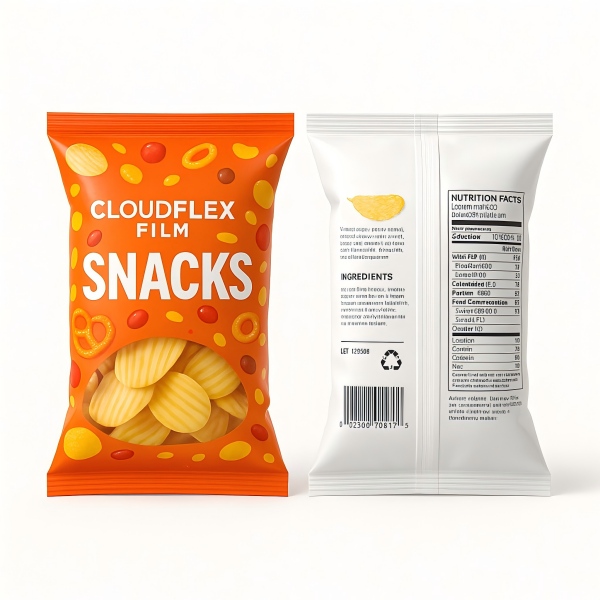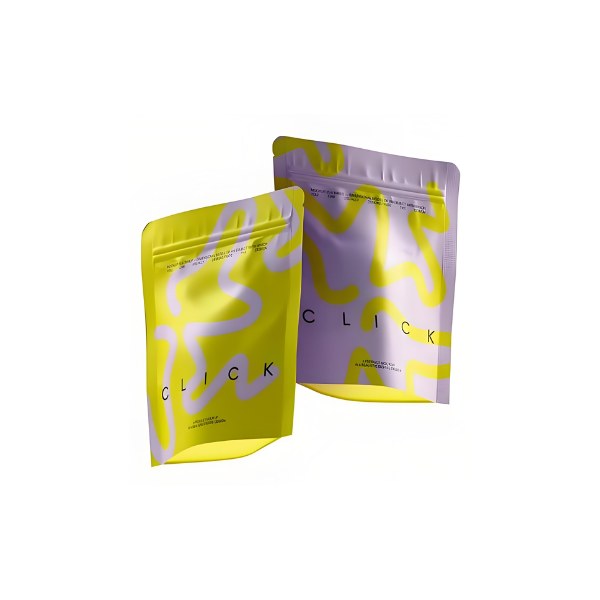
Coffee is one of the most packaging-sensitive products in the market. It is aromatic, oxygen-sensitive, moisture-sensitive, and in many cases still releasing gas after roasting. That means the best packaging for coffee is not simply the cheapest bag or the most attractive print design.
The right coffee package should protect aroma, control oxygen and moisture, match the filling process, support the brand image, and remain commercially practical. For roasters, importers, private-label buyers, and distributors, the best solution usually comes from balancing shelf life, package format, barrier level, and cost.
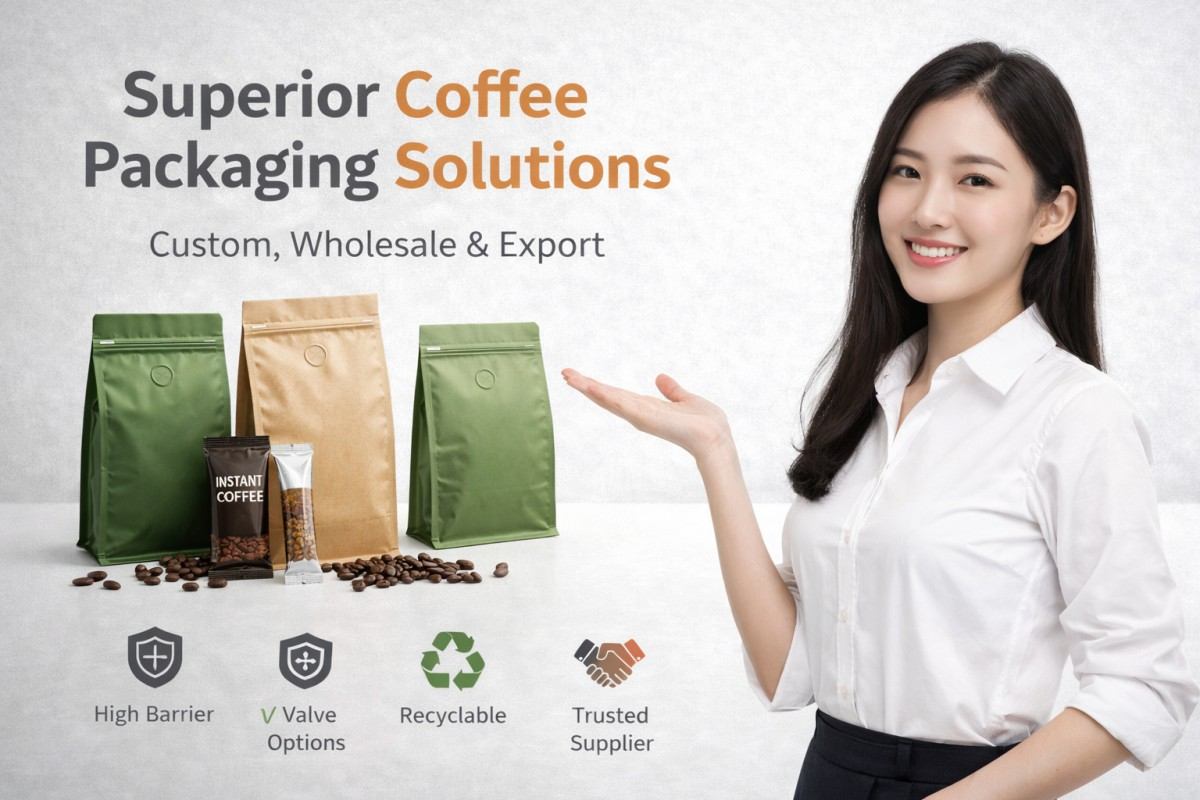
For many brands, the starting point is not just a generic pouch but a purpose-built coffee packaging bags solution that can combine valve options, barrier structures, and custom printing in one system.
Why Coffee Packaging Is More Complex Than It Looks
Coffee does not behave like many ordinary dry foods. Freshly roasted beans release carbon dioxide. Ground coffee loses aroma faster than whole beans. Premium coffee also depends heavily on appearance, shelf impact, and brand communication.
That is why one coffee SKU may need a different structure from another. A 1 kg whole bean bag for retail shelves, a small drip coffee sachet for travel, and a cold brew concentrate pouch for e-commerce do not need the same packaging design.
When buyers ask, “What is the best packaging for coffee?” the more useful question is this: best for which coffee product, which shelf life target, which sales channel, and which filling method?
The Best Packaging Depends On The Coffee Type
Whole Bean Coffee
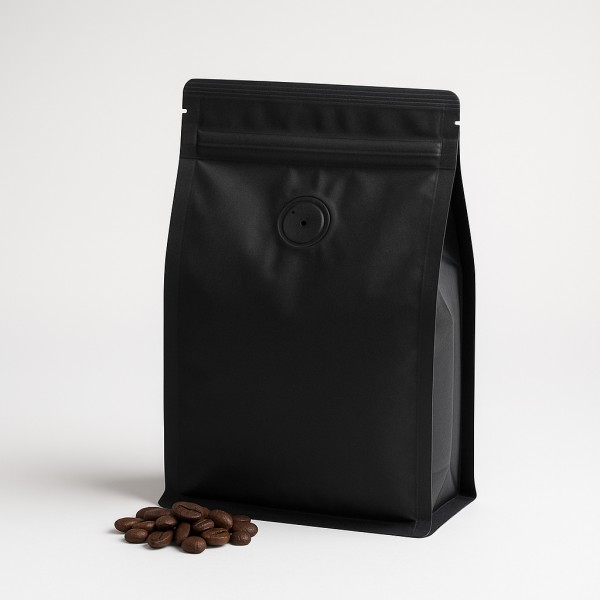
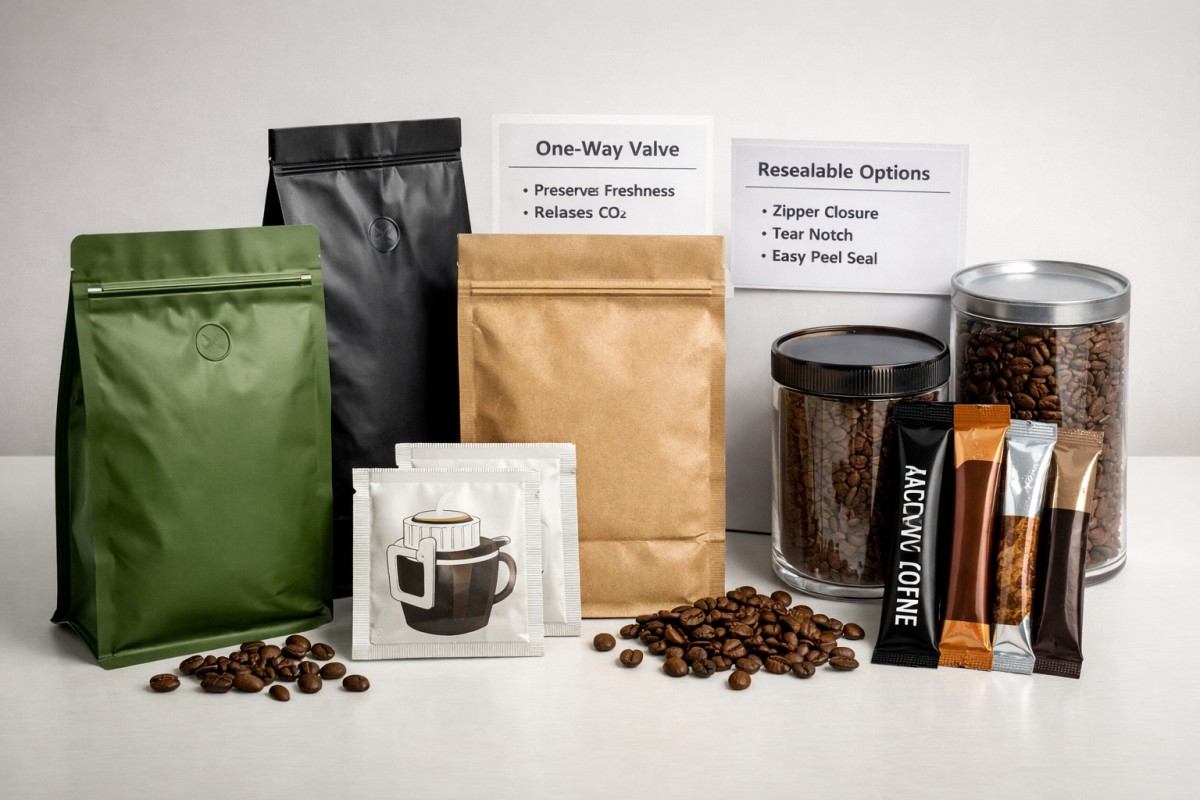
Whole bean coffee usually needs strong aroma retention and controlled degassing. If the beans are packed soon after roasting, a one-way degassing valve is often recommended. This allows gas to escape without letting outside air come back in.
For many premium retail SKUs, whole bean coffee is packed in stand-up pouches, side-gusset bags, or flat-bottom bags with a valve and, in some cases, a zipper for reclosure after opening.
Ground Coffee
Ground coffee is usually more sensitive than whole beans because the surface area is much larger. Aroma loss can happen faster, so barrier requirements are often higher. In many cases, ground coffee benefits from stronger oxygen and aroma protection than a standard low-barrier dry-food bag.
If the target shelf life is long, barrier performance becomes even more important. Transparent structures can work in some markets, but many brands still choose opaque or metallized solutions for stronger protection.
Drip Coffee And Single-Serve Packs
Single-serve coffee needs precision rather than just strength. The package must be clean, compact, and stable in machine handling. In this segment, brands often use sachets, overwraps, or small pouches depending on the product style and the sales format.
Because these packs are often sold in sets or gift-style combinations, printing quality and lot flexibility also matter more than buyers sometimes expect.
Instant Coffee
Instant coffee is different from roasted beans. The product is usually more stable, but moisture protection and sealing reliability are still critical. Pillow pouches, stick packs, and sachets are common.
For many instant coffee applications, the best structure is the one that provides enough barrier, stable sealing, and good print quality without overengineering the pack.
Cold Brew Concentrates
Cold brew concentrates and liquid coffee products need a different packaging logic. In these applications, the seal layer, leak prevention, and transportation reliability may matter as much as aroma retention.
That is why spouted pouches or stronger liquid-compatible laminated pouches can be more suitable than ordinary dry coffee bags.
Which Materials Are Commonly Used For Coffee Packaging
There is no single “best material” for all coffee packaging. The correct structure depends on shelf life, product type, barrier target, appearance, sustainability goals, and budget.
PET/AL/PE For Maximum Barrier
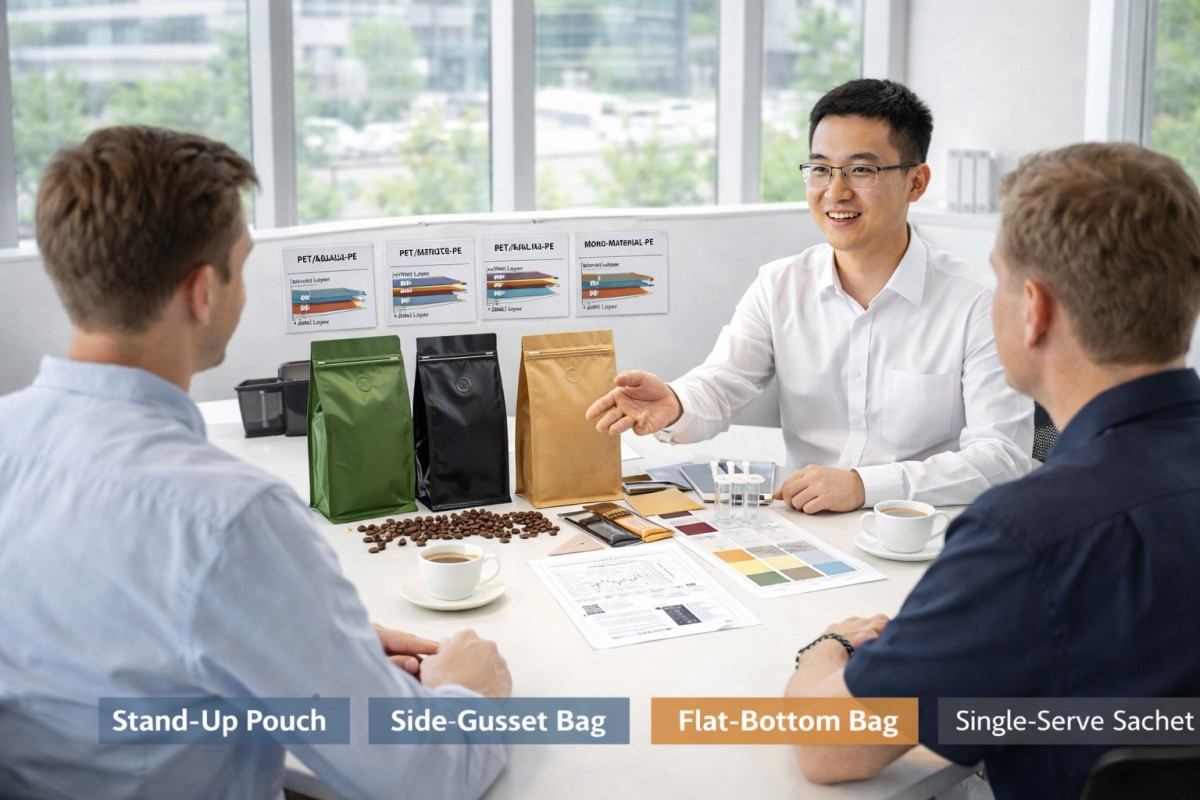
PET/AL/PE is one of the classic structures for high-barrier coffee packaging. PET gives printability and stiffness, aluminum provides excellent light, oxygen, and moisture barrier, and PE gives sealability.
This structure is often chosen for premium roasted coffee, ground coffee, and export packs that need longer shelf life and stronger protection in distribution.
If your priority is barrier performance first, it also helps to understand how high barrier films
are selected for oxygen- and moisture-sensitive products.
PET/EVOH-PE For Transparent High Barrier
Some brands want consumers to see the product or prefer a more modern transparent appearance. In those cases, PET/EVOH-PE can be a useful option.
This kind of structure can provide higher barrier than ordinary clear laminates while keeping a transparent look. It is often considered when the brand wants a cleaner premium image without using foil.
BOPP/PE Or BOPP/CPP For Cost-Balanced Coffee Packs
Not every coffee product needs the highest possible barrier. For some short-shelf-life products, faster-turnover channels, or more cost-sensitive lines, BOPP-based laminates can still be practical.
BOPP brings crisp appearance and good printability, while PE or CPP supports sealing and toughness. For buyers comparing mainstream dry-food structures, a closer look at BOPP/PE laminated film can help clarify where it works well and where a higher-barrier option may be better.
Mono-Material PE Solutions For Recyclable Design
Sustainability is becoming a larger decision factor in coffee packaging, especially for brands selling into markets with stronger recycling expectations. In these cases, mono-material PE structures are increasingly discussed.
They may not replace every traditional high-barrier laminate immediately, but they are a serious option for brands trying to move toward recycle-ready packaging while keeping reasonable protection and machinability.
Which Bag Style Is Best For Coffee
Material is only part of the decision. Bag style also affects shelf display, filling efficiency, freight cost, and customer experience.
Stand-Up Pouches
Stand-up pouches are widely used because they balance shelf presentation, filling convenience, and cost. They can work for beans, grounds, and many specialty coffee formats.
They are especially useful for brands that want a premium look without moving into a more structured and often slightly higher-cost format.
Side-Gusset Bags
Side-gusset bags are a classic choice in the coffee market. They use space efficiently and are familiar in wholesale and retail coffee channels.
For traditional coffee brands, this format still feels highly commercial and practical, especially in medium and larger pack sizes.
Flat-Bottom Bags
Flat-bottom bags are often one of the best choices for premium coffee because they combine strong shelf presence with good filling stability. Their box-like shape also gives more printable surface area.
For brands targeting a higher-end retail image, flat bottom pouches are often preferred for whole beans and premium blends.
Sachets, Stick Packs, And Small Single-Serve Packs
For instant coffee, trial sizes, hotel use, office use, and drip coffee applications, small-format packaging may be more suitable than a large retail bag.
In these cases, packaging efficiency, sealing consistency, and print control often matter more than large shelf display panels.
The Small Packaging Features That Make A Big Difference
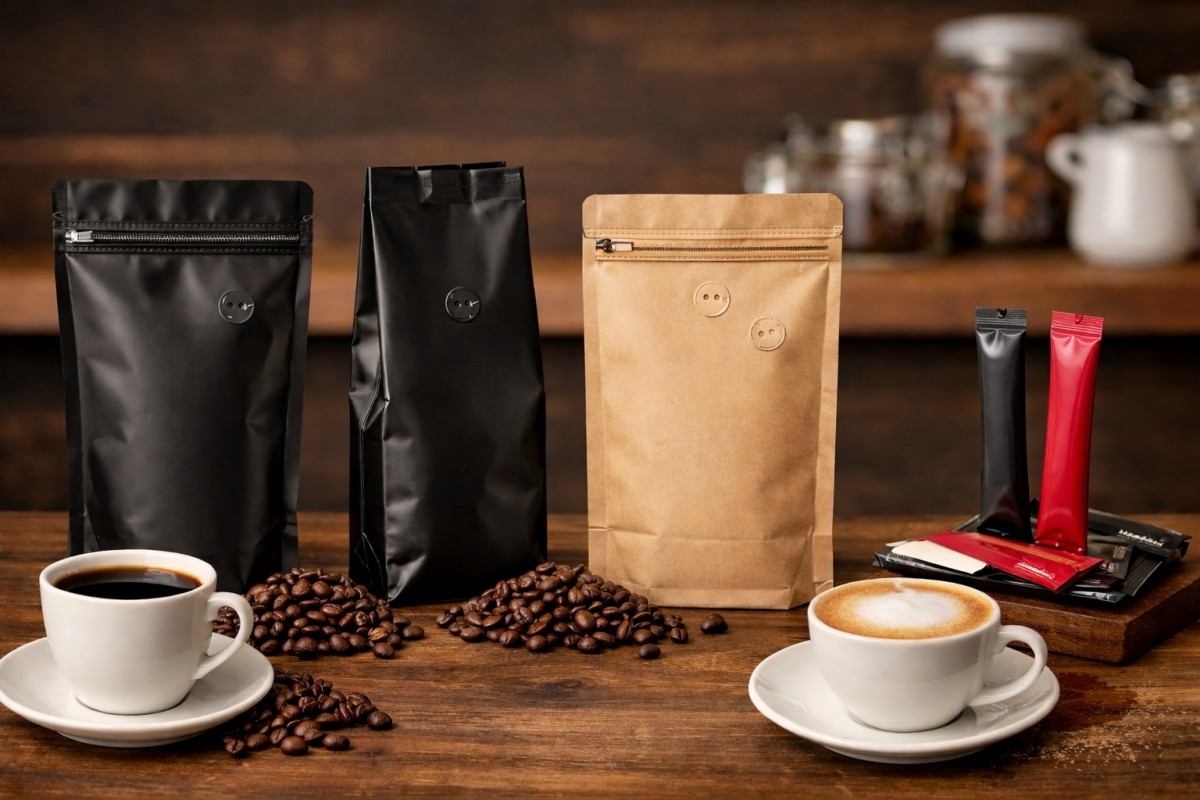
Many buyers focus first on the laminate, but coffee packaging performance often depends on smaller details as well.
A one-way degassing valve is important for freshly roasted beans. A zipper improves convenience after opening. A tear notch improves user experience. A matte finish can create a more premium look, while gloss can increase visual contrast and color impact.
Windows can improve visibility, but they should be used carefully because they may reduce total barrier performance depending on the structure. For some premium products, appearance should not come at the cost of freshness protection.
Seal quality also matters. Even a strong barrier structure can fail in real distribution if the sealing system, pouch conversion quality, or line settings are not appropriate.
Printing, MOQ, And Product Launch Flexibility
Coffee brands often change artwork more often than many industrial buyers expect. Seasonal blends, holiday editions, origin-specific lots, trial launches, and private-label projects all create packaging variation.
That is why print method and order flexibility matter. For fast changes and lower-volume development, digital flexible packaging can be useful for specialty coffee, pilot orders, and short-run marketing programs.
For larger ongoing volumes, conventional gravure or other long-run printing approaches may still make better commercial sense. The best coffee packaging supplier should be able to discuss both structure and print strategy, not only quote a bag.
Sustainability In Coffee Packaging
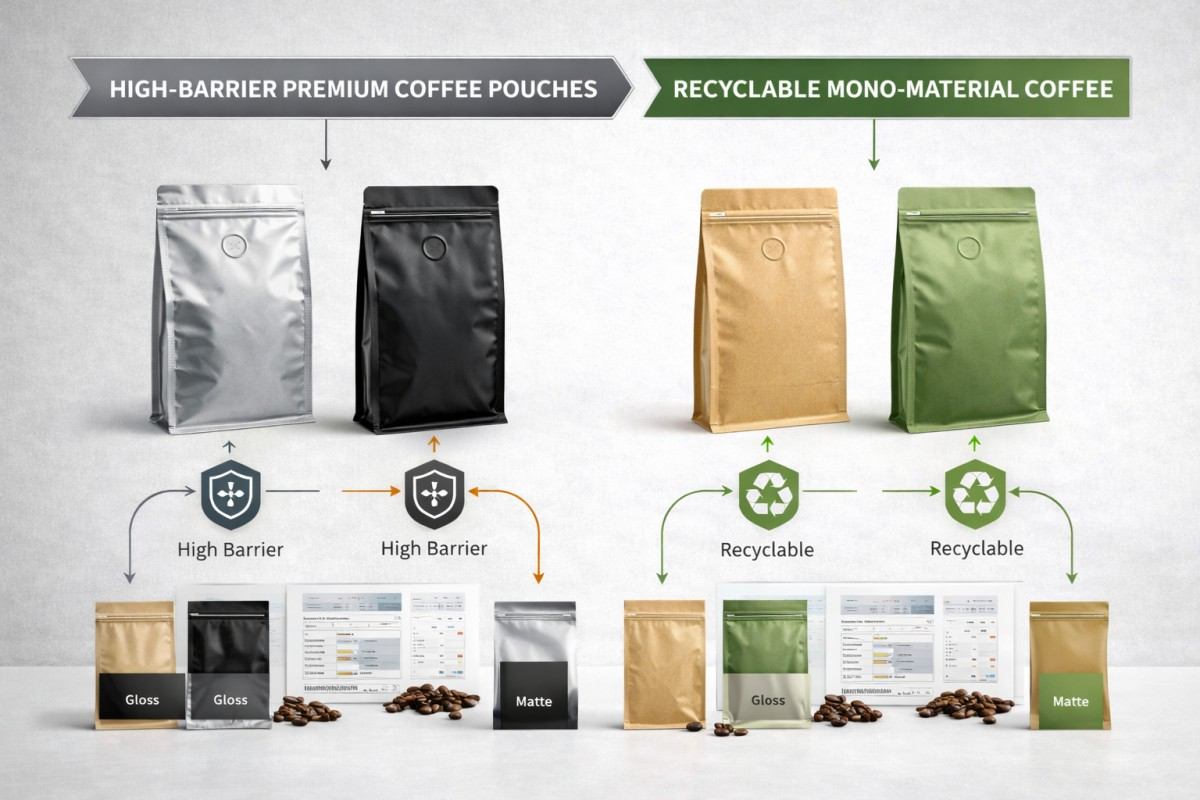
Sustainability is no longer only a brand message. In many markets, it is becoming a practical sourcing topic. Buyers want to reduce material complexity, improve recyclability direction, and still keep enough barrier to protect flavor.
That is where recyclable pouches enter the discussion. For some coffee applications, mono-material PE solutions with valves, zippers, and optimized barrier can provide a more sustainability-oriented pathway.
Still, recyclable design should be treated realistically. Coffee is a demanding product, and not every pack can move to the same structure at the same speed. The right decision depends on product sensitivity, shelf life target, local recycling systems, and brand positioning.
How To Choose A Coffee Packaging Manufacturer Or Supplier
The best coffee packaging manufacturer is not simply the one with the lowest quoted unit price. A serious coffee packaging supplier should understand product sensitivity, shelf life targets, valve logic, bag format choice, and export requirements.
A good supplier should be able to answer practical questions clearly. Does your coffee need a valve? Is a transparent structure enough, or do you need foil-level barrier? Is a stand-up pouch enough, or would a flat-bottom format create better shelf impact? Is your volume better suited to digital printing or to a longer-run method?
For importers and growing brands, a strong supplier relationship usually starts with a clear project brief. The more exact your information, the better the recommendation will be.
The most useful starting information usually includes product type, filling weight, bag dimensions, target shelf life, whether the coffee is beans or grounds, whether you need a valve or zipper, the sales market, and your approximate order volume.
What The Best Coffee Packaging Usually Looks Like In Practice
In real projects, the best coffee packaging is usually not the most complicated pack. It is the structure that protects the coffee well enough, runs reliably, looks right for the brand, and stays commercially sustainable.
For premium roasted beans, that often means a flat-bottom or stand-up pouch with a one-way valve and high barrier. For ground coffee, it often means stronger aroma and oxygen protection. For instant coffee, it may mean a more efficient sachet or stick-pack structure. For brands under sustainability pressure, it may mean moving selected SKUs toward mono-material solutions step by step.
The winning pack is the one that matches the actual business model, not the one that looks impressive only on paper.
FAQ About The Best Packaging For Coffee
What is the best packaging for whole bean coffee?
For many retail whole bean products, a high-barrier pouch with a one-way degassing valve is one of the best options. The exact structure depends on shelf life, roast freshness, and market position.
Does ground coffee need stronger packaging than whole beans?
In many cases, yes. Ground coffee usually loses aroma faster, so it often needs stronger oxygen and aroma protection than whole beans.
Is a degassing valve always necessary?
Not always. It is especially important for freshly roasted coffee packed soon after roasting. For some products and timings, the need depends on how much gas release is expected.
Which bag style is best for premium coffee?
Flat-bottom bags and high-quality stand-up pouches are both strong choices. Flat-bottom formats often give a more premium shelf presence and more printable area.
Can transparent coffee packaging still have high barrier?
Yes. Transparent high-barrier options such as structures using EVOH are possible, though the final suitability depends on your shelf life target and barrier requirements.
Is aluminum foil packaging still common for coffee?
Yes. Foil-based or metallized high-barrier structures are still widely used when long shelf life and strong aroma protection are key priorities.
Are recyclable coffee pouches really practical?
They can be practical for many projects, but the answer depends on the product, barrier requirement, valve system, and the recycling infrastructure in the target market.
Should I choose a zipper for coffee packaging?
A zipper improves convenience after opening, especially for larger retail bags. It is often useful for whole bean and some ground coffee formats.
Is digital printing good for coffee packaging?
It is often a good option for low MOQ projects, seasonal artwork, market trials, and specialty coffee launches. For long stable programs, larger-volume printing methods may still be more economical.
What information should I send to a coffee packaging supplier before asking for a quote?
Send the product type, coffee form, filling weight, target bag size, required shelf life, barrier expectation, valve and zipper needs, sales market, and estimated order quantity.
What is more important, bag appearance or barrier performance?
For coffee, barrier performance usually comes first. Attractive printing matters, but coffee quality drops quickly if the packaging cannot protect freshness.
How do I choose between high barrier and recyclable packaging?
Start with the product requirement, not the trend. If the coffee is very sensitive and the shelf life is long, a stronger traditional barrier may still be necessary. If the product and market allow it, selected SKUs may move toward recyclable structures step by step.
Final Thoughts
The best coffee packaging is the package that fits the coffee, the shelf life, the brand, and the route to market. There is no single universal answer, but there is usually a clearly better answer once the product details are known.
If you are planning a new coffee packaging project, changing bag style, or comparing barrier structures for beans, grounds, instant coffee, or cold brew, you can contact CloudFilm with your specifications and ask for a more targeted recommendation.