Packaging quality is one of the first things buyers notice and one of the last things they can afford to get wrong.
A package may look attractive on the shelf, but if it seals poorly, loses barrier, curls on the line, or leaks in transport, the real cost appears later. That cost may come as product waste, customer complaints, line downtime, delayed launches, or lost trust in the supplier.
For that reason, serious buyers do not treat packaging quality as a simple “pass or fail” topic. They treat it as a complete system that starts with material selection, continues through printing and lamination, and ends with stable performance during filling, sealing, storage, shipping, and final use.
This guide explains how packaging quality should be evaluated in practical B2B terms. It is written for brands, converters, importers, and procurement teams that need clearer standards before placing a packaging order.
If your project involves multiple materials, finished bags, or custom rollstock, it also helps to look at packaging from a broader solution angle rather than from a single film specification alone. That is why many buyers start by reviewing broader flexible packaging solutions
before narrowing the structure.
Why Packaging Quality Matters More Than Many Buyers Expect
Good packaging quality protects much more than the product itself.
It protects filling efficiency. It protects shelf life. It protects printing consistency. It protects the final appearance of the packed product. In many cases, it also protects the economics of the whole project.
A film that is slightly out of spec may still look acceptable in a sample roll. But on a real production line, small variation can become a large problem. Seal temperature may shift. Registration may drift. COF may become unstable. The pouch may warp or fail drop tests after filling.
This is why experienced buyers do not ask only, “What is the price per kilogram?” They also ask how stable the film runs, how consistent the sealing layer is, what tests are performed, and how problems are traced if a batch issue appears.
In real purchasing work, packaging quality often affects five business outcomes at the same time:
- product protection
- line efficiency
- brand appearance
- complaint risk
- total delivered cost
A lower-priced material with unstable quality can become the more expensive option very quickly.
What “Packaging Quality” Actually Means
Many people use the phrase “high-quality packaging” in a vague way.
In practical terms, packaging quality usually includes four layers.
1. Material Quality
This includes the base resin or substrate, thickness consistency, clarity, stiffness, surface treatment, and barrier capability.
For example, a dry snack structure and a vacuum meat structure do not need the same material behavior. A good supplier should explain why one film family is suitable and another is not.
2. Converting Quality
This includes printing, lamination, slitting, pouch making, curing, and visual appearance.
Even when the base film is good, poor converting can still create wrinkles, solvent retention, delamination, poor registration, telescoping, curl, or seal problems.
3. Functional Quality
This is what buyers care about most in actual use.
Can the package seal well? Can it resist puncture? Can it survive transport? Does it deliver the needed oxygen or moisture barrier? Does it work on the customer’s machine and in the customer’s supply chain?
4. Consistency From Batch To Batch
This point is often underestimated.
A supplier may produce one acceptable sample roll, but bulk orders require stable repeatability. Good quality is not only about making one good batch. It is about making the next batch, and the batch after that, with the same performance.
How Buyers Should Evaluate Packaging Quality Before Ordering
The best time to control packaging quality is before the purchase order is confirmed.
Start With The Real Application
Buyers should define the product, filling process, storage condition, and transport condition first.
Ask these questions early:
- Is the product dry, oily, liquid, frozen, acidic, or sensitive to oxygen?
- Is the package for manual filling or high-speed automatic filling?
- Does it need hot fill, retort, refrigeration, or freezer resistance?
- Will the package face long export transport, pallet stacking, or e-commerce handling?
- Is appearance more important, or is barrier more important, or are both critical?
Without these answers, even a technically correct film description may still lead to the wrong structure.
Evaluate The Film Family, Not Only The Thickness
Thickness alone does not define packaging quality.
A 60-micron structure made from the wrong material family may perform worse than a thinner but better-designed laminate. Buyers need to understand whether the structure should be based on BOPP, PET, PA, PE, CPP, foil, EVOH, AlOx, or another barrier concept.
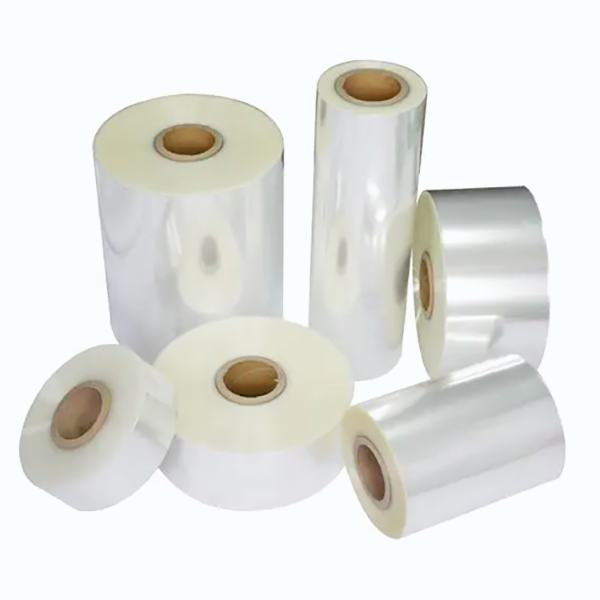
For many dry food and general overwrap applications, reviewing available BOPP film options can help clarify how printability, gloss, stiffness, and moisture resistance should be balanced.
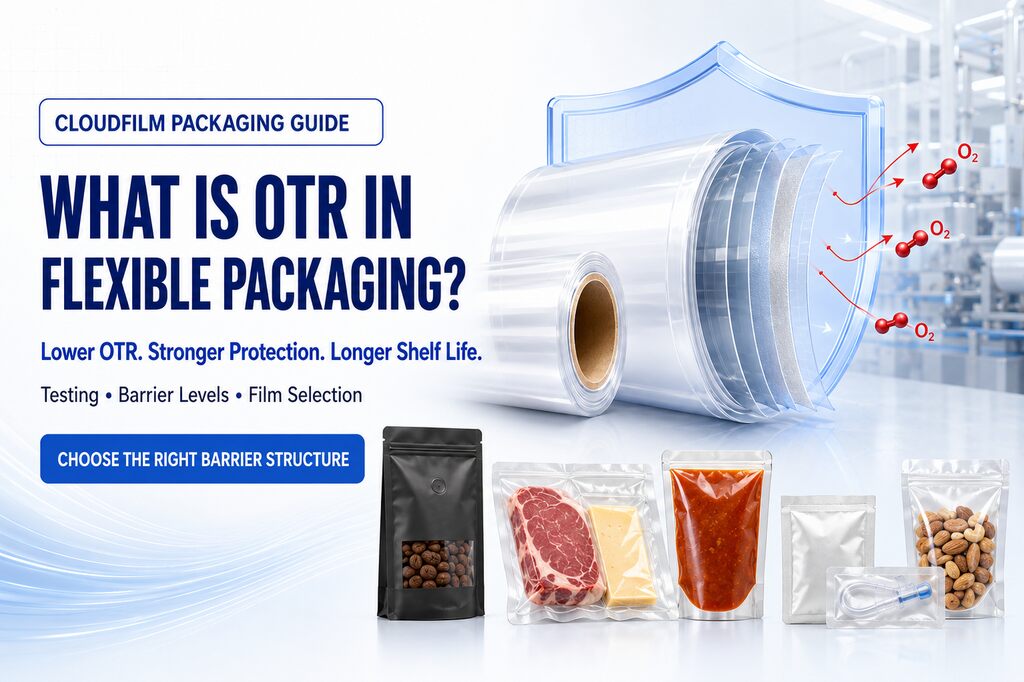
For products with higher aroma, oxygen, or moisture sensitivity, the conversation usually shifts toward high barrier films and more protective laminated structures.
Check Barrier Requirements Carefully
Barrier is one of the most misunderstood parts of packaging quality.
Some buyers ask for “good barrier” without defining whether the main concern is oxygen, moisture, aroma, grease, or light. Those are not the same thing.
A packaging supplier should be able to explain:
- what barrier is needed
- why it is needed
- how long that protection should last
- what test method or reference value is relevant
The right barrier level depends on the product. It also depends on target shelf life, distribution climate, and filling condition.
Review Sealing Performance Early
A package is only as good as its seal.
Weak seals, unstable hot tack, seal contamination sensitivity, or narrow sealing windows can all create trouble during mass production. Buyers should ask about seal layer design, recommended sealing temperature range, and the difference between lab sealing and real-line sealing.
This is especially important in food, frozen products, liquids, heavy products, and export shipments where seal failure quickly becomes a claim issue.
Do Not Ignore Printing And Appearance
Packaging quality is functional, but it is also visual.
Print registration, color consistency, ink adhesion, matte or gloss uniformity, scratch resistance, and haze all affect how the product is perceived. Premium products often fail commercially because the package does not look premium enough, even when the structure is technically acceptable.
If appearance matters, ask for visual references, print standards, and realistic tolerance discussion instead of assuming that every print job can look identical under every condition.
Confirm Mechanical Strength
Some packages need more than barrier and seal.
They also need puncture resistance, drop strength, flex-crack resistance, stiffness, or resistance to deformation during storage and transport. Heavy powders, frozen seafood, bone-in meat, and industrial parts all place different stresses on the package.
A good material choice should match the real abuse the pack will see after it leaves the factory.
Packaging Quality Looks Different In Different Applications
There is no single definition of “best packaging quality” for every product.
Dry Food And Snacks
For snacks, biscuits, bakery items, and similar products, buyers usually care about moisture barrier, printability, stiffness, and machine runnability.
This is where broader food packaging film discussions become useful, because the material must protect product freshness while still working efficiently on the packaging line.
Coffee, Tea, And Aroma-Sensitive Products
For coffee, tea, and similar products, aroma retention and oxygen barrier are major quality concerns.
Here, the quality discussion becomes more sensitive to structure design, degassing options, foil or transparent barrier choice, and long-term storage stability.
Frozen Foods, Meat, And Seafood
These products often require stronger seal integrity, puncture resistance, cold resistance, and in many cases vacuum performance.
A package can look fine when empty but fail after cold-chain handling, deep draw, or contact with hard product edges. That is why testing under realistic filled conditions matters.
Liquids And Refills
Liquid packaging quality is heavily connected to leak resistance.
Seal quality, drop performance, pouch design, and fitment compatibility all become critical. A beautiful liquid pouch is not a high-quality pouch if it leaks at the corner or around the spout.
Retail Pouches And Shelf-Ready Formats
For finished packs, quality is not only about the film. It is also about the format.
The wrong pouch format can create poor shelf presentation, low filling efficiency, or bad consumer experience even when the material itself is fine. That is why buyers often compare pouch design options first through a broader pouch types guide and then move into custom stand up pouches or other final formats.
Common Packaging Quality Problems And What They Usually Mean
When buyers know how to read defects, they make better sourcing decisions.
Weak Or Inconsistent Seals
This may indicate poor sealant design, unstable thickness, contamination during packing, or an overly narrow heat-seal window.
It may also mean the supplier tested under ideal lab conditions but not under realistic production conditions.
Delamination
This often points to adhesive problems, poor curing, poor surface treatment, incompatible structures, or process control issues during lamination.
Delamination is especially serious because it can affect both appearance and package function.
Curl And Poor Layflat
Curl can interfere with high-speed filling and pouch making.
It may be related to structure imbalance, tension history, coating differences, residual stress, or poor slitting control.
Pinholes Or Barrier Loss
This is a major issue in high-barrier packaging.
It may be caused by handling damage, poor film quality, abrasive contact, or unsuitable structure design for the product and transport environment.
Poor Print Registration Or Color Variation
This usually suggests unstable print control, insufficient process discipline, or poor communication of color standards.
For branded products, it quickly becomes a commercial problem, not just a technical one.
Blocking, Scratching, Or Surface Defects
These issues can reduce machine efficiency and damage shelf appearance.
They may also point to inadequate winding control, incomplete curing, or unsuitable surface design.
How Reliable Manufacturers Control Packaging Quality
Strong packaging quality normally comes from process discipline, not luck.
A reliable manufacturer or supplier should be able to explain quality control in a structured way.
Incoming Material Control
The first checkpoint is raw material and incoming substrate inspection.
If the base film, adhesive, ink, or resin is unstable, the downstream package will also be unstable.
In-Process Monitoring
Good converters monitor thickness, tension, registration, curing, coating performance, and slitting condition during production rather than waiting until the end.
This reduces the risk of hidden defects moving into finished stock.
Functional Testing
Serious quality control includes more than visual inspection.
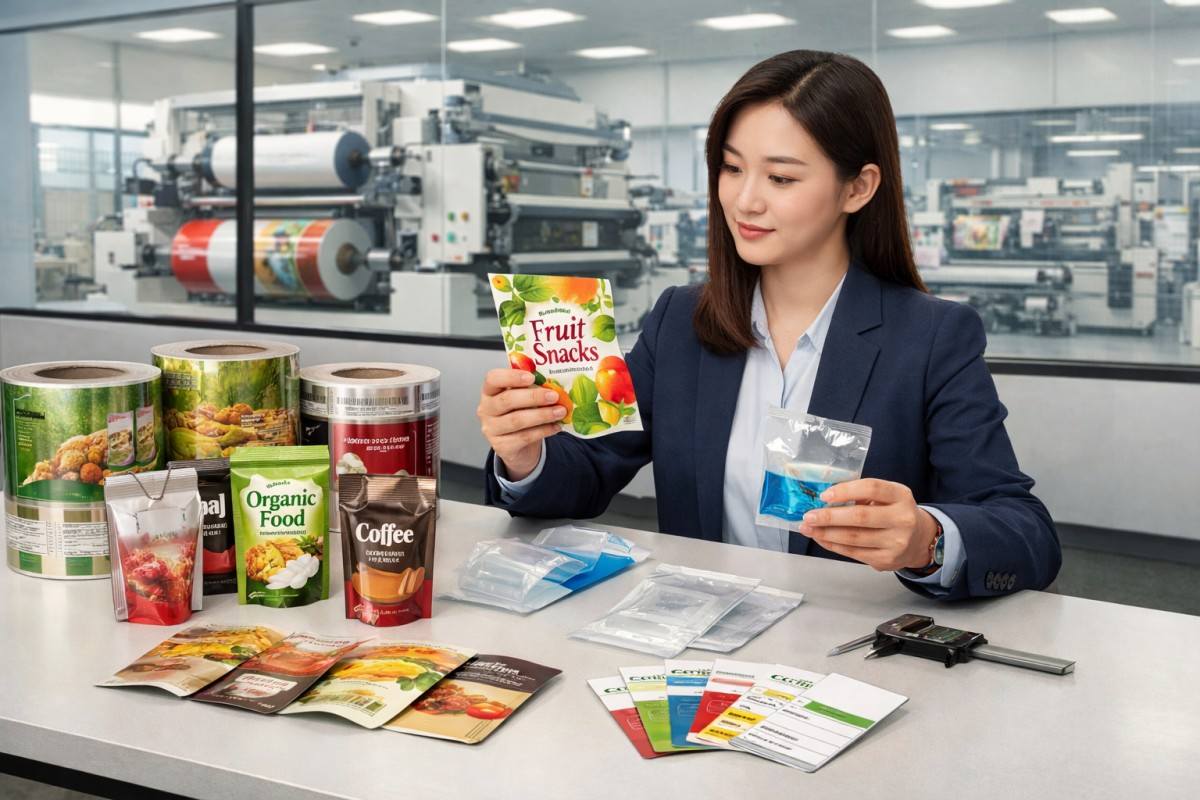
Depending on the product, testing may include seal strength, bond strength, leakage, burst, drop, puncture, coefficient of friction, barrier, migration-related documentation, and dimensional checks.
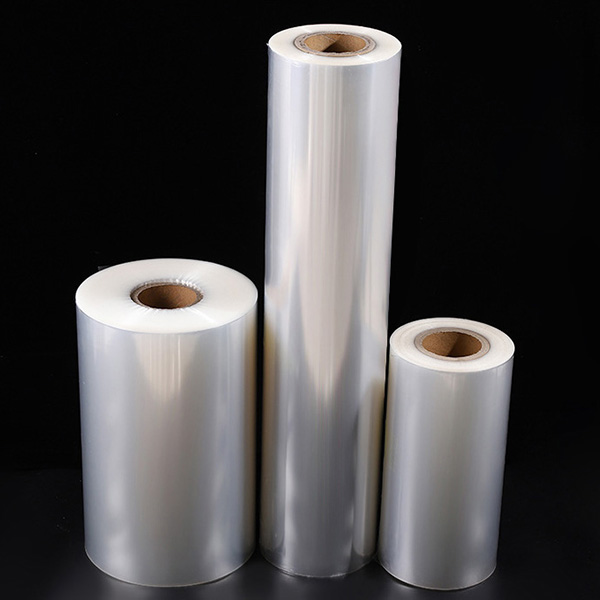
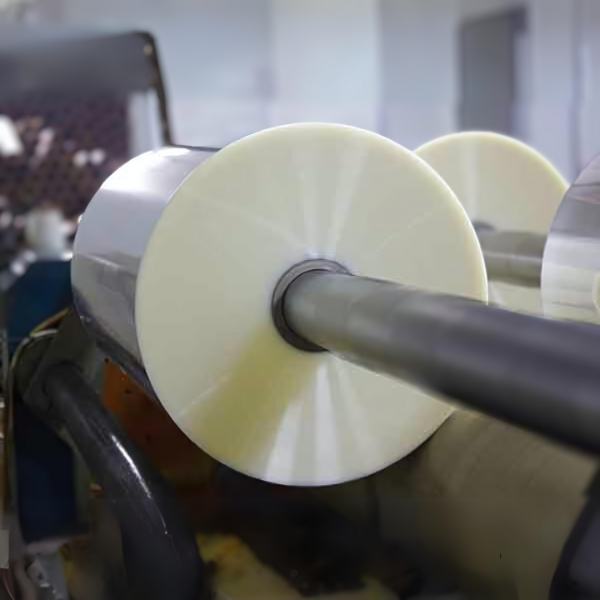
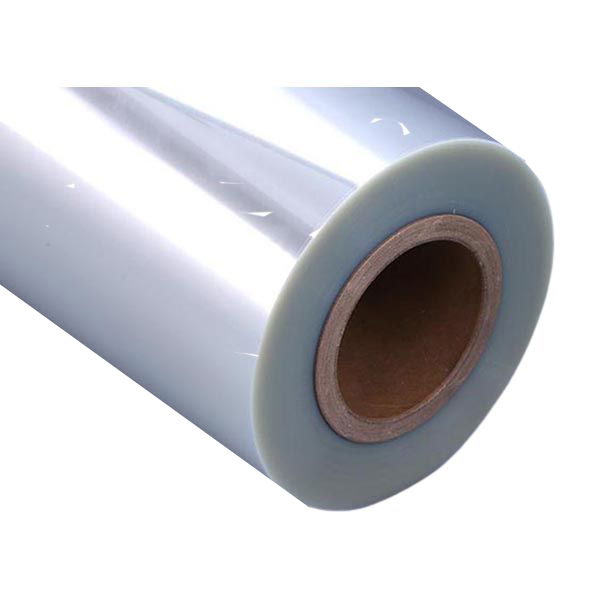
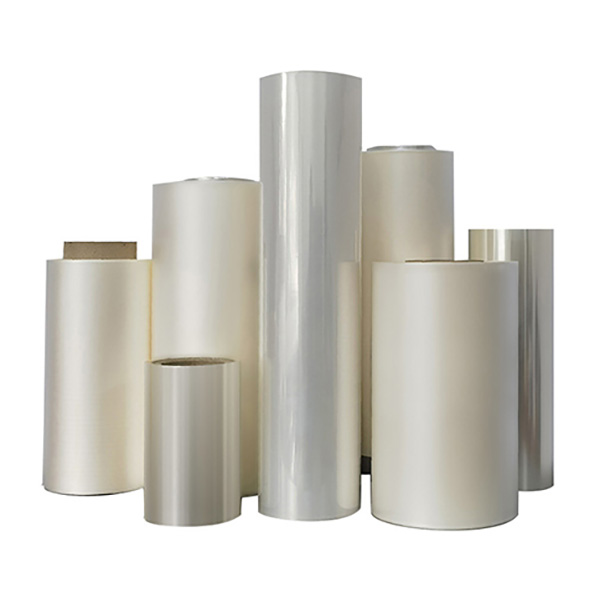
For buyers sourcing rollstock rather than pre-made bags, it is also useful to understand how packaging film rolls are controlled for traceability, runnability, and documentation.
Final Inspection And Traceability
Final inspection should confirm roll labeling, batch identity, dimensions, appearance, and packing condition.
When quality issues happen, traceability becomes essential. A supplier who cannot trace a batch clearly will struggle to solve complaints quickly.
How To Brief A Supplier So You Receive The Right Quality
Many packaging quality problems begin with incomplete quotations.
A buyer who sends only size and thickness often receives a price, but not necessarily the right package.
A better supplier brief should include:
- product type
- fill weight or volume
- required shelf life
- storage condition
- packaging machine type
- target structure, if known
- roll or pouch format
- print requirement
- sealing method
- special features such as zipper, spout, easy tear, or matte finish
- destination market and compliance expectation
- estimated order quantity and trial quantity
When this information is clear, supplier recommendations become much more accurate, and quality risk drops.
Packaging Quality And Sustainable Packaging Must Be Evaluated Together
Sustainable packaging should not be judged by marketing words alone.
A recyclable structure still needs the right seal, stiffness, printability, and barrier for the product. Otherwise, the package may become less practical even if the sustainability story is stronger.
That is why buyers should evaluate recyclable designs with the same seriousness they apply to traditional laminates. A broader guide to recyclable flexible packaging helps frame the logic, but project quality still depends on matching the structure to the application.
For many mono-PE developments, MDO PE film becomes part of the quality discussion because stiffness, optics, printability, and machine behavior must all be rebalanced when moving away from PET-based laminates.
The key point is simple: sustainable packaging still has to be good packaging.
Film Rolls Vs Premade Pouches: Quality Questions Are Not The Same
Buyers sometimes compare film rolls and finished pouches as if the quality checklist is identical.
It is not.
For rollstock, the focus is often on line behavior, print registration, winding quality, slitting, sealing response, and downstream conversion compatibility.
For pre-made pouches, the focus expands to pouch dimensions, side seals, bottom formation, zipper or spout function, leakage, burst, drop resistance, and shelf presentation.
A good supplier should know how quality priorities change between these two buying models.
What Smart Buyers Ask Before Approving A Packaging Supplier
Before approving a supplier, many experienced buyers ask questions such as:
- What tests do you perform on every batch and which ones are project-specific?
- Can you share standard tolerances for thickness, width, and print registration?
- How do you manage complaint investigation and corrective action?
- What is the difference between lab results and actual line performance in this structure?
- Can you support trial orders before mass volume?
- How stable is your quality from batch to batch?
- What documents can you provide for QA review?
These questions often reveal more about true packaging quality than a polished sales presentation.
FAQ: Packaging Quality In Flexible Packaging
1. What is the most important factor in packaging quality?
There is no single factor for every project.
For some products, barrier is most important. For others, seal strength, puncture resistance, machine performance, or appearance may matter more. The real priority depends on the product and supply chain.
2. Is thicker packaging always better quality?
No.
A thicker package can still be the wrong package. Structure design, material selection, and process control matter more than thickness alone.
3. Why can a good sample still lead to a bad bulk order?
Because sample quality and production consistency are not the same thing.
Bulk quality depends on repeatability, process control, curing, traceability, and stable raw material supply.
4. How should buyers compare two suppliers fairly?
Compare more than price.
Review structure logic, testing scope, tolerances, documentation, communication quality, and how each supplier handles risk.
5. What tests are commonly used to evaluate packaging quality?
Common tests include thickness, seal strength, bond strength, leakage, burst, puncture, drop, COF, barrier, and visual inspection.
The exact test plan depends on the product and application.
6. Why does seal quality fail so often in real production?
Because sealing is affected by temperature, pressure, dwell time, contamination, structure design, and machine condition.
A seal that works in a lab may fail on a fast filling line if the sealing window is too narrow.
7. What should buyers ask for before ordering printed pouches?
Ask for structure details, size tolerance, print standard, sealing information, testing plan, lead time, and shipping packing method.
For new projects, sample confirmation is highly valuable.
8. How can buyers reduce packaging complaint risk?
Define the application clearly, approve realistic samples, align on tolerances, confirm testing, and work with a supplier that has traceable production control.
9. Is recyclable packaging lower quality than traditional laminate packaging?
Not necessarily.
Some recyclable designs perform very well, but they still need application-based testing. Sustainability should not replace technical validation.
10. What makes a packaging manufacturer trustworthy?
Clear technical communication, realistic recommendations, stable process control, consistent batch quality, documented testing, and responsible after-sales support.
11. Should buyers focus on film quality or pouch quality?
Both.
Pouch quality is built on film quality, but pouch-making and final conversion also introduce their own quality risks.
12. What is the best way to start a new packaging project?
Start with a clear brief, realistic product information, and a supplier discussion focused on application, not just on price.

Conclusion
Packaging quality is not a decorative topic. It is a commercial, technical, and operational decision all at once.
The best packaging does more than look good. It protects the product, runs well on the line, holds up in transport, supports your brand, and stays consistent from sample to repeat order.
Buyers who define packaging quality clearly usually source better, test faster, and avoid more expensive mistakes later.
If a supplier can discuss structure logic, sealing behavior, test methods, pouch format, and batch consistency in a clear and practical way, that is usually a strong sign that the project is moving in the right direction.