When buyers search for an industrial plastic wrap roll, they are usually not looking for household cling film. In most B2B packaging and industrial contexts, this term refers to a broader family of plastic film rolls used for pallet wrapping, bundle protection, surface protection, automated packaging, and converting.
That is why this keyword has strong commercial value. A procurement manager may use it when sourcing pallet wrap for warehousing. A packaging engineer may use it when comparing stretch film and shrink film. A converter may use it when looking for a roll material that can be printed, laminated, slit, or turned into bags and pouches. An industrial manufacturer may also use it when they need protective film for metal, glass, plastic panels, or components.
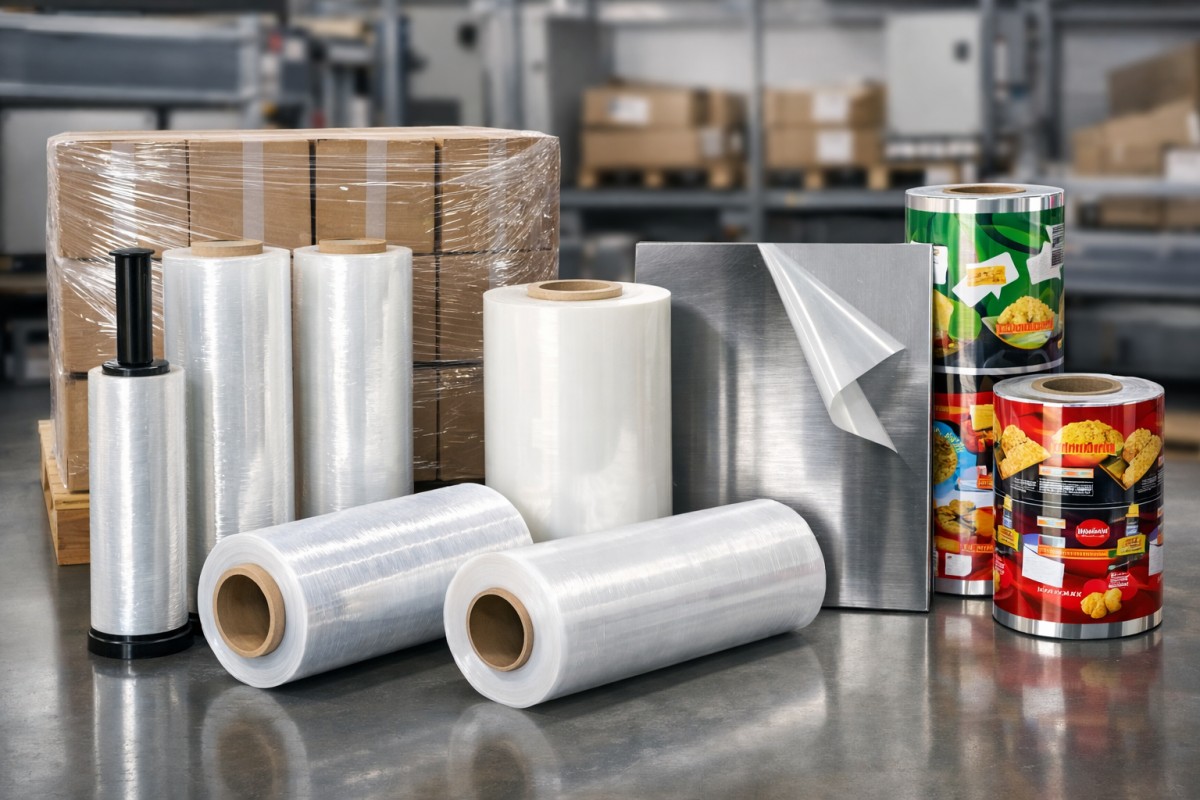
In practical terms, “industrial plastic wrap roll” is an umbrella phrase. Depending on the application, it may refer to stretch film, shrink film, PE film roll, protective film, or converting-ready packaging rollstock. If you also want a broader PE terminology reference, you can compare it with this guide to transparent polythene roll.
What Is an Industrial Plastic Wrap Roll?
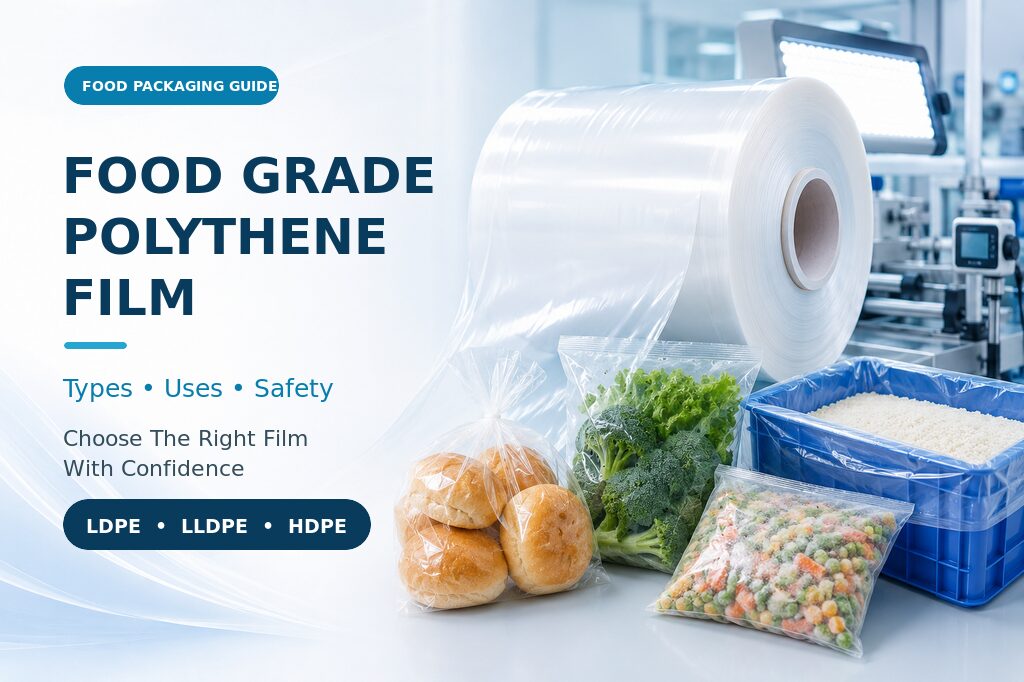
An industrial plastic wrap roll is a plastic film supplied in roll form for commercial or industrial use. It is usually made from polyethylene or other packaging-grade polymers, and it may be used as a single-layer wrap, a protective overwrap, or a converting substrate for more complex packaging structures.
Unlike consumer wraps, industrial film rolls are selected according to performance requirements such as stretch ratio, puncture resistance, sealing behavior, clarity, adhesion, shrink force, machine compatibility, and transport conditions. This is why professional buyers focus on the end use first, not only the material name.
For example, a warehouse may need a film that stretches well and stabilizes pallet loads. A beverage producer may need a film that shrinks tightly around multipacks. A metal processor may need a film that protects coated surfaces and peels off cleanly. A packaging plant may need a film roll that runs smoothly on high-speed FFS equipment and supports printing or lamination.
Why Industrial Buyers Use Plastic Wrap Rolls
Industrial plastic wrap rolls are widely used because they solve several problems at the same time.
First, they protect products from dust, moisture, scratches, and handling damage during storage and transport.
Second, they improve load stability. This is especially important for palletized goods, export shipments, and long-distance distribution where vibration and stacking pressure can cause damage.
Third, they support production efficiency. Film rolls are easier to run on manual, semi-automatic, or automatic equipment than many rigid packaging alternatives.
Fourth, they can reduce packaging cost when the correct structure and thickness are selected. The right film can help lower material usage, reduce breakage, improve line speed, and simplify logistics.
Finally, film rolls are highly customizable. Buyers can specify thickness, width, core size, roll length, color, additives, print design, and performance targets according to the project.

Main Types of Industrial Plastic Wrap Roll
1. Stretch Film for Pallet Wrapping
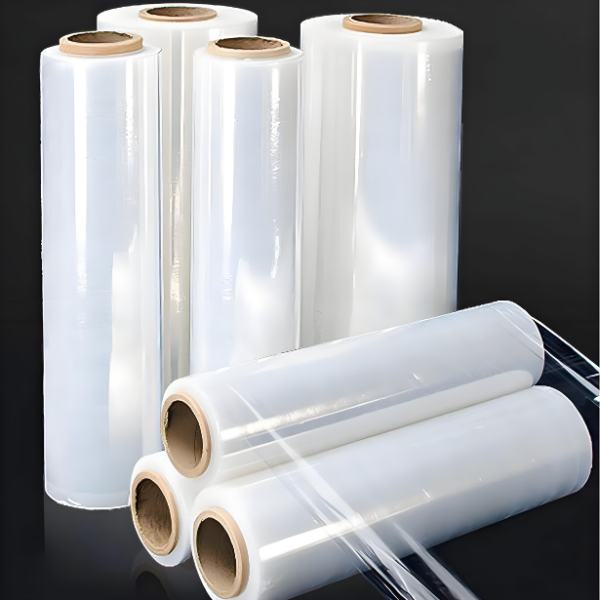
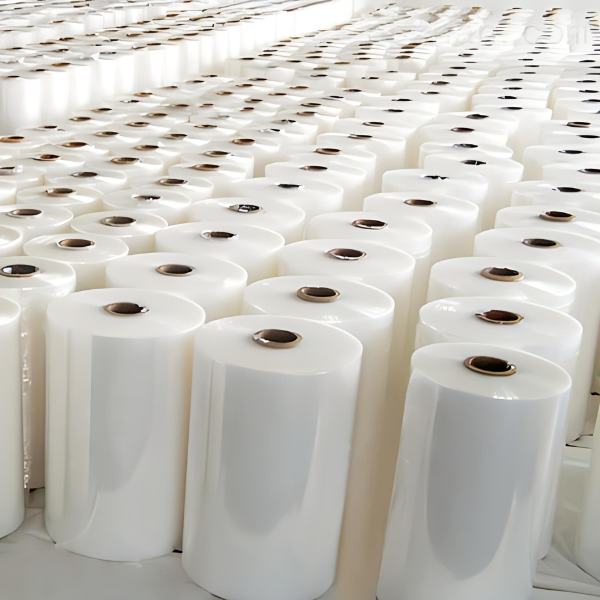
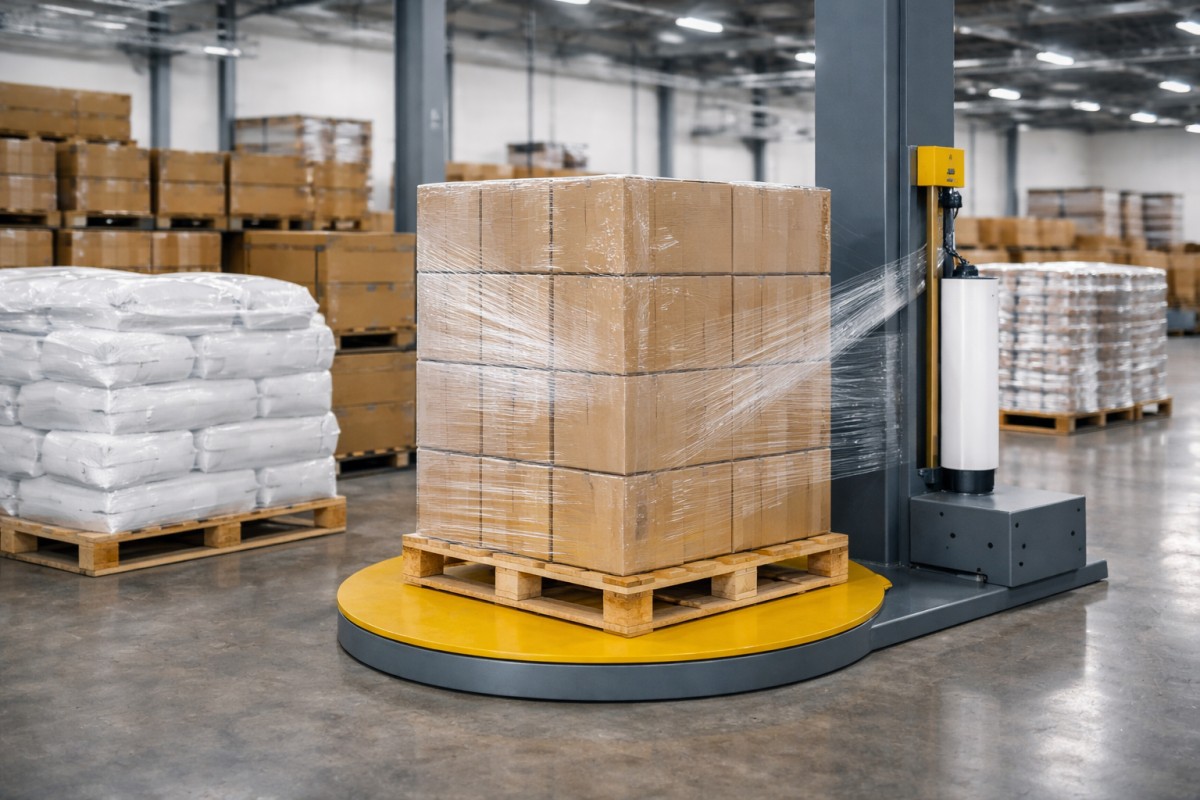
Stretch film is one of the most common meanings behind this keyword. It is a highly stretchable PE film used to wrap pallets, cartons, and industrial loads. Its main purpose is load stabilization.
A good stretch film should deliver strong holding force, stable unwinding, good puncture resistance, and consistent machine performance. It is commonly used in logistics centers, food and beverage distribution, chemical packaging, and industrial warehousing.
If your main application is pallet unitization, hand wrapping, or machine wrapping, a dedicated PE stretch film
page is the most relevant internal destination.
2. Shrink Film for Bundles and Multipacks
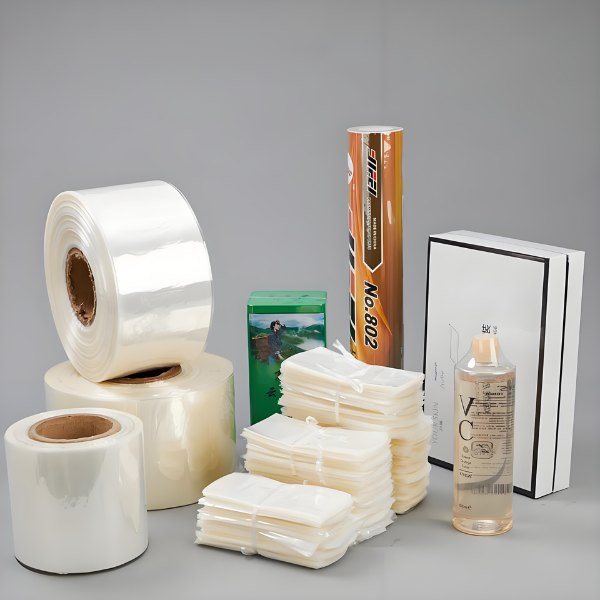
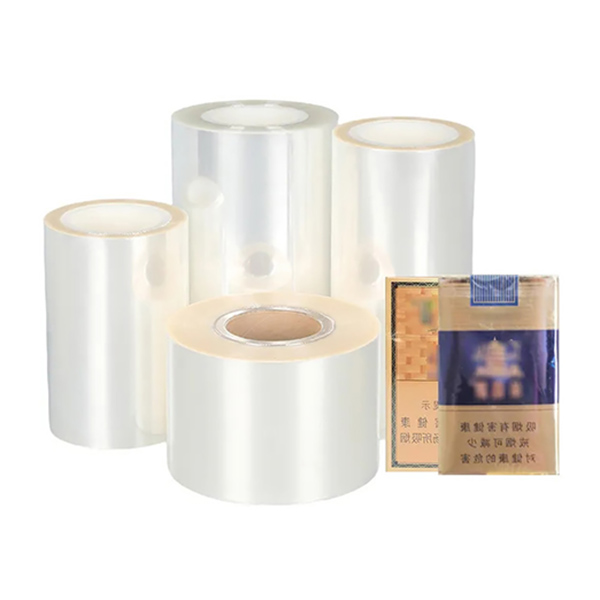
Shrink film is different from stretch film. Instead of being pulled tightly by stretching, it shrinks around the product when heat is applied. This makes it suitable for beverage packs, retail bundles, trays, and certain heavy-duty industrial wraps.
Shrink film is often chosen when a tighter, more form-fitting package is needed. It can also improve shelf appearance and bundle stability.
For multipacks, outer wrapping, and heat-applied unitization, PE shrink film is a more accurate match than stretch wrap.
3. PE Roll for General Packaging and Converting
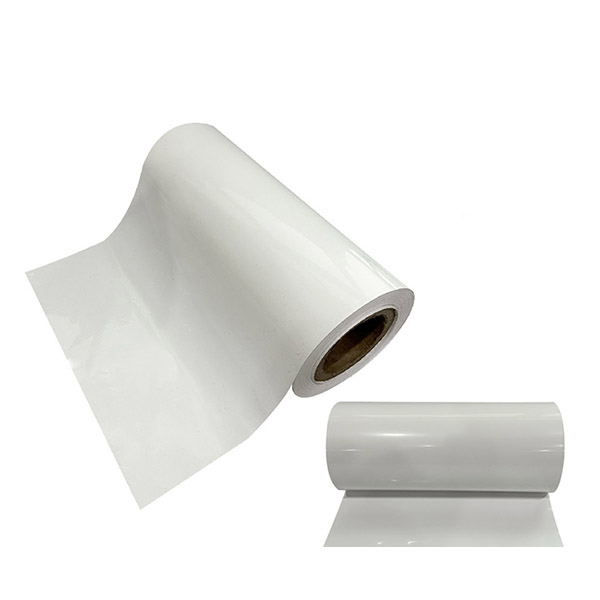
Sometimes the buyer does not need a finished stretch or shrink product. Instead, they need a base PE film roll that can be printed, slit, converted, perforated, or used as a liner, cover, or protective overwrap.
In those cases, the better product category is usually PE roll. This type of film is commonly used for packaging, surface protection, construction covers, agricultural covers, and simple industrial sheeting.
It is especially useful when the buyer wants flexibility in downstream processing.
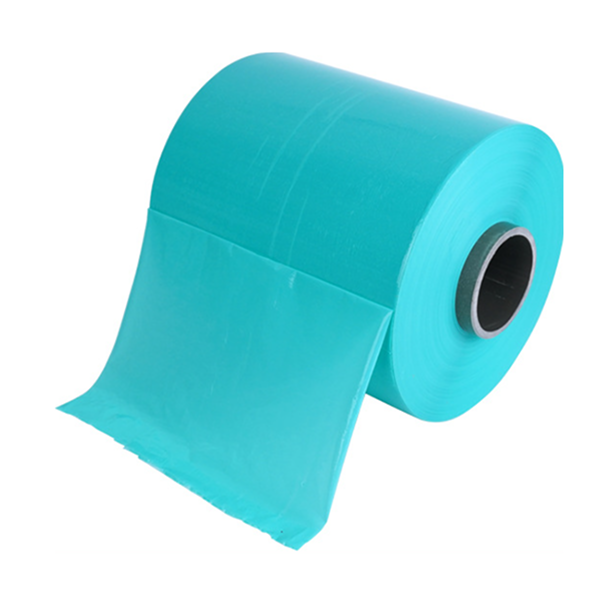
4. Protective Film for Surface Protection
Not every industrial plastic wrap roll is for packaging finished goods. Many are used to protect surfaces during manufacturing, fabrication, storage, and transit.
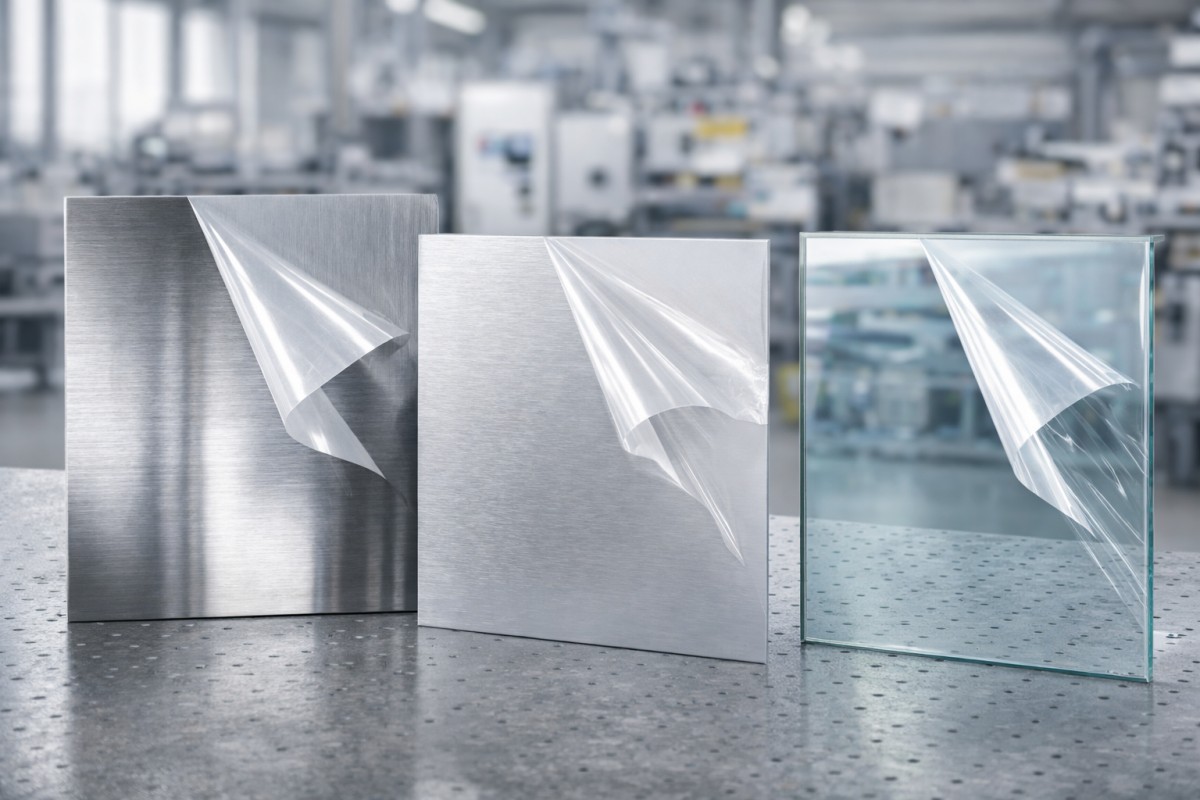
Typical substrates include stainless steel, aluminum, plastic sheets, glass, appliance panels, and electronic parts. In these applications, peel strength and clean removal are just as important as film strength.
For this use case, PE protective film is the more precise solution because it is designed around adhesion control, clean removal, and surface compatibility.
5. Packaging Film Roll for Automated Packing
In flexible packaging, the term may also refer to a converting-ready packaging film roll
used on VFFS, HFFS, flow-wrap, or other automatic equipment.
This is common in food, pharmaceutical, personal care, and industrial parts packaging. In such cases, the roll may be a mono-material film or a laminated structure designed for printability, barrier, stiffness, and sealing performance.
If the project also needs printed webs for automated packaging lines, roll stock film becomes an important related page.
6. Stretch Hood Film for Heavy Pallets and Outdoor Storage
For demanding pallet packaging, some buyers should not stop at stretch film. They should also compare stretch hood film, especially for heavy products, outdoor storage, chemicals, bricks, resin bags, or applications where weather resistance matters.
Stretch hood systems can provide excellent load stability, moisture protection, and barcode visibility while reducing the need for heat.
How to Choose the Right Industrial Plastic Wrap Roll
The correct film depends on the job. Many sourcing mistakes happen because buyers use the same generic term for very different applications.
Start with the application.
If you need to stabilize pallets, stretch film is usually the first option.
If you need tight bundle wrapping with heat, shrink film is usually more suitable.
If you need to protect a surface from scratches or residue, protective film is the better fit.
If you need a film that will be printed, laminated, slit, or converted into bags, you are likely looking for packaging film roll or roll stock rather than a simple wrapping film.
Next, define the required performance.
You should confirm:
- film material or structure
- thickness range
- roll width
- core size
- maximum roll diameter
- hand use or machine use
- shrink application or stretch application
- required adhesion, cling, or release force
- puncture resistance and tear behavior
- transparency, haze, or color
- food contact or industrial contact requirements
- whether printing, lamination, or perforation is needed
If you want a broader technical reference before sending an RFQ, this guide to PE packaging film
is a useful support page.
Industrial Plastic Wrap Roll by Application
Warehousing and Logistics
This is the most common B2B search intent. Buyers usually need pallet stability, dust protection, low break rates, and smooth machine running. Stretch film, shrink film, and stretch hood film are the core options here.
Food and Beverage Distribution
For beverage trays, secondary bundles, and automated FFS projects, buyers may move beyond simple pallet wrap and evaluate shrink film, packaging film roll, or printed rollstock. If branding matters, print method and converting flow also matter, which is why a buyer-focused roll to roll printing guide can strengthen topical relevance inside the site.
Industrial Components and Hardware
Screws, bearings, electrical parts, molded parts, and metal accessories often need moisture protection, corrosion reduction, dust control, or scratch protection. Depending on the exact product, the right solution may be PE roll, packaging film roll, or protective film.
Building Materials and Heavy Loads
Bricks, cement bags, resin bags, insulation products, and other heavy loads may require stronger pallet packaging systems. Here, buyers should compare stretch film, shrink film, and stretch hood rather than assuming one film type fits all jobs.
Surface Protection Manufacturing
If the real issue is protecting finish quality on glass, metal, acrylic, or electronics, the film must be selected around adhesion, substrate compatibility, and residue-free removal.
Stretch Film vs Shrink Film vs Protective Film vs Rollstock
This is one of the most important distinctions for buyers.
- Stretch film is best for pallet load stability.
- Shrink film is best for heat-applied, tight bundle wrapping.
- Protective film is best for keeping surfaces clean and undamaged.
- PE roll is best when you need a flexible base film for converting or simple wrapping.
- Packaging film roll or roll stock is best when the film must run on packaging machinery and may also need printing, lamination, and sealing performance.
A reliable manufacturer or supplier should help you compare these options instead of pushing one generic product for every inquiry.
What to Ask a Manufacturer or Supplier Before Buying
When you contact a film manufacturer, supplier, or exporter, do not send only a product name. A better inquiry usually includes:
your application, current film type, target thickness, width, machine type, product weight, packaging method, pain points, and expected order volume.
For example, saying “we need industrial plastic wrap roll” is too broad.
A much stronger RFQ would be:
“We need machine-grade PE stretch film for 1,000 × 1,200 mm pallets, average load 700 kg, export use, current issue is corner puncture, monthly demand 8 tons.”
That level of detail leads to faster technical matching, more accurate pricing, and fewer trial errors.
Sustainability and Material Simplification
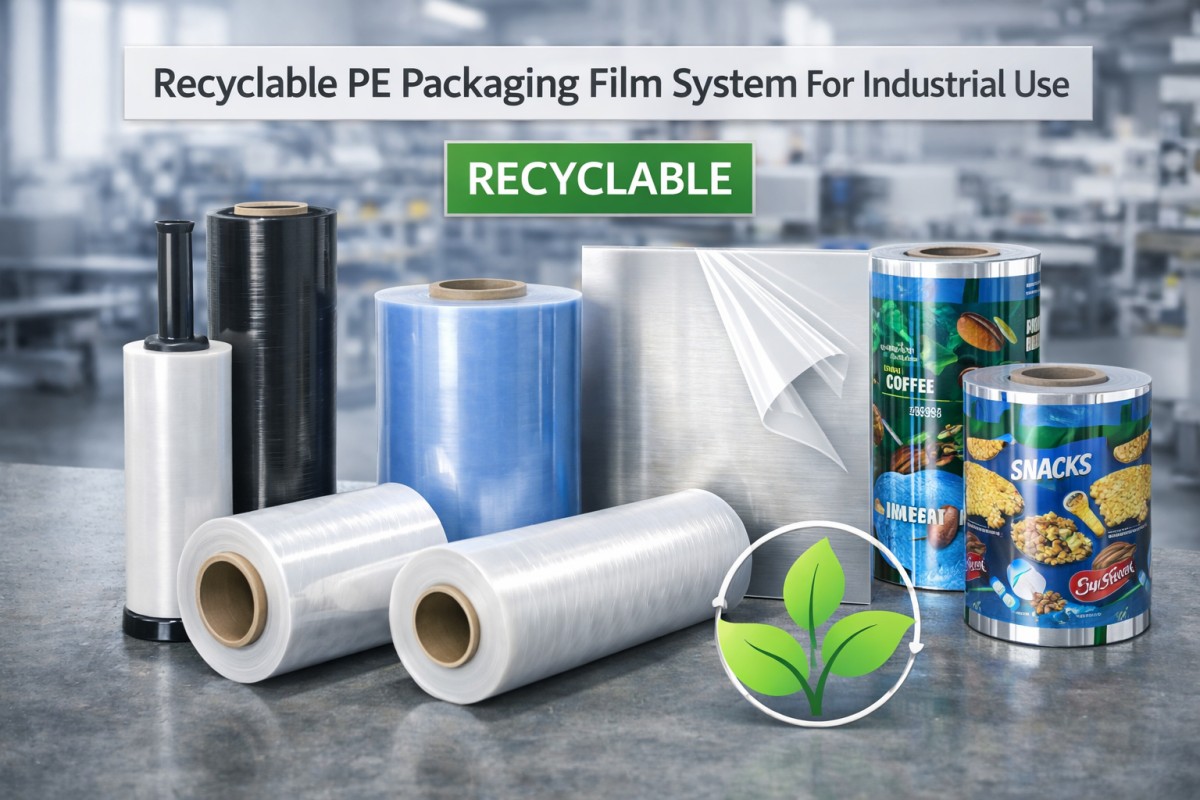
For many buyers, industrial film selection is no longer only about performance and price. It is also about material simplification, downgauging, and recyclability.
That does not mean every industrial plastic wrap roll is automatically recyclable in every market. Local collection and recycling systems still matter. But it does mean buyers are increasingly comparing mono-material PE systems for primary, secondary, and tertiary packaging.
If sustainability is part of your project brief, a related internal resource on recyclable flexible packaging can help connect this topic with broader circular packaging discussions.
Common Buying Mistakes
One common mistake is using “stretch wrap” and “shrink wrap” as if they mean the same thing. They do not.
Another mistake is choosing film only by price per roll instead of cost per protected unit. A cheaper film that breaks often, wraps poorly, or causes downtime may cost more in the end.
A third mistake is ignoring the machine. Hand film, machine film, hooding film, and converting rollstock all behave differently in production.
A fourth mistake is skipping trial testing. Especially for custom projects, sample rolls and line tests help confirm fit before bulk orders.
FAQ About Industrial Plastic Wrap Roll
1. What does industrial plastic wrap roll usually mean?
It usually refers to commercial plastic film rolls used for pallet wrapping, shrink bundling, surface protection, or automated packaging rather than household food wrap.
2. Is industrial plastic wrap the same as stretch film?
Not always. Stretch film is one important type, but the broader term may also include shrink film, protective film, PE roll, or packaging rollstock.
3. What material is most common for industrial wrap rolls?
Polyethylene is the most common family, especially for stretch, shrink, and many protective or converting applications.
4. How do I know whether I need stretch film or shrink film?
Choose stretch film for pallet stabilization without heat. Choose shrink film when you need heat-applied, tight wrapping around bundles or multipacks.
5. Can industrial plastic wrap roll be used for food packaging?
Some types can, but not all. Food projects usually require food-contact suitable materials, proper structure design, and application-specific technical confirmation.
6. What thickness should I choose?
There is no single standard answer. Thickness depends on load weight, puncture risk, machine setup, product shape, and whether the film is used for stretch, shrink, protection, or conversion.
7. What information should I send to get a quote?
Share the application, product type, target thickness, roll width, core size, machine type, current issues, and estimated quantity.
8. Can I request custom roll width and length?
Yes. Most industrial buyers need customized roll width, roll length, and performance rather than only standard stock sizes.
9. Is printed industrial film available?
Yes. Some projects require printed rollstock, branded shrink film, or marked protective film for handling instructions and brand presentation.
10. Is protective film the same as packaging film?
No. Protective film is designed mainly for surface protection and controlled peel behavior, while packaging film is designed around wrapping, sealing, barrier, or machine performance.
11. Can one supplier provide all these film types?
A full-range supplier often can. This is valuable because it simplifies purchasing, technical communication, and quality alignment across multiple packaging layers.
12. Should I ask for samples before bulk order?
Yes. Sample rolls or trial material are strongly recommended, especially when you are changing suppliers, downgauging, or testing a new machine setup.
13. Are these films recyclable?
Some are designed within recyclable PE or PP material families, but real recyclability depends on local collection systems, contamination, structure design, and end-market conditions.
14. What industries use industrial plastic wrap rolls most?
Warehousing, logistics, food and beverage, chemicals, building materials, electronics, metal processing, household goods, and flexible packaging conversion.
15. What makes a good industrial plastic wrap roll supplier?
A strong supplier should understand film structure, application matching, machine compatibility, export packaging, quality consistency, sampling, and commercial communication, not only price.
Final Thoughts
Industrial plastic wrap roll is not a single product. It is a commercial search term that covers several film families used across packaging, logistics, protection, and industrial processing.
That is exactly why this topic is valuable for SEO and AI visibility. It lets you rank for a broad buyer term while guiding users toward the right sub-solution: stretch film, shrink film, PE roll, protective film, packaging film roll, roll stock, or stretch hood.
For a China-based film manufacturer and exporter with a broad PE and flexible packaging portfolio, this kind of page can attract both informational traffic and inquiry-ready buyers—especially when the content explains the differences clearly and helps users move from a vague search term to a precise RFQ. CloudFilm’s current site structure already supports that journey through its homepage, PE film portfolio, packaging film roll, roll stock, stretch, shrink, protective, and sustainability content.