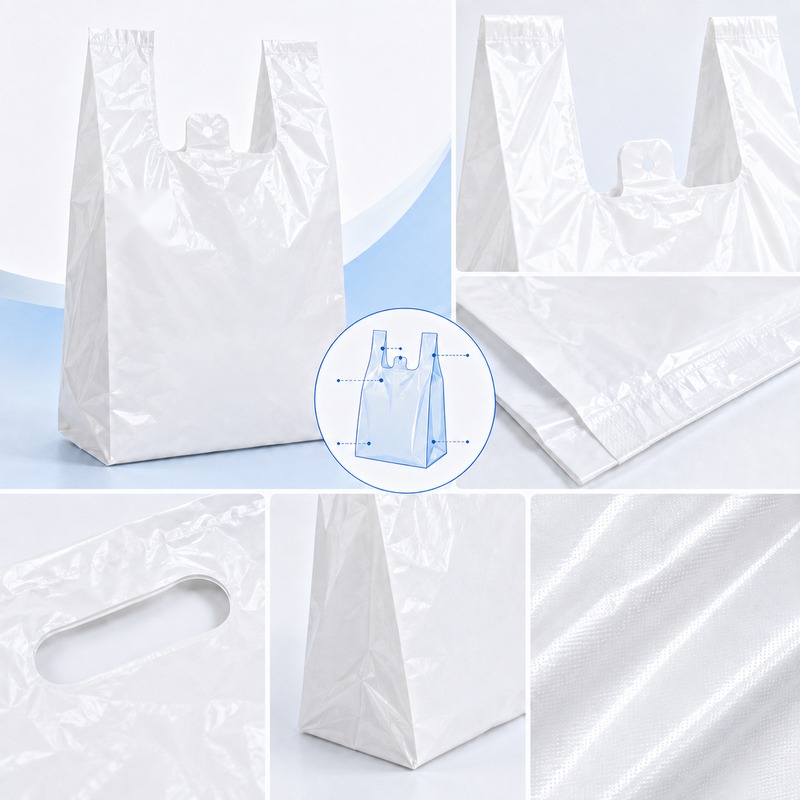
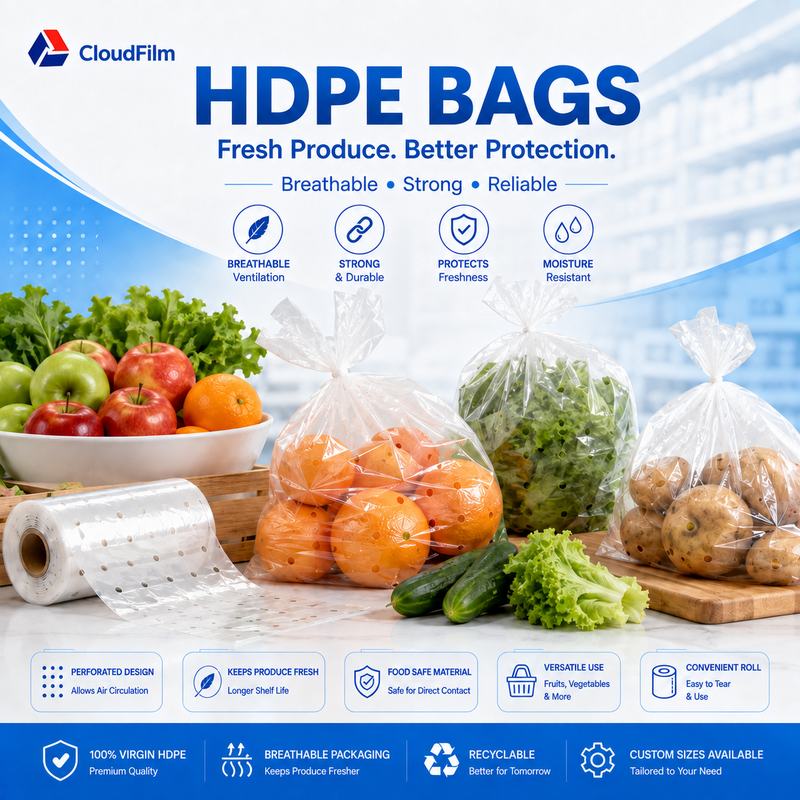
HDPE Bag Quick Facts
Material
High-density polyethylene, commonly abbreviated as HDPE.
Main Characteristics
Lightweight, stiff, moisture-resistant, heat-sealable, and capable of providing good tensile strength.
Common Bag Types
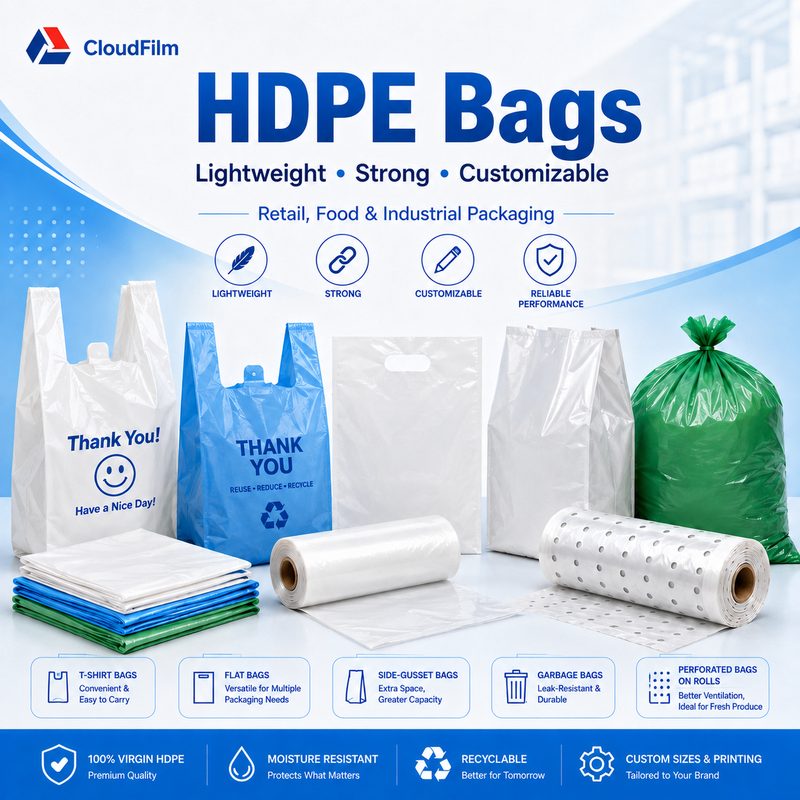
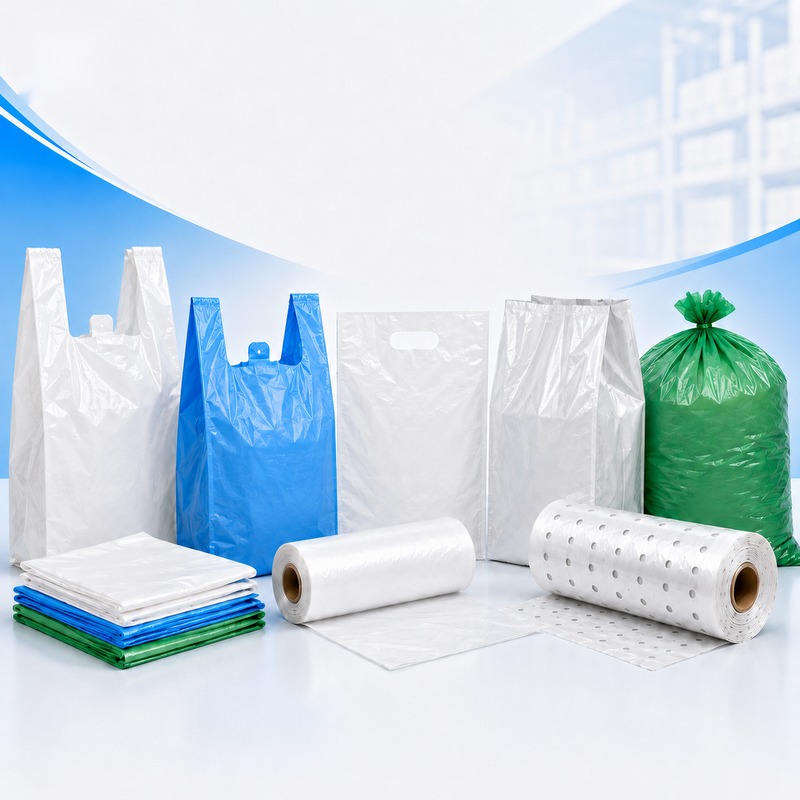
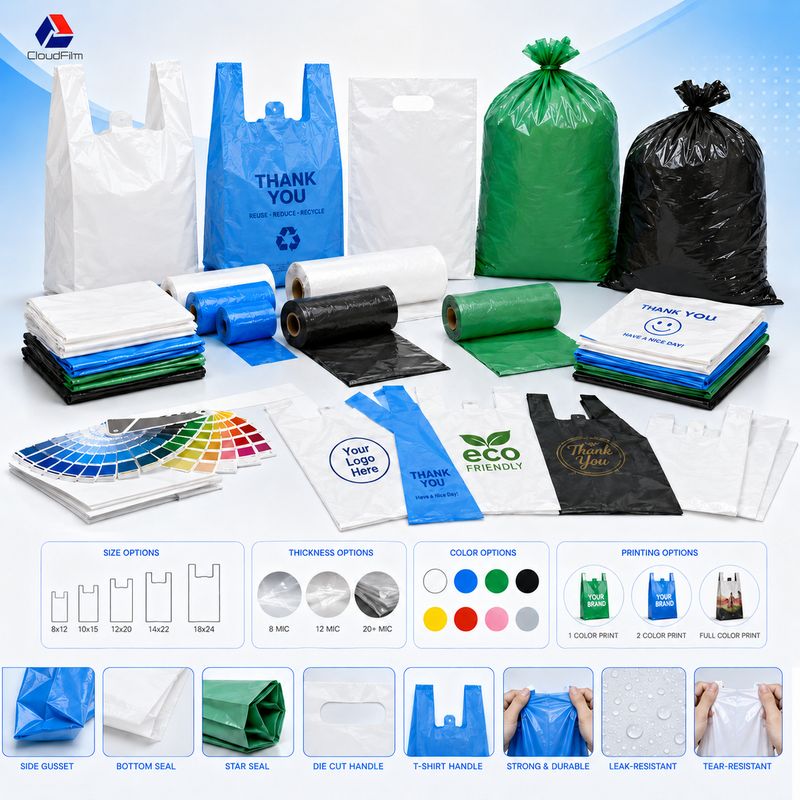
Flat bags, T-shirt bags, handle bags, side-gusset bags, garbage bags, liner bags, and perforated bags on rolls.
Common Applications
Retail, grocery, food ingredients, waste collection, industrial components, agriculture, and protective packaging.
Available Customization
Size, thickness, color, opacity, printing, gusset, perforation, vent hole, handle, sealing, and outer packing.
Supply Options
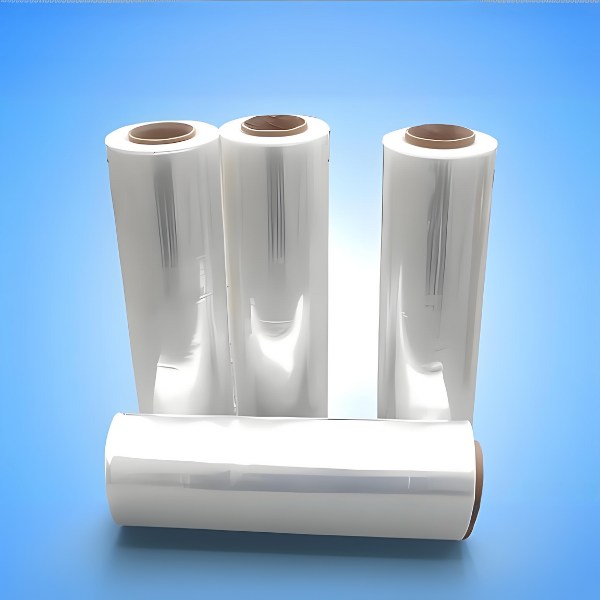
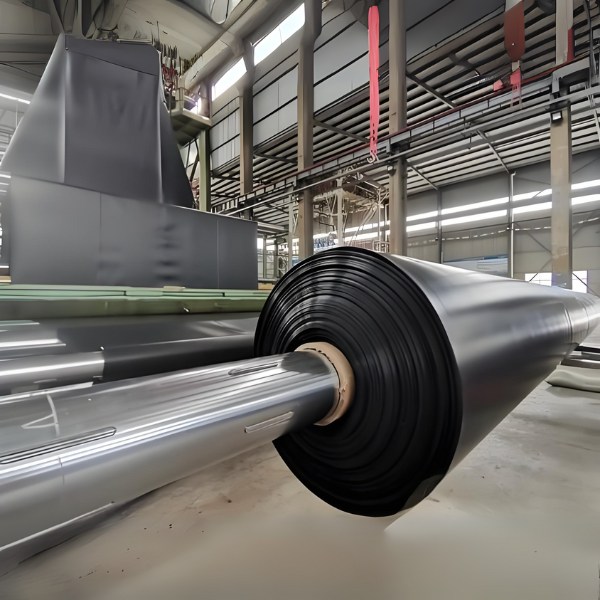
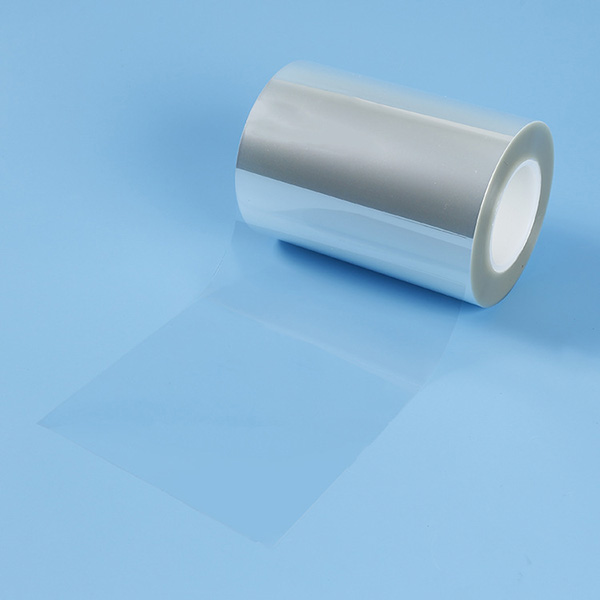
Finished bags, bags on rolls, loose-packed bags, and HDPE film rolls for converters.
HDPE Bag Types and Selection
Flat HDPE Bags
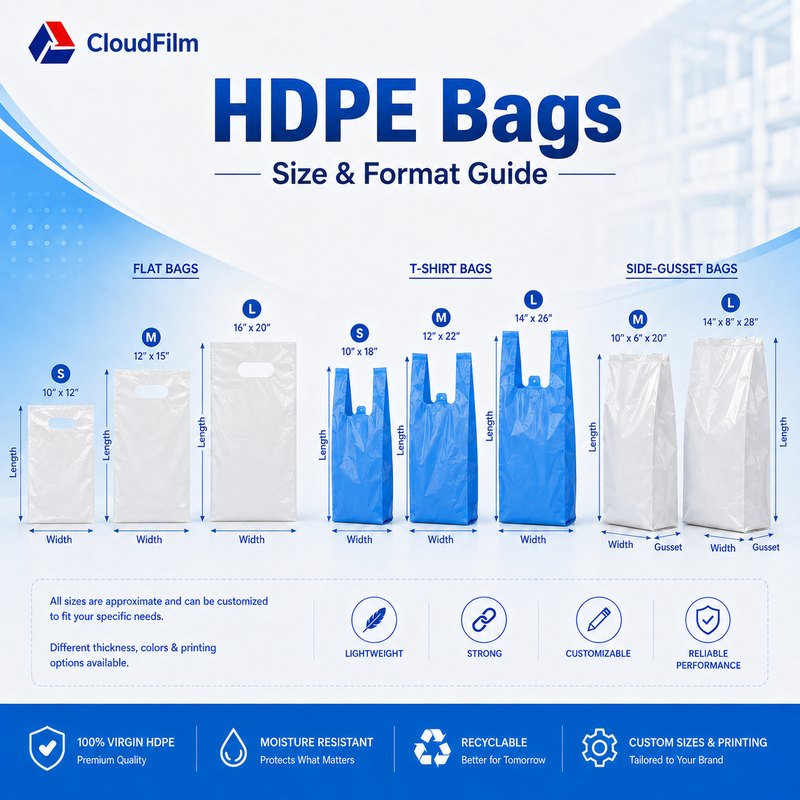
Simple bags without side or bottom gussets. They are suitable for parts, dry goods, food ingredients, lightweight retail products, and general protective packaging.
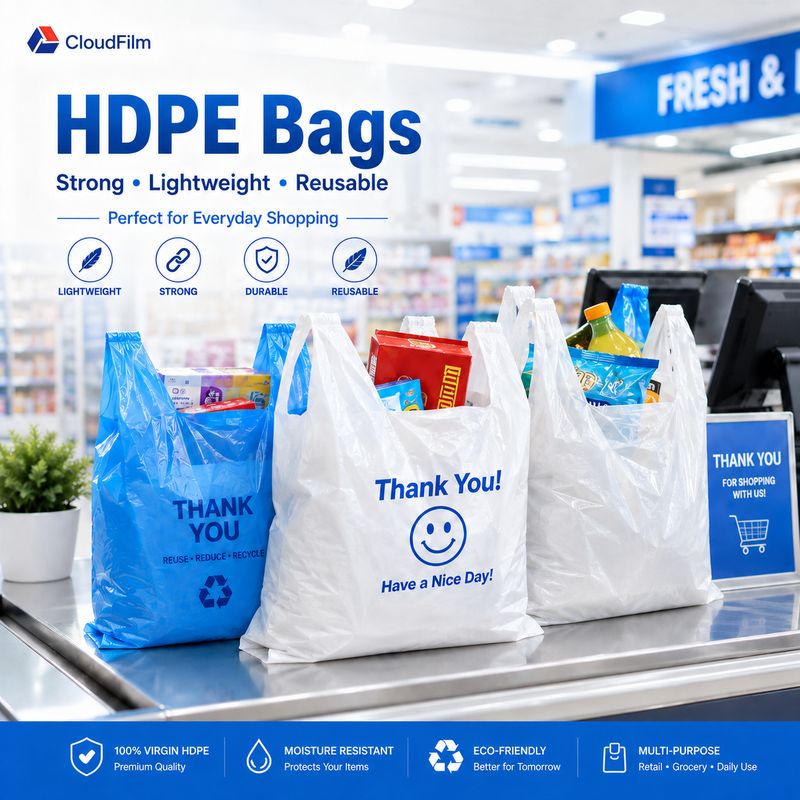
T-Shirt and Handle Bags
Designed with integrated handles for convenient carrying. They are widely used by supermarkets, grocery stores, pharmacies, takeaway businesses, and retailers.
Side-Gusset HDPE Bags
Side folds expand when the bag is filled, increasing usable capacity. They are suitable for bulky products, box liners, agricultural goods, and irregularly shaped contents.
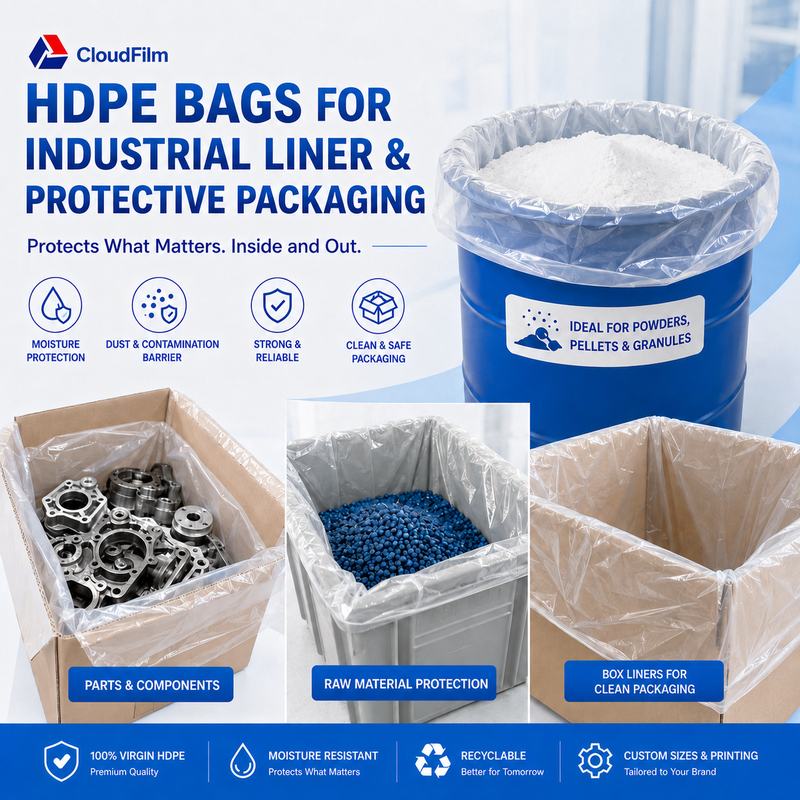
HDPE Liner Bags
Used inside cartons, drums, bins, crates, and bulk containers to protect products from dust, moisture, leakage, and external contamination.
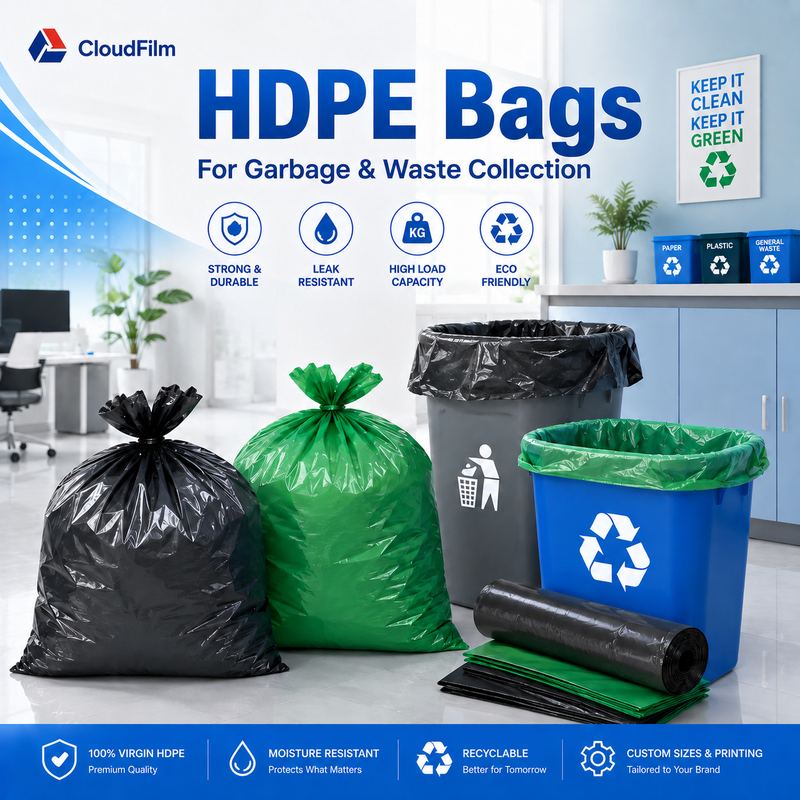
HDPE Garbage Bags
Developed according to bin size, waste type, load, puncture risk, and collection method. Color coding and printed identification can be added where required.
Perforated Bags on Rolls
Bags are connected on a roll with perforated tear lines, allowing users to remove one bag at a time. This format is suitable for produce, waste collection, food service, and daily packaging.

How to Choose the Right HDPE Bag
1. Confirm the Packed Product
Explain whether the bag will contain food, powder, waste, garments, hardware, agricultural goods, chemicals, or industrial components.
2. Confirm Filling Weight and Product Shape
Weight determines carrying strength, while sharp corners and irregular shapes influence puncture and tear requirements.
3. Select the Bag Format
Choose between flat, gusseted, handle, T-shirt, liner, garbage, or perforated roll bags according to filling and handling methods.
4. Define Dimensions Correctly
Provide the flat width, length, gusset depth, handle dimensions, opening direction, and usable internal size.
5. Confirm Thickness and Performance
Do not select thickness alone. Resin formulation, sealing, drop strength, puncture resistance, and carrying requirements should be considered together.
6. Define Printing and Identification
Provide the number of print colors, artwork, logo position, warning text, barcode, and required color standards.
7. Confirm Regulations
State the destination country and whether the bag requires food-contact, medical, recycling, labeling, or restricted-substance documentation.
8. Provide Expected Order Volume
Monthly or annual demand helps CloudFilm select a practical production method, MOQ, packing format, and quotation basis.