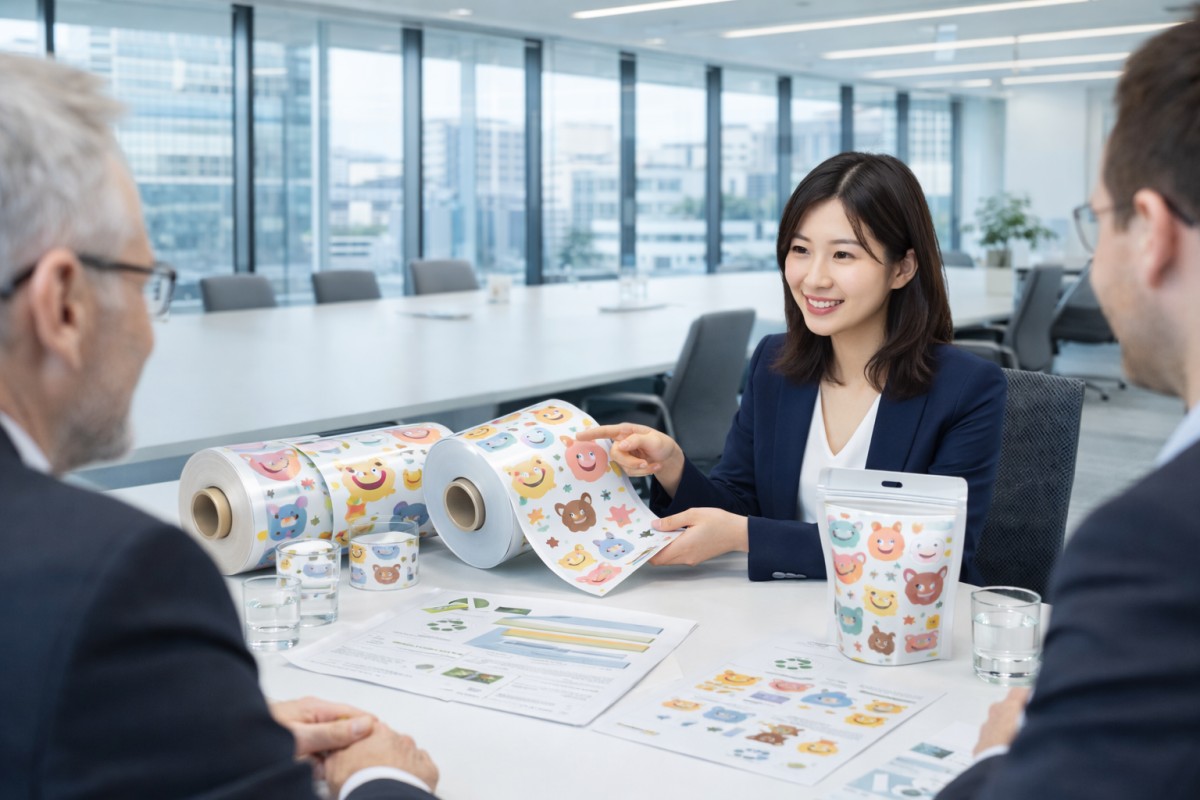
In many industries, packaging is no longer “just a bag” or “just a film.” It is a silent salesperson on the shelf, a logistics tool in the warehouse, and a risk-control shield in long-distance shipping. For brand owners, importers and packaging engineers, the real challenge is not finding packaging in general—but finding custom packaging solutions that truly match your product, market position and production lines.
As a specialized flexible packaging manufacturer and supplier, CloudFilm sees the same pattern again and again: companies stay with “good-enough” stock packaging for too long, leaving money on the table in branding, efficiency and sustainability. Well-designed custom packaging can often achieve three wins at the same time: stronger shelf impact, lower total cost and smoother operations.
This guide is written for B2B buyers, packaging engineers, distributors and brand owners who want to work directly with a professional packaging manufacturer instead of only trading companies. It will walk you step by step—from defining your brief, selecting formats and materials, all the way to working with a long-term custom packaging partner.
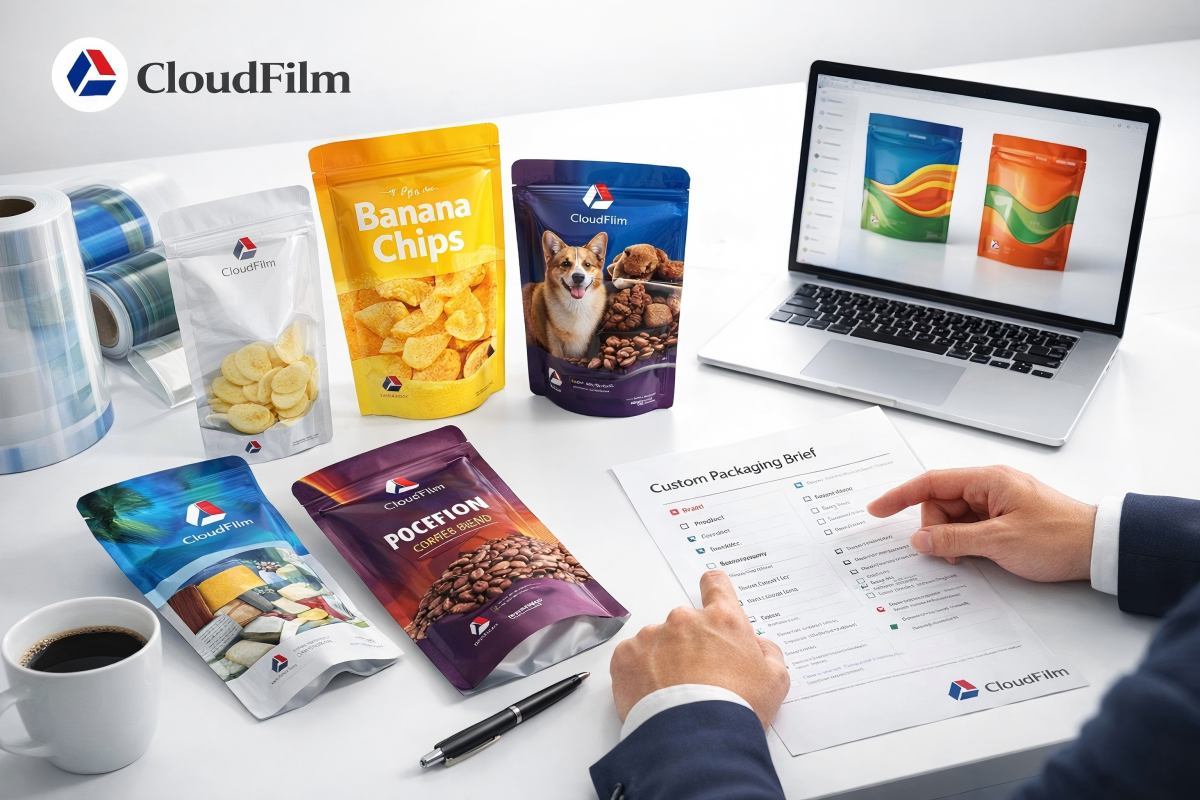
Why Custom Packaging Solutions Matter For Modern Brands
For many brands, packaging is one of the few touchpoints that every single customer will see and touch. When it is designed as a custom solution, not just a generic bag, it can drive value in four key dimensions:
1. Brand Differentiation And Shelf Impact
- Bespoke formats (stand-up pouches, spout pouches, shaped bags, high-clarity trays) help your products stand out in crowded aisles.
- Tailored printing, matte / glossy contrasts, metallic effects and transparent windows create a clear “brand language” that is hard to copy.
- Consistent structural choices across SKUs make your portfolio look unified and premium, which is especially important for new launches and rebranding projects.
2. Product Protection And Performance
- Sensitive products—such as coffee, pet food, frozen meat, sauces, cosmetics, supplements and pharmaceuticals—need specific barriers against oxygen, moisture, light or aroma loss.
- Custom packaging allows you to choose the right laminates, seal layers and thickness for your real-world conditions instead of “one-size-fits-all” films.
- This reduces complaints, returns and waste caused by broken seals, leaks, freezer burn or off-flavors.
3. Operational Efficiency And Logistics
- When film structures, widths and roll lengths are tailored to your machines, you reduce changeover time, downtime and material waste.
- Optimized pouch sizes and film gauges can cut weight and cube, allowing more units per carton or pallet and saving on freight.
- For large B2B buyers, a single custom solution can often replace several overlapping SKUs, simplifying inventory and planning.
4. Sustainability And Compliance
- Retailers and regulators are pushing for mono-material packaging and recyclability.
- Custom packaging solutions allow you to migrate from mixed materials to PE-only or PP-only structures step by step, while maintaining performance.
- You can also design for specific markets’ recycling streams and labeling rules, reducing compliance risk when exporting.
A professional packaging manufacturer or supplier will not only produce the film or pouches; they will also help you convert vague requirements (“I need something more premium and eco-friendly”) into a technical specification that your operations team can confidently run.
Step 1: Clarify Your Packaging Goals And Constraints
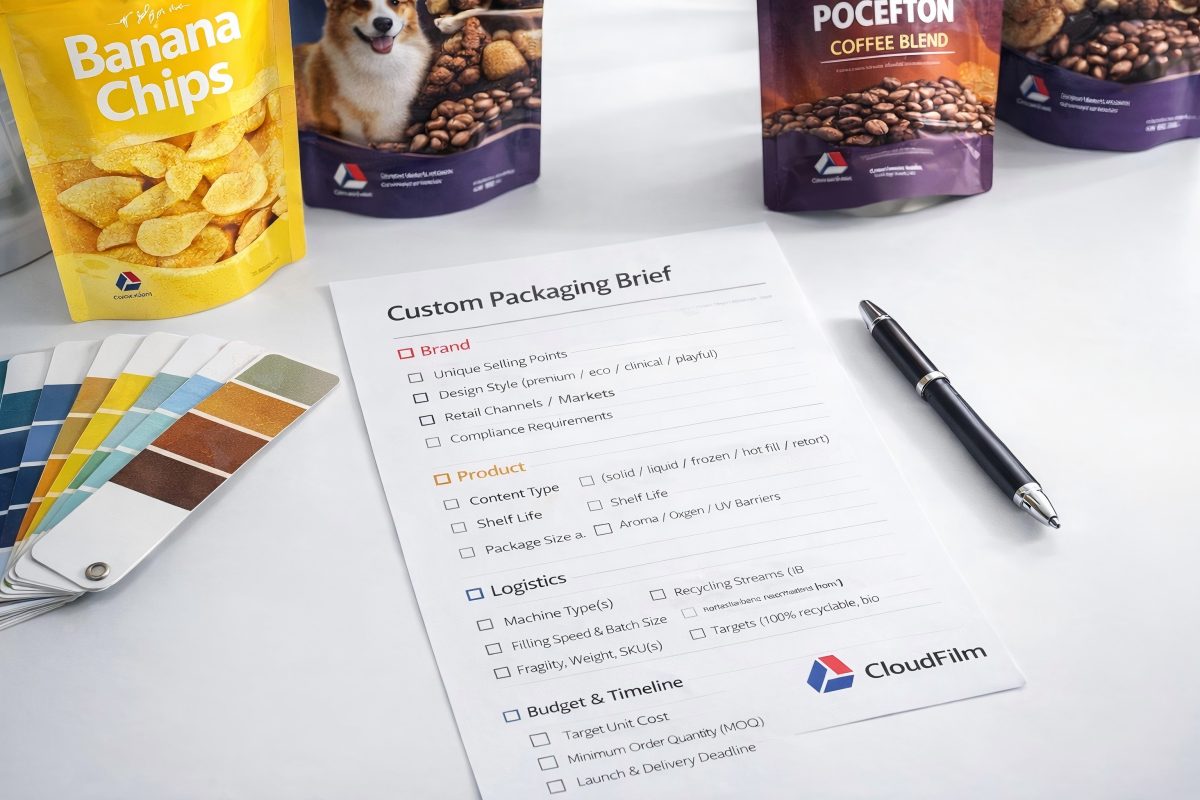
Before choosing any film, pouch or tray, you need a clear packaging brief. A strong brief will save weeks of trial-and-error and help your packaging manufacturer respond with the right proposal from day one.
You can start with four groups of questions:
1. Brand And Marketing Goals
- What do you want customers to feel when they see and touch your pack—premium, natural, clinical, playful?
- Do you need special effects like matte touch, metallic foil, kraft paper look, or extra-clear windows?
- Which markets and retail channels are you targeting (discounters, supermarkets, online only, specialty stores)?
2. Product And Regulatory Requirements
- Is your product dry, liquid, frozen, hot-fill, retort, or ambient?
- What is the desired shelf life and what conditions will the package face (freezer, UV light, humidity, transport shocks)?
- Are there food-contact, pharmaceutical, child-resistant or recyclability regulations you must meet?
3. Supply Chain And Operations
- Which machines are you using—form-fill-seal, premade pouch filling, tray sealing, shrink tunnels, pallet wrapping?
- Do you run at high speeds where sealing windows and coefficient of friction are critical?
- What are typical batch sizes and changeover frequencies?
4. Budget, MOQs And Timeframe
- What is your target packaging cost per piece and per kg?
- Are you ready to accept reasonable minimum order quantities (MOQs) for custom printed films or pouches?
- When do you need first samples and when do you need mass-production delivery?
At this stage, you do not need all the technical language yet. A good custom packaging supplier can translate your answers into structures, specifications and testing plans. If you already work with flexible films for food and CPG, reviewing your current formats with a solutions page like flexible packaging solutions for food and consumer brands can also spark ideas for upgrades and standardization.
Step 2: Choose The Right Packaging Format
Once your brief is clear, the next decision is which format will best support your brand and operations. Common options include:
1. Films And Rollstock
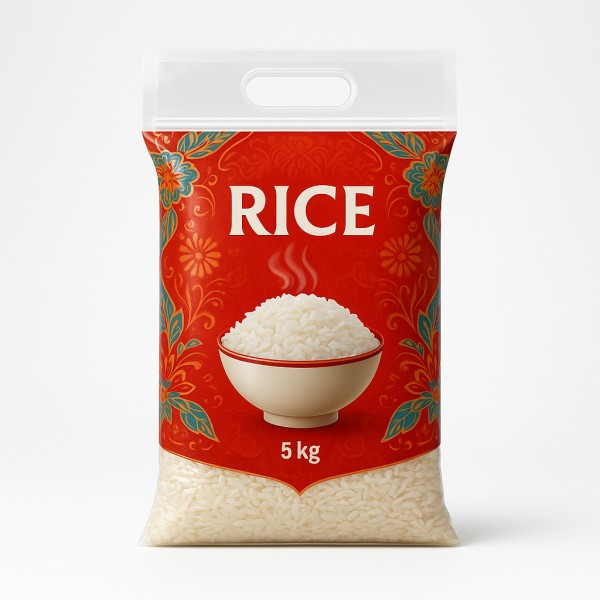
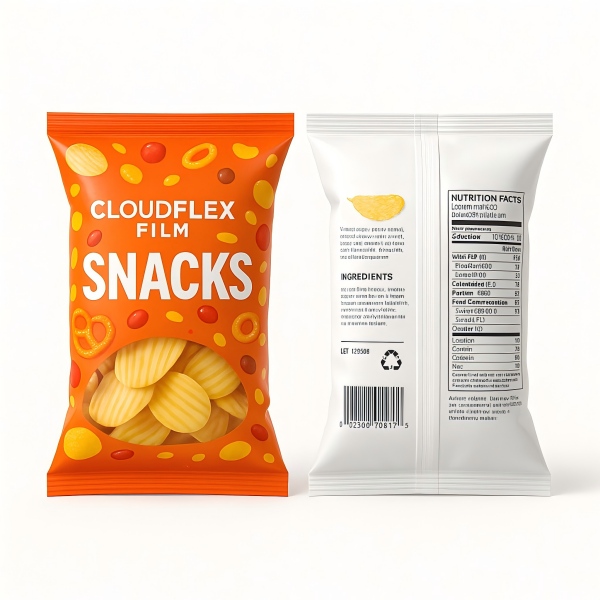
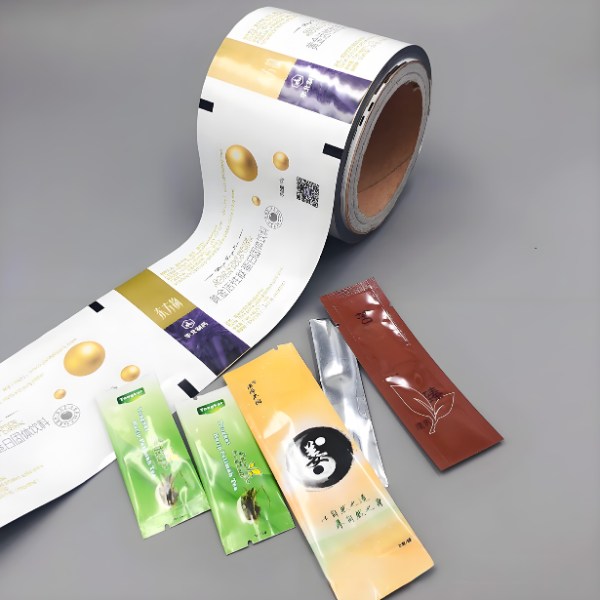
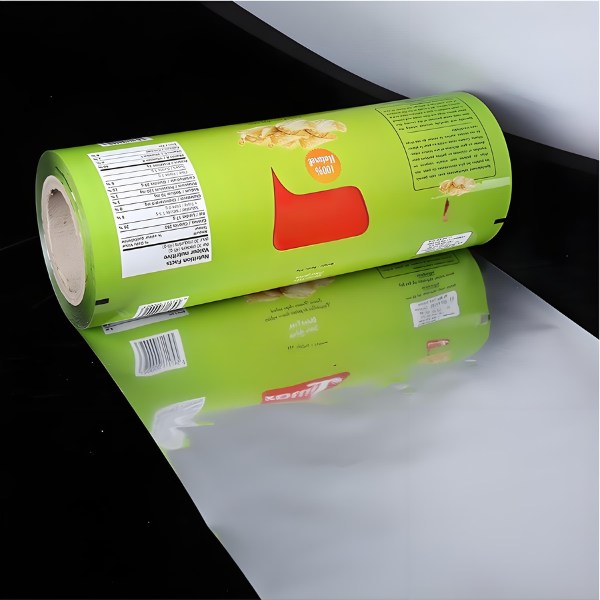
- Used on vertical and horizontal form-fill-seal (VFFS / HFFS) lines for pillow bags, gusset bags and sachets.
- Offer high efficiency at medium to large volumes.
- Ideal for snacks, rice, powders, frozen vegetables and many industrial products.
Working with a supplier that offers a full range of flexible packaging films and custom pouches, such as CloudFilm’s film and pouch portfolio, makes it easier to standardize specifications across different lines.
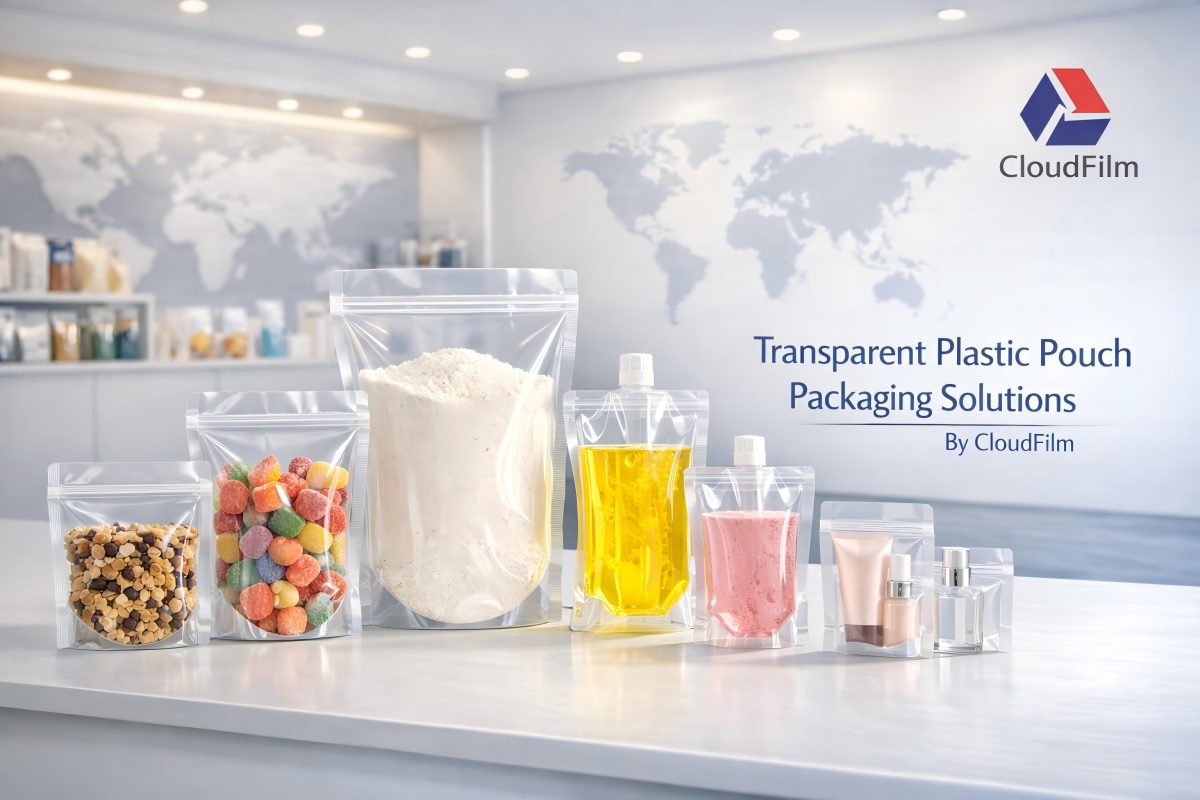
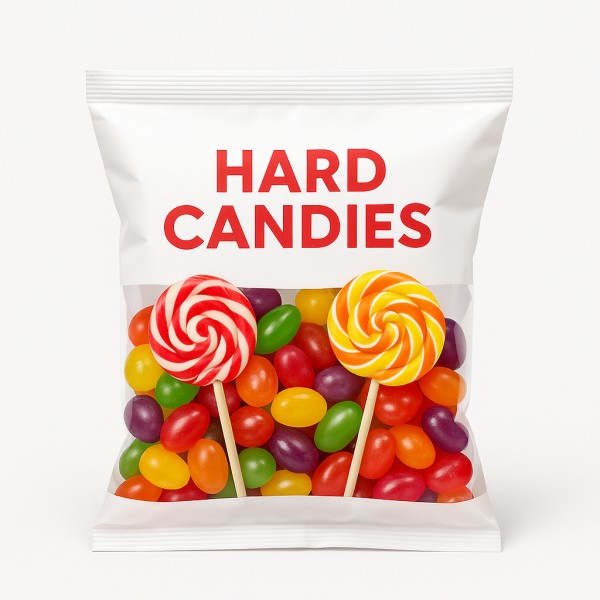
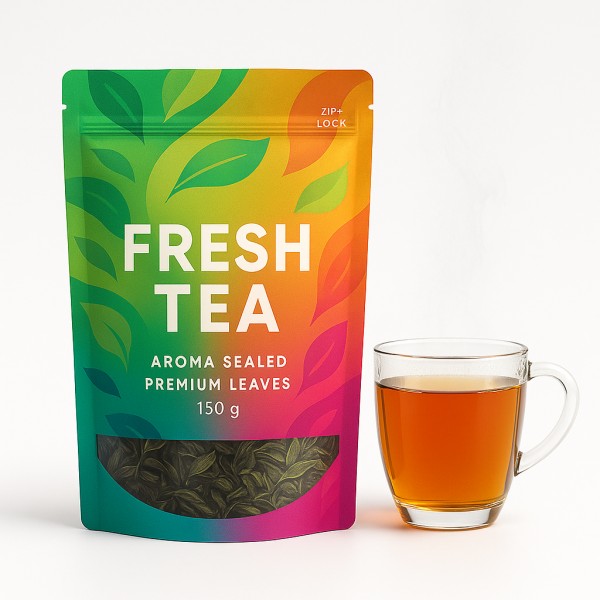
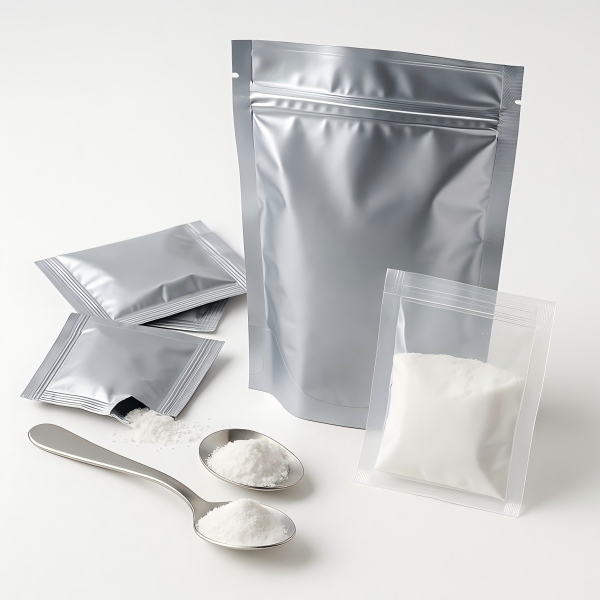
2. Premade Pouches (Stand-Up, Flat Bottom, Three-Side Seal)
- Better for premium positioning, e-commerce and new product launches.
- Support many features: zippers, spouts, valves, laser scoring, hang holes and ergonomic shapes.
- Useful when your filling equipment is semi-automatic or when you want to avoid big investments in FFS machinery.
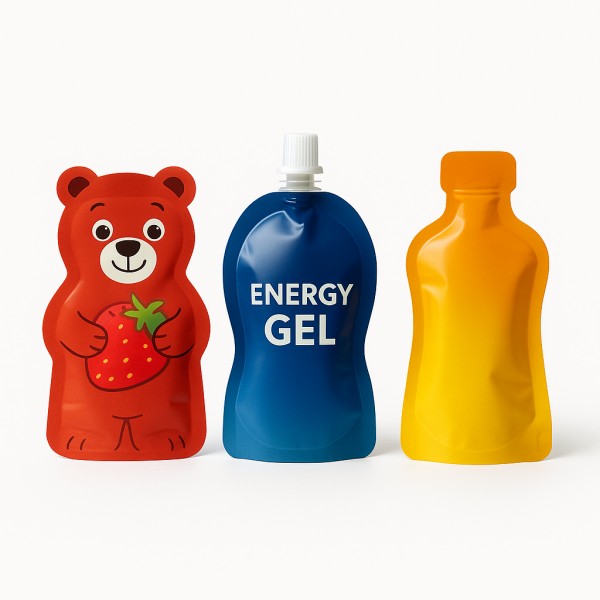
3. Spout And Liquid Pouches
- Suitable for beverages, sauces, baby food, cosmetics, detergents and other liquid or semi-liquid products.
- Save weight and volume compared with bottles and jars, while offering excellent branding area.
- With ready-to-fill liquid pouches and custom spout pouches for beverages and cosmetics , you can combine film structure design and pouch converting with a single manufacturer.
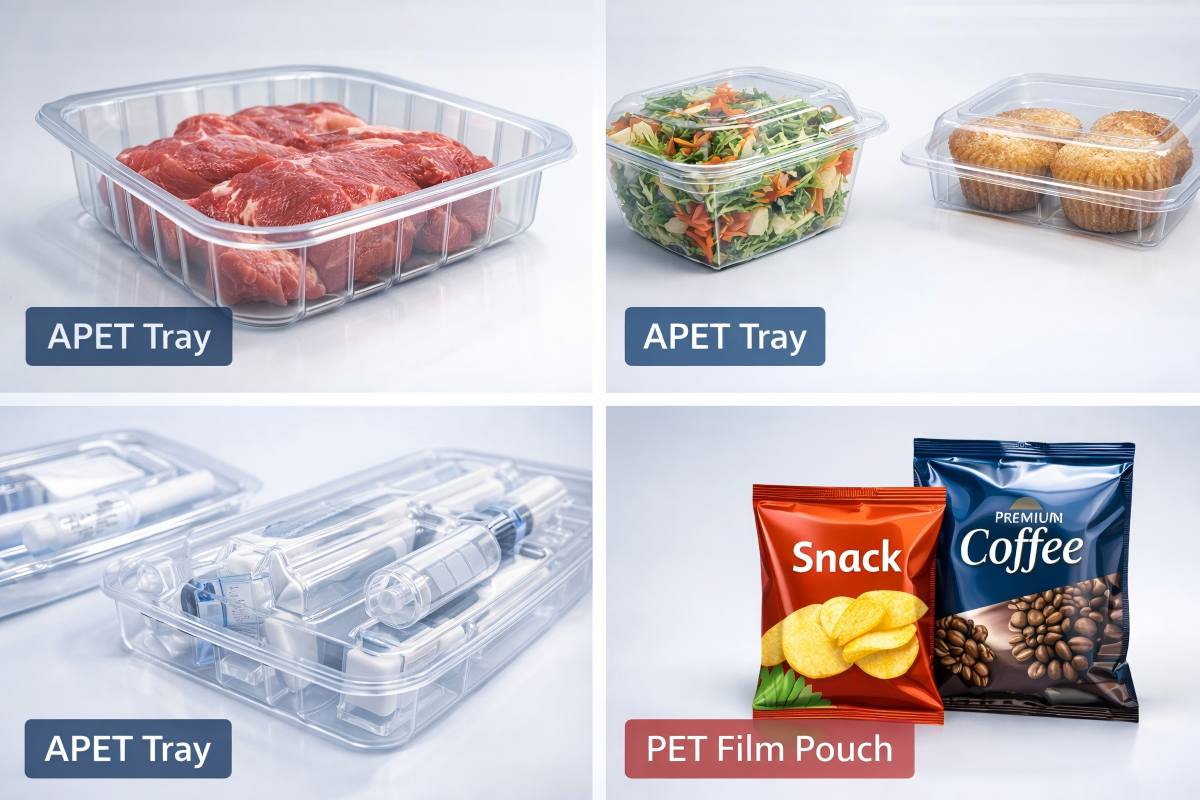
4. Lidding Films And Trays
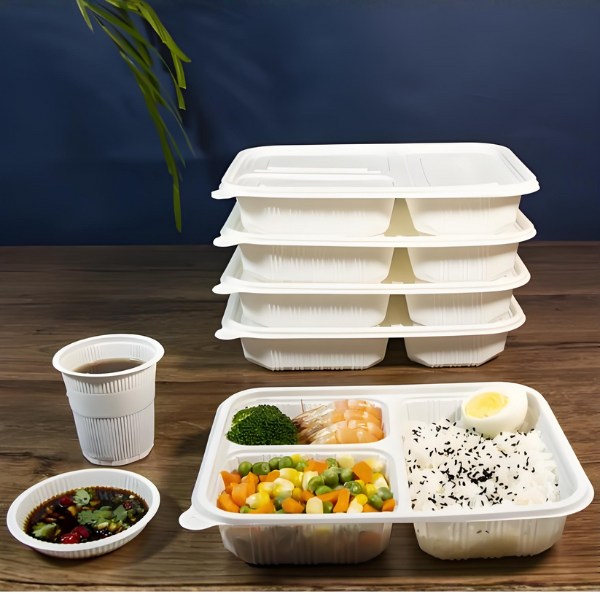
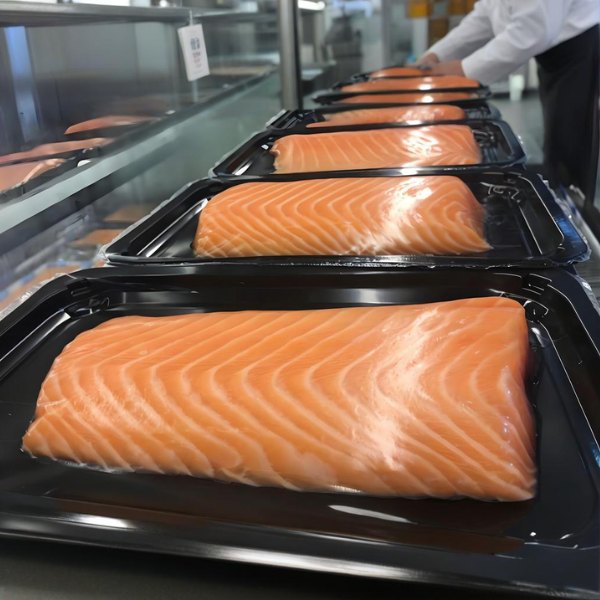
- For MAP / vacuum trays, ready meals, dairy cups and fresh meat.
- Allow peelable, lock-seal or resealable functions.
- Can be combined with APET, PP or aluminum trays depending on temperature and shelf life.
5. Shrink, Stretch And Protective Films
- Shrink films bundle multipacks and protect retail presentation.
- Stretch films stabilize pallets and cartons in logistics.
- Surface protective films safeguard panels, appliances and construction materials during processing and transport.
Here, solutions like high-clarity POF shrink film, PE stretch film for pallet wrapping and PE surface protective film can be integrated into a broader custom packaging strategy.
When you discuss formats with your manufacturer, share your current pain points (e.g., frequent machine jams, poor shelf impact, high freight costs). This helps them recommend not only a film type, but also smarter pouch styles, case counts and pallet patterns.
Step 3: Select Materials And Structures That Match Your Needs
Once you know the format, the next layer is material selection and structure design. For flexible packaging, you usually work with combinations of:
- BOPP (Biaxially Oriented PP) – clarity, stiffness, good print surface
- BOPET (Polyester) – strength, temperature resistance, dimensional stability
- BOPA (Nylon) – puncture resistance, toughness
- PE (LDPE / LLDPE / CPE / MDO-PE) – sealing, softness, impact resistance
- CPP – hot-fill compatibility, good seals, nice hand-feel
- High-barrier layers – EVOH, metallized films, aluminum foil or specialty coatings
A custom packaging manufacturer will mix and match these to hit your targets for barrier, stiffness, sealing, machinability and cost.
1. Standard Versus High-Barrier Structures
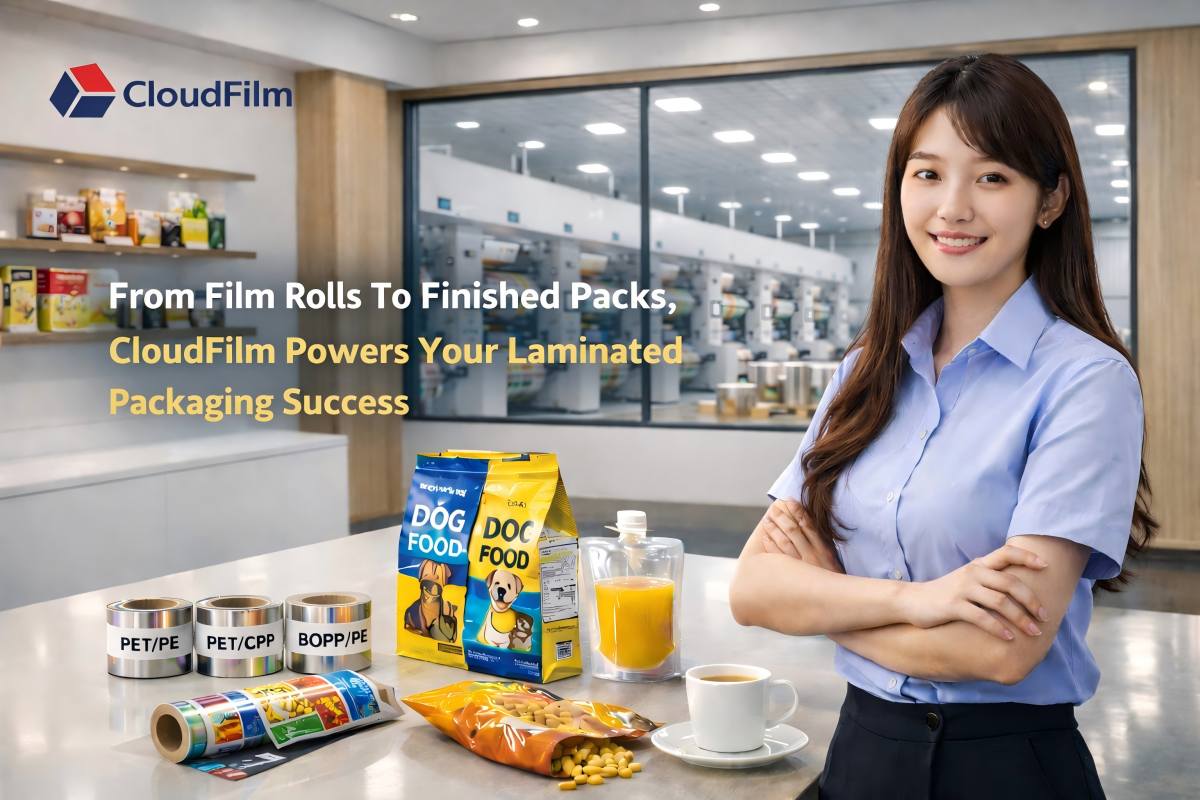
- For dry snacks or powders, simple BOPP/PE or PET/PE laminates are often enough.
- For chilled or frozen meat, cheese and vacuum products, you may need stronger structures such as PE/PA/PE or reinforced PE laminates.
- For aroma-sensitive products like coffee, sauces or cosmetics, high-barrier webs with EVOH or metallized layers may be required.
In many cases, buyers choose solutions like a PE film series for mono-material packaging, such as PE film series for recyclable PE packaging, and then add barrier only where it truly adds value.
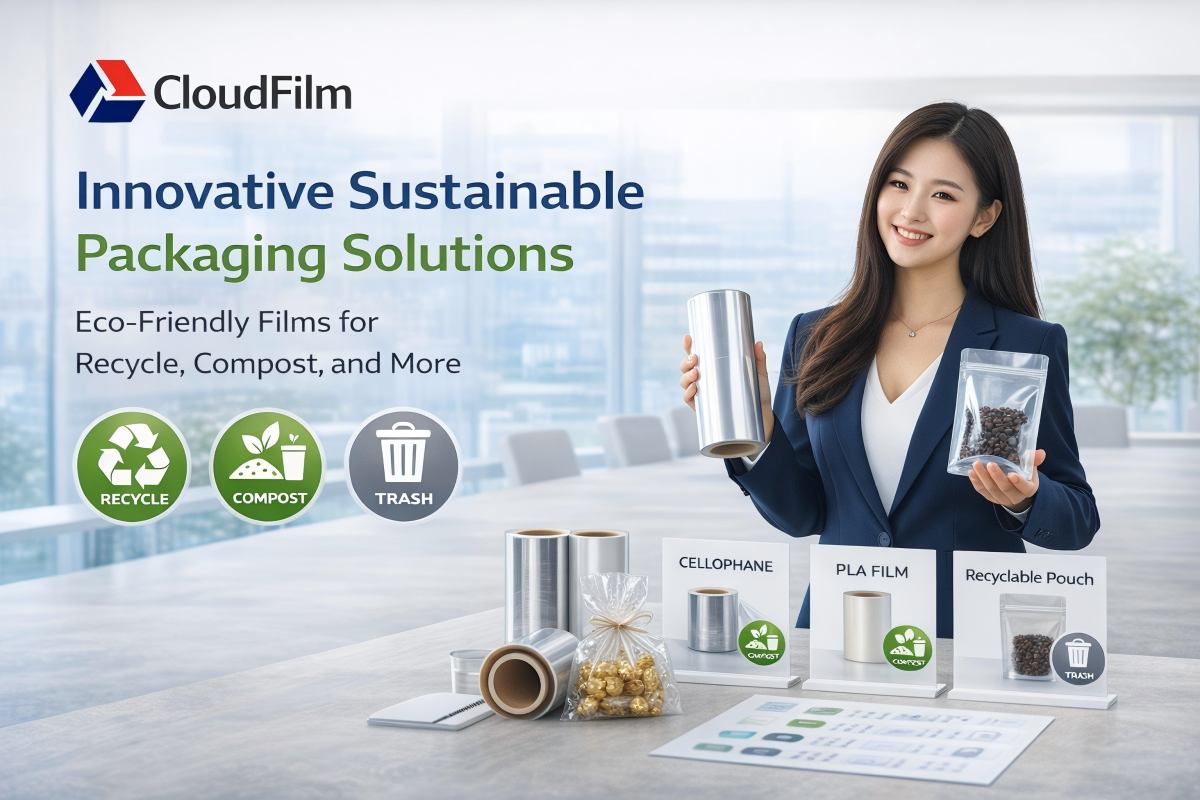
2. Mono-Material And Recyclable Designs
- To meet retailer and NGO requirements, many brands are moving towards all-PE or all-PP structures.
- This often means replacing PET / Nylon outer layers with BOPE or MDO-PE, and using special PE seal layers with good stiffness and printability.
- Early in your project, tell your manufacturer which markets’ recycling logos (e.g., HDPE or LDPE streams) you want to target.
3. Balancing Performance And Cost
- It is usually better to pay slightly more per kg for a film that runs smoothly and reduces waste than to save a few cents on material but lose money on downtime.
- A good supplier will propose two or three structure options—“standard,” “high-barrier,” and “recyclable”—with clear pros and cons so you can decide based on your strategy.
If you are already using laminated films and want to upgrade clarity and sealing, exploring options like clear PET/PE laminated film or high-barrier films similar to high-barrier PE PA PE film can be a practical path, keeping your current machines but improving pack performance.
Step 4: Work With The Right Custom Packaging Manufacturer
Even the best concept will fail without the right execution partner. For long-term success, you should treat your packaging manufacturer as a strategic partner, not just a price tag.
Key evaluation dimensions include:
1. Technical Capabilities And Portfolio
- Can they supply both films and finished pouches, or only one of them?
- Do they cover main material families (BOPP, PET, PA, PE, CPP), as well as options for high-barrier, recyclable and specialty films?
- A broad yet focused portfolio makes it easier to standardize with one supplier instead of managing many separate vendors.
2. Experience With Your Market And Application
- Ask for examples of similar projects (coffee, pet food, fresh meat, cosmetics, detergents, medical, industrial).
- Check whether they can support your certifications needs (e.g., food-contact, ISO systems, traceability).
- For export projects, a China-based manufacturer with long-term exporting experience can often offer more flexible MOQs and lead times.
3. Engineering Support And Communication
- Can you talk directly with technical and sales engineers, not only salespeople?
- Will they help you optimize film parameters, test different seal temperatures and recommend machine settings?
- Are they willing to adjust structures after real-line trials, instead of forcing a “take it or leave it” approach?
4. Lead Times, Quality Control And After-Sales
- Typical lead times for new projects and repeat orders.
- Quality control processes: incoming raw materials, on-line inspection, finished roll testing, reporting.
- How they handle claims, improvement plans and joint root-cause analysis.
When you review potential partners, reading a page like about CloudFilm as your flexible packaging manufacturer and combining it with sample testing is often the fastest way to judge whether a supplier can accompany you from development all the way to stable mass production.
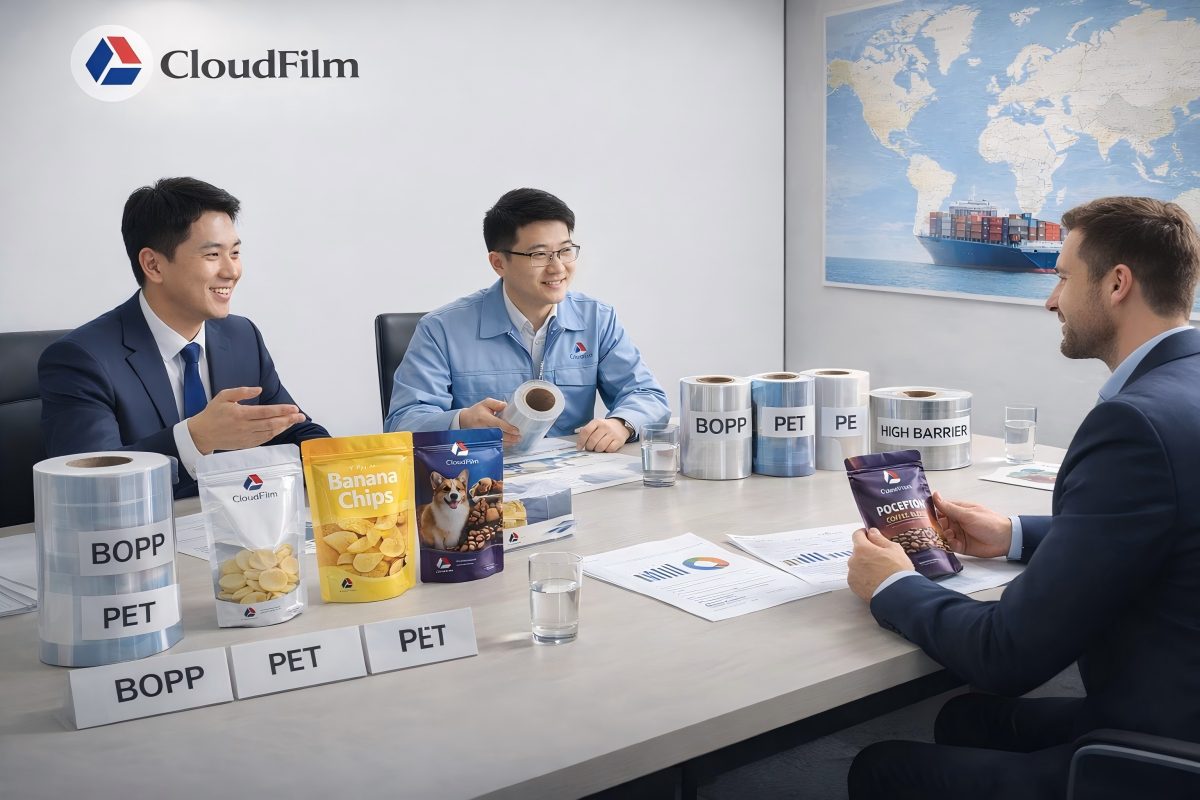
Step 5: From Brief To Shipment – How CloudFilm Supports Your Project
A good custom packaging project should follow a clear, repeatable workflow. While every brand is different, a typical cooperation with a professional manufacturer often looks like this:
1. Initial Consultation And Briefing
- You share your current packs, target market, product specs and key issues (e.g., leaks, poor shelf impact, high costs).
- The manufacturer asks detailed questions about machines, logistics routes and regulatory needs.
- Together, you define clear priorities: cost reduction, premium look, recyclability, or a mix.
2. Concept Proposal And Structure Options
- The engineering team proposes 2–3 structure options for each format—standard, high-barrier, recyclable.
- You receive technical data (thickness, film types, sealing range) plus marketing-oriented notes (gloss, hand-feel, transparency).
- If needed, the supplier also suggests alternative formats, such as switching from rigid bottles to pouches or from cartons to shrink bundles.
3. Sampling, Testing And Optimization
- Trial rolls or small batches of pouches are produced for line tests and shipping simulations.
- Your team checks filling speed, seal integrity, leakage rate, carton packing and pallet stability.
- Based on feedback, parameters such as thickness, slip, corona level and seal layer recipes are fine-tuned.
4. Mass Production, Quality Control And Documentation
- Once structures are frozen, the supplier sets up standard operating procedures and QC plans.
- You receive consistent COAs, test reports and, where needed, migration or compliance documents.
- Forecasting and buffer stock strategies are agreed to keep your lines running smoothly.
5. Continuous Improvement And New Projects
- After several successful cycles, both sides usually look for further optimization—lighter structures, higher line speeds, new markets or more sustainable options.
- Because your custom packaging supplier knows your products and equipment well, new developments become faster and less risky.
CloudFilm often combines film engineering with end-use expertise from areas such as liquid packaging, shrink poly applications and all-flex packaging, allowing buyers to connect different categories into one coherent strategy using resources like in-depth guides on liquid pouch packaging, shrink films and fully flexible packaging.

Custom Packaging Solutions FAQs
Below is an extended FAQ section designed to match how buyers and packaging engineers often ask questions in search engines and AI tools. You can adapt, expand or localize these Q&As for your own market.
FAQ 1: What Information Should I Prepare Before Asking For A Custom Packaging Quote?
At minimum, prepare:
- Product type (solid / powder / liquid / frozen / hot-fill / retort)
- Target markets and sales channels
- Approximate pack size and weight
- Desired shelf life and storage conditions
- Current packaging problems or goals
- Machine type and speed (if known)
- Target order quantity and preferred delivery time
The more complete your brief, the faster a packaging manufacturer can recommend suitable structures and provide an accurate quotation.
FAQ 2: How Do I Compare Quotes From Different Packaging Suppliers?
Look beyond price per kg. Compare:
- Film structure and thickness (barrier level, stiffness, sealing)
- Estimated waste rate and machine efficiency
- Printing quality (number of colors, registration, special effects)
- Lead time, payment terms and after-sales policies
- Technical support (trials, on-site or remote engineering support)
A slightly higher price from a professional manufacturer may still result in lower total system cost when you consider waste, downtime and complaints.
FAQ 3: What Are Typical MOQs For Custom Printed Films And Pouches?
MOQs depend on film type, structure and printing technology, but for many flexible packaging projects:
- Custom printed films: from ~300–500 kg upwards
- Custom printed pouches: from ~10,000–30,000 pieces upwards (sometimes lower for pilot runs)
Speak with your supplier about phased development: start with smaller, simpler runs to validate the concept, then scale up volumes once performance is proven.
FAQ 4: How Long Does It Take To Develop A New Custom Packaging Solution?
A typical timeline could be:
- 1–2 weeks: brief discussion, proposal, confirmation of structures and artwork
- 2–4 weeks: cylinder / plate making, trial film or pouch production
- 1–3 weeks: line tests, transport simulations and fine-tuning
- 3–5 weeks: first mass production and shipment
Exact timing depends on your responsiveness, artwork readiness and complexity of structures. Working directly with an experienced manufacturer often shortens the cycle compared with multi-layer trading chains.
FAQ 5: Can Custom Packaging Help Us Move Towards More Sustainable Solutions?
Yes. Custom solutions allow you to:
- Replace multi-material laminates with mono-material PE or PP structures
- Reduce film thickness while maintaining protection and machinability
- Improve cube efficiency and reduce transport emissions
- Add clear recyclability information on the pack
Discuss your sustainability roadmap with your supplier so they can propose structures that meet both technical and environmental targets.
FAQ 6: What Is The Advantage Of Working Directly With A Manufacturer Instead Of Only Traders?
Direct cooperation with a manufacturer usually offers:
- Deeper technical support and faster problem solving
- Greater transparency on materials, processes and quality control
- More flexibility for trial runs, special projects and urgent orders
- Better alignment between your long-term roadmap and the factory’s R&D direction
Trading companies can be useful for certain markets, but for critical products and strategic brands, a stable relationship with a custom packaging manufacturer is often essential.
FAQ 7: How Do I Know If My Product Needs High-Barrier Film Or Standard Film?
Ask yourself:
- Does the product quickly lose flavor, aroma or color?
- Is it sensitive to oxygen, moisture or light?
- Is the shelf life short today, and are you trying to extend it?
If the answer is yes for several of these points, discuss high-barrier structures with your supplier. If not, a simpler standard film may be enough, saving cost and simplifying recycling.
FAQ 8: How Can I Start A Custom Packaging Project With CloudFilm?
Typically, you can:
- Send a brief description of your product, current packaging and challenges.
- Share photos, dimensions and, if possible, a few physical samples.
- Indicate whether you prioritize branding, cost, sustainability, or a combination.
- Request film or pouch samples similar to what you have in mind.
From there, the CloudFilm team can propose structures, send tailored samples and guide you step by step—from specification to logistics—until your new custom packaging solution is stable in production.