When buyers search for packaging, they often start with a simple question: what packaging should I use? In real business, however, packaging is never only about a bag, a roll, or a printed surface.
A better question is this: what complete packaging system fits the product, the target shelf life, the filling method, the transport conditions, and the market position of the brand? That is what A To Z packaging really means.
What Does A To Z Packaging Mean?
A To Z packaging is not about offering every possible package in the market. It is about understanding the whole chain of packaging decisions from beginning to end.
That chain usually includes product characteristics, material choice, barrier level, structure design, printing method, pouch or rollstock format, line compatibility, storage conditions, and supplier coordination. When one of these parts is overlooked, the final package may look acceptable at first but fail later in real use.
For this reason, experienced buyers often prefer to work with a packaging partner that can support structure planning, sampling, and practical advice, not only supply film. A good starting point for that broader view is flexible packaging solutions.
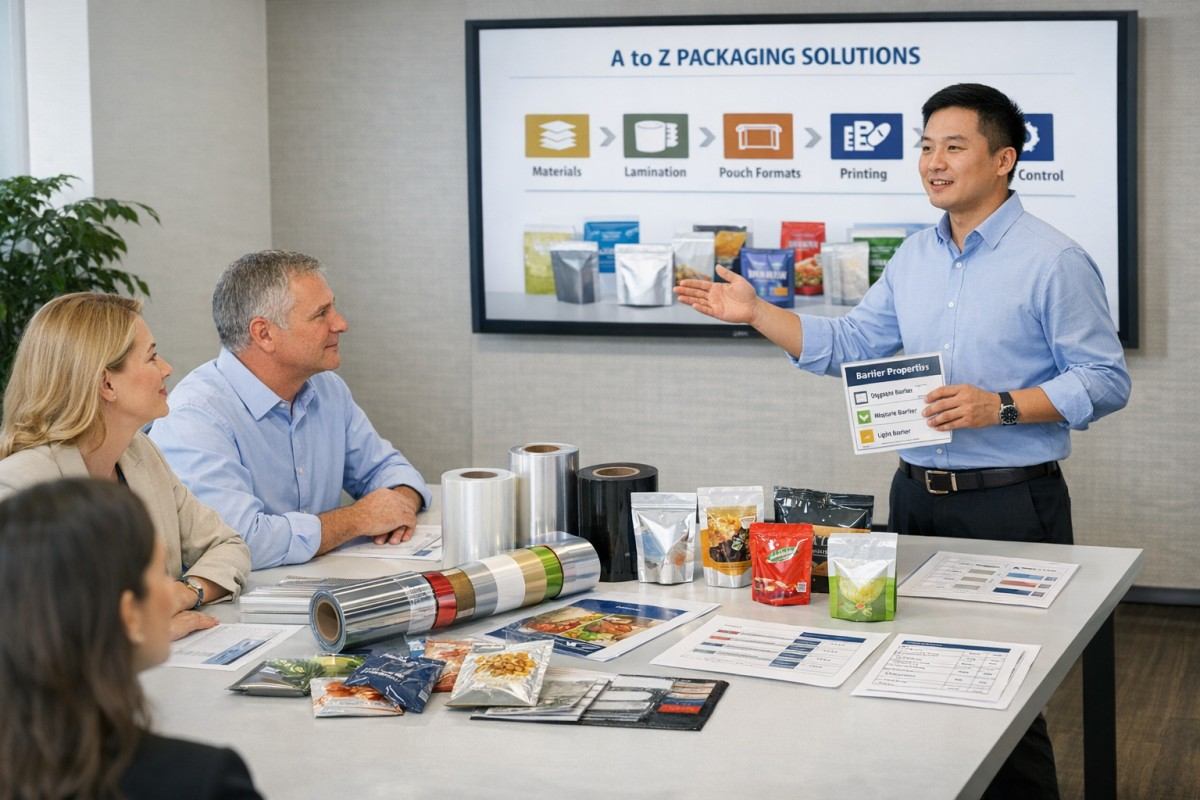
Why Packaging Should Be Viewed As A System
Many packaging problems happen because decisions are made one layer at a time. One person looks at print appearance, another looks at sealing, and another focuses only on price.
The result may be a package that looks good but runs poorly on the line. It may also be a structure that seals well but does not deliver the barrier needed for shelf life, or a package that protects the product but creates unnecessary cost.
That is why packaging should be judged as a full system. Good packaging quality supports product protection, filling efficiency, seal reliability, print consistency, and final shelf appearance at the same time.
For buyers who want a more practical checklist, this packaging quality guide is a useful supporting page inside the same topic cluster.
Main Material Families In A To Z Packaging
The first step in most projects is choosing the right material family. Different films solve different packaging problems, and no single film is right for every application.
A film that works well for dry snacks may not be suitable for retort food, frozen products, personal care packaging, or medical applications. That is why material selection should always be linked to the real product and the real supply chain.
BOPP: The Efficient Everyday Workhorse
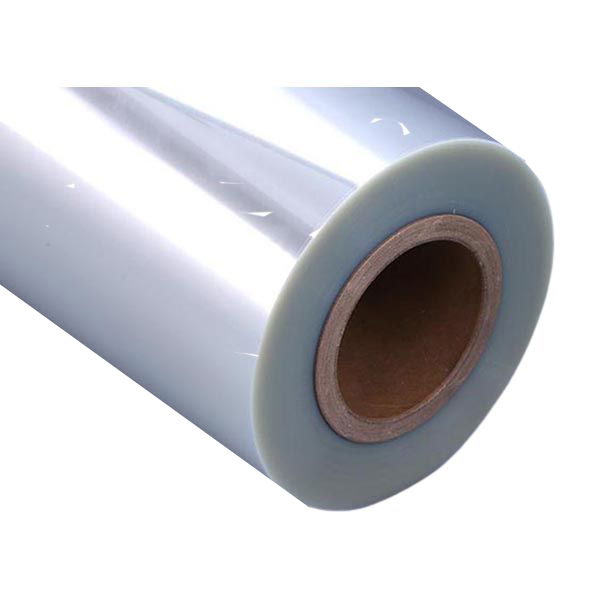
BOPP is one of the most widely used materials in flexible packaging because it offers good clarity, gloss, printability, stiffness, and cost performance. It is often used for snacks, confectionery, labels, overwrap, and many dry-food packaging structures.
When a project needs a softer and more premium visual effect, BOPP matte film can be a good option. Matte surfaces can reduce glare and help create a more understated shelf appearance.
PET / BOPET: Strength, Heat Resistance, And A Premium Outer Layer
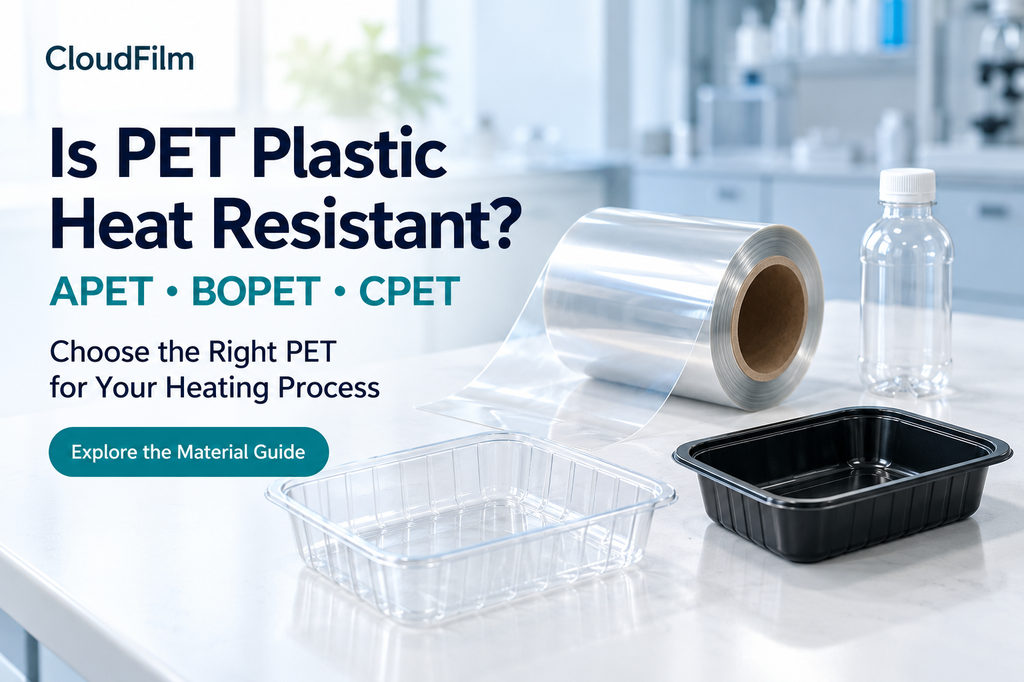
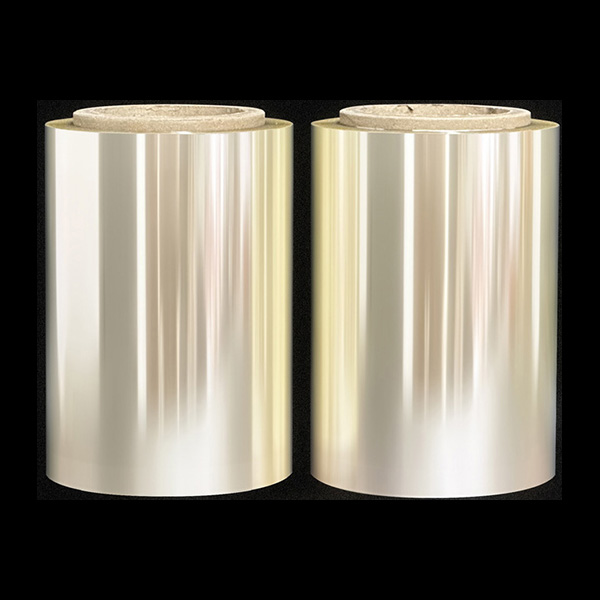
PET is commonly chosen when the structure needs higher dimensional stability, better heat resistance, and a stronger outer layer. It is widely used in coffee packaging, powder packaging, frozen foods, labels, lidding, and many industrial applications.
Compared with some other films, PET often offers a more stable print surface and a more rigid outside layer. Buyers who want a broader application overview can continue to this PET packaging market guide.
BOPA / Nylon: Toughness And Puncture Resistance
BOPA is often selected when puncture resistance, flexibility, and stronger oxygen protection are important. It is common in meat packaging, vacuum packs, and demanding laminates where abuse resistance matters.
In real projects, the choice between BOPP, PET, and BOPA is not only about cost. It is also about toughness, gas barrier, heat performance, and converting behavior, which is why this guide on BOPP, BOPET, and BOPA film differences fits naturally here.
PE: Sealing, Flexibility, And Recyclable Direction
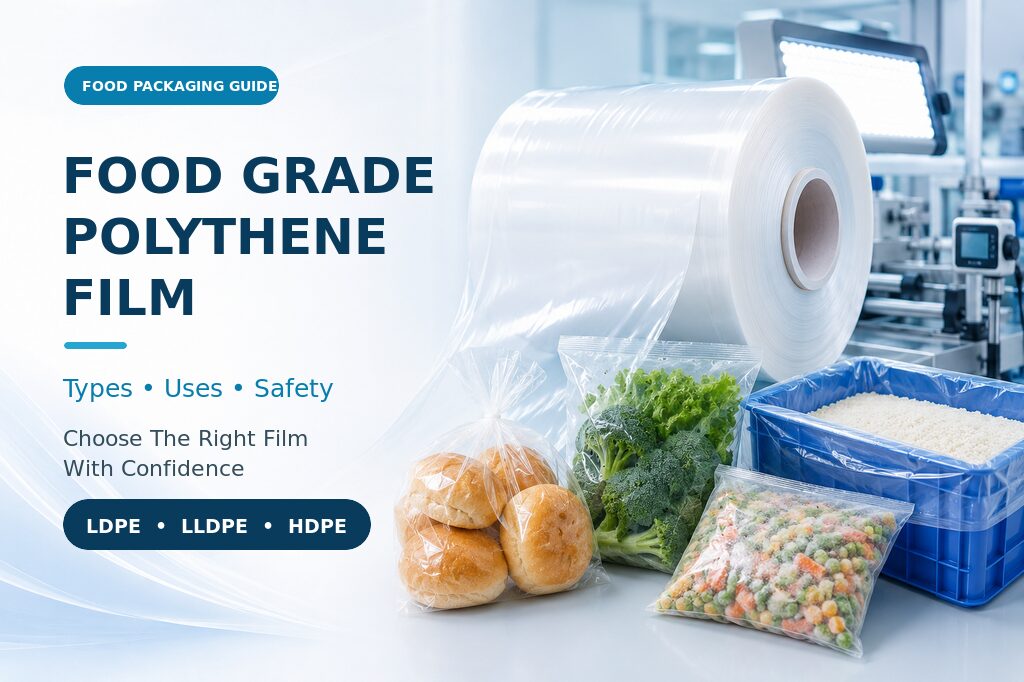
PE is a major packaging material family and plays an important role in seal layers, shrink film, stretch film, liners, protective films, and mono-material recyclable structures. In many packaging projects, PE is the layer that makes the package practical on the line because of its sealing behavior and flexibility.
CPP: Reliable Sealing And Functional Inner-Layer Performance
CPP is often used as an inner sealing layer when buyers need good sealability, hot tack, or a more functional PP-based inner layer. It is widely used in food and technical packaging structures where the seal layer needs to do more than basic closure.
For readers comparing PP-based options, this BOPP vs CPP guide is a natural internal link because it helps explain how the two materials differ in structure planning.
High-Barrier Layers: Metallized, Foil, EVOH, And ALOx
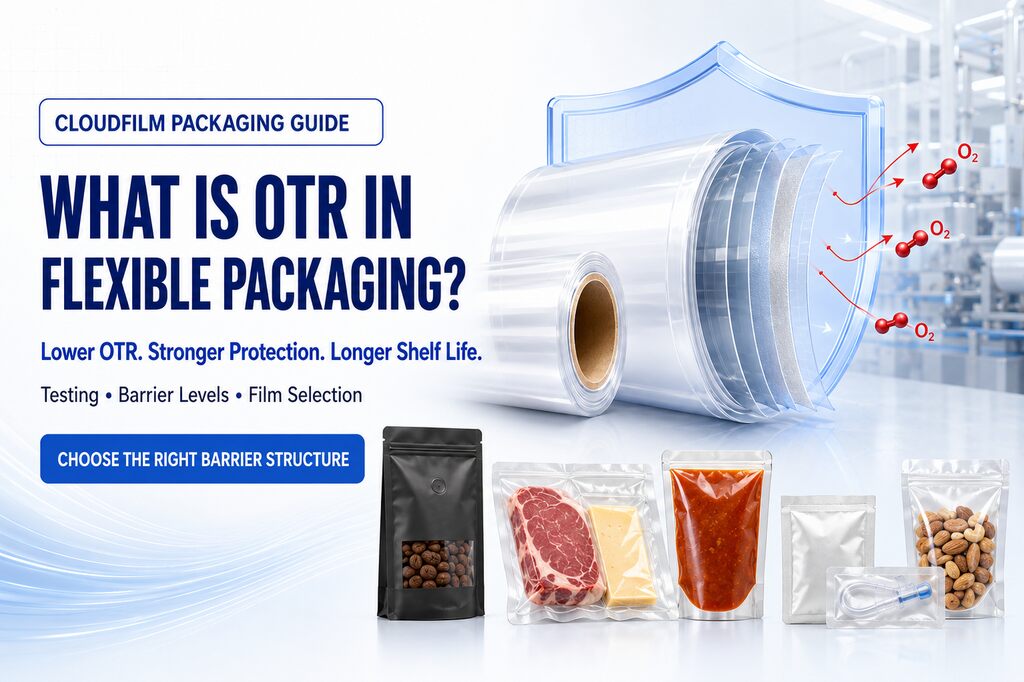
When shelf-life requirements go beyond basic packaging needs, the structure often needs stronger protection against oxygen, moisture, light, or aroma loss. This is where metallized films, foil-containing laminates, EVOH structures, and transparent barrier films such as ALOx PET become especially important.
Different barrier layers solve different packaging problems, so barrier design should always be tied to the product, storage condition, and market goal. For a broader look at barrier routes, this film and foil buyer guide is highly relevant.
Common Packaging Structures And When They Are Used
Once the material family is clear, the next question is the structure. The structure determines how different layers work together to deliver printability, sealability, barrier, machinability, and transport reliability.
For many basic dry-food and general-purpose packs, BOPP-based laminates can be practical. For packs that need a stronger shelf appearance and dependable sealing, PET/PE film is a common route, especially for food, medical, and industrial packaging.
When a project needs a more functional PP-based seal layer, PET/CPP film is often considered. This route is useful when the inner layer must deliver stronger sealing while supporting the needed product performance.
For sterilized or long-shelf-life applications, retortable CPP film becomes highly relevant because it is designed for high-temperature sterilization conditions while maintaining seal integrity.
For grouped transport packaging, multipacks, and retail bundles, PE shrink film is a strong option because it can improve bundle stability during transport and handling.
Packaging Formats From Rollstock To Finished Pouches
A To Z packaging is also about format selection. The same product can often be packed in several different ways, but the best route depends on the filling method, cost target, sales channel, and user experience.
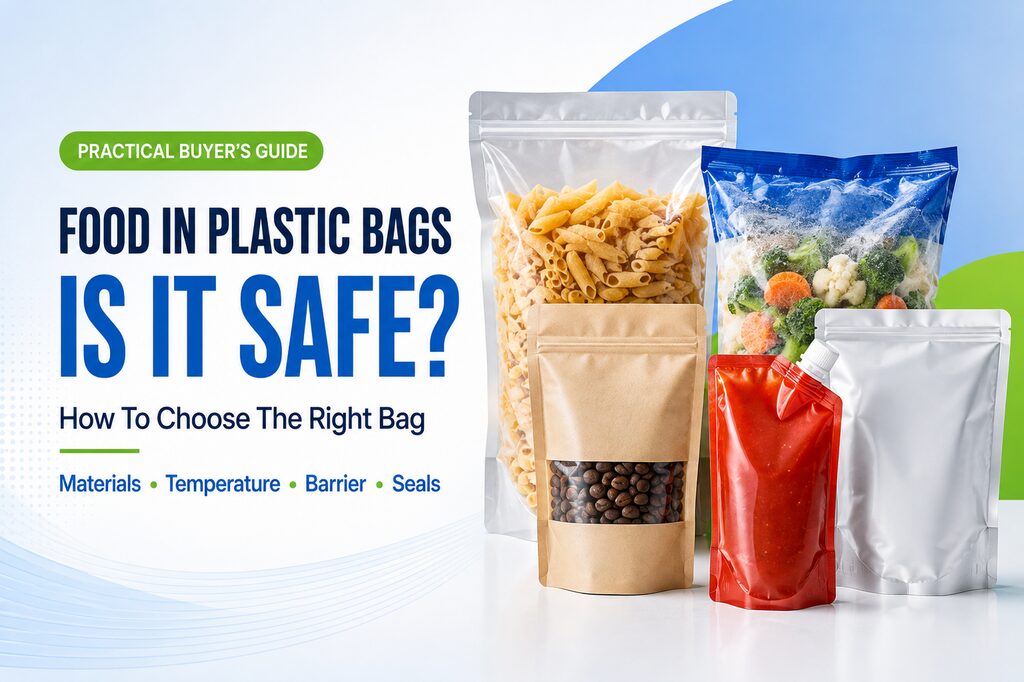
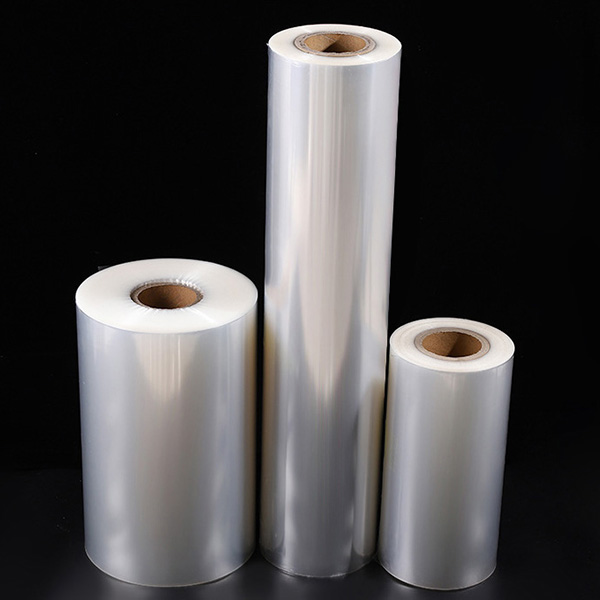
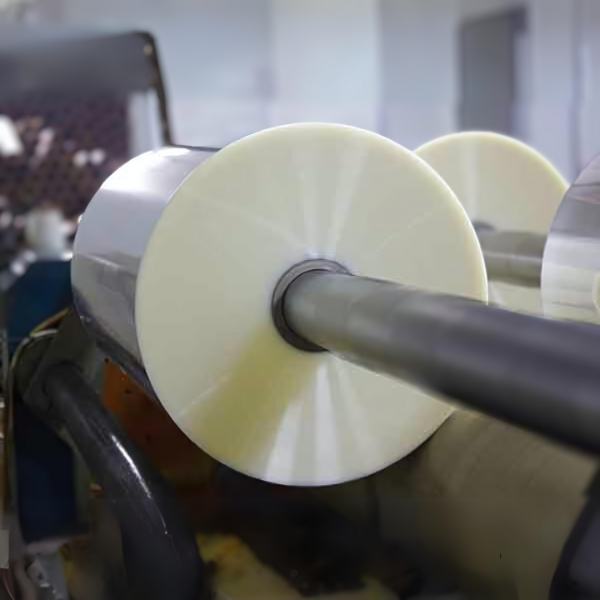
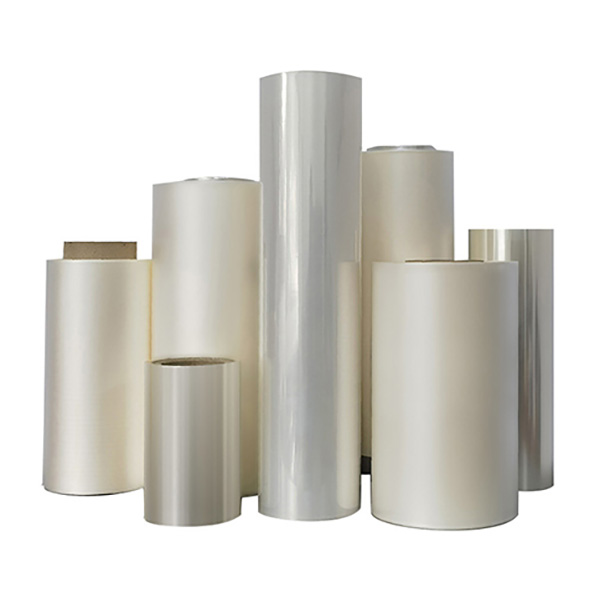
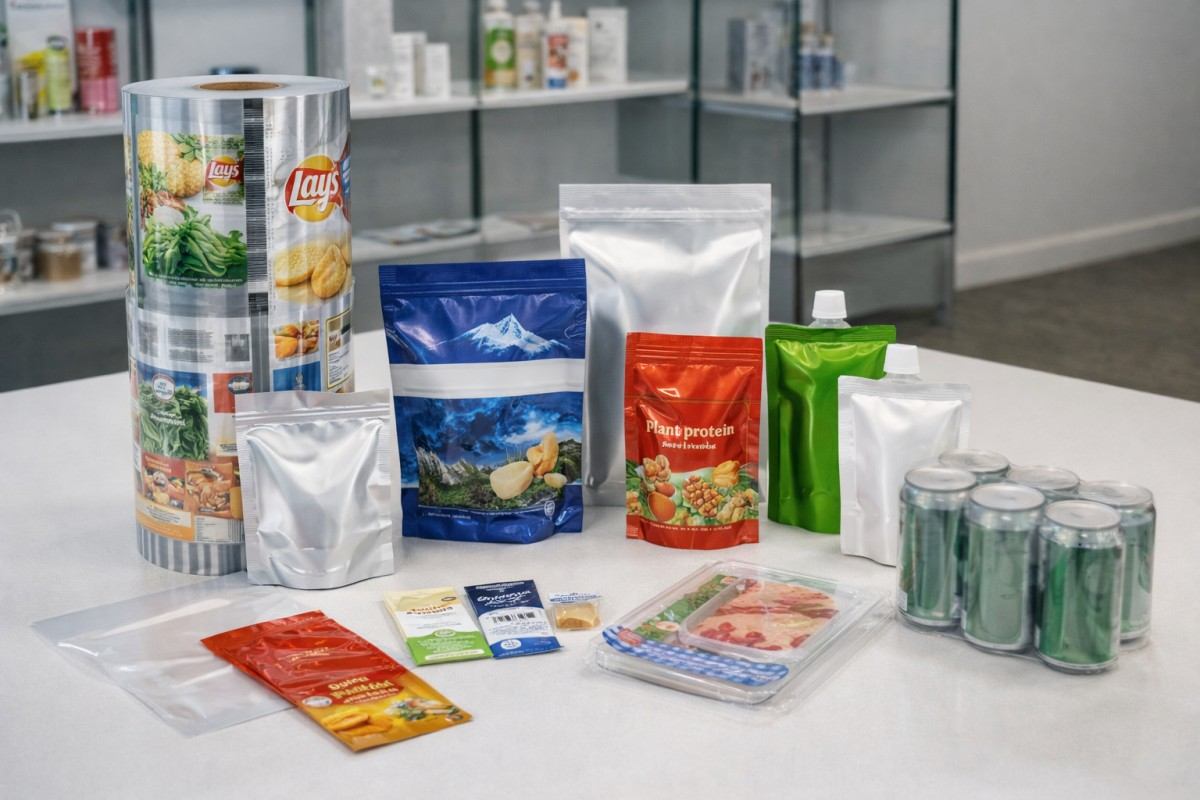
Rollstock is efficient for high-speed automatic filling and is often preferred in larger production runs. Flat pouches are simple and cost-effective, while stand-up pouches improve shelf visibility and can create a more premium retail presence.
Spout pouches are popular for liquids and semi-liquids where controlled pouring matters. Lidding films work well for trays, cups, and portion packs, while shrink packaging is useful for grouped retail units and logistics bundling.
To connect this part of the article with real food applications, food packaging innovation is an appropriate internal link because it expands the discussion from format selection to real product categories and packaging lines.
How To Decide The Right Barrier Level
A common packaging mistake is choosing structure by appearance only. Barrier requirements should always be matched to the packed product.
Dry snacks may mainly need moisture protection and acceptable oxygen control. Coffee, tea, and aroma-sensitive powders may need stronger aroma and oxygen barrier, while frozen foods need cold resistance and seal reliability.
Retort foods need high-temperature stability and seal retention, and some light-sensitive products may require metallized or foil-based shielding. That is why barrier should never be treated as a vague label such as “normal” or “high” without context.
Printing, Surface Finish, And Shelf Impact
Packaging is not only about protection. It also affects how the product looks, feels, and communicates value in the market.
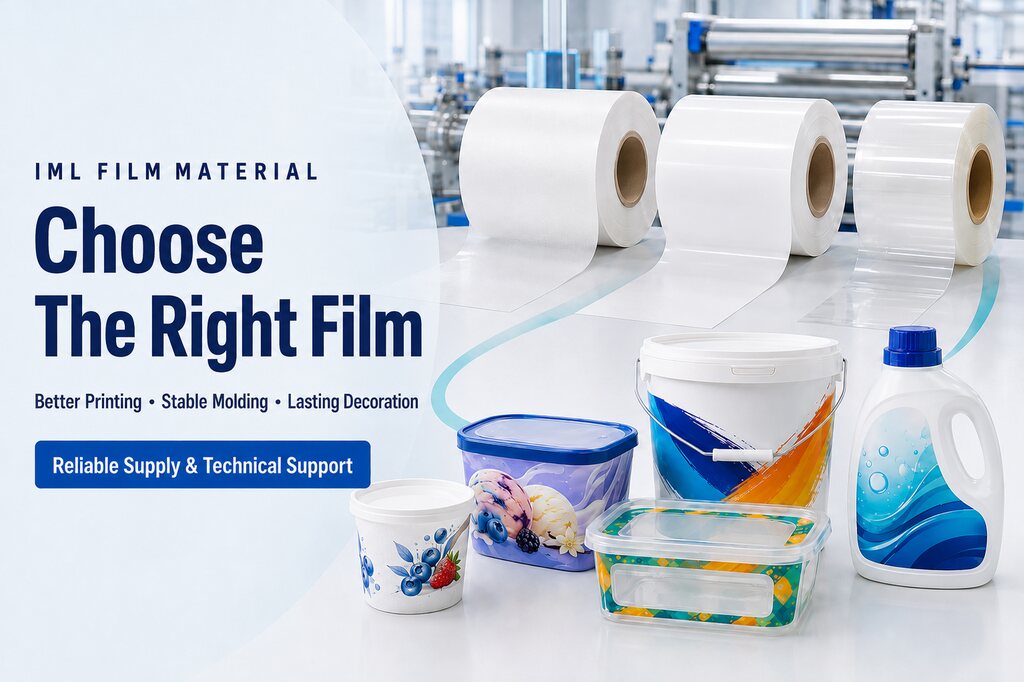
Glossy surfaces are often used when brands want brightness and strong color impact. Matte and soft-touch surfaces are often chosen for a more premium and understated look, while anti-scratch and specialty finishes matter when the package must stay clean and attractive through handling and transport.
In printing planning, buyers may choose between rotogravure, flexographic, and digital options depending on run length, SKU count, artwork changes, and speed-to-market needs. CloudFilm’s broader product and article structure also supports this kind of system thinking across films, pouches, and custom formats.
A To Z Packaging By Industry
Different industries ask different packaging questions. That is why good material and structure selection should always begin with the application rather than with the film name alone.
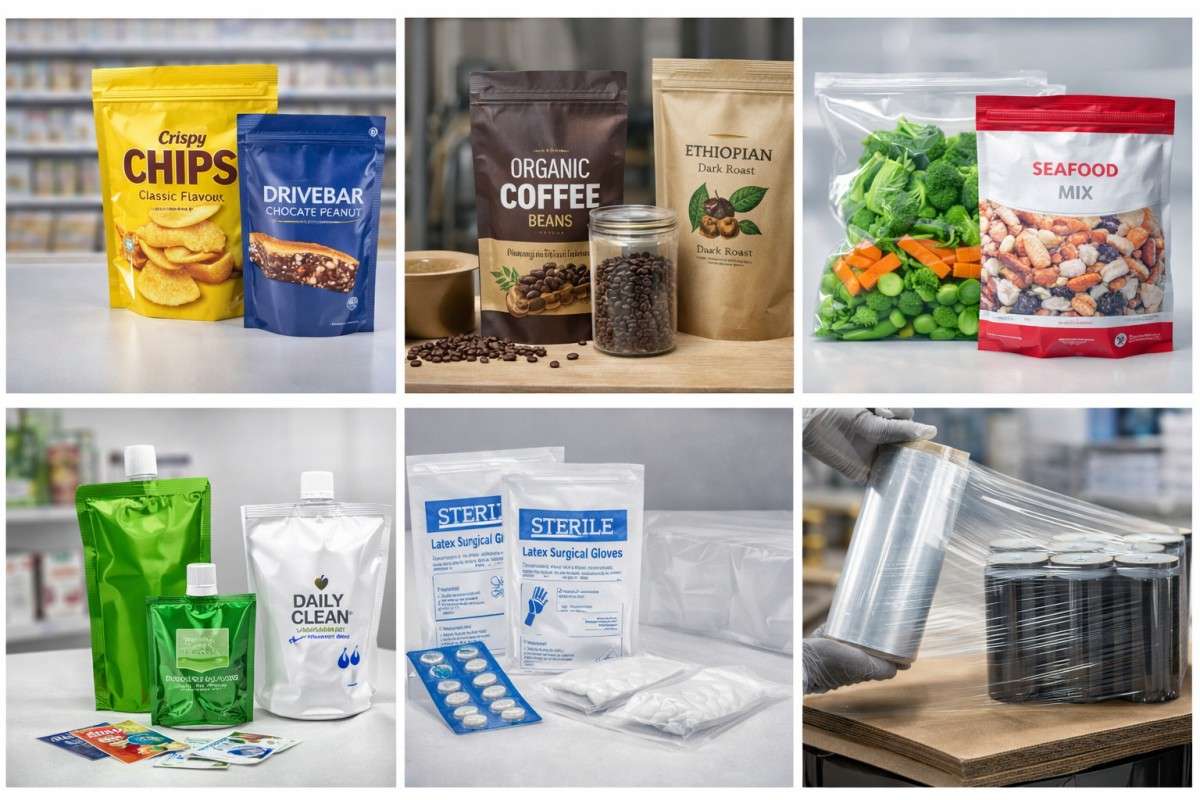
For snacks and dry foods, buyers often focus on print quality, moisture barrier, and machinability. For coffee and tea, aroma barrier and premium appearance become more important, while frozen foods and meat place greater weight on sealing strength, low-temperature performance, and puncture resistance.
For daily chemicals, the structure must often balance appearance, chemical compatibility, leak prevention, refill convenience, and shelf display. That is exactly why this daily chemical packaging guide
fits naturally into the internal link structure of this topic.
For medical, pharmaceutical, industrial, and construction uses, priorities can shift further toward documentation, stability, protection, and risk control. A strong packaging manufacturer or supplier should understand those differences before recommending a structure.
How Buyers Choose A Reliable Packaging Manufacturer Or Supplier
A serious buyer does not choose a packaging manufacturer only by price. The real evaluation standard is much broader.
Can the supplier understand the application clearly? Can it recommend structure options instead of pushing only one product? Can it support sampling, line trials, pilot orders, and clear communication during development?
Can it explain sealing, barrier, and print trade-offs in practical language? Can it keep specifications stable after the first order? Can it support export documentation and commercial follow-up efficiently enough for real international business?
These questions matter because packaging failures usually cost more than material differences. For buyers who want a stronger commercial bridge page here, custom flexible packaging solutions for brands is the most natural internal link.
Recyclable Packaging And The Future Direction
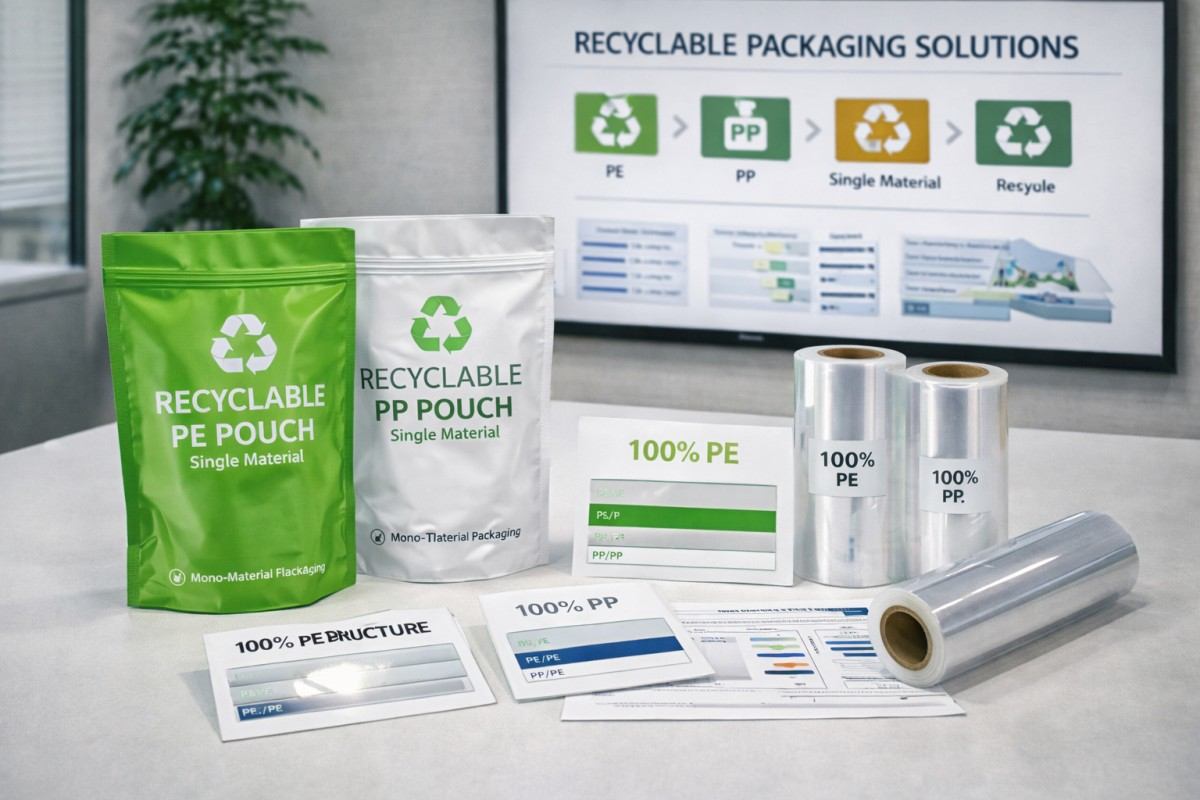
Today, many buyers are no longer asking only whether a package works. They are also asking whether it can move closer to a recyclable structure without losing practical performance.
That is why mono-material development has become more important. In many real packaging projects, recyclable design is built around all-PE or all-PP logic, depending on the product, barrier requirement, and local recycling route.
For readers who are already evaluating real product options, recyclable pouches is the strongest product-page link in this section. To support the educational side of the topic cluster, mono-material flexible packaging trends and recyclable flexible packaging are also well matched.
Common Mistakes Buyers Should Avoid
One common mistake is buying only by thickness. Thickness matters, but it does not fully explain barrier, seal behavior, stiffness, puncture resistance, or machinability.
Another mistake is copying an old structure into a new product category. A laminate that works for biscuits may fail for sauce, powder, frozen food, or retort applications because the real packaging demands are different.
A third mistake is ignoring the filling line. Some structures look good on paper but create problems in sealing, slitting, pouch making, or high-speed filling, which is why pilot testing and line trials are so important.
The last major mistake is asking for the cheapest structure before defining the real packaging need. A low unit price can become a much higher total cost if leakage, downtime, weak appearance, or poor shelf life creates larger losses later.
FAQ: A To Z Packaging
1. What is A To Z packaging?
A To Z packaging is a full-system approach to packaging selection. It covers materials, structures, formats, printing, sealing, barrier, logistics, and supplier coordination.
2. Is there one best packaging material for all products?
No. The right material depends on the product, shelf-life target, packaging method, and cost-performance balance.
3. When should I choose BOPP?
BOPP is often a good choice when you need clarity, gloss, stiffness, good printability, and cost efficiency for dry-food or general packaging applications.
4. When should I choose PET instead of BOPP?
PET is commonly preferred when higher heat resistance, dimensional stability, and a stronger outer layer are needed.
5. What is the role of PE in flexible packaging?
PE often serves as a sealing layer, a shrink or stretch material, or part of a mono-material recyclable structure.
6. Why do many laminates use CPP?
CPP is widely used for sealability, hot tack, and inner-layer performance in many food and technical applications.
7. What does high barrier really mean?
It means the structure gives stronger protection against oxygen, moisture, light, or aroma loss than a basic laminate, but the exact requirement depends on the product.
8. Is matte packaging only about appearance?
No. Matte structures can also improve glare control and help create a more premium tactile and visual effect.
9. What format is better: rollstock or pouch?
Rollstock is often better for high-speed automated filling, while finished pouches are useful when convenience, shelf display, or lower setup complexity matters more.
10. Can one supplier provide both films and pouch solutions?
Yes. Many buyers prefer a manufacturer or supplier that can support both materials and finished packaging logic because communication becomes simpler and development becomes faster.
11. Can recyclable packaging still have barrier?
In many cases, yes. The exact barrier level depends on the material family, structure design, and target recycling route.
12. Is retort packaging the same as normal food packaging?
No. Retort packaging must survive high-temperature sterilization while keeping seal integrity and structural stability.
13. What information should I send to a supplier for quotation?
It is best to share product type, pack format, target dimensions, filling conditions, shelf-life target, print requirement, and expected order volume. Clear information usually leads to a more accurate recommendation.
14. Is the cheapest structure always the best choice?
Not usually. The real goal is the lowest total cost with stable quality and acceptable risk.
15. What should I test before full production?
At minimum, buyers should test sealing, print quality, machinability, barrier fit, transport performance, and final appearance after packing. Pilot testing is usually the safest way to confirm the structure.
Final Thoughts
A To Z packaging is not about buying more material. It is about making fewer wrong decisions.
When the material, structure, format, print method, and supplier strategy are aligned, packaging works better on the line, protects the product more reliably, and creates a stronger business result. That is why more buyers now prefer solution-based packaging manufacturers and suppliers rather than simple one-product vendors.