PEEK (Polyether Ether Ketone) is a high-performance thermoplastic widely used where heat, chemicals, and mechanical loads are extreme. This guide explains PEEK material basics, where PEEK film fits in, typical applications, and practical sourcing considerations.
If you are evaluating PEEK film for electronics, aerospace, automotive, or medical devices, CloudFilm can support your project with technical discussion and export-ready supply: PEEK Film and Contact Us.
If your project also involves barrier packaging films (food, pharma, or high-barrier laminates), you may want to compare PEEK’s “engineering film” role with CloudFilm’s packaging-grade barrier options such as PVDC Coated Film, PVDC PET, and ALOx PET Film.
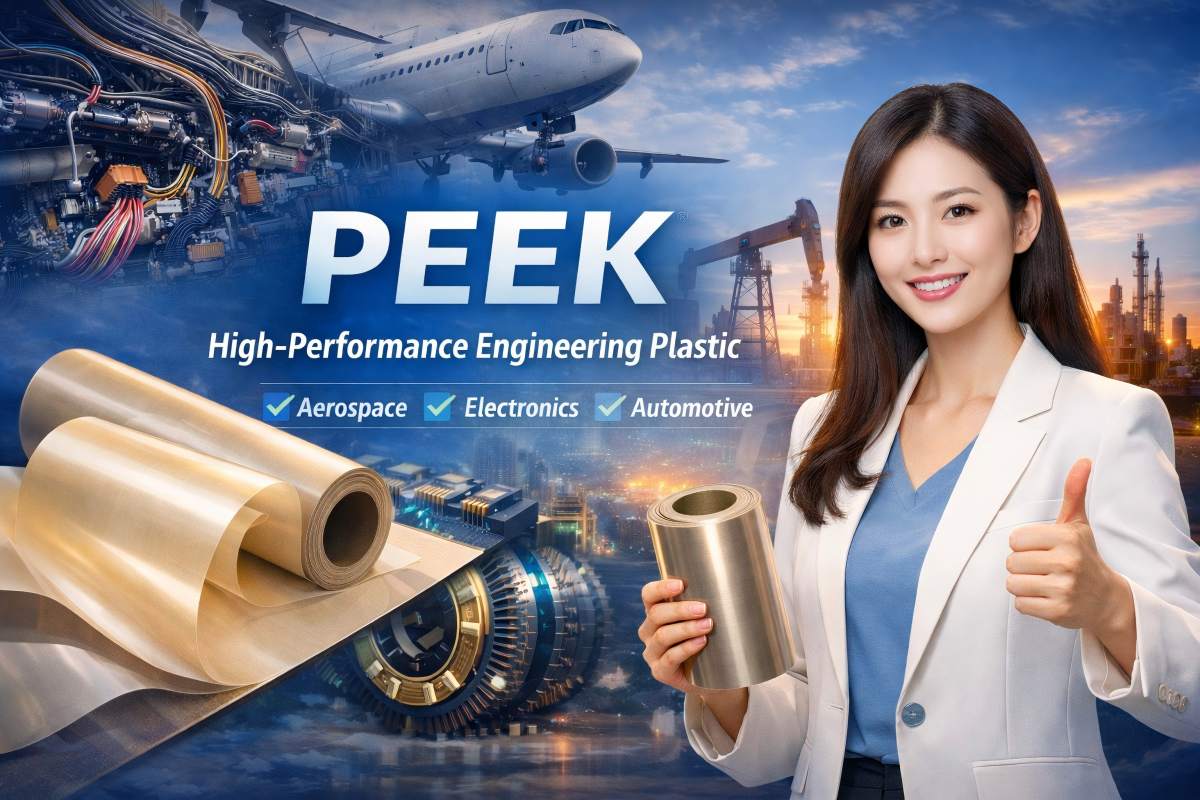
Introduction To PEEK: A High-Performance Thermoplastic
Polyether Ether Ketone, commonly known as PEEK, is a high-performance thermoplastic that has become a cornerstone of modern engineering and manufacturing. Renowned for its exceptional mechanical, thermal, and chemical properties, PEEK is widely used in industries ranging from aerospace to medical devices.
This blog delves into the world of PEEK film, PEEK material, and PEEK plastic, exploring their unique characteristics, applications, and the key players driving innovation in this field.
Why This Matters for Procurement & Design
When buyers search “PEEK film supplier” or engineers compare PEEK vs. polyimide vs. PET, the core questions are usually:
- Can it survive continuous high temperature and thermal cycling?
- Does it resist aggressive chemicals?
- Does it provide stable dielectric performance?
- Can the supplier deliver consistent thickness, surface, and documentation for global shipment?
CloudFilm positions its PEEK film offering specifically for these engineering and supply-chain expectations—see PEEK Film.
What Is PEEK Material?
The Science Behind PEEK
PEEK is a semi-crystalline thermoplastic belonging to the polyaryl ether ketone (PAEK) family. Its molecular structure, characterized by alternating ether and ketone groups, provides a unique combination of properties:
High-Temperature Resistance: PEEK can withstand continuous use at temperatures up to 260°C (500°F).
Chemical Resistance: It is highly resistant to acids, solvents, and hydrocarbons.
Mechanical Strength: PEEK offers excellent tensile strength and fatigue resistance, making it suitable for load-bearing applications.
Biocompatibility: PEEK is FDA-approved for use in medical implants and devices.
Below is a quick “decision snapshot” that buyers often use during material screening (final values depend on grade and test method):
| Screening Item | What engineers look for | Why it matters |
|---|---|---|
| Continuous use temperature | Stable near 260°C | Thermal endurance in aerospace/electronics |
| Chemical resistance | Resists solvents/acids (grade-dependent) | Reliability in harsh media |
| Mechanical strength & fatigue | Tensile + fatigue stability | Load-bearing & vibration environments |
| Electrical insulation | Dielectric stability under heat/humidity | FPC/insulation & power systems |
| Supplier capability | Gauge control + QC + export docs | Repeatable performance at scale |
If you want a supplier discussion around thickness, width, and surface finish options for engineering applications, CloudFilm supports project-based selection here: PEEK Film.

Clear PEEK: A Transparent Innovation
Traditional PEEK is opaque, but advancements in polymer science have led to the development of clear PEEK. This transparent variant retains all the mechanical and thermal properties of standard PEEK while offering optical clarity. Clear PEEK is particularly valuable in applications requiring visibility, such as medical imaging devices and transparent industrial components.
“Clear PEEK” is an engineering-material transparency concept (optical clarity with high heat capability). This is different from “transparent high-barrier packaging films” used for shelf-life. If your project is actually packaging-oriented (food/pharma), consider CloudFilm’s transparent barrier structures like PVDC PET or PVDC Coated Film, and for chlorine-free barrier options see ALOx PET Film.
PEEK Film: A Versatile Solution For Modern Industries
What is PEEK Film?
PEEK film is a thin, flexible form of PEEK that combines the polymer’s inherent properties with the versatility of a film. It is used in a wide range of applications due to its:
Electrical Insulation: Ideal for flexible printed circuits (FPCs) and electronic components.
Barrier Properties: Protects sensitive components from moisture, chemicals, and gases.
Thermal Management: Used in high-temperature environments, such as aerospace thermal shields.
When sourcing engineering films, “PEEK film” is not a single universal item. For a quote that matches your converter or assembly process, CloudFilm typically aligns on:
- thickness range and tolerance target (project-dependent)
- width, roll vs. sheet format, and core/packaging requirements
- surface preference (polished/matte options depending on application)
- end-use (e.g., FPC dielectric, cable insulation, gasket, medical component)

PEEK Film Suppliers: Meeting Global Demand
In addition to major manufacturers, there are numerous PEEK film suppliers catering to regional markets. Companies in Asia, such as PANJIN ZHONGRUN, are gaining traction due to their cost-effective production capabilities and ability to meet the growing demand in electronics and automotive industries.
Before placing an order, engineering teams and procurement typically confirm:
- thickness capability + stability across the roll
- documented QC routine and traceability
- available supporting documents (typical: RoHS/REACH statements, COA/TDS as required by project)
- packaging method for damage prevention during international shipping
- lead time and ability to support trial quantities before scale-up
Applications Of PEEK Polymer Across Industries
Aerospace and Defense
PEEK’s lightweight nature and flame resistance make it ideal for aerospace applications. It is used in cable insulation, engine components, and structural parts, helping to reduce fuel consumption and improve performance.

Medical Devices
PEEK’s biocompatibility and radiolucency have made it a preferred material for medical implants, such as spinal cages and dental instruments. Clear PEEK is particularly useful in devices requiring transparency, such as endoscopes and imaging equipment.
For medical-related projects, the key procurement step is confirming which grades, documentation, and validation pathway your device requires. If your request is for packaging of medical devices (sterile barrier systems) rather than device components, consider packaging structures such as PVDC Coated Film or retort/high-temperature packaging layers like Retort CPP Film where applicable.
Electronics and Energy
In the electronics industry, PEEK film is used as a dielectric layer in high-frequency circuits. It also plays a critical role in renewable energy systems, such as insulation for wind turbine cables and components for solar panels.
For certain RF/antenna designs where dielectric loss targets are extremely strict, engineers may also evaluate LCP film as a complementary option. CloudFilm also supplies LCP Film for high-performance electronics use cases.
Automotive Innovation
The automotive industry leverages PEEK for components like bearings, seals, and connectors. In electric vehicles (EVs), PEEK is used in battery modules and charging systems due to its thermal stability and electrical insulation properties.
The Economics Of PEEK: Pricing And Market Dynamics
PEEK is significantly more expensive than conventional plastics, with prices ranging from USD200 to 500 per kilogram. Key factors driving the cost include:
- Raw Material Complexity: The synthesis of PEEK requires specialized monomers, such as difluorobenzophenone.
- Manufacturing Precision: High-temperature processing demands advanced equipment and stringent quality control.
- Research and Development: Continuous innovation, such as the development of clear PEEK, increases R&D costs.
Instead of focusing only on resin price, many buyers control total cost through:
- right-sizing thickness (avoid over-spec)
- reducing scrap through stable winding/packaging and consistent roll quality
- requesting trial quantities before mass production
- aligning specification to the real service temperature + dielectric/mechanical target
Challenges And Future Trends In PEEK Technology
Sustainability Concerns
While PEEK is durable and long-lasting, its petroleum-based origin raises environmental concerns. Companies are exploring bio-based monomers and recycling methods to reduce the carbon footprint of PEEK production.
3D Printing and Customization
PEEK’s compatibility with additive manufacturing is opening new possibilities for customized components. 3D-printed PEEK parts are being used in medical implants and complex aerospace structures, offering design flexibility and reduced waste.
Emerging Markets
Growing demand in regions like India, China, and Brazil is driving the expansion of PEEK applications. Local manufacturers and suppliers are partnering with global firms to meet the increasing need for high-performance polymers.

Conclusion: PEEK As A Pillar Of Modern Engineering
From its origins as a niche aerospace material to its current status as a cornerstone of advanced manufacturing, polyether ether ketone (PEEK) exemplifies the power of materials science. Innovations like clear PEEK and PEEK film continue to push the boundaries of what is possible, while cost-reduction efforts and sustainability initiatives promise broader accessibility.
As industries evolve, PEEK’s role in enabling lighter, stronger, and smarter technologies will only expand—solidifying its place as a polymer of the future.
FAQs (PEEK & PEEK Film) — 8 Questions
1. What is PEEK and why is it considered “high-performance”?
PEEK is a semi-crystalline thermoplastic known for high heat resistance, strong mechanical performance, and chemical stability, making it suitable for extreme environments.
2. What is PEEK film used for most often?
PEEK film is commonly used for electrical insulation, dielectric layers (e.g., electronics), and protective functions in high-temperature or chemically aggressive settings. For supply reference: PEEK Film.
3. How do I choose thickness and format (roll vs. sheet)?
Choice depends on your converting process and end-use (lamination, die-cutting, insulation wrapping, forming). Share thickness targets, width, and annual volume for a practical recommendation via Contact Us.
4. Is PEEK film suitable for high-frequency electronics?
In many designs it is used as insulation/dielectric; for ultra-high-frequency RF designs, some engineers also evaluate LCP Film as a complementary option.
5. What documents do buyers typically request for international orders?
Common requests include TDS/spec sheet, COA or batch QC summary, and compliance statements (project-dependent). CloudFilm can coordinate these with your order: PEEK Film.
6. Why is PEEK more expensive than conventional plastics?
Its raw materials, high-temperature processing, and strict QC requirements generally increase cost (the page discusses typical pricing drivers).
7. If my project is packaging (food/pharma), is PEEK film the right material?
Usually PEEK is an engineering film. Packaging projects often use barrier films such as PVDC PET, PVDC Coated Film, or ALOx PET Film.
8. How do I get a fast quotation from CloudFilm?
Provide application, thickness range, width, roll/sheet preference, and estimated quantity—then contact CloudFilm via Contact Us or start from the product page: PEEK Film.