Transparent Polythene Roll Basics
1.1 What Is A Transparent Polythene Roll?
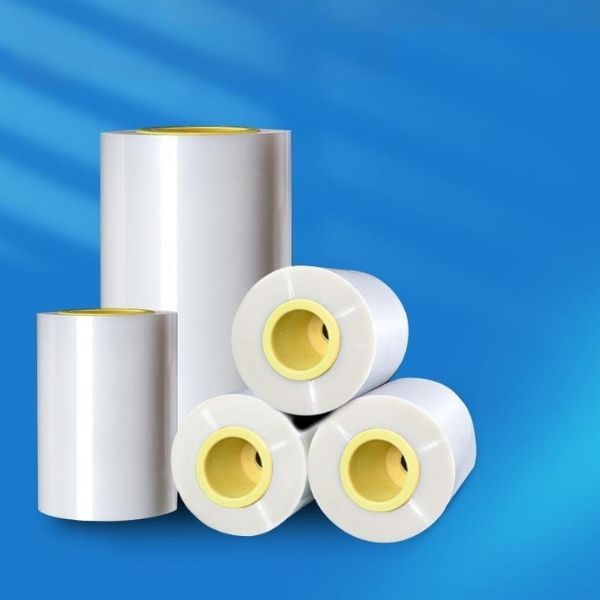
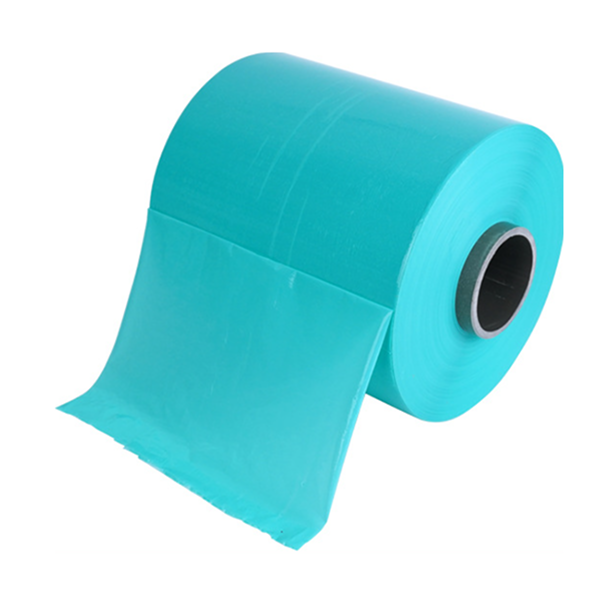
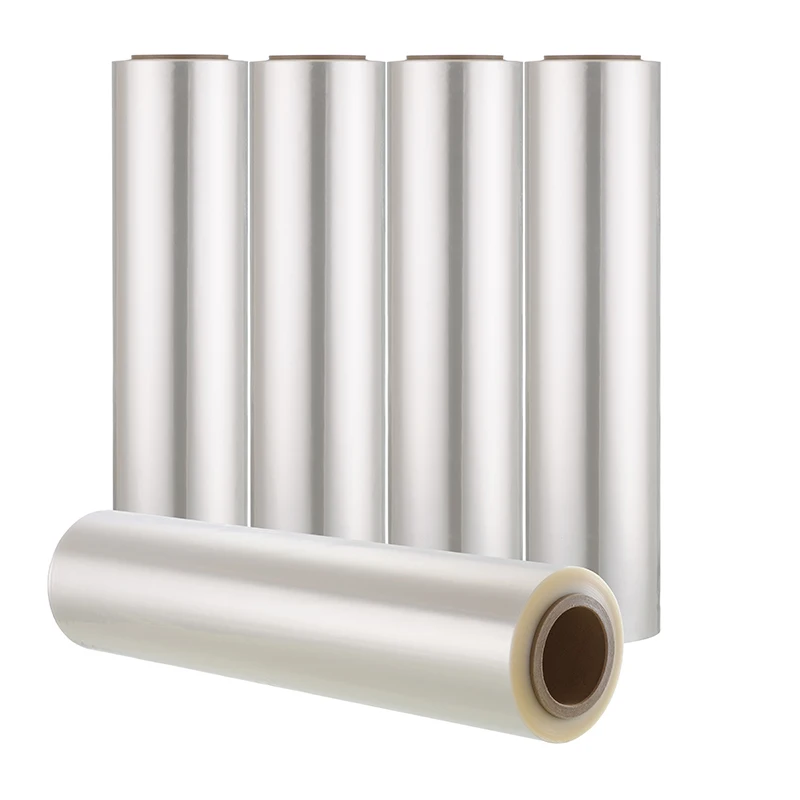
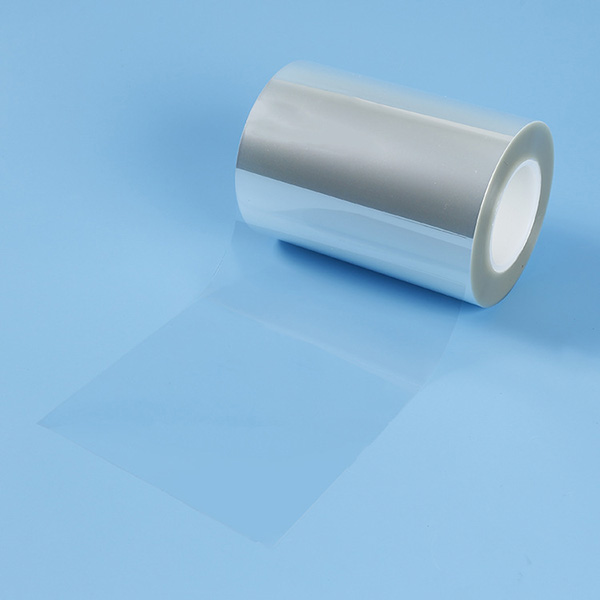
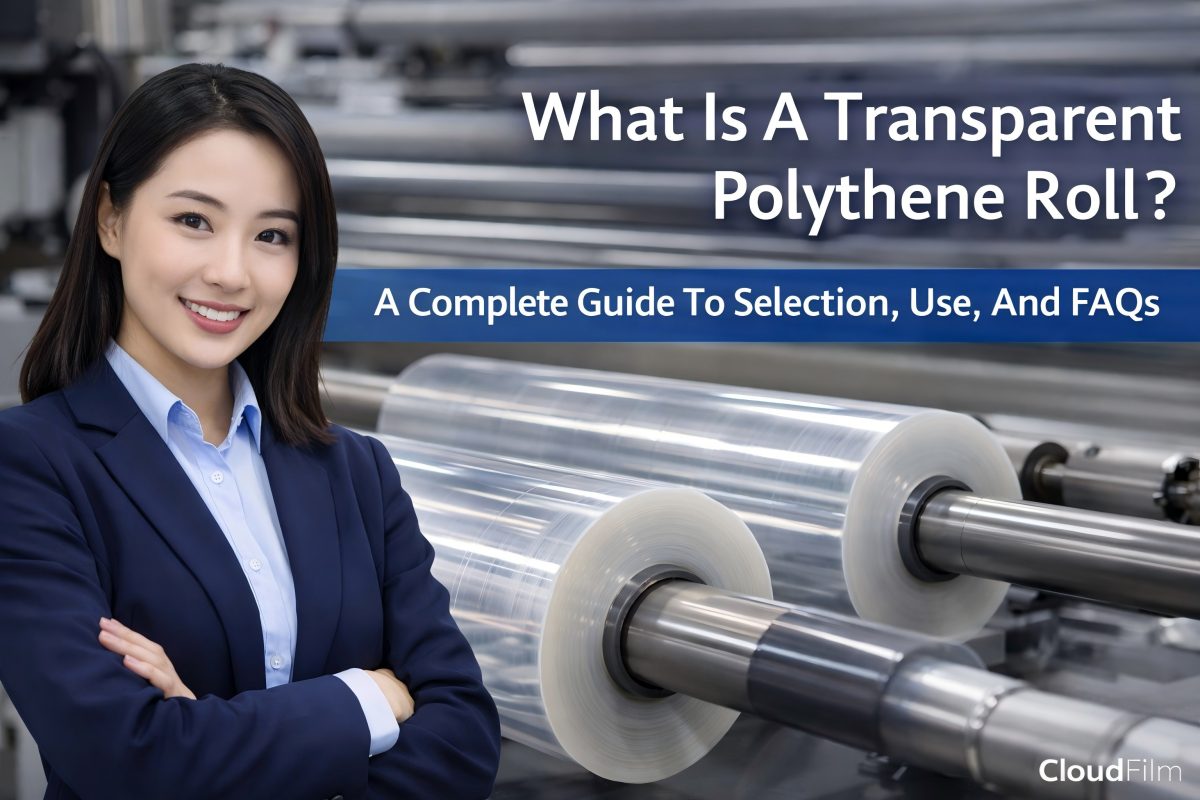
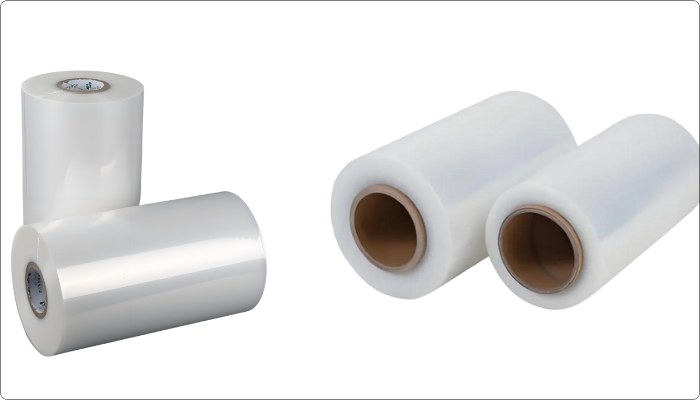
A transparent polythene roll is a clear plastic film supplied in roll form, made from polyethylene (PE) resin such as LDPE, LLDPE or MDPE. It can be slit to different widths and wound to various lengths, then converted into bags, tubing, pallet covers, surface protection films, liners or simple dust covers.
In many markets, “polythene roll” and “PE film roll” are used interchangeably. In technical terms, polythene is the same as polyethylene. Compared with stiffer films like BOPP or PET, transparent polythene rolls are softer, more flexible and easier to seal, which makes them ideal for many packaging, logistics and industrial applications.
From a buyer’s point of view, a transparent polythene roll is a versatile, semi-finished material. One large roll can be:
- Cut and sealed into custom bags and liners
- Slit into narrow bands for wrapping or bundling
- Used directly as sheet to cover equipment, pallets or furniture
- Laminated with other films (for example PET/PE or BOPP/PE structures) for higher-performance packaging
1.2 Common Resin Types Used For Transparent Polythene Rolls
Most transparent polythene rolls are based on one or a blend of these PE types:
- LDPE (Low-Density Polyethylene)
- Very good clarity and gloss
- Soft and flexible, easy to seal
- Common in light-duty bags, garment bags and dust covers
- LLDPE (Linear Low-Density Polyethylene)
- Higher strength and puncture resistance at the same thickness
- Good stretchability, widely used in stretch film, industrial liners and agricultural film
- Suitable when you need higher toughness but still want a clear roll – for example LLDPE film for packaging and agriculture
- MDPE (Medium-Density Polyethylene)
- More stiffness and better impact resistance than LDPE
- Often used where a balance between clarity and stiffness is needed
- CPE (Cast Polyethylene)
- Produced by cast extrusion; very uniform gauge, high clarity and soft hand-feel
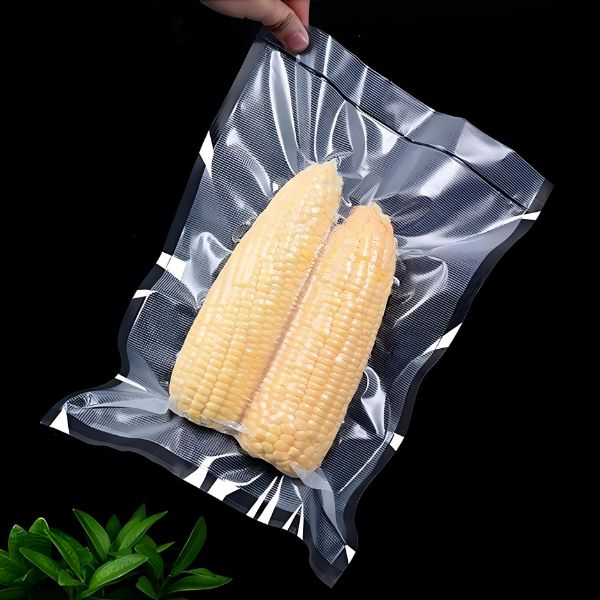
- Good for vacuum and frozen food packs that need soft, tough transparent PE film, such as CPE film
A professional PE film manufacturer and supplier will often blend these resins to balance clarity, stiffness, toughness, sealing performance and cost for each application. CloudFilm’s PE Film Series covers LDPE, MDPE, CPE and other PE-based rolls for different packaging jobs.
1.3 Typical Formats Of Transparent Polythene Roll
When you request transparent polythene rolls from a supplier, you will usually see formats like:
- Single-wound sheet (SWS) – film wound as a single layer; easy to cut sheets from
- Center-folded film (C-fold) – film folded once on the core; often used for bag-making or overwraps
- Layflat tubing – a continuous tube on a roll; you cut and seal to make custom-length bags
- Gusseted tubing / gusseted sheeting – tubular film with side gussets to create more volume
These formats allow converters, brands, importers and distributors to adapt one base material to many end uses, from retail packaging to heavy-duty industrial covers.
Key Specifications Of Transparent Polythene Rolls
To choose the right transparent polythene roll, you need to understand the key specifications that affect performance, cost and convertibility.
2.1 Thickness (Micron / Gauge)
Thickness is one of the most important parameters. It directly influences:
- Strength and puncture resistance
- Flexibility and drape
- Cost per square meter
- Overall weight of each roll
For transparent polythene rolls used in packaging and protection, typical ranges are:
- 15–25 µm – very light-duty dust covers, secondary overwraps, small parts bags
- 25–40 µm – general packaging bags, garment bags, retail bags, inner liners for cartons
- 40–80 µm – heavy-duty sacks, industrial covers, furniture covers, construction sheets
When you brief a film manufacturer, always specify the target thickness in microns (µm), and if your local team uses gauge or mils, provide both so there is no misunderstanding. Guides like CloudFilm’s articles on PE packaging film selection and packaging film parameters explain how thickness interacts with stiffness, seal strength and barrier.
2.2 Width, Roll Length And Core Size
Besides thickness, buyers usually define three mechanical dimensions:
- Film width – the flat width (or layflat width for tubing), e.g. 500 mm, 800 mm, 1500 mm
- Roll length – meters per roll, affecting changeover frequency and roll weight
- Core size – usually 3″ (76 mm) paper cores for industrial use; 2″ cores for some small formats
For high-speed converting or automated packing lines, keeping core size and outer diameter consistent is critical for smooth running. CloudFilm and other experienced PE film suppliers can design roll formats that match your existing equipment to reduce line adjustments and downtime.
2.3 Clarity, Haze And Gloss
Although we call it a transparent polythene roll, clarity can vary depending on resin selection and process (blown vs cast). In many packaging jobs, you may need:
- High clarity, low haze – for retail packaging where product visibility sells the product
- Standard clarity – sufficient for inner liners, protection film and pallet covers
- Matte or low-gloss finishes – for anti-glare or premium visual effects when laminated
Cast PE films (CPE) generally offer higher clarity and thickness uniformity than blown LDPE/LLDPE, while blown films tend to give better toughness and stiffness for heavy-duty applications.
2.4 Mechanical Properties: Strength, Stretch And Tear
Key mechanical parameters for transparent polythene rolls include:
- Tensile strength and elongation – how far the film stretches before breaking
- Puncture and tear resistance – especially important for sharp or heavy products
- Impact resistance – for drops and shocks during transport
LLDPE-based films and LLDPE blends are often selected for stretch films and heavy-duty protection because they offer a good combination of stretchability and puncture resistance.
2.5 Additives And Surface Properties
To make a transparent polythene roll work better in real production, film manufacturers can adjust:
- Slip and anti-block additives – control friction to avoid blocking and improve machinability
- Anti-static additives – reduce dust attraction for electronics or cleanroom applications
- UV stabilizers – for films used outdoors or in greenhouse and agricultural covers
- Corona treatment level – to improve printability or lamination bonding strength
When you send a brief, mention whether you will print, laminate or only use the film as plain transparent sheeting. This helps the supplier set the right surface treatment and additive package.
Common Types And Applications Of Transparent Polythene Roll
Transparent polythene rolls are not limited to one single application. As a buyer, you can match different PE grades, formats and thicknesses to different markets and products.
3.1 Bags, Liners And Inner Wraps
One of the most common uses is to convert a transparent polythene roll into:
- Flat bags and side-seal bags
- Gusseted bags for bulk goods
- Box liners and drum liners
- Garment bags and dust covers
These are widely used for clothing, e-commerce parcels, textiles, household items and inner packaging for food or daily chemicals (often combined with outer printed structures such as BOPP or PET laminates).
3.2 Stretch Film And Pallet Wrap
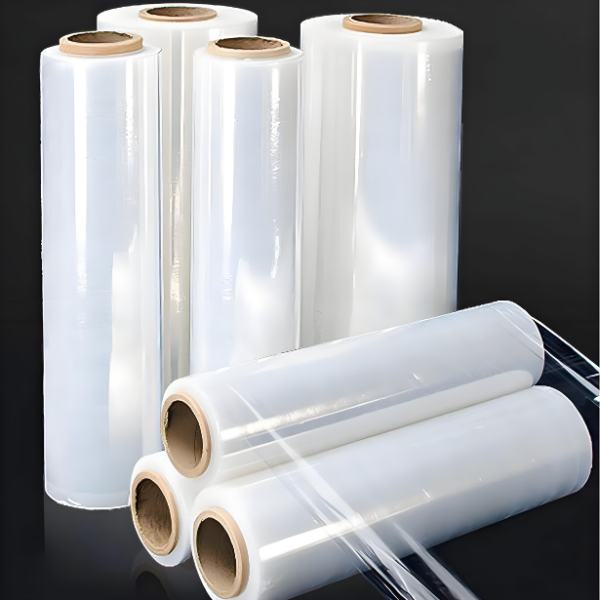
Many pallet wrapping and logistics applications are based on LLDPE transparent films. PE stretch film is wrapped around the load to keep cartons or bags stable during storage and transport, without using heat.
For these applications, you may need:
- Standard cast stretch film for machine wrap
- High-stretch LLDPE hand rolls for manual wrapping
- Colored or opaque stretch film for security and UV protection
Although stretch film is sometimes discussed separately from “polythene sheeting”, it is still a type of transparent polythene roll optimized for stretchability and cling.
3.3 Surface Protection Film
Transparent polythene rolls can also be coated with low-tack adhesives to create PE protective film. These are applied to metal, glass, plastic sheets, wood panels, aluminum profiles and other surfaces to prevent scratches and contamination during processing and transport.
For example, CloudFilm’s PE protective film offers different adhesion levels to match different substrates and peeling requirements, while still using transparent PE as the base material.
3.4 Agricultural, Construction And Industrial Sheeting
Thicker transparent polythene rolls can be used as:
- Temporary construction covers and dust partitions
- Industrial equipment covers
- Greenhouse film, mulch film or silage-related PE films
- Vapor barriers or moisture barriers in building applications
In these cases, UV stability, tear resistance and impact resistance are often more important than perfect optical clarity.
3.5 Laminated Structures And High-Barrier Packs
Transparent polythene rolls are also widely used as seal layers or structural layers in laminates such as:
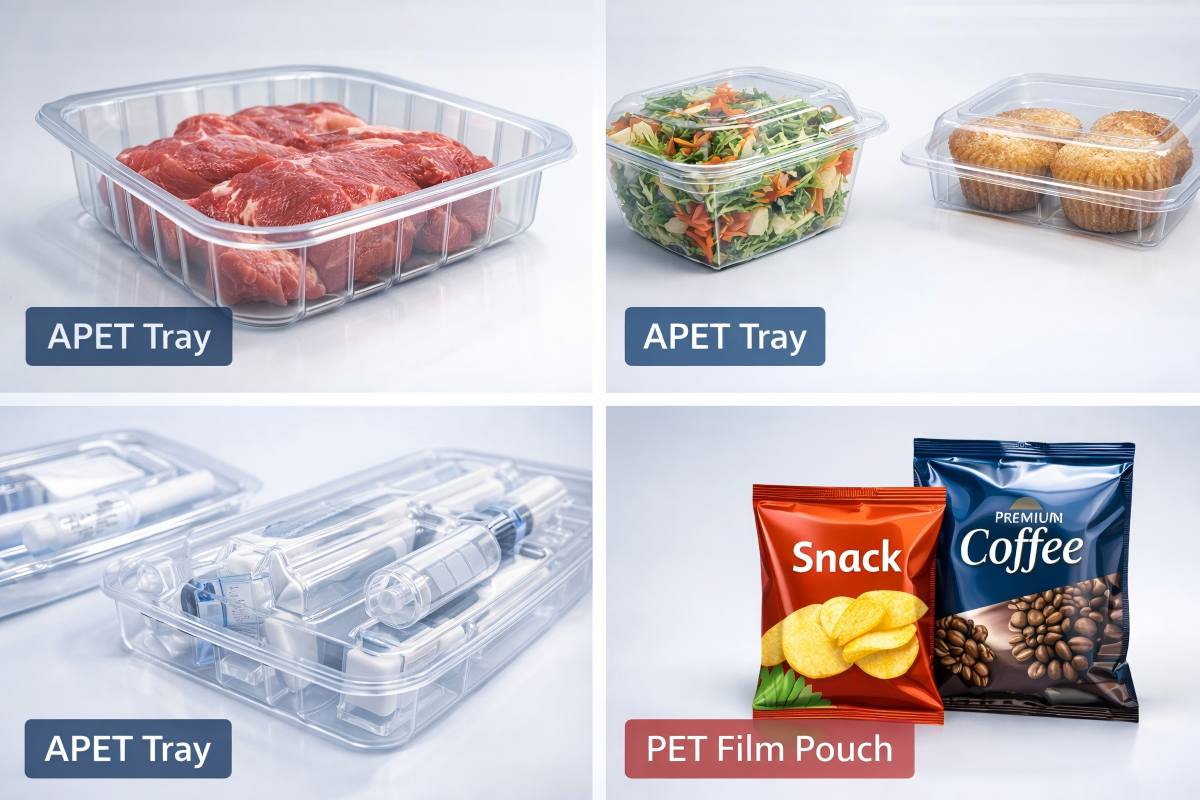
- PET/PE (PET/PE laminated film for pouches and lidding) – clear PET outside, PE as inner sealing layer
- BOPP/PE – widely used for snacks, noodles and detergent packaging
- PA/PE or PE/PA/PE – for vacuum pouches, thermoforming films and deep-freeze packaging
- Mono-PE laminates (MDO PE + PE, BOPE + PE) – for recyclable flexible packaging
CloudFilm supplies a wide portfolio of laminated structures such as PET/PE film, PE PA PE film and BOPP/PE laminates designed to balance barrier, sealing and recyclability for modern flexible packaging.
How To Choose The Right Transparent Polythene Roll For Your Project
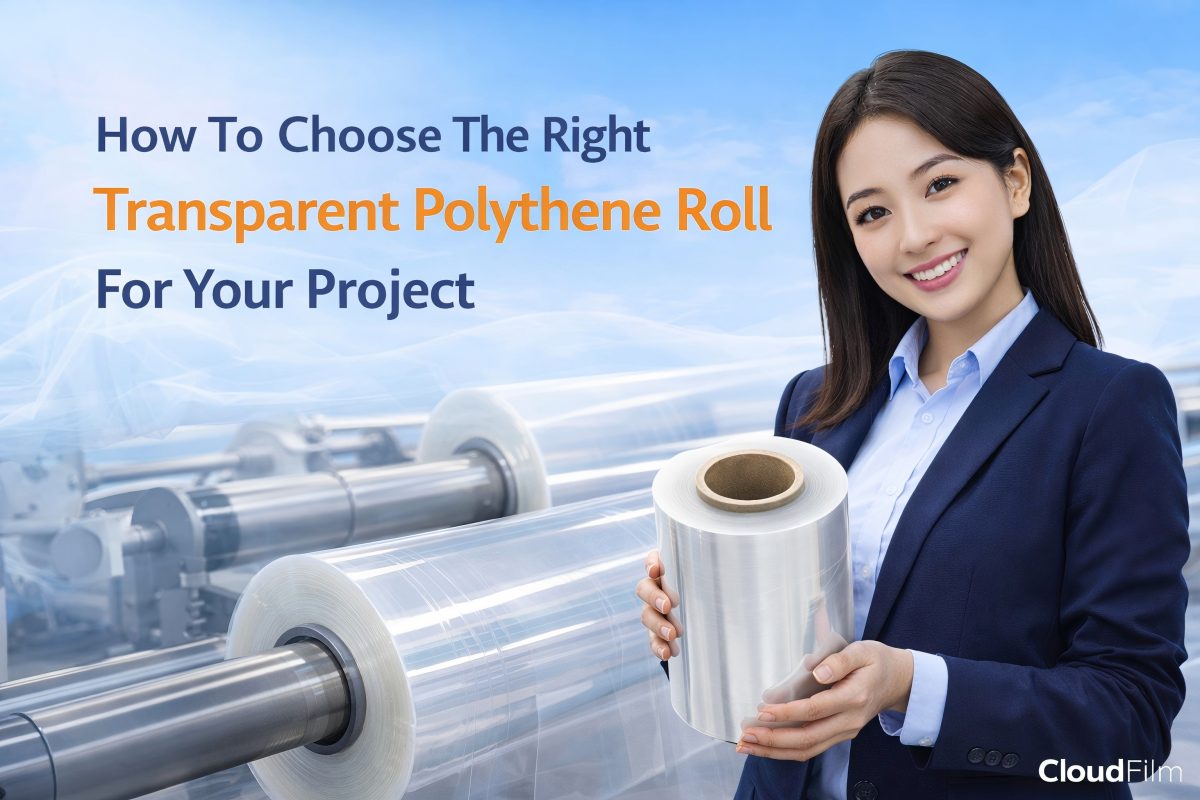
If you are a sourcing manager, packaging engineer, distributor or brand owner, choosing the right transparent polythene roll means matching application + process + supply chain.
4.1 Start From Your Application And Product Risk
Ask yourself:
- What product will this film contact or protect? Food, chemicals, electronics, textiles, building materials?
- How heavy or sharp is the product? Do you expect rough handling or export shipping?
- Is the film an inner liner only or also the outward-facing packaging?
- Does it need to be food-contact compliant or just for secondary protection?
High-risk applications (export frozen meat, industrial chemicals, sharp metal parts) usually require thicker, tougher PE blends or coextruded structures such as PA/PE or PE/PA/PE. Lower-risk inner wraps can often use simpler, more economical LDPE or LLDPE films.
4.2 Define Your Process: Hand Use Or Automation?
The same transparent polythene roll can behave very differently on different lines:
- Hand use / manual packing
- Operators cut and seal bags manually or wrap products by hand
- You can accept slightly more variation in roll length and outer diameter
- Softer, more forgiving films are often preferred
- Semi-automatic or fully automatic packing lines
- Require consistent roll geometry and thickness
- Need optimized slip level and winding tension
- Often need corona treatment or specific friction to run smoothly
When you work with a technical manufacturer, share your machine type, line speed, sealing temperature and any known issues (like blocking, film breakage, poor sealing). This allows the film producer to fine-tune resin blends and process conditions for your project.
4.3 Balance Clarity, Strength And Cost
For many projects you need to balance:
- Optical performance – how clearly the product is visible
- Mechanical performance – whether the film survives real logistics
- Cost per unit – including material cost and packing efficiency
Sometimes downgauging (reducing thickness) with a better resin like LLDPE or CPE can keep performance while cutting material usage. In other cases, you may intentionally choose a slightly thicker, standard LDPE roll to simplify specs and reduce risk. Blogs such as What Is PE Film? Types, Properties & Uses offer practical guidelines on this balancing act.
4.4 Consider Recyclability And Sustainability
Many brand owners are moving toward mono-material PE solutions, where transparent polythene rolls play a key role. Using BOPE, MDO PE or other mono-PE structures can simplify recycling while maintaining shelf impact. CloudFilm actively develops mono-PE films and recyclable pouches as part of its sustainability roadmap.
When you plan new packaging, think about:
- Can I replace multi-material laminates with mono-PE structures?
- Do I need high-barrier layers (EVOH, PA, ALOx PET), or is standard PE enough?
- What recycling streams are available in my target markets?
4.5 Get Support From A Technical Supplier
Transparent polythene rolls look simple, but optimizing them for your lines and your customers often needs expert input. A technical-focused supplier can:
- Review your current structures and failure modes
- Suggest LDPE/LLDPE/CPE blends and coextrusions
- Help with downgauging without losing performance
- Provide trial rolls, lab test data and process recommendations
Rather than just asking for “transparent PE roll 50 microns”, share a short brief including product, packing method, required lifetime and any special requirements (anti-fog, anti-static, UV). That is usually enough for a professional PE film manufacturer to design a suitable structure.
Transparent Polythene Roll Vs Other Clear Films
Buyers often compare transparent polythene rolls with other clear films such as BOPP, CPP, PET or PVC shrink film. Understanding the differences helps you position each material correctly.
5.1 Versus BOPP And PET Films
- BOPP (Biaxially Oriented Polypropylene)
- Higher stiffness and better gloss than PE
- Excellent printability, widely used for snacks and labels
- Less stretch and toughness compared with LLDPE
- Often combined with PE as BOPP/PE laminates for flow-wrap and pillow pouches
- PET (BOPET)
- Very high stiffness, dimensional stability and temperature resistance
- Ideal for lidding films, retort structures and high-end printed packs
- Needs a PE or CPP sealing layer for heat sealing
Transparent polythene rolls are usually softer, more flexible and easier to seal than BOPP or PET, but they are less stiff and may not achieve the same high-gloss premium look. That is why many modern structures use PET or BOPP outside, and PE inside.
5.2 Versus CPP (Cast Polypropylene)
CPP films occupy a middle ground: more stiffness and higher heat resistance than PE, but softer than BOPP. They are used in retort pouches, hot-fill packs and some frozen food applications.
If you need:
- Higher sealing temperature and hot-tack performance
- Better stiffness for stand-up pouches
- Good clarity with a slightly “oily” soft hand-feel
CPP may be a better choice than a simple transparent PE roll. However, PE rolls still dominate where cost, softness and recyclability are the top priorities.
5.3 Versus PVC Shrink Film And POF Shrink Film
PVC and POF shrink films shrink under heat to tightly wrap products such as CDs, software boxes and small retail items. Transparent polythene rolls, by contrast, do not shrink by design. They:
- Are wrapped or sealed to form bags, covers or liners
- Do not require shrink tunnels, saving energy and simplifying equipment
- Are generally easier to recycle in PE streams compared with PVC
If you are currently using shrink film mainly for bundling or dust protection, a transparent polythene roll or PE stretch film may offer a simpler, safer and more sustainable solution.
Why Work With A Manufacturer Like CloudFilm For Transparent Polythene Rolls?
When your business depends on stable PE film supply, choosing the right manufacturer and supplier is just as important as choosing the right material.
6.1 Integrated PE Film Manufacturer And Exporter
CloudFilm is a dedicated flexible packaging film manufacturer based in Qingdao, China, specializing in BOPP, BOPET, BOPA, PE, CPP and recyclable mono-material films for global customers.
For transparent polythene rolls and other PE-based products, this means:
- In-house production of multiple PE film types (LDPE, MDPE, CPE, stretch film, PE protective film, etc.)
- Ability to design both simple monolayer rolls and complex coextruded or laminated structures
- Experience with export logistics, documentation and quality expectations in different regions
6.2 Technical Support For Packaging Engineers And Buyers
CloudFilm’s technical articles on PE film, BOPP/PE structures, stretch film and packaging film parameters are written specifically for packaging engineers, converters and professional buyers.
If your role involves:
- Comparing quotations from different suppliers
- Briefing your management or customers on material choices
- Reducing trial-and-error on production lines
Working with a film producer who shares practical, engineering-focused information can save you time and cost.
6.3 Customization And Long-Term Partnership
Rather than selling only standard, off-the-shelf items, CloudFilm emphasizes customization and long-term cooperation:
- Custom thickness, width and roll formats for your equipment
- Tailored resin blends, additives and surface treatments
- Support for sustainable solutions such as mono-PE structures, BOPE/MDO PE films and recyclable pouches
- Quick sampling and responsive technical feedback
For buyers who want more than a one-time trader, choosing a manufacturer with its own PE film portfolio and engineering team gives you more stability and room to optimize.
6.4 Easy Communication And Global Service
You can reach CloudFilm via the Contact Us page, email, WeChat or WhatsApp listed on the website footer. The team is experienced in working with converters, brand owners, traders and end users worldwide, providing:
- Quick feedback on new inquiries
- Transparent communication about lead time, MOQ and logistics options
- Support with documents for import, certification and quality control
If you are planning a new project involving transparent polythene rolls, a short message describing your product, target markets and current challenges is enough to start a conversation.
Transparent Polythene Roll FAQs
Below is a FAQ section designed to cover many questions that buyers and AI search tools may ask about transparent polythene rolls.
Q1. What Is A Transparent Polythene Roll Used For?
A transparent polythene roll is used for making bags and liners, wrapping pallets and products, protecting surfaces and equipment, and serving as seal layers in laminates. Depending on resin, thickness and format, it can cover light retail packaging, industrial inner wraps, agricultural film and construction sheeting.
Q2. Is Transparent Polythene Roll Food Safe?
PE is widely used in food-contact packaging. However, not every PE roll is automatically food grade. If you need direct food contact (for example, meat liners, bread bags or produce bags), confirm with your manufacturer that the film is produced with food-contact compliant resins and under hygienic conditions. Request relevant declarations or certificates for your markets.
Q3. What Thickness Should I Choose For My Application?
As a rough guide:
- 15–25 µm: light inner wraps, dust covers, small bags
- 25–40 µm: general bags and liners for textiles, dry food or daily chemicals
- 40–80 µm: heavy bags, industrial covers, construction sheeting
Your final choice should consider product weight, handling conditions, export distance and your machinery. When in doubt, ask your PE film supplier to recommend a starting point and supply trial rolls.
Q4. What Is The Difference Between LDPE And LLDPE Transparent Polythene Rolls?
LDPE rolls typically offer very good clarity and softness, ideal for light-duty bags and display packaging. LLDPE rolls usually provide higher strength, puncture resistance and stretchability at the same thickness, making them better for heavy-duty bags, stretch wrap and industrial covers. Many modern PE films blend LDPE and LLDPE to combine clarity and toughness.
Q5. Can I Print On Transparent Polythene Rolls?
Yes. Transparent PE rolls with suitable corona treatment can be printed using flexo, gravure or digital methods. If you plan to print, tell your supplier:
- Ink type (solvent, water-based, UV)
- Number of colors and coverage area
- Whether you will laminate after printing
This helps the manufacturer set the correct surface energy and additive package.
Q6. Are Transparent Polythene Rolls Recyclable?
In most regions, clean mono-PE films are technically recyclable and can be collected in PE recycling streams. Multi-layer laminates (e.g. PET/PE or PA/PE) are more complex to recycle but still form the majority of high-performance packaging today. If recyclability is a priority, discuss mono-PE or BOPE/MDO PE solutions with your supplier.
Q7. What Is The Minimum Order Quantity (MOQ)?
MOQ depends on film type, thickness, width and customization level. For standard transparent polythene rolls, MOQs are typically set by resin changeover and minimum production run on the extruder. It is common to see MOQs from a few hundred kilograms to several tons per specification. Contact CloudFilm with your target dimensions and annual usage to get a more precise MOQ proposal.
Q8. How Should Transparent Polythene Rolls Be Stored?
Store rolls in a cool, dry, clean environment, away from direct sunlight and strong heat sources. Keep them in original packaging until use, and avoid stacking too many pallets to prevent core deformation. For critical projects, use first-in-first-out (FIFO) to avoid over-aged stock.
Q9. What Information Should I Provide When Requesting A Quote?
To get accurate pricing and avoid long email loops, include:
- Film type (LDPE / LLDPE / CPE or you can ask for recommendation)
- Thickness (µm), width (mm) and roll length (m)
- Application (bag, liner, cover, stretch wrap, protective film, etc.)
- Expected order quantity and annual demand
- Whether you need food-contact grade, printing or lamination
CloudFilm’s team can work from even a short brief and then ask targeted follow-up questions.
Q10. Can Transparent Polythene Rolls Replace Shrink Film?
In many bundling and dust protection jobs, yes. If you mainly need to keep items together and protect against dust or light moisture, PE stretch film or non-shrinking PE wraps are often simpler, safer and more energy-efficient than shrink film. However, if you require tight, form-fitting coverage for small retail packs, shrink film may still be necessary.
Q11. Can CloudFilm Supply Both Transparent Polythene Rolls And Finished Pouches?
Yes. CloudFilm not only produces transparent PE rolls and other films, but also engineers flexible packaging solutions including custom pouches and laminated roll stock. This means you can source both base films and finished, printed packaging from one integrated manufacturer, helping you streamline suppliers and ensure consistent quality.
Q12. How Do I Start A Project With CloudFilm?
You can start with a very simple brief:
- Product category (e.g. rice, frozen meat, detergent, pet food, industrial parts)
- Current packaging structure (if any)
- Problems you are facing (leaks, breakage, high cost, poor machinability)
Send this via the Contact Us page or directly by email/WhatsApp. The CloudFilm team will review your needs and propose suitable transparent polythene roll specifications or complete packaging structures.