Introduction
Transparent plastic pouches are no longer just simple packaging bags. In modern flexible packaging, they are part of product display, shelf communication, transport efficiency, and even buyer trust. When customers can clearly see the product inside, they often feel more confident about freshness, cleanliness, color, texture, and overall quality.
That is why transparent pouches are widely used for snacks, bakery items, frozen foods, candies, powders, cosmetics, household refills, and many industrial items.
CloudFilm’s own transparent-packaging content also shows that buyers increasingly care about clarity, lightweight structures, and pack formats that combine appearance with real packaging performance.
A good transparent plastic pouch is never “just a clear bag.” The real work happens in the material structure: which outer film gives the best gloss, which sealing layer runs well on the filling line, whether the pouch needs zipper or spout, and whether the pack must balance transparency with oxygen or moisture barrier.
This article is written for brand owners, importers, converters, sourcing managers, and packaging engineers who want a clear and practical guide. If you want a broader background on clear, premium-looking flexible packs, CloudFilm’s crystal flexible packaging guide is also worth reading.
What Is a Transparent Plastic Pouch?
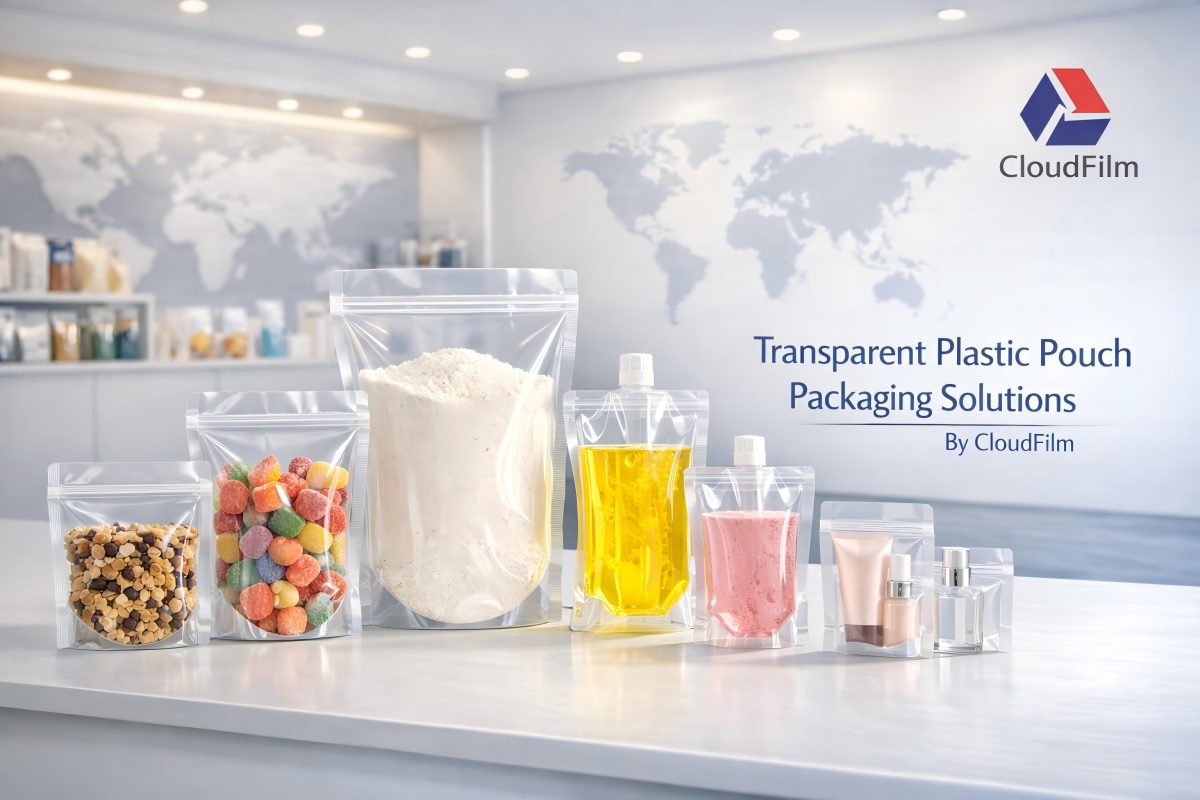
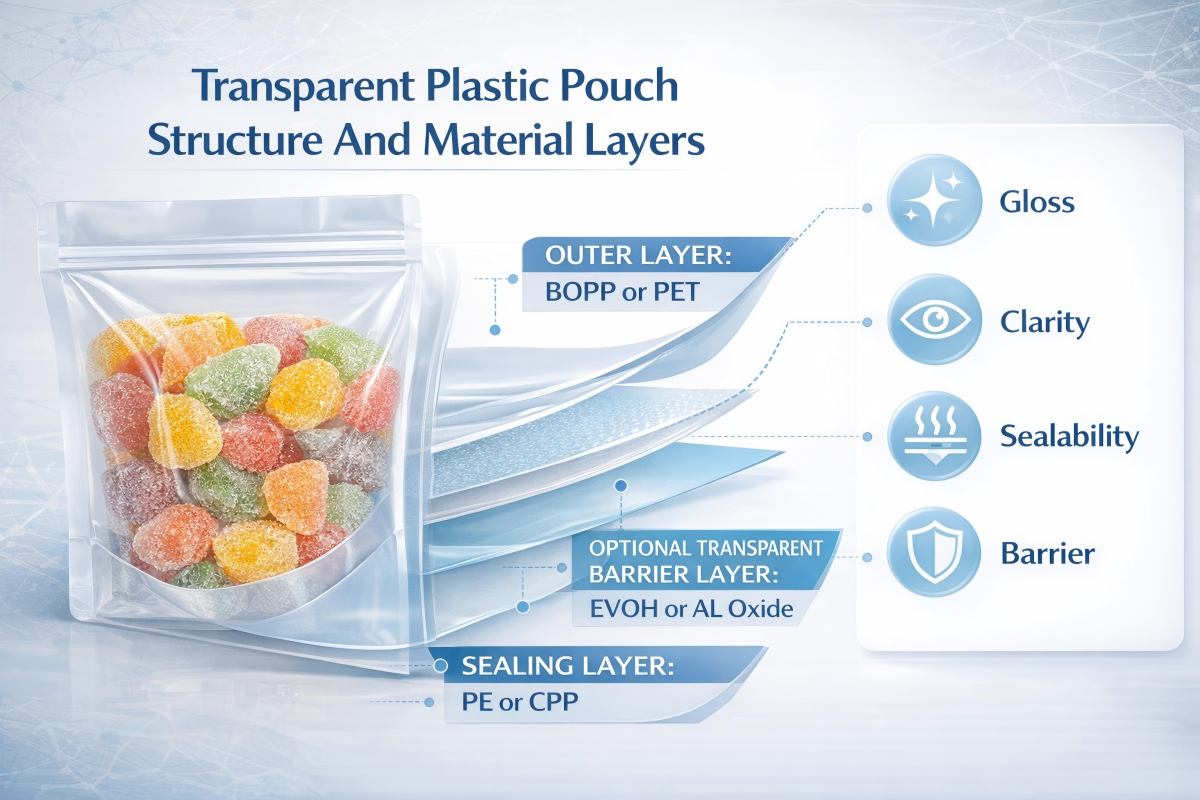
A transparent plastic pouch is a flexible package made from clear polymer films so the product inside remains visible. In practice, transparent pouches are usually built from one or more layers. Common combinations include clear BOPP or PET for stiffness and print quality, plus PE or CPP as the sealing layer.
When longer shelf life is needed, converters may add transparent barrier elements such as EVOH or ALOx-based structures. In other words, transparency does not mean low performance. A well-designed transparent pouch can still provide sealing strength, puncture resistance, machinability, and, in many cases, good barrier performance.
The term is often used loosely in the market, so buyers should be careful. Some people say “transparent pouch” when they mean a fully clear pouch. Others mean a printed pouch with one transparent window. Still others use the term for premium “crystal clear” packaging with higher gloss and lower haze.
For professional sourcing, it is better to define the pouch by product type, desired appearance, barrier target, and filling method rather than by the word “transparent” alone. CloudFilm’s clear plastic film page is useful if you want to understand the material side before deciding the final pouch structure.
Why Transparent Plastic Pouches Are Popular
The first reason is visibility. A transparent pouch lets consumers see the real product rather than only a printed photo. This is especially powerful for products where color and texture influence buying decisions, such as dried fruit, candy, coffee beans, bakery mixes, pet treats, bath salts, or refill liquids.
CloudFilm’s transparent-packaging guidance emphasizes that clarity can improve shelf impact, online product presentation, and buyer confidence. For many brands, this visual honesty becomes part of the sales message.
The second reason is packaging efficiency. Compared with many rigid packs, flexible pouches reduce shipping weight, save storage space, and allow more packaging formats in one supply chain. Transparent pouches can be made as small sachets, pillow bags, stand up pouches, spouted refill packs, or larger gusseted bags.
This makes them attractive for both retail and industrial applications. If you want a broader comparison of available bag styles, CloudFilm’s guide to pouch types
gives a helpful overview.
The third reason is branding flexibility. Transparent does not mean plain. A transparent pouch can still use selective printing, matte or gloss effects, zippers, tear notches, hang holes, rounded corners, and shaped formats.
Brands often combine transparency with partial graphics so the product remains visible while the package still looks premium. This balance is one reason transparent plastic pouches remain popular in food, personal care, and household packaging.
Common Materials and Structures for Transparent Plastic Pouches
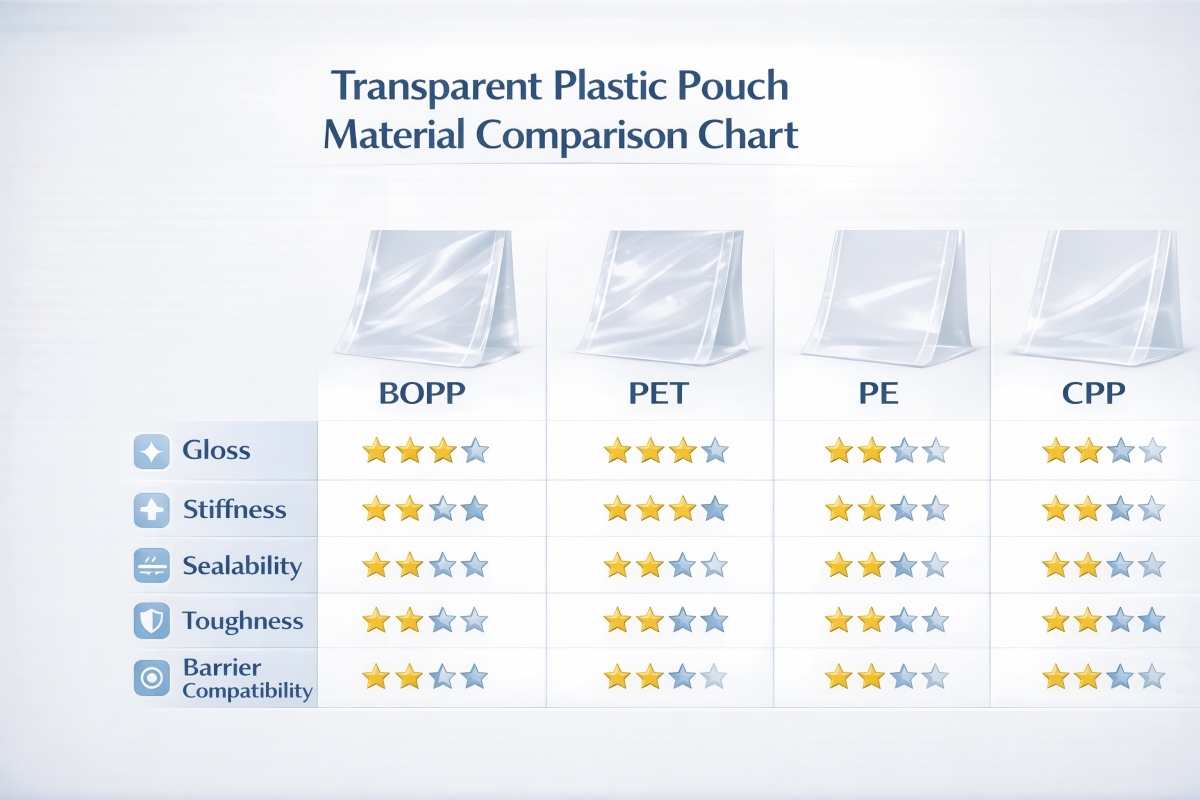
When buyers ask for a transparent pouch, the first technical question should be: which material family is most suitable? Clear BOPP is often used when high gloss, crisp appearance, and good printability are important. Clear PET is a strong option when you want higher stiffness, dimensional stability, and a more premium outer web. PE is widely used as the sealing layer because it offers reliable sealing and softness.
CPP is also common for inner layers where seal performance, clarity, and toughness are needed. CloudFilm’s material pages consistently position BOPP and BOPET as good clear outer layers, while PE and CPP are often used for sealing and protection roles.
Typical clear structures include BOPP/CPP and BOPP/PE for many dry products, PET/PE for projects needing stronger appearance or tougher converting performance, and transparent barrier structures when shelf life matters more. In higher-demand projects, EVOH or ALOx can be introduced while still keeping the pouch visually transparent.
For brands shifting toward recyclable design, mono-PE or mono-PP structures may be the better direction, although final recyclability still depends on local collection and recycling systems. For sustainability-focused projects, CloudFilm’s recyclable flexible packaging guide explains why mono-material PE and PP structures are becoming more important for real buyer decisions.
In simple terms, there is no single “best” transparent pouch material. The right answer depends on your product, shelf-life target, filling speed, storage temperature, and branding needs. That is why good suppliers do not recommend structure by habit. They recommend it by application.
Main Types of Transparent Plastic Pouches
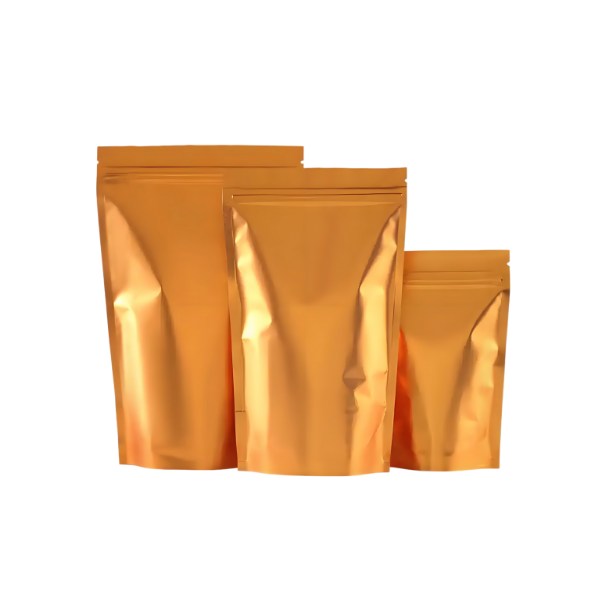
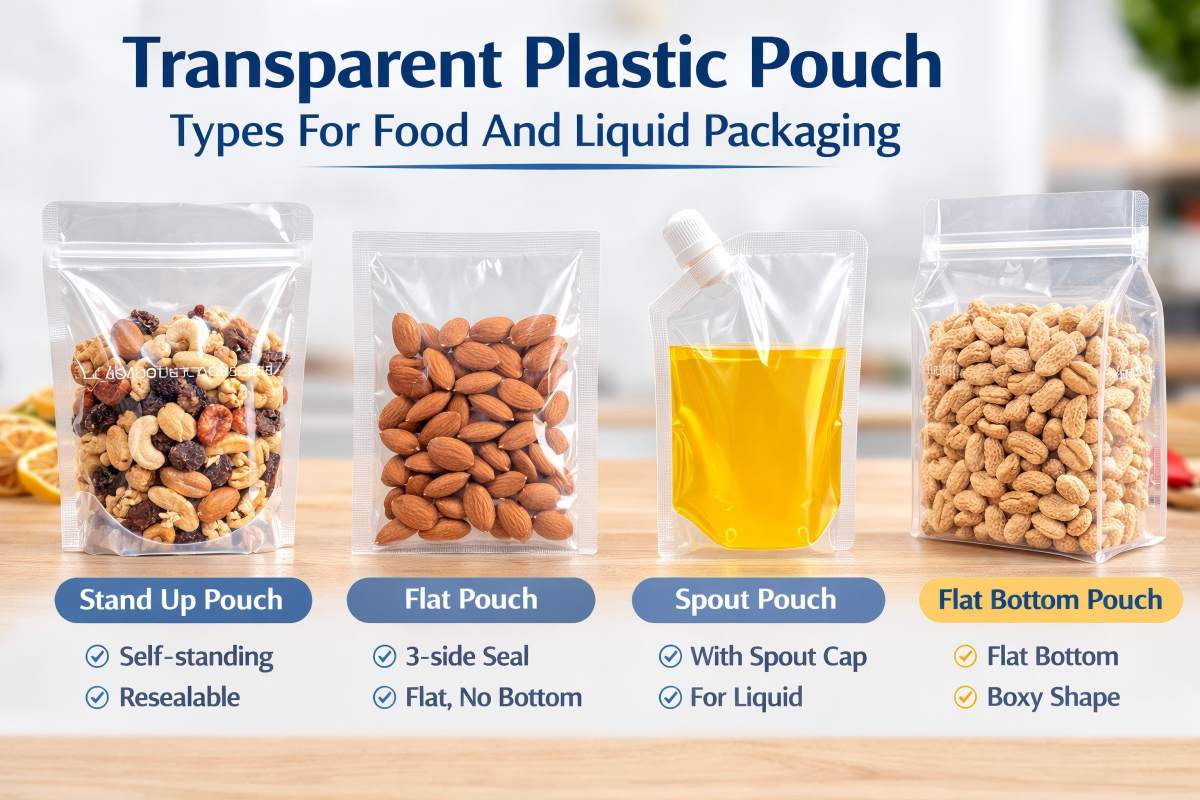
For most retail products, the transparent stand up pouch is the most popular format. It stands well on shelf, gives good front-facing display, and offers enough space for printing, labeling, and convenience features such as zipper closure. If you are developing snacks, supplements, candies, dry mixes, or refill products, CloudFilm’s custom stand up pouches page shows why this format remains a mainstream option for both branding and functionality.
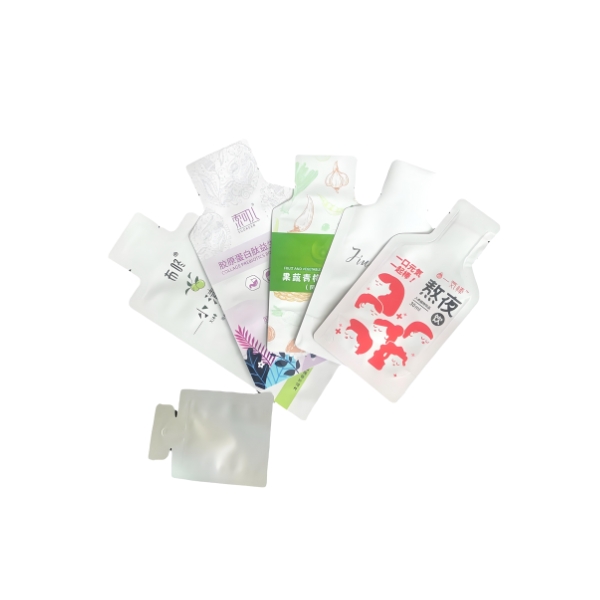
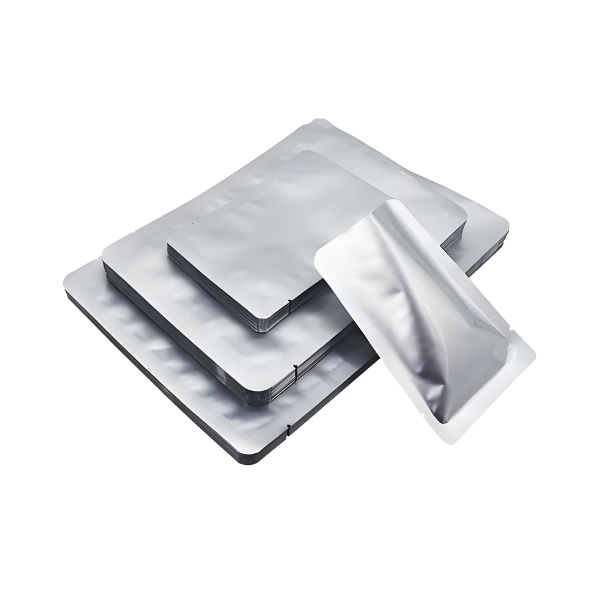
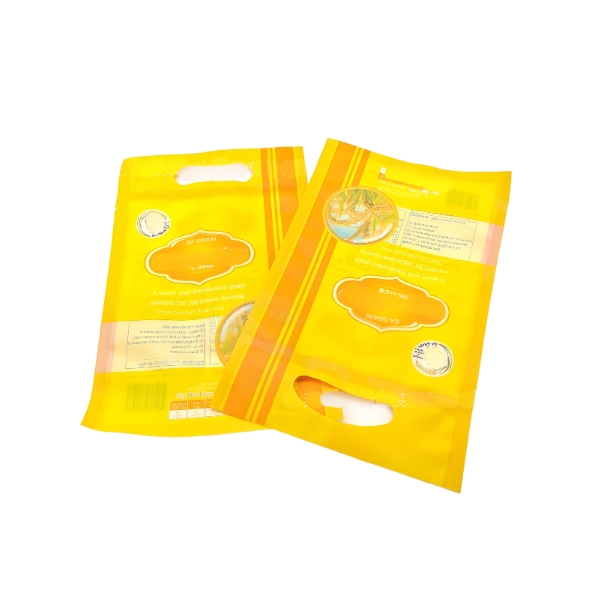
Flat pouches, pillow pouches, and three-side-seal pouches are usually chosen when cost, machine speed, or compact packaging matters more than shelf-standing performance. They are widely used for candies, biscuits, samples, single-serve powders, and simple retail items.
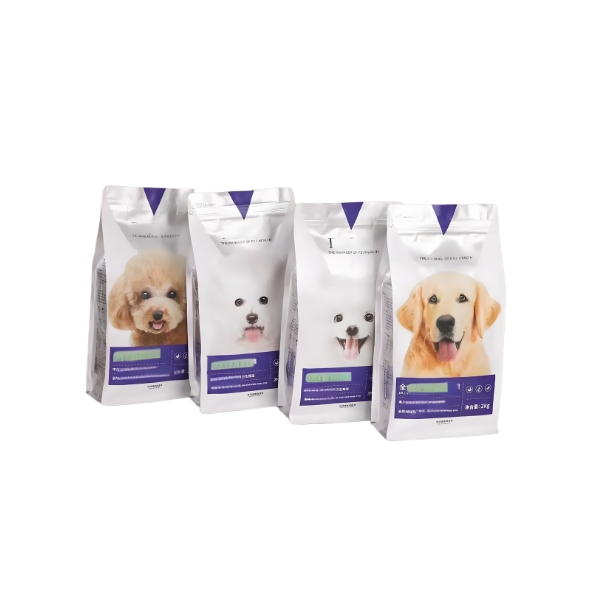
At the premium end, flat bottom pouches provide stronger shelf presence and more printable panels, especially for heavier dry goods. If your project needs a box-like look with better display area, CloudFilm’s flat bottom pouches are worth evaluating.
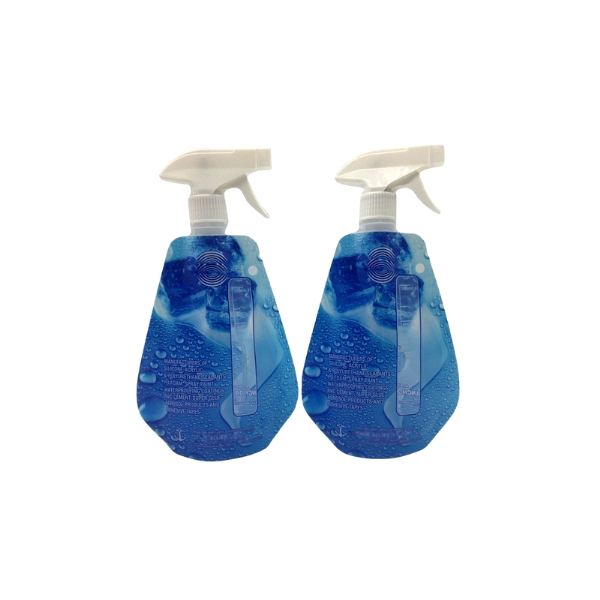
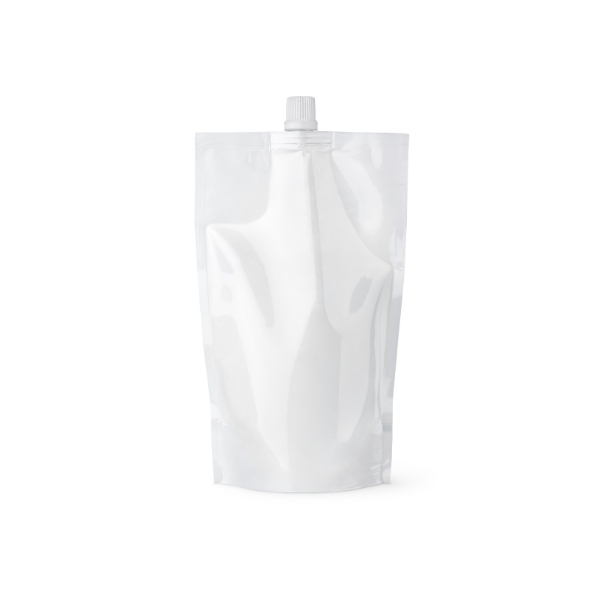
For liquids and semi-liquids, transparent spouted pouches or transparent liquid pouches become more relevant. These formats combine visibility with easy pouring, reclosure, and lower logistics weight than bottles. If your product is juice, puree, sauce, detergent, or cosmetic refill, CloudFilm’s liquid pouches and spout pouches pages provide a solid starting point for selecting structures and pouch styles.
Typical Applications of Transparent Plastic Pouches
Transparent plastic pouches are especially strong in dry food packaging. Snacks, nuts, granola, pasta, candies, rice seasonings, bakery ingredients, and pet treats all benefit from product visibility. For these categories, brands often want consumers to see texture and fill level immediately.
In many cases, moderate barrier plus good clarity is enough, although oil-sensitive or aroma-sensitive products may need a stronger structure. For related use cases, CloudFilm’s dry food packaging guide gives more context.。
Transparent pouches are also increasingly used in personal care and household refills. Consumers like to see lotion color, gel consistency, bath salts, or refill liquid level. At the same time, brands want lighter and more space-saving packaging than rigid bottles.
This is one reason stand up refill pouches and spouted pouches continue growing across shampoo, shower gel, hand wash, and detergent projects. CloudFilm’s liquid and recyclable pouch pages both highlight these refill-oriented applications.
In B2B and industrial packaging, transparent pouches are often used for parts, hardware kits, sample packs, powders, additives, and small chemical products where content identification matters. In these applications, transparency is not only about shelf appeal.
It also improves sorting, checking, and faster handling. That is why transparent packaging remains valuable far beyond consumer retail.
How to Choose the Right Transparent Plastic Pouch
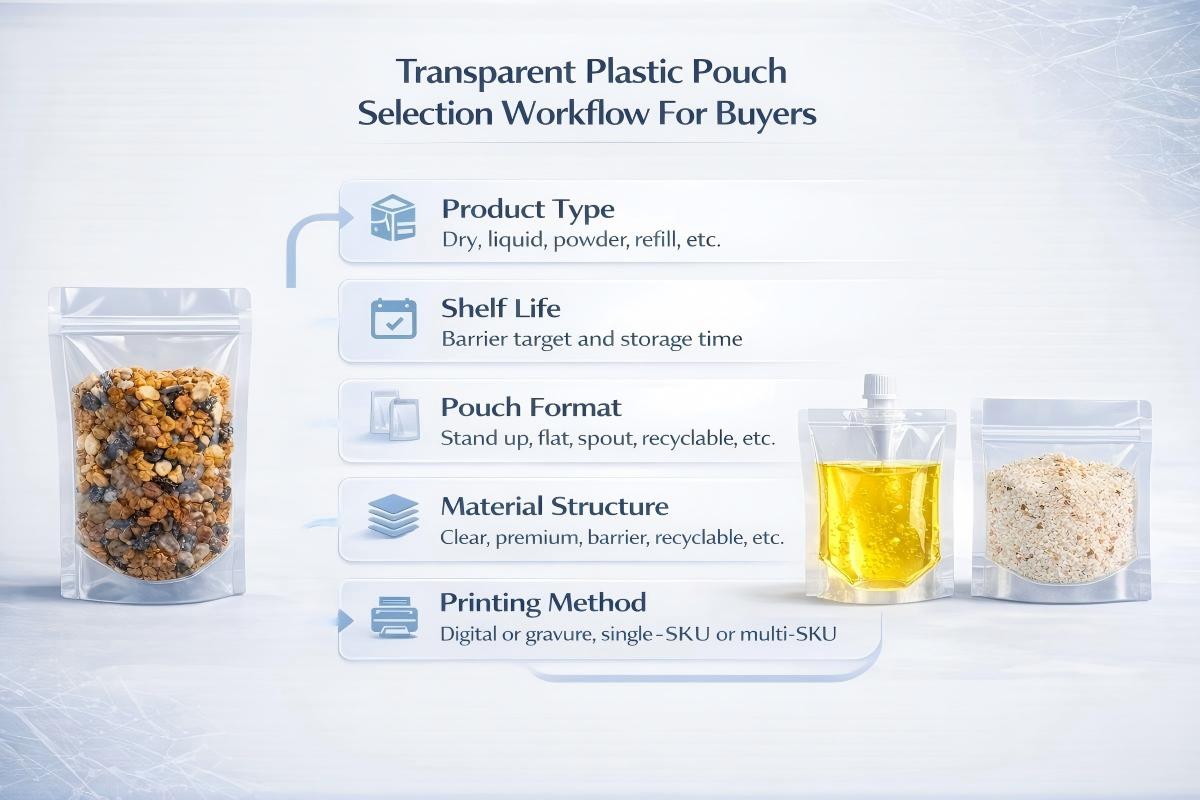
The best way to choose a transparent pouch is to start with the product, not the bag. Ask what you are packing, how long it must last, whether it is dry or liquid, whether it will be filled hot or cold, and whether it needs zipper, spout, tear notch, or hanging display. CloudFilm’s pouch and liquid-packaging content consistently recommends beginning with product type, shelf-life demand, consumer use, and filling conditions before choosing a structure.
The second step is to match the required appearance with the required performance. Some buyers focus too much on “full transparency” and forget barrier, seal strength, or line efficiency. For example, a very clear pouch may look beautiful but still fail if it does not seal well or if it collapses on high-speed lines. A professional supplier should help compare one or two candidate structures rather than push a one-size-fits-all option.
The third step is to consider order model and printing model. If you are launching many SKUs or testing a new market, digital printing may reduce MOQ and speed up launch. If you are running large, stable volumes, gravure may still be more cost-efficient.
CloudFilm’s packaging-printing guidance highlights the importance of matching technology, MOQ, setup cost, and production model to the actual business situation. For short runs and multi-SKU launches, their digital flexible packaging content is relevant.
What Buyers Should Check in a Transparent Plastic Pouch Supplier or Manufacturer
For serious sourcing, a transparent pouch supplier should do more than quote a price. Buyers should check whether the supplier can control both film and pouch performance, whether it can recommend structures by application, whether it supports samples and line trials, and whether its documentation is clear.
CloudFilm’s stand up pouch and liquid pouch pages emphasize integrated production from film to finished pouch, which is valuable because appearance, sealing, and converting behavior are all connected.
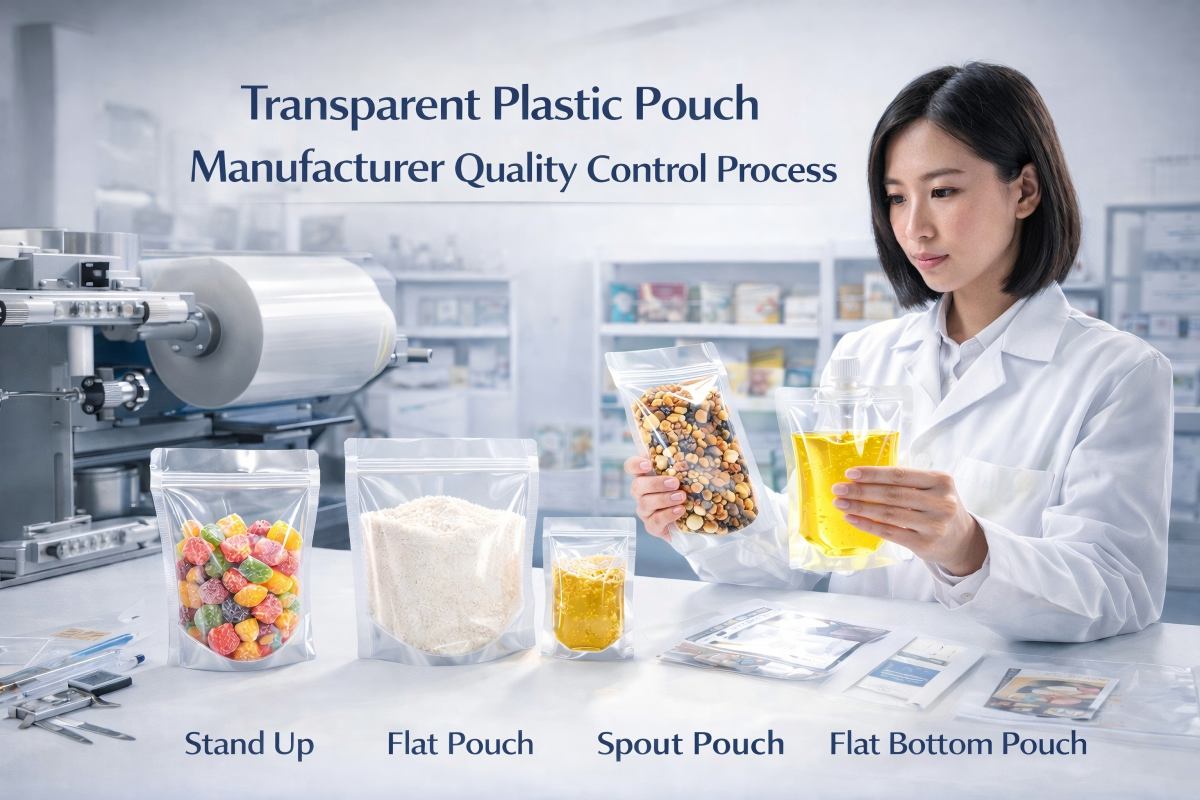
Quality control is another key point. Reliable pouch manufacturers should be able to discuss thickness control, seal strength, leakage, drop performance, print registration, traceability, and compliance support.
On CloudFilm’s stand up pouch page, the company describes thickness checks, seal tests, burst and drop tests, visual inspection, traceability, and documentation support, including food-contact related documents and certificates. These are the kinds of details that matter far more than a low headline price.
A good manufacturer should also be commercially practical. That means clear MOQ logic, honest lead-time planning, realistic sample arrangements, and export experience. It should be able to say when digital makes sense, when gravure is better, and when a project should first run a small trial before a full container order. In global B2B packaging, professional communication is part of product quality.
Can Transparent Plastic Pouches Be Recyclable?
Yes, some transparent plastic pouches can be designed for recycling, but not all of them. This is one of the most important points for both SEO accuracy and buyer trust. Traditional multi-material laminates may deliver excellent performance, but they are often hard to recycle.
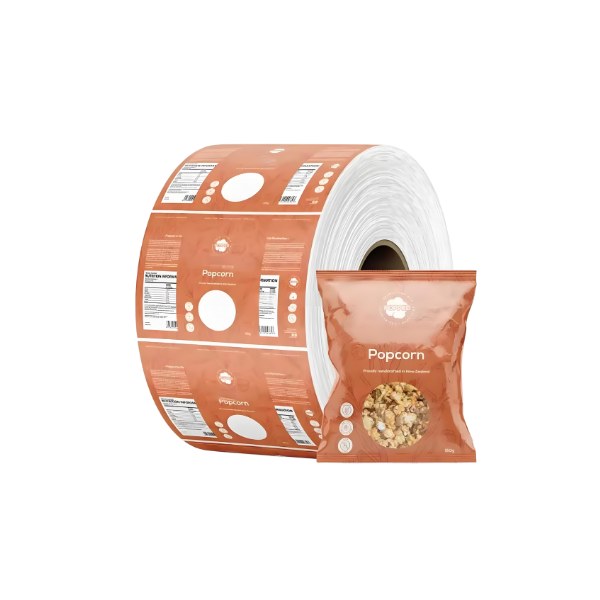
Mono-material PE or mono-material PP structures are now the main direction when brands want better compatibility with recycling streams. CloudFilm’s recyclable packaging content repeatedly explains that mono-material design simplifies sorting and reprocessing compared with traditional mixed laminates.
At the same time, recyclable does not mean recyclable everywhere. Actual recyclability depends on local collection rules, sorting systems, and the specific recycling infrastructure of the target market. That is why responsible packaging content should say “designed for recycling” where appropriate instead of making broad claims.
For transparent pouch projects aimed at sustainability, CloudFilm’s recyclable pouches page is a natural internal reference.
FAQ
Q1. Is a transparent plastic pouch the same as a clear plastic bag?
Not always. In daily language, people often use the terms loosely. In professional packaging, a transparent plastic pouch may refer to a converted flexible package with specific structure, sealing performance, barrier level, and features such as zipper or spout, while a clear plastic bag may mean a simpler mono-layer or low-spec bag.
Q2. What material is best for a transparent food pouch?
There is no universal answer. BOPP, PET, PE, and CPP all have roles. The right choice depends on whether your product is dry, oily, powdery, frozen, or liquid, and on the shelf life and line conditions you need to achieve.
Q3. Can a transparent pouch still have good barrier?
Yes. Transparent pouches can be engineered with suitable structures, including transparent barrier options such as EVOH- or ALOx-based systems, when you need longer shelf life without losing visibility.
Q4. Are transparent plastic pouches suitable for liquids?
Yes. Transparent liquid pouches and spout pouches are widely used for beverages, sauces, baby food, detergents, and personal-care refills. The structure must be matched to viscosity, filling temperature, and drop-performance requirements.
Q5. Can I add a zipper, spout, matte finish, or custom printing to a transparent pouch?
Yes. Transparent packaging can still include partial printing, zipper closure, tear notches, spouts, rounded corners, and other custom features. Transparency and branding are not mutually exclusive.
Q6. Can transparent pouches handle hot fill or retort?
Some can, but not all. Hot-fill and retort resistance depend on the exact laminate and sealant layer. For higher-temperature applications, the pouch structure must be designed specifically for that process.
Q7. Are transparent plastic pouches recyclable?
Some are designed for recycling, especially mono-PE and mono-PP versions. But actual recyclability depends on local recycling infrastructure and market rules.
Q8. What information should I send to a supplier for a fast quote?
Send product type, pouch style, pack size, filling method, shelf-life target, preferred material if known, printing requirements, estimated order quantity, and destination market. The more complete the brief, the faster the supplier can recommend the correct structure.
Q9. What is the MOQ for transparent plastic pouches?
MOQ depends on pouch size, material structure, and printing method. Digital printing usually supports smaller quantities, while gravure becomes more cost-effective for larger, repeat volumes.
Q10. Can one supplier provide both film rollstock and premade pouches?
Yes, some integrated suppliers can. This is often helpful because it keeps film and pouch performance more consistent across related SKUs. CloudFilm explicitly positions itself as both a film manufacturer and pouch converter on relevant product pages.
Q11. Is a China transparent plastic pouch manufacturer suitable for export projects?
It can be, if the manufacturer has stable quality control, clear communication, export packaging experience, sampling support, and documentation ability. Buyers should evaluate capability, not only price.
Q12. How do I start a transparent pouch project with CloudFilm?
Start with a simple brief: product type, target size, current structure if any, filling process, annual volume, and target market. From there, the supplier can suggest one or more structures, arrange samples, and move toward line trials and mass production.
Conclusion
A transparent plastic pouch is one of the most practical packaging formats in today’s flexible packaging market because it combines product visibility, brand value, logistics efficiency, and broad structural flexibility. But the right pouch is never selected by appearance alone.
Buyers should evaluate materials, barrier needs, pouch format, filling process, order model, and supplier capability together. When that work is done correctly, a transparent pouch can become not only a package, but also a stronger selling tool.
CloudFilm’s broader site positioning around films, pouches, printing, recyclable design, and export support also fits this “solution supplier” approach well.
If your next project involves snacks, powders, liquids, refills, or industrial products, the smartest path is to start with a clear brief and let the structure be engineered around your real application. That is how transparent packaging moves from a nice visual idea to a repeatable commercial solution.