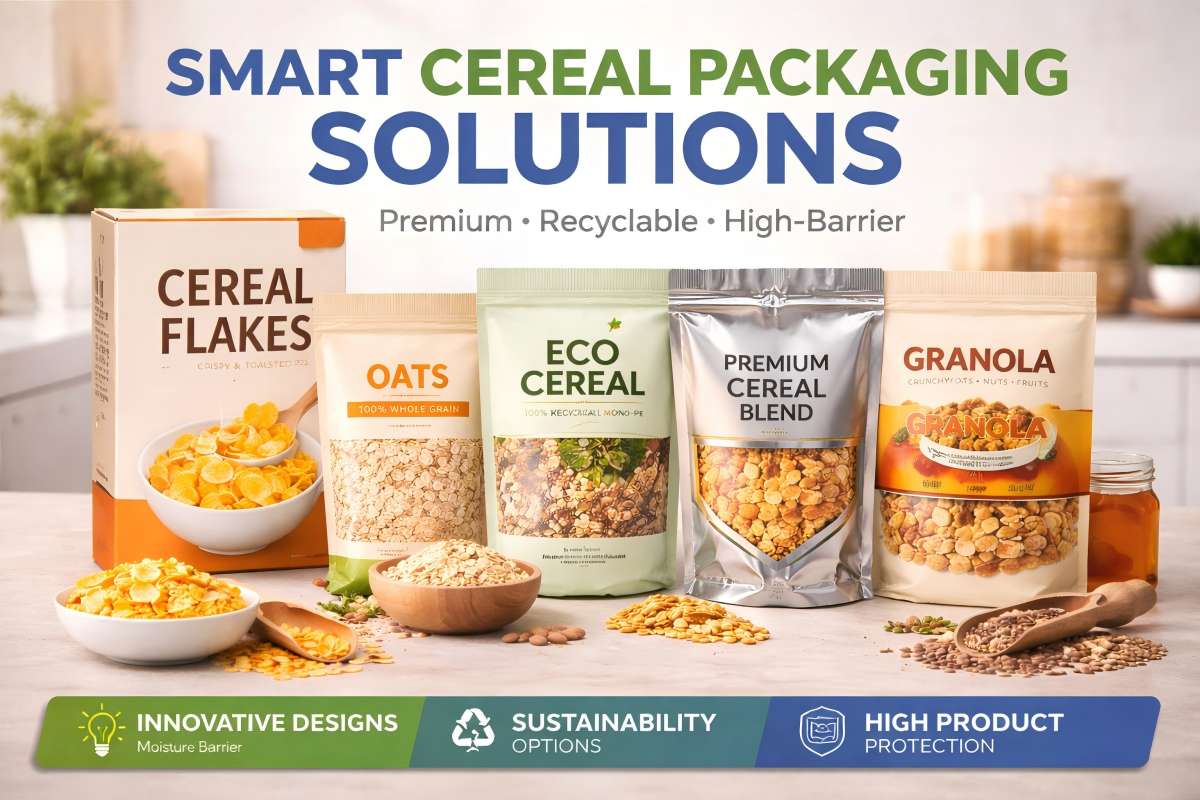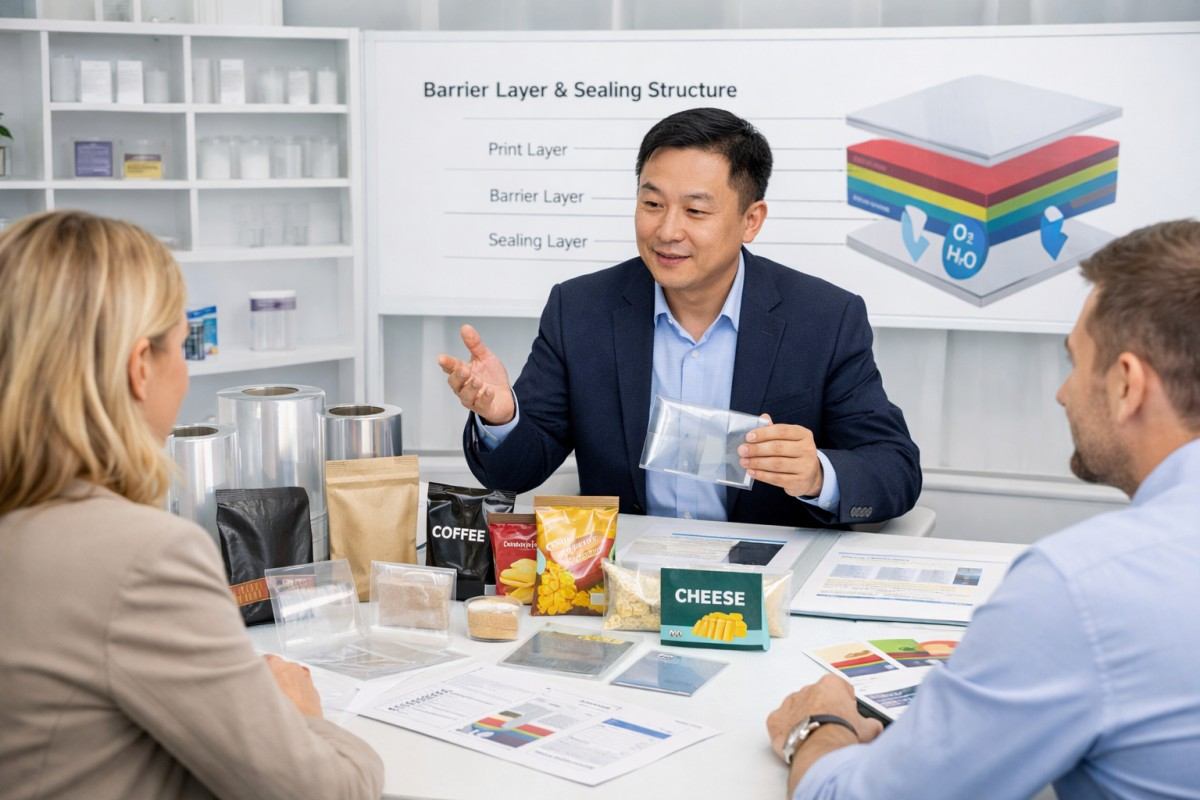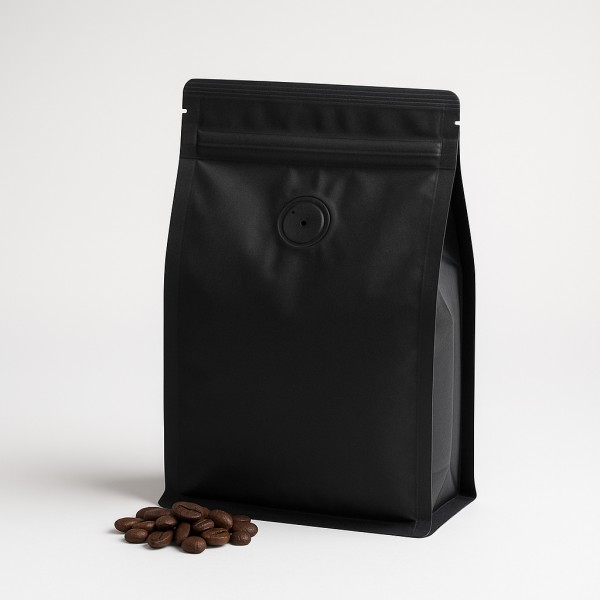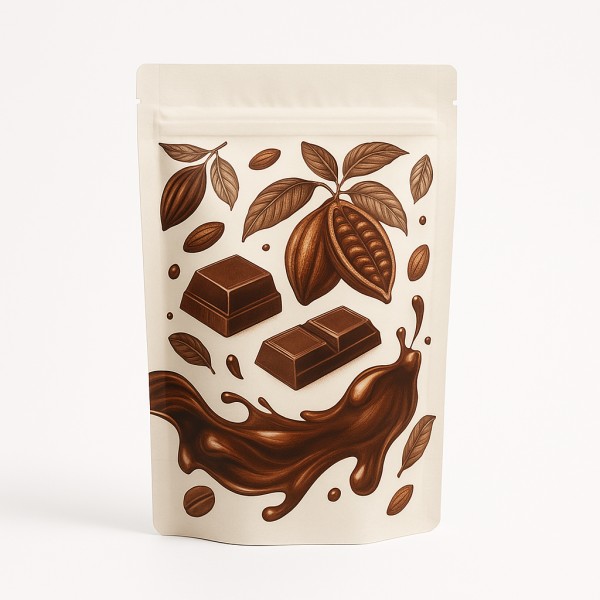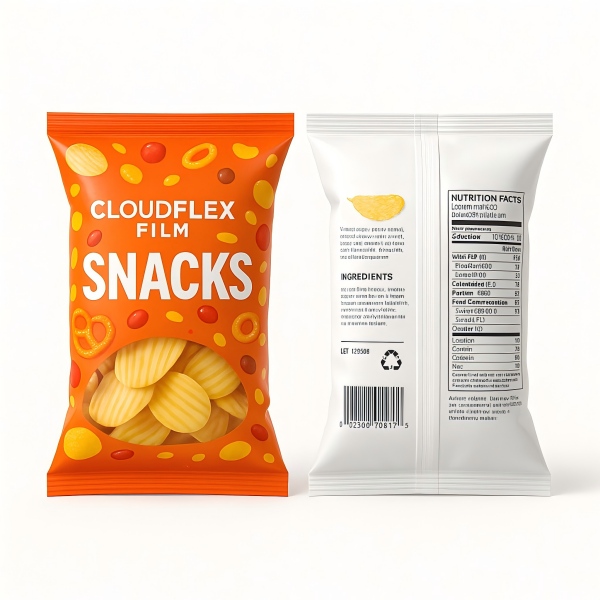
Cereal packaging looks simple at first, but it is actually one of the most strategic parts of product development. A good pack must protect texture, limit moisture pickup, support shelf impact, fit the filling line, and match the brand position at the same time.
For some products, the goal is low cost and fast turnover. For others, the goal is a premium image, better reclose convenience, stronger aroma retention, or a more modern pouch format. That is why “cereal packaging ideas” should never be limited to graphics alone. The right answer usually starts with product type, barrier target, pack size, and sales channel.
If you are selling breakfast cereals, granola, muesli, cereal clusters, children’s cereal, protein cereal, or instant grain mixes, the packaging route may look similar from a distance. But in practice, the structure, finish, and format can change a lot depending on shelf life, oil content, shipping distance, and whether the product is sold in stores, online, or through private label programs.
For teams planning dry-food packaging more broadly, it is useful to review how different pouch formats and laminate choices are matched to cereals, snacks, and other shelf-stable foods in CloudFilm’s guide to Dry Food Packaging.
Why Cereal Packaging Needs More Thought Than Many Brands Expect
Cereal is not one single product category. Corn flakes, granola, oat clusters, muesli, cereal powder, and multigrain blends all behave differently in a pack.
Plain flakes are light and fragile. Granola often contains oils, nuts, seeds, or dried fruit, so aroma and oxidation matter more. Powdered cereal mixes need strong sealing and dust control. Family packs need easy pouring and repeated reclosing. Single-serve packs need portion control and efficient machine running.
This means the best cereal packaging idea is not always the most decorative one. The best idea is the one that balances protection, cost, convenience, and branding without adding unnecessary complexity.
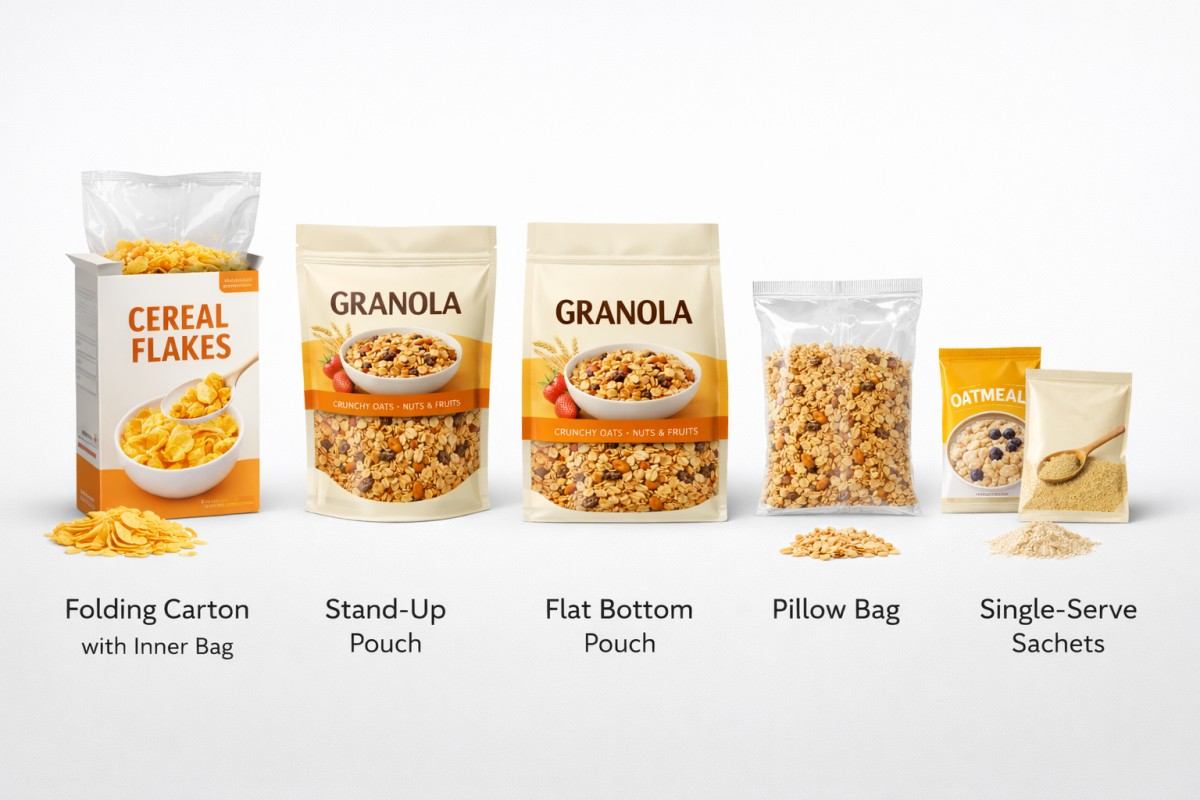
Cereal Packaging Format Ideas That Actually Work
1. Folding Carton With Inner Bag
This is still one of the most familiar cereal packaging solutions in many markets. The carton gives a large printable area, strong front-facing branding, and a traditional supermarket look. The inner bag protects the product and carries the real sealing job.
This format works well for mainstream breakfast cereal, children’s cereal, and value lines that need a recognizable shelf presence. It also gives brands enough space for nutrition panels, claims, mascots, recipes, and promotion graphics.
The main weakness is that once opened, the inner bag often does not reclose well unless a clip, zipper insert, or secondary storage habit is added. For brands that want a more convenient consumer experience, flexible pouch formats can be stronger.
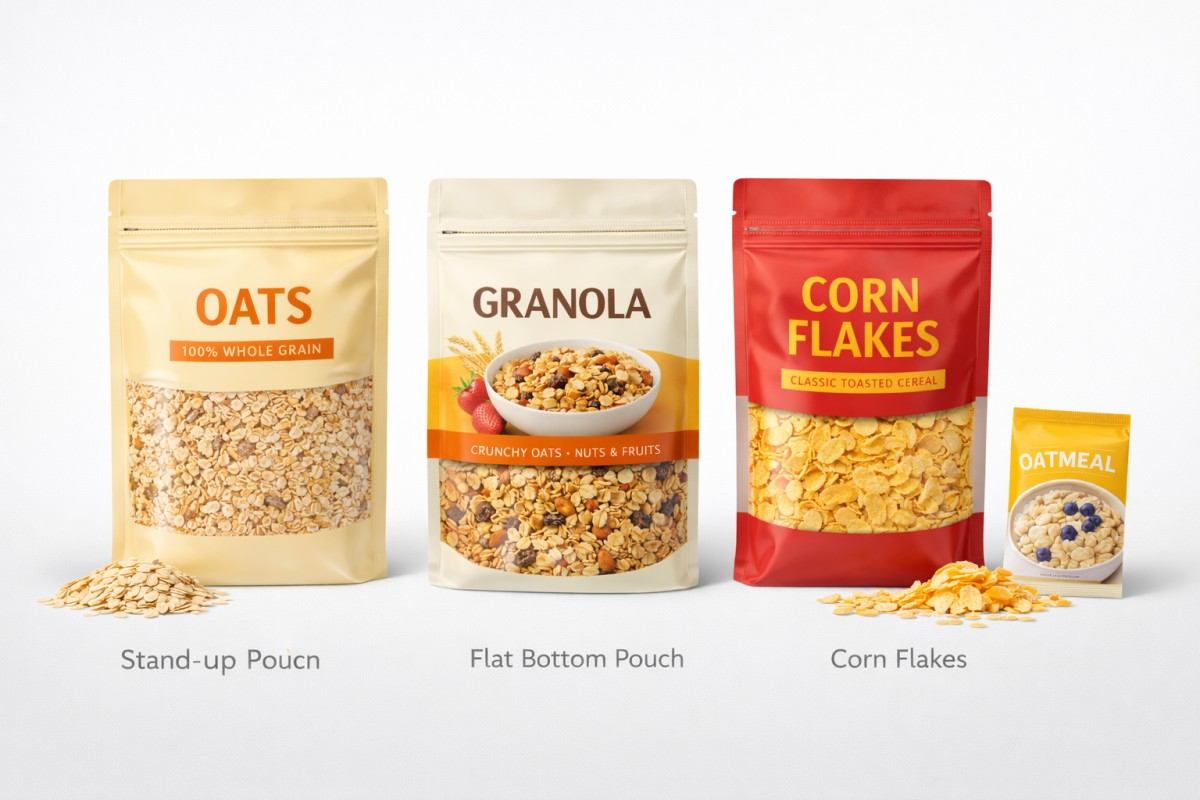
2. Stand-Up Pouches
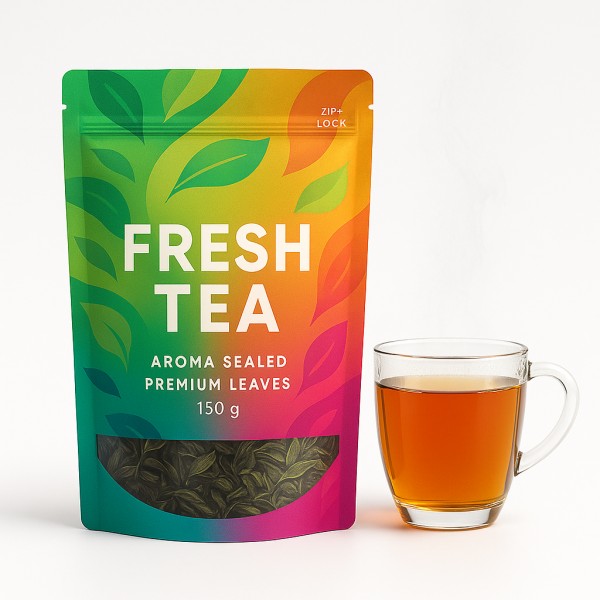
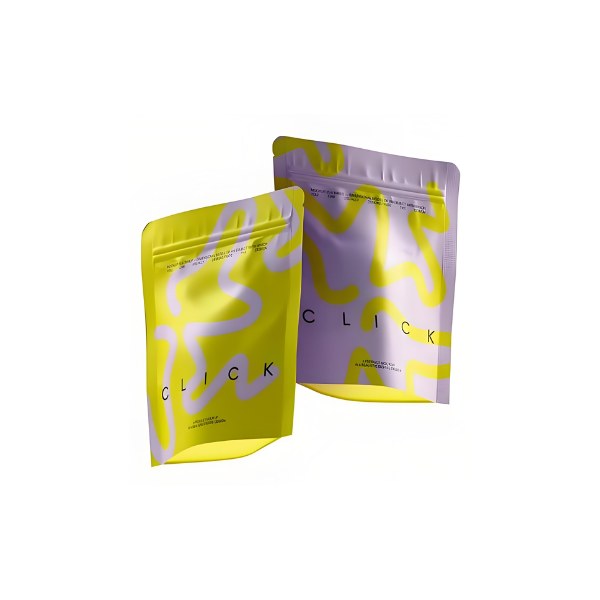
Stand-up pouches are one of the most practical cereal packaging ideas for modern retail. They save space, reduce shipping bulk compared with rigid formats, and can combine strong shelf presence with zipper convenience.
They are especially useful for granola, muesli, high-protein cereal, organic cereal, and smaller premium SKUs. A pouch can look more contemporary than a carton, and matte or soft-touch finishes can help position the product at a higher price level.
CloudFilm’s Stand Up Pouches page highlights dry food, high-barrier, zipper, and recyclable options, which fits well with premium cereal and granola projects.
3. Flat Bottom Pouches
Flat bottom pouches are one of the best cereal packaging ideas when you want the shelf impact of a box and the efficiency of flexible packaging. They stand well, fill well, and offer more printable panels than many other pouch types.
This format is especially effective for granola, granola clusters, premium oats, family packs, and export-oriented dry goods. It can also help a product look more substantial on shelf, which matters for higher-value cereals.
CloudFilm notes that Flat Bottom Pouches are suitable for cereals and other premium dry goods because of their stable base, stronger display effect, and larger printable area.
4. Pillow Bags Or Simple Refill Packs
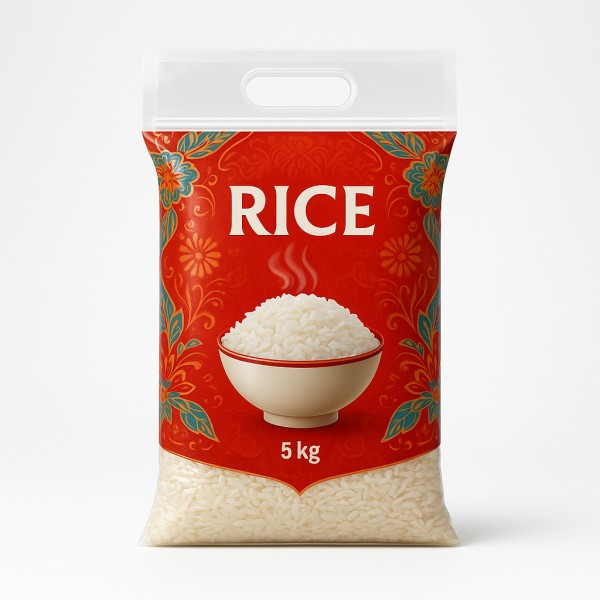
For price-sensitive products, refill programs, club packs, or inner liners used inside cartons, simple bags still make sense. They are efficient, familiar, and easy to run on high-speed lines.
The trade-off is presentation. A simple bag may be fine inside secondary packaging, but it usually does not deliver the same premium shelf look as a stand-up or flat bottom pouch.
5. Single-Serve Sachets
For school packs, travel packs, trial packs, instant cereal blends, or portion-controlled nutrition products, single-serve packs can be the smartest route. They help with convenience, hygiene, and dosage control.
This format also works well when the brand wants to build sampling into the sales strategy or create mixed-flavor multipacks.
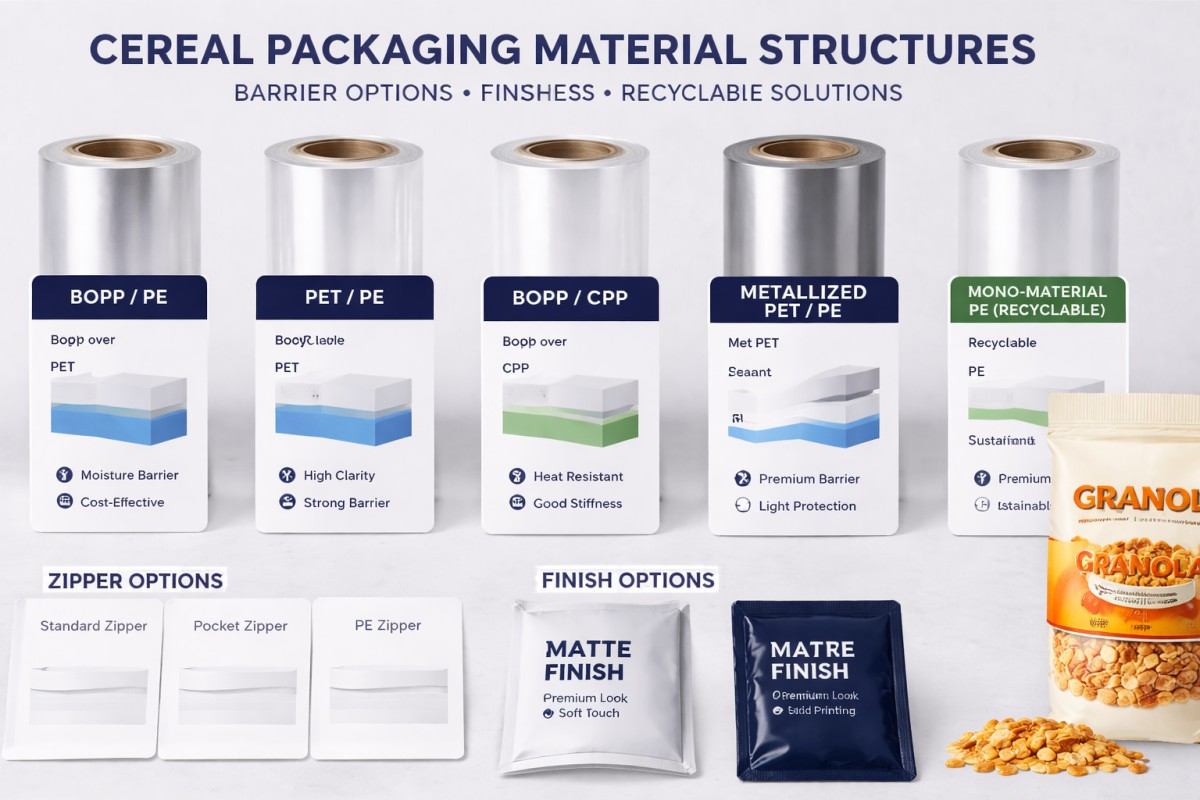
Material Ideas For Cereal Packaging
The format is only half of the decision. The material structure is what controls barrier, seal strength, stiffness, appearance, and machine performance.
1. BOPP/PE For Cost-Effective Dry Cereal Packaging
For many dry cereal products with moderate shelf-life demands, BOPP/PE is a practical structure. BOPP gives stiffness, printability, and good appearance. PE contributes sealability and pack toughness.
This can be a good option for standard cereal lines, value products, and projects where cost control matters more than maximum barrier.
2. PET/PE For A More Stable Premium Outer Layer
When a project needs stronger print appearance, better stiffness, or a more premium outer web, PET/PE often becomes a candidate. It is commonly used when the brand wants a more polished look or when the filling and logistics environment is more demanding.
3. BOPP/CPP When Seal Performance Matters
Some cereal projects benefit from the balance between a stiffer outer BOPP layer and a softer sealing layer inside. This is one reason why BOPP/CPP remains a useful structure in dry-food packaging.
If your team is comparing seal performance, stiffness, and laminate roles, CloudFilm’s article on BOPP Vs CPP is a useful reference because it explains how these films play different roles in real packaging structures.
4. Metallized Structures For Better Barrier
When cereal includes nuts, seeds, chocolate inclusions, freeze-dried fruit, or other components that are more sensitive to oxygen, moisture, or aroma loss, a higher-barrier route may be needed.
That is where metallized films become relevant. They can improve barrier while keeping the structure lighter and more flexible than some alternative packaging routes. For granola and other premium dry-food products, this can be a strong solution when the shelf-life target is more demanding.
CloudFilm’s Metallized Films and metallized film category pages both position metallized PET, BOPP, and CPP as useful barrier materials for snacks, coffee, tea, dairy powder, pet food, and other dry-food applications.
5. Recyclable Mono-Material Options
Not every cereal product needs to stay with traditional mixed-material laminates. Some brands now want recyclable pouch concepts, especially for premium health, natural, or sustainability-led product lines.
That is where mono-material PE or PP pouch development becomes relevant. The exact choice depends on required barrier, line compatibility, pack shape, and the recycling infrastructure in the target market.
CloudFilm’s Recyclable Pouches and mono-material packaging articles show that mono-PE and mono-PP routes are increasingly part of real packaging development, especially for brands trying to align packaging claims with more recyclable design approaches.
Design Ideas That Make Cereal Packaging More Competitive
Good cereal packaging design is not only about color. It is about making the format and material choice feel consistent with the product promise.
A natural granola line may look better in a matte pouch with warm earthy colors, a clean ingredient story, and a structured product window. A children’s cereal may need stronger color contrast, bold icons, and clearer flavor coding. A premium protein cereal may benefit from a more disciplined layout with fewer visual elements and a stronger hierarchy of claims.
Matte finishes are especially effective when the brand wants a softer, more modern shelf impression. CloudFilm’s BOPP Matte Film page shows why matte surfaces are often used when low-glare appearance and higher-end presentation matter.
Other strong design ideas include:
Use A Window Carefully
A product window can build trust by showing real cereal texture, cluster size, and visible inclusions. But it should be used carefully. If the product is light-sensitive or if the barrier target is high, a full window may not be the best answer.
Make Reclose Features Part Of The Visual Story
A zipper should not feel like an afterthought. If the cereal is designed for family use or repeated snacking, the pack should visually communicate convenience, freshness, and controlled pouring.
Match Finish To Market Position
Gloss can feel bright and energetic. Matte can feel calm, premium, and modern. Soft-touch can feel even more elevated, but it must fit the budget and brand logic.
Build Information Hierarchy
Many cereal packs are overloaded with claims. A stronger layout usually leads with brand, product type, flavor, and one or two primary value points first. Too much front-panel information weakens shelf recognition.
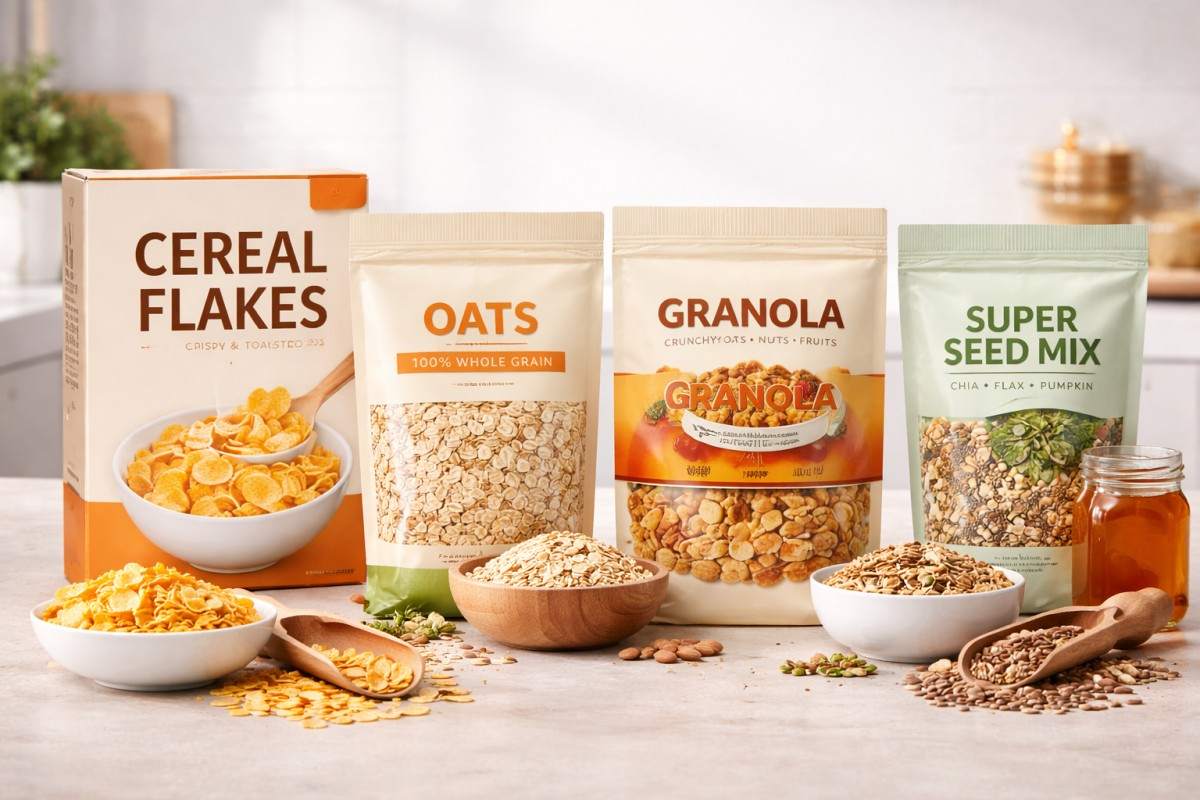
Functional Features Worth Adding
A strong cereal pack should also solve daily-use problems.
A zipper can greatly improve repeat use, especially for granola, muesli, and family packs. Tear notches help opening. Strong side seals reduce leakage of powder or crumbs. A well-designed gusset improves shelf stability. Correct film stiffness improves machine handling. Anti-slip or matte outer surfaces can also help a product feel more premium in hand.
For brands selling across e-commerce, retail, and export channels, packaging must also survive stacking, handling, and longer transport cycles without losing shape too quickly.
Cereal Packaging Ideas For Export, Private Label, And Supplier Selection
From a commercial point of view, some of the best cereal packaging ideas are the ones that reduce friction during sourcing and launch.
That means choosing a packaging manufacturer or supplier that can do more than quote film by thickness alone. It helps when the partner can discuss structure, printing, pouch format, barrier level, finish, and shipping logic together.
CloudFilm’s broader Flexible Packaging Solutions positioning shows why many buyers now expect one supplier to support films, pouches, structure selection, and application advice across food and consumer packaging projects.
For private label cereal programs, consistency matters. Color stability across production lots, correct bag dimensions, zipper consistency, and predictable lead times are often just as important as the headline material choice.
Sustainable Cereal Packaging Ideas
Sustainability in cereal packaging should be practical, not cosmetic.
A lighter pack is not automatically the best pack if it leads to product waste. A recyclable claim is not enough if the structure does not fit local collection systems. A paper-heavy visual style does not mean the pack is structurally simple.
Better sustainable ideas often include right-sizing the pack, reducing unnecessary layers, using mono-material routes where they make sense, improving reclose performance to reduce food waste, and choosing packaging formats that ship efficiently.
How To Choose The Right Packaging Route
If your cereal is a standard dry flake product sold at value price, a carton with an inner bag or a simple flexible bag may be enough.
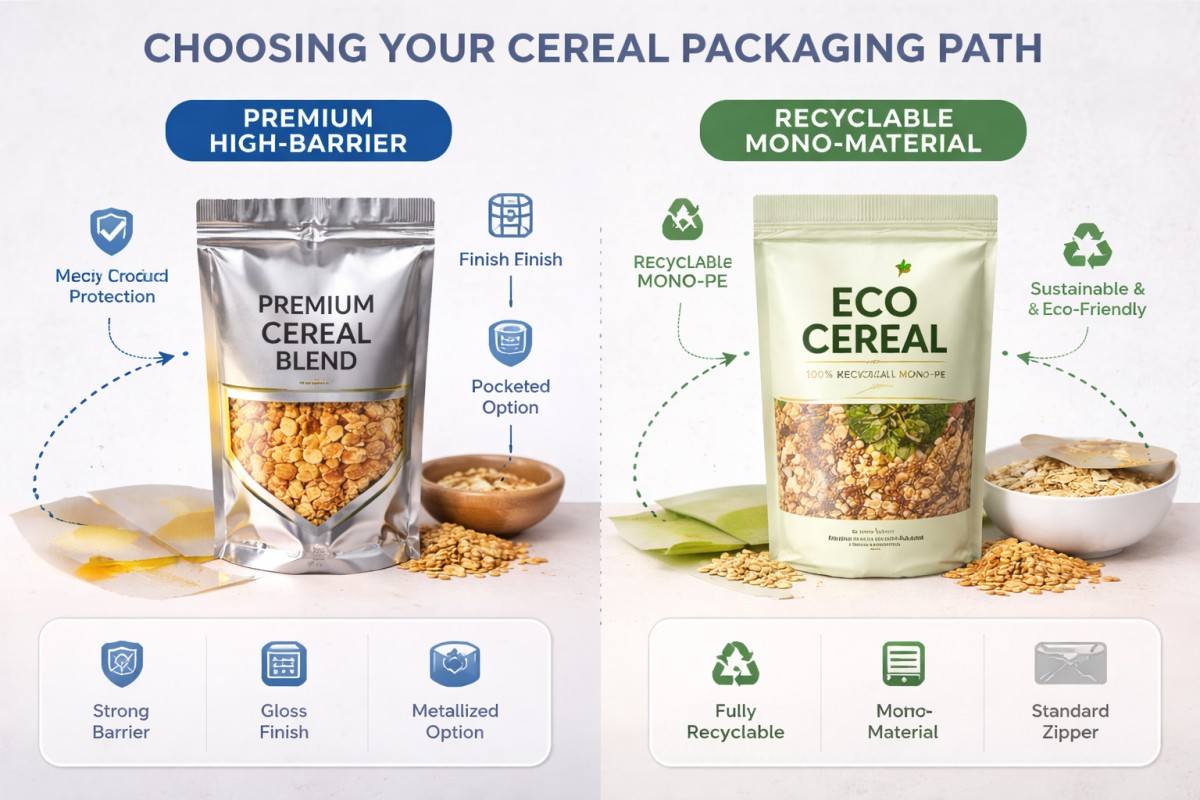
If your product is premium granola with nuts, fruit, and stronger aroma sensitivity, a high-barrier pouch with a zipper may be a much better fit.
If you want stronger shelf impact without moving into rigid packaging, a flat bottom pouch is often one of the best choices.
If the product is part of a health, organic, or modern lifestyle line, a stand-up pouch with matte finish and a disciplined front-panel layout can work extremely well.
If your market strongly values recyclable packaging, start testing mono-material pouch options early rather than leaving sustainability decisions until final artwork.
FAQ About Cereal Packaging Ideas
1. What is the best packaging for cereal?
There is no single best option for every cereal. Cartons with inner bags remain common for mainstream products, while stand-up and flat bottom pouches are often stronger for premium, resealable, and modern retail applications.
2. Are pouches better than cartons for cereal?
Sometimes yes. Pouches can reduce shipping bulk, support zipper convenience, and give a more contemporary look. But cartons still offer familiar shelf presence and large print area. The right answer depends on cost target, filling line, and brand style.
3. What material is commonly used for cereal packaging?
Common material routes include BOPP/PE, PET/PE, BOPP/CPP, and higher-barrier metallized laminates. Mono-material PE or PP options may also be considered for recyclable designs.
4. Does cereal packaging need high barrier?
Not always. Plain dry cereal may not need the same barrier level as granola with nuts, seeds, oils, or sensitive inclusions. The product formula and shelf-life target decide this.
5. Is a zipper necessary for cereal packaging?
Not in every case, but it can add real value. It improves convenience, supports freshness after opening, and is especially useful for family packs, granola, and premium resealable products.
6. What is the best pack style for premium granola?
A stand-up pouch or flat bottom pouch is often a strong choice. These formats support better shelf display, easier reclosing, and a higher-end visual presentation.
7. Can cereal packaging be recyclable?
Yes, in some cases. Mono-material PE or PP pouch concepts are increasingly used in recyclable packaging development. But recyclability still depends on local systems, not only on structure design.
8. Should cereal packaging have a clear window?
A window can help sell the product by showing real texture and inclusions. But it must be balanced against barrier needs, light sensitivity, and overall design logic.
9. Is matte or gloss better for cereal packaging?
Neither is always better. Gloss can feel brighter and more mass-market. Matte often feels more premium and more modern. The better finish is the one that matches the product position.
10. What should buyers ask a cereal packaging supplier?
Buyers should ask about material structure, barrier level, sealing performance, pack format, zipper options, print finish, food-contact compliance, MOQ, sample support, and whether the supplier can recommend structures based on the actual cereal product rather than only quoting a film roll.
Final Thoughts
The best cereal packaging ideas come from aligning format, material, barrier, finish, and convenience with the real product inside the pack.
In other words, good cereal packaging is not just a graphic exercise. It is a product-positioning and packaging-engineering decision at the same time. When that balance is right, the pack protects better, looks better, and sells more confidently across retail, private label, and export markets.