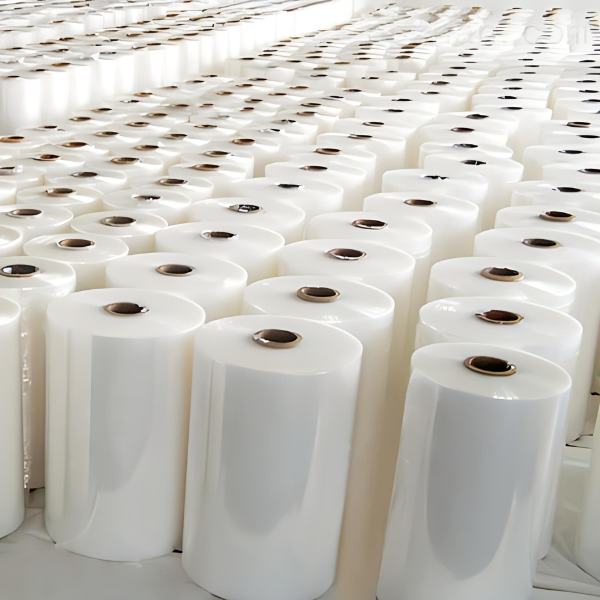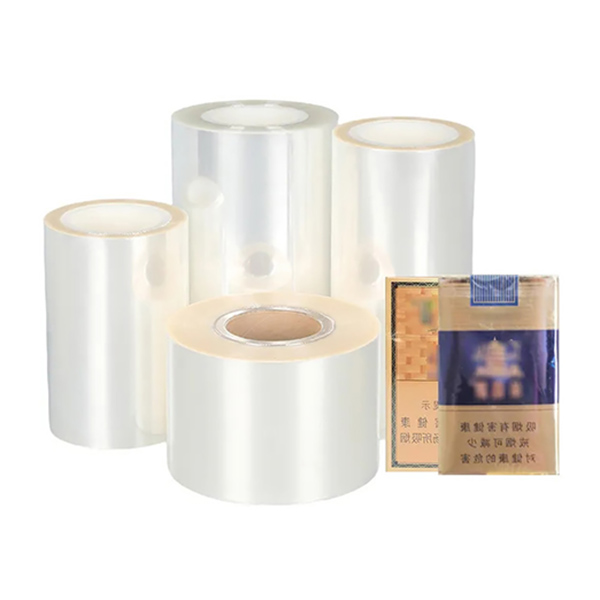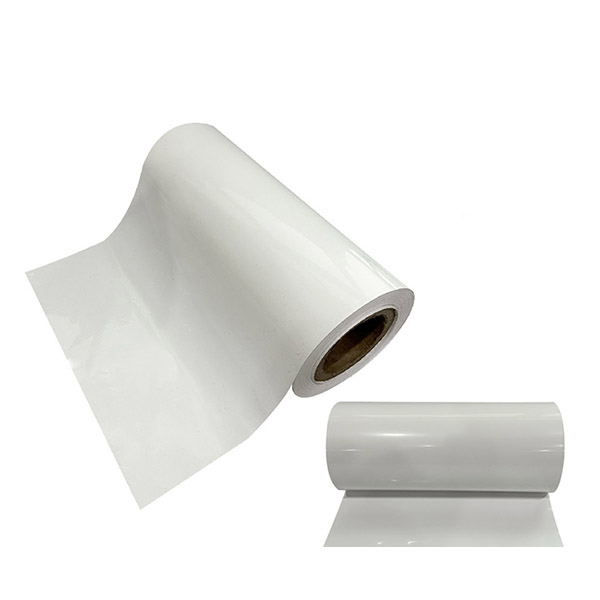
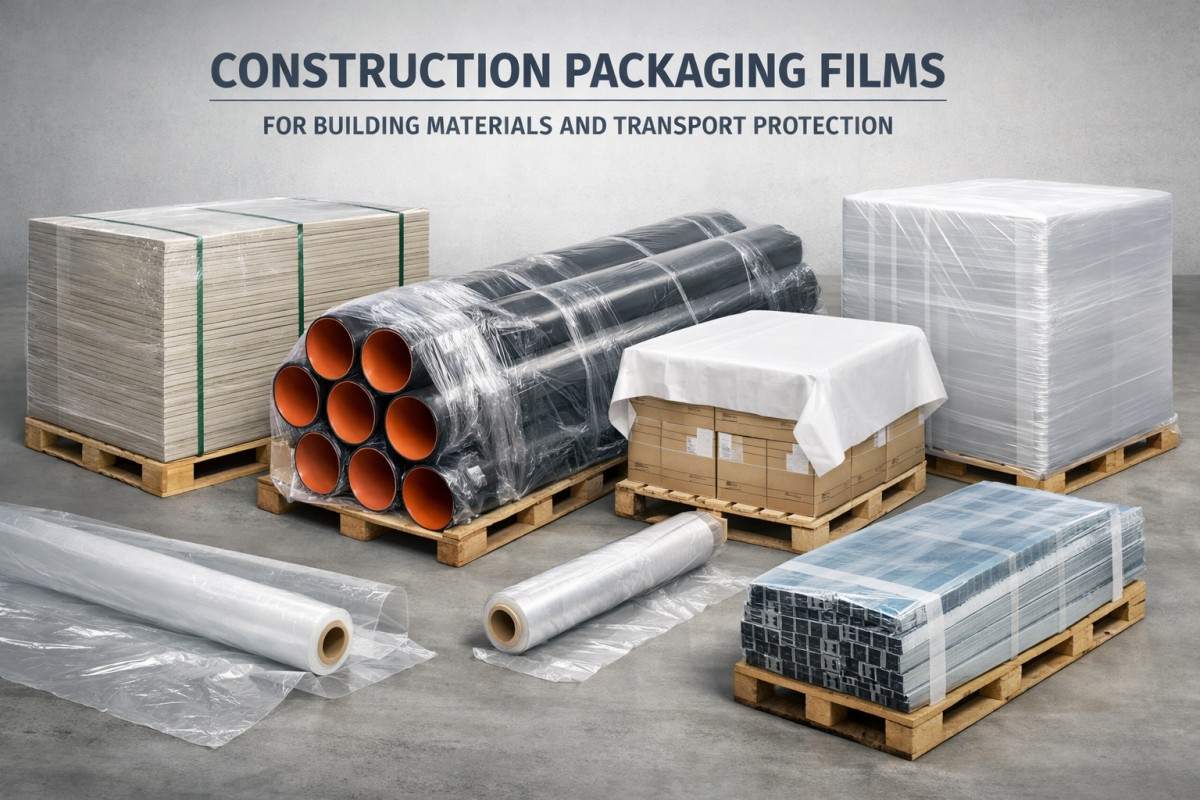
Construction packaging is much broader than a simple outer bag. In real projects, it can include moisture barriers, pallet wraps, heavy-duty liners, clear cover films, protective surface films, shrink bundling materials, and custom converting rollstock.
These materials are used to protect cement products, boards, profiles, metal parts, glass, tiles, pipes, insulation products, and many other building-related goods from dust, water, scratches, load shifting, and handling damage.
CloudFilm’s own site already positions PE films for construction covers, vapor barriers, surface protection, pallet stabilization, and industrial use, while its broader portfolio spans film webs, seal layers, and finished packaging solutions.
For buyers, the real question is not only “What is construction packaging?” but “Which film structure fits my product, my transport route, my handling method, and my customer expectations?” A bag of powdered mortar does not need the same packaging logic as a stack of aluminum panels.
A pallet of tiles does not need the same surface protection as architectural glass. The right packaging system reduces breakage, improves storage life, lowers claims, and helps materials arrive at the jobsite in sellable condition.
Construction packaging also has a strong commercial side. Importers, distributors, and manufacturers often need not only protection, but also packaging efficiency, roll consistency, export-ready supply, and stable performance on manual or automatic lines.
That is why buyers increasingly look for a supplier that can support multiple film families instead of just selling one standard grade. CloudFilm presents itself exactly in that broader manufacturer-and-supplier role, with PE, PET, BOPP, CPP, high-barrier films, and other packaging materials in one system.
What Does Construction Packaging Usually Cover?
In practice, construction packaging usually falls into five main groups:
1. Primary Protection
This is the film or package that touches the product directly. Examples include surface protection film on aluminum sheets, PET protective film on glass, and PE liners inside bags or outer wraps.
2. Secondary Packaging
This includes shrink bundling, printed overwrap, sleeve packs, and grouped outer wrapping for easier handling and cleaner presentation.
3. Tertiary Packaging
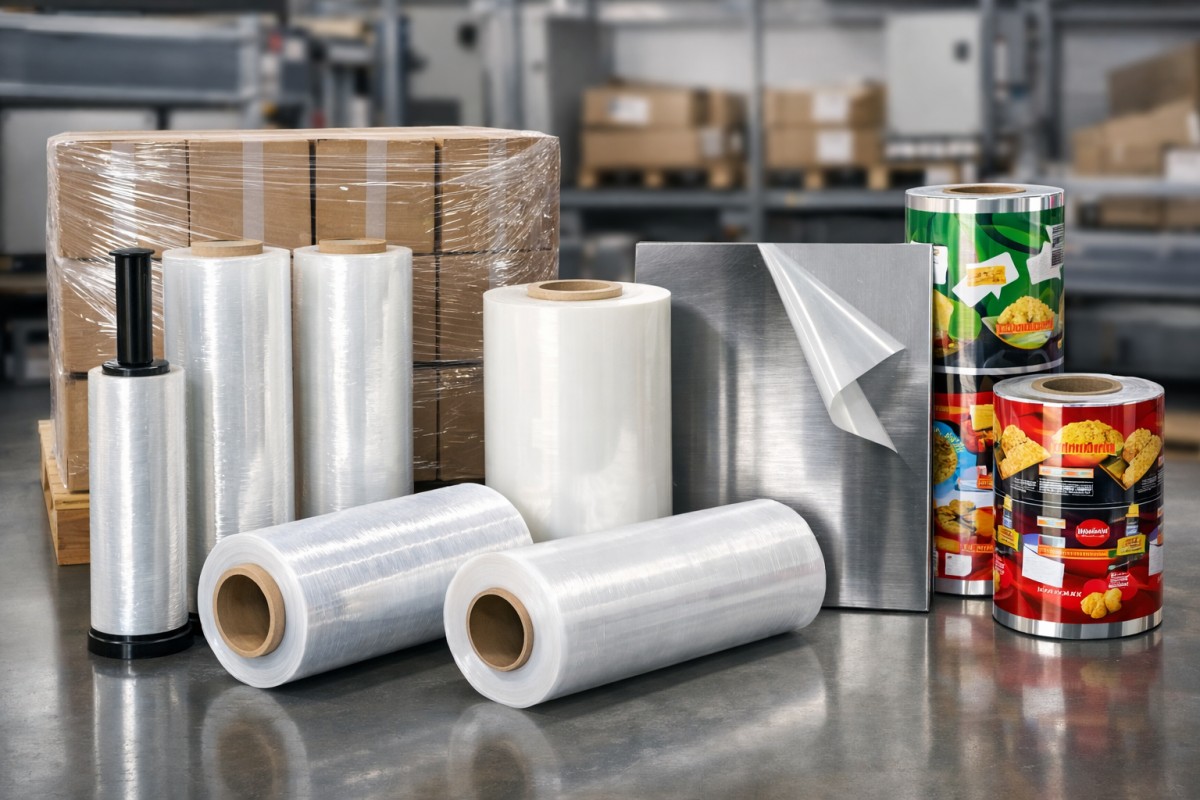
This is mainly for warehousing and shipping. Typical examples are stretch film, pallet covers, hood films, and heavy-duty wrap rolls that stabilize cargo.
4. Temporary Jobsite Protection
Many construction materials are damaged after delivery, not during production. Temporary PE sheets, dust covers, and removable protection films help protect products during installation, storage, and renovation.
5. Converting Rollstock
Some buyers do not want finished bags. They want film rolls that can be slit, printed, laminated, folded, or sealed on their own lines. In these cases, packaging film rolls and industrial wrap rolls become part of the solution, not just an accessory.
Why Construction Materials Need Different Packaging Than General Consumer Goods
Construction goods are often heavy, abrasive, dusty, sharp-edged, or exposed to outdoor conditions. That creates different packaging priorities.
First, load stability matters more. Building products are often palletized in high stacks, moved by forklift, stored in yards, and shipped over long distances. A weak wrap may break, loosen, or allow cartons to shift.
Second, surface damage is costly. A scratch on ordinary transit packaging may not matter, but a scratch on stainless steel trim, coated aluminum, decorative panels, or glass can turn a sellable product into a claim.
Third, moisture control can be critical. Some building materials absorb water, lose strength, change appearance, or suffer mold risk if not protected during storage and transport.
Fourth, packaging must often balance strength and efficiency. Over-packaging raises freight and material cost. Under-packaging raises damage risk. Good construction packaging is a functional system, not just more plastic.
Finally, jobsite handling is rough. Products may be unpacked, partly used, rewrapped, and moved again. Films therefore need the right combination of toughness, removability, visibility, and cost control.
Main Film Types Used In Construction Packaging
PE Roll: The Basic Workhorse
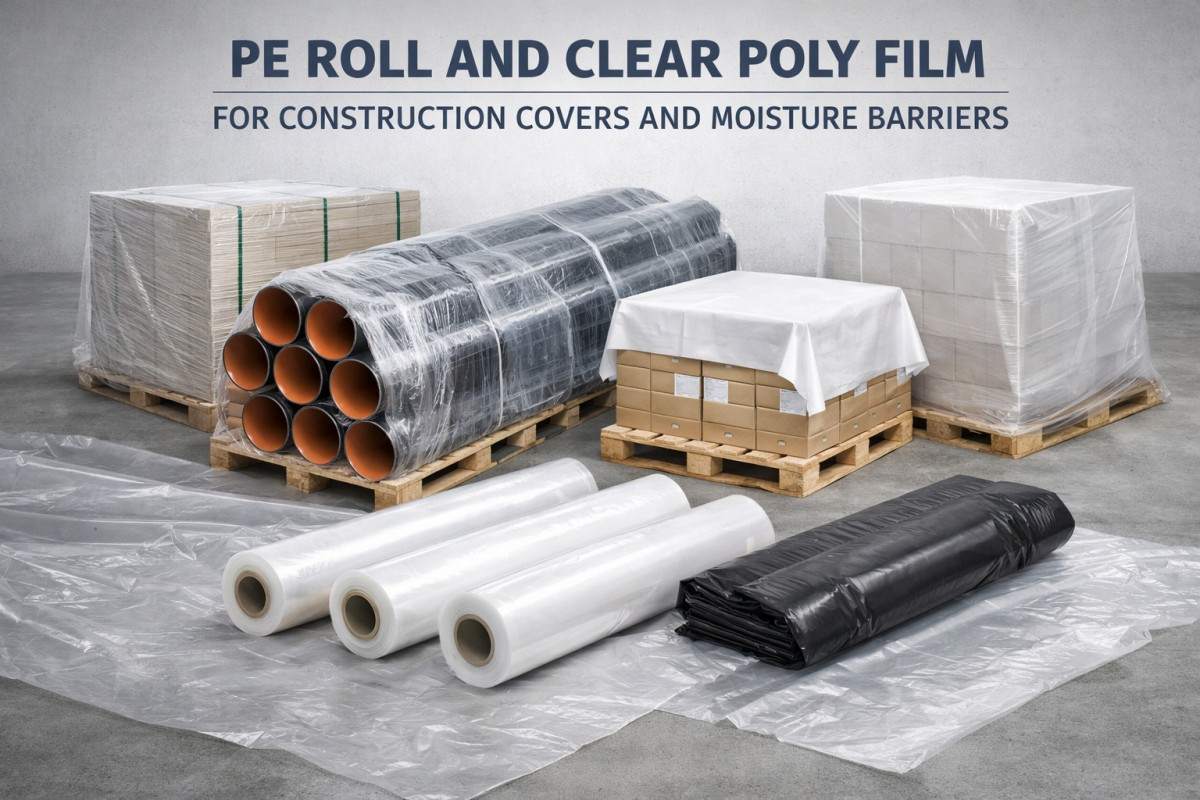
For many buyers, polyethylene is the first material family to evaluate. A practical starting point is a good PE film guide, because PE covers a wide range of construction uses: vapor barriers, protective sheets, pallet wrapping, liners, and general cover films.
On CloudFilm’s site, PE films are directly associated with construction sheets, liners, protective covers, stretch applications, and transport protection.
If your need is broad and flexible, PE roll solutions are a strong starting point. CloudFilm describes PE rolls as suitable for packaging, surface protection, and construction or farming covers, with customizable resin blends, width, thickness, color, and additives.
It also highlights moisture and dust protection plus flexible-but-strong handling performance. That makes PE roll suitable for temporary floor protection, under-slab moisture barriers, pallet top sheets, furniture covers, machinery covers, and general construction wrapping.
When visibility is important, clear poly film becomes especially useful. CloudFilm positions clear poly film as transparent polyethylene sheeting that protects against dust, moisture, and rain while keeping the covered surface visible.
That is helpful for wrapped pallets, window-related materials, covered panels, site storage, and any situation where operators still need to inspect the item without removing the film.
HDPE Film: Better For Stiffness, Strength, And Heavier Duty Protection
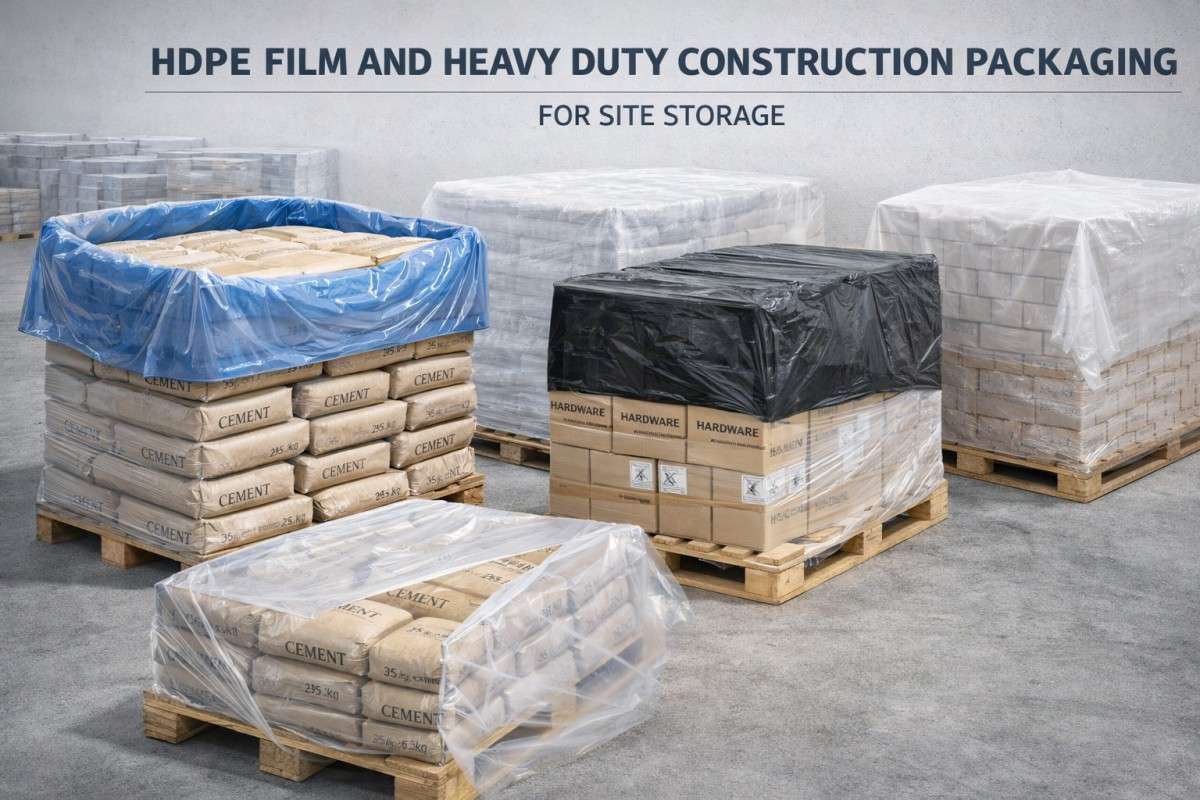
When the application moves toward liners, geomembrane-style uses, stronger barrier needs, or tougher industrial protection, HDPE film deserves attention. On CloudFilm’s site, HDPE is described as stiffer and stronger than softer PE grades, with good moisture resistance and chemical resistance, and it is linked to heavy-duty bags, liners, protective wrapping, and construction-related uses such as vapor barriers and geomembrane applications.
This matters in construction packaging because not every product needs a soft, clear film. Some products need structure. Bulk powders, sharp hardware, damp environments, and outdoor storage often benefit from a stiffer film that resists deformation and offers better barrier behavior.
Typical HDPE-led uses in the construction field include:
- heavy-duty liners
- moisture barriers
- protective wrap for industrial parts
- site storage covers
- waste and rubble bag liners
- underlayer protection for slab and wall systems
A buyer should still remember that HDPE is not always the best answer for every packaging job. If you need softness, conformability, and easier wrapping around irregular shapes, LDPE or LLDPE-based structures are often better.
If you need surface protection with clean removal, dedicated protective film is usually the smarter choice. The right decision depends on end use, not only on resin name.
Protective Films: Critical For Glass, Metal, And Decorative Surfaces
Construction packaging is not only about containing a product. In many categories, it is about preserving finish quality. This is where protective films become essential.
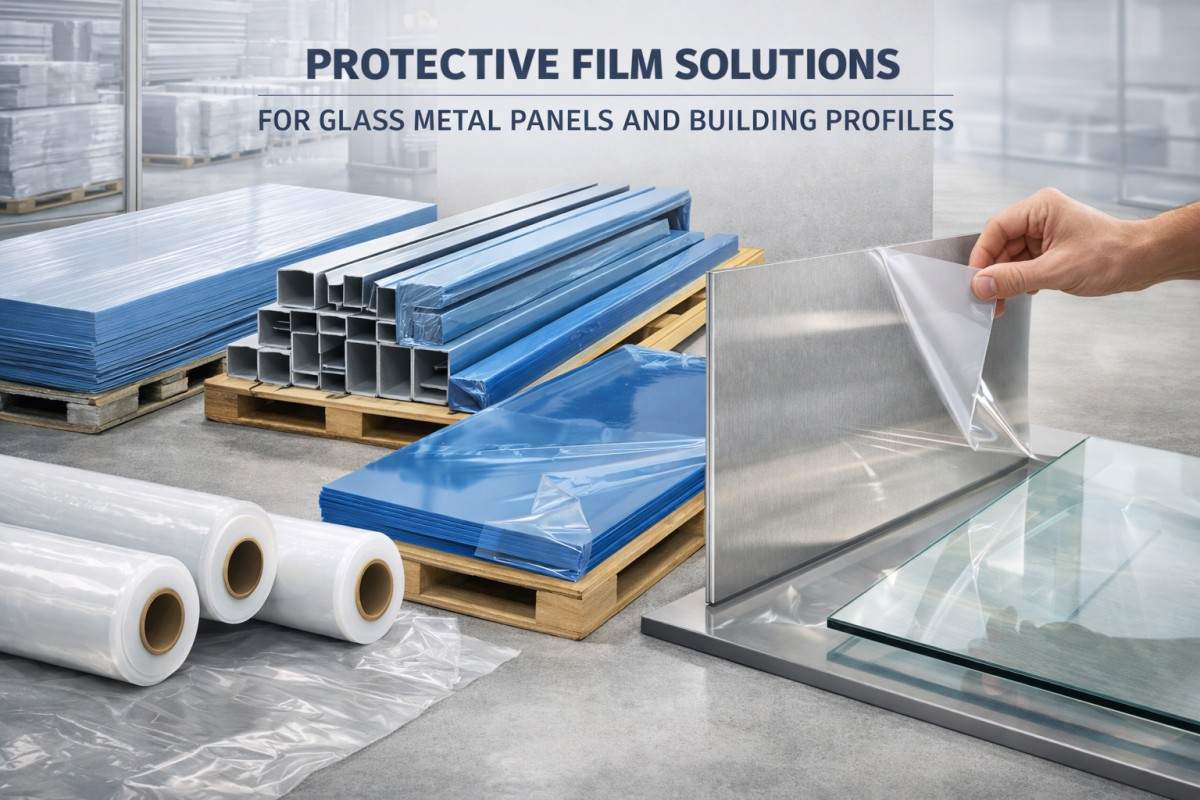
CloudFilm’s PE protective film is positioned for surface safeguarding during production, storage, and transit, with customizable adhesion levels for different materials and applications.
That kind of adjustability is important because surface protection is not one-size-fits-all. Too little adhesion and the film lifts during transport. Too much adhesion and removal becomes difficult or risky.
For flat, high-clarity, or more demanding surfaces, PET protective film can be the better option. CloudFilm highlights its clarity, scratch resistance, clean removal, dimensional stability, and suitability for glass, metal, electronics, and premium panels.
In a construction-related context, that makes PET protection especially relevant for stainless steel panels, aluminum composite materials, elevator panels, architectural glass, and glossy boards that must remain visually perfect until installation.
The selection logic is straightforward:
- Use PE protective film when you need flexible, cost-effective temporary protection for many common surfaces.
- Use PET protective film when you need better flatness, clarity, scratch resistance, or higher heat and dimensional stability.
- Always test peel strength on the real substrate, not just on a general sample panel.
- Consider storage duration, UV exposure, temperature, and downstream cutting or bending processes before final approval.
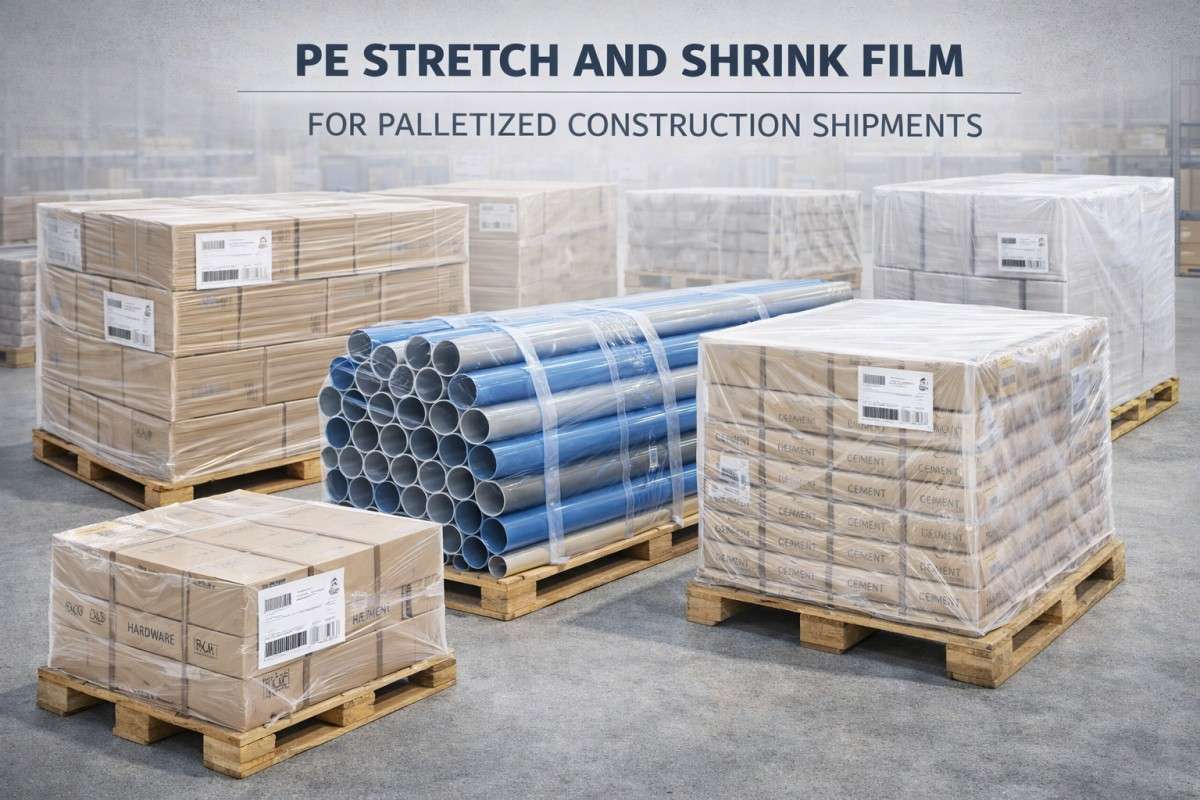
Stretch Film And Shrink Film: For Pallets, Bundles, And Export Handling
For tertiary packaging, two materials dominate many construction shipments: stretch film and shrink film.
PE stretch film is designed for hand or machine wrapping of pallets and cartons, with strong stretch, puncture resistance, cling, and good visibility for labels and barcodes. CloudFilm also notes its role in logistics, industrial supply chains, and pallet stabilization.
For building materials such as cartons of fittings, hardware boxes, bagged products, or mixed pallet loads, stretch film is often the fastest and most economical way to secure the shipment without heat.
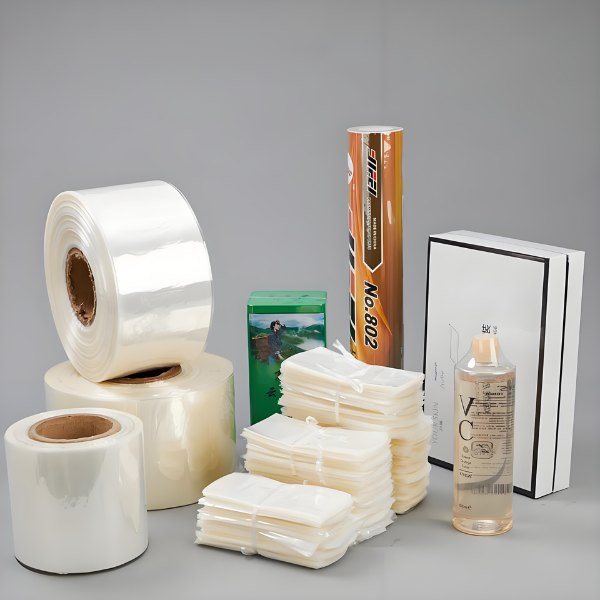
PE shrink film is different. CloudFilm describes it as a heat-applied material with high shrinkage, strong puncture resistance, and good sealing, especially suitable for multipacks, tray packs, and heavier bundled loads.
In construction packaging, PE shrink film can be useful when tighter grouping, cleaner presentation, or more permanent outer bundling is needed for smaller units, boxed systems, accessories, or heavy grouped packs.
A simple rule:
- choose stretch film for pallet stabilization without heat
- choose shrink film for tighter bundle wrapping with heat
- choose both when the pack design includes grouped units plus palletized export handling
Clear Technical Films And Laminated Rollstock
Some construction packaging projects are not solved by a simple single-layer wrap. Buyers may need printable rolls, laminated structures, special finishes, better stiffness, or more advanced protection.
CloudFilm’s clear plastic film rolls cover BOPP, BOPET, PE, and CPP options for packaging, surface protection, and display uses, allowing the buyer to match clarity, stiffness, barrier, and sealing behavior to the application. That is helpful when one project needs visibility, another needs stronger printability, and another needs more sealing or cushioning performance.
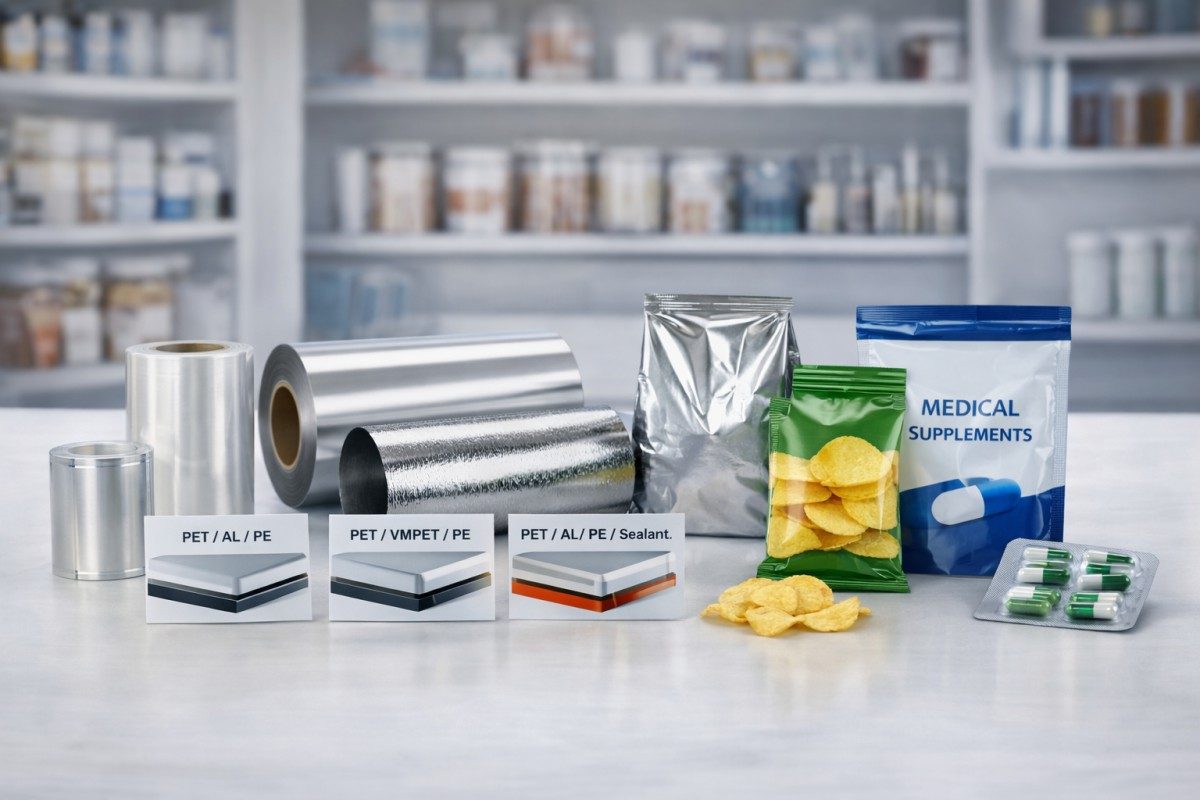
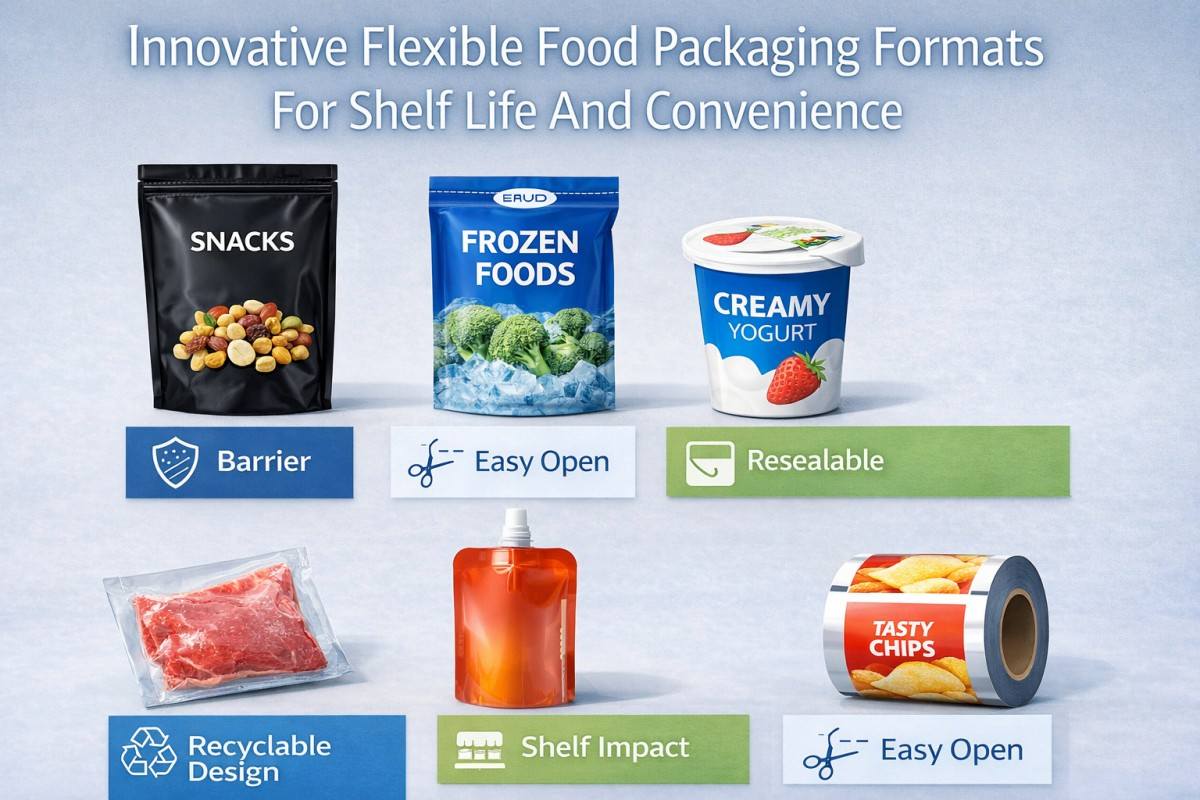
For more customized projects, packaging film roll solutions are relevant. CloudFilm positions these as custom rollstock options for food, household, logistics, medical, and industrial uses, including laminated structures, printed and unprinted options, and industrial wrapping uses.
It also presents common structures such as PET/PE, BOPP/PE, PA/PE, and PET/AL/PE. Even though many examples on the page are not construction-specific, the logic is highly relevant for building-material buyers who need converting-ready rolls, stronger protection, or custom outer packaging for hardware kits, accessories, powders, sealants, or technical components.
Typical Construction Packaging Applications By Product Type
Cement, Mortar, Powder Additives, And Dry Mixes
These products usually need moisture control, tear resistance, and stable palletization. Outer bundling and pallet wrap are often more important than high optical appearance.
Tiles, Stone Samples, And Decorative Boards
These products need edge protection, anti-scratch handling, pallet stability, and cleaner presentation. Stretch film, PE overwrap, and surface protection films may work together.
Aluminum Profiles, Coated Metal, And Stainless Panels
This is where protective film becomes central. Surface finish must survive cutting, packing, shipping, and installation.
Glass, Acrylic, And Architectural Panels
Clarity, scratch prevention, and clean removal matter. PET protective film is often more suitable for premium surfaces.
Pipes, Fittings, Cables, And Hardware Sets
Here, bundle security, dirt resistance, and transport efficiency are usually the key drivers. Stretch film, shrink bundling, or custom packaging rolls can all fit, depending on sales format.
Insulation And Lightweight Boards
These materials often need dust protection, moisture shielding, and pallet stability while keeping pack weight low.
How To Choose The Right Construction Packaging Film
A practical buying process usually starts with six questions:
1. What Is The Real Product Risk?
Is the main risk moisture, scratches, load shifting, dirt, UV, or puncture?
2. Is The Packaging For Warehouse, Transport, Or Jobsite Use?
A warehouse-only cover may be light. A sea-shipping export wrap must usually be stronger.
3. Does The Surface Need Clean Removal?
If yes, protective film selection becomes critical.
4. Is Visibility Important?
If operators need to see labels or surfaces, clear film may be better than opaque film.
5. Will The Film Run By Hand Or Machine?
This affects roll width, thickness, unwind behavior, and total cost.
6. Do You Need A Standard Film Or A Converting Solution?
Some buyers need stock wraps. Others need printable, laminated, slit, or customized rollstock from one manufacturer.
A strong supplier should be able to discuss the application, film structure, target thickness, width, machine type, shipping conditions, and commercial volume before recommending a grade. That kind of consultative approach is exactly what CloudFilm emphasizes in its industrial film and rollstock pages.
What Buyers Should Ask A Construction Packaging Supplier
When sending an inquiry, include:
- product type
- unit size or pallet size
- weight
- indoor or outdoor use
- transport distance
- need for clear or opaque film
- need for adhesive or non-adhesive protection
- manual or automatic application
- target thickness range
- estimated order quantity
This makes the supplier’s recommendation much more accurate and reduces trial cost.
FAQ About Construction Packaging
1. What is construction packaging?
Construction packaging refers to film, wraps, liners, protective films, and bundled packaging systems used to protect building materials during storage, transport, and jobsite handling.
2. What film is most common in construction packaging?
PE-based films are among the most common because they are versatile, economical, and suitable for covers, pallet wrapping, moisture barriers, and general protection. CloudFilm’s PE pages show this range clearly across rolls, stretch, shrink, and protective uses.
3. What is the difference between PE roll and stretch film?
PE roll is a broad polyethylene roll format that can be used as sheeting, cover film, or converting material. Stretch film is a specific PE product designed mainly for pallet stabilization.
4. What is the difference between stretch film and shrink film?
Stretch film secures goods by tension without heat. Shrink film tightens around goods after heat is applied.
5. When should I use HDPE instead of softer PE film?
Use HDPE when you need more stiffness, stronger moisture barrier behavior, or heavier-duty liner performance.
6. Which protective film is better for aluminum panels?
That depends on the surface, process, and required peel strength. PE protective film is common for many standard uses, while PET protective film can be better for flatter, clearer, or more demanding premium surfaces.
7. Can protective film stay on the product during fabrication and installation?
Often yes, but the exact answer depends on adhesion, storage time, UV exposure, temperature, and downstream processing. Testing on the real substrate is essential.
8. Is clear film always better for construction packaging?
No. Clear film helps inspection and barcode visibility, but black or milky films may be better for light blocking, privacy, or certain barrier needs.
9. Can construction packaging film be customized?
Yes. Buyers often customize thickness, width, roll length, color, core size, additives, and sometimes printing or lamination. CloudFilm’s PE roll and packaging film roll pages both emphasize this customization approach.
10. What details should I give when asking for a quotation?
At minimum: application, dimensions, material preference, thickness, packaging method, machine type, quantity, and destination.
11. Is recyclable construction packaging possible?
In many cases, yes, especially when the structure stays within a PE family. But real recyclability still depends on local collection and recycling systems, not only on material design. CloudFilm also frames mono-material and PE-based simplification as an active direction in its product portfolio.
12. Can one supplier cover both surface protection and outer transport wrap?
A broader film manufacturer often can. CloudFilm’s portfolio spans PE protective film, PET protective film, stretch film, shrink film, PE roll, and broader rollstock categories, which is useful for buyers who want fewer suppliers and more consistent coordination.
Final Thoughts
Construction packaging is not one material and not one format. It is a system of films and packaging decisions built around the real risks of the product: moisture, abrasion, load movement, handling damage, and storage conditions.
For some projects, a basic PE roll is enough. For others, the better answer may be HDPE, clear poly sheeting, stretch film, shrink film, PE protective film, PET protective film, or custom rollstock.
If you are sourcing construction packaging from a manufacturer or supplier, the best path is to start from the application, then match the film family, thickness, format, and performance target.
CloudFilm’s site already provides a useful framework for this approach by combining general PE knowledge with specific products for covers, protection, palletization, and custom packaging rolls.